Posts tagged ‘Narendra Modi’

08/06/2016

In boost to Paris climate pact, India says it aims to join this year | Reuters

India has agreed to work toward joining the Paris Agreement on climate change this year, India and the United States said on Tuesday, giving a jolt of momentum to the international fight to curb global warming.

At a time of heightened tensions in Asia over China’s assertive pursuit of territory, the two countries also pledged to expand military cooperation and outlined principles for cooperation on cyber issues.

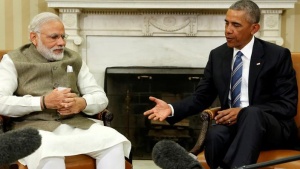
President Barack Obama welcomed Indian Prime Minister Narendra Modi to the White House for their seventh meeting since Modi took office in 2014, underscoring the warm relationship between the leaders and the world’s two largest democracies. Modi is to address the U.S. Congress on Wednesday.

“We discussed how we can, as quickly as possible, bring the Paris Agreement into force,” Obama told reporters. Climate change is a legacy issue for the U.S. president who leaves office in January.

India’s potential entrance into the agreement this year would help accelerate its enactment, perhaps years ahead of schedule. India is the world’s third-largest greenhouse gas emitter after China and the United States.

The two countries also welcomed preparations that could lead to the building of six nuclear reactors in India by U.S.-based Westinghouse, in what would be the culmination of some 10 years of work to resolve civil-nuclear issues.

The joint statement said India and the U.S. Export-Import Bank were working to complete a financing package for the project and that the Nuclear Power Corporation of India and Westinghouse had confirmed engineering and site design work would begin immediately.It said Westinghouse and the Nuclear Power Corporation of India would work toward finalizing the contract by June 2017 – a year later than Westinghouse’s chief executive, Daniel Roderick, said he hoped for in an interview with Reuters in late March.

Modi told an event organized by the U.S. India Business Council that relations between India and the United States were “closer than ever.” He said the planned reactor purchases would mark new era in nuclear and scientific cooperation.Modi’s address to a joint session of Congress will be a significant personal step. Although this has become a tradition for Indian prime ministers, he was once banned from the United States over massacres of Muslims.

More than 1,000 people, mostly Muslims, were killed in sectarian riots in Gujarat in 2002 when Modi had just become the state’s chief minister. Modi has denied any wrongdoing, and India’s Supreme Court in 2010 ruled there was no case.In the joint statement, the United States said it now recognized India as a “Major Defense Partner” and would work on technology sharing “to a level commensurate with that of its closest allies and partners.

“The text of a logistics agreement, which will allow the countries’ militaries to use each other’s land, air and naval bases, would be signed soon, a U.S. official said.

Tensions between the United States and Pakistan as well as regional concerns about China have served as a backdrop to increased security cooperation.Senator John McCain, chairman of the U.S. Senate Armed Services Committee, said the address to Congress was “entirely appropriate” given the new partnership.”

There’s no doubt there are significant tensions and challenges in the region, which argues for closer coordination between our militaries,” he said.While Modi is generally popular with U.S. lawmakers, they criticize what they see as lingering unfriendliness to U.S. firms and a stifling bureaucracy, in spite of Modi’s pro-business image. They also question New Delhi’s record on human rights.Modi got a boost on Tuesday when Amazon Inc AMZN.O Chief Executive Jeff Bezos said his company would invest an additional $3 billion in India, boosting its committed investment in the country to over $5 billion.

Source: In boost to Paris climate pact, India says it aims to join this year | Reuters

08/06/2016

Amazon Plans $3 Billion Investment in India – India Real Time – WSJ

Amazon.com Inc. plans to invest an additional $3 billion into India, which is emerging as a critical area of growth for the e-commerce giant.

Chief Executive Jeff Bezos announced the plan at a meeting of business leaders Tuesday with the Indian Prime Minister Narendra Modi in Washington. Amazon sees “huge potential in the Indian economy,” Mr. Bezos said in a statement.

The announcement brings Amazon’s total planned investment in India to $5 billion, since it announced a $2 billion infusion in 2014. An Amazon spokesman declined to provide details such as how the new funds would be allocated or over what period.

Amazon operates a pure marketplace in India, due to local rules, selling only goods offered through its website by third parties. It nonetheless has warehouse and delivery technologies there that are particularly attuned to the local market, where internet connectivity can be spotty or nonexistent and many consumers don’t have credit cards.

Source: Amazon Plans $3 Billion Investment in India – India Real Time – WSJ

07/06/2016

Here’s How Indians Are Rating Narendra Modi’s Programs – India Real Time – WSJ

Two years into his five-year term, Indian Prime Minister Narendra Modi is asking his countrymen to rate a series of initiatives undertaken by his government.

Among the top scorers so far: an effort expand and modernize the railways and a program to build more roads. Toward the bottom of the favorability rankings: Mr. Modi’s Clean India campaign, which, among other things, aims to get people to use toilets instead of defecating outside.

Mr. Modi has become known for introducing a series of high-profile initiatives, from Make in India, which seeks to promote manufacturing, to pledges to build scores of so-called smart cities across the country.Of 21,770 respondents who had participated in the online survey on the government’s mygov.in website as of Tuesday morning, 70% gave a five-star rating to the government’s efforts to upgrade the rail system. People are asked to grade programs on a scale of one to five.

In the latest federal budget, the government earmarked $17 billion to improve the state-run railroad. Wi-Fi services are being rolled out at stations. And late last year, a deal was struck with Japan to help build India’s first high-speed rail line between Mumbai and Ahmedabad.

The government’s efforts to build more highways and improve the condition of roadways have also been popular with the people. More than 65% of the respondents to the survey gave these initiatives a five-star rating. The target this year is to build 9,300 miles of highways.People taking the survey also seemed satisfied by the government’s attempts to make electricity more accessible.

One of the worst performing programs, according to the current results of the survey, which is ongoing, is Swachh Bharat Abhiyaan, or the Clean India Mission. Only 33% of the respondents gave it a five-star rating. About 16% gave it score of one or two.

India’s Competitiveness and Prosperity Rankings Rise Under ModiIn October, a year into the program, another national survey also hinted at the public’s disappointment with its impact. More the 70% of those polled in that survey said the availability of public toilets hadn’t improved and their cities hadn’t become cleaner.

Mr. Modi is no stranger to crowdsourcing. He regularly encourages Indians to submit their thoughts for his weekly radio show. Prior to delivering his speech on India’s Independence Day last year, he asked citizens to submit their suggestions on what they’d like to hear him speak about. And they did, in hordes.

Source: Here’s How Indians Are Rating Narendra Modi’s Programs – India Real Time – WSJ

04/06/2016

Dam completion signifies growing Indian influence in Afghanistan | Reuters

Prime Minister Narendra Modi visited Afghanistan on Saturday to mark the completion of a nearly $300 million hydroelectric dam project, the latest symbol of Indian investment in its South Asian neighbour.

The dam, originally built in western Herat province in 1976 before being damaged during the civil wars of the 1990s, was rebuilt by some 1,500 Indian and Afghan engineers, according to the Indian Ministry of External Affairs.

“It is symbol of our friendship and would usher in hope, light up homes, nourish the fertile fields of Heart and bring prosperity to the people of the region,” Modi said in a social media post as he departed for Afghanistan, the first stop on a five-country trip.

Afghan President Ashraf Ghani has nurtured closer ties with India in the past year as relations with Pakistan have deteriorated in the face of continued insurgent attacks and border tensions.

Afghanistan has walked a fine line as it accepts Indian aid, with Pakistan historically wary of any Indian influence in Afghanistan.

Salma Dam is another big step in deepening and broadening the relationship between Afghanistan and India,” Ghani said in a post on Twitter.

At more than 100 metres (330 feet) high and 540 metres (1,770 feet) wide, the dam is designed to generate 42 megawatts of power and help irrigate 75,000 hectares of land, according to Modi.

India has poured more than $1 billion into Afghanistan reconstruction projects and humanitarian aid, making it one of the largest donors to the war-torn country.

A new national assembly building in Kabul and major power line and road construction have been among the main projects funded by India.

Source: Dam completion signifies growing Indian influence in Afghanistan | Reuters

27/05/2016

Southern comfort | The Economist

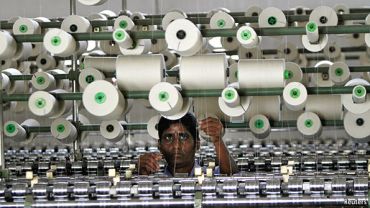
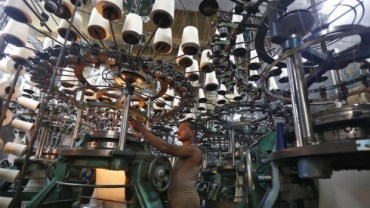
MAHATMA GANDHI would not have enjoyed Texfair 2016 in Coimbatore in the southern state of Tamil Nadu. The man hated machines and factories, and promoted Indian independence by urging every household to spin its own cotton yarn. But on display at the textile fair were bobbins, rollers, waste balers, quality-control sensors and much, much more.

Indeed, India is vying with China to be the world’s biggest producer of yarn, with over 45m spindles twirling around the clock. But what is striking about the trade fair is how so much of the modern wizardry on show is made not in better-known industrial centres around the world but in Coimbatore itself, a city of just 1.6m some 500 kilometres (310 miles) south-west of Chennai, the Tamil Nadu capital. In this section Pull the other one Taliban reshuffled Southern comfort Reprints Related topics Bharatiya Janata Party Tamil Nadu Kerala India

The fast-growing city is an inelegant sprawl stretching into groves of coconut palms. It teems with technical institutes, bustling factories and civic spirit. Earnest and ambitious, Coimbatore evokes the American Midwest of a century ago. A regional manufacturers’ group that was founded in 1933 during Gandhi’s homespun campaign has now designed, built and marketed a hand-held, battery-operated cotton picker that it claims is six times more efficient than human fingers.

Gandhi would have been appalled. But the gadget says something about the quiet success of parts of India’s deep south. Mill owners worry that with day wages in Tamil Nadu and neighbouring Kerala to the west now far higher than those in northern India, local cotton may grow uncompetitive. Tea planters in the hills west of Coimbatore are already squeezed. One landowner, in Kerala’s Wayanad region, where silver oaks shade trim ranks of tea bushes, says that his pickers get 300 rupees (about $4.50) a day, nearly three times the wage in Darjeeling in India’s north.

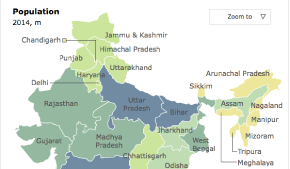
It may not sound like much, but it is also more than the average Indian earns. And as a whole, GDP per person in Tamil Nadu and Kerala is 68% and 41% higher respectively than the national average of $1,390 a year. With the south’s booming new industries, better education and higher wages contrasted with declining industries in the north and east, India is undergoing a shift a bit like the American one from the rustbelt to the sunbelt in the 1980s. Kerala shares in this new industrialisation less than Tamil Nadu, but that is balanced by another source of prosperity: remittances from abroad. As many as one in ten of Kerala’s 35m people work in the rich Arab countries of the Persian Gulf. Their remittances boost local incomes, property prices and demand for better schools. Kerala, under leftist governments for the past six decades, already has India’s best state education and its highest literacy rate. Its school district has again topped nationwide exams for 17-year-olds, followed by Chennai region, covering the rest of southern India.

Yet India’s deep south has not transmuted growing prosperity into greater political clout. It remains largely aloof from broader political trends, including a slugging match between the Bharatiya Janata Party (BJP), in office nationally under Narendra Modi, the prime minister, and Congress, the once-dominant centre-left party that worships Gandhi. In elections across four Indian states that wrapped up on May 19th, attention elsewhere focused largely on the fortunes of those two parties. The BJP’s capture from Congress of Assam in the north-east was seen as a big boost for Mr Modi. Congress’s failure to take any state was seen as a sign of decay.

Source: Southern comfort | The Economist

18/03/2016

We’re not gonna take it | The Economist

DELHI found itself under siege last month. Young men blocked roads and canals that feed people and water into the city. They looted, set fires and dragged women out of cars to rape them. The protesters, from a relatively privileged group of land-owning peasants called Jats, were agitating to be included in India’s list of “other backward classes”, which guarantees university places and government jobs.

Faced with dry taps, Narendra Modi’s government was eventually forced to concede to the demand.

This is the fury to which Somini Sengupta refers in the subtitle of her sharply observed study of India’s young, “The End of Karma: Hope and Fury Among India’s Young”. The median age in India is 27. Every month between 2011 and 2030, nearly 1m Indians will turn 18. Those coming of age this month were born well after the country started opening up its markets in 1991; they have spent their formative years in a world of optimism and rapid economic growth. But Ms Sengupta calls India “a democracy that makes promises it has no intention of keeping”. Advertisement

By 2030 the majority of Indians will be of working age. This could be what economists call a “demographic dividend”, creating a high worker-to-dependent ratio—or it could be a time bomb. India is producing nowhere near enough jobs for the tens of millions of young people joining the workforce every year.

The argument running through Ms Sengupta’s book, made of seven richly detailed portraits of young Indians, is both simple and beguiling. For centuries Indians born into wretched circumstances have accepted their lot as karma—punishment for misdeeds in past lives. This belief explains the persistence of the caste system, and the remarkable fact that a country that is home to one in three of the world’s poor has not come apart at the seams. But young people no longer accept karma, argues Ms Sengupta. Ideas of aspiration and free will have entered the Indian consciousness. Young Indians today demand the right to shape their own futures. If fury is in ample supply, so is hope.

Yet at every step the young are thwarted. It starts in the womb. A traditional preference for boys means that India has one of the most skewed sex ratios in the world: 1.13 boys for every girl, second only to China. (The ratio in America is 1.05.) One in three children under five is underweight. Nearly two-thirds of food meant for early-childhood feeding programmes is pilfered. A rare bright spot is education: in 2013, 96% of primary-school-age children were enrolled. But here, too, India fails its young. By the age of ten, only 60% of students can complete work at the level of a five-year-old. More than half cannot subtract.

Source: We’re not gonna take it | The Economist

29/02/2016

India unveils fire-fighting budget to placate voters, sustain growth | Reuters

The government unveiled a fire-fighting budget on Monday that seeks to win back support among rural voters for Prime Minister Narendra Modi‘s government and sustain growth against a grim global backdrop – all without borrowing more.

Finance Minister Arun Jaitley‘s third budget marked a strategic shift by addressing rural distress in a country of 1.3 billion, where two-fifths of families rely on farming and are reeling from two years of drought.

At the same time it hiked public investment in India’s woeful infrastructure by 22.5 percent, while taking further steps to revive corporate investment that Modi needs to create new jobs for India’s burgeoning workforce.

“We have a shared responsibility to spend prudently and wisely for the people, especially for the poor and downtrodden,” the 63-year-old finance minister told lawmakers in his 100-minute address.

India holds several state elections this year, including in the farming state of West Bengal, with the country’s most populous state, Uttar Pradesh, going to the polls in 2017. A strong showing will be vital to Modi’s chances of a second term.

Despite commanding a large majority in parliament’s lower house, Modi’s government has failed to pass several key measures since sweeping to power almost two years ago, raising doubts over the impact of its reform agenda.

Jaitley called Asia’s third-largest economy a bright spot in a gloomy global landscape, and reiterated a forecast that it would grow by 7.6 percent in the fiscal year that is drawing to a close.

Source: India unveils fire-fighting budget to placate voters, sustain growth | Reuters

23/02/2016

Angry victims heckle Haryana CM after Jat riots kill 19 | Reuters

A political ally of Prime Minister Narendra Modi was shouted down on Tuesday by a crowd angered by rioting in Haryana that destroyed businesses, paralysed transport and cut water supplies to metropolitan Delhi.

Photo

The chief minister of Haryana, Manohar Lal Khattar was heckled by local people in the town of Rohtak after they objected to his comments promising that they would receive compensation.

More than a week of unrest involving the Jat rural caste has challenged the authority of Modi, who was elected in 2014 with the largest majority in three decades but has publicly ignored the outburst of anger over a lack of jobs.

Although Jat leaders reached a deal late on Monday to end more than a week of protests that killed 19 people and injured 170, anger was still boiling among the victims whose livelihoods had been ruined.

Live TV pictures showed Khattar giving up his attempt to address angry people on the street. After retreating indoors to give an impromptu news conference, he repeated his promise of compensation only to be shouted down again.

Soon after Modi won national power, Khattar led his nationalist Bharatiya Janata Party to power in Haryana, a state of 25 million people, for the first time.

TRAIL OF DESTRUCTION

There was a trail of destruction through the town, one of several to be hit by Jat agitation to demand more government jobs and college places, with one Hyundai dealership gutted. Traders who staged an earlier sit-down protest said they had lost everything.

“I had two showrooms on the road; both were first looted and then set on fire. I have nothing left now,” Anil Kumar told Reuters Television.

Kumar appealed to Modi and to chief minister Khattar for compensation: “Are we not humans? Don’t our votes count? Why did they not have any mercy on us? Don’t we pay our taxes?”

Modi has remained silent through the worst social unrest of his 20 months in office. A senior government official said he would give a statement in due course to parliament, which convened for its budget session on Tuesday.

Finance Minister Arun Jaitley next week presents his annual budget. He is expected to announce big hikes in public sector pay that would make it hard to free up funds for investment without borrowing more money.

Thousands of troops were deployed to quell the protests, which flared on Monday near Sonipat when a freight train was torched and, according to reports, police shot dead three protesters. Jats also attacked buses in neighbouring Rajasthan.

Disruption has been huge, with at least 850 trains cancelled, 500 factories closed and business losses estimated at as much as $5 billion by one regional lobby group. India’s largest car maker, Maruti Suzuki, shut two factories at the weekend because its supply of components was disrupted.

The army on Monday retook control of a canal that supplies three-fifths of the water to Delhi, a metropolis with a population of over 20 million. A key sluice gate was reopened, but protesters sought to cut the water supply at another place.

“The canal was damaged by protesters and repair work will have to be done,” Delhi’s Water Resources Minister Kapil Mishra said. “The water crisis will continue for a few more days.”

Source: Angry victims heckle Haryana CM after Jat riots kill 19 | Reuters

20/02/2016

Leaders of Nepal and India mend fences after friction | Reuters

The leaders of Nepal and India have overcome mutual misgivings, India’s foreign secretary said on Saturday, after talks to ease tensions over Nepal’s recently-adopted constitution.

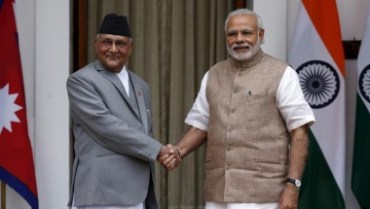
Nepal's Prime Minister Khadga Prasad Sharma Oli (L) shakes hands with his Indian counterpart Narendra Modi during a photo opportunity ahead of their meeting at Hyderabad House in New Delhi, India, February 20, 2016. REUTERS/Adnan Abidi

Prime Minister K.P. Oli visited New Delhi for talks with his Indian counterpart Narendra Modi after a months-long freeze in relations triggered by the grievances of plains dwellers in southern Nepal who have close historical ties to India.

Nepal, which moved from absolute to constitutional monarchy in 1990, made changes to its constitution to ensure greater participation of the Madhesi community in parliament.

But community leaders said the amendments failed to address their central fear that provincial borders would be redrawn in a way that would divide them.

“Our prime minister appreciated the progress made towards consolidation of constitutional democracy in Nepal,” Indian Foreign Secretary Subrahmanyan Jaishankar told a news briefing.

Source: Leaders of Nepal and India mend fences after friction | Reuters

20/02/2016

Pathankot Attack: Pakistan Begins Formal Police Investigation – India Real Time – WSJ

Pakistan has launched a formal police investigation into the alleged involvement of Pakistan-based militants in a deadly attack on an Indian air force base last month, senior government and police officials said Friday.

Six heavily-armed militants attacked the Pathankot air force base on Jan. 2, sparking a battle with Indian forces that lasted more than 40 hours, killed seven Indian security personnel and threatened to dismantle a tentative improvement in relations between Islamabad and New Delhi.

India suspected Pakistan-based Jaish-e-Mohammad, a U.S.-designated foreign terrorist group, was behind the Pathankot attack, and demanded Pakistan take action against the perpetrators.

Source: Pathankot Attack: Pakistan Begins Formal Police Investigation – India Real Time – WSJ

Law of Unintended Consequences

continuously updated blog about China & India

ChiaHou's Book Reviews

continuously updated blog about China & India

What's wrong with the world; and its economy

continuously updated blog about China & India