Posts tagged ‘New Delhi’

15/09/2014

India’s Economy Looks a Lot Like China’s — In 2001 – India Real Time – WSJ

India today doesn’t look quite like the economic dynamo that, just a few years ago, some predicted would overtake China as emerging-markets champion.

But the race looks a lot closer if you account for one key fact: China got a 13-year head start on India in opening its economy and giving companies greater freedom to invest and produce. In exports, capital spending and foreign investment, India today is remarkably similar to China circa 2001.

That should both console and concern India as it gets back on its feet after three years of weak growth and high inflation. Console, since it suggests the country’s economy could remain on a China-like trajectory for years to come. But concern, because India’s delay could mean that the country has missed out on some big advantages that catalyzed China’s boom.

The latter point is especially worth considering given how assiduously India’s recently elected prime minister, Narendra Modi, is working to follow the blueprint for China’s export- and investment-driven success.

When Chinese President Xi Jinping visits the Indian capital this week he will encounter a recipe for economic revival that ought to look very familiar. Delhi is aiming to boost exports and raise India’s share in world trade by 50% over the next five years. “Sell anywhere,” Mr. Modi said in an Independence Day exhortation to global business last month. “But manufacture here.”

via India’s Economy Looks a Lot Like China’s — In 2001 – India Real Time – WSJ.

15/09/2014

China on track to develop Indian railways as Xi heads to South Asia | Reuters

China will pledge to invest billions of dollars in India’s rail network during a visit by President Xi Jinping this week, bringing more than diplomatic nicety to the neighbors’ first summit since Narendra Modi became prime minister in May.

China's President Xi Jinping attends a meeting with Venezuela's President Nicolas Maduro at Miraflores Palace in Caracas in this July 20, 2014 file photo. REUTERS/Jorge Silva/Files

The leaders of Asia’s three biggest economies – China, India and Japan – have crisscrossed the region this month, lobbying for strategic influence, building defense ties, and seeking new business opportunities.

Beijing’s bid to ramp up commercial ties in India comes despite a territorial dispute that has flared anew in recent years, raising concerns in New Delhi, where memories of a humiliating border war defeat in 1962 run deep.

It follows a pledge by Japan to invest $35 billion in India over the next five years – including the introduction of bullet trains – and a drive to deepen security ties during talks earlier this month between Modi and Prime Minister Shinzo Abe in Tokyo.

India and China are expected to sign a pact that will open the way for Chinese participation in new rail tracks, automated signaling for faster trains and modern stations that India’s British-built rail system desperately needs, having barely added 11,000 km of track in the 67 years since independence.

China, which added 14,000 km of track in the five years to 2011, is also pushing for a share of the lucrative high-speed train market in India, which it says would be cheaper than Japanese proposals.

“India has a strong, real desire to increase its cooperation with China and other countries to perfect and develop its rail system, and has concrete cooperation ideas,” Assistant Chinese Foreign Minister Liu Jianchao told reporters ahead of Xi’s trip.

“India is considering building high-speed railways, and China has a positive attitude towards this.”

China’s consul general in Mumbai, Liu Youfa, told the Times of India last week that Chinese investment in the modernization of India’s railways could eventually touch $50 billion.

Beijing is looking to invest another $50 billion in building India’s ports, roads and a project to link rivers, part of an infrastructure push that Modi has said is his top priority to crank up economic growth.

Chinese investment will also help narrow a trade deficit with India that hit $31 billion in 2013.

via China on track to develop Indian railways as Xi heads to South Asia | Reuters.

11/09/2014

India and China in wary dance as Xi Jinping prepares for South Asia trip | South China Morning Post

Xi Jinping will start his first South Asia tour with a visit to Beijing’s latest investment in Sri Lanka, a US$1.4-billion port city development to include a marina and a Formula One track – all just 250km from India’s coast.

japan_denmark_tok332_45418663.jpg

The president’s trip to the site, next to a major Chinese-funded commercial port, will provide a vivid reminder of Beijing’s growing economic clout in India’s backyard ahead of his maiden visit to New Delhi next week.

Despite his hardline nationalist reputation, India’s Prime Minister Narendra Modi moved quickly to engage with traditional rival China after taking office in May, inviting Xi to India.

But he has also sought to stop India’s neighbours falling further into China’s embrace, choosing Bhutan and Nepal for his first foreign trips as prime minister and extending an olive branch of peace to arch-rival Pakistan.

That may not worry China too much. Modi’s close relationship with Tokyo, on the other hand, is likely to raise alarm bells in Beijing that analysts say he may be able to use to his advantage.

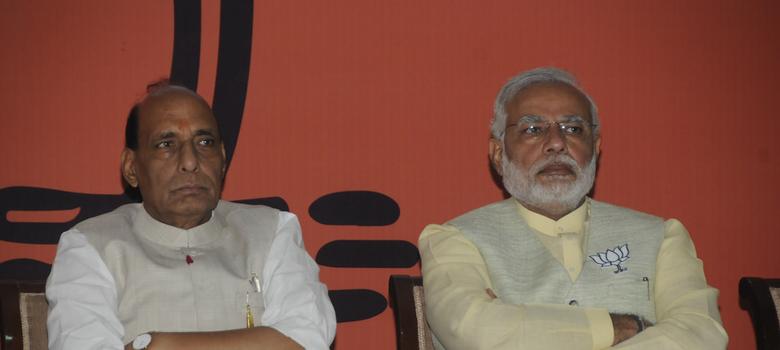
Indian Prime Minister Narendra Modi pictured in New Delhi earlier this month. Photo: EPA

Modi enjoys a particularly warm friendship with his Japanese counterpart Shinzo Abe, who welcomed him even as he was shunned by Western powers over claims he failed to stop deadly religious riots in Gujarat, the state he used to run.

Both India and Japan are wary of what many see as Beijing’s growing territorial assertiveness, and Washington is eager for them to step up their cooperation by way of counterweight to China.

“China is looking at India under Modi as a serious and credible partner as well as potential adversary.” POLITICAL ANALYST SHYAM SARAN

“China is concerned that we would get closer to Japan and to the US under Modi. They don’t want that to happen,” said Jayadeva Ranade, president of the Centre for China Analysis and Strategy in New Delhi.

via India and China in wary dance as Xi Jinping prepares for South Asia trip | South China Morning Post.

01/09/2014

Independence for Intelligence Bureau, tackling Maoism are Home Ministry’s biggest challenges

The Home Ministry is possibly the most crucial cabinet portfolio after the prime minister’s seat. Under Narendra Modi‘s leadership, veteran Bharatiya Janata Party stalwart Rajnath Singh bagged the coveted spot on Raisina Hill, an appointment that was widely predicted during post-poll speculation in the capital, New Delhi.

Singh played the part of Modi’s right-hand man for much of the former Gujarat chief minister’s gruelling campaign. But Singh did much more than help with Modi’s election trail; he was effectively Team Modi’s chief executive, managing the power games and personality clashes erupting in the party and, above all, placating the old guard’s resentment toward Modi’s popularity and apprehension about their status.

For many days after the BJP-led National Democratic Front swept the election, Singh said that he would be glad to continue as the party president and was not angling for a cabinet berth. Yet he got possibly the most important cabinet position, besides the prime minister’s, and accepted it with great alacrity.

But many people did advise him against moving to Raisina Hill’s North Block, where the ministry is located, and to stay on as the party president, a position they said was more powerful than a cabinet berth. But Singh has his own political ambitions and the cabinet berth certainly has greater national prestige.

Today, it’s unclear why exactly Modi’s right-hand man is in the government, especially after Singh’s outburst last week following reports that his son had been upbraided by the prime minister for allegedly accepting bribes in exchange for arranging police postings. The battle for that primacy is between Singh and Arun Jaitley, the finance minister who is doubling up as defence minister, both wily politicians who know how to navigate the BJP and its various spheres of influence.

via Scroll.in – News. Politics. Culture..

15/08/2014

Modi Targets Bureaucrats, Manufacturing and Toilets in Independence-Day Speech – India Real Time – WSJ

In his first Independence Day speech Friday, Indian Prime Minister Narendra Modi listed the issues he plans to focus on as the leader of the world’s largest democracy: bickering bureaucrats, women’s rights, manufacturing jobs, trash and toilets.

“You might say Independence Day is an opportunity to talk about big ideas and make big declarations. But sometimes, when these declarations are not fulfilled, they plunge society into disappointment,”said Mr. Modi, who is the South Asian nation’s first prime minister born after India gained independence from Britain 67 years ago. “That’s why I’m talking about things we can achieve in our time.”

Mr. Modi’s Bharatiya Janata Party was propelled to power by Indians who, hungry for better jobs and a higher standard of living, grew frustrated with slowing growth under the previous Congress-led government. Since coming to power in May, Mr. Modi has made some cautious policy moves, disappointing some of his supporters who had expected immediate and bold change from his administration.

Addressing the nation from the ramparts of New Delhi’s regal Red Fort Friday, Mr. Modi said he plans to set the government in order and stop bureaucratic squabbling, underlining his focus on administrative processes rather than economic overhauls. As “an outsider” to New Delhi, he said, he has been shocked since taking office to find that “there were dozens of governments inside the government,” each with “its own fiefdom.”

“Departments are fighting each other, suing each other in the Supreme Court,” Mr. Modi said. “How can they move the country forward?”

In his nearly hour-long speech delivered largely in Hindi, Mr. Modi reiterated his focus on making India a global manufacturing hub and export powerhouse.

Offering a new slogan in English, “Come, make in India,” Mr. Modi invited the world to come to India to manufacture.

“Sell anywhere in the world but make it here,” he said. “Electricals to electronics, chemicals to pharmaceuticals, automobiles to agro-products, paper or plastic, satellites or submarines — Come, make in India.”

Mr. Modi questioned why India needs to import “every little thing,” and urged the country’s youth to open factories and export goods.

Manufacturing makes up only around 15% of India’s gross domestic product as most of its rapid expansion over the last decades has come from the service sector. During spring elections the BJP said it planned to create millions of new jobs if elected. Economists say one of the best ways India can generate employment is through exports.

While India’s labor costs are among the lowest in the world, it has consistently failed to become an export powerhouse like China and Asia’s other largest economies.

Prime Minister Modi also announced initiatives aimed at modernizing India: a nationwide drive for cleanliness that would boost tourism, a program for parliamentarians to transform villages, one by one, into “model villages,” encouraging politicians and companies to build more toilets so people don’t have to use the outdoors and a push to open bank accounts for all Indians.

Mr. Modi also used his speech to address an issue the new opposition has been demanding discussion on: religious violence. A Hindu nationalist leader accused of not doing enough to stop communal violence in the state of Gujarat in 2002 when he was chief minister there, Mr. Modi Friday urged Indians to stop communal fighting. Just this week, opposition parties accused the BJP of polarizing Indians on religious lines and analysts have blamed Mr. Modi of not addressing recent tensions.

“Who benefits from this poison of communalism? It is an impediment to growth,” Mr. Modi said. “Let us choose peace instead and see how it propels our nation forward.”

via Modi Targets Bureaucrats, Manufacturing and Toilets in Independence-Day Speech – India Real Time – WSJ.

08/08/2014

Rats On Planes — A Distressingly Common Problem – India Real Time – WSJ

After a rat was discovered aboard an Air India Ltd. plane at the Delhi airport, a spokesman for the country’s state-owned flag carrier said rodent stowaways are a “rare occurrence.”

If only that were true. In fact, rats and other pests often find their way onto jetliners in India and around the world.

With thousands of flights each day handling large quantities of food for passengers as well as baggage, rodents and insects sometimes manage to hitch a ride on food catering trucks or luggage trollies to get inside planes despite hygiene checks.

“We get requests to fumigate four or five planes each month,” said an official of India’s state-run Central Warehousing Corp., which offers pest-control services to airlines, ports, railways, shipping companies and government offices in India.

The official, who declined to be named, said Central Warehousing offers two types of pest treatment to airlines. The most common is spraying pesticides inside aircraft cabins to keep out mosquitoes, cockroaches and other insects.

“The second is fumigation and it is done only when a rat or rat droppings are spotted inside an aircraft,” he said.

Fumigating an aircraft isn’t easy. The plane needs to be isolated, sealed and then pumped full of lethal gas. After about six hours, the aircraft is ventilated to clear the toxic fumes.

The official said the fumigation procedure was carried out on the Air India Airbus A321 that had rodent issues this week. The official said he wasn’t sure whether there was one or more rats inside the plane.

An Air India official had said there was only one rat inside the Airbus A321 jet when it landed at New Delhi on a flight from the eastern metropolis of Kolkata. He denied a Times of India report that said there were “scores” of rats inside the plane.

Pests afflict all airlines. A pest-control company in Southeast Asia said his company has helped clear rats out of planes belonging to two Asian airlines. But airline companies like to keep such matters quiet, and often ask exterminators to sign confidentiality agreements, he said.

The Central Warehousing official said the company’s pest control business for Indian carriers suffered a setback after Kingfisher Airlines stopped flying in 2012 but is now optimistic that business will rebound as new airlines like AirAsia India Pvt.  and Tata SIA Airlines Ltd. set up base in the country.

via Rats On Planes — A Distressingly Common Problem – India Real Time – WSJ.

06/08/2014

Insurance Bill Struggle Pokes Another Hole in the Notion of Modi Magic – India Real Time – WSJ

The new government in New Delhi is struggling this week to get an insurance-industry liberalization bill— an important part of its campaign to revamp the economy—to the floor of the upper house of Parliament.

Opening up the insurance business to more foreign investment was one of the main deregulation measures unveiled in Prime Minister Narendra Modi’s first budget last month.

But already it is bogged down. Mr. Modi’s Bharatiya Janata Party does not control the upper house and other parties want to stall a vote on the bill.

The legislative tussle is a sign of the challenges Mr. Modi faces, despite his party’s landslide electoral victory and the BJP’s lower-house majority, as he tries to push through even modest changes in the way India manages its economy.

Mr. Modi swept to power this spring on a surge of anti-incumbency sentiment and hope that the BJP could break the policy deadlock in the capital. Supporters expected Mr. Modi bring the “achche din,” or good days, back to Asia’s third-largest economy.

But India’s complicated national politics, its decentralized federal system and Mr. Modi’s own desire not to get too far ahead of public opinion in a country long used to large-scale welfare schemes and a heavy state hand in the economy, is likely to slow any change.

The new administration’s national budget, announced in July, was bland and disappointing to many. It did not include the kind of big-bang reforms many optimists had anticipated.

In response to criticism of the budget, India’s new Finance Minister Arun Jaitley told a television news channel that the government is waiting for the right time to implement some changes.

“You don’t do reforms in a manner that the political system is unwilling to accept them,” Mr. Jaitley said during a July interview on Headlines Today. “The more challenging ones, you go on that course in times to come.”

Last week, Mr. Modi’s government blocked an important trade agreement that all 160 members of the World Trade Organization—including India—had agreed to in December. India demanding more freedom ratchet up market-distorting food subsidies.

“This is an inauspicious start for the new Modi government,” said Orrin Hatch, a Republican U.S. senator from Utah and member of the Senate Finance Committee in response to India’s decision.

M. J. Akbar, a BJP spokesman, says the party is happy with its progress. He said the government has focused on dealing with inflation, encouraging growth and reaching out to neighboring countries.

“On the insurance bill, the government has shown complete firmness in pushing it through,” and will use a joint-session of Parliament to vote on it if the upper house refuses, he said.

Still, the gradual deflation of the Modi bubble can be seen in the stock and currency markets. The benchmark Sensex index, has basically been going sideways for the last two months, after a sharp run up as the scale of Mr. Modi’s election win became clear.

The rupee has also been giving up some of this year’s gains against the dollar.

Of course the less excitable analysts and executives have always said the complexity of running the world’s largest democracy means that decision making will remain a slow and often painful process, even with a majority in the lower house of Parliament.

Many of the biggest challenges to improving the lives for India’s 1.2 billion citizens—such as reducing corruption, building modern infrastructure and providing hundreds of millions of good jobs–will take years, if not decades, surmount, even with the right policies and a charismatic leader.

“If a handful of people decide that (the progress so far) is insufficient, we have to ignore them and recognize that the majority of India is both relieved that the return of governance as well as the return of hope,” said the BJP’s Mr. Akbar. “Files are being cleared after ages of stagnation.”

–Prasanta Sahu contributed to this story.

via Insurance Bill Struggle Pokes Another Hole in the Notion of Modi Magic – India Real Time – WSJ.

25/07/2014

What Happened to India’s Girls? A New U.N. Report On Sex Selection Offers Some Answers – India Real Time – WSJ

India’s census data consistently shows two things: the country’s inexorably expanding population and its deep preference for sons over daughters.

A new United Nations study takes a deep look at how parents keep choosing boys over girls, despite laws that seek to block the use of ultrasounds and other pre-natal tests to determine the sex of an unborn child.

India’ child sex ratio – the number of girls for every 1,000 boys under the age of 6 — has deteriorated sharply over the past 20 years, dropping to 918 in 2011 from 945 in 1991.

India’s sex gap “demonstrates that the economic and social progress in the country has had minimum bearing on the status of women and daughters in our society,” said Lakshmi Puri, an Indian who is a U.N. assistant secretary general.

Here are five significant takeaways from the U.N. study, written by Mary E. John, a senior fellow at the New Delhi-based Centre for Women’s Development Studies.

Improvements in the Overall Sex Ratio are More Nuanced Than You Think

Since 1991, the number of women per 1,000 men has been rising, though it remains far below normal. In 1991, there were 927 women for every 1,000 men. In 2011, the year of the most recent census, that number had risen to 943. The U.N. study argues that much of the improvement isn’t because fewer girls are being born and surviving into adulthood. In India, in the past, women had a shorter life expectancy than men – unlike the situation in most of the rest of the world. That has changed. Indian women now outlive men, in part because of lifestyle changes and “diseases that take a greater toll on” men.

via What Happened to India’s Girls? A New U.N. Report On Sex Selection Offers Some Answers – India Real Time – WSJ.

17/07/2014

Indian eatery run by murder convicts praised for politeness, hygiene – India Insight

As India’s capital baked under a heat wave this month, banker Gaurav Gupta sat down for lunch at a new air-conditioned restaurant, and was greeted by a smiling waiter who offered him chilled water and took his order — a traditional “thali” meal of flatbread, lentils, vegetables, rice and pickle.

Nothing unusual, except that the employee, like most of his co-workers, is a convicted murderer serving time in South Asia’s largest prison complex.

“Tihar Food Court” on Jail Road in west Delhi is part of a wide range of reform and rehabilitation initiatives undertaken at the Tihar prison. It opened in the first week of July on an “experimental basis” while waiting for formal clearances, and is located half a kilometre from the prisoners’ dormitories.

With a spacious interior lined with gleaming wooden tables and walls adorned with paintings by prisoners, the 50-seat restaurant is coming in for praise from customers, especially for being clean and for the polite behaviour of its employees, who were trained by the Delhi Institute of Hotel Management, an autonomous body under the state government.

“The food is average. But the hygiene factor is really good, very clean. And it’s a good thing they are employing prisoners,” said Gaurav Gupta.

via India Insight.

Law of Unintended Consequences

continuously updated blog about China & India

ChiaHou's Book Reviews

continuously updated blog about China & India

What's wrong with the world; and its economy

continuously updated blog about China & India