Posts tagged ‘Ningxia’

29/09/2016

Chinese Tourists Encouraged to Behave Ahead of Mass Vacation – China Real Time Report – WSJ

Urinating on the streets of Hong Kong? Hurling hot water at flight attendants? Stealing wood from Lovers’ Beach in Thailand?
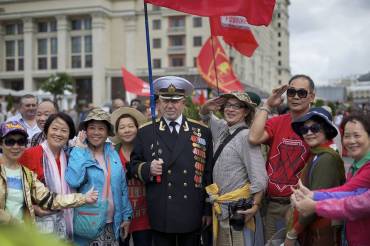
These are the kind of mainland-Chinese tourist antics that the motherland is looking to stub out ahead of the week-long national holiday known as Golden Week, when throngs of citizens travel both domestically and abroad.

To help them do so, the China National Tourism Administration and one of China’s dominant online travel firms, Ctrip.com International, are teaming up to find model tourists to promote travel behavior worthy of emulation—and national recognition.

“Civility of Chinese tourists is an important indicator of a country’s soft power and one of the major ways to export a country’s influence,” the tourism administration’s Vice Chairman Wang Xiaofeng said at an event announcing the campaign.

The two organizations, along with state-run newspaper China Daily, are asking the Chinese public to provide examples of what they think is model traveler decorum. Ctrip will give gifts to exemplary participants, such as free travel products and company souvenirs, said Ctrip senior director of investment relations Zhou Shiwei.

“The campaign is about changing the perception of Chinese travelers,” he said. “We definitely want Chinese travelers to be well-received abroad.

”Examples include pictures of Chinese soccer fans who picked up trash in Seoul, even after the Chinese men’s team lost to South Korea earlier this month, or photos of Chinese tourists patiently waiting in line.Ctrip says the campaign is aiming to publish a compilation of guidelines and pictures suggested by Chinese netizens during Golden Week. Chinese tourists can upload pictures via Chinese social-media network Weibo, and to the China Daily website. It is unclear how the photos will be verified.More than 600 million Chinese are expected to travel abroad in the next five years, as China’s middle class grows and visa restrictions ease in some countries welcoming Chinese spending. Last year, about 120 million Chinese traveled overseas—10% more than in 2014, according to the national tourism administration.

Domestically, tourism generated about $620 billion last year, with more than four billion trips taken.

The campaign, entitled “Good Chinese Tourists,” is an addition to other recent efforts the government has put forth to curb travel misbehavior. Last year, it unveiled new measures that allow authorities to track the bad habits of wayward tourists for up to two years.

The tourism administration also recently published a guidebook on civilized tourism, in which it urges tourists to refrain from spitting and littering—common practices back home—and to take photographs only where permitted. “Do not chase, beat or feed animals,” it adds. “Do not be greedy with complimentary items.

”For traveling abroad, the guide includes recommendations that cutting in line is “shameful wherever you are” and suggests that tourists “not leave footprints on toilet seats.”

Source: Chinese Tourists Encouraged to Behave Ahead of Mass Vacation – China Real Time Report – WSJ

07/02/2014

Internal trade: It’s a continent, actually | The Economist

China’s external imbalances are as nothing compared with its internal ones

Feb 8th 2014 | HONG KONG AND YINCHUAN | From the print edition

NINGXIA, an autonomous region in China’s north-west, is home to 6.3m people. About a third of them are Muslims, descendants of travellers along the Silk Road. The region is keen to revive the kind of trade networks that created its unique ethnic mix, so that it can diversify an economy which relies too much on coal, metals and chemicals.

In that regard Ningxia is hoping to sell nutritious goji berries to people worried about their bodies, certified halal foods to Muslims worried about their souls, and fine red wines to people relaxed about both. If these schemes succeed, they will help Ningxia to close its big trade gap with the rest of the world—and the rest of the country.

China trades more goods across its international borders than any other country. Its provinces also trade a lot with each other, but this trade is far from balanced. If each of China’s provinces were treated as an independent economy, they would record enormous trade deficits and surpluses with the rest of the country and the world (see chart).

The biggest deficit, in absolute terms, in 2012 was recorded by the central province of Henan, out of which China’s civilisation sprang and into which flowed goods and services worth a net 580 billion yuan ($96 billion). In relative terms, however, the widest deficits appear in China’s western provinces. Ningxia’s deficit amounted to almost 40% of its GDP, bigger than the current-account deficit of any actual country. Even wider trade gaps were recorded in Qinghai, Yunnan and Tibet.

These deficits reflect the government’s “Go West” campaign, an effort to invest in the infrastructure of the west. Net “imports” from the rest of China and beyond allow poor provinces to spend more on consumption and investment than they earn. Ningxia’s investment rate was 89% of GDP in 2012. In Tibet, the “roof of the world”, the investment rate was through the ceiling at 101% of GDP.

Signs of investment are everywhere in Ningxia’s capital, Yinchuan. Foreign firms are helping to build a posh hotel and mall, shaped like a flying dragon, which will attract international brands. But not everything is imported. The coal, piled around the dormitories where the labourers live and cook, is local.

via Internal trade: It’s a continent, actually | The Economist.

Enhanced by Zemanta
24/11/2013

Between a desert and a dry place: Beijing’s green projects drain scarce water resources | South China Morning Post

Smog-plagued Beijing is anxiously awaiting its first batch of synthetic natural gas – a material converted from coal and piped 300 kilometres from Heshigten Banner in northeastern Inner Mongolia.

dd1245bc3340c9e42496ea52f72724a2.jpg

The gas will power some of Beijing\’s central heating systems in the harsh winter months, replacing coal to cut harmful emissions of particulate pollutants.

When the pipes are fully pumping next year, Beijing will receive 4 billion cubic metres of synthetic gas a year – nearly half of last year\’s natural gas consumption – a step towards switching all the city\’s heating systems and industrial boilers from coal to gas.

But there is an ominous tinge to the seemingly green investment: environmental experts say the water-intensive conversion process could drain already scarce water resources in the country\’s drylands in the northwest, eroding land and causing more sandstorms.

\”If water depletion continues … not only will the local people suffer, the environmental impact could be profound,\” Chinese Academy of Sciences ecology researcher Xie Yan says.

Nationwide, replacing dirty coal with cleaner natural gas is a key measure in reducing the choking smog that spreads over more than a quarter of the country and is inhaled by nearly 600 million people. Because of the country\’s limited conventional natural gas and abundant coal reserves, converting coal to natural gas seems a convenient choice.

Beijing\’s demand for natural gas is expected to rise rapidly, reaching 18 billion tonnes in 2015 and 28 billion tonnes in 2020, as all its heating systems and industrial boilers make the switch from coal to gas. Beijing Gas Group, which is fully owned by the municipal government, has invested in the coal-to-gas project in Inner Mongolia to meet the demand.

The coal-to-gas industry, which had been sputtering for several years, received a boost in September when the State Council released a national action plan to fight air pollution, giving the sector explicit support.

But ecological experts have voiced concern for the unintended environmental consequence of coal-to-gas plants. The conversion requires vast quantities of water not just for production, but also for cooling and the removal of contaminants. On average, one cubic metre of synthetic natural gas needs six to 10 tonnes of freshwater.

\”Freshwater is a key raw material for turning coal to gas, so it\’s impossible to reduce water demand in such projects,\” Wen Hua, an associate at the US-based World Resources Institute (WRI), says.

To make things worse, the coal-abundant northwest, where the gas projects are based, already experiences chronic water shortages. Five provinces – Shanxi , Shaanxi , Ningxia , Inner Mongolia and Xinjiang – which possess 76 per cent of the country\’s coal reserves, have just 6.14 per cent of its total water resources.

via Between a desert and a dry place: Beijing’s green projects drain scarce water resources | South China Morning Post.

08/10/2012

* More Chinese Muslims head for Mecca pilgrimage

Xinhua: “A total of 332 Muslims from northwest China’s Ningxia Hui Autonomous Region flew to Mecca, Saudi Arabia Sunday evening for the annual pilgrimage.

This is part of the government-organized pilgrimage tours that will carry 13,800 Chinese Muslims via 41 charter flights to the holiest city of Islam this year.

Previously, more than 2,700 Muslims from neighboring Gansu Province had flown to Mecca in eight groups.

In Ningxia, one of major regions inhabited by Muslims in China, 2,676 Islamic followers will go on the pilgrimage this year, according to Li Yushan, vice president of the regional Islamic association.

The Mecca pilgrimage, also known as the Hajj, is a Muslim religious tradition that specifies that all able-bodied Muslims who can afford to travel to Saudi Arabia must visit Mecca at least once in their lives.

China has more than 20 million Muslims, about half of whom are from the Hui ethnic group. In addition to Ningxia, Chinese Muslims mainly live in the western provinces of Qinghai, Gansu and Yunnan, and Xinjiang Uygur Autonomous Region.”

via More Chinese Muslims head for Mecca pilgrimage – Xinhua | English.news.cn.

Law of Unintended Consequences

continuously updated blog about China & India

ChiaHou's Book Reviews

continuously updated blog about China & India

What's wrong with the world; and its economy

continuously updated blog about China & India