Posts tagged ‘Pakistan’

25/11/2014

India-Pakistan Sparring Opens Door for China in South Asia – Businessweek

For a senior Afghan diplomat sitting in India’s capital, it’s easy to explain how a region with a quarter of the world’s people can account for only five percent of global trade.

Narendra Modi and Xi Jinping

“India and Pakistan need to overcome their problems,” M. Ashraf Haidari, deputy chief of mission at Afghanistan’s embassy in New Delhi, said in an interview ahead of this week’s meeting of the South Asian Association for Regional Cooperation, or SAARC. “Summits happen, leaders come, there’s all this consensus and declarations announced. But unfortunately it doesn’t happen in reality.”

As leaders of eight SAARC countries meet in Nepal this week for the first time since 2011, Indian Prime Minister Narendra Modi has more reasons than ever to turn the bloc into a regional force to counter China’s growing influence in South Asia. Doing so will require him to overcome differences with Pakistani leader Nawaz Sharif.

So far, things aren’t looking good. Modi’s government scrapped talks with Pakistan in August, which was followed by the worst border fighting between the countries in a decade. At the same time, China has promised SAARC nations part of a $40 billion Silk Road fund to finance infrastructure investments.

“SAARC won’t be able to counter China’s influence,” said Nishan de Mel, executive director and head of research at Colombo-based Verite Research Pvt., a policy research group. “China tends to have an approach that isn’t too demanding and isn’t politically difficult for the partner country and where the partner country will tend to see benefits quite quickly. India’s approach tends to be more hard-nosed.”

via India-Pakistan Sparring Opens Door for China in South Asia – Businessweek.

22/11/2014

China commits $45.6 billion for economic corridor with Pakistan | Reuters

The Chinese government and banks will finance Chinese companies to build $45.6 billion worth of energy and infrastructure projects in Pakistan over the next six years, according to new details of the deal seen by Reuters on Friday. The Chinese companies will be able to operate the projects as profit-making entities, according to the deal signed by Prime Minister Nawaz Sharif during a visit to China earlier this month.

At the time, officials provided few details of the projects or the financing for the deal, dubbed the China-Pak Economic Corridor (CPEC).

The deal further cements ties between Pakistan and China at a time when Pakistan is nervous about waning U.S. support as troops pull out of Afghanistan.

Pakistan and China, both nuclear-armed nations, consider each other close friends. Their ties are underpinned by common wariness of India and a desire to hedge against U.S. influence in South Asia.

via China commits $45.6 billion for economic corridor with Pakistan | Reuters.

03/11/2014

Wagah Border Flag Ceremony a Casualty of Pakistan Bomb Attack – India Real Time – WSJ

At sunset each day, before the only road crossing between India and Pakistan closes for the night, a military spectacle takes place in which forces from both countries come face-to-face and goose-step to goose-step at the Wagah border for an elaborate flag-lowering ceremony.

On Sunday, as spectators there headed for home, a suicide bomber on the Pakistan side detonated a device that killed dozens and more than 100 injured.

In response, India has now put on hold the ceremony that has taken place for six decades since the creation of Pakistan, according to officials from India’s Border Security Force, a paramilitary force responsible for guarding the country’s land border.

For at least three days the border will close without fanfare, officials said.

The Wagah border is about 14 miles from Lahore. The ceremony, known as ‘Beating Retreat’, attracts thousands of Indians and Pakistanis  as well as a few bemused-looking foreign tourists to the tiered seating on each side of the border and the place echoes to cheers  “Long live India” and “Long live Pakistan” as each side tries to outdo each other.

The south Asian nuclear-armed neighbors have had frosty relations since the partition of the Indian subcontinent in 1947, and have fought three wars over the Himalayan territory of Kashmir, which both sides claim. Sunday’s suicide attack comes amid increased tensions between India and Pakistan after a resurgence of cross-border shooting at the disputed frontier in the Kashmir region.

Despite India and Pakistan’s rocky past and fractious present, the Wagah border ceremony is full of good-natured nationalistic pomp. If you want to get a sense of the atmosphere, think changing of the guard crossed with a baseball game.

The ritual begins with the sound of bugles blown together by military guards on both sides followed by a parade – a well-coordinated, energetic military display of competitive high-kicking put together by members of India’s Border Security Force and the Rangers of Pakistan.

Representatives from each side take it in turns to shout at the top of their voices and for as long as they can into a microphone in what could be described as a yell-off.

The end is marked by the lowering of the flags as soldiers shake hands across the divide between the hostile neighbors, before the border gates are slammed shut.

via Wagah Border Flag Ceremony a Casualty of Pakistan Bomb Attack – India Real Time – WSJ.

19/10/2014

After border row, India, China plan counter-terror drills to build trust | Reuters

India, which under Prime Minister Narendra Modi has struck an assertive national security posture, also agreed to China’s request to move next month’s exercises away from the border with Pakistan with which China shares a close relationship.

The manoeuvres will come just weeks after thousands of Indian and Chinese soldiers confronted each other on their de facto border in the western Himalayas, accusing each other of building roads and observations posts in disputed territory.

“The exercises are a confidence-building measure, it is in everyone’s interest,” Jayadeva Ranade, the China specialist on India’s National Security Advisory Board, told Reuters.

“It doesn’t mean anyone is conceding anything.”

The row in the Chumar sector of the Ladakh region erupted just as China’s President Xi Jinping was visiting New Delhi for his first summit with Modi since the Indian leader’s election in May. The leaders of the Asian giants aim to ramp up commercial ties.

India sees the anti-terrorism collaboration with China as a way to highlight the threat they both face from Islamist militants in Pakistan.

It had arranged for the Chinese to practise mock assaults in Bhatinda, about 110 km (70 miles) from the Pakistan border.

via After border row, India, China plan counter-terror drills to build trust | Reuters.

05/09/2014

Nawaz Sharif attempts mango diplomacy to placate Modi

Pakistan government keen on reigniting diplomatic ties with India

Pakistan Prime Minister Nawaz Sharif on Thursday sent a package of special mangoes from his country through “official channels” to his Indian counterpart Narendra Modi. This move is seen in Indian diplomatic circles as Pakistan’s initial attempt to rectify the damage caused by its High Commissioner Abdul Basit’s meetings with separatist leaders from Kashmir last month. In response to these meetings, India had cancelled foreign-secretary levels talks with Pakistan scheduled for August 25. Meanwhile, there is speculation that Modi and Sharif might conduct bilateral talks on the sidelines of the United Nations General Assembly summit in New York later this month.

via Scroll.in – News. Politics. Culture..

20/08/2014

Why decades of India-Pakistan negotiations have not resulted in any real progress

It’s simple. Pakistan wants something India has, but can offer nothing in return that India desires.

It took less than three months for the candle of hope lit by Narendra Modi and Nawaz Sharif at the Indian prime minister’s inaugural ceremony in Delhi to be extinguished. India has cancelled foreign secretary-level talks scheduled to be held in Islamabad next week because Abdul Basit, the Pakistani High Commissioner, met a few separatist leaders. It’s not as if Basit did anything illegal or novel. Kashmir being the apple of discord between India and Pakistan, it is natural for Pakistan’s envoy to consult with secessionist Kashmiris before an important round of bilateral discussions. It has been done many times before. On this occasion, though, the Modi government threw a hissy fit, which is being spun by pliant commentators as a “tough approach”.

The extinguishing of hope was predictable, and followed directly from the mistake of inviting Nawaz Sharif to Delhi. The two prime ministers should have met only when they had something serious to decide upon, after the spadework for an agreement, however minor, had been completed. The euphoria of the inauguration handshake created expectations difficult to fulfill, considering the deeply entrenched and entirely incompatible views of the opposing sides.

The fact that Narendra Modi is no Atal Behari Vajpayee turned Mission Difficult into Mission Impossible. Vajpayee was committed to a legacy-defining vision of securing lasting peace with Pakistan. There was a tiny possibility that he might have accepted the sacrifices essential for it, and convinced his party and the nation to go along. In the reign of Modi, whose idea of India is the most aggressive of any leader since independence, such a sacrifice is inconceivable.

Give and take

Any successful negotiation requires give and take from both sides. The stumbling block to resolving the Kashmir issue is that Pakistan wants something India has, but can offer nothing in return that India desires. Although the official positions of the two sides indicate that each is in occupation of territory that rightfully belongs to the other, in reality India has no use for that part of Kashmir we call POK. Nor has anybody in POK expressed a will to secede from Pakistan and join India. In any conceivable deal, then, India can only lose territory. The abstract peace dividend doesn’t provide anything close to adequate compensation for this physical loss. Which is why India has negotiated in bad faith for decades.

In 1972, the two nations signed the Simla Agreement, resolving not to wage further wars, and to address speedily the issue of Kashmir. In 1999, through the Lahore Declaration, we agreed essentially to the same things, tacking on a promise not to nuke each other. But for over 40 years, through cycles of violent insurrection and relative calm, through dozens of horrific terrorist attacks and thousands of peaceful demonstrations, through periods of sectarian amity and passages of ethnic cleansing, India’s position on the issue hasn’t budged an inch, down to the proscription of any maps that show Pakistani Kashmir for what it really is.

Why would any Indian politician risk negotiating in earnest, when it is clear that Indians in general do not give a fig for what Kashmiris actually want? We are happy to let our security forces commit crimes shielded by the Armed Forces Special Powers Act. We are content to pour billions of rupees into defending an icy wasteland where our soldiers regularly die of exposure. We are barely moved by the discovery of unmarked graves in which thousands of Kashmiris were secretly and hastily buried.

via Scroll.in – News. Politics. Culture..

14/08/2014

War of Words Erupts Between India and Pakistan – India Real Time – WSJ

An all-to-familiar war of words has erupted between India and Pakistan, threatening to undo efforts to bridge the gap between the estranged neighbors, who have fought three wars since independence from Britain 67 years ago.

The latest rhetorical salvo was fired Wednesday by India’s foreign ministry, which said “mere denials or selective approaches toward terrorism” by Pakistan wouldn’t assuage Indian concerns about what it sees as backing from Islamabad for Islamic terror attacks on Indian soil.

This week’s bickering started when Indian Prime Minister Narendra Modi, on a visit to the disputed state of Jammu and Kashmir on Tuesday, said Pakistan, too weak to fight a conventional war, was using terror groups to wage a “proxy war against India.”

Pakistan’s Foreign Ministry the next day denounced Mr. Modi’s criticism as “baseless rhetoric.”

“It would be in the larger interest of the regional peace that instead of engaging in a blame game, the two countries should focus on resolving all issues through dialogue,” Pakistan’s foreign ministry said.

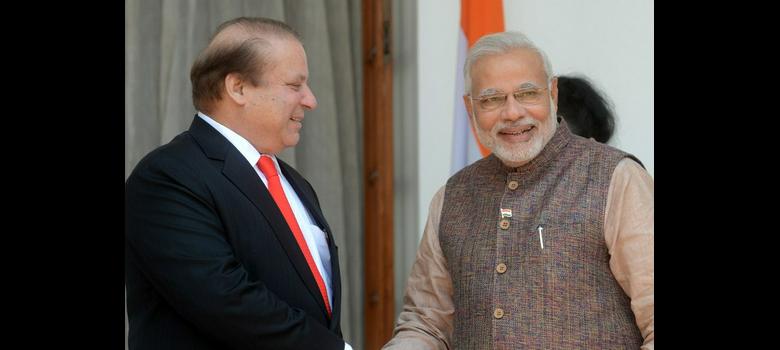
It wasn’t supposed to be like this. When Indian Prime Minister Narendra Modi invited his Pakistani counterpart, Nawaz Sharif to Delhi for his swearing-in ceremony, it ignited hope for better relations between the estranged neighbors.

The two countries’ foreign secretaries are scheduled to meet in Islamabad on Aug. 25 to “look at the way forward” in the bilateral relationship. But the current spat could cast a shadow over the meeting.

That poses a problem. Deep-rooted suspicion between India and Pakistan has stymied attempts at achieving greater economic integration and better connectivity in the region. Relations between India and Pakistan, a close ally of neighbouring China, also have a major impact on regional stability.

via War of Words Erupts Between India and Pakistan – India Real Time – WSJ.

09/08/2014

China builds friendship railway to link Pakistan | The Times

In a park outside Islamabad, fountains tinkle beneath the huge glass façade of the new Pakistan-China Friendship Centre. “Pakistan China friendship is as high as the Himalayas, as deep as the ocean and sweet as honey,” declares a hoarding above an escalator, which grinds to a halt intermittently due to the country’s chronic power shortages.

Nanga Parbat mountain

Next month, China’s President Xi Jinping will arrive here to finalise plans to turn this gushing propaganda into reality by building a 1,800km railway that would, for the first time, directly link Beijing to Islamabad via its eastern province of Xinjiang. Stretching to Pakistan’s biggest city of Karachi, and beyond to a Chinese-built deep-sea port at Gwadar on the Gulf of Oman, the railway would bore through some of the world’s highest peaks in the Karakoram sub-range of the Himalayas.

“China has a new focus on this region,” beams Senator Mushahid Hussain Sayed, the chairman of the Pakistan China Institute, who says the railway will be a “game changer” and the most ambitious part of a Chinese plan to reboot the area’s troubled economy and open up its own western flank to development. After years of war and terrorism, Pakistan has suffered an exodus of foreign cash and expertise, but with Beijing now splashing out $32 billion on more than 120 projects in Pakistan over the next seven years, the number of Chinese living and working in the country has leapt to from 3,000 in 2008 to nearly 15,000.

Chinese workers are dredging Karachi’s port complex, and building a giant hydroelectric dam at Bunji on the Indus River, a highway linking Lahore to Karachi, and nuclear and coal-fired power stations, solar power plants and ports.

With Pakistan’s reputation for violence, terrorism and corruption, some westerners are privately raising their eyebrows at the scale of China’s spending spree. However, for China’s former ambassador to India and Pakistan, Zhou Gang, the attractions are clear. “It will promote the economic development of all Asian countries,” he said, pointing out that to reach the Gulf of Oman from Shanghai, Chinese goods must currently travel 15,858km by ship through the Strait of Malacca. A railway, road or pipeline through Pakistan would slash that journey to 4,712km.

Despite the hype, however, tensions exist. India disapproves of the railway, which would run through territory it claims as its own. China also frets about the safety of its citizens in Pakistan, several of whom have been killed. One Pakistani official warned: “If they can’t sort out the terrorism and security then it won’t happen.”

via China builds friendship railway to link Pakistan | The Times.

25/07/2014

India’s human development index in 2013 improved slightly from the previous year

India’s human development index in 2013 improved slightly from the previous year, while it ranked 135 out of 187 countries, according to the 2014 UNDP Human Development Report.

This is only seven positions ahead of Bangladesh, but well behind Sri Lanka, which is at 73. Nepal and Pakistan fall in the low development category, at 145 and 146 respectively.

The human development index is derived from a measurement of life expectancy, education, and income indices and is used to rank countries into four tiers of human development: very high, high, medium and low.

The report, released on Thursday morning, shows that India’s index is 0.586 out of a maximum of 1. India’s index was below the average of 0.614 for countries in the medium human development group.

via Scroll.in – News. Politics. Culture..

11/06/2014

Nawaz hopes to resolve unsettled matters with Modi – Pakistan – DAWN.COM

In a letter written to Indian premier Narendra Modi on Wednesday, Prime Minister Nawaz Sharif said he looked forward to working him in harmony to resolve all unsettled matters in the interest of the two nations.

Prime Minister Nawaz Sharif (L) and Indian premier Narendra Modi (R). — File photo

The premier also expressed satisfaction over his visit to India.

“I have returned satisfied with meaningful exchange of thoughts over regional issues and matters of mutual interest,” Sharif said.

“Million of people living in poverty in both countries deserve our foremost attention and their future is integrated with our common economic destiny,” Sharif said.

The premier further said that prosperity could be brought to both nations with concerted efforts.

He also said that he hoped that mutual endeavours by both countries would brighten their futures.

Sharif was invited to Prime Minister Modi’s swearing-in ceremony after the Bharatiya Janata Party (BJP) emerged victorious in the general elections held in the world’s largest democracy during the course of two months. The invitation was accepted after a series of consultations that the premier held with his close aides.

Sharif had also phoned Modi to congratulate him on his party’s win in the elections.

via Nawaz hopes to resolve unsettled matters with Modi – Pakistan – DAWN.COM.

Law of Unintended Consequences

continuously updated blog about China & India

ChiaHou's Book Reviews

continuously updated blog about China & India

What's wrong with the world; and its economy

continuously updated blog about China & India