Posts tagged ‘Philippine’

13/02/2014

For South China Sea claimants, a legal venue to battle China | Reuters

When Philippine President Benigno Aquino compared China to the Germany of 1938 and called for global support as his country battles Beijing’s claims in the South China Sea, he put the focus on a case that Manila has filed in an international court.

Chinese naval soldiers stand guard on China's first aircraft carrier Liaoning, as it travels towards a military base in Sanya, Hainan province, in this undated picture made available on November 30, 2013. Ongoing tensions with the Philippines, Japan and other neighbours over disputed territories in East and South China Sea were heightened by China establishing a new airspace defense zone. REUTERS/Stringer

The Philippines has taken its dispute with China to arbitration under the United Nations’ Convention on the Law of the Sea and its lawyers say that the tribunal has discretionary powers to allow other states to join the action.

China is refusing to participate and has already warned Vietnam against joining the case being heard at the Permanent Court of Arbitration at The Hague, sources have said. Hanoi has so far kept its options open.

Any final ruling by the court on the dispute, one of the most tense flashpoints in Asia, cannot be enforced but will carry considerable moral and political weight, analysts say.

“If a large number of countries, including members of ASEAN, speak out in support of the application of international law to resolve disputes, Beijing might conclude that flouting the ruling of the tribunal is too costly, even if China’s nine-dash line is found to be illegal,” said Bonnie Glaser at the Centre for Strategic and International Studies in Washington.

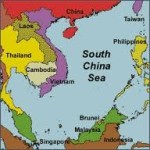
ASEAN, or the Association of Southeast Asian Nations, groups four of the claimants to the sea – Malaysia, the Philippines, Brunei and Vietnam – and six other countries in the region.

China, and also Taiwan, claim much of the sea through a nine-dash line on Chinese maps that encompasses about 90 percent of its 3.5 million sq km (1.35 million sq mile) waters. The sea provides 10 percent of the global fisheries catch and carries $5 trillion in ship-borne trade each year.

via For South China Sea claimants, a legal venue to battle China | Reuters.

Enhanced by Zemanta
25/11/2013

Chinese hospital ship Peace Ark arrives in the Philippines – Xinhua | English.news.cn

China\’s navy hospital ship Peace Ark arrived in typhoon-hit Philippines on Sunday night and is the first foreign vessel of its kind that has reached there, Chinese Foreign Ministry spokesman Qin Gang confirmed.

Peace Ark, the first 10,000-ton-class hospital ship in the world, with 300 beds and over 100 medical professionals on board, has been put into use in the Philippines, Qin told a daily news briefing on Monday.

Doctors onboard Peace Ark, together with an emergency medical team sent by the Chinese government and an international rescue team dispatched by the Red Cross Society of China have treated hundreds of patients, the spokesman said.

Chinese medical workers will work closely with their Philippine and international counterparts during the rescue process, Qin said.

Qin also announced that the Red Cross Society of China has delivered a new batch of relief supplies worth 5.4 million yuan, including 2,000 tents and drugs, to the Philippine National Red Cross.

Typhoon Haiyan has killed 5,235 people and injured 23,501 others,the Philippine government said. Another 1,613 people remain missing.

via Chinese hospital ship Peace Ark arrives in the Philippines – Xinhua | English.news.cn.

21/11/2013

After Stingy Aid to Typhoon Haiyan Victims, China Tries Damage Control – Businessweek

With a relief team finally on its way to the Philippines, China is trying to control the damage from its petty response to the Typhoon Haiyan tragedy.

A 17-member disaster relief team from the China Red Cross prepares to depart for the Philippines, in Beijing, on Nov. 20

The Chinese group is getting there late because of political differences between the two governments. The storm may have killed thousands of people and brought to a halt a large swath of China’s neighbor to the south, but since the world’s new economic giant is feuding with the Philippines about disputed islands in the South China Sea, the leadership in Beijing decided to take advantage of a humanitarian catastrophe to teach President Benigno Aquino who’s boss.

China initially offered a paltry $100,000 in aid and, after an international outcry, raised that figure to $1.6 million. It’s as if Dr. Evil decided to go into the disaster-relief business: “One point six million dollars!” Hence the headlines worldwide expressing outrage that China, the world’s second-largest economy, was offering less money than do-it-yourself furniture maker Ikea.

Not the ideal message for a country trying to persuade its neighbors of its trustworthiness. China’s ham-fisted response to Haiyan is a welcome gift for Japanese Premier Shinzo Abe, who has spent much of his first year in office touring countries in the region that have good reason to worry about China’s intentions.

That’s probably why China’s officials and media are trying to change the narrative. Chinese relief workers are on their way to the Philippines now, China’s Foreign Ministry announced today—a week and a half after Haiyan hit. But not to worry, some Chinese blankets and tents started arriving on Monday and Tuesday. “China will also send a medical boat Peace Ark, which belongs to the Chinese navy, to the Philippines,” the Xinhua news agency reported today. “The boat, which has good medical rescue capability and maneuverability, will depart soon.”

Even as the Chinese relief effort finally gets underway, there’s a new message: China is actually the victim here, hurt by Philippine bureaucrats. According to Xinhua, China was slow because the Philippine government hadn’t given its blessing. Indeed, the state-run news agency reported yesterday the emergency medical team was “ready to go” and would “depart for the disaster areas immediately, once China gets permission from the Philippines.”

via After Stingy Aid to Typhoon Haiyan Victims, China Tries Damage Control – Businessweek.

12/11/2013

China’s meager aid to the Philippines could dent its image | Reuters

To many, China‘s $200,000 against the US’s $20m will look more like an insult than aid. Even the UK has pledged £5m. Let’s hope it is a case of mis-reporting!

“China may have wasted the chance to build goodwill in Southeast Asia with its relatively paltry donation to the Philippines in the wake of a devastating typhoon, especially with the United States sending an aircraft carrier and Japan ramping up aid. People leave on a boat against the backdrop of a destroyed fishing community after the Super typhoon Haiyan battered Tacloban city in central Philippines November 12, 2013. REUTERS/Edgar Su

The world\’s second-largest economy is a growing investor in Southeast Asia, where it is vying with the United States and Japan for influence. But China\’s assertiveness in pressing its claim to the disputed South China Sea has strained ties with several regional countries, most notably the Philippines.

China\’s government has promised $100,000 in aid to Manila, along with another $100,000 through the Chinese Red Cross – far less than pledged by other economic heavyweights. Japan has offered $10 million in aid and is sending in an emergency relief team, for instance, while Australia has donated $9.6 million.

\”The Chinese leadership has missed an opportunity to show its magnanimity,\” said Joseph Cheng, a political science professor at the City University of Hong Kong who focuses on China\’s ties with Southeast Asia. \”While still offering aid to the typhoon victims, it certainly reflects the unsatisfactory state of relations (with Manila).\” China\’s ties with the Philippines are already fragile as a decades-old territorial squabble over the South China Sea enters a more contentious chapter, with claimant nations spreading deeper into disputed waters in search of energy supplies, while building up their navies. Vietnam, Malaysia, Brunei and Taiwan also claim parts of the South China Sea, making it one of the region\’s biggest flashpoints. The Association of South East Asian Nations (ASEAN), a 10-nation grouping that includes the Philippines, has been talking to China about a binding code of conduct in South China Sea to ease the friction, but Beijing\’s frugal aid hints at a deeply entrenched rivalry that could make forging consensus difficult.

Even China\’s state-run Global Times newspaper, known for its nationalistic and often hawkish editorial views, expressed concern about the impact on Beijing\’s international standing. \”China, as a responsible power, should participate in relief operations to assist a disaster-stricken neighboring country, no matter whether it\’s friendly or not,\” the paper said in a commentary. \”China\’s international image is of vital importance to its interests. If it snubs Manila this time, China will suffer great losses.\””

via China’s meager aid to the Philippines could dent its image | Reuters.

28/06/2013

Confrontation over the South China Sea ‘doomed’, China tells claimants

Reuters: “Countries with territorial claims in the South China Sea that look for help from third parties will find their efforts “futile”, China’s Foreign Minister Wang Yi warned on Thursday, adding that the path of confrontation would be “doomed”.

PRC foreign minister Wang Yi

Beijing’s assertion of sovereignty over a vast stretch of the South China Sea has set it directly against Vietnam and the Philippines, while Brunei, Taiwan and Malaysia also lay claim to other parts of the sea, making it Asia’s biggest potential military troublespot.

At stake are potentially massive offshore oil reserves. The seas also lie on shipping lanes and fishing grounds.

Wang didn’t name any third countries, but the United States is a close ally of Taiwan and the Philippines, and has good or improving relations with the other nations laying claim to all or part of the South China Sea.

“If certain claimant countries choose confrontation, that path will be doomed,” Wang said after a speech at the annual Tsinghua World Peace Forum.

“If such countries try to reinforce their poorly grounded claims through the help of external forces, that will be futile and will eventually prove to be a strategic miscalculation not worth the effort.”

The Philippine military said this week it had revived plans to build new air and naval bases at Subic Bay, a former U.S. naval base that American forces could use to counter China’s creeping presence in the South China Sea.

Wang’s comments came days before the minister is due to attend a meeting of foreign ministers of the Association of Southeast Asian Nations grouping in Brunei from Saturday to Tuesday.

The 10-member ASEAN hopes to reach a legally binding Code of Conduct to manage maritime conduct in disputed areas. For now a watered-down “Declaration of Conduct” is in place.

The path to a Code of Conduct will be slow and deliberate, Wang said, adding that the Declaration of Conduct was a commitment made by China and the 10 ASEAN countries and China would continue to abide by it.

“The right way is to fully implement the Declaration, and in this process, move forward with the Code in a gradual way,” Wang said.”

via Confrontation over the South China Sea ‘doomed’, China tells claimants | Reuters.

See also:

10/12/2012

* On the brink of gunboat diplomacy

It is truly ironic that China, the nation who suffered from ‘gunboat diplomacy 170 years ago, is apparently adopting the same measures against its smaller and weaker neighbours. If, as a result, we see a resurgence of Japanese militarism, China will only have itself to blame. What is worrying is that amongst leader Xi’s recent pronouncements since becoming head of the Party is the recurrent term ‘nationalism’.  This can mean something innocent such as resuming China’s global pre-eminence which it had until 200 years ago or something more sinister. Let’s hope it is the former.

Inquirer Opinion (Philippines): “The past four weeks saw the swiftest escalation in recent years of tensions over the territorial disputes between China and its neighbors in the Asia-Pacific.

China Gunboat Diplomacy

The tensions spiraled in late November when the province of Hainan, in the southern coastal region of China, issued an imperial-sounding  edict that its so-called lawmaking body had authorized its police patrol boats to board and search foreign ships of any nationality that illegally enter what it considers Chinese territories in the South China Sea. The plan was announced to take effect on short notice: on Jan. 1.

The edict caused considerable alarm among China’s smaller neighbors, including the Philippines, Vietnam, Malaysia, Brunei, and Taiwan, all of whom have overlapping claims on islands in portions of the South China Sea, which China has claimed as exclusively belonging to it on the strength of ancient maps. It also caused consternation among other world powers such as the United States and India, which do not have territorial claims in the South China Sea, which is the shortest route between the Pacific and Indian Oceans and through  which more than half of the globe’s oil tanker traffic passes. The concern of the United States and India, both of which have powerful navies to challenge China’s aggressive assertion of its hegemonic ambitions, involves freedom of navigation and trade routes in the entire China Sea.

The new rules emanating from Hainan will allow its local police—not China’s navy—to seize control of foreign ships that “illegally enter” Chinese waters and order them to change course. The determination of what is illegal is left entirely in the hands of the Hainan authorities. What has affronted the rest of the world is this arbitrary exercise by China to enforce its territorial claims while intimidating its weaker neighbors with threats of its expanding naval power.

The rules shocked China’s neighbors so powerfully because these were issued, not by a democratic political system, but by a provincial government, and was addressed to rival claimants of disputed territories in both the South China Sea and the East China Sea, most of which are democracies. These rival claimants are the Philippines, Vietnam, Malaysia, Brunei, and Taiwan.

The Hainan decision empowering its border police to intercept foreign ships sailing in waters claimed by China as its territory, which also overlaps territories in the South China Sea, affronts other claimants because it is seen as condescending and treating them as vassal states of the suzerain province.

There are now questions raised over whether the new rules were handed down at the instigation of the central Chinese government in Beijing or were initiated by the Hainan provincial government. Whatever is the source of the initiative, the new rules have galvanized countries affected by it to call for a clarification. The rules have accelerated the spiraling of tensions close to a flashpoint, of armed confrontation between Chinese gunboats and those of smaller countries whose ships are being intercepted even in waters claimed by them.

Under the new rules, Hainanese patrols are to prowl the seas far beyond the “baseline” of China’s 12-nautical-mile zone, which is allowed archipelagic countries. The Philippines has joined other nations in a coalition calling for clarification. A report in the Wall Street Journal said experts were unclear how the rules would be applied in practice. According to the report, Wu Sichun, the director of the foreign affairs office of Hainan province, who is also president of the National Institute for South China Sea, gave a narrow interpretation of the regulations.

He said the main purpose was to deal with Vietnamese fishing boats operating in waters near Yonxing Islands in the Paracels, which China calls the Xisha Island.

Wu said the regulations applied to waters around islands which announced “baselines.” He said the baseline is the low-water line along the coast from which countries measure their territorial waters, according to the UN Convention on the Law of the Sea (Unclos).

Wu also said the rules allowed police to check and expel vessels that will enter, or conduct illegal activity  within, the 12 nautical miles of the islands for which China has announced baselines. It is not clear how this rules apply. The problem is that the Chinese are handing down their set of rules, interpreting these at their own convenience, and enforcing these with their own police patrols.

With their unilateral interventions, they have decreed a new law of the sea without the consent of the users of the sea. What worries us is: What happens when the boats they intercept are our gunboats patrolling our own national territory also claimed by China? That can be an act of war. We are on the brink of gunboat diplomacy.

via On the brink of gunboat diplomacy | Inquirer Opinion.

Related articles

24/11/2012

* The end of the “ASEAN way”

Extracted from Al Jazeera Blogs: “The long-time journalists in this region have joked that it didn’t really matter if they missed out on covering ASEAN summits as nothing ever really happened at them anyway.: ”

The ten-member regional organisation composed of Brunei, Cambodia, Indonesia, Laos, Malaysia, Myanmar, The Philippines, Thailand, Singapore, and Vietnam was seen as a bit of a toothless mouse … ineffective, irrelevant, and a trifle useless.

All pomp and ceremony at the best of times – with very little substance. It’s been termed a “loose grouping” with nothing legally binding it together.

The one pronouncement from ASEAN with any kind of general recall was its members’ agreement of “non-interference” in each other’s affairs – which meant that for the most part, there were no condemnations of, or sanctions against, or even reactions to alleged human rights violations amongst them from anyone in the group.

It was the “ASEAN way” to be non-confrontational, put on a united front… and pretty much sweep things under the carpet. Which is likely why most thought the group a “lame” body.

Everything hinged on members’ consensus… and for many years, the only underlying consensus appeared to be making sure everyone played nice, and kept the house clean and presentable at all times. There was to be no “rocking the boat”, as it were.

But if one thing is clear after this series of recently concluded summits in Phnom Penh (ASEAN + Australia, China, India, Japan, New Zealand, Russia, South Korea, and the US) it’s that ASEAN is changing.

But it’s precisely because Cambodia, a nation with deep ties to China, tried to “stifle” that issue that things didn’t quite go as it had planned.

The Philippines, one of the countries embroiled in an increasingly tense dispute with China over overlapping maritime claims, spoke out in public contradiction of Cambodia’s statement that ASEAN members had “agreed” to not “internationalise” the territorial disputes.

“There was no consensus,” Philippine President Benigno Aquino said after the Cambodian leader finished his declaration. And that was only the beginning.

Possibly emboldened by the presence of Obama, (and the seven other non-ASEAN leaders), Aquino took the opportunity to basically “internationalise” the matter by speaking about the need for a “multi-lateral” resolution.

One that involves all those with a stake in the disputed areas’ maintaining its freedom of navigation and over-flight, including the US. A position several other countries agreed with.

And just like that, the subject that wasn’t supposed to be discussed hijacked the discussions. Much of this happened behind closed doors, but there was no way it was going to remain there… whether ASEAN liked it or not.

Cambodian Prime Minister Hun Sen delivered his usual stage-managed, loquacious statement in an attempt to conclude the summits on a “positive” and “graceful” note… but he refused to answer questions (of which there were many!) ostensibly because he was tired and feeling “emotional” about the passing of Cambodia’s former king last month.

But never mind Hun Sen’s neat summary. The media rush, (referred to by one journalist as similar to a dangerous bar-room brawl), to get to the Chinese and Philippine delegates as they exited and looked to make side-line statements taking pot-shots at each other (without directly pointing fingers of course), said more about the region’s state of affairs than can be tidied up and swept under the carpet.

This time around, ASEAN may have found itself with little other choice than to do something more substantial.

via The end of the “ASEAN way” – Al Jazeera Blogs.

22/11/2012

* China might be moving to ASEAN agreement on S China Seas= dispute

If China does agree to ASEAN multi-lateral agreement on South China Sea dispute, it will probably be the first time. It much prefers to do bilateral deals; conforming tot the old principle of ‘divide and conquer’.

See also:

21/09/2012

* China’s Xi seeks to reassure Southeast Asia on sea dispute

Reuters: “China’s leader-in-waiting Xi Jinping sought to reassure Southeast Asian leaders on Friday that his country wanted only peaceful relations with them, following months of growing tensions over the strategically located South China Sea.

China's Vice President Xi Jinping listens to U.S. Secretary of Defense Leon Panetta (not pictured) in a meeting at the Great Hall of the People in Beijing, September 19, 2012. REUTERS/Larry Downing

Speaking at the opening of a trade fair in southern China for Association of Southeast Asian Nations (ASEAN) members, Vice President Xi said China’s own prosperity could only be guaranteed by having good relations with its neighbors.

“The more progress China makes in development and the closer its links with the region and the world, the more important it is for the country to have a stable regional environment and a peaceful international environment,” Xi said.

“Having gone through numerous vicissitudes in modern times, we are deeply aware of the importance of development and how valuable peace is,” he added, according to state media.

Beijing’s assertion of sovereignty over a vast stretch of the South China Sea has set it directly against Vietnam and the Philippines, while Brunei, Taiwan and Malaysia also lay claim to other parts of the region, making it Asia’s biggest potential military troublespot.

At stake are potentially massive offshore oil reserves. The seas also lie on key shipping lanes.

Vietnam Prime Minister Nguyen Tan Dung is one of the ASEAN leaders attending the trade fair, held in the city of Nanning.

Xi said China – currently also involved in a dispute with Japan over a group of uninhabited islets in the East China Sea -wanted the peaceful resolution for its diplomatic arguments.”

via China’s Xi seeks to reassure Southeast Asia on sea dispute | Reuters.

See also: https://chindia-alert.org/political-factors/geopolitics-chinese/

20/07/2012

* ASEAN to claim common ground on South China Sea, but no communiqué

Reuters: “Southeast Asian states have reached a “common position” on the disputed South China Sea, but will not resurrect a joint communiqué aborted after unprecedented discord over the issue at a summit last week, Indonesia’s Foreign Minister said on Friday.

Marty Natalegawa sought to put a positive gloss on two days of shuttle diplomacy that failed to rally members of the Association of Southeast Asian nations (ASEAN) behind a belated, face-saving communiqué.

They had failed to agree the customary end-of-summit joint statement last Friday for the first time in the bloc’s 45-year history. The divisions follow a rise in incidents of naval brinkmanship involving Chinese vessels in the oil-rich waters that has sparked fears of a military clash.

Natalegawa told Reuters the 10 members had agreed on the components of an ASEAN “instrument” that would be issued by chair Cambodia later on Friday and would detail what was agreed upon during last week’s ASEAN Regional Forum in Phnom Penh, including the maritime dispute.

“We are trying so that other decisions made by the foreign ministers will be formulated in a different instrument for follow up,” Natalegawa told Reuters.

“The non-existence of a joint communiqué is behind us,” he said, adding that the customary communiqué was aborted last week because one of the four paragraphs relating to the South China Sea in the 132-paragraph draft could not be agreed on.

Disputes over how to address the increasingly assertive role of China – an ally of several ASEAN states – in the strategic waters of the South China Sea has placed the issue squarely as Southeast Asia’s biggest potential military flashpoint.

China has territorial claims over a huge area covering waters that Vietnam and the Philippines say they also have sovereignty over. All three countries are eager to tap possibly huge offshore oil reserves.

The failure to issue the communiqué and the bitter rows behind closed doors over what words to use and what to exclude have been a huge embarrassment for a 10-member bloc planning to form an EU-style economic community by 2015.

The row illustrated how Southeast Asian nations have been polarized by China’s rapidly expanding influence in the region and the economic dependence on Beijing that some of ASEAN’s poorer states now have, among the Cambodia, this year’s chair.”

via ASEAN to claim common ground on South China Sea, but no communiqué | Reuters.

Law of Unintended Consequences

continuously updated blog about China & India

ChiaHou's Book Reviews

continuously updated blog about China & India

What's wrong with the world; and its economy

continuously updated blog about China & India