Posts tagged ‘politics’

18/06/2012

* China publishes books on officials’ morality

Xinhua: “A book series expounding the moral issues of officials, the first-ever publication on the topic in China, was released for sale Monday in Beijing as part of government-backed efforts to promote integrity among civil servants.

The four-book series embodies the results of research conducted by experts with the Beijing Academy of Social Sciences at the request of Beijing authorities two years ago, according to a report published by the Beijing Daily.

The books record the development of theories about officials’ morality through Chinese history and provide case studies, as well as highlight the importance of raising officials’ moral standards in modern society, an official with the Beijing Commission for Discipline Inspection of the Communist Party of China (CPC) was quoted as saying in the report.

The major difference between good and bad officials simply lies in whether they perform duties with a conscience, says the prologue of the series.

Nowadays, the CPC, as the ruling party, must value virtues of officials and it is a general trend for officials to abide by professional ethics, according to a passage in one of the books.

The book also points out a moral official in modern China should always serve the people as well as be loyal, pragmatic, fair-minded and incorruptible, while always improving oneself.

The series will serve as anti-graft reading material for all Communist Party cadres in Beijing, according to the report.”

via China publishes books on officials’ morality – Xinhua | English.news.cn.

Let’s hope the cadres take this book as seriously as their forebears took Mao’s Red Book.
15/06/2012

* Recent Cases Shed Light on China’s Feared Interrogation System

NY Times: “Membership in the Chinese Communist Party has many advantages. Officials often enjoy government-issued cars, bottomless expense accounts and the earning potential from belonging to a club whose members control every lever of government and many of the nation’s most lucrative enterprises.

Interrogation

Interrogation (Photo credit: Steve Rhode)

There is, however, one serious downside. When party members are caught breaking the rules — or even when they merely displease a superior — they can be dragged into the maw of an opaque Soviet-style disciplinary machine, known as “shuanggui,” that features physical torture and brutal, sleep-deprived interrogations.

And that is exactly what appears to have happened to Bo Xilai, once one of China’s most charismatic and ambitious politicians. Mr. Bo has not been seen in public since mid-March, when he was stripped of his position as party chief of the sprawling municipality of Chongqing in southwest China. He was later accused of “disciplinary violations” and removed from the Politburo.

Few who have been pulled into the system emerge unscathed, if they emerge at all. Over the last decade, hundreds of officials have committed suicide, according to accounts in the state news media, or died under mysterious circumstances during months of harsh confinement in secret locations. Once interrogators obtain a satisfactory confession, experts say, detainees are often stripped of their party membership and wealth. Select cases are handed over to government prosecutors for summary trials that are closed to the public.

“The word shuanggui alone is enough to make officials shake with fear,” said Ding Xikui, a prominent defense lawyer here.

Although the leadership has not disclosed details of its investigation into Mr. Bo, insiders say it involves a number of allegations, including corruption, spying and obstructing justice on behalf of his wife, who has been implicated in the death of a British businessman, Neil Heywood.

Two people who have been briefed said Mr. Bo’s troubles had been compounded by his effort to rise to the top levels of power and protect himself by currying favor with the military. In addition to inquisitors from the party’s commission for discipline, the army’s political division is playing a role in the interrogations, the sources said.

via Recent Cases Shed Light on China’s Feared Interrogation System – NYTimes.com.

15/06/2012

* Arrested spy compromised China’s U.S. espionage network

Reuters: “A Chinese state-security official arrested this year on allegations of spying for Washington is suspected to have compromised some of China’s U.S. agents in a major setback that angered President Hu Jintao, sources said.

Hu personally intervened this year, ordering an investigation into the case after the Ministry of State Security arrested one of its own officials for passing information to the Americans, two sources with direct knowledge of the matter said.

The official, an aide to a vice minister, was taken into custody sometime between January and March after the ministry became alarmed last year over repeated incidents of Chinese agents being compromised in the United States, they said.

Seal of the C.I.A. - Central Intelligence Agen...

Seal of the C.I.A. of the United States Gov’t (Photo credit: Wikipedia)

The ministry’s own investigations found the aide had been working for the Central Intelligence Agency (CIA) for years, divulging information about China’s overseas spy network in the nation’s worst espionage scandal for two decades, they added.

The sources’ comments represent the first confirmation that overseas Chinese espionage was deemed to have been damaged by the security breach, which has been kept quiet by both Beijing and Washington. Reuters first reported it on June 1.”

via Exclusive: Arrested spy compromised China’s U.S. espionage network: sources | Reuters.

14/06/2012

* Chinese State Council improves food safety

China Daily: “The State Council laid out measures to improve food safety on Wednesday, including tighter supervision and harsher punishment for violators.

“It is an onerous task for the government to ensure food safety,” as China’s food industry is still suffering from nonstandard management and many hidden safety risks, according to a statement released after a State Council executive meeting presided over by Premier Wen Jiabao.

Police officers examine decayed beans at an illegal food processing plant in Cangshan county, East China’s Shandong province, on June 1. The plant has been shut down. Initial investigation found its products, fried beans and peanuts, were mainly sold to rural market. [Zhu Wutao / For China Daily]

The government should enhance supervision by setting up an efficient mechanism that covers all links in the food industry and a rigid food recall system for destroying defective products, the statement said.

The State Council has vowed a “vigous crackdown” on those who endanger food safety.

Meanwhile, policies, laws and regulations should be revised to increase costs for violators, according to the statement.

The country will intensify a series of food safety supervisions, including strengthening enterprises’ accountability for their food products and streamlining current food quality testing standards .

The country will establish credit profiles for food enterprises, releasing quality information to the public in time, the statement said.

Also, the country will give prizes to people who expose substandard food products, it said.

China is facing increasing risks on food safety as some food enterprises have put too much emphasis on profits, negatively affecting sales, Pu Changcheng, deputy director of the General Administration of Quality Supervision, Inspection and Quarantine, said at a news conference on Monday.”

via State Council improves food safety |Politics |chinadaily.com.cn.

14/06/2012

* What Happens if India Is Downgraded to ‘Junk’?

NY Times: “Since Standard & Poor’s warned Monday that India could be the first among the BRIC nations to lose its investment grade rating, politicians in India have moved quickly to discount the report.

Finance Minister Pranab Mukherjee “rejects” the report, the ministry said in a statement, which added that there are “several positives” for the Indian economy in the future. Rajkumar Dhoot, a member of Parliament and head of an industry trade group, referred to the report as “drawing room talk,” while Veerappa Moily, the minister of corporate affairs, said “S&P can not speak like this,” the Press Trust of India reported.

The criticism of Standard & Poor’s is overlooking an important point, analysts say. Whether politicians and industry leaders agree with the rating agency or not, a downgrade to so-called ‘junk’ status, could have very serious, very negative connotations.

“We shouldn’t ignore foreign rating agencies, either right or wrong,” said Vikram Limaye, deputy managing director at the Infrastructure Development Finance Company. “We should take their concerns into account. It is incumbent upon us to explain why their fears are misplaced or exaggerated in a reasonable way. Dismissal will not get us anywhere.”

A rating downgrade to junk status would mean that there would be an increase in the overseas borrowing costs for Indian companies and the country’s ability to attract foreign investment would be considerably diminished.

“This could have a major impact on overall fund flows, which rely heavily on international ratings,” said Dipen Shah, who leads fundamental research at Kotak Securities. “While the overall international debt is not so alarming as a proportion of the G.D.P., India needs a lot of capital flows to cover up its balance of payment deficit.”

While the cost of borrowing will increase, India’s borrowing capability will also be materially reduced, as certain investors who only invest in investment-grade paper will shun India.”

via What Happens if India Is Downgraded to ‘Junk’? – NYTimes.com.

13/06/2012

* China football ex-chiefs Nan Yong and Xie Yalong jailed

BBC News: “Two ex-heads of China’s football league have been jailed for 10-and-a-half years each for corruption, making them the most senior football officials sentenced. Nan Yong and his predecessor Xie Yalong were both accused of accepting bribes. Nan was also fined 200,000 yuan ($31,400; £20,200) and Xie is set to have personal assets and illegal takings confiscated.

China has increased efforts to clean up the game, hit by a series of scandals.

Nan, charged with 17 counts of taking bribes, was sentenced by a court in Tieling in north-eastern China. Xie, who was sentenced in Dandong, denies the charges against him adding that he only confessed to the allegations under torture. More than 900,000 yuan in personal assets and illegal takings of his are set to be confiscated.

Several other verdicts have also been delivered in similar cases in other cities, Chinese media reported.

In Dandong, a former national team captain was also sentenced to 10 years and six months in jail and fined 200,000 yuan. Four former national team players were sentenced in Shenyang for to up to six years’ jail and fined 500,000 yuan for taking bribes and match fixing.

via BBC News – China football ex-chiefs Nan Yong and Xie Yalong jailed.

09/06/2012

* China Signals Interest in Afghanistan

NY Times: “In a sign of China’s growing interest in neighboring Afghanistan after the departure of the United States and NATO led forces, President Hu Jintao met the Afghan leader, Hamid Karzai, in the Great Hall of the People on Friday and announced a new strategic partnership between the two countries.

Mr. Karzai was given special attention this week at the summit meeting of the Shanghai

English: Afghan President Hamid Karzai at a su...

Cooperation Organization, a group of six countries organized by China that includes Russia and Central Asian nations bordering Afghanistan. China is trying to ensure that a Muslim separatist group in a western region does not benefit from the Taliban when Western forces leave Afghanistan.

In a joint statement, China and Afghanistan said they would step up cooperation in security and the fight against terrorism, as well as increase intelligence sharing. No specifics were given.

A modest $23 million aid grant for unspecified projects that accompanied the new partnership indicated that despite concerns about the stability of Afghanistan after 2014, when most United States and allied troops are expected to be gone, China had no immediate plans to play a major development role.

This was Mr. Karzai’s fifth, and most prominent, visit to China. No Chinese leader has been to Afghanistan since the 1958 visit of Prime Minister Zhou Enlai. China’s major worry is the prospect of a Taliban-dominated Afghanistan lending sanctuary to the separatist group, the East Turkestan Islamic Movement, led by ethnic Uighurs, a Turkic-speaking, largely Muslim people in the autonomous western region of Xinjiang. The group wants a breakaway homeland in Xinjiang.

via China Signals Interest in Afghanistan – NYTimes.com.

See also: 

31/05/2012

* Iran cancels $2 billion dam deal with China

Iran has cancelled a $2 billion contract for a Chinese firm to help build a hydroelectric dam in the country, Chinese state media said on Thursday, a move that risks upsetting Beijing, one of Tehran’s most important economic and political allies.

Iranian President Mahmoud Ahmadinejad is due to visit China next week for a security summit, where he is expected to hold talks with his Chinese counterpart, Hu Jintao, on Iran’s disputed nuclear programme.

In March 2011, Iran’s official IRNA news agency said China’s Sinohydro Corp. had signed a contract with Iranian hydro firm Farab to build the dam, described as the world’s tallest, in Iran’s western province of Lorestan. It was designed to support a 1,500-megawatt power station.

The Global Times, a popular tabloid owned by Chinese Communist Party mouthpiece the People’s Daily, said the Iranian government had decided to cancel the contract. The report did not cite sources or give a reason for the cancellation.

But it quoted Iranian media reports as saying Iran’s central bank was “dissatisfied” with financing options offered by China.

From China Daily Mail blog

Iran cancels $2 billion dam deal with China « China Daily Mail.

30/05/2012

* China could owe America one trillion dollars

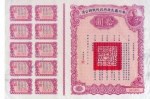
China has a secret: It owes American investors hundreds of billions of dollars.

The Chinese government doesn’t like to talk about it and the U.S. government doesn’t want to raise it. But decades ago, Beijing defaulted on debt owed to Americans, as well as investors and governments around the world. In one case, it was paid. In the rest it was not. More than 20,000 American investors own this debt. The U.S. government may also own Chinese war debt, unpaid since World War II.

With the simple stroke of an executive proclamation, President Barack Obama can begin the process of addressing this issue. A 1930s-era law has established a quasi-public agency within the Securities and Exchange Commission, known as the Corporation of Foreign Securities Holders, which can arbitrate this dispute, much as a predecessor agency did for decades. China can both afford and benefit from this solution; it will afford goodwill at a time when relations between the world’s two superpowers are strained.

The story begins nearly 100 years ago, in 1913, when the government of China began issuing bonds to foreign investors and governments for infrastructure work to modernise the country. As the country fell into civil war in 1927, paying these debts became increasingly difficult and the government fell into default. Even so, in April 1938, the Nationalist government of China began to issue U.S.-dollar denominated bonds to finance the war against Japan’s brutal invasion.

Locked in a pitched battle for survival, the government issued these bonds into 1940. As part of its wartime financial aid, the U.S. government further provided a $500 million credit to China in March 1942, shipping gold there and helping to stabilise the currency. In return, it appears that the U.S. government redeemed some of these dollar-denominated bonds. But China doesn’t appear to have repaid this debt either, according to State Department records, and the declaration of the People’s Republic of China in 1949 ended decades of political, military and financial cooperation.

While successor governments are usually bound by the debts of predecessor governments, the new Communist government refused to pay any of these claims. The issue lay dormant for decades, just as the bilateral relationship did. Then, in 1979, as part of normalising relations, Washington released government financial claims regarding the expropriation of American property and appears to have dropped the matter of the war debt entirely. However, it is one thing for government decision-makers to let go of government debt, however questionable that is.

And it is entirely another thing for individual citizens to press their claims. Some U.S. investors tried to sue the Chinese government in the 1980s and 1990s. However, the Foreign Sovereign Immunities Act makes it very hard for any U.S. citizen to sue a foreign government in U.S. courts because the law generally says that U.S. courts do not have jurisdiction.

The law usually only allows the jurisdiction of U.S. courts if a foreign government waives its immunity, commits a tort or seizes property. Recent additional exceptions have been added for terrorism. China lost an initial summary judgement for failing to appear in court but, with the urging of the U.S. State Department, later appeared in court and successfully argued that U.S. courts did not have jurisdiction.

Today, the Chinese bonds held by U.S. investors may be worth as much as $750 billion, according to Jonna Bianco, president of the American Bondholders Foundation, who estimates the value of bonds held by investors worldwide may be $10 billion, including interest and penalties for default.

China Daily Mail blog: “China could owe America one trillion dollars.”
29/05/2012

* Former Chinese rail minister expelled from Party

China Daily: “Liu Zhijun violated discipline and will face judicial investigationLiu Zhijun, former railway minister, was expelled from the Communist Party of China due to serious disciplinary violations, according to a decision by the Central Commission for Discipline Inspection announced on Monday.

Liu, 59, was also blamed for fostering corruption throughout the railway system. The disciplinary watchdog said Liu had taken advantage of his position to help Ding Yuxin, board chairwoman of Beijing Boyou Investment Management Corp, make huge illicit gains. He was also charged with accepting a large number of bribes and leading a corrupt life. His illicit gains have been confiscated and he will be handed over to the judicial department for further investigation. His disciplinary violations may include criminal acts, the watchdog said.

Lin Zhe, a professor at the Party School of the Central Committee of the CPC who specializes in fighting corruption, said Liu will probably face severe punishment. “Expelling Liu from the Party means his political life has ended,” she said, adding such punishment for an official is very heavy. However, Lin added Liu’s case will not be brought to court any time soon, “because the case is complicated”, and more time is needed to investigate. No matter what achievements an official has made, no matter how high his position was, the authority will deal with corruption without fear or favor, Lin added.

Li Chengyan, head of Peking University’s clean government research center, said the case is being treated seriously. “Lius punishment, after a one-year investigation, shows our government attaches great importance to the case.” The announcement on Monday is the latest development in the investigation.

Liu was appointed vice-minister of railways in 1996 and minister in 2003. He was removed from his post in February last year. At least eight senior officials at the Ministry of Railways have been sacked in the past two years and placed under investigation. They include, Zhang Shuguang, former deputy chief engineer at the ministry, Luo Jinbao, former board chairman of China Railway Container Transport Co and Su Shunhu, former deputy chief of the ministrys transport bureau.”

via Former rail minister expelled from Party |Politics |chinadaily.com.cn.

Law of Unintended Consequences

continuously updated blog about China & India

ChiaHou's Book Reviews

continuously updated blog about China & India

What's wrong with the world; and its economy

continuously updated blog about China & India