Posts tagged ‘Shanghai Cooperation Organisation’

18/06/2016

India looks to China’s technology for making clouds rain|Government|chinadaily.com.cn

China is in talks with India on the transfer of cloud-seeding technology.In the first such engagement between the Asian giants, a team of scientists and officials from Beijing, Shanghai and East China’s Anhui province, were recently in Maharashtra to discuss weather conditions with the government of the western Indian state, parts of which have experienced severe droughts over the past two years.

line art drawing of cloud seeding.

line art drawing of cloud seeding. (Photo credit: Wikipedia)

The Chinese team’s days-long tour concluded on June 2.If the discussions are successful, Chinese experts would provide training to officials of the Indian Meteorological Department on their latest cloud-seeding technology, according to two sources with knowledge of the matter.

One of the sources had earlier described it as an “exploratory visit by the Chinese side to discuss with relevant Indian authorities how to go about it”.

The training is expected to be given on procedures to seed clouds successfully, the source said.

The training is aimed at inducing rain over Maharashtra’s Marathwada region in the summer of 2017 if needed, the source said.

While summer rains have arrived this year in India, the region has been traditionally vulnerable to drought.

The sources spoke to China Daily on condition of anonymity.

An official in the China Meteorological Administration said that arrangements are still in progress.

The development follows a meeting between Han Zheng, Shanghai’s top official, and Maharashtra chief minister Devendra Fadnavis, in the Indian state’s capital of Mumbai in early May.

Han, who is also a Communist Party of China Politburo member, had asked Fadnavis if China could do anything for drought relief in Maharashtra, one of the sources said.

Monsoons and temperatures nearing 50 C have triggered many agrarian crises in India, with poor farmers being hit the hardest.

Indian media said in April that the Maharashtra government would begin cloud-seeding experiments in June and continue through August – the period of summer monsoons.

China started to use cloud-seeding technology in 1958, and today has one of the most advanced systems in the world.

Source: India looks to China’s technology for making clouds rain|Government|chinadaily.com.cn

01/02/2016

Another Type of Factory-Gate Indicator: Dumpling Sales – China Real Time Report – WSJ

Whether it is the cold drizzle, factory economics or the annual exodus of migrant laborers ahead of Lunar New Year, Lin Xinge is selling fewer dumplings.

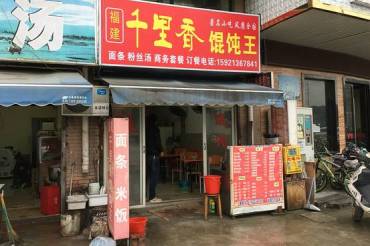
Ms. Lin is chief dumpling wrapper, waitress, cashier and dishwasher for Fujian One Thousand Li Fragrant, a tiny restaurant she owns with her husband in an industrial zone of Shanghai. Just over a fence, her neighbors include iPhone maker Foxconn Technology Group and other giant industrial groups that employ legions of workers she counts as customers.

“The workers earn less salary so fewer people come here and our restaurant isn’t doing well,” says Ms. Lin. She says that during the three years she has run One Thousand Li Fragrant, she’s had periods when every seat at her eight tables has been filled. Not lately.

Like her customers who come for $1.50 bowls of noodles and dumplings, Ms. Lin is a migrant worker. On a recent day she was sitting on an orange chair in the restaurant gripping a hand-warmer and thinking of her native Fujian province, where as a young woman she sang opera in the local dialect.

“Our Putian is more comfortable,” she says referring to the ancient city in Fujian where she was born. Though only 34 years old, Ms. Lin said singing in a traveling opera troupe is for the young and made less sense for someone like her, a mother of two.

In the Shanghai factory zone called Songjiang, One Thousand Li Fragrant was among the few restaurants that remained open ahead of the Feb. 8 Lunar New Year. Wind and cold rain whipped across tables placed on the sidewalk that would have been inviting in balmier times. Ms. Lin said the other dozen or so restaurants, also run by migrants and for migrants, had shut a few days before, as their owners departed for the holidays.

China’s mass people movement for Lunar New Year officially began a week ago. Beijing predicts 2.91 billion trips between January 24 and March 3. Ms. Lin’s family will join the throng in coming days.

Economists will be watching how China’s slowdown affects the mass migration. During past years of economic boom in China, until the mid-2000s, cash-rich factory workers returned to interior villages for the holidays, but quickly flooded back to the industrialized east, often along with family members willing to work for low pay. But in more recent years, the monotony of factory work has proved less of a draw, leaving employers to scramble to hold workers, with higher salaries or benefits. This year, jobs themselves are the concern.

Migrants interviewed outside factories in southern Shanghai and northern Zhejiang province this past week provided a mixed picture. Some suggested the economic slowdown is hitting factories. Some noted that workers were sometimes being encouraged to leave for holidays earlier this year while some factories shut outright. Truck traffic in the zones appeared light and some facilities were shut.

Speaking outside some factories, many veteran workers used the word for nothing special, “chabuduo,” to dismiss any suggestion they see dramatic changes this holiday season.

As heavy rain fell in the Zhejiang province industrial city Jiaxing on Friday, a group jostled and pushed an assortment of fancy suitcases, canvas bags and industrial buckets into the hold of a bus. The group was embarking on a 10-hour drive back home to the Henan province city of Nanyang. The mood was upbeat.

One woman, who works in a garment factory, said she was toting gifts for her family, including 100 rice balls. A worker, who said he drives on a construction site, reported he had a pretty good year. They said bonuses had been paid as usual.

Source: Another Type of Factory-Gate Indicator: Dumpling Sales – China Real Time Report – WSJ

29/07/2015

Why the Punjab Police Station Attack Was Waiting to Happen – India Real Time – WSJ

Six people were killed and at least seven injured in the Indian province of Punjab on Monday after gunmen dressed in military uniforms opened fire at a bus station and later turned their weapons on a police post.

According to Indian officials, security forces killed three of the attackers; three police officers also were killed in the violence in Gurdaspur district, which is close to the Pakistani border. The death toll could have been much higher; five bombs were reportedly found on train tracks nearby.

Many Indians and South Asia analysts, myself included, have feared for some time an eruption of the sort of violence that unfolded Monday. Reasons include:

* With most international troops out of Afghanistan, numerous militants that had been fighting foreign forces in Afghanistan could be looking for new targets—and might see ones in neighboring India.

* There was a resurgence in 2014 of anti-India militant leaders who had been quiet in recent years. These include Masood Azhar, head of the Jaish-e-Mohammed group, whose voice was heard in a recorded broadcast last year at an anti-India rally in Pakistan. Mr. Azhar had threatened to assassinate Narendra Modi if he became prime minister.

* The India-Pakistan relationship is at one of its lowest points in years. The Pakistani military controls its country’s relations with India, and army leaders are fundamentally opposed to the idea of peace with New Delhi. Mr. Modi’s conservative, Hindu nationalist government sees no reason to pursue full-fledged talks with Pakistan’s civilian government, which is more sympathetic to reconciliation but lacks the power to pursue it. This fraught environment offers useful pretexts for attacks.

It is not yet clear who staged Monday’s assault; some Indian officials have alleged the involvement of Lashkar-e-Taiba, the Pakistani anti-India group responsible for the 2008 terror strikes on Mumbai. Lashkar-e-Taiba is known to have ties to the Pakistani security establishment. Notably, Islamabad has condemned the attack—a goodwill gesture made with the knowledge that, whoever staged the attack, someone in India would invariably accuse Pakistan.

Although Punjab province is close to the tense Kashmir region, terror attacks are unusual in Punjab. In decades past, it has been a hotbed of separatist—and at times violent—activity led by Indian Sikhs, though this movement—which many Indian commentators believe is supported by Pakistan’s intelligence service—has been quiet in recent years (grievances of the past, however, remain entrenched, I was told repeatedly while in Punjab last year). Some Indian commentators have questioned whether Monday’s attack marks a “revival” of the movement. Others wonder if Pakistani terrorists are simply opening new fronts beyond Kashmir.

If India concludes that the attack originated in Pakistan, the subcontinent could be in for some very turbulent times. Mr. Modi is not likely to be as restrained in the face of Pakistani provocations as his predecessor Manmohan Singh was.

Whoever was behind the attack, Monday’s death toll reminds us that amid talk of al Qaeda affiliates and Islamic State wreaking havoc across the Middle East and North Africa, South Asia’s subcontinent remains a dangerous–and nuclear-armed—place.

via Why the Punjab Police Station Attack Was Waiting to Happen – India Real Time – WSJ.

12/07/2015

Beijing invites Japanese prime minister to ceremony marking end of second world war | South China Morning Post

President Xi Jinping has officially invited Japanese Prime Minister Shinzo Abe to a ceremony in September commemorating the 70th anniversary of the end of the second world war.

Shinzo Abe speaks at the Japan Summit 2015 on Thursday. Photo: Reuters

Beijing had been waiting for a reply since the invitation was made three weeks ago, Vice-Minister of Foreign Affairs Cheng Guoping said on Friday following a BRICS summit.

Cheng said all leaders from the Shanghai Cooperation Organisation members – Russia, Kazakhstan, Kyrgyzstan, Tajikistan and Uzbekistan – had agreed to attend the September 3 ceremony, which includes a military parade in Tiananmen Square.

Abe had told aides he was willing to visit China, the Asahi newspaper reported.

However, fearing a domestic backlash, he was considering a visit either before or after the ceremony, it said.

A Japanese government source said Abe hoped to talk with Xi on repairing the damage caused by territorial disputes and differing perceptions of history.

Jiang Yuechun , a professor at the China Institute of International Studies, said Abe’s hesitation was understandable.

“If Abe decides to attend the ceremony, it would be a good opportunity to help his country get rid of its historical burden [as an invader]. It would also be a chance to [turn back] Sino-Japanese bilateral ties,” he said.

“Of course, it’s impossible for the two countries to remedy the breach even if Abe does meet Xi, because there are so many problems left by history that have hindered the relationship, such as maritime disputes over the Diaoyu Islands and fishing rights. It will take time to solve these by rational communication.”

Whether Abe’s trip goes ahead could depend on the content of a statement he is expected to make regarding the war anniversary and China’s activities to press sovereignty claims in the East and South China seas. China has urged Abe to include a full apology and note that Japan was engaged in a war of aggression.

Recent speeches by Abe had reflected on Japan’s “wrongdoing” but “offered no apology”, said Sun Cheng, director of the East Asia International Studies Centre at the China University of Political Science and Law.

Sun said the attitude of the US would be key to pushing Japan into an open apology “because Tokyo cares more for Washington’s [approval] than for China’s or South Korea’s”.

To lay the groundwork for Abe’s visit, Shotaro Yachi, the head of Japan’s National Security Council, was planning to travel to China this month to hold talks with Yang Jiechi , the mainland’s top diplomat, a Japanese government source said.

Abe and Xi held talks last November in Beijing and this April in Jakarta on the sidelines of international conferences.

Observers say Beijing hopes to improve its relations with Tokyo before Xi’s visit to the United States in September, while Abe is eager to bolster his domestic support by repairing ties with Beijing amid deliberations on controversial security bills.

Meanwhile, Japan has proposed sending its foreign minister, Fumio Kishida, to Russia from August 31 to September 1. Russian President Vladimir Putin is scheduled to visit Japan within the year.

via Beijing invites Japanese prime minister to ceremony marking end of second world war | South China Morning Post.

12/07/2015

5 Takeaways from Modi and Sharif’s Meet in Ufa – WSJ

Little more than a photo opportunity was expected to come out of the meeting between India’s Narendra Modi and Pakistan’s Nawaz Sharif on Friday.

So, when the two rival nations put out a joint statement after their leaders held long-delayed talks in the Russian city of Ufa, some political commentators were caught by surprise.

Almost a year after his country called off talks with Pakistan, Mr. Modi accepted an invitation to visit Islamabad in 2016 for the upcoming Saarc summit.

Describing Friday’s meeting on the sidelines of the Shanghai Cooperation Organization summit as a “constructive engagement,” India’s foreign ministry, along with its counterpart in Islamabad, highlighted steps the two sides agreed to take on “issues of bilateral and regional interests.”

Here are five takeaways from the statement.

1 Tackling Terrorism

The current national security advisors of the two nations, will meet to “discuss all issues connected to terrorism,” said the statement. It didn’t give a timeline for the meeting between India’s Ajit Doval and Pakistan’s Sartaj Aziz.

India has on several occasions blamed Pakistan for supporting terrorism, a claim Islamabad has repeatedly denied. Last year, after eight soldiers died in a militant attack on an Indian army camp in the northern state of Jammu and Kashmir, Indian Home Minister Rajnath Singh blamed Islamabad for “sheltering” terrorists. “If Pakistan can’t stop these attacks, let it take India’s help,” he said.

2 Military Meeting

The two sides also said meetings will take place between the heads of India’s Border Security Force and the Pakistan Rangers, followed by discussions between the director generals of military operations from both countries. Mr. Singh said in a statement Friday that this would “help in stabilizing the situation” at the border between India and Pakistan.

The border has recently seen a spate of violence with cross-border firing from both sides, forcing thousands of local people from their homes.

3 Freeing Fishermen

A decision on the release of Indian and Pakistani fishermen in custody in both countries, along with the return of their boats, can be expected in 15 days, according to the statement. Pakistan’s foreign ministry said as of July 1 that there were 355 Indian fishermen in Pakistani jails and 27 Pakistani fishermen in Indian jails. The statement did not go as far as to say they would be released however.

4 Religious Tourism

The neighbors agreed to establish a “mechanism for facilitating religious tourism” between the two countries.

5 Mumbai Terror Attack

Six months after Zakiur Rehman Lakhvi, the alleged mastermind of the devastating attack on Mumbai that killed 166 people in 2008, was freed from prison in Pakistan, the two sides announced a decision to “discuss ways and means to expedite the Mumbai case trial, including additional information like providing voice samples.” India alleges that the attackers were backed by Pakistan’s military and intelligence agencies—a charge that Pakistan denies.

via 5 Takeaways from Modi and Sharif’s Meet in Ufa – WSJ.

09/07/2015

The Troubled Path to Modi and Sharif’s Meet – India Real Time – WSJ

A little more than a year after they met amid high expectations in New Delhi, the prime ministers of India and Pakistan will hold talks on the sidelines of a summit in Russia on Friday. The mood this time around is decidedly less upbeat.

Narendra Modi and Nawaz Sharif are scheduled to sit down for a one-on-one in the city of Ufa, where they have both traveled to attend a meeting of the Shanghai Cooperation Organization, a China- and Russia-dominated group that India and Pakistan are a part of as observers. The two South Asian nations aspire to full membership of the organization, which also includes Kazakhstan, Kyrgyzstan, Tajikistan and Uzbekistan.

Relations between India and Pakistan over the past year have been strained, with a long catalog of disagreements. New Delhi called off planned talks in August after Pakistan’s ambassador to India met with separatists from the northern state of Jammu and Kashmir.


Tit-for-tat cross-border firing in the fall resulted in civilian casualties and provocative rhetoric from both sides.

The flare-up cast a shadow over a meeting in November of South Asian nations in Nepal, during which Mr. Modi held bilateral talks with some of his counterparts from the region but skipped a one-to-one with Mr. Sharif.

Frosty ties turned openly belligerent again in April when the alleged mastermind of a devastating 2008 terrorist attack in Mumbai was freed from prison in Pakistan. India accused Islamabad of not pursuing his prosecution properly, an allegation Pakistan denied.

Inflammatory remarks haven’t made matters easier. India’s cross-border raid on insurgent camps in Myanmar after its soldiers were killed in an ambush near the country’s northeastern frontier–and comments by Mr. Modi’s ministers afterward that the military operation should serve as a warning “to all those who harbor intentions of terror on our country”–irked the government in Islamabad. India has long accused Pakistan of supporting terrorism in India.

India has another growing strategic misgiving: a strengthening China-Pakistan nexus. The two countries, which are longtime allies and each have territorial disputes with India, recently took their relations a step further by inking a $46 billion deal for Chinese investments in building an economic corridor through Pakistan. The pact raised hackles in India, largely because it includes building Chinese-funded infrastructure on disputed territory that is governed by Pakistan but also claimed by India.

All that said, Mr. Modi and Mr. Sharif have tried to ease tensions with occasional telephone calls. In February, the two exchanged messages over the then-upcoming Cricket World Cup. In June, Mr. Modi called Mr. Sharif to wish him well ahead of the Muslim holy month of Ramadan and gave him the news that, as a gesture of goodwill, India would be releasing some Pakistani fishermen detained by Indian authorities.

The planned meeting Friday is unlikely to result in a major breakthrough in ties. Still, when the leaders of two nuclear-armed rival nations meet, the world watches.

via The Troubled Path to Modi and Sharif’s Meet – India Real Time – WSJ.

06/07/2015

Narendra Modi’s Visit to Central Asia: What to Know – India Real Time – WSJ

India is starting to latch onto the need to forge diplomatic relationships with other countries beyond simple exchange of embassies. However, in the two months of rest between PM Modi’s globe trotting, China formed or reinforced relationship with 28 countries:

  • May:  E U; Japan; Belarus; India; Ireland; Vietnam; Brazil; Colombia, Peru, Chile.
  • June:  Pakistan, Senegal; French Polynesia;  Angola; Sri Lanka; Georgia; Myanmar, Maldives; Uzbekistan; Australia; Czech Republic; Poland; Belgium; USA; Brazil; France.

Some of these were when senior foreign politicians visited China, others when senior Chinese politicians visits abroad.

In 2014, China wooed 167 nations – https://chindia-alert.org/2014/12/31/chinese-diplomacy-2014/ and over 100 in 2013 – https://chindia-alert.org/2013/12/31/who-did-china-woo-in-2013/.  So far 62 in 2015.  Someone in the higher eschelons of Chnese government must have read and espouse Dale Carnegie’s book!

“Less than two months after returning from a journey that took him to China, South Korea and Mongolia, Indian Prime Minister Narendra Modi begins another whirlwind overseas tour on Monday in which he is slated to visit five Central Asian countries, attend two multilateral summits in Russia and talk about issues ranging from trade to yoga to terrorism.

In a series of short trips, Mr. Modi will touch down in Uzbekistan, Kazakhstan, Turkmenistan, Kyrgyzstan and Tajikistan, covering a cluster of strategically-positioned, resource-rich nations not far from India’s borders where China has established robust trade and investment ties. In between, he’ll visit Russia for the annual Brics summit.

Mr. Modi’s main focus is going to be energy: Turkmenistan’s natural gas reserves, for instance, and Kazakhstan’s oil and uranium. In recent years, India’s plans to invest in Kazakhstan’s oil projects have been waylaid by proposals from China, which has a major presence in the country’s oil and gas production.

Efforts to ramp-up the flow of these resources to India have also been complicated by the region’s security risks and geopolitics. A long-pending project with Turkmenistan, for instance, involves constructing a gas pipeline from that country over Taliban-hit Afghanistan and across India’s rival neighbor Pakistan, to India.

The Indian government is looking to kickstart work on the pipeline. In April, during a visit by India’s foreign minister, Sushma Swaraj, Turkmenistan pledged to begin construction of it this year, India said. Ahead of Mr. Modi’s departure, Navtej Sarna, an Indian official, said on Friday that the government “will have to explore how we can move this project forward very quickly,” though he didn’t elaborate on how much progress Mr. Modi and his team were expected to make.

It’s not just the pipeline. Mr. Modi is hoping to push other infrastructure projects too that would connect Central Asia to India – regions that are not far apart on the map but have remained inadequately linked by roads, railways and ports, diminishing opportunities for trade and investment.

A North-South transport corridor that would help move cargo through a more straightforward and cheaper route between Russia and Central Asia on the one hand and India on the other has been in the offing for years. While some infrastructure has been built, big gaps remain. Mr. Modi is hoping to recruit more partners to help fill them.

One crucial link country in this plan is Iran, which has been off limits because of Western sanctions aimed at driving Tehran to end its nuclear program. As Iran and its U.S.-led opponents moved toward a deal this year that would end the deadlock, India in May sought to reinvigorate a port project in Iran’s eastern Chabahar region. Once completed, the port would become a central part of the planned corridor.

These questions of connectivity are important for India’s trade prospects, but they also have a geopolitical  significance. China has in recent months stepped up its diplomatic outreach for its new “Silk Road” belt connecting it to Central Asia and Europe. On a visit to Islamabad in April, Chinese President Xi Jinping unveiled a $46 billion economic corridor that would cut across Pakistan and a disputed territory governed by Pakistan that India also claims. Indian officials have objected to the initiative, both publicly and in meetings with Chinese officials.

At the same time, Mr. Modi is looking to forge closer economic ties with China. This week, he will meet Chinese leaders during the Brics summit in the Russian city of Ufa, where the leaders will discuss, among other regional and global issues, their recently-formed bank. The New Development Bank as it is called is headquartered in Shanghai and will have an Indian banker as its first head. Mr. Modi will also participate in a meeting of the Shanghai Cooperation Organization, a security grouping led by China and Russia, which India is likely to join shortly as a full member.”

via Narendra Modi’s Visit to Central Asia: What to Know – India Real Time – WSJ.

06/07/2015

Rivals Pakistan, India to start process of joining China security bloc | Reuters

Nuclear-armed rivals Pakistan and India will start the process of joining a security bloc led by China and Russia at a summit in Russia later this week, a senior Chinese diplomat said on Monday, the first time the grouping has expanded since it was set up in 2001.

Photo

The Shanghai Cooperation Organisation (SCO) groups China, Russia and the former Soviet republics of Tajikistan, Uzbekistan, Kazakhstan and Kyrgyzstan, while India, Pakistan, Iran, Afghanistan and Mongolia are observers.

“As the influence of the SCO’s development has expanded, more and more countries in the region have brought up joining the SCO,” Chinese Vice Foreign Minister Cheng Guoping told a news briefing.”India and Pakistan’s admission to the SCO will play an important role in the SCO’s development. It will play a constructive role in pushing for the improvement of their bilateral relations.”

India and Pakistan have fought three wars since 1947, two of them over the divided Muslim-majority region of Kashmir which they both claim in full but rule in part. Pakistan also believes India is supporting separatists in resource-rich Baluchistan province, as well as militants fighting the state.

India applied to join the regional security grouping last year and SCO foreign ministers gave a positive recommendation when they met in June. “We await further developments,” said Sujata Mehta, a senior foreign ministry official.

Prime Minister Narendra Modi will be in Moscow for a summit of the BRICS group of emerging markets and both he and his Pakistani counterpart, Nawaz Sharif, will attend a special SCO “outreach” session as part of the gathering.

Pakistan’s application is being considered, said foreign ministry spokesman Qazi Khalilullah. “We hope they will support us for full membership,” he added.

The grouping was originally formed to fight threats posed by radical Islam and drug trafficking from neighboring Afghanistan.

Cheng said the summit, to be attended by Chinese President Xi Jinping, would also discuss security in Afghanistan.

Beijing says separatist groups in the far western region of Xinjiang, home to the Muslim Uighur minority, seek to form their own state, called East Turkestan, and have links with militants in Central Asia, as well as Pakistan and Afghanistan.

China says Uighur militants, operating as the East Turkestan Islamic Movement (ETIM), have also been working with Islamic State.

“It can be said that ETIM certainly has links with the Islamic State, and has participated in relevant terrorist activities. China is paying close attention to this, and will have security cooperation with relevant countries,” Cheng said.

via Rivals Pakistan, India to start process of joining China security bloc | Reuters.

16/09/2013

China in Central Asia: Rising China, sinking Russia

The Economist: “In a vast region, China’s economic clout is more than a match for Russia’s

LESS than a decade ago little doubt hung over where the newly independent states of Central Asia had to pump their huge supplies of oil and gas: Russia, their former imperial overlord, dominated their energy infrastructure and markets. Yet today, when a new field comes on stream, the pipelines head east, to China. As if to underline the point, this week China’s president, Xi Jinping, swept through Central Asia, gobbling up energy deals and promising billions in investment. His tour left no doubts as to the region’s new economic superpower.

In Turkmenistan, already China’s largest foreign supplier of natural gas, Mr Xi inaugurated production at the world’s second-biggest gasfield, Galkynysh. It will help triple Chinese imports from the country. In Kazakhstan $30 billion of announced deals included a stake in Kashagan, the world’s largest oil discovery in recent decades. In Uzbekistan Mr Xi and his host, President Islam Karimov, unveiled $15 billion in oil, gas and uranium deals, though details in this opaque country were few.

China is the biggest trading partner of four of the region’s five countries (the exception being Uzbekistan). During Mr Xi’s trip, Chinese state media reported that trade volumes with Central Asia topped $46 billion last year, up 100-fold since the countries’ independence from the Soviet Union two decades ago. Though neither side puts it like this, China’s growing presence clearly comes at Russia’s expense. Russia still controls the majority of Central Asia’s energy exports, but its relative economic clout in the region is slipping—other than as a destination for millions of migrant labourers. For years Russia has treated the region as its exclusive province, insisting on buying oil and gas at below-market rates through Soviet-era pipelines, while re-exporting it at a markup. The practice helped drive Kazakhstan and Turkmenistan, both with huge energy reserves, into China’s arms.

Yet Russia and China have much riding on their bilateral relationship. The government in Moscow is eager to benefit from its eastern neighbour’s economic might, while in Beijing policymakers view Russia as a critical ally on the world stage. (Knowing the premium China places on protocol, it was no accident that Mr Xi’s very first official visit as president was to Moscow; and that he went to St Petersburg for the G20 summit in the middle of his Central Asian tour.) All this suggests the two giants will aim to co-operate as much as compete, at least for the moment. As for Central Asians, says Vasily Kashin, a Moscow-based China expert, Russia has accepted that “they will try to get the best deals out of this rivalry.”

When it comes to security issues in Central Asia, in public China still defers to Russia. Both look warily on as NATO withdraws from Afghanistan. China’s chief concern is the threat posed by Uighur separatists and their sympathisers in Central Asia. And so, in security matters too, China’s influence is growing. As The Economist went to press, Mr Xi was expected in Bishkek, capital of Kyrgyzstan, to attend the annual summit of the Shanghai Co-operation Organisation, a block which China was instrumental in founding. A chief aim is to counter the “three evil forces” of terrorism, extremism and separatism.

Arguably, Chinese investment in Central Asia promotes that goal, by improving living standards and thus stability in a region that shares a 2,800km (1,750-mile) border with Xinjiang, China’s westernmost province and Uighur homeland. Yet China’s soft power is undermined by a beast it is not good at fighting: resentment. Chinese contractors are flooding into Central Asia, building roads and pipelines and even, in Tajikistan’s capital, Dushanbe, the government buildings. The cruel irony is not lost on the millions of unemployed men leaving for Russia to look for jobs. But it is lost, says Deirdre Tynan of the International Crisis Group, a think-tank, on policymakers. “Central Asia’s governments see China as a wealthy and willing partner, but on the ground little is being done to ease tensions between Chinese workers and their host communities,” she warns.”

via China in Central Asia: Rising China, sinking Russia | The Economist.

See also: https://chindia-alert.org/political-factors/geopolitics-chinese/

27/04/2013

* Turkey becomes partner of China, Russia-led security bloc

One day Europe may well come to regret not wqelcoming Turkey into the EU.

Reuters: “NATO member Turkey signed up on Friday to became a “dialogue partner” of a security bloc dominated by China and Russia, and declared that its destiny is in Asia.

Turkey's Prime Minister Tayyip Erdogan makes a speech during the Global Alcohol Policy Symposium in Istanbul April 26, 2013. REUTERS/Murad Sezer

“This is really a historic day for us,” Turkish Foreign Minister Ahmet Davutoglu said in Kazakhstan’s commercial capital Almaty after signing a memorandum of understanding with Shanghai Cooperation Organisation Secretary General Dmitry Mezentsev.

“Now, with this choice, Turkey is declaring that our destiny is the same as the destiny of the Shanghai Cooperation Organisation (SCO) countries.”

China, Russia and four Central Asian nations – Kazakhstan, Kyrgyzstan, Tajikistan and Uzbekistan – formed the SCO in 2001 as a regional security bloc to fight threats posed by radical Islam and drug trafficking from neighboring Afghanistan.”

via Turkey becomes partner of China, Russia-led security bloc | Reuters.

Law of Unintended Consequences

continuously updated blog about China & India

ChiaHou's Book Reviews

continuously updated blog about China & India

What's wrong with the world; and its economy

continuously updated blog about China & India