Posts tagged ‘Sport utility vehicle’

30/11/2016

All-American pick-up trucks aim to lure China’s wealthy | Reuters

Automakers Ford (F.N) and General Motors (GM.N) are aiming the pick-up truck, an iconic staple in the United States, at upmarket buyers in China, where most associate trucks with farmers and construction workers.

“The Chinese call it pika, pika – a very low-end worker’s (vehicle). But the (Ford F-150) Raptor is totally different,” said Wesley Liu, Ford’s Asia-Pacific sales director, ahead of this month’s Guangzhou autoshow.

Trucks are largely restricted to overnight driving in most Chinese cities, but four provinces – Yunnan, Liaoning, Hebei and Henan – have this year launched trial programmes allowing them into urban zones in an attempt to stimulate production as economic growth, and car sales, slow.

With those looser restrictions, U.S. pick-up makers aim to distance their trucks from local models made by Great Wall Motor (601633.SS), Jiangling Motors Corp (JMC) (000550.SZ) and others – and appeal to Chinese premium buyers, like Meng Shuo.

The 32-year-old founder of an investment consultancy, who already owned a Chevrolet Camaro when he bought an F-150 pick-up truck five years ago through an unofficial grey market importer. He has since traded it in for a Toyota (7203.T) Tundra, and also owns a Mercedes (DAIGn.DE) luxury sedan and Porsche (PSHG_p.DE) and Mitsubishi (7211.T) sports cars.

Ford said in April it would bring a high-performance version of its F-series – the best-selling vehicle in the U.S. for 34 years – to China, the world’s biggest auto market. A spokesman said the company is studying whether to also bring a mass-market model such as the F-150 or Ranger pick-up to China, depending on demand and future regulations.

“The people who buy the Raptor maybe own some other premium vehicle already. This is another toy,” Liu said.The truck is aimed at four types of buyers, he said – the wealthy, who want to stand out from the crowd; business owners, who want more than a traditional commercial vehicle; drivers who want a single car for all situations; and “gearheads”, who just like the mechanics.

Even as Chinese authorities throw vast subsidies at green, clean auto technologies, the growing wealth of Chinese consumers has driven a boom in larger cars and sport-utility vehicles (SUV). With margins now under pressure in the crowded SUV sector, automakers see potential profits in high-end foreign pick-ups.

Ford and GM – which displayed its Chevrolet Colorado and Silverado trucks around the Guangzhou show, with t-shirt clad urban cowboys and an all-leather rock band selling the trucks’ macho, all-American appeal – have not yet announced prices for their pick-ups, expected to be launched next year. But they should command a sizeable premium to locally made models as China slaps a 25 percent tax on imports.

PICKING UP

For now, pick-ups are a tiny fraction of China’s market.

IHS Markit sees sales increasing by 14 percent this year to 368,791 pick-up trucks, but that would still be only 1.4 percent of China’s light vehicle market.

By contrast, sales in the U.S. are forecast at 2.7 million pick-ups, about 15 percent of the market.

Yan Ningya, an official involved in the Hebei pilot project, said the province, home to Great Wall and other automakers, accounts for half of China’s pick-up production.

The trial has not yet resulted in higher production, he told Reuters, but the local government will need a year from the pilot project’s launch in May to gauge its impact.

After that, the central government may do more to drive production, possibly reclassifying pick-ups as passenger cars rather than commercial vehicles, he said.

The Ministry of Industry and Information Technology, which directed the provinces to launch the pilot projects, did not respond to a faxed request for comment.

“China’s pick-up truck market will be very large in the future,” said Yan, noting domestic brands would likely upgrade their trucks to meet the tastes of middle-class drivers.

Source: All-American pick-up trucks aim to lure China’s wealthy | Reuters
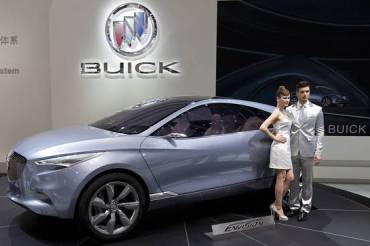
15/11/2015

In ‘Milestone’ Move, GM to Sell Chinese-Made Cars in U.S. – China Real Time Report – WSJ

Yale Zhang, the head of Shanghai-based consultancy Automotive Foresight, called the export of the Buick Envision SUV from China to the U.S. a “landmark.”

“It means that China’s manufacturing quality has met the requirements of the world’s strictest market,” he said.

GM introduced the Buick Envision SUV in China last October. Since then, it has been one of the best-selling cars sold by GM in the country. According to the China Association of Automobile Manufacturers, a government-backed industry group, the Envision ranked seventh in China’s fast-growing SUV market in October, with monthly sales of 17,300 vehicles. Data from Automotive Foresight show that sales of Buick Envision SUVs totaled 100,826 cars in the period from January to September.

Despite the progress, experts say that Chinese home-grown car manufacturers will continue struggling to compete with foreign brands, even in China.

China is already the world’s largest market for cars in terms of sales and production. But global auto makers have been slow to ship Chinese vehicles to the U.S. and Europe on worries that Western buyers would shun them over quality concerns. European car maker Volvo Car Corp., which is owned by China’s Zhejiang Geely Holding Group Co., was the first to challenge that assumption when it started shipping sedans from a plant in China to the U.S. this spring. A Volvo China spokesman declined to disclose how many Chinese-made Volvos have been shipped to the U.S., saying only that it is a “small volume.”

A study released by automotive industry consultants J.D. Power in October shows that although Chinese car makers have been improving in quality in recent years, they still lag behind international brands in producing reliable vehicles. According to the study, Chinese brands had 120 problems for every 100 vehicles this year, compared with 131 in 2014 and 155 in 2013. International brands had 98 problems for every 100 vehicles in 2015.

“Buick is a household brand in the U.S.,” said Ms. Li from Deren Electronic. “American consumers are probably not aware that the car is made in China. But Chinese local  auto brands, like Chery and Geely, are little known outside of China.” Victor Yang, a spokesman for Zhejiang Geely Holding Group Co., said that as a global player, it’s normal for GM to sell its China-made cars at home in the U.S. “All the cars made by foreign companies in China should be produced in line with their global standards,” Mr. Yang said.

“Geely aims to sell its cars to developed markets including the U.S. By doing so, our quality and technology will be well recognized,” he said, without specifying a time frame. Jin Yibo, a vice president for Chery Automobile, said that Chinese home-grown auto makers “will absolutely go to the U.S. and other developed markets to sell their cars.”

But he cautioned: “It will take time.”

Source: In ‘Milestone’ Move, GM to Sell Chinese-Made Cars in U.S. – China Real Time Report – WSJ

06/11/2015

Xiaomi’s Big Bet on Indian Internet Revolution Starts to Pay Off – China Real Time Report – WSJ

The sales are a significant rise compared with the three million phones the company said it sold in its first year of business in India.

Xiaomi aims to sell 80 to 100 million smartphones this year and has been valued by investors at $46 billion. But increasing competition at home, from companies who mimic Xiaomi’s business model of selling high-end phones at low prices, will make it tough to meet its sales target. So the five-year-old startup is setting its hopes on growth in India. Xiaomi found success in China by combining razor-thin profit margins on hardware with glitzy product launches that helped build its fanbase.

The closely-held company needs to prove that it can export its business model to other countries to continue to justify its high valuation.

Xiaomi introduced its first model, the Mi 4i, outside China, at a launch in New Delhi in April. In August, it said it would begin assembling its entry-level Redmi 2 Prime in India.

Xiaomi’s recent success in India shows that its model can work there, said the company’s Vice President Hugo Barra. Since January, sales in the South Asian country increased 45% quarter-over-quarter, on average.

The firm’s Indian office is tweaking Xiaomi’s model of Internet flash sales, designed to boost demand and cut costs. During the company’s sale for the Hindu holiday Diwali, items were sold for as little as a rupee. “Some people bought a Mi TV for one rupee,” Mr. Barra said. One rupee is equal to $0.02. The heavily discounted deals meant that Xiaomi spent nothing on marketing. “This is an idea the India team came up with that you will see reused in other markets,” he said. The company still faces challenges in India.

While Xiaomi says it sold three million phones in its first year in India, market leader Micromax Informatics Ltd. says it sells three million phones a month. While the Chinese company relies mostly on online sales to cut costs, the majority of Micromax’s sales are in brick-and-mortar retail outlets, where most Indians still shop.

It remains unclear how much India can help bolster Xiaomi’s balance sheet. While smartphone sales are booming in India, the market is still tiny.

Xiaomi’s Mr. Barra says the company will slowly add to its catalogue of products in India, which currently includes phones and a handful of accessories like headphones and a fitness tracker. In China, Xiaomi sells everything from water purifiers to power strips.

Next up could be the company’s line of Internet routers, Mr. Barra said, which includes a model with six terabytes of storage.

“We are looking at bringing the router family to India,” he said. But don’t expect the smart bathroom scale to show up in India right away, or even the company’s newest gadget: a cut-price Segway-like device. “We carefully select things that will sell in India in good volumes. We have to be thoughtful and plan carefully.”

Source: Xiaomi’s Big Bet on Indian Internet Revolution Starts to Pay Off – China Real Time Report – WSJ

26/03/2015

Ford aims to triple exports from India with $1 bln plant | Reuters

Ford Motor Co(F.N) has invested $1 billion in a new plant in western India which will help the automaker triple exports from the country, chief executive Mark Fields told reporters on Thursday.

A Ford logo is seen during preparations for the 2014 LA Auto Show in Los Angeles, California November 18, 2014. REUTERS/Lucy Nicholson/Files

Ford plans to make India an export hub for compact cars such as the EcoSport, a sub-four meter sports utility vehicle, and the newly launched compact sedan, Ford Figo Aspire, the first car to be produced at the new facility.

The new manufacturing facility in Gujarat will nearly double the company’s installed production capacity in the country to 610,000 engines and 440,000 vehicles a year, Fields said at the launch of the new facility.

via Ford aims to triple exports from India with $1 bln plant | Reuters.

23/05/2014

Terrorist attack kills dozens in China’s tense Xinjiang region – CNN.com

A series of explosions tore through an open-air market in the capital of the volatile western Chinese region of Xinjiang on Thursday, killing dozens of people and wounding many more, state media reported.

Watch this video

China‘s Ministry of Public Security said the attack in the heavily policed city of Urumqi was “a serious violent terrorist incident” and vowed to crack down on its perpetrators. President Xi Jinping called for the terrorists behind it to be “severely” punished.

Two SUVs slammed into shoppers gathered at the market in Urumqi at 7:50 a.m. Thursday, and explosives were flung out of the vehicles, China’s official news agency Xinhua said.

The vehicles then exploded, according to Xinhua, which said at least 31 people were killed and more than 90 wounded.

Some of the photos circulating on social media suggested a hellish scene, with bodies strewn on the ground amid burning wreckage. Others showed flames and smoke billowing out of the end of a tree-lined street guarded by police officers.

via Terrorist attack kills dozens in China’s tense Xinjiang region – CNN.com.

Enhanced by Zemanta
Law of Unintended Consequences

continuously updated blog about China & India

ChiaHou's Book Reviews

continuously updated blog about China & India

What's wrong with the world; and its economy

continuously updated blog about China & India