Posts tagged ‘Subsidy’

22/01/2015

India wants to reduce subsidies to cut expenditure – Jaitley | Reuters

India wants to reduce its subsidy bill, estimated at near two percent of its gross domestic product, to cut down state expenditure and transfer funds to other sectors, the finance minister said.

“Subsidies for the poor will remain, but we intend to rationalise it,” Arun Jaitley said at an event in Davos on Thursday.

“Elimination of subsidies in India, where one-third of the people are still living in poverty conditions, is not possible, is not desirable.”

Jaitley will present his first full-year budget for 2015/16 fiscal year on Feb. 28.

via India wants to reduce subsidies to cut expenditure – Jaitley | Reuters.

22/10/2014

Diesel Deregulation Frees Up Billions for India to Spend More Wisely – India Real Time – WSJ

India’s decision to end government control of diesel fuel prices will save the government billions of dollars which can be better spent on more pressing needs such as building schools, roads and ports, analysts say.

India announced over the weekend that it would end a decades-old policy of controlling the retail price of diesel fuel. Providing diesel at below-market rates cost the government about $10 billion last year, hampering India’s ability to spend on other things.

The government had given up control over the prices of gasoline back in 2010 but had continued to regulate prices of diesel – the primary fuel used in trucks and tractors as well as for running generators used to power irrigation pumps.

“It shields the government’s finances from volatility in global oil prices, because of which the subsidy bill often went up,” said Radhika Rao, an economist at DBS Bank.

HSBC estimates that the diesel deregulation will drop fuel subsidy bill to around 0.4% of gross domestic product, half of the 0.8% of GDP it paid last year.

“Our estimate is that over the next few years, fuel subsidies should remain contained,” said Prithviraj Srinivas, an economist at HSBC.

Diesel subsidies cost India close to $50 billion over the last five years, economists say. If India sticks to its guns and lets fuel prices meander with global markets, it will no longer have to foot that kind of unproductive expense. Instead, it can now choose to lower its fiscal deficit or spend more on infrastructure development or social development programs.

Analysts say the government’s fiscal deficit target of 4.1% of GDP this fiscal year – a level that many analysts had thought optimistic – now looks within reach.

via Diesel Deregulation Frees Up Billions for India to Spend More Wisely – India Real Time – WSJ.

30/08/2014

The backup power in Indian apartments are funded in the name of a poor Indian farmer

In India’s urban areas, you can tell the interruption in power supply by an accompanying noise – a diesel genset whirring into life somewhere nearby, releasing plumes of dark smoke into the air. Power failure is so endemic in some areas that factories, call centres, hotels and apartment complexes all install large gensets to provide back-up power.
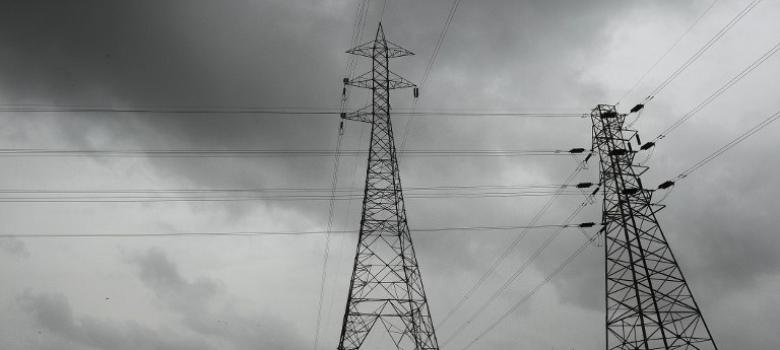
So much so, that the installed power generation capacity of diesel gensets in India has now exceeded 90,000 megawatts, or the equivalent of 36% of India’s total power generation capacity. This estimation by the power regulator, the Central Electricity Regulatory Commission, in fact takes into account only large units with over 100 kilo volt ampere. If smaller units in apartment complexes and household are taken into account, the figure could be much larger.

Policymakers thus far believed that the installed capacity of such units was just over 1,000 MWs, while in reality it was 90 times as much. And so there is no estimation of how much fuel is consumed by these gensets.

There should be. Because these gensets all consume subsidized diesel.

Fuel subsidies were a little under 2% of India’s GDP in 2011-12, according to IMF calculations. Diesel subsidies accounted for nearly half of it.

The rationale for subsidizing diesel is two-fold. Farmers use it to operate motor pumps to irrigate their farms. And second, cost of transporting essential goods and food needs to be kept down to rein in inflation.

Both these reasons are undermined by the situation on the ground and what researchers have shown.

Nearly 27% of diesel sold in India is consumed by vehicles, the economist Kirit Parikh estimated in 2013. All of these are not trucks transporting vegetables. Many are sports utility vehicles owned by the rich. Parikh estimated that an SUV owner received an annual subsidy of Rs50,000 on account of the diesel subsidy in the name of the poor.

Researchers at the thinktank Integrated Research and Action for Development showed in 2012 that a 10% increase in the price of diesel would only result in a 0.6% rise in consumption expenditure of the poorest 10% of people both in the rural and urban areas. A 4% rise in wholesale price index, which can be caused by fiscal deficit-fuelled inflation, can have a much greater impact, they found.

The government recently set up an expenditure reform commission to streamline spending and ensure better targeting of subsidies.

via Scroll.in – News. Politics. Culture..

13/02/2014

* India Approves Paying $54-a-Ton Subsidy for Raw Sugar Exports – Businessweek

India, the world’s biggest sugar producer after Brazil, will introduce a subsidy on raw sweetener exports to boost shipments amid a domestic glut, a government official said.

The cabinet approved a 3,333 rupees ($54) a metric ton subsidy for exports in February and March and will review the amount in April, the official, who asked not to be named because the person isn’t authorized to speak to the media, said in New Delhi yesterday after the cabinet meeting. That’s 67 percent more than the 2,000 rupees previously proposed by the Food Ministry. India will subsidize as much as 4 million tons in the next two years, the official said.

Bajaj Hindusthan Ltd., Balrampur Chini Mills Ltd. (BRCM) and other mills are counting on government support to increase shipments and trim record losses as cane costs climb and prices drop. The subsidy will help spur exports from India and help the country compete with supplies from Thailand, Michael McDougall, a senior vice president at Newedge Group in New York, said by phone yesterday. Refineries including Dubai-based Al Khaleej Sugar Co. will benefit from Indian supplies, he said.

via India Approves Paying $54-a-Ton Subsidy for Raw Sugar Exports – Businessweek.

Enhanced by Zemanta
25/01/2014

India Said to Consider $32 a Ton Subsidy for Raw Sugar Exports – Businessweek

India, the world’s biggest sugar producer after Brazil, will consider a subsidy on raw sweetener exports to ease a domestic glut, two government officials said.

The government will consider 2,000 rupees ($32) a metric ton subsidy for shipments, said the officials, who asked not to be identified because they aren’t authorized to speak to the media. The government may also consider ways to reduce imports in the next cabinet meeting, they said.

N.C. Joshi, spokesman for the food ministry, declined to comment on the matter.

via India Said to Consider $32 a Ton Subsidy for Raw Sugar Exports – Businessweek.

Enhanced by Zemanta
06/11/2012

* India Is Clamping Down on Spending

WSJ: “India’s government has started to tighten its belt as it strives to meet the revised budget deficit target of 5.3% of gross domestic product for the year through March 2013.

It’s not that spending is decreasing: it’s still increasing –  only a lot less. So in September, government spending rose by a “paltry” 1.4% from a year earlier, according to a new report by brokerage Nomura.  By comparison, in August, spending had increased by a whopping 32% from a year earlier, Nomura economist Sonal Varma told India Real Time.

To look at it another way, public spending rose by 0.47% between August and September compared to a 30.7% increase in the same period last year.

Nomura’s Ms. Varma told India Real Time said that the government has cut spending on sectors such as defense. A recent increase in fuel prices means the government is also saving money on subsidies. In September, the government raised the price of diesel by 14% to about 47 rupees to reduce its expenses on fuel subsidy. The government estimates this will save it around 150 billion rupees in the year ending March 31, 2013.

One of the reasons why public spending has slowed down, says Ms. Verma, is because the government has delayed paying subsidies to oil marketing companies. These are costs that may be partly rolled over to next year.

A senior finance ministry official told India Real Time that the government expects to cut at least 500 billion rupees, or about 4% of the 14.9 trillion rupees that it had planned to spend this year. The official said spending cut will be across the board, but did not want to single out any particular area.

Despite spending cuts, public expenditure remains high, mainly due to subsidies on fuel, food and fertilizers, and on social sector schemes.

To meet its budget deficit target, India needs to slash government expenditure as well as raise funds through stake sales in state-run companies and the sale of radio bandwidth.

These are the governments priorities as laid out by Finance Minister P. Chidambaram last week, when he announced a fiscal roadmap aimed at lowering the budget gap from 5.3% in the year through March 2013 to 3% by 2017.”

via India Is Clamping Down on Spending – India Real Time – WSJ.

Law of Unintended Consequences

continuously updated blog about China & India

ChiaHou's Book Reviews

continuously updated blog about China & India

What's wrong with the world; and its economy

continuously updated blog about China & India