Posts tagged ‘Tata Motors’

02/06/2016

Bureaucrats at the till | The Economist

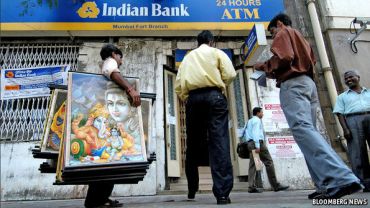
INDIA’S biggest banks tend to have official-sounding names, worthy of a central bank. There is State Bank of India, Union Bank of India, Bank of India and even Central Bank of India (the actual central bank is called the Reserve Bank of India, or RBI). That is because, starting in 1969, the entire financial system was nationalised. Although the government has grudgingly permitted private-sector banks over the past 20 years, the 27 public-sector banks (PSBs), which are listed but majority-owned by the government, still account for 70% of lending. That is a worry, because the PSBs are in terrible shape, having lent freely to companies that cannot pay them back. In response, both the government and the RBI are imposing various reforms—but not the most obvious one.

Indian banks dodged the global financial meltdown in 2008. But they promptly embarked on a frenzy of lending to big companies, sowing the seeds of a home-made crisis. The PSBs gleefully funded infrastructure projects that never got the required permits, mines with an output made much less valuable by slumping commodity prices, and tycoons whose main qualification was friendship with government ministers. PSBs have tried to gloss over the problem for years, but the RBI is now forcing them to admit the true extent of the damage.

The reckoning has been brutal: 3 trillion rupees ($44 billion) of loans have been recognised as “non-performing” by banks in the past two quarters, the vast bulk of them at PSBs; 17% of all loans there have either been written off, provisioned for or categorised as impaired, according to Credit Suisse, a bank. More losses are in the pipeline. The revelations have driven the combined market capitalisation of the 27 PSBs down to that of a single well-run private lender, HDFC Bank, founded in 1994.

Tidying up a mess on this scale is never easy, but it is proving particularly tricky in India. The absence of a bankruptcy law (one was enacted in May but it will take months, if not years, to become operational) leaves bankers powerless in the face of defaults. Indian lenders recover just 25% of their money from delinquent borrowers on average, and only after four years of haggling, compared with 80% in America in half the time. A creaky judicial system piles delays upon delays.

Worse, as quasi-bureaucrats, Indian bankers are loth to do the one thing that would help a recovery, which is to sell iffy loans to outside investors and move on. Such investors exist, albeit in limited numbers, but doing business with them can be treacherous: if the borrower’s fortunes recover after a sale and it pays back the new owner of the loans in full, bankers fear government auditors will accuse them of selling the distressed loans on the cheap. Best for the bankers to do nothing, and hope that the situation somehow improves.

The government wants to change this dynamic. A new “bank board bureau”, headed by an unimpeachable former government auditor, has been created to insulate bankers from government meddling, and so give them cover to sell assets at less than face value. Much of what it suggests is sensible: giving longer terms to PSBs’ bosses, for example, and ensuring they are not judged merely on how quickly they increase the bank’s loan book—part of the reason the PSBs ran into trouble before. The government also wants to halve the number of PSBs through mergers.

Source: Bureaucrats at the till | The Economist

09/07/2015

How India Could Be Hit by Chinese Stock Slide – India Real Time – WSJ

The dive in Chinese markets on Wednesday may have rattled investors across the globe, but prospectors in India need not panic: any trickle down impact of the crisis on the South Asian nation will be limited to certain sectors.

The Shanghai Composite index has lost around a third of its value over the past month and concern is growing that Beijing’s failure to prop up its equity markets means it will be unable to push through its broader agenda of liberalizing the economy to mitigate the country’s slowing growth.

India’s metals companies are likely to be affected the most as China is the world’s biggest importer of steel and iron ore. Any further slowdown in China’s economy will bring down global prices, hurting Indian firms’ profitability.


Meanwhile, luxury-car manufacturers are also likely to take a hit. Tata Motors 500570.BY +1.62%’ share price has already lost about 8% in the past two trading sessions on concerns that the problems in China could further worsen the slowdown in demand for its Jaguar Land Rover luxury cars there, which is now the single-largest market for JLR.

But long-term effects are expected to be minimal. India’s benchmark S&P BSE Sensex index has gained about 5% during the past month.

Though India’s benchmark index fell 1.7% yesterday, analysts and fund managers attribute it to a domino effect from China that won’t last. India’s improving domestic fundamentals are capable of thwarting a similar meltdown.

“India is relatively better off among the emerging markets as we don’t have too many negatives compared to other countries,” said Deven Choksey, managing director of Mumbai-based brokerage K.R. Choksey Shares and Securities.

He said investors will give preference to the ongoing reform process in India and key legislation such as the Land Acquisition Bill and the Goods and Services Tax Bill, rather than global events.

Analysts said upcoming corporate earnings will also matter more to Indian stock prices than the Chinese turmoil. Though corporate earnings are expected to take some time to improve, analysts are confident that a sharp recovery in profits is likely from the second half of this financial year. The January-March period was the worst earnings season in the past two years.

“Both (China and India) can’t be compared and, in fact, the developments in China will only serve to reinforce confidence in India and India’s market structure,” said Aashish Somaiyaa, chief executive of Motilal Oswal Asset Management Co.

In fact, foreign investors, who own about 43% of the publicly-traded shares of companies in the Sensex, have invested about $600 million already in July, after pulling out nearly $1.8 billion in the previous two months.

And domestic investors have not lost faith in the Indian story as they have poured in nearly $2.4 billion into stocks since May.

“Whenever there is a correction in [the] Indian market, we are getting more enquiries,” said Nandkumar Surti, chief executive of J.P. Morgan Asset Management India Pvt. Ltd.

via How India Could Be Hit by Chinese Stock Slide – India Real Time – WSJ.

19/05/2015

Tata Motors Faces Shades of Gray in China – India Real Time – WSJ

China’s car market is getting less luxurious, and among the firms feeling most uncomfortable is India’s Tata Motors.

Tata’s Jaguar and Land Rover unit wasn’t so long ago the darling of affluent Chinese car buyers. It is now a brand in a tailspin. China sales fell 21% between January and April from the year before.

Some of that is a national car market in retreat, especially the luxury segment. But JLR’s problems are more serious, partly because JLR is bearing the brunt of a governmentcampaign to force luxury car makers to lower prices. Last year, officials began encouraging so-called parallel imports of luxury cars, gray-market vehicles not authorized by the car maker that are sold in China below the official sticker price.

via Tata Motors Faces Shades of Gray in China – India Real Time – WSJ.

19/05/2015

Tata Motors’ New Nano Automatic Costs 269,000 Rupees – India Real Time – WSJ

Tata Motors Ltd. launched the first automatic transmission model of its Nano on Tuesday along with new features aimed at turning around falling sales of the micro vehicle, which made its name with a minuscule price.

The new version costs 269,000 rupees ($4,236) and 289,000 rupees at dealerships in New Delhi for the two variants on offer, the company said.

Tata Motors has revamped some of the exteriors and interiors of the Nano with features such as a Bluetooth-connected music system, fog lamps and a trunk,  which, for the first time on a Nano, can be opened.

The Mumbai-based auto maker has included these additions on three other new models in the Nano range. Prices start at 199,000 rupees for the base model with manual transmission.

Only around 1% of the cars sold in India have automatic transmissions, but car makers increasingly are putting them in cheaper models, betting that more Indians want to buy cars that are easier to drive.

Tata Motors—owner of Jaguar Land Rover Automotive PLC—marketed the Nano as the world’s cheapest car when it was introduced in 2009. But sales have failed to meet expectations, in part because the pitch back fired: Indian consumers were reluctant to be associated with a car considered cheap. Some incidents of earlier versions of the Nano catching fire also drew skepticism from some buyers.

Sales of the Nano fell 20% in the fiscal year ended March 31 to 16,901 vehicles, according to industry data.

All models of the Nano are powered with a 624-cubic-centimeter two-cylinder gasoline engine delivering 38 horsepower.

via Tata Motors’ New Nano Automatic Costs 269,000 Rupees – India Real Time – WSJ.

27/11/2014

India’s Car-Sharing Startups Look to Change a Driving Culture – Businessweek

The startups, modeled after U.S. car-sharing service Zipcar (CAR), are gaining in popularity. Slow economic expansion has frozen income growth, and prime lending rates have risen 26 percent in the past five years, discouraging people from taking out car loans. “A lot of people don’t want to invest in cars,” says Abdul Majeed, a partner at PricewaterhouseCoopers in Chennai. “With traffic congestion and cost of ownership rising, and with poor public transport in most cities, car-sharing is bound to take off.” For younger Indians joining the workforce, car-sharing comes free of the hassle of maintaining the cars.

Bandra–Worli Sea Link in Mumbai, India

Zoomcar, based in Bangalore, has attracted U.S. investors, including venture capital firm Sequoia Capital, which led an $8 million investment round in October, and former U.S. Treasury Secretary Lawrence Summers. Americans Greg Moran and David Back started the company in February 2013 with $650,000. They raised another $3 million last year. Summers was an early investor. “There were small-time operators, mom-and-pop type shops that didn’t have the technology and the right product,” says Moran, who, along with Back, graduated from the University of Pennsylvania in 2007.

via India’s Car-Sharing Startups Look to Change a Driving Culture – Businessweek.

13/05/2014

India Poll Prospects Drive Auto Shares – India Real Time – WSJ

Shares of most automobile companies in India surged on Tuesday on expectations that the pro-business Bharatiya Janata Party will emerge victorious when national election results are announced Friday.

Maruti Suzuki India Ltd.532500.BY +1.97%, Mahindra & Mahindra Ltd.500520.BY +1.40%, Tata Motors Ltd.500570.BY +0.81%, Ashok Leyland Ltd.500477.BY +1.19% and Hero MotoCorp Ltd.500182.BY +3.17% were trading around their 52-week highs when markets closed Tuesday evening.

“This (share-buying) is mainly sentiment-driven,” said an analyst at a Mumbai-based brokerage, who did not wish to be named.  He expected auto shares to trade even higher if a BJP-led government with a clear majority were to emerge the winners of India’s federal election.

The analyst said investors are hoping that a government led by BJP’s Prime Ministerial candidate Narendra Modi would take strong steps to revive economic growth, increase foreign investment, and boost industrial growth, which would in turn improve market sentiment and demand for new vehicles in India, the world’s sixth-largest car producing market.

via India Poll Prospects Drive Auto Shares – India Real Time – WSJ.

Enhanced by Zemanta
20/10/2013

Jaguar Land Rover to recruit 1,000 workers in China: report – NDTVProfit.com

Indian auto giant Tata Motors plans to recruit 1,000 workers in China for its 1-billion pound Jaguar Land Rover (JLR) joint venture in the country, which will include a new engine plant.

Jaguar Land Rover to recruit 1,000 workers in China: report

The West Midlands based carmaker has been training 50 of those workers at its Halewood plant in Merseyside, according to The Sunday Times.

The workers are due to return to China at the end of the month, where they will pass on their skills to others. JLR wants to cash in on the huge demand for its vehicles in China by launching its own giant manufacturing operation in Changshu near Shanghai.

Its best-selling Evoque \’Baby Range Rover\’ will be the first car to roll off the production line.

Sources told the newspaper that the factory, built under a joint venture with Chinese car manufacturer Chery, will produce up to 130,000 cars a year, rising to 200,000.

This would put it on a par with JLR\’s operations at Solihull, which builds Range Rover and Halewood.

via Jaguar Land Rover to recruit 1,000 workers in China: report – NDTVProfit.com.

21/11/2012

* Construction on Chery-Jaguar Land Rover JV starts in east China

Jaguar-Land Rover is following a path long set by other top-end car makers like Mercedes and BMW. It will, hopefully, not mean a reduction of jobs in the UK.

Xinhua: “Construction of a joint venture (JV) project between China’s auto giant Chery and Britain-owned luxury carmaker Jaguar Land Rover (JLR) started Sunday in east China’s Jiangsu Province.

Foundation stone-laying ceremony was held at the economic and technology development area in the city of Changshu, according to the city’s government.

The JV project, with a total investment of 17.5 billion yuan (2.8 billion U.S. dollars), will have an ultimate annual output of 250,000 units of passenger vehicles, said the government in a press release.

The first phase of the project, which costs 10.9 billion yuan, is expected begin producing vehicles in July 2014. Annual production capacity of the first phase will include 77,000 Land Rover SUVs, 23,000 Chery cars, and 30,000 unit of Jaguar cars by 2016.

New energy vehicles and cars with aluminum body will be produced in the JV, and its own brand will also be developed after its completion.

The JLR is also expected to establish a research and development center in the city, said the press release.

Chery was founded in 1997 and has since emerged as one of China’s largest and most productive automotive manufacturers. In 2011, Chery recorded sales of 643,000 units, ranking the sixth among China’s passenger vehicle manufacturers.

JLR, a wholly-owned subsidiary of Tata Motors, is the largest manufacturer of premium vehicles in Britain.

In 2005, sales in China accounted for one percent of combined Jaguar and Land Rover sales. The country is now JLR’s third largest market and is still growing.”

via Construction on Chery-Jaguar Land Rover JV starts in east China – Xinhua | English.news.cn.

Law of Unintended Consequences

continuously updated blog about China & India

ChiaHou's Book Reviews

continuously updated blog about China & India

What's wrong with the world; and its economy

continuously updated blog about China & India