Posts tagged ‘UNICEF’

06/10/2015

World Bank estimates show fall in India’s poverty rate – The Hindu

The World Bank has revised the global poverty line, previously pegged at $1.25 a day to $1.90 a day (approximately Rs. 130). This has been arrived at based on an average of the national poverty lines of 15 poorest economies of the world. The poverty lines were converted from local currency into U.S. dollars using the new 2011 Purchasing Power Parity (PPP) data.
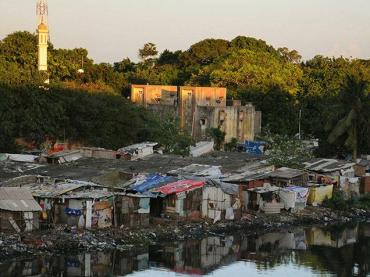
The global poverty line, previously pegged at $1.25 a day, has been revised to $1.90 a day (nearly Rs.130).

In its latest report ‘Ending Extreme Poverty, Sharing Prosperity: Progress and Policies’, authors Marcio Cruz, James Foster, Bryce Quillin, and Phillip Schellekkens, note that world-wide poverty has shown a decline under these new estimates.

The latest headline estimate for 2012 based on the new data suggests that close to 900 million people (12.8 per cent of the global population) lived in extreme poverty.

With the Sustainable Development Goals adopted in September, seeking to end all forms of poverty world over, the World Bank Group has set itself the target of bringing down the number of people living in extreme poverty to less than 3 per cent of the world population by 2030.

Source: World Bank estimates show fall in India’s poverty rate – The Hindu

01/07/2015

India Lags Behind Pakistan, Nepal on Sanitation – India Real Time – WSJ

Indian Prime Minister Narendra Modi has made sanitation a priority for his country, saying he would rather build toilets than temples and setting a goal for every home in the country to have a place to go to the bathroom by 2019.

But new data show India is lagging behind its neighbors in providing access to adequate sanitation.

“Progress on Sanitation and Drinking Water,” a report published by the United Nations Children’s Fund and the World Health Organization this week, says that advancements in meeting Millennium Development Goals, or MDGs, by 2015 in relation to sanitation have faltered worldwide. The report says 2.4 billion people still don’t have access to improved sanitation.


Mr. Modi launched his Clean India, or Swachh Bharat, campaign last year for good reason. Research shows that the practice of open defecation is linked to a higher risk of stunting in children and the spread of disease. A World Health Organization report said in 2014 that 597 million people in India still relieved themselves outdoors.  And the new WHO/Unicef report says that the Southern Asia region has the highest number of people who defecate in the open.

The new data show that despite recent efforts, over the past 25 years, India has been losing the regional race to improve sanitation.

Its neighbors, Nepal, Bangladesh and Pakistan led the way with the greatest percentage-point change in the proportion of the population with access to improved sanitation facilities between 1990 and 2015.

Pakistan’s percentage point change was 40–64% of people have use an improved sanitation facility. In Nepal, a country in which just 4% of people had access to improved sanitation facilities in 1990, access rose by 42 percentage points to 46%. Bangladesh improved its score by 27 percentage points — 61% now have access to improved sanitation facilities.

India meanwhile, had a lower 23 percentage point increase in the same period – bringing the number of people with access to improved sanitation facilities to 40%.

And Sri Lanka is way ahead, with 95% of people having access to improved sanitation.

via India Lags Behind Pakistan, Nepal on Sanitation – India Real Time – WSJ.

28/07/2014

Improving health care: Congratulations! Inoculations! | The Economist

FANS of the China model frequently say that, for all the disadvantages of a one-party state, there are also benefits. Enforcing basic health care is one—and by no means a small one. Last year China’s mortality rate for children under five years old was just one-fifth the rate it was in 1991, down from 61 deaths per 1,000 live births to 12. The maternal mortality rate has also dropped substantially—by 71%—since 1991. In 1992, one in ten Chinese children under five contracted hepatitis B. Today fewer than one in 100 of them carry the disease.

China’s advances have not gone unnoticed. Last month a group of four international bodies, including the World Health Organisation (WHO) and the World Bank, said China was one of ten countries to have made exceptional progress in reducing infant and maternal mortality (see chart). Not all of the ten—which included Egypt, Peru, Bangladesh and Vietnam—are one-party states.

China’s improvement lies in two basic, connected areas: better care at birth and countrywide immunisation. Since 2000 the government has offered subsidies to mothers who give birth in hospitals, thereby reducing health dangers from complications—especially the risk of neonatal tetanus. The scheme also brought hard-to-reach people and groups into contact with the health-care system.

From 2001 to 2007, the share of births that took place in hospitals rose by 46%, making it easier to give a hepatitis B vaccine immediately. China now has one of the highest usage rates of the birth dose of the vaccine in the world: 96% of Chinese babies receive it on their first day of life. In 2012 the WHO commended China for a “remarkable” public-health achievement. That year it declared China free of maternal and neonatal tetanus.

Margaret Chan, the WHO’s director-general, this month said that China’s regulatory system for vaccines had passed the WHO’s evaluation with outstanding results. Dr Chan says she has “full confidence” in the safety of vaccines made in China. Last year the WHO approved one for the first time for use by UNICEF. (That has not dispelled suspicions within China itself, however, about the safety of Chinese vaccines.) China and the WHO claim that about 95% of children are vaccinated for measles, rubella and polio. In 2008 the government added eight new vaccines, including hepatitis A and meningitis, to its national programme. All are administered to children free of charge. Just as important has been the mobilisation of a network of health-care workers, at provincial, county and township levels.

via Improving health care: Congratulations! Inoculations! | The Economist.

Law of Unintended Consequences

continuously updated blog about China & India

ChiaHou's Book Reviews

continuously updated blog about China & India

What's wrong with the world; and its economy

continuously updated blog about China & India