Posts tagged ‘United State’

10/03/2013

* From Auspicious Forest to Happy Establishment: A Literally Translated Map of China

The Atlantic: “One of the pleasures of studying the Chinese language is realizing that a huge number of words actually consist of combinations of smaller words.

shanghaiistchinamap.jpg

For example, the word for camera, zhaoxiangji, literally translates as something like “mutual flash machine”. Which, if you think about it, makes sense but…yeah. Never mind.

Along these lines, this nifty map of unknown origin, but pulled from the Shanghaiist Facebook feed shows China with the names of its provinces and nearby countries translated literally into English. Most of them are kind of meh, but  a few amusing ones stick out: Liaoning Province is called, quite ominously for a province bordering North Korea, “distant peace”. North Korea itself is referred to as “Morning Calm”, which, given the country’s recent behavior, doesn’t seem to fit at all. Far-western, bone-dry Qinghai Province translates into “Blue Sea”, which would be fine except that its thousands of miles from the coast. Guizhou, one of China’s poorest provinces, is nonetheless referred to as “Expensive State”.

Then there’s Russia which, oddly, translates to “Land of Rowers”, conjuring up an image of a fur coat wearing crew team spiriting down the Volga.Though it isn’t on this map, its often remarked that the Chinese word for the United States, meiguo, translates to “beautiful country”. Alas, this has less to do with an appreciation of the American landscape than the fact that meiguo sounds vaguely similar to America. All this goes to show how little the literal meanings of place names even matter. For example, what does the name “Hong Kong” evoke? For me, its tall buildings, finance, British customs, kung fu movies, and great dim sum. Fragrant harbor? Not quite. But that’s exactly what Hong Kong means.

via From Auspicious Forest to Happy Establishment: A Literally Translated Map of China – Matt Schiavenza – The Atlantic.

07/03/2013

* North Korea warns U.S. of preemptive nuclear strike

Perhaps North Korea has learnt from the lessons of past wars with the US. Losers such as Germany and Japan benefited hugely from American aid, whereas winners such as North Vietnam did not benefit for decades after beating the Americans. Indeed even American allies like the UK had to pay the full Second World War loan for over 50 years.

So, if North Korea fought the US and lost, it reasons, unlimited aid will be forthcoming; perhaps more than China is willing to contribute.

That seems to be the only rational explanation for the continued belligerence of North Korea.

Reuters: “North Korea threatened the United States on Thursday with a preemptive nuclear strike, raising the level of rhetoric while the U.N. Security Council considers new sanctions against the reclusive country.

North Korean soldiers attend a military training in this picture released by the North Korea's official KCNA news agency in Pyongyang March 6, 2013. REUTERS-KCNA

North Korea has accused the United States of using military drills in South Korea as a launch pad for a nuclear war and has scrapped the armistice with Washington that ended hostilities in the 1950-53 Korean War.

North Korea, which has one major ally, neighboring China, threatens the United States and its “puppet”, South Korea, on an almost daily basis.

“Since the United States is about to ignite a nuclear war, we will be exercising our right to preemptive nuclear attack against the headquarters of the aggressor in order to protect our supreme interest,” the North’s foreign ministry spokesman said in a statement carried by the official KCNA news agency.”

via North Korea warns U.S. of preemptive nuclear strike | Reuters.

11/02/2013

Was it Sun Tzu who said: “Always do the opposite of what your enemy is doing. Because copying him will always make you number 2”? Or did I make that up?

30/05/2012

* China could owe America one trillion dollars

China has a secret: It owes American investors hundreds of billions of dollars.

The Chinese government doesn’t like to talk about it and the U.S. government doesn’t want to raise it. But decades ago, Beijing defaulted on debt owed to Americans, as well as investors and governments around the world. In one case, it was paid. In the rest it was not. More than 20,000 American investors own this debt. The U.S. government may also own Chinese war debt, unpaid since World War II.

With the simple stroke of an executive proclamation, President Barack Obama can begin the process of addressing this issue. A 1930s-era law has established a quasi-public agency within the Securities and Exchange Commission, known as the Corporation of Foreign Securities Holders, which can arbitrate this dispute, much as a predecessor agency did for decades. China can both afford and benefit from this solution; it will afford goodwill at a time when relations between the world’s two superpowers are strained.

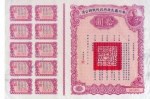
The story begins nearly 100 years ago, in 1913, when the government of China began issuing bonds to foreign investors and governments for infrastructure work to modernise the country. As the country fell into civil war in 1927, paying these debts became increasingly difficult and the government fell into default. Even so, in April 1938, the Nationalist government of China began to issue U.S.-dollar denominated bonds to finance the war against Japan’s brutal invasion.

Locked in a pitched battle for survival, the government issued these bonds into 1940. As part of its wartime financial aid, the U.S. government further provided a $500 million credit to China in March 1942, shipping gold there and helping to stabilise the currency. In return, it appears that the U.S. government redeemed some of these dollar-denominated bonds. But China doesn’t appear to have repaid this debt either, according to State Department records, and the declaration of the People’s Republic of China in 1949 ended decades of political, military and financial cooperation.

While successor governments are usually bound by the debts of predecessor governments, the new Communist government refused to pay any of these claims. The issue lay dormant for decades, just as the bilateral relationship did. Then, in 1979, as part of normalising relations, Washington released government financial claims regarding the expropriation of American property and appears to have dropped the matter of the war debt entirely. However, it is one thing for government decision-makers to let go of government debt, however questionable that is.

And it is entirely another thing for individual citizens to press their claims. Some U.S. investors tried to sue the Chinese government in the 1980s and 1990s. However, the Foreign Sovereign Immunities Act makes it very hard for any U.S. citizen to sue a foreign government in U.S. courts because the law generally says that U.S. courts do not have jurisdiction.

The law usually only allows the jurisdiction of U.S. courts if a foreign government waives its immunity, commits a tort or seizes property. Recent additional exceptions have been added for terrorism. China lost an initial summary judgement for failing to appear in court but, with the urging of the U.S. State Department, later appeared in court and successfully argued that U.S. courts did not have jurisdiction.

Today, the Chinese bonds held by U.S. investors may be worth as much as $750 billion, according to Jonna Bianco, president of the American Bondholders Foundation, who estimates the value of bonds held by investors worldwide may be $10 billion, including interest and penalties for default.

China Daily Mail blog: “China could owe America one trillion dollars.”
20/05/2012

* China seeks export recovery

China Daily: “China is now losing an increasing number of export orders to other emerging countries because of rising costs at home. That’s driving the government to consider supportive measures including tax rebates and reduced transportation fees, a commerce official said on Saturday during an investment and trade expo held in Changsha, Hunan province.

“Rising costs of labor and land as well as enhanced environment protection criteria has reduced the competitive edge of Chinese exporters,” said Wang Shouwen, director of the department of foreign trade at the Ministry of Commerce. Chinese labor-intensive exports, including textile, apparel and light industrial products, increased rapidly in such traditional markets as the US, the EU and Japan before 2010. But the first four months of 2012 saw Chinas textile and apparel exports to Japan expand only slightly, by about 7 percent year-on-year, while Japanese imports from other emerging countries surged by more than 40 percent in the same period, Wang said. “Overseas buyers strategy, called China plus one, also contributed to the shifting away of Chinese exporting order. China remained the main supplier for overseas buyers but one alternative procurement source in other emerging countries is established to compare the cost with China. “Further rising costs at home will drive buyers to rely more and more on their plus-one countries,” the director said.

via China seeks export recovery|Economy|chinadaily.com.cn.

Compounding worries about the Greek economy, recessions across many Euro countries, low growth in the US and slowing growth in India, comes the bad news that Chinese exports are not as high as it used to be. Bad news all round.

10/05/2012

* Marine forces of China, Thailand to hold joint training

China Daily: “Marine forces of China and Thailand will hold a joint military training in south Chinas Guangdong province from May 9 to 29, sources with Ministry of National Defense said Tuesday.

Garuda as national symbol of Thailand

Garuda as national symbol of Thailand (Photo credit: Wikipedia)

The training, codenamed Blue Commando-2012, will be conducted in Zhanjiang and Shanwei of the province in line with an agreement reached by the two countries navies, according to the ministry’s information office. The training will be the second of its kind by the two navies marine forces since 2010, and it will feature anti-terrorism and increase mutual understanding of the two forces.”

via Marine forces of China, Thailand to hold joint training|chinadaily.com.cn.

It takes two to tango. So it is with the US trying to ‘surround’ China with alliances or naval exercise with Australia, India, Philippines and (see other post) with Singapore.  In the meanwhile, China is holding exercises or reaffirming military alliances with Russia and Thailand.

Related articles and posts:

10/05/2012

* U.S. plans 10-month warship deployment to Singapore

Strait of Malacca from globe at Field Museum

Strait of Malacca from globe at Field Museum (Photo credit: Wikipedia)

Reuters: “The first of a new class of U.S. coastal warships will be sent to Singapore next spring for a roughly 10-month deployment, the Navy said on Wednesday, spotlighting a move that may stir China’s fears of U.S. involvement in South China Sea disputes.

Deployment of the shallow-draft ship “Freedom” will help refine crew rotations, logistics and maintenance processes to maximize the classs value to U.S. combat commanders, Rear Admiral Thomas Rowden, the Navys director of surface warfare, told reporters.”Well be deploying the ship for about 10 months in the spring of next year” to Singapore, he said in a teleconference. “In the meantime, were prepping her for success in the execution of that deployment.

“Singapore is strategically located along the Strait of Malacca, the chief link between the Indian and Pacific Oceans through which flows about 40 percent of world trade. The government has discussed hosting up to four such U.S. “Littoral Combat Ships,” or LCS, on a rotational basis at its naval facilities. Both countries have said the deployment stops short of a basing agreement.”

via U.S. plans 10-month warship deployment to Singapore | Reuters.

It takes two to tango. So it is with the US trying to ‘surround’ China with alliances or naval exercise with Australia, India, Philippines and with Singapore.  In the meanwhile, China is holding exercises or reaffirming military alliances with Russia and Thailand (see other post).

Related articles and posts:

18/04/2012

* Who’s Returning to India and Why?

WSJ: “A recent front page article in the New York Times documented the migration of second generation Americans back to their ancestral countries, including India, China, Brazil and Russia.

India’s faltering growth may be disappointing, but it’s still much more rapid than the continued stagnation of the U.S. economy. In certain fields, at least there are still opportunities to be seized in India by those with a taste for adventure.

Labor economists call this kind of migration the “reverse brain drain.” Ironically, the migrants are often the kids or sometimes grandkids of the original “brain drain,” skilled workers and professionals who left India and other developing countries in the 1960s, ’70s and ’80s to seek opportunities in the booming U.S. economy.

In fact, a more accurate term for the highly mobile skilled workers of today, favored by labor economists, is “brain circulation.” These people are agile and will seek out opportunities wherever they exist. So if things don’t work out in India, they might return to the U.S. or try their luck somewhere else.”

via Economics Journal: Who’s Returning to India and Why? – India Real Time – WSJ.

Law of Unintended Consequences

continuously updated blog about China & India

ChiaHou's Book Reviews

continuously updated blog about China & India

What's wrong with the world; and its economy

continuously updated blog about China & India