Posts tagged ‘Wen Jiabao’

25/09/2012

If this article is correct, then it is good news, indeed. Mr Wen may yet achieve what he didn’t quite do while Premier for a decade. It all depends upon whether then new top two leaders (probably Xi and Li) are pro-reform or not.

30/08/2012

* China to buy 50 Airbus planes for $3.5bn

BBC News: “China has signed a deal to buy 50 planes worth $3.5bn (£2.2bn) from Europe’s Airbus.

The agreement is part of a slew of trade deals signed by German Chancellor Angela Merkel at the start of a two-day visit to China.

An agreement on Airbus plane assembly in China was also signed, according to the Xinhua news agency.

Chinese Premier Wen Jiabao said on Thursday his country would continue to invest in the EU.

Emissions row

This is the first significant deal in China for Airbus, whose parent company is EADS, since a dispute between the country and the European Union over the Emissions Trading Scheme (ETS).

Effective from 1 January this year, the ETS charges airlines for the carbon they emit.

China and other countries say the system is not fair, as it charges airlines for the full journey, not just over European airspace.

Following this in March, EADS chief executive Louis Gallois said Airbus was facing “retaliation measures” by China.

According to him, China had blocked firms from buying planes made by Airbus. Beijing did not comment on the allegation.”

via BBC News – China to buy 50 Airbus planes for $3.5bn.

Although $3.5bn sounds big, it is only half that being ordered by the Philippines: Airbus wins $7 bln Philippine Air order (vancouverdesi.com)

29/08/2012

* China city party chief ‘fled with money’

BBC News: “A former top official of a city in northeast China has fled the country – reportedly with millions of dollars, Chinese reports say.

A person handling Chinese yuan bills

Wang Guoqiang, who was party secretary of Fengcheng city in Liaoning province, left for the United States in April with his wife, the People’s Daily said.

Local officials said Mr Wang, who was being investigated for corruption, had been removed from his post, it said.

Several reports cited 200m yuan ($31.5m; £20m) as the amount taken.

The local officials did not elaborate on allegations that he had embezzled and transferred the funds to the US, where his family is believed to be.

But rumours surrounding the case, the latest in a series of corruption scandals, have been circulating online for some time.

According to the city’s website, Mayor Ma Yanchuan took over as Fengcheng party secretary earlier this month.

Premier Wen Jiabao has repeatedly called corruption the biggest threat to Chinese Communist Party rule.

Corruption among officials remains a huge source of anger among China’s population, says the BBC’s Martin Patience in Beijing.

While the finances of the top leaders are off limits, many other senior officials have been brought down by scandals, says our correspondent.”

via BBC News – China city party chief ‘fled with money’.

As this article says: “Premier Wen Jiabao has repeatedly called corruption the biggest threat to Chinese Communist Party rule.”

See also: Corruption by officials  is what makes Chinese citizens mad

14/07/2012

* China top leaders vow to better handle people’s petitions

Xinhua: “China’s top leaders on Friday met representatives for a nationwide conference on the work of handling the people’s petitions, vowing to safeguard the people’s rights and interests and strengthen ties between the authorities and the people.

President Hu Jintao, Premier Wen Jiabao, Vice President Xi Jinping and Vice Premier Li Keqiang met the representatives before the conference, extending their greetings to all the government staff handling the people’s letters and calls.

Zhou Yongkang, a member of the Standing Committee of the Political Bureau of the Communist Party of China (CPC) Central Committee, and secretary of the Committee of Political and Legislative Affairs of the CPC Central Committee, also met representatives and delivered a speech at the conference.

The petitioning, also known as letters and calls, is the administrative system for hearing complaints and grievances from Chinese citizens.

The bureaus of letters and calls at all levels are commissioned to receive letters, calls, and visits from individuals or groups, and then channel the issues to respective departments, and monitor the progress of settlement.”

via China top leaders vow to better handle people’s petitions – Xinhua | English.news.cn.

Petitioning has been a historic means for members of the public, however lowly to put forward their grievances to someone high enough to deal with it. Sometimes, a petition would go all the way to the Emperor or, at least, to his chief minister.

The Chinese government is merely reaffirming this historic practice.

See also: http://en.wikipedia.org/wiki/Petitioning_(China)

31/05/2012

* Senior leader says to promote Xinjiang’s leapfrog development

Xinhua: “Vice Premier Li Keqiang on Wednesday called for more support to Xinjiang Uygur Autonomous Region to achieve leapfrog development and long-term stability in this westernmost region of China. Li made the remarks at the 3rd National Work Conference on “pairing assistance” projects to support Xinjiang’s development.

Maps of Xinjiang Uygur Autonomous Region of Ch...

Maps of Xinjiang Uygur Autonomous Region of China Español: Región autónoma de Xinjiang (Photo credit: Wikipedia)

President Hu Jintao met the delegates to the annual conference and thanked them for their efforts made in accelerating Xinjiang’s development. Premier Wen Jiabao and Vice President Xi Jinping, both members of the Standing Committee of the Political Bureau of the Communist Party of China CPC Central Committee, were present at the meeting.  Zhou Yongkang, also member of the Standing Committee of the Political Bureau of the CPC Central Committee, also met with the delegates and attended the conference.

Huge achievements have been made in the past two years under a large number of pairing assistance projects for Xinjiang, especially projects concerning Xinjiang people’s well-being, said Li, also a member of the Standing Committee of the Political Bureau of the CPC Central Committee.

Vast land, abundant resources and huge development potential make Xinjiang a major area to implement China’s strategy to expand domestic demand and the strategy to develop the country’s western regions, Li said, adding Xinjiang is also a key area to accommodate transfer of domestic industries. Xinjiang is one of the bridgeheads for China’s opening to central Asia and Europe, said Li, calling for speeding up the opening of China’s western border areas while enhancing the openness of its eastern coastal regions.

Li noted that assisting the development of Xinjiang is a long-lasting, arduous and imperative task. More efforts and higher effectiveness are needed to advance the programs concerning the well-being of local people, such as housing, employment, medical care and social insurance, while the infrastructure construction and environmental protection should be further improved, said Li. More support regarding technology, education, talented people and excellent cadres should be provided to Xinjiang, and the exchanges between Xinjiang and inland areas should be enhanced, Li added.”

via Senior leader says to promote Xinjiangs leapfrog development – Xinhua | English.news.cn.

Xinjiang and Tibet are the two areas where ethnic minorities do not see eye to eye with the Han majority. Interestingly, both are strong adherents of religion; Buddhism in the case of Tibet and Islam in the case of Xinjiang. Until and unless the central authorities can convince these minorities that they have some form of self-determination (after all both are called ‘autonomous regions’ of China), unrest will continue.

19/05/2012

* How China’s 300m microbloggers are shaking the system

The Times: “There was a time when a hardline editorial in the Beijing Daily could strike fear into Chinese hearts. These days, such clumsy propaganda draws a stream of sarcasm from the country’s 300 million or so microbloggers. …

Welcome to the world of the Twitter-like Sina Weibo — weibo means microblog — which has become one of the greatest threats to Communist Party supremacy. With 20 million followers, the most popular microblogger is the actress Yao Chen, whose musings, like “the traffic is good today” or “I recommend that documentary” are hardly incendiary. But many more want to weigh in on touchier topics … It is clashes like these that are reframing the battle for control of information.

Concerns have intensified as China approaches its once-a-decade change of leadership in a state of political turmoil not seen for 20 years. What Beijing wants is stability, a smooth transfer of power and a public convinced that everything is improving. The microbloggers ensure that it will have to achieve that against a backdrop of scrutiny, mockery and even defiance.

For a regime that has long prided itself on its control of information, the huge numbers who follow the most popular microblogs are a potent reminder of diminishing influence. In common with the most followed people on Twitter, which is banned by Chinese censors, the most popular weibos have readerships that dwarf the circulation of the largest newspapers.

“It has given a voice to 300 million Chinese and that has never happened before,” said Zhan Jiang, a professor of journalism at the Beijing Foreign Studies University. “It has taken on the role of spreading information when news is breaking and that is a big challenge to the Government and media.” As the Government is quickly recognising, sheer size of readership is not the real problem. The war being lost by the authorities, said Hu Xingdou, of the Beijing University of Technology, involves the sophistication of the information in the public domain, the speed of its flow and the vibrant debate. “Weibo has started the enlightenment in China and promoted social progress,” he said. “It is pushing the Government to disclose more, exposing more truths and allowing people to play a role in politics. We should thank God for giving weibo to China: without it, our prospects would not be good.”

Some bloggers talk about 2012 as the year in which Beijing might finally lose control of information. But they also fear that some of the most influential weibos are being quietly shut down — an attempt, said one, to test the “arrogant and stupid idea” that information can still be controlled. The 140-character weibo offers far more scope for provocative content than a 140-letter Tweet. Official data is ridiculed, corruption is outed and the contradictions of the system laid bare. When officials tried to bury news of a fatal train crash in southern Wenzhou last year, it was the exposure via weibo that forced the authorities to change tactics immediately.

“The more powerful weibo has become, the more use it could be to the central government if they thought about it,” said Francis Cheung, a China economist at CLSA Securities. “They are still thinking of weibo as something that can be controlled. In reality it is a new media that is telling Beijing more about what is going on around the country than it ever knew before.”For now, the Government appears to be resorting to tried and tested strategies: it is insisting that users register with their real names and has made it a crime to spread false rumours. Some believe these measures could kill the weibo phenomenon, others are convinced the genie is out of the bottle.

A large part of the power of weibo, which is hosted by Sina, the state-owned ISP, is its resilience. When words are blocked by the censors, codes and puns evolve within minutes to get around the ban. Premier Wen Jiabao becomes known as “teletubbies” while the deposed Chongqing party secretary, Bo Xilai, becomes “tomato”.

This week, weibo users were on form when the National Bureau of Corruption Prevention said that 72.7 per cent of Chinese were satisfied with government progress on fighting corruption. The derision went viral. “Public opinion poll? Did they conduct it inside the Politburo? Poor old public opinion — raped once again,” wrote one user.

“Weibo is doing something in China that is very different from what microblogs are doing in the West,” said Mr Hu. “It has become a means of making sure that people’s constitutionally guaranteed rights are actually upheld.”

via How China’s 300m microbloggers are shaking the system | The Times.

27/04/2012

* China Wants More Trade With Central and Eastern Europe

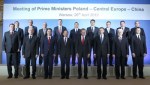
New York Times: “Prime Minister Wen Jiabao said Thursday that China wanted to double trade with the countries of Central and Eastern Europe to $100 billion a year by 2015, and pledged billions in loans to help promote investment in the region.

Mr. Wen made the announcement at a gathering in Warsaw that brought together business and political leaders of countries stretching from the Baltics to the Balkans that are eager to do business with China, even as they struggle to overcome stereotypes still held by many in the region who associate the Chinese as makers of inexpensive toys and designer knock-offs.

Infrastructure, high technology and green technology are target areas for growth, Mr. Wen said, announcing that Beijing would set up a $10 billion line of credit to support investment in these specific industries. He also pledged an additional $500 million in funds to be made available to Chinese companies seeking to make first-stage investment in the region.”

via China Wants More Trade With Central and Eastern Europe – NYTimes.com.

China continues to woo everyone. And Mr Wen is making himself very busy in his final year in office.

Related post: https://chindiapedia.wordpress.com/wp-admin/post.php?post=5753&action=edit

https://chindia-alert.org/political-factors/geopolitics-chinese/

27/04/2012

* Wen paints Europe green in 4-nation trip

China Daily: “Trade and investment deals and business cooperation have been the focus of Premier Wen Jiabao’s tour to four European nations this week. Such fare is common for such visits, but

Wen Jiabao (温家宝), Chinese Premier

Wen Jiabao (温家宝), Chinese Premier (Photo credit: Wikipedia)

there was a new ingredient in the latest trip: Wen and his delegation have been paying particular attention to green and innovative industries in almost every destination of the seven-day visit, which ends on April 29.

As China switches from high growth to sustainability in the current five-year plan and as the country’s foreign trade growth slows, politicians, businesses and industrial leaders from China and Europe are seeing more opportunities in each others markets. Before his scheduled arrival in Warsaw on April 27, Wen pressed for global action on sustainable development that strikes a balance between economic growth, social progress and environmental protection, instead of focusing exclusively on the environment, at the Stockholm+40 conference in Sweden.”

via Wen paints Europe green in 4-nation trip|News|chinadaily.com.cn.

This relatively new theme of ‘sustainability’ goes along with strenuous efforts to reduce carbon and increase renewable energy sources. Good for China and good for the world.

Related pagehttps://chindia-alert.org/economic-factors/greening-of-china/

27/04/2012

* China’s vice-premier starts landmark European mission

Li Keqiang, Chinese politician

Li Keqiang, Chinese politician (Photo credit: Wikipedia)

China Daily: “Visit covers Russia, Hungary, Belgium and EU headquarters

Business opportunities will emerge from the economic development of China and Russia and both countries will benefit from increasing prosperity and global influence, Vice-Premier Li Keqiang said on Thursday. “The two countries are in total agreement on this point,” Li said in a Russian newspaper article.

The vice-premier started a 10-day visit on Thursday, to promote trade and investment. He will visit Russia, Hungary, Belgium and EU headquarters in Brussels.”We view each others growth as opportunities because both nations share similar targets,” Li said.”

via Chinas vice-premier starts landmark European mission|Politics|chinadaily.com.cn.

The wooing continues unabated; Premier Wen visits Iceland, Sweden, Germany and Poland, then VP Li visits Russia, Hungary, Belgium and EU.

Related posts:

26/04/2012

* China Invests in Germany Amid Uncertainty

New York Times: “As Prime Minister Wen Jiabao of China tours Europe this week, it is no accident that Germany occupies a special place on his itinerary. After all, Germany is the one European Union country that has a trade surplus with China. And it has also been a focus of Chinese investment in Europe — so much so that analysts say some Germans are growing wary as Chinese businesses have been snapping up German engineering companies.

Mr. Wen, making his sixth visit in eight years, and the German chancellor, Angela Merkel, on Sunday opened the annual trade fair in Hanover, billed as the world’s leading showcase for industrial technology. They plan to witness the signing of an economic agreement at the Volkswagen headquarters, in Wolfsburg, on Monday. According to German media reports, the deal will include the opening of a new car plant in the far western Chinese region of Xinjiang.

Mr. Wen’s agenda, as with a follow-up trip planned by his likely successor, Vice Prime Minister Li Keqiang, seems aimed at presenting an aura of business as usual, even as trade tensions flare with the West and the Communist Party at home is embroiled in its biggest scandal in years, involving the deposed Politburo member Bo Xilai.”

via China Invests in Germany Amid Uncertainty – NYTimes.com.

Two birds with one stone: Collaboration with Germany & VW; and opening up a major auto plant in Xinjiang, one of the two provinces with significant unrest (the other, of course, is Tibet).

Law of Unintended Consequences

continuously updated blog about China & India

ChiaHou's Book Reviews

continuously updated blog about China & India

What's wrong with the world; and its economy

continuously updated blog about China & India