Posts tagged ‘WhatsApp’

08/09/2016

A 16-year-old British girl earns £48,000 helping Chinese people name their babies – BBC Newsbeat

Beau Jessup, a British A-level student from Gloucestershire, came up with the idea after a family visit to China.

They were out for a meal with friends when she was asked to give an English name to a newborn baby.

In China it is considered important to have an English name for future study or business with the UK.

‘Special Name’ requires the user to pick five of the 12 personality traits which they most hope their baby will grow into

In China they name their child based on the elements and Beau wanted a similarity between how they pick their Chinese name and how they pick their English name.

And she does this by assigning personality traits to each English name.

They also select the gender of the baby and pay the equivalent of 60p.

The three chosen names are then shared with family and friends on We-Chat, China’s WhatsApp equivalent, to help make the final decision.

Each suggestion is printed on a certificate with its meaning and an example of a famous person with that name.

Beau says that when she was first asked to name her father’s friend’s baby, she was surprised.

“I’m not really qualified or relevant enough in that baby’s life to be the person to give it a name.

“But after hearing of some of the “embarrassing” names, Beau decided she needed to act.

There was someone called Rolex

“There are quite a few examples where people have gotten the names wrong.”

Beau explains that the Chinese are fascinated by western culture but their access to it is restricted by the government in China.There isn’t open access to the internet so they can’t use standard baby naming websites that people may use in the UK.

“Being exposed to luxury items and things like Harry Potter, Disney films and Lord of the Rings means they use those for reference.

“I once heard of someone called Gandalf and another called Cinderella.”

Amelia and Oliver were the most popular baby names in England and Wales in 2015
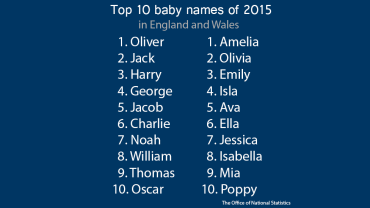
That’s according to the Office for National Statistics which released the complete set of data last week.

But Beau doesn’t know which names are the most popular on her website, and she’s “happy about that”.

“It is called ‘special name’ and it’s based on individual preference and what they personally want their child to be.”

Beau says it’s quite strange to know she’s named more than 200,000 babies

“It’s nice to be a part of such a happy experience and be a part of those young stages in a baby’s life.”The site’s success has been a pleasant surprise.

“I wanted to do it just to see if an idea could turn into more than just simply an idea.”

And I never expected it to become more than just a small project because I never really considered myself very academic.

“It is obviously a nice surprise, but it is definitely a surprise.”

Source: A 16-year-old British girl earns £48,000 helping Chinese people name their babies – BBC Newsbeat

06/03/2014

BBC News – India police use WhatsApp to trace missing boy

A missing 11-year-old boy in India has been found after he was spotted by a member of the public who received a WhatsApp alert sent out by police.

Police message on the missing boy

Police in the northern town of Bareilly say they used the instant messaging service to send out the boy’s photo to several mobile phones in the area.

A man travelling on a train, who had received the alert, recognised the boy sitting near him and called the police.

India has more than 900 million mobile users and WhatsApp is hugely popular.

The app, used by more than 400 million people globally every month, was bought by social networking site Facebook recently for $19bn (£12bn).

via BBC News – India police use WhatsApp to trace missing boy.

Enhanced by Zemanta
21/02/2014

Who Is WhatsApp’s Neeraj Arora? – India Real Time – WSJ

Another renowned alumnus of IIT!  See https://sites.google.com/site/123iitphysics/iitalumni

“As jaws dropped across the globe at the amount Facebook paid to acquire messaging company WhatsApp on Thursday, the media in India was quick to credit the deal to Neeraj Arora, an Indian who describes himself on his website as “all things business at WhatsApp!”

Mr. Arora is the vice-president of business development for the messaging service.

He studied mechanical engineering at one of the country’s most prestigious education establishments, the Indian Institute of Technology in New Delhi, and received his Masters in Business Administration from the Indian School of Business in 2006, made the front page of The Economic Times on Friday with the headline, “This Chat is Laced with Indian Masala.”

Mr. Arora’s success story fits the beloved script of an Indian making a mark in California’s Silicon Valley or anywhere else in the U.S. for that matter.

He spent four years handling corporate development for Google Inc. before joining WhatsApp when it was still a fledgling startup in 2011.

Prior to Google, he was part of the Investments and Corporate Strategy teams at Times Internet Limited, a subsidiary of the Times of India Group, and an engineer and “self learnt hacker” at mobile file sharing company Accellion  Inc., according to his LinkedIn profile.”

via Who Is WhatsApp’s Neeraj Arora? – India Real Time – WSJ.

Enhanced by Zemanta
18/01/2014

The internet: From Weibo to WeChat | The Economist

WHEN Luo Changping, an investigative journalist, tried on November 22nd to post the latest chapter of his big scoop on WeChat, a popular Chinese mobile messaging service, censors blocked it. But he was able to work round them. In a follow-up message he told his subscribers they could send him the words “Chapter Seventeen”; users who did so automatically received the post on their mobile phones, uncensored.

WeChat, or Weixin in Chinese, is known mostly for private chatting and innocuous photo-sharing among small circles of friends. With more than 270m active users, it has become the star product from Tencent, an internet conglomerate. Some have compared it to WhatsApp, an American messaging service. More quietly, it has become the preferred medium for provocative online discussion—the latest move in China’s cat-and-mouse game of internet expression and censorship.


Mr Luo began posting his serialised stories on WeChat in May. They related how he had exposed the alleged corruption of Liu Tienan, a senior economic official. He had tried tweeting them on Sina Weibo, a Twitter-like microblog on which he had accused Mr Liu of corruption months earlier, but internet censors blocked him from doing so: hence his switch to WeChat. Though his initial attempts there were also blocked, the loophole that enabled him to send out the file is typical of WeChat’s more relaxed approach to censorship.

A WeChat account works much less publicly than accounts on microblogs (of which Sina Weibo is the most prominent). Anyone using Sina Weibo can see almost anyone else’s tweets and forward them on, meaning a single tweet can spread very quickly. On WeChat, it is usually only subscribers to a public account who will see a post (though such posts may also be viewed on a separate web page), and if a subscriber forwards a post, only that subscriber’s circle of friends see it. Its non-public accounts are even less open. Information on WeChat spreads at such a slow burn that authorities feel they have more control over it. Also in contrast to microblogs, many types of public account (like Mr Luo’s) can send out only one post to subscribers a day, making them much easier for authorities to monitor.

Mr Luo does not always have problems sending out his stories on WeChat and, since switching to the service, he has posted the equivalent of a blog post every week or two, and built a following of more than 60,000—“higher than the actual subscription figure of many Chinese magazines”, he says. WeChat is now his prime delivery platform for newsy titbits, including sensitive information that would be censored more rigorously on microblogs. (He has not published for Caijing magazine, his former employer, since being transferred in November to a non-reporting position at an affiliated research institute.) Meanwhile, he makes much less use of his Sina Weibo account, even though it has more than four times as many followers: “The ground for public opinion has begun to shift toward WeChat,” he says.

The rise of WeChat is a business phenomenon in its own right (see article). But it is also a measure of how adaptive and resilient China’s political and social discourse has become—almost as adaptive as the censorship regime that seeks to contain it. Recently a number of public intellectuals have lamented the decline of meaningful discussion on weibo. The microblogs were full of user-led activism in 2012 but, starting in 2013, officials have dramatically escalated their efforts to control them. Propaganda outlets have intensified attacks on the spread of rumours online, authorities browbeat online celebrities to be “more responsible” (at least two have been arrested on unrelated charges), and microbloggers can now be jailed for up to three years for tweeting false information that is forwarded 500 times or viewed 5,000 times. President Xi Jinping, in a speech to party leaders in August, said that the internet was the prime battleground in the fight over public opinion, and that officials must seize control of it.

via The internet: From Weibo to WeChat | The Economist.

Enhanced by Zemanta
Law of Unintended Consequences

continuously updated blog about China & India

ChiaHou's Book Reviews

continuously updated blog about China & India

What's wrong with the world; and its economy

continuously updated blog about China & India