Posts tagged ‘World War II’

27/08/2013

Chinese Hatred of Japan—Real or Government-Created?

The Atlantic: “”On this day in 1945, Japan announced unconditional surrender.” The official account of China Central Television posted this information on Weibo, one of China’s largest social media platforms, and it quickly spread. Three trending posts, with a combined 236,000 retweets, identified the day’s significance and emphasized the number of Chinese who had been wounded and killed during the war — 35 million by China’s official estimates.

chinahatesbanner.jpg

Within an hour, the hashtag “#NeverForgetNationalHumiliation” began to trend, drawing a mix of patriotism, anger, and confusion. User @谭兵林 asked, “How can you not mention to whom the Japanese surrendered?” Others criticized the appropriation of a day thought to be a victory to remember a period of national humiliation: “Many people have told me that today is a day of national humiliation,” wrote @Cepheus的旁座-ELF, “but … isn’t today the day Japan surrendered? How can Japan surrendering be a day of national humiliation?”

How much of this anti-Japanese sentiment is real, and how much manufactured? All three trending articles were posted by state-run media, with some users complaining that “50-cent party” users — those alleged to write pro-government posts for money — played a role in spreading and promoting the anti-Japan comments. Yet much of the reaction was organic. In last year’s round of anti-Japan protests, Chinese authorities sought to promote such protests, but also control them, fearing public anger might spiral out of control. While the government may be seeking to use public sentiment, perhaps as a distraction from domestic issues, Chinese dissatisfaction with Japan is not entirely manufactured; it has sharply increased over the last year, while public support for Japan among Chinese has fallen 12 percentage points over the last five years, according to a recent Pew survey.

In particular, Japanese officials’ annual visit to Yasukuni, the shrine memorializing Japanese soldiers who fought in the Second World War, has angered Chinese. One Weibo user wrote, “When I saw on TV that the number of Japanese who visited the Yasukuni Shrine was double that of last year, I felt myself become suddenly enraged.” Many others joined in, calling for an attack on Japan or a boycott of Japanese goods.

Some version of the Yasukuni Shrine controversy replays itself between China and Japan every year, but tensions between the two countries have been especially raw of late. Last year, violent protests erupted throughout China as Japan announced it was nationalizing a chain of islands, known by Japan as the Senkaku and China as the Diaoyu. A survey conducted annually since 2005 showed that last year, 92.8 percent of Chinese and 90.1 percent of Japanese have “unfavorable feelings” toward the other’s country, with 77.6 percent of Chinese citing the aforementioned dispute as the main motivating factor.

Japan’s recent political moves — including the move to nationalize the islands — have added fuel to an already-burning fire. The Chinese education system has long incorporated teachings about Japanese atrocities during World War II and encouraged negative feelings toward the country. But this anti-Japanese sentiment is not simply an expression of regret for the past. As long-time China watchers Orville Schell and John Delury wrote in their new book, Wealth and Power:

Foreign superiority (as remembered in the Opium Wars, colonization, and Japanese occupation) may have been humiliating and shameful, but it also served as a sharp goad urging Chinese to sacrifice for all the various reform movements and revolutions that came to be launched as a way to remove the stigma of their shame.”

via Chinese Hatred of Japan—Real or Government-Created? – China – The Atlantic.

See also: https://chindia-alert.org/historical-perspectives/china-20c-timeline/

21/08/2013

China, Japan, and India’s Asian Arms Race

BusinessWeek: “China and Japan managed to get past the Aug. 15 anniversary of the Japanese surrender in World War II without incident. For weeks leading up to the date, the question was, will he or won’t he? Will Shinzo Abe, the conservative prime minister who last year infuriated the Chinese by visiting the Yasukini Shrine in Tokyo, which commemorates Japan’s war dead—including war criminals from World War II—go to the shrine on the anniversary?

Japan's 19,500-ton Izumo helicopter carrier is launched in Yokohama on Aug. 6

Abe has enough on his agenda without provoking another crisis with China, so he decided to stay clear. Three members of his cabinet did go to Yasukini, part of a group of 100 members of Japan’s parliament who prayed at the shrine. While Abe wasn’t one of them, the prime minister did make a gesture to his nationalist supporters, sending a cash offering to the shrine.

Another day, another crisis in the ongoing saga of the dispute between the two Asian powers over uninhabited rocks in the East China Sea. Today, China’s official China Central Television reported the People’s Liberation Army had started 10 days of live-fire military exercises in the waters near the islands, which Japan calls the Senkaku and the Chinese call the Diaoyu. In a highly symbolic move, one ship taking part in the exercises is the Liaoning, China’s first aircraft carrier.

The Liaoning is part of a three-way arms race involving the naval forces of China, Japan, and the other big Asian power, India. With China embroiled in territorial disputes with both Japan and India, all three countries are coming out with bigger and better warships to make sure they hold their own in the region.

For Japan, the big news is a 19,500-ton helicopter carrier called the Izumo, which the government unveiled on Aug. 6. It’s the third such warship in Japan’s self-defense force and the biggest Japanese-made military vessel since the end of World War II. That’s big for Japan but still small compared with U.S. aircraft carriers, which displace 97,000 tons when fully loaded.

Still, the Chinese are not happy about the Izumo’s launch. The helicopter carrier is a “symbol of Japan’s strong wish to return to its time as a military power,” the Global Times wrote the next day.

India, meanwhile, has launched its first aircraft carrier, unveiled on Monday. That’s a challenge to China, the Global Times editorialized. “China should speed up its construction of domestic aircraft carriers,” it said. “The earlier China establishes its own aircraft carrier capabilities, the earlier it will gain the strategic initiative.”

India has tripled military spending over the past 10 years and in February announced more spending, with a 14 percent increase in defense outlays. The border dispute between India and China isn’t as hot as the one between Japan and China, but it involves much more land: India says China is occupying 38,000 square kilometers of Indian territory in Jummu and Kashmir (the much-disputed region in the north of India that is also claimed by Pakistan). China says India is occupying 90,000 square kilometers of Chinese territory in Arunachal Pradesh (a state in northeastern India near Bhutan and Tibet).””

via China, Japan, and India’s Asian Arms Race – Businessweek.

19/08/2013

A gaffe-prone Japan is a danger to peace in Asia; China concerned

Are we inching towards a military confrontation between thes two East Asian powers?

22/12/2012

* Japan’s Abe to send envoy to China to mend ties

Commonsense and geo-politics wins over parochial politics.  Thank goodness.

Reuters: “Japan’s next Prime Minister Shinzo Abe plans to send senior ruling party member Masahiko Koumura as an envoy to China as early as next month in a bid to repair ties between Asia’s two largest economies, the Nikkei business daily said.

Shinzo Abe, Japan's incoming Prime Minister and the leader of Liberal Democratic Party (LDP), attends a meeting at the LDP headquarters in Tokyo December 21, 2012. REUTERS/Toru Hanai

Abe, a hardliner who has questioned claims by China and others that Japan’s army forced woman from occupied territories into prostitution during World War II, wants to bolster relations with his nation’s biggest neighbor after anti-Japanese protests there this year, the paper reported, without saying where it obtained the information.

Komura will carry a letter from Abe for China’s leaders, the Nikkei said. Komura is a former foreign minister who served as Abe’s defense minister during his first administration in 2007. As head of the Japan-China Friendship Paliamentarians’ Union, the lawmaker is known for his strong ties with China.

During campaigning for the general election that returned his Liberal Democratic Party to power after three years, Abe pledged to take a tough line with China in the dispute over islands in the East China Sea islands, called Senkaku in Japan and Diaoyu in China.

A Chinese boycott of Japanese cars, electronic gadgets and other products earlier this year, however, hurt Japanese companies, while violent anti-Japanese protests damaged some businesses.”

via Japan’s Abe to send envoy to China to mend ties: Nikkei | Reuters.

See also: https://chindia-alert.org/2012/10/05/diaoyu-islands-dispute-hammers-japanese-car-sales-in-china/

27/08/2012

* $135 – $12 = the pay gap the West can’t bridge

The Times: “We can’t compete with China on wages and are living beyond our means. We must retrench before we grow again

Two numbers — $135 and $12 — explain why Britain’s and Europe’s economies are stagnant or shrinking. Pundits and economists have lined up with suggestions about how to stimulate our economy: more quantitative easing; clever schemes such as “funding for lending”; while others say enough of austerity, let’s stop the cuts. But all that assumes that growth is the natural order of things.

None of these proposals will solve our problems because they ignore the two numbers $135 and $12. The first is what the average worker in the West earns per day; the second what the average worker in urban China earns.

This inequality in pay is the main reason our economy is in peril. What entitles the rich world’s 500 million workers to salaries ten times greater than the 1.1 billion workers in urban bits of the developing world who toil and study so much harder, let alone nearly 100 times greater than the 1.3 billion adults who live in rural poverty?

In the global marketplace it is now impossible to preserve well-paid jobs for Westerners. Many of those jobs have gone or are going south or east. In the 1950s the most successful company by market capitalisation was General Motors. In 1955 it employed nearly half a million Americans and 80,000 foreigners. Today Apple, the world’s biggest company, employs 4,000 Americans and more than 700,000 overseas contractors. And in jobs that have not moved, wages are under severe downward pressure: US high- school dropouts now earn less in real terms than their dropout grandfathers.

It was not always like that. For 55 years after the Second World War annual growth in jobs in Western economies was about 2 per cent and real wages grew by about 3 per cent year after year. The idea that we would all earn more without having to work harder, and that there would be jobs for our children, became a democratic “right”. But this right is now broken because, starting in 1990, developing nations ditched the failed socialist and Marxist policies that kept them poor. Since 2000 China’s economy has quintupled — while jobs, wages and GDP growth over the cycle for Western economies was, with few exceptions, negative.

For the first time in centuries we have to compete on a level playing field. We cannot compete on wages. Do we have other advantages that will protect our living standards? Aren’t Europe’s workers better educated? More creative? No: 10,000 science PhDs graduated from Chinese universities last year. In 1995, global patents granted to China amounted to 0.5 per cent of the total; in 2010 it had reached 9 per cent and is rising exponentially. Our best universities are educating many future business leaders and scientists of developing countries. Our advantage in physical and intellectual capital is eroding fast. What the developing world does not create, it can steal; the global value of counterfeit and pirated goods is forecast to rise by $1.5 trillion by 2015.

Most importantly, we consume more and invest less. China’s investment levels (however misdirected some of those investments may be) have risen to almost half of GDP, while the West is at about 15 per cent and falling. The truth is that Western nations have been living beyond their means. Our build-up in total debt — corporate, individual and government — has now become an enormous overhang. The UK is more indebted than Greece, Spain or Italy and only Japan and Ireland’s total debt per head is greater than ours.

So how do we get out of this mess?

…”

By Jon Moynihan, , 15 August 2012 | PA Consulting Group

via The Times – $135 – $12 = the pay gap the West can’t bridge, 15 August 2012 | PA Consulting Group.

23/07/2012

* Chariots of Fire’s Eric Liddell is Chinese ‘hero’

BBC News: “The story of Scottish athlete Eric Liddell – a devout Christian who refused to take part in an Olympic race because it took place on a Sunday – became famous after being told in the Oscar-winning film Chariots of Fire. But almost a century later, why is the athlete regarded as a hero in China?

In the corner of a quiet Chinese courtyard, 5,000 miles from Scotland, stands a memorial in Isle of Mull granite. The stone commemorates Eric Liddell – one of Scotland’s greatest Olympians – who is buried nearby. The stone was gifted by Edinburgh University after a Scottish engineer, Charles Walker, rediscovered his grave in the Chinese city of Weifang.

Eric Liddell won a gold medal at the 1924 Olympics in Paris

Liddell, the son of Christian missionaries, had been born in China in 1902 and lived there until he was five when he returned to Britain to be educated. While he was at Edinburgh University, Liddell excelled at athletics and also played rugby for the Scottish national team – as well as being a noted evangelist preacher.

At the 1924 Olympics in Paris, he famously refused to run on a Sunday, ruling him out of the 100 metres race to which he was best suited. Instead, he took part in the 400 metres race and, against the odds, still won a gold medal.

Soon after his Olympic triumph, Liddell finished his studies and returned to China to become a missionary. As well as religious duties, he worked as a science and sports teacher at the Anglo/Chinese College in Tianjin.

After the Japanese invasion in 1937, Liddell carried on his missionary work even when it became dangerous to do so. Liddell’s wife and children left China for Canada in 1941 but he stayed to help in any way he could.

In 1943 he was interned at Weifang and he died of a brain tumour just months before the end of World War II, at the age of 43.

Liddell’s achievements are taught at the school on the site of the prison camp

The prisoner-of-war camp which held about 2,000 Westerners is now a place of learning for 2,000 Chinese teenagers. Every new pupil at the school is taught about the camp and Eric Liddell’s achievements on and off the track

“This part of history is a great treasure for our school,” said head teacher, Zhao Guixia.

“We can see the great value of humanity, especially in Eric Liddell’s stories.”

In the camp, Liddell was affectionately known as “Uncle Eric” because he spent most of his time teaching children, organising sports and helping others.

via BBC News – Chariots of Fire’s Eric Liddell is Chinese ‘hero’.

30/05/2012

* China could owe America one trillion dollars

China has a secret: It owes American investors hundreds of billions of dollars.

The Chinese government doesn’t like to talk about it and the U.S. government doesn’t want to raise it. But decades ago, Beijing defaulted on debt owed to Americans, as well as investors and governments around the world. In one case, it was paid. In the rest it was not. More than 20,000 American investors own this debt. The U.S. government may also own Chinese war debt, unpaid since World War II.

With the simple stroke of an executive proclamation, President Barack Obama can begin the process of addressing this issue. A 1930s-era law has established a quasi-public agency within the Securities and Exchange Commission, known as the Corporation of Foreign Securities Holders, which can arbitrate this dispute, much as a predecessor agency did for decades. China can both afford and benefit from this solution; it will afford goodwill at a time when relations between the world’s two superpowers are strained.

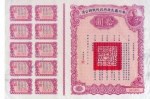
The story begins nearly 100 years ago, in 1913, when the government of China began issuing bonds to foreign investors and governments for infrastructure work to modernise the country. As the country fell into civil war in 1927, paying these debts became increasingly difficult and the government fell into default. Even so, in April 1938, the Nationalist government of China began to issue U.S.-dollar denominated bonds to finance the war against Japan’s brutal invasion.

Locked in a pitched battle for survival, the government issued these bonds into 1940. As part of its wartime financial aid, the U.S. government further provided a $500 million credit to China in March 1942, shipping gold there and helping to stabilise the currency. In return, it appears that the U.S. government redeemed some of these dollar-denominated bonds. But China doesn’t appear to have repaid this debt either, according to State Department records, and the declaration of the People’s Republic of China in 1949 ended decades of political, military and financial cooperation.

While successor governments are usually bound by the debts of predecessor governments, the new Communist government refused to pay any of these claims. The issue lay dormant for decades, just as the bilateral relationship did. Then, in 1979, as part of normalising relations, Washington released government financial claims regarding the expropriation of American property and appears to have dropped the matter of the war debt entirely. However, it is one thing for government decision-makers to let go of government debt, however questionable that is.

And it is entirely another thing for individual citizens to press their claims. Some U.S. investors tried to sue the Chinese government in the 1980s and 1990s. However, the Foreign Sovereign Immunities Act makes it very hard for any U.S. citizen to sue a foreign government in U.S. courts because the law generally says that U.S. courts do not have jurisdiction.

The law usually only allows the jurisdiction of U.S. courts if a foreign government waives its immunity, commits a tort or seizes property. Recent additional exceptions have been added for terrorism. China lost an initial summary judgement for failing to appear in court but, with the urging of the U.S. State Department, later appeared in court and successfully argued that U.S. courts did not have jurisdiction.

Today, the Chinese bonds held by U.S. investors may be worth as much as $750 billion, according to Jonna Bianco, president of the American Bondholders Foundation, who estimates the value of bonds held by investors worldwide may be $10 billion, including interest and penalties for default.

China Daily Mail blog: “China could owe America one trillion dollars.”

Law of Unintended Consequences

continuously updated blog about China & India

ChiaHou's Book Reviews

continuously updated blog about China & India

What's wrong with the world; and its economy

continuously updated blog about China & India