Archive for June, 2012

21/06/2012

* All eyes on China’s green leap forward

New Scientist: “TWENTY years ago this week, the United Nations’ Earth Summit closed in Rio de Janeiro having forged landmark agreements on climate change and biodiversity. Next week, delegates from around the world will meet again in Rio for a new Conference on Sustainable Development, dubbed Rio+20. How far have things advanced in the interim?

On the face of it, the picture is dispiriting. Annual global carbon dioxide emissions have risen by over 50 per cent, and the demise of the Kyoto protocol has halted co-ordinated action on climate change. And while the Convention on Biological Diversity is still in force, it has not prevented rampant habitat destruction.

With global co-operation proving hard to secure, progress now depends heavily on the unilateral actions of individual countries. The US tops the priority list, just as it did at the original Earth Summit – but it has been joined there by China. The Asian giant’s extraordinary economic growth has come at enormous environmental cost: it is now among the world’s largest polluters, and its natural resources have been massively exploited in recent years.

Despite this, China’s appetite for resources still falls well short of the west’s on a per capita basis, and its people do not generally enjoy the prosperity, health and life satisfaction common to the world’s richest billion inhabitants. It has become the received wisdom that nothing approaching global parity can possibly be achieved without utterly gutting the planet. The implication? That the lives of 6 billion of the world’s residents are, and must remain, “nasty, brutish and short”.

We now have a first sense that this picture is not true to life. Much discussion revolves around GDP, but this is a poor measure of sustainable development. Pick a metric that emphasises citizen well-being in combination with the environment, such as the Happy Planet Index, and the pecking order is turned on its head, with countries such as Costa Rica topping the league (see “What is wealth on a happy planet?”).

Such measures are for the moment informal. But the World Bank has for some time been plugging away at its own tweaked index, which would offset the environmental damage caused by a nation’s industry against its productivity. It has been slow going, due to political resistance and the difficulties of pricing up “natural capital”.

This is where China’s role becomes most surprising – and promising. It is setting out on a huge green experiment that could provide lessons far afield (see “China leads the march for the green economy”). Even as its economy booms, it is sharply reducing its “carbon intensity” – CO2 emissions per unit of GDP – and deploying new economic models to price natural resources.

Such models are routinely scorned in the west as the products of ivory-towered wishful thinking, and their adoption deemed unthinkably risky. Yet China, acting largely out of economic self-interest, and perhaps with a longer-term vision than beleaguered western democracies can muster, is forging ahead.

All this does not expiate China from its environmental sins. But its experiment offers the west scope to learn from its experience. Our representatives at Rio+20 should pay close attention.”

via All eyes on China’s green leap forward – opinion – 14 June 2012 – New Scientist.

21/06/2012

* Imagine if every resident of Mumbai had a car?

IT Decisions: “Professor Stéphane Garelli of IMD Business School and the University of Lausanne delivered one of the opening keynotes, describing the future of the world economy. One of the key points he made related to consumers in emerging economies creating ‘needs’ from what were previously ‘wants’.

“In China, everybody is buying a fridge. How many times have you bought a fridge? Once you have one then it lasts a long time before you replace it. You are living in a replacement economy where you are just upgrading what you already have. In China, you have no fridge, you want one. You have no TV set, you want one. You have no telephone, you want one…” he said.

The idea that enormous tranches of humanity are about to start consuming items they have never used before, such as cars, washing machines, fridges, and air conditioning, is a scary thought for environmental campaigners. Economic growth benefits those who are lifted from poverty, but how can the world really cope with billions of new drivers all expecting their own car?

Professor Garelli said: “The problem for the environment is that the infrastructure is not following [consumption].  For example in China, in 2020 they will buy 30m cars and only 15m will be sold in the USA. So everybody wants a car, but there are not enough roads for all of them. You need growth, you need traffic control, etc – the infrastructure has to grow in parallel.”

Professor Garelli went on to explain: “This means there is an enormous environmental impact and I think that this growth has to be checked. At a certain stage they will have to slow down some access. There are some countries where people can perhaps wait for a car – can you imagine if every single person in Mumbai has a car?”  …  “

via Imagine if every resident of Mumbai had a car? | IT Decisions.

18/06/2012

* China publishes books on officials’ morality

Xinhua: “A book series expounding the moral issues of officials, the first-ever publication on the topic in China, was released for sale Monday in Beijing as part of government-backed efforts to promote integrity among civil servants.

The four-book series embodies the results of research conducted by experts with the Beijing Academy of Social Sciences at the request of Beijing authorities two years ago, according to a report published by the Beijing Daily.

The books record the development of theories about officials’ morality through Chinese history and provide case studies, as well as highlight the importance of raising officials’ moral standards in modern society, an official with the Beijing Commission for Discipline Inspection of the Communist Party of China (CPC) was quoted as saying in the report.

The major difference between good and bad officials simply lies in whether they perform duties with a conscience, says the prologue of the series.

Nowadays, the CPC, as the ruling party, must value virtues of officials and it is a general trend for officials to abide by professional ethics, according to a passage in one of the books.

The book also points out a moral official in modern China should always serve the people as well as be loyal, pragmatic, fair-minded and incorruptible, while always improving oneself.

The series will serve as anti-graft reading material for all Communist Party cadres in Beijing, according to the report.”

via China publishes books on officials’ morality – Xinhua | English.news.cn.

Let’s hope the cadres take this book as seriously as their forebears took Mao’s Red Book.
16/06/2012

* China to Investigate Death of Labor Activist

NY Times: “Chinese officials, bending to public pressure, have announced an investigation into the death of a veteran labor activist whose body was found hanging from a hospital window this month, days after he gave a series of interviews in which he vowed to continue fighting to end the Communist Party’s monopoly on power.

The dissident, Li Wangyang, who was convicted of organizing protests during the pro-democracy movement of 1989, had only recently emerged from prison. Friends and relatives have questioned how Mr. Li could have taken his own life because he was disabled from the beatings and other mistreatment he suffered during his 21 years behind bars.

Mr. Li, 62, was blind, nearly deaf and had difficulty walking unassisted.

According to the state-run Hong Kong China News Agency, public security officials in Hunan Province, where Mr. Li died, promised an investigation by a “team of experienced criminal investigation experts.” According to the agency, a police spokesman acknowledged that public pressure had prompted the announcement on Thursday.

Earlier this week, local officials in Shaoyang, the city where Mr. Li died, changed the cause of death to “accidental” from “suicide.”

Human rights advocates raised doubts after his death became public, but the suspicions began to spread more widely in the past week after family members and friends of Mr. Li disappeared or were warned by the police not to speak to the news media.”

via China to Investigate Death of Labor Activist – NYTimes.com.

Yet another case of the Chinese authorities bending to public opinion.  See also:

16/06/2012

* China launches spaceship with first female astronaut

Xinhua news: “China launched Saturday Shenzhou-9 spacecraft with the country’s first female astronaut aboard.

Shenzhou-9, atop an upgraded Long March-2F carrier rocket, blast off from the Jiuquan Satellite Launch Center in northwestern China at 6:37 p.m. Saturday.

A see-off ceremony was held at the center hours before the launch. Wu Bangguo, the country’s top legislator, attended the ceremony and extended wishes to the three astronauts.

“The country and the people are looking forward to your successful return,” he said.

The first Chinese woman in space Liu Yang, 33, is joined by commanding officer Jing Haipeng and Liu Wang, who has been selected as an astronaut trainee since January 1998.

Main tasks of the Shenzhou-9 mission include the manual docking procedure conducted between the Shenzhou-9 and the orbiting space lab module Tiangong-1.

China succeeded in the automated rendezvous and docking between unmanned Shenzhou-8 spacecraft and Tiangong-1 last year.

A successful manual docking will demonstrate a grasp of essential space rendezvous and docking know-how, a big step in the country’s manned space program to build a space station around 2020.

Liu, a People’s Liberation Army (PLA) major, was a PLA Air Force pilot with 1,680 hours of flying experience and deputy head of a military flight unit before being recruited as an astronaut candidate in May 2010.

After two years of training, which shored up her astronautic skills and adaptability to space environment, Liu excelled in testing and was selected in March this year as a candidate for the Shenzhou-9 manned space mission.

“Female astronauts generally have better durability, psychological stability and ability to deal with loneliness,” Wu Ping, spokeswoman for China’s manned space program, said.

More than 50 female astronauts from seven countries have gone into space to date. The longest space flight by female astronauts lasted 188 days.”

via China launches spaceship with first female astronaut – Xinhua | English.news.cn.

https://chindia-alert.org/prognosis/innovation/

15/06/2012

* Recent Cases Shed Light on China’s Feared Interrogation System

NY Times: “Membership in the Chinese Communist Party has many advantages. Officials often enjoy government-issued cars, bottomless expense accounts and the earning potential from belonging to a club whose members control every lever of government and many of the nation’s most lucrative enterprises.

Interrogation

Interrogation (Photo credit: Steve Rhode)

There is, however, one serious downside. When party members are caught breaking the rules — or even when they merely displease a superior — they can be dragged into the maw of an opaque Soviet-style disciplinary machine, known as “shuanggui,” that features physical torture and brutal, sleep-deprived interrogations.

And that is exactly what appears to have happened to Bo Xilai, once one of China’s most charismatic and ambitious politicians. Mr. Bo has not been seen in public since mid-March, when he was stripped of his position as party chief of the sprawling municipality of Chongqing in southwest China. He was later accused of “disciplinary violations” and removed from the Politburo.

Few who have been pulled into the system emerge unscathed, if they emerge at all. Over the last decade, hundreds of officials have committed suicide, according to accounts in the state news media, or died under mysterious circumstances during months of harsh confinement in secret locations. Once interrogators obtain a satisfactory confession, experts say, detainees are often stripped of their party membership and wealth. Select cases are handed over to government prosecutors for summary trials that are closed to the public.

“The word shuanggui alone is enough to make officials shake with fear,” said Ding Xikui, a prominent defense lawyer here.

Although the leadership has not disclosed details of its investigation into Mr. Bo, insiders say it involves a number of allegations, including corruption, spying and obstructing justice on behalf of his wife, who has been implicated in the death of a British businessman, Neil Heywood.

Two people who have been briefed said Mr. Bo’s troubles had been compounded by his effort to rise to the top levels of power and protect himself by currying favor with the military. In addition to inquisitors from the party’s commission for discipline, the army’s political division is playing a role in the interrogations, the sources said.

via Recent Cases Shed Light on China’s Feared Interrogation System – NYTimes.com.

15/06/2012

* Toilets Become a Battle Cry in India

NY Times: “You could be forgiven for thinking that safety is the top concern for travelers brave enough to venture on Indian railways. It’s not. Unclean toilets appear to be their main grouse, according to a recent survey.

Across India, toilets appear to be the new battleground on which wars are being waged, whether it’s about hygiene, austerity, gender equality or corruption.

On India Ink, we’ve previously written how sanitation is a dump in India, with more than half of all households having no toilet facilities.

Even Bill Gates, one of the world’s richest people, has made his new mission to “reinvent the toilet.” “One of my ultimate dreams now is to reinvent the toilet — find a cheaper alternative to the flush toilet that does not require running water, has smell characteristics better than the flush toilet and is cheap,” he told the Times of India newspaper.

But it’s mostly the women in India who are paying a price for toilets -– literally. On Thursday Jim Yardley wrote in The New York Times that unlike men, many women in Mumbai often have to pay to urinate –- an injustice that has started a “Right to Pee” campaign.

Toilets have also been flushed into the austerity debate last week, when India’s Planning Commission ran up a 3 million rupee, or $54,100, bill for renovating the toilets at its headquarters, a move viewed by some as lavish and a drain on public funds. That was followed by news that the western state of Goa had given 2 million rupees, or $35,700, to build a single air-conditioned toilet in the constituency of the former chief minister of the state.

Think that raises a stink? In India, where the government is reeling with corruption scandals, the innocuous toilet made a brief swirl when many reportedly went missing. According to an April report in an Indian daily, the Telegraph, the federal government says it delivered about 87.1 million toilets to households across villages over the last decade. But the census shows that only about 51.6 million had toilets in 2011. That’s a case of 35 million missing toilets.”

via Toilets Become a Battle Cry in India – NYTimes.com.

Another example of discrimination against women in India.  See: https://chindia-alert.org/2012/06/14/india-the-worst-big-country-to-be-a-woman/

See also: Will India overtake China in 25 years?

15/06/2012

* Deutsche Bank Makes Cross-Border Yuan Payment Under New China Central Bank Scheme

WSJ: “A pilot scheme intended to make it easier for companies to settle trade in the Chinese yuan officially kicked off Friday, with Deutsche Bank AG completing the first cross-border yuan payment transaction under the program.

The new program, launched by the Shanghai branch of the People’s Bank of China on a trial basis, aims to streamline the process for settling cross-border trade in the yuan by exempting qualified companies from submitting original trade documentation to support each payment. Information on the program has recently been circulated among banks in Shanghai, bankers said, though the central bank hasn’t yet made a public announcement on the initiative.

Deutsche Bank, one of the largest providers of liquidity to currency markets, executed the transaction on behalf of the China subsidiary of Huettenes-Albertus, a German manufacturer of foundry chemical products, under which the company paid a foreign supplier in yuan.

“In the past, settling trade in yuan has been both time-consuming and labor intensive,” said Beng-Hong Lee, Deutsche Bank’s head of foreign-exchange trading in China. “This is a big leap forward.”

The new scheme currently is limited to companies and banks operating in Shanghai. It follows the PBOC’s move in March, when the central bank expanded the use of yuan in trade settlement to exporters and importers across the country.

As China pushes ahead with its drive to spread global use of its currency, many analysts expect the yuan to account for a bigger share of international trade settlement. Beijing started to allow cross-border trade to be invoiced and paid for in its currency about three years ago, and since then, yuan-settled trade has grown to about 10% of China’s total trade. Some analysts have predicted that figure to grow to 3.7 trillion yuan ($587 billion) this year, or 15% of China’s total trade.”

via Deutsche Bank Makes Cross-Border Yuan Payment Under New China Central Bank Scheme – WSJ.com.

Another step in freeing the world economy from US $ domination.

15/06/2012

* Arrested spy compromised China’s U.S. espionage network

Reuters: “A Chinese state-security official arrested this year on allegations of spying for Washington is suspected to have compromised some of China’s U.S. agents in a major setback that angered President Hu Jintao, sources said.

Hu personally intervened this year, ordering an investigation into the case after the Ministry of State Security arrested one of its own officials for passing information to the Americans, two sources with direct knowledge of the matter said.

The official, an aide to a vice minister, was taken into custody sometime between January and March after the ministry became alarmed last year over repeated incidents of Chinese agents being compromised in the United States, they said.

Seal of the C.I.A. - Central Intelligence Agen...

Seal of the C.I.A. of the United States Gov’t (Photo credit: Wikipedia)

The ministry’s own investigations found the aide had been working for the Central Intelligence Agency (CIA) for years, divulging information about China’s overseas spy network in the nation’s worst espionage scandal for two decades, they added.

The sources’ comments represent the first confirmation that overseas Chinese espionage was deemed to have been damaged by the security breach, which has been kept quiet by both Beijing and Washington. Reuters first reported it on June 1.”

via Exclusive: Arrested spy compromised China’s U.S. espionage network: sources | Reuters.

15/06/2012

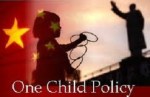
* Chinese officials apologise to woman in forced abortion

BBC News: “City officials in China have apologised to a woman who was forced to have an abortion and suspended three people responsible, state media reports.

This came after photos showing a foetus and the mother, Feng Jianmei, shocked web users.

She was made to undergo the procedure in Shaanxi province in the seventh month of pregnancy, local officials said after investigating.

Chinese law clearly prohibits abortions beyond six months.

The Ankang city government said it decided to suspend three officials in Zhenping county following initial investigations. It also urged the county government to conduct a thorough review of its family planning operations, said Xinhua news.

China has long denied that its vast army of local family planning officials are using abortion to enforce the country’s one-child policy.

In this case, though, there has been a rare admission that her pregnancy was terminated against her will, and now action will be taken against certain officials.

What has made the difference appears clear.

Minutes after the abortion, a family member posted on the internet a photograph of Feng Jianmei’s aborted foetus, clearly formed at seven months, lying next to her on a hospital bed and the image went viral.

It is a classic illustration of the challenge posed to China’s one party system by the internet.

On Thursday night, the city officials apologised to Ms Feng, 27, and her family, the report said.

She was ”forced to terminate her pregnancy” at a hospital in Zhenping on 2 June, said Xinhua.

Officials in Zhenping county claimed she agreed to the abortion because she was not allowed to have a second child by law. She already has a daughter, born in 2007.

But activists said she was forced into the abortion as she could not pay the fine for having a second child.”

via BBC News – Chinese officials apologise to woman in forced abortion.

Law of Unintended Consequences

continuously updated blog about China & India

ChiaHou's Book Reviews

continuously updated blog about China & India

What's wrong with the world; and its economy

continuously updated blog about China & India