Archive for April, 2013

13/04/2013

* India’s Great Polio Legacy

WSJ: “Hundreds of leading scientists are urging the world to finish the job on polio, declaring that the disease has never been closer to eradication and endorsing a new global plan to wipe it out within six years. India has proved an inspiration.

More than 400 signatories to this week’s declaration, hailing from 80 countries, believe polio eradication is achievable in large part because of the great gains India has made against the disease. Not long ago, experts said stopping polio in India was impossible, but we’ve just celebrated two years since the last case and continue to work hard to ensure that all children are vaccinated against the virus.

Polio once paralyzed hundreds of thousands of children each year without regard to national borders. Now, it is endemic in only three countries.

The Scientific Declaration endorses a new global polio eradication plan provides a fully costed, realistic roadmap how to finish off polio. It applies lessons learned from India for reaching zero polio cases while simultaneously preventing re-importation of the disease and switching to a new vaccine that wipes out even the risk of vaccine-related polio.

As the rest of the world learns from India’s success, it is worth asking what else polio lessons can teach India. The country has the highest child mortality rate in the world; 1.66 million children under five die every year from preventable diseases. Innovations developed to eliminate polio offer India unprecedented opportunities to get other life-saving vaccines and health interventions to the people that need them most.

Measles could be the next disease on the hit-list. According to The Lancet medical journal, vaccines slashed measles deaths by 74% between 2000 and 2010, from 535,300 to 139,300. But India still accounts for nearly half of measles deaths.”

via India’s Great Polio Legacy – India Real Time – WSJ.

13/04/2013

* France plans currency swap line with China: paper

Reuters: “China to make Paris a major offshore yuan trading hub in Europe, competing against London, the China Daily on Saturday cited Bank of France Governor Christian Noyer as saying.

A bank clerk counts Chinese yuan banknotes at a branch of Industrial and Commercial Bank of China in Huaibei, Anhui province, June 8, 2012. REUTERS/Stringer

Yuan deposits in Paris amount to 10 billion yuan ($1.6 billion), making it the second largest pool for the Chinese currency in Europe after London. Almost 10 percent of Sino-French trade is settled in yuan, also called the renminbi or RMB, according to French data cited by the official newspaper.

“The Bank of France has been working on ways to develop a RMB liquidity safety net in the euro area with due consideration of a supporting currency swap agreement with the People’s Bank of China,” Noyer told the English-language newspaper.

The yuan’s internationalization and bilateral financial cooperation could be among the main topics during French President Francois Hollande’s visit to China in late April, the paper said.”

via France plans currency swap line with China: paper | Reuters.

12/04/2013

* China labour camp victim sues local authorities

BBC: “A Chinese woman is suing a local authority who sent her to a labour camp for the loss of her personal freedom.

Tang Hui points out Zhuzhou Baimalong Labour Camp

Tang Hui was sent to a re-education camp by Yongzhou’s local authority for “disturbing social order” last August, state-run news agency Xinhua reported.

She had been campaigning for harsher punishments for the seven men who raped and kidnapped her daughter, and forced her daughter to work as a prostitute.

Her case sparked a public outcry, and she was released after nine days.

Tang Hui is suing the Yongzhou authorities for 1,463.85 yuan ($236, £152) for her detention, Xinhua news agency reported.

She had taken her case to court after the Yongzhou re-education-through labour commission rejected her demand for compensation, Xinhua added.”

via BBC News – China labour camp victim sues local authorities.

12/04/2013

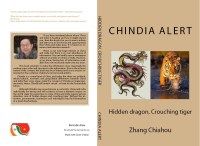
# My eBook now available in paperback format

Hi readers – those who wanted to read my eBook but didn’t have a Kindle device can now order it in paperback form.

US ppbk cover v1

The US paperback can be found via http://www.amazon.com/Chindia-Alert-Youll-living-their/dp/1482063921/ref=sr_1_1?s=books&ie=UTF8&qid=1365782293&sr=1-1&keywords=chindia+alert

11/04/2013

* China’s ‘Going Out Strategy’ and the implications for agricultural and forestry resources in Africa

CPI: “China is shifting the global political economy which has significant implications for natural resource management. The so-called Western powers, which have dominated global natural resource institutions for centuries, may be about to witness a new mode of resource governance. Although not always perceptible, even our relationship with nature has been modified and shaped in some way due to classifications and instruments of European order. The ‘Columbian Exchange’ (the widespread exchange of animals, plants, culture and human populations following the voyage of Christopher Columbus in 1492) signified a stage of voyages of discovery which helped create the British Empire and fostered the commodification and exchange of plants through global value chains of influence. The voyages of exploration were in part derived from a need to expand territory and acquire natural resources. In the late 1660s, books such as Silva and French Forest Ordinance signified a shift in thinking and attitudes towards the unforeseen consequences of economic development over conservation. Forestry was starting to be recognised as a science. At that time, the power of the nation rested largely on the ability of nations to continue ship building; resources such as timber therefore were vital to the continuation of that power.

The twenty- first century is witnessing a different mode of power. Empire has given way to new forms of cultural imperialism, or as Nye terms it: ‘soft power’, where culture itself is used as a tool to create influence. ‘Hard’ military power and colonisation are inefficient or ineffective at securing natural resources in an increasingly globalised world, therefore more peaceful methods need to be used. International development has for some time served the purpose of mutual exchange whereby relationships have been based predominantly on a Western notion of ‘conditionality.’ Development assistance is exchanged for a level of compliance with widely shared Western values.

As China leads a new geopolitical trend in ‘South-South’ cooperation, the implications for global governance are vast. China’s new demand for natural resources has, like developing nations before them, led to expanding their boundaries beyond their own nation and engaging in exploitation of other nations. The outward expansion of industry and natural resource management was officially launched in 2001 in a package of initiatives known as the ‘going out strategy’. Since its launch, China’s mode of development based on ‘no strings attached’ financial assistance and ‘non-interference’ in internal affairs as a development strategy (rather than a Western mode of ‘conditionality’) has attracted attention and criticism. After all, Western democratic neoliberal thought has always focused on shared values, even when the planet sits in its own capitalist ruins. That is not to condone human rights abuses, oppressive dictatorships or arms trade, but to recognise that the West has itself turned a blind eye to such issues, or else paid more attention to the plight of certain citizens when natural resources have been involved.

China’s success as the ‘world’s factory’ has led to a new demand in overseas natural resources – particularly oil, timber and minerals.  This has resulted in many new formed partnerships between China and Africa. One such example is the establishment of the Centre for China-Africa Agriculture and Forestry Research (CAFOR), in late 2012, in partnership with the International Network for Bamboo and Rattan (INBAR) and Zhejiang Agriculture and Forestry University (ZAFU). The project proposes to train high level professionals, improve global agriculture and forestry technology and secure China’s influence on African national policy making for international agriculture and forestry development strategies. Moreover, the centres will provide an opportunity for Sino-African agriculture and forestry culture exchange through the development of agricultural and forestry resources traditionally associated with China: tea and bamboo.

Although bamboo is largely associated with Asia, bamboo species are native to Africa. With the global population set to increase by 0.9% per year to 8.2 billion in 2030, according to FAO, there is a pressing need for substitute timber resources. Whilst the global bamboo economy is estimated at US $10 billion (which is set to double in the next five years) according to the World Bamboo Organisation, institutions to facilitate sustainable supply chains suited to the specific management characteristics of the plant are still lacking. Globally there has been a recent surge in interest in the plant in face of resource deficits, however China’s involvement in Africa would signify the first move to actively define and develop modern forestry institutions inclusive of bamboo. This not only has significant implications for Chinese focused trade and investment, but also institutionalised practices within the timber industry, which have been largely driven by Western interests.”

via China Policy Institute Blog » China’s ‘Going Out Strategy’ and the implications for agricultural and forestry resources in Africa.

11/04/2013

* New Beijing airport targets 2018 opening

While London continues to debate expanding Heathrow or building a new airport, Beijing takes action. Sometimes politicians in the West use ‘democracy’ as an excuse for slow progress. But often it is due to simple lack of will and decisiveness.

China Daily: “Construction of a new airport in south Beijing will start next year, and the facility is expected to be completed and put into use in 2018, local authorities announced on Wednesday.

Beijing Capital International Airport (北京首都国际机场)

Beijing Capital International Airport (北京首都国际机场) (Photo credit: dbaron)

Preliminary work prior to the construction of the airport, located in Daxing district, bordering Hebei province, is under way, sources with the Beijing Municipal Commission of Development and Reform said.

They added that the airport will be linked with three expressways, including one that will be newly built along the southern central axis of Beijing.

Under-way discussions over an urban rail transit to connect the airport are likely to be finished within the year.

The new airport project was approved at the end of 2012, as part of efforts to spur the development of Beijing’s southern suburbs.

Meanwhile, an air transport-related economic zone is also planned, with an investment of 84 billion yuan ($13.39 billion).

Upon completion, the new airport is expected to ease traffic pressure on Beijing Capital International Airport, which remained the world’s second-busiest airport in 2012 in terms of passenger throughput. Its passenger volume reach 81.8 million last year, according to a statement published by the airport in January.

via New Beijing airport targets 2018 opening |Society |chinadaily.com.cn.

11/04/2013

* India, Germany sign six new pacts

Times of India: “India and Germany on Thursday inked six key MoUs including that for putting together 7 million for next four years towards joint research in the field of higher education and a pact for a soft loan of 1 billion for strengthening the green energy corridor.

A pact to promote German as a foreign language was also signed by the two sides following the 2nd round of inter-governmental consultations in Berlin.

Under pacts signed, both Germany and India have committed to 3.5 million each towards working on joint research and innovation programmes.

According to officials, under the strengthening of German language collaboration, currently 30,000 children in Kendriya Vidyalaya are learning German and under the pact they will try to increase the capacity.”

via India, Germany sign six new pacts – The Times of India.

11/04/2013

* British shops ration baby milk as Chinese demand surges

Reuters: “British shops are rationing sales of baby milk after Chinese visitors and bulk buyers cleared their shelves to send it to China, where many parents fear the local versions are dangerous.

Shoppers browse the aisles in the Canary Wharf store of Waitrose in London January 23, 2013. REUTERS/Neil Hall

The British Retail Consortium (BRC), whose members account for 80 percent of the sector, said many stores had imposed a two-box limit on each customer to deter the “unofficial exports” to China.

Demand for foreign milk powder has been high in China since at least six infants died and 300,000 fell ill in 2008 after they drank milk laced with the industrial chemical melamine.

The scandal sapped consumer confidence in Chinese-made food and led to shortages of powdered milk in Hong Kong and Australia as people bought boxes to export to China.

The rise of the middle-class Chinese working mother has greatly increased sales of baby milk in the world’s most populous country. Fast-growing markets like China support a global baby food market worth an estimated $30 billion a year.”

via British shops ration baby milk as Chinese demand surges | Reuters.

11/04/2013

The Masters: Teenager Guan provides taste of China’s golfing ambition

CNN: “The legendary Jack Nicklaus may have won the most titles, a 21-year-old Tiger Woods may have been the youngest champion and Gary Player may have made the most appearances, but a little-known Chinese golfer will be added to the illustrious list of Masters record-holders on Thursday.

Guan Tianlang, now 14, qualified for this week's Masters when -- as the youngest player in the field, then rated 490th in the world amateur rankings -- he beat a host of senior golfers to win the Asia-Pacific Amateur Championship in Thailand.

For when Guan Tianlang steps onto the first tee, the Chinese teenager will become the youngest competitor — at the age of 14 years and five months — in the 80 years of the prestigious Augusta event, beating the previous record held by then 16-year-old Matteo Manassero.

The boy who has been taking time out of school in his home city Guangzhou earned his place at golf’s top table when, as the youngest player in the field, he beat a host of senior players to win last year’s Asia-Pacific Amateur Championship in Thailand.

He is just the latest of a small but expanding list of teenage — and, remarkably, even pre-teen — golfers to be impacting upon the highest echelons of golf, despite being drawn from a playing pool estimated to be no more than 600 teenage boys and girls.”

via The Masters: Teenager Guan provides taste of China’s golfing ambition – CNN.com.

10/04/2013

* Lloyd’s building sold to Ping An

Insurance Times: “The Lloyd’s building will be sold to Chinese insurance firm Ping An for about £260m.

Lloyd's building

There is no sign that the Lloyd’s market would need to leave the building.

Commerz Real was the firm appointed to selll the building, helped by CBRE and Savills, according to The Times.”

via Lloyd’s building sold to Ping An | Latest News | Insurance Times.

See also: https://chindia-alert.org/2012/02/13/pattern-of-chinese-overseas-investments/

Law of Unintended Consequences

continuously updated blog about China & India

ChiaHou's Book Reviews

continuously updated blog about China & India

What's wrong with the world; and its economy

continuously updated blog about China & India