Archive for July, 2017

05/07/2017

H-1B and Modi: India Real Time Reveals the Secret Reading Habits of India’s Elite – India Real Time – WSJ

India Real Time started in 2010 as the first attempt by a global newspaper to offer a news product for Indian readers through the internet. Seven years and crores of clicks later, The Wall Street Journal is winding down the successful blog.
We will continue to offer the content Indian readers want through the more popular paths of distribution: WSJ subscriptions, apps and social media.

All those years monitoring the India Real Time reader has given us unprecedented insight into what educated India watchers are actually reading and we will continue to apply that knowledge to how we choose and craft stories.

We also discovered the types of stories they weren’t reading. One surprising example was the English-speaking elite just weren’t that mesmerized by cricket or Bollywood. Our readers were either getting that news elsewhere or maybe they just weren’t as film and cricket crazy as people in India are supposed to be.

Here are five other lessons we learned about India’s news junkies: Visa Power
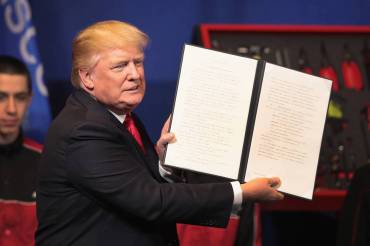
President Donald Trump signed an executive order to revamp the H-1B visa guest worker program, in Kenosha, Wisconsin, April 18, 2017. PHOTO: SCOTT OLSON/GETTY IMAGES

H-1B may be bureaucratic jargon that means little to most Americans but it is click bait for others. Our readers couldn’t get enough news about how Washington is tinkering with the high-skilled worker visas. Stories like “H-1B Visas: How Donald Trump Could Change America’s Skilled Worker Visa,” and “So What Does Obama’s Immigration Reform Mean for India’s High-Skilled Worker?” were by far the most read, attracting millions of readers.

Modi Magic
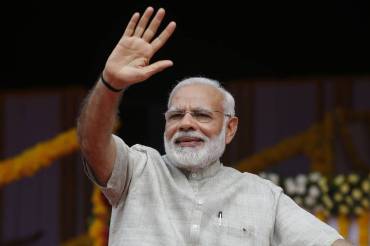
Indian Prime Minister Narendra Modi in Ahmadabad, India, June 30, 2017. PHOTO: AJIT SOLANKI/ASSOCIATED PRESS

India’s prime minster appeals to tech-savvy Indians at home and abroad and our readers wanted to know everything he was up to whether it was his pop-star  performance at Madison Square Garden or the vanity suit he wore when he met President Barack Obama.

Battle of the Billions
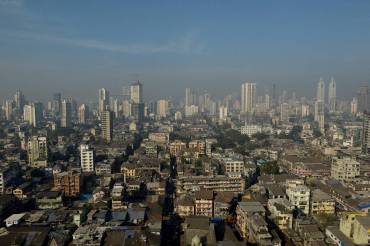
The Bhendi Bazaar area of Mumbai, Dec. 2, 2016. PHOTO: INDRANIL MUKHERJEE/AGENCE FRANCE-PRESSE/GETTY IMAGES

A theme that resonated with our readers was how India was doing relative to China. As India’s economy has grown it has become increasingly aware it is living in the shadow and slipstream of its giant neighbor. When our readers saw headlines like “The Difference Between Indian and Chinese Migrants,” “India Ranked Less Corrupt Than China for the first time in 18 years,” and “India Passes China to Become Fastest-Growing Economy,” they tapped on their smartphones to read more.

Tech Triumphs

The Polar Satellite Launch Vehicle rocket lifted off carrying India’s Mars spacecraft from the east coast island of Sriharikota, India, Nov. 5, 2013. PHOTO: ARUN SANKAR/ASSOCIATED PRESS

Our readers couldn’t get enough of technology trends and inventions.  From stories about how India pulled off its Mars mission and how outsourcers are coping with the cloud to blogs on an Indian-designed smartshoe and a roti-making machine, IRT was rewarded when it covered India’s contribution to the tech world.

Please Explain

An Indian Oil Corp. employee counted Indian rupee banknotes in the village of Mangrauli, Uttar Pradesh, India, July 19, 2016. PHOTO: PRASHANTH VISHWANATHAN/BLOOMBERG NEWS

Years of traffic to the blog showed us readers want reporters to sometimes step back and explain the history and context of a story as well as how it will affect their lives. “How Can Indians Living Abroad Exchange Their Old Rupee Notes?”  and “Who is Anna Hazare?” are great examples of stories that went viral because they explained the basics. The blog also had a lot of popular quirky explainers including “A Short History of the Kiss in India,” and “India Shining: We Unravel the Secret Behind Delhi’s Dazzling Sweater Vests.”The list of hits could go on and on—in fact it will but not on a separate blog page—there were great graphics like the rape map  and the global comparison of wages.  There were stories that made waves like a multi-part long form series on the history of Ayodhya as well as a quick hit that exposed how some Indian snacks from Haldiram’s and others were getting blocked from entry into the U.S.The Wall Street Journal is taking all the experience and insight gained through India Real Time and will continue to deliver its unique take on what is happening in India and what matters to Indians. It will continue to use the largest team of international newspaper journalists in South Asia to deliver the stories that matter through its websites, apps and social media pages.

Source: H-1B and Modi: India Real Time Reveals the Secret Reading Habits of India’s Elite – India Real Time – WSJ

05/07/2017

What’s behind the India-China border stand-off? – BBC News

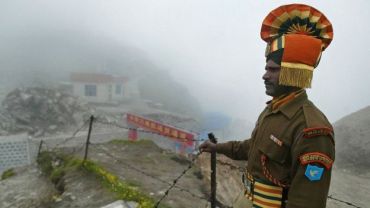
For four weeks, India and China have been involved in a stand-off along part of their 3,500km (2,174-mile) shared border.

The two nations fought a war over the border in 1962 and disputes remain unresolved in several areas, causing tensions to rise from time to time.

Since this confrontation began last month, each side has reinforced its troops and called on the other to back down.

How did the row begin?

It erupted when India opposed China’s attempt to extend a border road through a plateau known as Doklam in India and Donglang in China.

The plateau, which lies at a junction between China, the north-eastern Indian state of Sikkim and Bhutan, is currently disputed between Beijing and Thimphu. India supports Bhutan’s claim over it.

India is concerned that if the road is completed, it will give China greater access to India’s strategically vulnerable “chicken’s neck”, a 20km (12-mile) wide corridor that links the seven north-eastern states to the Indian mainland.

Indian military officials told regional analyst Subir Bhaumik that they protested and stopped the road-building group, which led Chinese troops to rush Indian positions and smash two bunkers at the nearby Lalten outpost.

“We did not open fire, our boys just created a human wall and stopped the Chinese from any further incursion,” a brigadier said on condition of anonymity because he was not authorised to speak to the press.

Chinese officials say that in opposing the road construction, Indian border guards obstructed “normal activities” on the Chinese side, and called on India to immediately withdraw.

What is the situation now?

Despite hostilities, the two countries have growing trade and economic ties

Both India and China have rushed more troops to the border region, and media reports say the two sides are in an “eyeball to eyeball” stand-off.

China also retaliated by stopping 57 Indian pilgrims who were on their way to the Manas Sarovar Lake in Tibet via the Nathu La pass in Sikkim. The lake is a holy Hindu site and there is a formal agreement between the neighbours to allow devotees to visit.Bhutan, meanwhile, has asked China to stop building the road, saying it is in violation of an agreement between the two countries.

What does India say?

Indian military experts say Sikkim is the only area through which India could make an offensive response to a Chinese incursion, and the only stretch of the Himalayan frontier where Indian troops have a terrain and tactical advantage.

They have higher ground, and the Chinese positions there are squeezed between India and Bhutan.

India and China fought a bitter war in 1962. Photograph: Hulton Archive

“The Chinese know this and so they are always trying to undo our advantage there,” retired Maj-Gen Gaganjit Singh, who commanded troops on the border, told the BBC.Last week, the foreign ministry said that the construction “would represent a significant change of status quo with serious security implications for India”.

Indian Defence Minister Arun Jaitley also warned that the India of 2017 was not the India of 1962, and the country was well within its rights to defend its territorial integrity.

What does China say?

China has reiterated its sovereignty over the area, saying that the road is in its territory and accusing Indian troops of “trespassing”.

It said India would do well to remember its defeat in the 1962 war, warning Delhi that China was also more powerful than it was then.

India opens its longest bridge

China and India in border stand-off

India’s wrestling blockbuster delights China

Why border stand-offs between India and China are increasing

On Monday, a Chinese foreign ministry spokesman said that the border in Sikkim had been settled in an 1890 agreement with the British, and that India’s violation of this was “very serious”.

The Global Times newspaper, meanwhile, accused India of undermining Bhutan’s sovereignty by interfering in the road project, although Bhutan has since asked China to stop construction.

What’s Bhutan’s role in this?

Bhutan’s Ambassador to Delhi Vetsop Namgyel says China’s road construction is “in violation of an agreement between the two countries”.

Bhutan and China do not have formal relations but maintain contact through their missions in Delhi.

An Indian soldier on the China border – Beijing has reiterated what it says is its right to territory

Security analyst Jaideep Saikia told the BBC that Beijing had for a while now been trying to deal directly with Thimphu, which is Delhi’s closest ally in South Asia.

“By raising the issue of Bhutan’s sovereignty, they are trying to force Thimphu to turn to Beijing the way Nepal has,” he said.

What next?

The fact that Tibet’s spiritual leader, the Dalai Lama resides in India has also been a sticking point between the two countries.

This stand-off in fact, comes within weeks of China’s furious protests against the Dalai Lama’s visit to Arunachal Pradesh, an Indian state that China claims and describes as its own.

The Dalai Lama during his visit to Tawang near the India-China border in Arunachal Pradesh on April 10, 2017Image copyrightGETTY IMAGES
Image captionChina recently protested against Tibetan spiritual leader Dalai Lama’s visit to Arunachal Pradesh, an Indian state Beijing claims as its own

Relations between the Asian giants, however, may not slide further as China has allowed 56 Hindu pilgrims, who entered through the Indian state of Himachal Pradesh, to visit the Manas Sarovar site.

“They are heading for the lake and they are safe,” senior tourism official Dheeraj Garbiyal said last week.

This, experts say, shows that the Chinese are not raising tensions on the whole border but specifically on the Sikkim-Bhutan stretch.

Source: What’s behind the India-China border stand-off? – BBC News

05/07/2017

What Rosneft’s purchase of Essar’s oil refinery means

CONGLOMERATES sometimes sell their least promising units, thereby ginning up returns for the remaining empire. But groups saddled with huge debts do not have that luxury; only by disposing of the most profitable parts can they raise enough funds to satisfy creditors. Such is the story of the Essar Group, which is in the final stages of selling its crown jewel, India’s second-biggest private oil refinery, to a consortium led by Rosneft, a Russian oil titan. The slimming of what was once the country’s third-largest diversified corporate group is a welcome signal that an era of powerful industrialists running rings round their creditors is ending.

The purchase by Rosneft (along with a Russian investment fund and Trafigura, a trading firm) of the giant Vadinar refinery in the state of Gujarat for $12.9bn will be the largest-ever foreign investment in India. It has been a long time coming. It was first mooted over two years ago and jointly announced with fanfare in October by India’s Narendra Modi and Russia’s Vladimir Putin. The deal includes an Indian port and a network of coveted petrol stations.

Most analysts approve of Rosneft’s intiative as a way of diversifying away from upstream activities in Russia. But what is most telling is why the assets came up for sale in the first place. Essar, whose interests span power plants, steel, infrastructure and shipping, says that it saw a good opportunity to monetise an asset it has nurtured for years. It may have had little choice. An investment splurge starting in 2011 has left various Essar operating entities, along with a holding company based in the Cayman Islands, with a combined debt of around $20bn. Although the company does not disclose updated financials (it is privately held by the Mumbai-based Ruia family) few firms in its various industries make the sort of money it would need to pay down such a debt.

In the past, bosses at Indian state-run banks (which conduct over two-thirds of all lending) could easily be convinced to overlook trifles such as a debtor’s inability to repay loans. It takes over four years for an insolvency process to return a meagre 26 cents on the dollar to creditors, so bankers often preferred to behave as if even the most distressed company might somehow find a way of repaying a loan.

A bad-loan crisis followed. Around one in five loans made by state-owned banks are either set to default or have already done so. The central bank is pushing bankers to get tough on errant borrowers. In recent weeks it has threatened to push a dozen firms with huge debts into insolvency unless deals to refinance their debts could be reached quickly. One was Essar Steel.

Banks are still allowed to forgive a part of a company’s debt. But there is now pressure to show that shareholders pay a price, by having to forfeit large chunks of their equity to the banks. Advisers involved in the talks over Essar Steel say the group will have to give up over half its equity in the steel business to convince lenders to refinance loans. That is new: in past cases, parts of Essar have moved in and out of debt restructurings without the central group having to give up any stakes.

Part of the reason the Rosneft deal was held up for so long, insiders say, is that state-owned banks insisted that the Ruia family clear debts from other bits of the Essar empire first, including from the central holding company. They refused to agree to a sale until that was done (Essar repaid in part by taking out a bridge loan from Vneshtorgbank, a big Russian lender). That shows a savvy few thought state-owned bank executives possessed.

The cash from the sale to Rosneft will take away about half of Essar’s $20bn of debt but will also deprive it of its main source of profits. Essar’s pain in having to sell the oil refinery is the corporate system’s gain. Resolving festering bad loans, either by forcing asset sales or seizing ownership, is an essential part of restoring the health of Indian banking. Credit to Indian industry is currently shrinking for the first time in two decades. Resolving this mess can only help companies—including what will remain of Essar.

Source: What Rosneft’s purchase of Essar’s oil refinery means

Tags:
05/07/2017

Indian utility bets $10 billion on coal power despite surplus, green concerns | Reuters

India’s state-run power utility plans to invest $10 billion in new coal-fired power stations over the next five years despite the electricity regulator’s assessment that thermal plants now under construction will be able to meet demand until 2027.

In the first phase, India’s biggest power producer, NTPC (NTPC.NS), plans to build three new plants with a combined capacity of more than 5 gigawatts (GW), nearly double the capacity of those currently being phased out, five senior company officials said.

The company has not made the investment public because it has not yet received government approval.If approved, the plan could set back efforts by the world’s third-largest greenhouse gas emitter to control carbon output and raise questions about Prime Minister Narendra Modi’s vow to stand by commitments under the Paris climate accord.

The proposal also comes as several coal-fired stations built in the last power boom a decade ago are standing idle due to softer-than-expected demand. State-controlled Coal India (COAL.NS) is struggling to sell its stockpile as a result.

But other indicators indicate demand will pick up, a top NTPC executive said, asking not to be named because the plan had not yet been announced.

“I don’t think (the current) electricity surplus will be there for a long time,” he told Reuters. “We should not fool ourselves.”

More than 300 million of India’s 1.3 billion people are still not hooked up to the grid, according to NITI Aayog, which makes policy recommendations to the government.

As connections improve, the panel reckons, the country’s per-capita power consumption could jump around a third to up to 2,924 kilowatt-hours by 2040 from 2012 levels.

In the next decade, the around 50 GW of capacity from thermal plants due to come online by 2022 will meet demand, the Central Electricity Authority (CEA) said. Additional supplies will come from sources such as solar and wind, it said.

Asked about NTPC’s plan, CEA chairman RK Verma said the commercial decisions of the company were its own affair.

“NTPC is a commercial organization and they must be having their own commercial considerations,” Verma said.For its part, a spokesperson at NTPC would say only: “NTPC takes decisions after consulting both the CEA and the ministry of power.”

THERMAL VS RENEWABLE

Solar power generation capacity in India has more than tripled in three years to more than 12 GW since Modi targeted raising energy generation from renewable sources to 175 GW by 2022, against total installed capacity at the end of May of 330.3 GW.

Around 78 percent of generated power in India at the moment still comes from coal-fired plants, however, making it one of the biggest users of the dirty and cheap fuel in the world.

Carbon dioxide emissions from India’s thermal plants are expected to jump to 1,165 million tonnes by 2026/27 from 462 million tonnes in 2005, the CEA estimates. Emission intensity, measured in carbon dioxide emissions versus GDP, is likely to fall, however.India is undergoing a program to retrofit several coal-fired plants to reduce emissions.

The plants planned by NTPC are “supercritical”, meaning they are 2-3 percent more efficient than conventional plants and therefore have lower emissions.

NTPC’s proposal is likely to be greeted with alarm by environmental activists who are already worried by the CEA’s statement that existing power plants are unlikely to meet India’s emission norms before the Paris deadline of December this year.

“Adding more power plants would aggravate health impacts even further,” said Sunil Dahiya, an energy activist with Greenpeace in New Delhi, when asked about the possibility of new coal-fired plants.NTPC’s proposal is to build plants of two 660 megawatt (MW) units each at Singrauli in central India’s Madhya Pradesh and Talcher in Odisha in the east.

The biggest plant, with a capacity of 2.4 GW in the eastern state of Jharkhand, was close to getting clearance from the environment ministry, one of many steps in the process of getting government approval, one of the senior company officials said.

A plan announced by NTPC last year to generate 10 GW of energy from renewable sources by 2022 was making slow progress due to land acquisition issues, another company official said.

Source: Exclusive: Indian utility bets $10 billion on coal power despite surplus, green concerns | Reuters

Tags:
05/07/2017

Too much rain: China’s floods roil hydropower, corn supplies | Reuters

Severe flooding across southern China has forced the world’s largest power plant to slash capacity on Tuesday, delayed grain on barges and damaged farms along the Yangtze River, as the death toll rose to 56 and economic costs hit almost $4 billion.

Heavy rainfall, mudslides and hail caused by the annual rainy season has killed 56 people and 22 people were missing across 11 provinces and regions as of Tuesday morning, according to the Ministry of Civil Affairs.

More than 750,000 hectares (1.85 million acres) of crops have been damaged and direct economic losses totaled more than 25.3 billion yuan ($3.72 billion), it said.The government said it had disbursed 700 million yuan ($103 million) in emergency aid to four flood-hit provinces – Zhejiang, Jiangxi, Hunan and Guizhou.

Rain in the southern provinces is expected to ease in the coming days, but weather forecasters predict downpours will move to the southwestern province of Sichuan.

In what analysts said was a move unprecedented in its scale, the Three Gorges and Gezhouba, two of China’s top hydropower plants, closed as much as two-thirds of their capacity to avert flooding further downstream on the Yangtze River.

The move stoked concerns about electricity supplies from China’s second-largest power source as a heatwave continued to scorch northern parts of the country, raising the export prices of coal, the fuel the country uses to produce most of its power.

A man sits in the attic of his flooded house after a flood in Zhaoqing, Guangdong province, China July 4, 2017.

The annual rainy season, which arrived in the second half of June, has hit southern Hunan province, one of the nation’s largest hog and freshwater fish producers, the most.

High water levels on the Yangtze, Asia’s largest river, also slowed barges carrying grain from northern ports to the south, spurring a rise in freight rates and physical corn prices in some regions, analysts and corn buyers said.

Zhang Yi, a purchase manager at a feed producer in Hunan, said he had three ships carrying about 5,000 tonnes of corn stuck on waterways near the port of Changsha, the capital of Hunan, since Friday.

Spot corn prices at major ports along the Yangtze and its tributaries, including Changsha, Nanchang in Jiangxi province, and Wuhan in Hubei province, have risen by 30 yuan to 1,800 yuan a ton since last week, according to data provided by China National Grain and Oils Information Center, a government think tank.

China usually transports corn from northern growing regions to the ports in the south. Then the grain is shipped along the Yangtze and its branches, to central and western provinces including Hunan, Hubei, and Sichuan.

The Yangtze river’s large watershed also accounts for 60 percent of the nation’s freshwater fish output.Cao Delian, manager of the Dabeinong Changlin fish farm, estimated that he has lost about one-third of his carp due to the deluge.”It’s the biggest loss we’ve seen in at least 5 years,” he told Reuters.

On Monday, a natural gas pipeline in Guizhou owned by China National Petroleum Corp collapsed due to a mudslide, causing an explosion that killed at least eight people and injured another 35.

In his office in Liuyang, a city near Changsha, Zhang was hoping water levels would continue to subside on Wednesday.”I have stocks of corn that can last for four to five days. As long as it does not rain tomorrow, Changsha port can resume operation and I will get my corn offloaded,” Zhang said.

Source: Too much rain: China’s floods roil hydropower, corn supplies | Reuters

01/07/2017

China exposes US$120 million local government debt scandal | South China Morning Post

Beijing vows to punish officials involved in using taxpayers’ money to pay off debts incurred by authorities in central China city

A fresh scandal involving 818 million yuan (US$120 million) of murky local government debt has been exposed by China’s finance ministry, in another demonstration of Beijing’s determination to clean up the troublesome sector.

The municipal government of Zhumadian, a city in central China’s Henan province, is the latest to be caught out by the central government for borrowing irregularities. It is the third local authority to be named and shamed this year, following Qianjiang, Chongqing municipality in March and Zoucheng, Shandong province in April.

China’s spiralling local government debt still out of control, says outspoken lawmaker

According to a statement posted on the finance ministry’s website on Friday, the Zhumadian government in September 2015 used taxpayers’ money to repay loans and cover interest payments incurred by one of its financing vehicles, which it then billed as “government service procurement”.

“We have closely coordinated with the National Audit Office to crack down on such irregularities or violation of laws,” Wang Kebing, deputy head of the finance ministry’s budget management department, told a media briefing in Beijing.

The county at the centre of a Chinese debt crisis“Our provincial authorities are following some investigations … and we will punish [the officials involved] once confirmed,” he said.

The finance ministry is currently playing a game of cat-and-mouse with several local governments. Despite Beijing’s efforts to set clear boundaries between government debt and corporate liabilities, it is often hard to separate local governments from the debts incurred by their corporate vehicles.

Earlier this year, Moody’s downgraded China’s sovereign rating for the first time since 1989, citing the country’s rising debt level.

Rising bad debts in China a boon for some investors

After years of investment stimulus since 2008, China’s local governments have built up a mountain of debt, and raised fears at home and abroad of its potential to weigh on the banking system and bring an unprecedented level of risk to the country’s financial stability.

Since auditing the scale of local debt in 2013, Beijing has sought to regulate its growth by setting a cap on annual bond issuances and preventing illegal financing via the new Budget Law, which came into effect in January 2015.

China’s bad loan problem could reappear later this year, analysts say

According to official figures, China’s local government debt totalled 15.3 trillion yuan at the end of last year, comprising 10.6 trillion yuan of bonds and 4.7 trillion yuan pending bond replacement.

A growing concern is that many local governments are accumulating more implicit debt through a variety of means, including guarantees, trust products and, most recently, the public-private partnership (PPP). The fear for Beijing is that this, together with the contingent debt incurred by financing vehicles, will end up being shouldered by the central government.

Until it breaks: China debt risks exposed after 85pc fall in dairy firm’s stock price

“Local financing vehicles are ordinary corporations and [since the enactment of the new Budget Law] receive no more government backing for their debt. Their debt will not be paid with taxpayer’s money,” Wang said.

Meanwhile, the finance ministry said in its circular released in May that it has stepped up its scrutiny of project financing.

Wei Qiang, spokesman for the National Audit Office, said that the government has set a red line on PPP projects that do not belong to the government debt.

How China’s young people became addicted to debt

“Overall it functions well and no … violations have been found yet,” he said.The audit office said last week that the outstanding debt of 16 selected cities around the country has risen by 87 per cent over the past four years, but claimed that China’s debt level is “overall controllable”.

Source: China exposes US$120 million local government debt scandal | South China Morning Post

Tags:
01/07/2017

India launches new economic era with sales tax reform | Reuters

India early on Saturday introduced its biggest tax reform in the 70 years since independence from British colonial rule.

The Goods and Services Tax (GST) replaces more than a dozen federal and state levies and unifying a $2 trillion economy and 1.3 billion people into one of the world’s biggest common markets.

The measure is expected to make it easier to do business by simplifying the tax structure and ensuring greater compliance, boosting Prime Minister Narendra Modi’s economic credentials before a planned re-election bid in 2019.

At a midnight ceremony in parliament’s central hall Modi and President Pranab Mukherjee together launched the new tax by pressing a button.

“With GST, the dream of ‘One India, Great India’ will come true,” Modi said.

For the first midnight ceremony in the central hall in two decades, Modi was joined by his cabinet colleagues, India’s central bank chief, a former prime minister and major company executives including Ratan Tata.

The launch, however, was boycotted by several opposition parties including the Congress Party, which first proposed the tax reform before it fell from power three years ago.

Former Prime Minister Manmohan Singh – the architect of India’s economic reforms – also gave it a miss.

It has taken 14 years for the new sales tax to come into being. But horse trading to get recalcitrant Indian states on board has left Asia’s third-largest economy with a complex tax structure.In contrast to simpler sales taxes in other countries, India’s GST has four rates and numerous exemptions.

The official schedule of rates runs to 213 pages and has undergone repeated changes, some taking place as late as on Friday evening.

Many businesses are nervous about how the changes will unfold, with smaller ones saying they will get hit by higher tax rates.

Adding to the complexity, businesses with pan-India operations face filing over 1,000 digital returns a year.

While higher tax rates for services and non-food items are expected to fuel price pressures, compliance is feared to be a major challenge in a country where many entrepreneurs are not computer literate and rely on handwritten ledgers.

“We have jumped into a river but don’t know its depth,” said A. Subba Rao, an executive director at power firm CLP India.

Poor implementation would deal a blow to an economy that is still recovering from Modi’s decision late last year to outlaw 86 percent of the currency in circulation.

In a bid to mitigate the impact on the farm sector, the GST rates for tractors and fertilizer were slashed on Friday to 18 percent and 5 percent, respectively.

HSBC estimates the reform, despite its flaws, could add 0.4 percentage points to economic growth.

An end of tax arbitrage under the GST is estimated to save companies $14 billion in reduced logistics costs and efficiency gains.

As the GST is a value added tax, firms will have an incentive to comply in order to avail credit for taxes already paid. This should widen the tax net, shoring up public finances.

“The old India was economically fragmented,” Finance Minister Arun Jaitley said. “The new India will create one tax, one market for one nation.”

Source: India launches new economic era with sales tax reform | Reuters

Tags:
Law of Unintended Consequences

continuously updated blog about China & India

ChiaHou's Book Reviews

continuously updated blog about China & India

What's wrong with the world; and its economy

continuously updated blog about China & India