Chindia Alert: You’ll be Living in their World Very Soon
aims to alert you to the threats and opportunities that China and India present. China and India require serious attention; case of ‘hidden dragon and crouching tiger’.
Without this attention, governments, businesses and, indeed, individuals may find themselves at a great disadvantage sooner rather than later.
The POSTs (front webpages) are mainly 'cuttings' from reliable sources, updated continuously.
The PAGEs (see Tabs, above) attempt to make the information more meaningful by putting some structure to the information we have researched and assembled since 2006.
Wang Huning, a member of the Standing Committee of the Political Bureau of the Communist Party of China (CPC) Central Committee and a member of the Secretariat of the CPC Central Committee, speaks during a meeting on Party building at colleges across the country, in Beijing, capital of China, Jan. 15, 2019. (Xinhua/Yao Dawei)
BEIJING, Jan. 15 (Xinhua) — Senior Communist Party of China (CPC) official Wang Huning on Tuesday called for the full implementation of the Party’s education policy to advance Party building and ideological and political work at colleges.
Wang, a member of the Standing Committee of the Political Bureau of the CPC Central Committee and a member of the Secretariat of the CPC Central Committee, made the remarks at a meeting on Party building at colleges across the country.
Enhancing the Party’s political building should be taken as the overarching principle to push forward the colleges’ Party building work with stronger guidance in both politics and value, Wang said.
He also called for the innovative development of the ideological and political work of colleges and more efforts to strengthen the professional ethics and competence of teachers.
The meeting was presided over by Vice Premier Sun Chunlan, who is a member of the Political Bureau of the CPC Central Committee.
GUANGZHOU, Jan. 15 (Xinhua) — China’s import and export volume in 2018 rose 9.7 percent year on year to more than 30 trillion yuan (4.4 trillion U.S. dollars), a record high amid the complex circumstances mainly thanks to the country’s robust ang resilient private sector.
“Private enterprises contributed more than half to China’s foreign trade growth in 2018, a bright spot of China’s foreign trade development,” said Li Kuiwen, spokesperson of the General Administration of Customs.
This indicates the private sector’s stronger presence in driving China’s foreign trade.
Song Ziqiang, head of the import and export department of Kingfa Technology Co., Ltd., said his company had achieved over 10 percent growth in both imports and exports in 2018.
“In particular, our exports of biodegradable plastics, a high value-added new material, rose 117 percent year on year, accounting for about a third of such products in the European market,” Song said.
As a private new material enterprise in the southern Guangdong Province, Kingfa uses more than 4 percent of the company’s annual sales revenue for research and development in high-performance new materials such as special plastics and carbon fiber.
“With high-tech innovation and government support for private companies and the real economy, we are confident to realize high-quality development this year,” said Song.
New trade forms and business models, including cross-border e-commerce, are showing greater vitality, according to Gu Xueming, head of the Chinese Academy of International Trade and Economic Cooperation under the Ministry of Commerce.
“The effect of China’s foreign trade transformation and structural adjustment will be further demonstrated,” Gu said.
The official data shows that China’s total retail imports and exports via cross-border e-commerce management platforms of customs increased by 50 percent in 2018.
“Tariff cuts have attracted more overseas quality commodities to China, and consumer goods for daily use have become one of the import priorities,” said Huang Hongying, vice president of Vipshop Holdings Ltd., a Chinese online discount retailer.
“The expanded imported consumer goods market brings new opportunities for e-commerce platforms. Our foreign purchases are estimated to exceed 10 billion yuan in the future,” Huang said.
China’s home appliance marker Galanz exported its products to more than 70 countries and regions along the Belt and Road in 2018. About 3 million microwave ovens were exported. Demands in Southeast Asia have increased significantly, according to Liang Zhaoxian, president of the company.
Domestic appliances are one of China’s major export products. Under the Belt and Road Initiative, the company plans to build more branches along the routes and bring more quality products and services to customers, he said.
China’s robust economy and improved services have also provided a strong impetus for foreign companies to invest in the country. More than 60,000 foreign-funded enterprises were set up in China last year, up 69.8 percent compared with 2017, according to the Ministry of Commerce.
In 2018, Guangdong, a major hub for foreign trade, attracted tens of billions of dollars of investment in petrochemical projects from Germany chemical company BASF SE and U.S. energy giant ExxonMobil. Foreign companies including Toyota, Shell and Hitachi also expanded their investment and production in the province.
“Our efforts in boosting foreign capital use and creating a better business environment have made a significant contribution to Guangdong’s stable development of foreign trade,” Yang Yong, deputy director of the Guangzhou Municipal Bureau of Commerce.
BEIJING, Jan. 15 (Xinhua) — An article by President Xi Jinping on building a contingent of high-quality officials who are loyal, clean and have a strong sense of responsibility, will be carried by the second issue of Qiushi Journal, to be published on Wednesday.
Xi, also general secretary of the Communist Party of China (CPC) Central Committee and chairman of the Central Military Commission, says in the article that to unite and lead people to reach the two centenary goals and realize the Chinese Dream of national rejuvenation, the Party’s organizational line in the new era must be comprehensively implemented.
The standard of both integrity and ability must be upheld, and the appointment of officials should be fair, reads the article carried by Qiushi Journal, the flagship magazine of the CPC Central Committee.
In the article, Xi also asks for broader vision in appointing officials and more efforts to inspire officials’ enthusiasm in their work.
Peng Liyuan (R, front), the wife of Chinese President Xi Jinping, attends a show including poetry reading and musical performances with Jenni Haukio, wife of Finnish President Sauli Niinisto, in Beijing, capital of China, Jan. 15, 2019. (Xinhua/Zhai Jianlan)
BEIJING, Jan. 15 (Xinhua) — Peng Liyuan, the wife of Chinese President Xi Jinping, attended a performance with Jenni Haukio, wife of Finnish President Sauli Niinisto, on Tuesday.
The show, which included poetry reading and musical performances, was held in the stylish bookstore Page One situated in the Qianmen area, a significant symbol of old Beijing.
After having strolled around the bookstore and learning about the history of the bookstore and the surrounding block, Peng and Haukio enjoyed wonderful performances on the top floor. Peng also briefed Haukio on the history and recent renovation of the historic district of Dashilar.
During the show, students majoring in Finnish read Haukio’s award-winning poems, catching her by surprise.
Young ladies dressed in ancient costumes sang traditional Chinese poems with the accompaniment of piano and Chinese zither, a traditional Chinese instrument.
The performance ended with a violinist and a pianist playing a piece work composed by Finnish composer Jean Sibelius.
The show was performed by teachers and students from the Beijing Foreign Studies University and the China Conservatory of Music.
Haukio is in Beijing accompanying President Niinisto who is paying a state visit to China from Sunday to Wednesday.
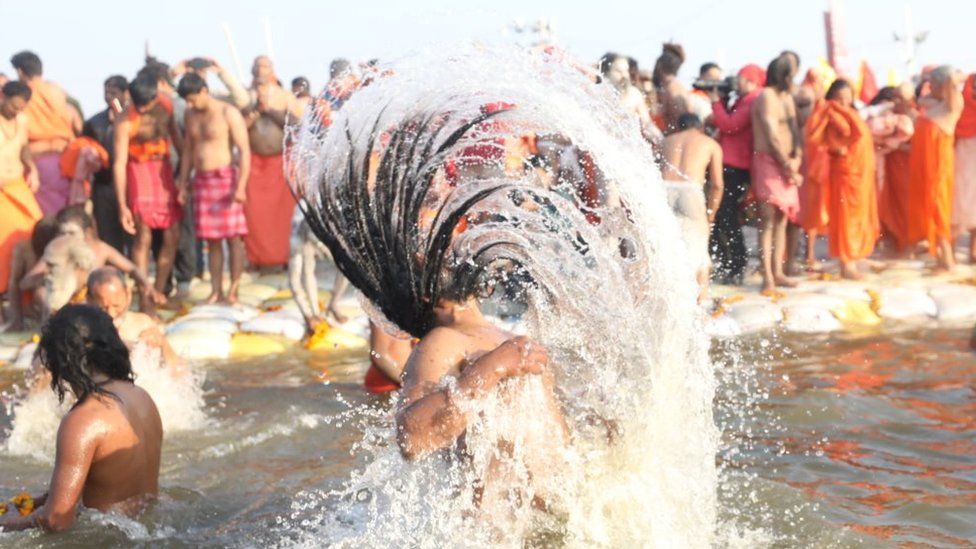
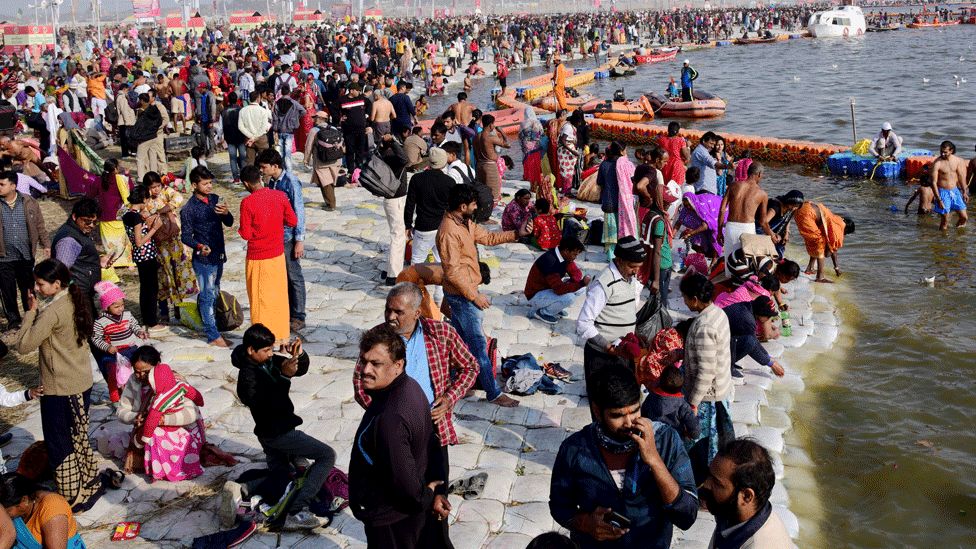
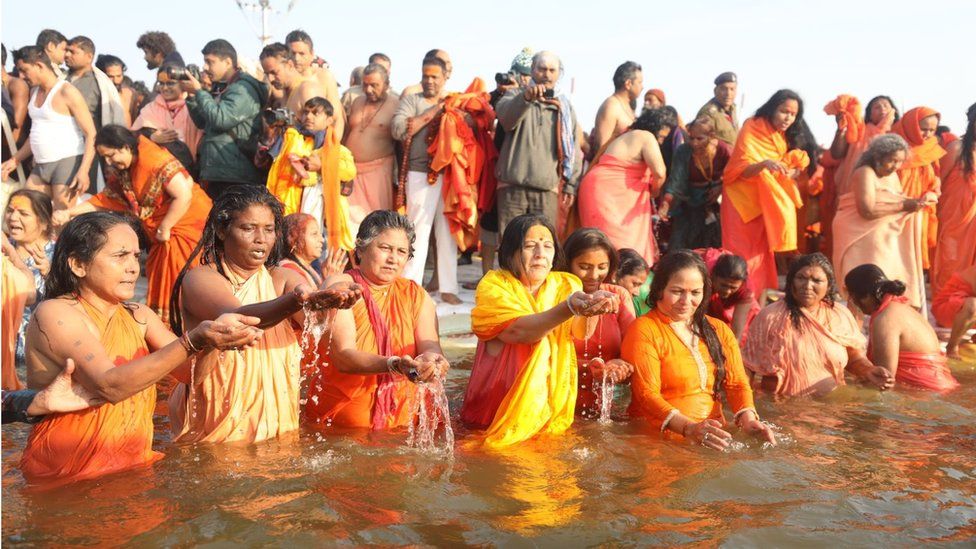
Millions of people have taken to the waters at the confluence of India’s sacred Ganges and Yamuna rivers at the Kumbh Mela festival – humanity’s largest gathering.
At least 15m people are expected on the first day alone. Officials project about 120m visitors over 49 days.
Hindus believe bathing at the rivers will cleanse their sins and bring salvation.
The holy men were among the first procession to arrive early Tuesday.
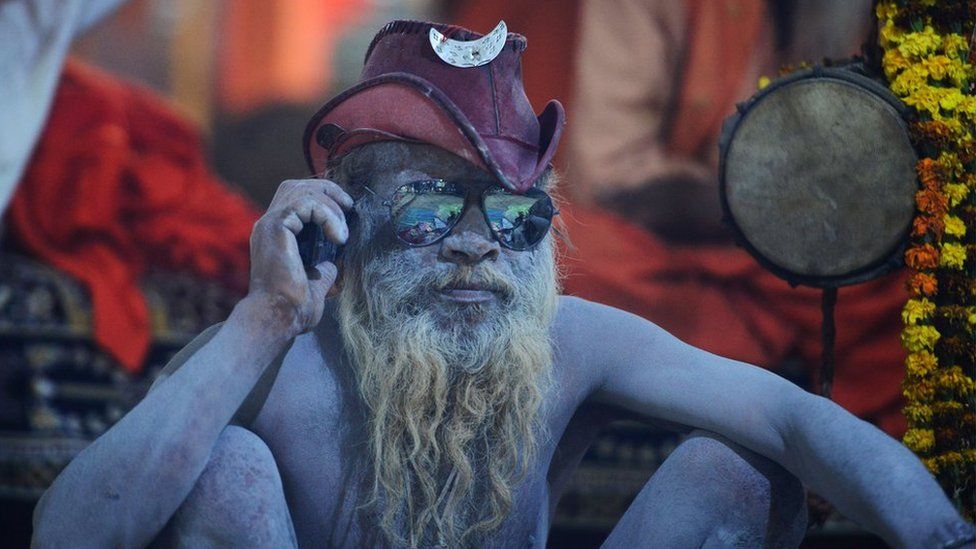
Sadhus – or ascetics – smeared ash on their bodies as they came out of the water and chanted “Har Har Gange”, or “Mother Ganges”, and danced while posing for photographers.
Image copyrightANKIT SRINIVAS
The Naga sadhus are the biggest draw of the festival – held in the northern city of Allahabad, recently renamed Prayagraj – and can be counted on to arrive in massive colourful processions.
At the last Kumbh in 2013, female ascetics were allowed to bathe at the confluence of the rivers – known as the Sangam – for the first time. A few hundred transgender people already bathed on Tuesday morning.
More than a million foreign pilgrims will also take part in the festival, senior administration official Rajeev Rai told the BBC.
He and other organisers have been preparing for more than a year for the event, which dwarfs the annual Hajj pilgrimage to Islam’s holiest sites in Saudi Arabia.
“Last minute preparations are on. All the religious sects have been allocated time for their processions and bathing rituals,” Mr Rai said. “We have devised a traffic plan to ensure there’s no overcrowding. The mela area is open only to pedestrians,”
The mela (meaning “fair” in Hindi) has been held in Allahabad for centuries now, but it has grown into a mega event in the past two decades.
Image copyrightGETTY IMAGES
This year the gathering will be particularly huge and many believe India’s Hindu nationalist government has organised it with an eye on key general elections due in the summer.
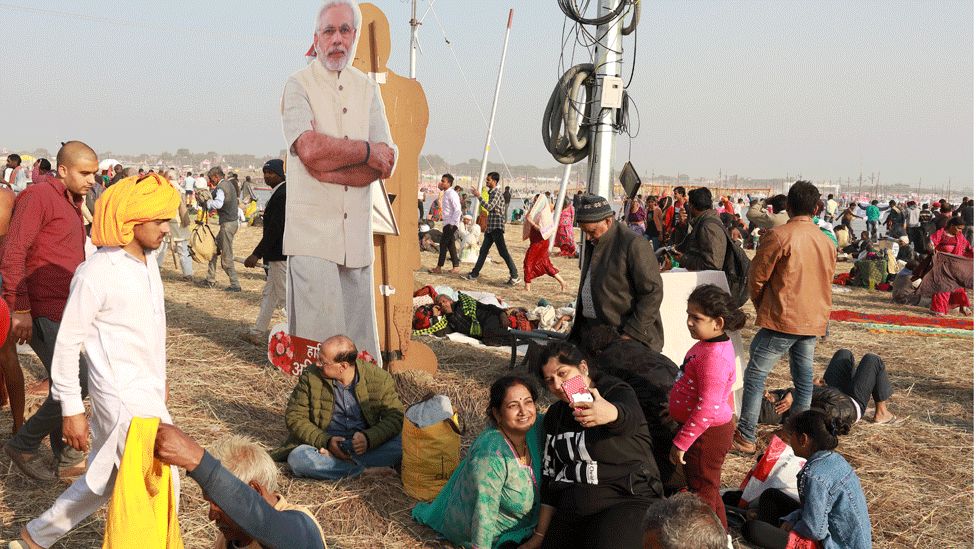
Massive billboards of Prime Minister Narendra Modi dot Allahabad city and the mela ground. Huge cardboard cut-outs have been placed strategically at the bathing areas.
Image copyrightANKIT SRINIVAS
A temporary tent city, spread over 32 sq km (12 sq miles) has been set up to accommodate the masses, complete with hundreds of kilometres of new roads. Hospitals, banks and fire services have been set up just for the festival, along with 120,000 toilets.
Hundreds of new train services are running to and from Allahabad to tackle the rush of pilgrims and more than 30,000 police and paramilitaries have been deployed to provide security and manage the crowds.
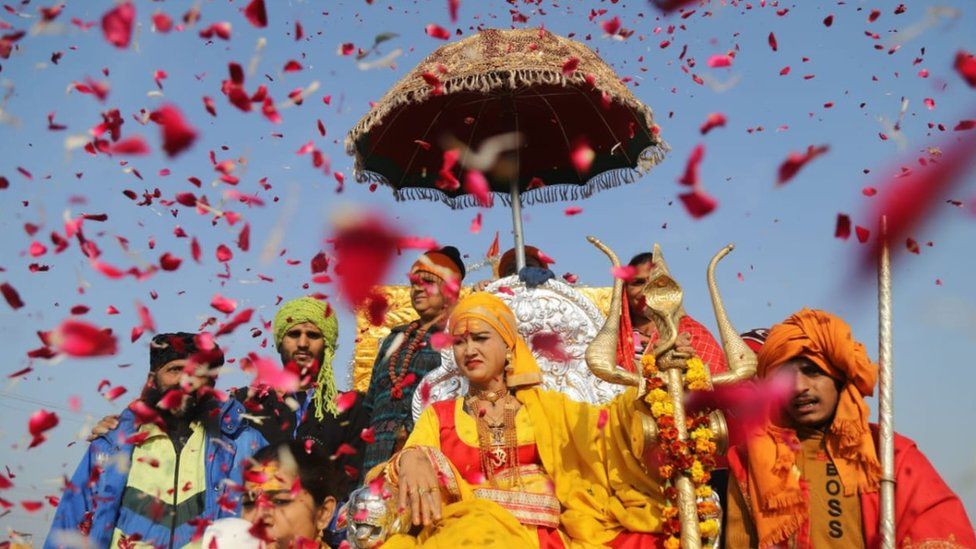
In the run up to the festival, religious sects have held daily processions marked by much pomp and show.
Image copyrightANKIT SRINIVAS
At one such procession on Sunday night, there were elephants, camels and horses. Brass bands and drummers played, as religious leaders sitting atop several vehicles threw marigold flowers to thousands of devotees.
On Monday – a day before the official start of the festival – tens of thousands of pilgrims bathed at the Sangam. Some then lit clay lamps and floated them along with flowers in the Ganges.
The atmosphere at the mela is festive, and the authorities have announced a calendar of music and dance performances. But there’s plenty of impromptu entertainment taking place by the roadside, with children performing rope tricks and shows by drummers and ballad singers.
Most pilgrims, however, say they are here to “answer the call of Mother Ganges”.
“We believe that bathing here will destroy our sins,” farmer Pramod Sharma said.
“The waters here have regenerative properties. Bathing here can cure your ailments. It also removes obstacles from your way,” Shahbji Raja said.
KOCHI, India (Reuters) – One of two Indian women who entered an ancient Hindu hill temple in southern India this month in defiance of a centuries-old ban on women of menstruating age alleged she was beaten up by her mother-in-law on Tuesday, police said.
Kanaka Durga, 39, a civil servant, suffered injuries to her head and had to be hospitalised, police said. She claims she was attacked only minutes after she returned to her home from spending a month at undisclosed locations fearing attacks by conservative Hindu groups, police said.
“We received a complaint from Kanaka Durga alleging that she was attacked by family members of her husband when she returned home after entering the temple,” said Jaya Mani, officer in charge of Perinthalmanna police station in Malappuram district, which is in the state of Kerala where the Sabarimala temple is located.
Police were investigating, Mani said.
SPONSORED
A second police source said Durga had alleged she was assaulted by the mother-in-law. The mother-in-law had denied the allegation, he said.
Durga did not return calls seeking comment. The family members, including Durga’s mother-in-law, could not be reached for comment.
The Sabarimala temple has been the site of tension since India’s Supreme Court ruled in late September to end a ban on women and girls aged from 10-50 from entering.
The temple refused to abide by the ruling and subsequent attempts by women to visit were blocked by thousands of devotees.
That was until Bindu Ammini, 40, a law lecturer at Kerala’s Kannur University, and Durga finally succeeded in entering the temple on Jan. 2 through a side entrance in the middle of the night. Some other women have claimed they have got into the temple since then.
Congress president Rahul Gandhi has been relentless in his attacks on Prime Minister Narendra Modi over a range of issues.(REUTERS FIle Photo))
Congress president Rahul Gandhi today took a swipe at Prime Minister Narendra Modi who received the Philip Kotler Presidential award on Monday saying he wanted to “congratulate” him on winning “the world famous” prize that has no jury and has never been given out before.
The award focuses on the triple bottom-line of ‘people, profit and planet’. It will be offered annually to the leader of a nation, a statement from the Prime Minister’s Office said. According to the award citation, Modi was selected for his “outstanding leadership for the nation”.
Rahul Gandhi
✔@RahulGandhi
I want to congratulate our PM, on winning the world famous “Kotler Presidential Award”!
In fact it’s so famous it has no jury, has never been given out before & is backed by an unheard of Aligarh company.
Modi Wins ‘First-Ever’ Philip Kotler Presidential Award – But What Is it?
Top BJP leaders praised the PM for winning a prize with no disclosed jury or process – from a marketing group whose organisers ducked questions, calling it “a very confidential award”.
thewire.in
9,074 people are talking about this
The Congress chief’s dig at the PM evoked a sharp response from Union textiles minister Smriti Irani who accused the Gandhi family of conferring Bharat Ratna awards on its members.
He also attacked the state government under Naveen Patnaik and said the benefits meant for the people should reach them on time and must not be used as an election tool.
IANS | Bhubaneswar | January 15, 2019 2:38 pm
He also attacked the state government under Naveen Patnaik. (Image: Twitter/@BJP4India)
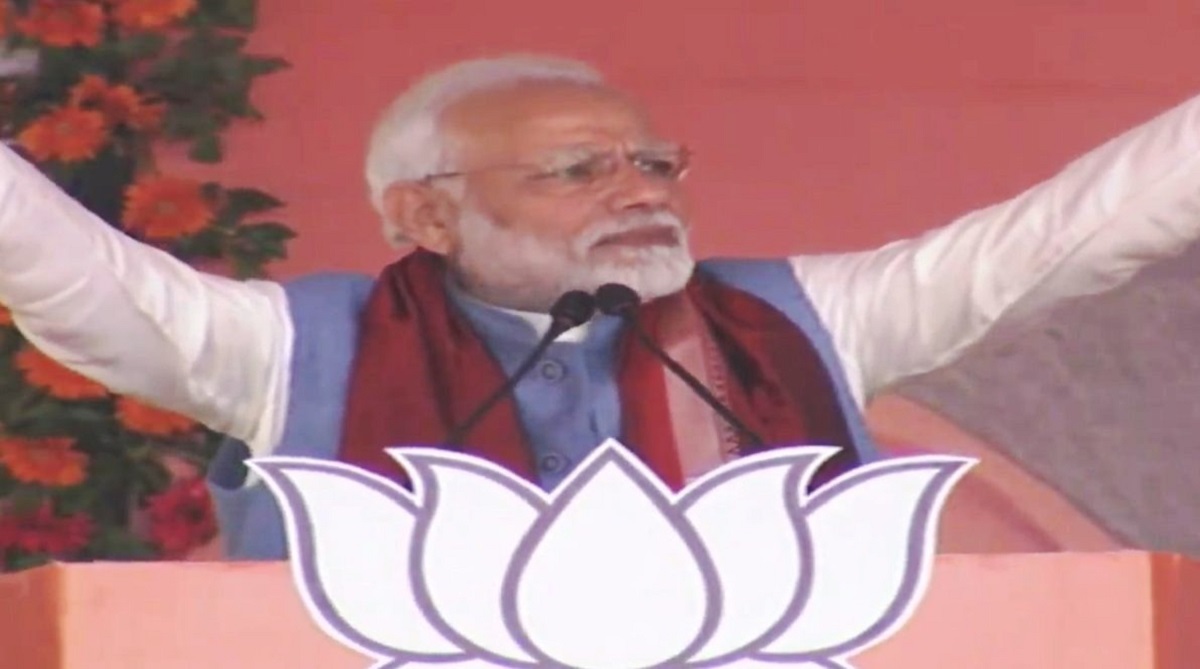
Prime Minister Narendra Modi on Tuesday attacked previous governments at the Centre for ruling the country like their “Sultanates”, neglecting its rich heritage.
“Past governments ruled like Sultans and neglected our rich heritage. They ignored our glorious civilisation and failed to pay attention to their preservation,” said Modi while addressing a public meeting in Balangir town in Odisha.
“This criminal error will always stick to the parties, who the country gave the opportunity to run governments for decades. Surprisingly, they have not taken lessons from this,” he added.
He also attacked the state government under Naveen Patnaik and said the benefits meant for the people should reach them on time and must not be used as an election tool.
This was Modi’s third visit to the state in the past three weeks and showed the importance that the Bharatiya Janata Party (BJP) was attaching to the state ahead of the general and assembly elections.
The Prime Minister said his government was committed to conserving and preserving the country’s rich cultural heritage.
He said his government has been constantly making efforts to bring back the idols stolen from the temples in India.
He also attacked the parties for opposing the International Yoga Day and the construction of the Statue of Unity.
“Some parties were against organising the International Yoga Day. These are the people who did not promote yoga. These people neither understand India nor tourism,” he added.
“They raised questions on erecting the statue of Sardar Vallabhbhai Patel. But, after becoming the world’s tallest statue, it has generated jobs for people residing around the structure.
“They were also against changing the names of islands in Andaman and Nicobar islands,” said Modi.
He said the central government has cancelled around six crore fake ration cards, gas connections, scholarships with wrong names, grabbing pension under wrong names over the last four years.
“We plugged these leakages, saving crores of rupees. All ration cards have been digitised and around 80 per cent of them have been linked with Aadhaar,” said the Prime Minister.
“The middlemen used to loot the money meant for poor. We have stopped this. We ensured everyone gets what they deserve,” he added.
The Prime Minister said there are people who are angry because he has put a stop to their loot and corruption.
Highlighting the developmental works being carried out by the Centre in the state, he attacked the Odisha government for failing to utilise the District Mineral Foundation (DMF) fund in the mineral bearing areas.
“Odisha has Rs 4,000 crore in its DMF Fund which has remained unutilised so far. What has happened to the government? It is in deep slumber. The government of Odisha should ensure that the benefits reach the tribal people.
“Do not wait for the elections. Ease the problems of people, elections will keep coming,” said Modi.
He said the central government has allocated over Rs 20,000 crore for the development of Railways in Odisha in the last four years alone, which is five times more than the allocation by the previous government.
In a month, development projects worth more than Rs 20,000 crore have been either inaugurated or initiated in Odisha, said Modi.
Following Schellenberg’s death sentence, Canada has updated its travel advice for China, urging citizens to “exercise a high degree of caution due to the risk of arbitrary enforcement of local laws”.
Schellenberg’s aunt, Lauri Nelson-Jones said the death sentence was “a horrific, unfortunate, heartbreaking situation”.
“It is our worst case fear confirmed,” she added. “It is rather unimaginable what he must be feeling and thinking.”
Canadian Prime Minister Justin Trudeau condemned the ruling.
“It is of extreme concern to us as a government, as it should be to all our international friends and allies, that China has chosen to begin to arbitrarily apply the death penalty,” he said in a statement.
China’s foreign ministry said it was “strongly dissatisfied” with Mr Trudeau’s remarks, and said Canada should respect China’s sovereignty.
Schellenberg has 10 days to launch an appeal and his lawyer told Reuters news agency that he would probably do so.
What is Schellenberg’s case about?
The Canadian, who is believed to be 36, was arrested in 2014 and accused of planning to smuggle almost 500lb (227kg) of methamphetamine from China to Australia.
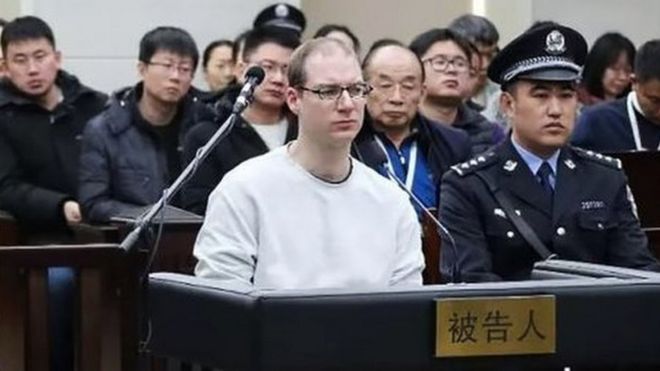
He was sentenced to 15 years in prison in November but, following an appeal, a high court in the north-eastern city of Dalian on Monday sentenced him to death.
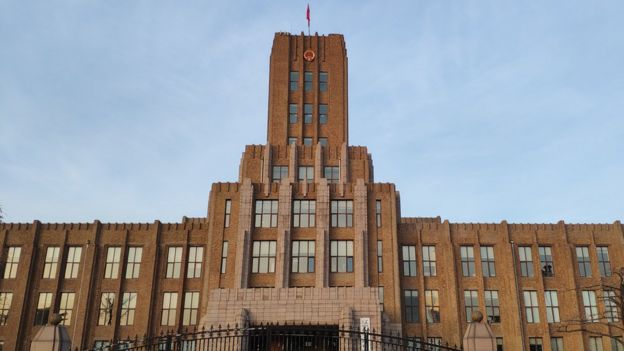
Image copyrightGETTY IMAGESImage captionThe court in north-eastern China where Schellenberg’s case was reviewed
“I am not a drug smuggler. I came to China as a tourist,” Schellenberg said just before the verdict was announced, the AFP news agency reports.
China is believed to execute more people annually than any other country, but is highly secretive about the number.
Human rights group Amnesty International puts the figure in the thousands – more than the rest of the world’s nations put together.
A number of foreigners have been executed for drug-related offenses in the past, including British man Akmal Shaikh, who was executed in 2009 despite claims he was mentally ill, and an appeal for clemency from the UK prime minister.
What’s the bigger picture?
Relations between China and Canada have deteriorated rapidly since the arrest of Ms Meng in Vancouver on 1 December.
She was granted bail by a Canadian court several days later but remains under constant surveillance and must wear an electronic ankle tag.
Ms Meng, who is the daughter of Huawei’s founder, is accused in the US of using a subsidiary of the company called Skycom to evade sanctions on Iran between 2009 and 2014.
She denies any wrongdoing and says she will contest the allegations.
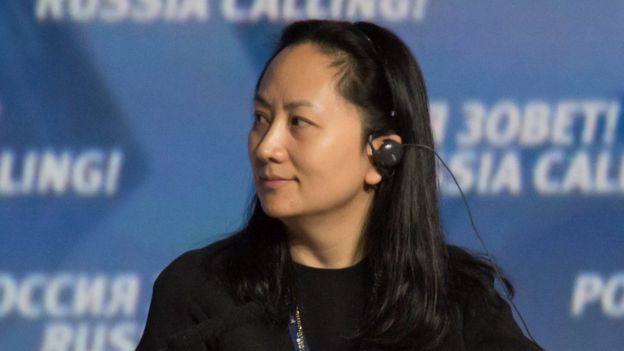
Image copyrightREUTERSImage captionMeng Wanzhou is the daughter of Huawei’s founder
In the weeks that followed her arrest China detained two other Canadian citizens.
Former diplomat Michael Kovrig and businessman Michael Spavor face accusations of harming national security.
China has denied the detention of the two men is tied to Ms Meng’s arrest, but many analysts believe it is a tit-for-tat action.
Donald Clarke, a specialist in Chinese law at George Washington University, said that Schellenberg’s death sentence appeared to be “an unprecedented step in China’s diplomacy”.
“I have seen cases I considered unjust before, but I cannot recall a previous case that looked so clearly unconnected to the defendant’s guilt or innocence,” Prof Clarke told the BBC’s Chinese service.
China began working hard to push Schellenberg’s case to international prominence, taking the highly unusual step of inviting foreign journalists into the court, the BBC’s John Sudworth in Beijing reports.
And despite the Canadian’s insistence that he is innocent, his retrial lasted just a day, with his death sentence being announced barely an hour after its conclusion, our correspondent says.
“The trial will also send the message that China won’t yield to outside pressure in implementing its law,” it said.
However, back in December, the editor of the Global Times warned that China would “definitely take retaliatory measures against Canada” if Ms Meng were not released.
Hu Xijin said in a video posted on the Global Times website: “If Canada extradites Meng to the US, China’s revenge will be far worse than detaining a Canadian.”
Two people have been killed and 27 injured in separate mass stabbings in China on Monday.
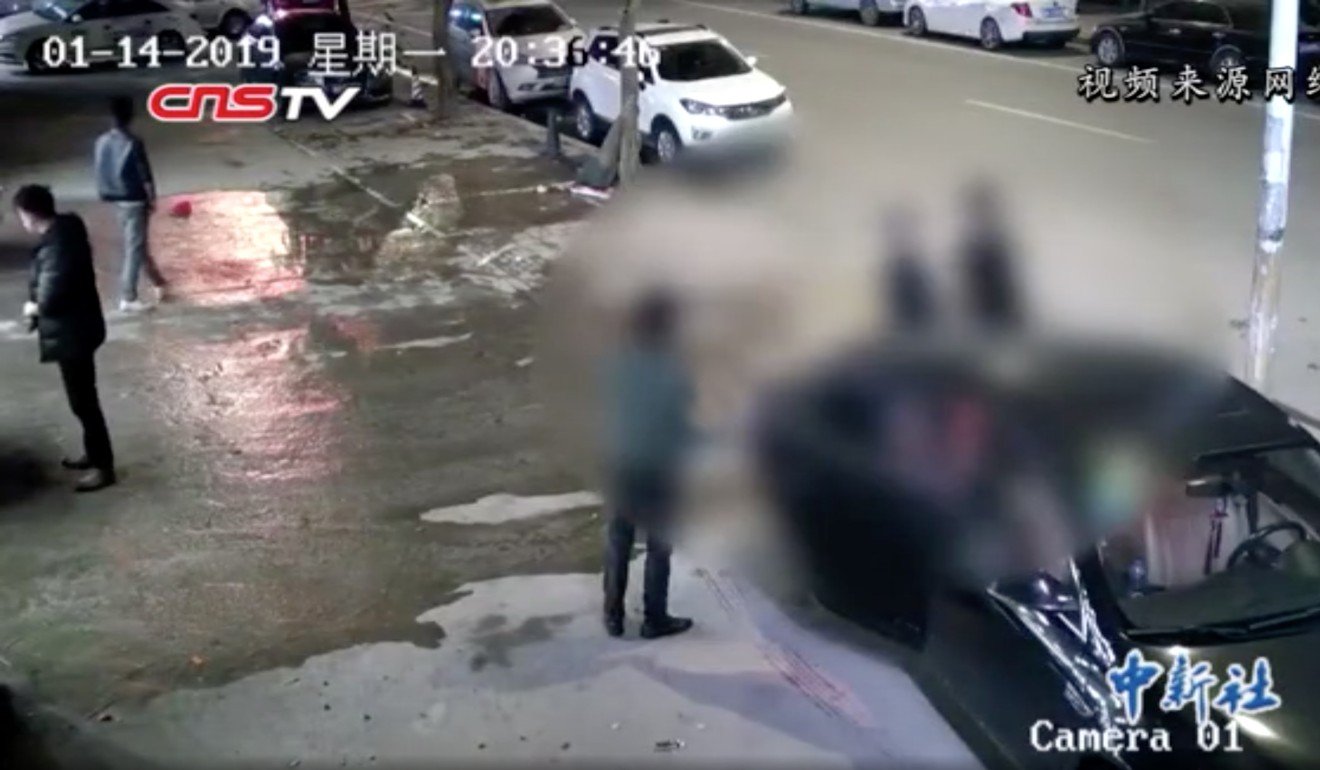
In the first incident one man died and 19 people were injured in Fuzhou, the capital of the southeastern province of Fujian.
According to Fuzhou News, a motorcyclist attacked a group of a pedestrians after getting into an argument with his former wife, a woman named Huang, and stabbing her new boyfriend.
The report named the suspect as a 48-year-old called Hou and said that he had confronted his former wife at her home in Jianxin town at around 8pm.
After stabbing the boyfriend the attacker then rode off on his motorbike, before attacking a group of people in the street.
A witness told Beijing Youth Daily that while returning home around 9pm, she saw a man and a woman collapse with stab wounds on the city’s Pushang bridge.
“I thought he was a beggar so I did not give him much attention. Later, I saw a woman collapsing to the ground as well and people running away from the scene, urging others to run,” she told the reporter.
Another witness told local radio station FM987 that the attacker pulled his motorcycle over in front of a street stall selling shoes, said nothing and then stabbed the stall owner in the stomach.
He fled immediately on the motorcycle, and the crowd quickly called the police.
One woman was stabbed while she was standing at a crossroads and making a phone call was sent to the Jinshan branch of the Fujian Provincial Hospital.
“That man just came up to her and stabbed her all of a sudden, before fleeing,” the victim’s son told local media.
The second attack in Dongguan, a manufacturing hub in the southern province of Guangdong, left one person dead and eight injured.
Police have arrested a man named Tan in connection with the attack and confirmed they were investigating the case.
Few details have been made available, but officers said they did not believe it was a terrorist attack.
One local resident posted on a WeChat group on Monday evening: “Everyone, please don’t go out. There is a psycho in Huaide area stabbing people randomly. He doesn’t just stab everyone but attacks suddenly.”








 CHINDIA ALERT: You'll be living in their world, very soon
COMMENTS: 1