Chindia Alert: You’ll be Living in their World Very Soon
aims to alert you to the threats and opportunities that China and India present. China and India require serious attention; case of ‘hidden dragon and crouching tiger’.
Without this attention, governments, businesses and, indeed, individuals may find themselves at a great disadvantage sooner rather than later.
The POSTs (front webpages) are mainly 'cuttings' from reliable sources, updated continuously.
The PAGEs (see Tabs, above) attempt to make the information more meaningful by putting some structure to the information we have researched and assembled since 2006.
BEIJING, Feb. 4 (Xinhua) — A total of 197 million people took part in winter tourism from November 2017 to March 2018, according to an annual report released by the China Tourism Academy recently.
Winter tourism refers to tourist activities related to ice and snow.
The cost associated with winter tourism has been decreasing while the public shows increasing interest in participating, said Han Yuanjun, editor-in-chief of the report.
Winter tourism is conducive to rural vitalization and local economic transformation, the report said.
Winter tourism has been booming in China since Beijing won its bid in 2015 to host the 2022 Winter Olympic Games. Local governments of Beijing and the provinces of Hebei, Jilin and Heilongjiang have unveiled policies to promote winter tourism.
To all my readers and blog followers – Happy New Year.
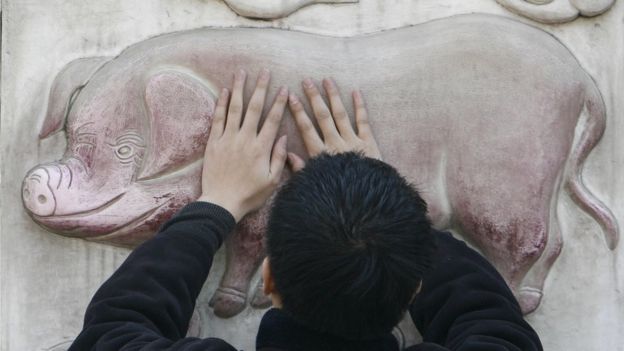
The Pig is one of 12 animals in the Chinese calendar. The others are: Rat, Ox, Tiger, Rabbit (my birth year), Dragon, Snake, Horse, Goat, Monkey, Rooster, Dog. Pigs have a beautiful personality and are blessed with good fortune in life.
This zodiac system has existed in Chinese culture since the Qin dynasty, more than 2,000 years ago. This in turn gave rise to various compatibilities (and incompatibilities) between each zodiac, and play a major role in marriage and career decisions, fortune-telling and more!
Paired with the Celestial Stems (天干—Tiān gān), there is a 60-year calendrical cycle. Although hài is associated with earth, the years also cycle through the five elements of nature (五行—wǔ xíng).
See the table below for the full details of each year.
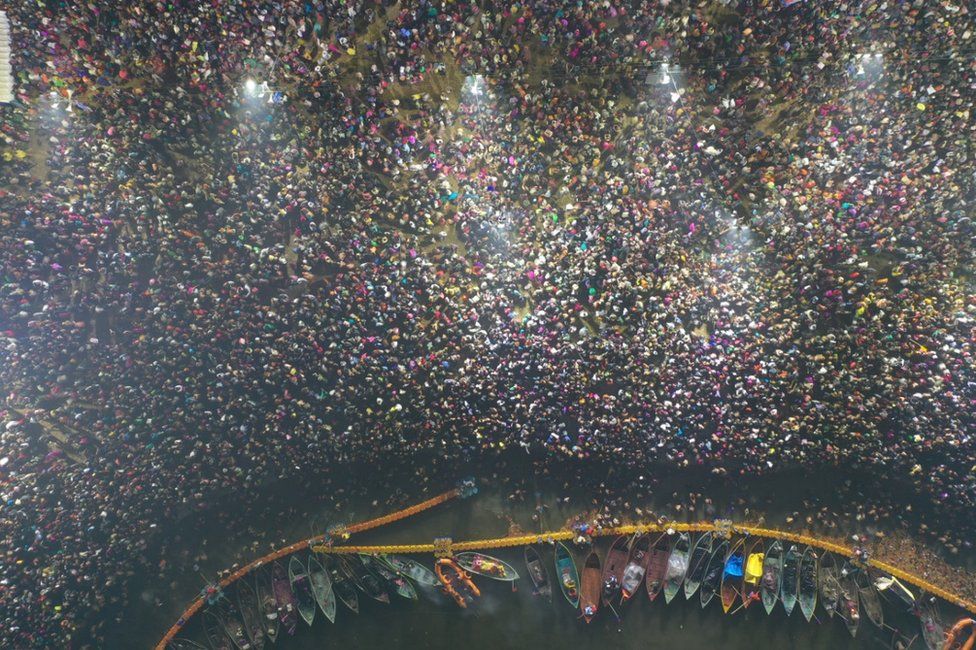
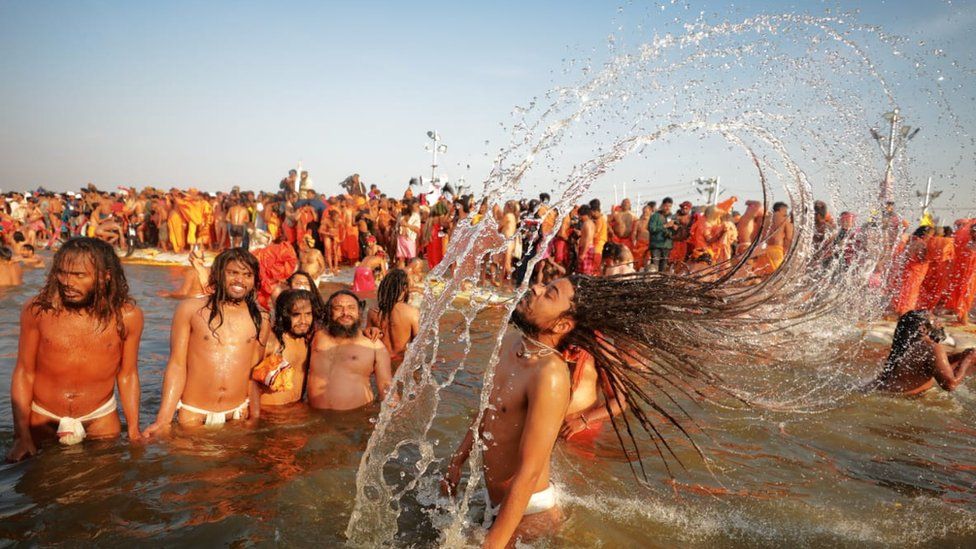
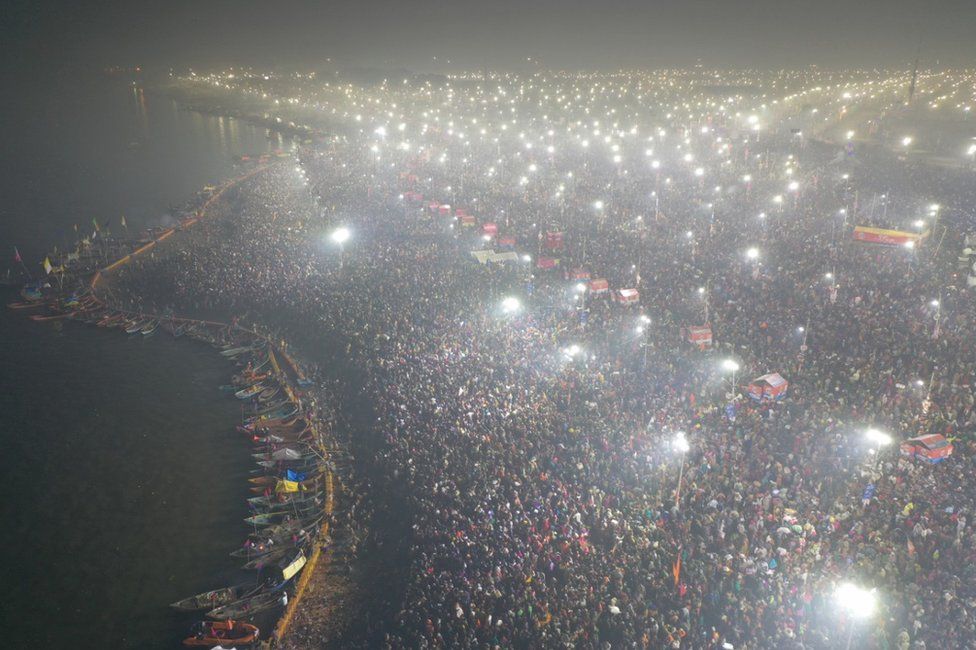
The main day of bathing has been held at India’s Kumbh Mela, with tens of millions of pilgrims taking a dip at the confluence of the Ganges and Yamuna rivers.
This is the most auspicious of six bathing days at the event, billed as the world’s biggest human gathering.
Hindus believe bathing at the rivers will cleanse them of their sins and help them attain “moksha”, setting them free from the cycle of birth and death.
The mela (meaning “fair” in Hindi) has been held in Allahabad city (recently renamed Prayagraj) in the northern state of Uttar Pradesh for centuries now. But it has grown into a mega event in the past two decades.
Image copyrightANKIT SRINIVAS
The BBC’s Vikas Pandey, who is at the festival, said people had arrived from all parts of the country and had walked miles to take a dip. “Every street in the city leading to the mela grounds is flooded with people,” he said.
The bathing began at midnight with people chanting “hail mother Ganges”.
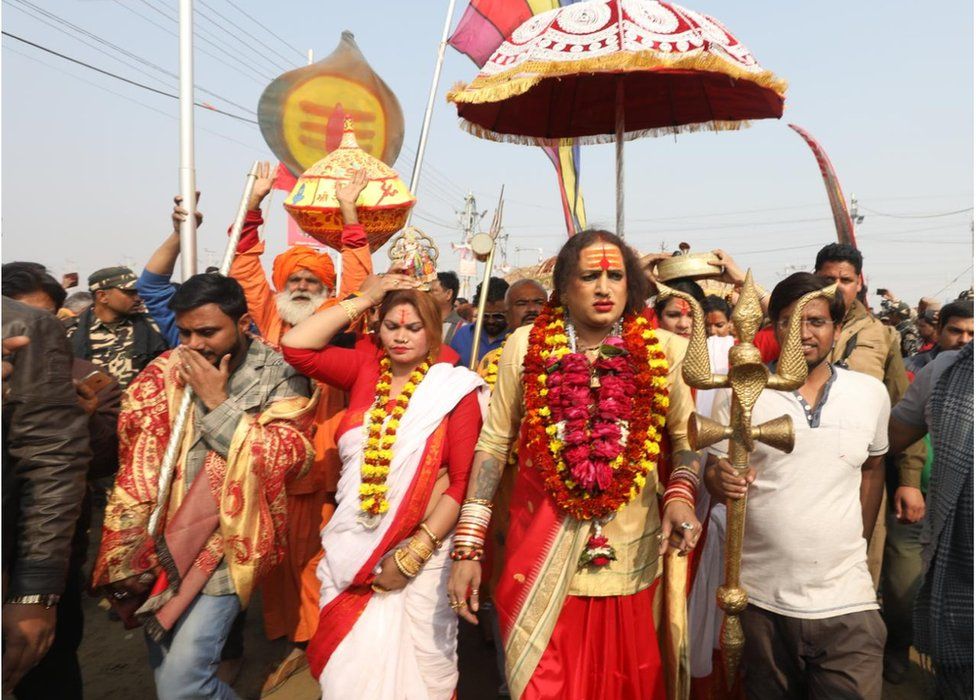
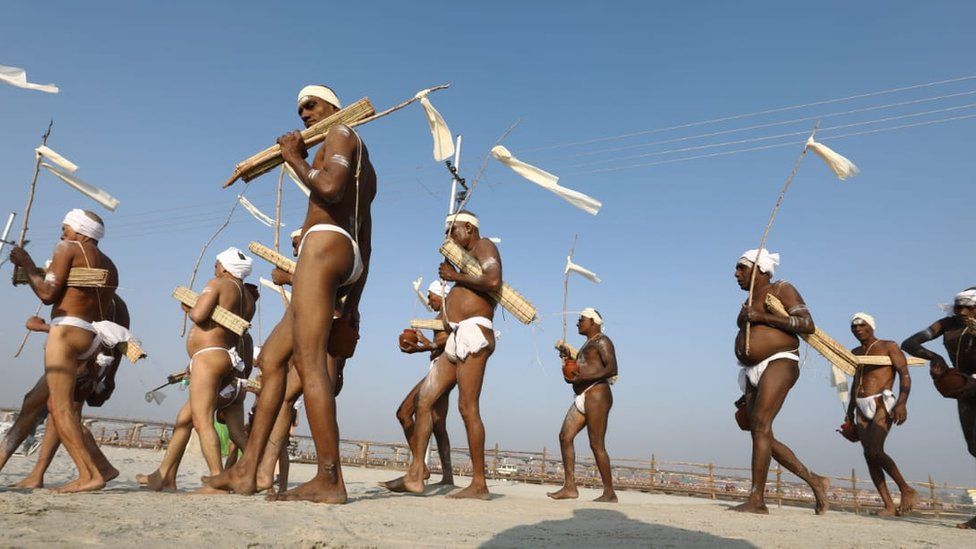
At dawn, visitors jostled to get a glimpse of the Akharas – different congregations of Hindu saints – who had started their procession.
Image copyrightANKIT SRINIVAS
These processions are highly coveted as people line up to see holy men and women perched on top of heavily decorated floats.
“It is so crowded but everyone seemed excited, despite having walked long distances in the cold,” our reporter said.
Officials say more than 10 million people have already taken a dip and the number is likely to rise during the day.
Avnish Tripathi, who had arrived from Madhya Pradesh state, walked for five hours from the outskirts of Allahabad city to reach the festival. “Once I got there, I had to wait for two hours to take a dip because of the crowds. But it was a magical experience and I didn’t feel tired at all,” he told the BBC.
Many other devoted pilgrims had walked more than 50km (31 miles) in the hope of taking a dip.
Image copyrightUTTAR PRADESH GOVERNMENT
“It has been nearly 12 hours since bathing began but the crowds haven’t thinned,” our reporter added.
The Naga sadhus are the biggest draw of the festival. Thousands of the Sadhus, naked and wearing garlands around their necks, charged into the river with swords and tridents in their hands.
They were escorted by the police as people watched from behind barricades.
Image copyrightANKIT SRINIVAS
This year’s festival is an “ardh Kumbh” – a “half-size” version that falls mid-way between two Kumbhs – but there’s nothing diminutive about it. In fact, it’s much bigger than the last.
KOLKATA, India (Reuters) – The chief minister of a big Indian state led a sit-in on Monday in a standoff with Prime Minister Narendra Modi’s government over a corruption investigation she condemned as a vendetta, as political tension rises ahead of a general election.
Mamata Banerjee, the firebrand chief minister of West Bengal, began the protest overnight in the state capital, Kolkata, after federal police swooped on the home of a police commissioner as part of an investigation into Ponzi schemes that defrauded thousands of small investors.
Banerjee, who leads a regional party trying to forge a front against Modi’s ruling Bharatiya Janata Party (BJP), accused the federal government of trying to undermine state powers.
West Bengal, which sends the third largest number of legislators to the lower house of parliament, has become a battleground state as the Hindu nationalist BJP looks to make in-roads in the east to make up for any losses in its northern heartland.
Over the past several months, disputed have erupted between the BJP and Banerjee’s Trinamool Congress and there have been allegations that hardline Hindu groups are trying to stir up tension with minority Muslims to win votes.
“The highest levels of the BJP leadership are doing the worst kind of political vendetta,” Banerjee said in a tweet. “They are misusing power to take control of the police and destroy all institutions.”
Hundreds of her supporters gathered at Banerjee’s protest venue on Monday, shouting encouragement.
The chief minister sat on a wooden platform, surrounded by ministers and party leaders, and held a meeting of her cabinet.
But the Central Bureau of Investigation (CBI), which is controlled by the federal government, said state police prevented its agents from carrying out their work on Sunday and even briefly detained them.
“A clash like this, between law enforcement agencies, is not only unfortunate but is also dangerous for the country’s federal and political system,” Home Minister Rajnath Singh told parliament.
Modi has to call the election by May. Polls suggest his alliance may emerge as the largest group in parliament but short of a majority. Regional parties like Banerjee’s could play a crucial role in any coalition building.
Opposition parties led by the Congress party said they backed Banerjee in her fight with Modi’s administration.
Congress chief Rahul Gandhi said Modi and his party were waging an “unrelenting” attack on political institutions.
“The entire opposition will stand together and defeat these fascist forces,” he said.
Mamata Banerjee on dharna LIVE: West Bengal chief minister Mamata Banerjee said her struggle will continue till “the situation is resolved”. Her comments came as she visited the police commissioner’s residence.
West Bengal chief minister Mamata Banerjee launched a dharna in the heart of Kolkata on Sunday to protest the move of the CBI to question Kolkata Police commissioner Rajeev Kumar as she accused Prime Minister Narendra Modi and BJP president Amit Shah of plotting a ‘coup’.
She said her struggle will continue till “the situation is resolved.” Her comments came as she visited the police commissioner’s residence after a CBI team which showed up to quiz the Kolkata Police chief was detained by the local police.
West Bengal Chief Minister Mamata Banerjee continued her dharna against the Central Bureau of Investigation (CBI) move against the Kolkata police commissioner Rajeev Kumar in connection with ponzi scam cases.
SNS Web | New Delhi | February 4, 2019 1:31 pm
West Bengal Chief Minister Mamata Banerjee during a sit-in (dharna) protest over the CBI’s attempt to question Kolkata Police Commissioner Rajeev Kumar in connection with a ponzi scheme scam, near the Metro Channel in Kolkata on Feb 4, 2019. (Photo: Kuntal Chakrabarty/IANS)
West Bengal Chief Minister Mamata Banerjee continued her dharna against the Central Bureau of Investigation (CBI) move against the Kolkata police commissioner Rajeev Kumar in connection with ponzi scam cases.
Accusing Prime Minister Narendra Modi and BJP chief Amit Shah of unleashing a state of “emergency” in the country, Banerjee, the chief of Trinamool Congress (TMC), said on Monday that her protest is a Satyagraha and she will continue till the country is saved.
Banerjee has been on a sit-in at a makeshift dais at Dharamtala area near Metro Channel of the city since 9 pm on Saturday.
“The nation can see but they can’t speak out of fear,” she said, further accusing the Centre of playing vendetta politics.
“The Modi govt has taken away the democratic rights of the people,” Banerjee said, adding, “Centre is targeting opposition.”
Banerjee, who was scheduled meet farmers today at the Netaji Indoor Stadium, addressed them from the protest site over Facebook Live.
“The Modi government has sucked the blood of the farmers. Around 12,000 farmers have committed suicide,” she alleged.
Banerjee said that her government works for farmers’ welfare.
Commenting on crop insurance schemes for the farmers, Banerjee claimed that the state government has done more than the Modi government in this regard.
“Modi says he has sent money. He hasn’t. Eighty per cent of the money contributed into the scheme is of the state government. We pay the share of both the state government and that of the farmers. We have given Rs 600 crores. We have given Kisan credit card to 70 lakh farmers,” Banerjee said.
Further hitting at the Modi government, Banerjee said that the Modi government, after 5 years, says that farmer income will double by 2022.
“I say with pride, we have tripled the income already. The West Bengal govt is way ahead,” she told the gathering and the farmers.
“Those who try to insult Bengal should know that we consider work as dharma and karma. Doing lip-service is not enough. I will appeal to the farmer brothers and sisters to not allow anyone to exploit your weaknesses for political gains,” she said.
Opposition support
Banerjee’s sit-in, now dubbed ‘Save The Constitution’, received wide support from anti-BJP parties except a few from across the country.
Samajwadi Party (SP) chief Akhilesh Yadav said that Banerjee is right when she says that the BJP is using CBI to target political opponents.
“Besides West Bengal, such things have been heard from other states too. BJP and Centre have started misusing CBI as elections are approaching. Not only I, not only Samajwadi Party, but all political parties are saying this,” he said on Monday.
“There was CBI row, centre was scared of a CBI director, now they are trying to scare everyone using CBI. Who has misused? The institutions. If someone has politicised the institutions, it is BJP,” Yadav said.
The former Uttar Pradesh Chief Minister recently formed an alliance with the Bahujan Samaj Party (BSP) to take on the BJP in the upcoming Lok Sabha elections. He was also among the leaders present at the mega anti-BJP rally organised by Mamata Banerjee in Kolkata on 19 January.
Extending support of the National Conference (NC), Farooq Abdullah said, “Her (Mamata Banerjee) allegation is right. This country is in danger as its becoming dictatorial. They (Central govt) are not masters of this country, people are.”
Delhi Chief Minister Arvind Kejriwal, Andhra Pradesh Chief Minister N. Chandrababu Naidu, National Conference leader Omar Abdullah RJD leader Tejashwi Yadav and DMK leader M K Stalin were among leaders who expressed their solidarity with Banerjee in tweets.
Kejriwal called Modi-Shah duo’s action is against democracy.
“Spoke to Mamta didi and expressed solidarity. Modi-Shah duo’s action is completely bizarre and anti-democracy,” Kejriwal said.
Yadav, who also spoke to Banerjee, extended RJD’s support, “BJP has not only venomous and nefarious agenda against opposition leaders but Indian Administrative Service and Police Officers. Might visit Kolkata tomorrow,” he said on Sunday night.
Stalin said he stood with Banerjee in her fight to protect the federal structure of this country and to save democracy. “The independence of every institution has been compromised under this fascist BJP Government.”
Congress president Rahul Gandhi too threw his weight behind Banerjee.
Sitaram Yechury, CPI(M) general secretary, said that corruption cases against TMC government in chit fund scam have been public for years but the Modi government chose to stay quiet as the top mastermind of the scam joined BJP.
“It does a drama to act now, after 5 years, and TMC leadership responds by staging a drama to protect its corrupt. This drama in Kolkata by BJP and TMC is not a fight for any principle but only to save their corrupt and hide their corruption. CPI(M) has fought both these undemocratic, corrupt, communal and dictatorial regimes in the Centre and the state and will continue to do so,” he said.
CBI vs Kolkata Police: How it began
The showdown began when CBI officials reached official residence of the police commissioner in the evening to question him in connection with the ponzi scam cases. Reports indicate that the probe agency sleuths were spotted in the vicinity in the afternoon, alerting the police who reached the Commissioner’s residence immediately.
Kolkata Police officials inquired if the 40-odd CBI officers had the documents required to question the CP.
After preventing the CBI officials from entering the residence of Commissioner Kumar, the police whisked away some of the sleuths to the Shakespeare Sarani police station for further discussions.
More CBI men arrived at the Loudon Street home of Rajeev Kumar and a commotion ensued. Some CBI men were then bundled into police jeeps and taken to the police station.
It was after this incident that Mamata Banerjee began a sit-in in front of the Metro Cinema to protest “insults” faced at the hands of Prime Minister Narendra Modi and BJP chief Amit Shah. She accused both the BJP leaders of organising a “coup” on West Bengal.
The CBI on Monday moved the Supreme Court seeking directions to Kolkata Police Commissioner Rajeev Kumar to cooperate with the investigation.
Representing CBI, Solicitor General Tushar Mehta sought directions to Kumar to cooperate with the investigation and surrender all the evidence related to the chit fund case, stating that the top cop was a “potential accused”.
The CBI has claimed that Kumar has been instrumental in causing destruction of evidence and obstructing justice.
Meanwhile, on Monday, Home Minister Rajnath Singh told the Lok Sabha that the CBI action was initiated after the Supreme Court ordered an investigation into Saradha chit fund case.
“The Police Commissioner was summoned many times but he did not appear. West Bengal Governor Keshari Nath Tripathi has summoned Chief Secretary and Director General of Police and has asked them to take immediate action to resolve the situation,” Singh told the House.
Banerjee is expected to hold a scheduled cabinet meeting at the protest venue itself. The events were expected to cast a shadow on the Budget Session of Parliament on Monday with the opposition expected to vociferously raise the issue.
ULAANBAATAR (Reuters) – Mongolia has extended school winter holidays in the world’s coldest capital and many families have sent children to live with relatives in the vast, windswept grasslands to escape choking smog and respiratory diseases such as pneumonia.
The temperature is expected to drop to minus 32 degrees Celsius (minus 26F) in Ulaanbaatar on Monday night, as residents burn coal and trash to try to keep warm and concentrations of smog particles known as PM2.5 routinely exceed 500 mg per cubic meter, 50 times the level considered safe by the WHO.
Mongolia, a former Soviet satellite landlocked between Russia and China, has invested public money and foreign aid to tackle pollution, but improvement has been slow, with residents saying inaction has been compounded by a corruption scandal that has paralyzed parliament.
In a crowded township more than 40 miles from Ulaanbaatar, Jantsandulam Bold’s five grandchildren are breathing more easily after fleeing the capital.
“Fresh air and sun are most important for kids to grow healthy and robust,” says Jantsandulam, 57, making milk tea for her grandchildren in her home, a thickly padded felt hut known as a “ger”, or in Russian, a “yurt”.
“This little one had flu when he came here but the fresh air has treated him well,” she said, pointing at her five-year-old grandson.
The children are nearing the end of a two-month break, with schools due to reopen next Monday.
About 60 percent of Mongolia is covered by grassland, where the mining of copper, gold, coal and other minerals provides employment, while the Gobi desert envelops the South. But almost half the population live in Ulaanbataar.
Reuters calculations based on U.S. Embassy data show annual average PM2.5 concentrations hit 100 micrograms in Ulaanbaatar in 2018. They soared to 270 in December. PM2.5 in China’s most polluted city of Shijiazhuang stood at an average 70 micrograms last year, down 15.7 percent from 2017. The World Health Organisation recommends a concentration of no more than 10 micrograms.
The WHO said 80 percent of Ulaanbaatar’s smog was caused by coal burning in “ger” districts, where thousands of rural migrants, used to a nomadic lifestyle, have pitched huts. It estimates air pollution causes more than 4,000 premature deaths a year.
A joint study by the U.N. International Children’s Emergency Fund (UNICEF) and Mongolia’s National Centre for Public Health said children living in one smog-prone district of Ulaanbaatar had 40 percent less lung function than those living in the countryside.
“Air pollution aggravates respiratory diseases and children under five are most vulnerable as their organs are still not mature,” said Bolormaa Bumbaa, a doctor at Bayangol District’s Children’s hospital in Ulaanbaatar.
Families have already set up a pressure group known as Moms and Dads Against Smog, but after the protests they organized in Ulaanbaatar were ignored, the group decided to focus on encouraging residents to take action to protect themselves, said Mandakhjargal Tumur, a group coordinator.
“I don’t believe the government will do enough to reduce pollution in coming years,” she said. “That’s why we are now focusing on raising awareness.”
At the Bayangol hospital, Ulzii-Orshikh Otgon, 34, was forced to bring her 10-month-old daughter Achmaa in with pneumonia for the second time in a month.
“I believe it’s because of the pollution,” she said, adding that home air purifiers did little to help.
“Just by opening the door, our home fills with smog,” she said while breastfeeding Achmaa in the waiting room.
Doctors advised her to take her children out of Ulaanbaatar but she has no relatives in the countryside and rent is expensive.
“Decision makers have said for years they are fighting pollution,” she said. “They just wasted billions of tugriks on useless stoves and processed coal, which don’t change anything.”
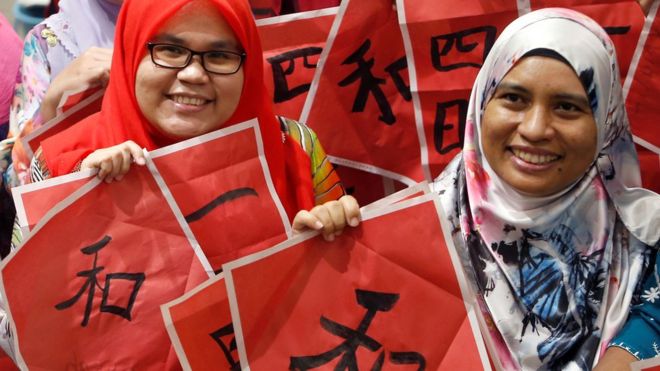
Image copyrightREUTERSImage captionMuslim teachers attend a Chinese calligraphy event in Kuala Lumpur, Malaysia to mark the Year of the Pig
Communities around the world are gearing up to celebrate the lunar new year, which this time ushers in the Year of the Pig.
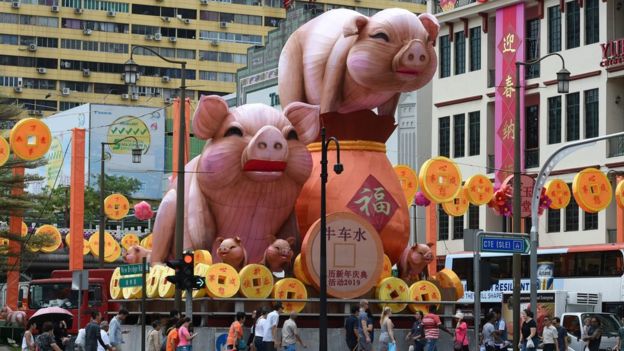
New Year celebrations usually mean the animal is depicted everywhere – in decorations, toys, gifts and advertising.
But the pig, the last animal on the Chinese zodiac calendar, is considered unclean by Muslims and a sin to consume. So does this cause problems for people celebrating lunar new year in Muslim-majority countries in South East Asia?
Like most Chinese-Malaysian families, the lunar new year is serious business for the Chow family, who live in the sleepy town of Batu Pahat in Johor, Malaysia.
This year is particularly significant because Chow Yoon Kee, his wife Stella and their daughter were all born in pig years.
“We will display lots of lucky pig ornaments at home and of course, have our relatives, friends, workers and neighbours over to visit, no matter what race or religion. Celebrations are for all,” said Mr Chow, a floor manager at a local biscuit factory.
He isn’t worried about his celebrations offending fellow residents as he believes there is no sign of new year controversy.
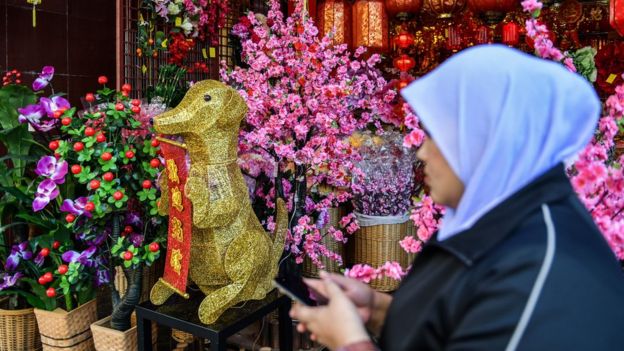
“There was a lot of fuss last year,” he recalls, when it was the Year of the Dog, also seen as impure animals by some Muslims.
Image copyrightAFPImage captionMalaysian authorities trod cautiously last year, being careful not to overdo the canine decorations
Malaysia is multicultural but the official religion is Islam, and there have been increasing reports of intolerance towards activities and actions considered insulting to Muslims.
So many shops and merchants avoided using images of dogs in fear of offending Muslim communities.
But Mr Chow feels local authorities have overlooked the feelings of the Chinese community, who actually celebrate the holiday.
“Malaysia is a country made up of many races, it isn’t just Malay Muslims. We have Chinese and Indian communities too, as well as other religions like Christianity, Hinduism, Taoism and Buddhism so we should be respecting each other’s beliefs and celebrations.”
But he adds that “the spirit of censorship” did not seem to carry on into the pig year.
Image copyrightAFPImage captionThat’s some pig! Celebrations are under way in Chinatown, Singapore
Each animal of the Chinese zodiac is believed to have its own unique traits and qualities. Those born in the year of the pig are said to be intelligent, compassionate and loyal.
Does it matter if one’s zodiac animal isn’t welcome?
“There’s absolutely no reason to worry,” said Kuala Lumpur-based Feng Shui consultant Joey Yap. He told the BBC there didn’t seem to be any sensitivities around celebrations in Malaysia this year, compared to last.
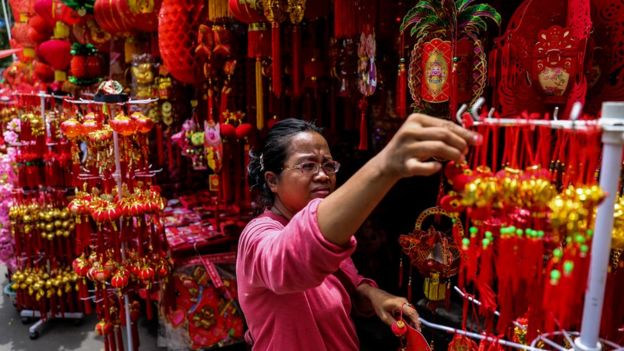
Image copyrightGETTY IMAGESImage captionRed decorations galore in Jakarta’s Chinatown
“Pigs will be fine,” he said, adding that whether you display objects or not “does not affect one’s personal luck”.
“Colours, emblems; they all aren’t important. In reality, one’s luck all boils down to one’s actions, so embrace positivity,” he said.
‘The first pigs Muslims can eat’
Even though it’s the world’s most populous Muslim nation, the lunar new year is a national holiday in Indonesia. Public celebrations are widely accepted – lanterns, colourful parades and performances are often seen in many cities.
Merry Olivia in Jakarta said her Muslim friends welcomed the image of pigs.
Image copyrightDAPUR MAMA LOEImage captionBaker Valeria Rita says her special cookies were a holiday hit with Muslim customers
“I grew up with many Indonesian Muslims so I know pigs will not make them feel uneasy,” she said, adding that the creatures looked more “festive” than other zodiac animals.
“If you compare pigs with snakes, pigs are more adorable so people would rather buy decorations embellished with them. Not many people in Jakarta like snakes.”
Baker Valeria Rita was rolling out special treats in time for the new year: pig shaped cookies with sweet pineapple jam fillings.
She said the response had been really good. “Orange or tangerine is a popular symbol for the lunar new year. This year, we decided to create pig-shaped treats and the quota for pre-orders was full within two weeks.”
Many of her customers are also Muslim.
“They buy my cookies for Chinese colleagues and friends who celebrate the holiday. Some also order for themselves because they like the pigs,” she said, sharing a joke made by her best friend, also a Muslim. “My goodies were the first pigs Muslims are allowed to eat.”
‘I don’t want to offend’
But it’s a different situation for 24-year-old Rangga Sastrajaya, from Bogor city. He bought pig toys and decorations but remains cautious in displaying them openly as he feels many Indonesians still do not accept cultural diversity.
“I could wear pig shirts or display pig-themed decorations at home but I will be quite careful in showing them off in public because I do not want to offend anyone,” he admitted.
Image copyrightAFPImage captionWill the new year spirit provoke widespread resentment among conservative Muslims?
But there are those who condemn the festivities. Forum Muslim Bogor (FMB), a conservative Islamic organisation in West Java, released a letter demanding the cancellation of festivities. They said it was “inappropriate” for Muslims because it could “undermine Islamic faith”.
Their actions follow other groups like Pemuda Pancasila (PP) and the Malayan Persatuan Forum Komunikasi Pemuda Melayu (PFKPM), who previously condemned the celebrations by Chinese communities.
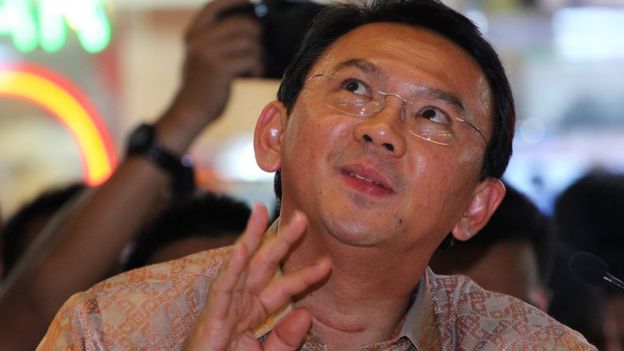
Image copyrightGETTY IMAGESImage captionIn 2017 Chinese-Christian Jakarta governor Basuki Tjahaja Purnama was jailed for blasphemy against Islam
Analyst Thung Ju-Lan from the Indonesian Institute of Science considers such sentiments the “impact of intolerant and political narratives”, the same kind which rocked Jakarta two years ago.
“It is the impact of the gubernatorial election in Jakarta, in Ahok’s case. The same sentiment has been spreading,” she told the BBC.
“The problem of intolerance continues because we have narrow understandings of what is actually happening. The more we do not understand, the more intolerant we are.”
In the case of celebrating the lunar new year, many Indonesian Muslims feel it is “more religious than cultural”.
But one politician has spoken out in defence of the Chinese community. Religious Affairs Minister Lukman Hakim Saifuddin encouraged beliefs of people from different cultures, faiths, and traditions to be respected.
“Regardless of what people understand about such celebrations, I invite all to respect tradition,” he said.
To counter China’s rapidly slowing economic growth, the Chinese government has returned to the policy playbook that worked well in the past: spending money on large infrastructure projects.
The National Development and Reform Commission (NDRC), China’s top economic planner, has accelerated its review process and approved 27 infrastructure projects with a total expected investment of 1.48 trillion yuan (US$219.43 billion) since the start of 2018, of which 16 worth around 1.1 trillion yuan were approved since the start of November.
Concerns were raised over a return to the debt-fuelled infrastructure investment binge that caused Beijing to halt approval of such projects in 2017, however, the need to stabilise the economy, which Beijing’s highest decision-making body set as the government’s top priority in July, took precedent.
We review the top 10 infrastructure projects by expected investment value that China has approved since the start of 2018, each costing over 50 billion yuan (US$7.41 billion).
The total investment for the 10 projects is projected at 1.158 trillion yuan over the next six years, or about 78 per cent of all newly approved infrastructure investment since the start of 2018.
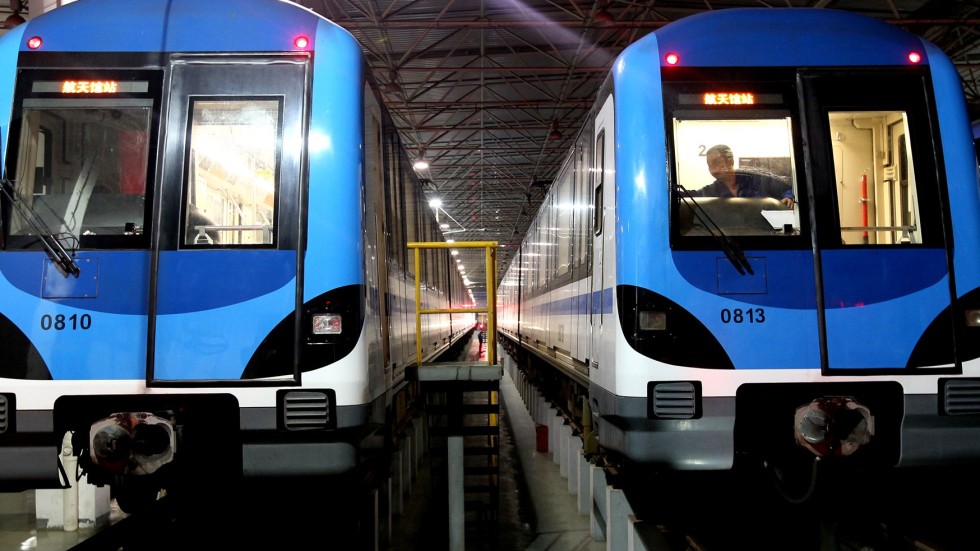
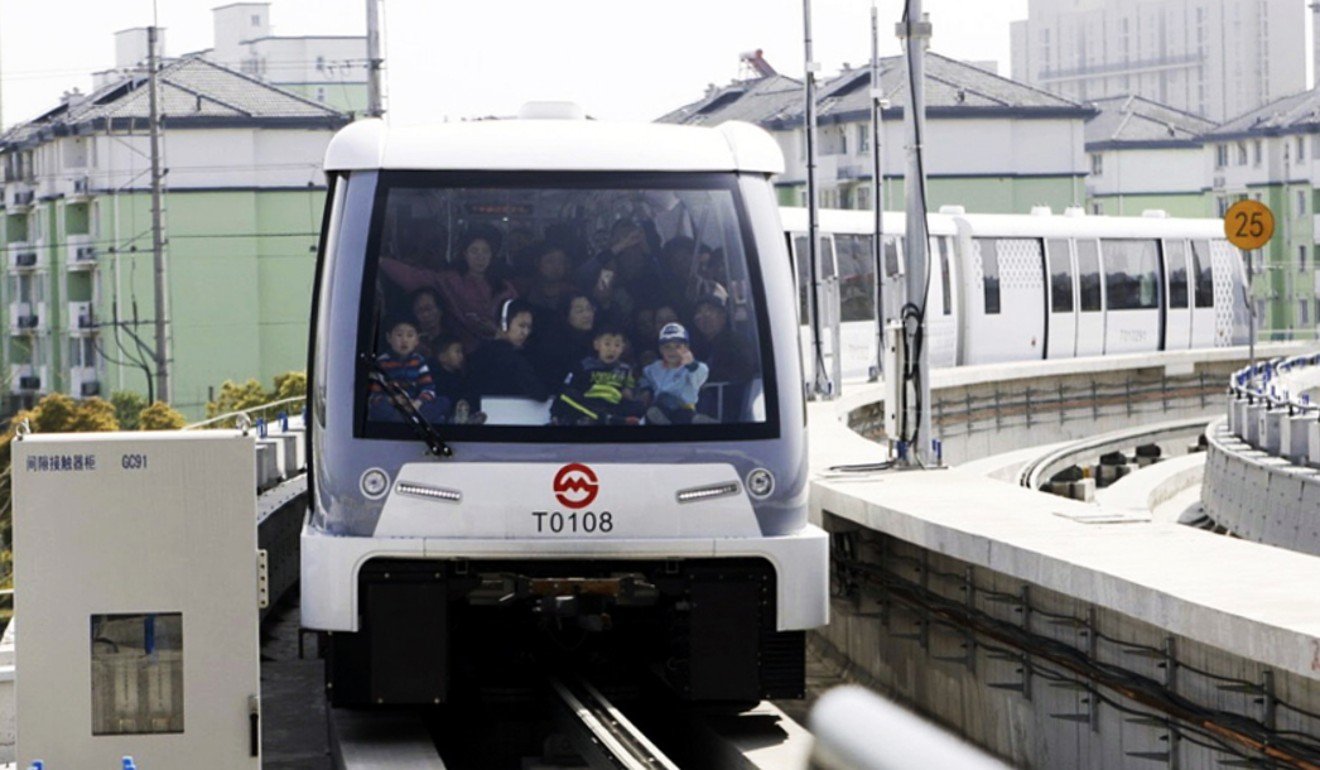
Nine rail projects including six subway lines and three intercity railways will be constructed from 2018 to 2023.
The projects are estimated to total 286km and will cost 298.35 billion yuan. The network is aimed at creating better connections between the financial hub’s two airports and two major railway stations.
2. Intercity Railway along the Yangtze River in Jiangsu province (US$34.35 billion)
Eight regional intercity railways will be built in a metropolitan cluster along the Yangtze River in Jiangsu Province, a move to shorten commuting time from Nanjing, the capital city of Jiangsu province, to other districts and cities within the province.
Some of the lines will also connect Nanjing to municipalities in the neighbouring Anhui Province.
Construction of the intercity lines are estimated to cost about 231.7 billion yuan, with the construction running until 2025.
Four metro lines plus four urban express lines will be constructed in the central Chinese city of Wuhan, with a total investment estimated at 146.9 billion yuan.
The NDRC said that the projects will support Wuhan’s urban layout and ease the city’s traffic congestion.
A circle line with 37 stops starting from Wuchang railway station tops the investment plan, which alone will cost 58.39 billion yuan (US$8.66 billion).
The construction will run from 2019 to 2024.
4. Intercity Rail Network in Eastern Guangdong (US$14.86 billion)
The intercity rail network in eastern Guangdong province, with a total investment of 100.2 billion yuan (US$14.86 billion), will facilitate connections between the cities of Shantou, Shanwei, Chaozhou, and Jieyang.
Construction on three rail lines totalling 320km started construction in 2018, with work on four others totalling 140km will start “at the right time”, according to the NDRC.
No specific completion date was mentioned by the state planner.
5. Suzhou Urban Rail Transit (US$13.84 billion)
Construction on four new urban transit lines in Suzhou was expected to start last year and finish in 2023.
Total investment is estimated at around 93.32 billion yuan (US$13.84 billion).
Among the four new lines, a 41km line will connect the city to Shanghai.
Seven urban rail transit lines, including the extension of three existing lines and four new lines, are due to be constructed in Changchun from 2019 to 2024.
The project is part of the government’s strategy to revitalise China’s northeastern provinces and boost the development of the city’s new districts.
The investment for the new projects is estimated at 71.14 billion yuan.
7. Xi’an-Yan’an High Speed Rail (US$8.18 billion)
A planned high speed rail connecting the Shaanxi provincial cities of Xi’an and Yan’an, the birthplace of Chinese Communist Party’s revolution, will also stop off at Chinese President Xi Jinping’s hometown of Fuping, located in the centre of the province.
The project will cost 55.16 billion yuan and will be completed within four and a half years.
8. Hangzhou Urban Rail Transit (US$8.3 billion)
An additional budget of 56.01 billion yuan has been granted for the already approved Hangzhou urban rail transit project.
Some 41.98 billion yuan (US$6.22 billion) of the new investment is for the new airport express from Wushan West station to Hangzhou International Airport.
According to the NDRC, it aims to better connect Hangzhou’s urban rail lines to the airport and to Hangzhou West railway station, a planned new station that is part of the infrastructure upgrade for the 2022 Asian Games which will be held in the city.
9. Chongqing-Qianjiang High Speed Rail (US$7.93 billion)
China’s first railway tunnel under the Yangtze River – the high speed rail link between Chongqing and Qianjiang – will be completed in the next five and half years at a cost of 53.5 billion yuan.
As a major section of the Xiamen-Chongqing high speed rail line, the Chongqing-Qianjiang section covers 265km and will allow speeds of up to 350km/h.
A total investment of 51.7 billion yuan will be put into two intercity railways in Guangxi province, with one from the capital city Nanning to the southeastern city of Yulin, and the other from Nanning to the southwestern city Chongzuo.
The track network is to be completed by 2023 and will connect regional towns with a total population over 500,000.
A tea farmer picks tea leaves at Zhouya Village of Doujiang Township in Sanjiang Dong Autonomous County, south China’s Guangxi Zhuang Autonomous Region, Feb. 3, 2019. The local spring tea goes on market every year before and after “Lichun”, literally meaning the beginning of the spring. Lichun is the first of the 24 solar terms of the Chinese lunisolar calendar, which falls on Feb. 4 this year. (Xinhua/Gong Pukang)








 CHINDIA ALERT: You'll be living in their world, very soon


COMMENTS: