Chindia Alert: You’ll be Living in their World Very Soon
aims to alert you to the threats and opportunities that China and India present. China and India require serious attention; case of ‘hidden dragon and crouching tiger’.
Without this attention, governments, businesses and, indeed, individuals may find themselves at a great disadvantage sooner rather than later.
The POSTs (front webpages) are mainly 'cuttings' from reliable sources, updated continuously.
The PAGEs (see Tabs, above) attempt to make the information more meaningful by putting some structure to the information we have researched and assembled since 2006.
LHASA, March 6 (Xinhua) — To conserve the ecosystem while eradicating poverty, southwest China’s Tibet Autonomous Region hired 309,000 farmers and herders as forest rangers in 2018, bringing the total number of people engaged in environmental protection to 667,000.
Average annual subsidies in the jobs increased to 3,500 yuan (522 U.S. dollars), according to the regional department of ecology and environment.
Last year, Tibet invested 10.7 billion yuan in environmental protection funds, with 74,133 hectares of trees planted and forest coverage rising to 12.14 percent.
The region also invested 100 million yuan in enhancing the ecology along the upper reaches of the Yangtze, China’s longest river.
“Protecting the forests is equal to protecting our homeland,” said a local Tibetan forest ranger.
The implementation of a series of measures contributed to environmental protection, making Tibet one of the areas with the best ecological environment in the world, authorities said.
BEIJING, March 6 (Xinhua) — Chinese companies operating in Africa have created huge opportunities for the continent’s development, a senior political advisor said Wednesday at a press conference on the sidelines of the annual sessions of the top legislative and political advisory bodies.
There are more than 10,000 Chinese companies in Africa and over 90 percent of them are private businesses, said Nan Cunhui, a member of the Standing Committee of the Chinese People’s Political Consultative Conference National Committee, citing a recent survey.
These companies have built roads, railways, airports, ports and other infrastructure projects in Africa, addressing the bottleneck in development, said Nan, also a vice chairman of the All-China Federation of Industry and Commerce. They have also invested in green energy development, including photovoltaic power stations, to boost local power supply.
The Chinese companies have also brought advanced technologies, development concepts and management to the continent, Nan said.
Citing the operation of an industrial park in Egypt as an example, Nan said over 95 percent of the employees are locals who develop professional skills and gain managerial know-how through their work.
“Chinese companies in Africa have contributed a lot to the local economic development through infrastructure construction, job creation and tax payment,” Nan said. “I believe China-Africa cooperation will go from strength to strength.”
BEIJING, March 6 (Xinhua) — China has created a special committee to implement the country’s national nutrition plan, according to the National Health Commission (NHC).
Jointly established by NHC and 17 other government departments to coordinate and advance nutrition and health related work, the national nutrition and health committee held its inaugural meeting on Feb. 28 in Beijing, said a source of the NHC.
During the meeting, the committee adopted the regulation on its work and the main tasks for 2019 on the national nutrition plan.
Among the key jobs are improving food nutrition and health standards that build upon food safety, and establishing subcommittees at local levels to organize nutrition education and training, to conduct pilot programs and spread scientific knowledge in this regard.
Innovation will also be encouraged in the efforts, while nutrition intervention will be introduced in the campaign to battle poverty.
The national nutrition plan (2017-2030) was released by the General Office of the State Council in July 2017, with the goal of raising awareness of nutrition among the Chinese people, reducing obesity and anemia among students.
Chinese Premier Li Keqiang, also a member of the Standing Committee of the Political Bureau of the Communist Party of China (CPC) Central Committee, joins panel discussions by deputies from Guangxi Zhuang Autonomous Region at the second session of the 13th National People’s Congress in Beijing, capital of China, March 6, 2019. (Xinhua/Ding Lin)
BEIJING, March 6 (Xinhua) — Senior Chinese leaders on Wednesday urged for more efforts to advance high-quality development.
Li Keqiang, Wang Yang and Han Zheng — members of the Standing Committee of the Political Bureau of the Communist Party of China Central Committee — made the remarks at the annual “two sessions” of the country’s top legislative and political advisory bodies.
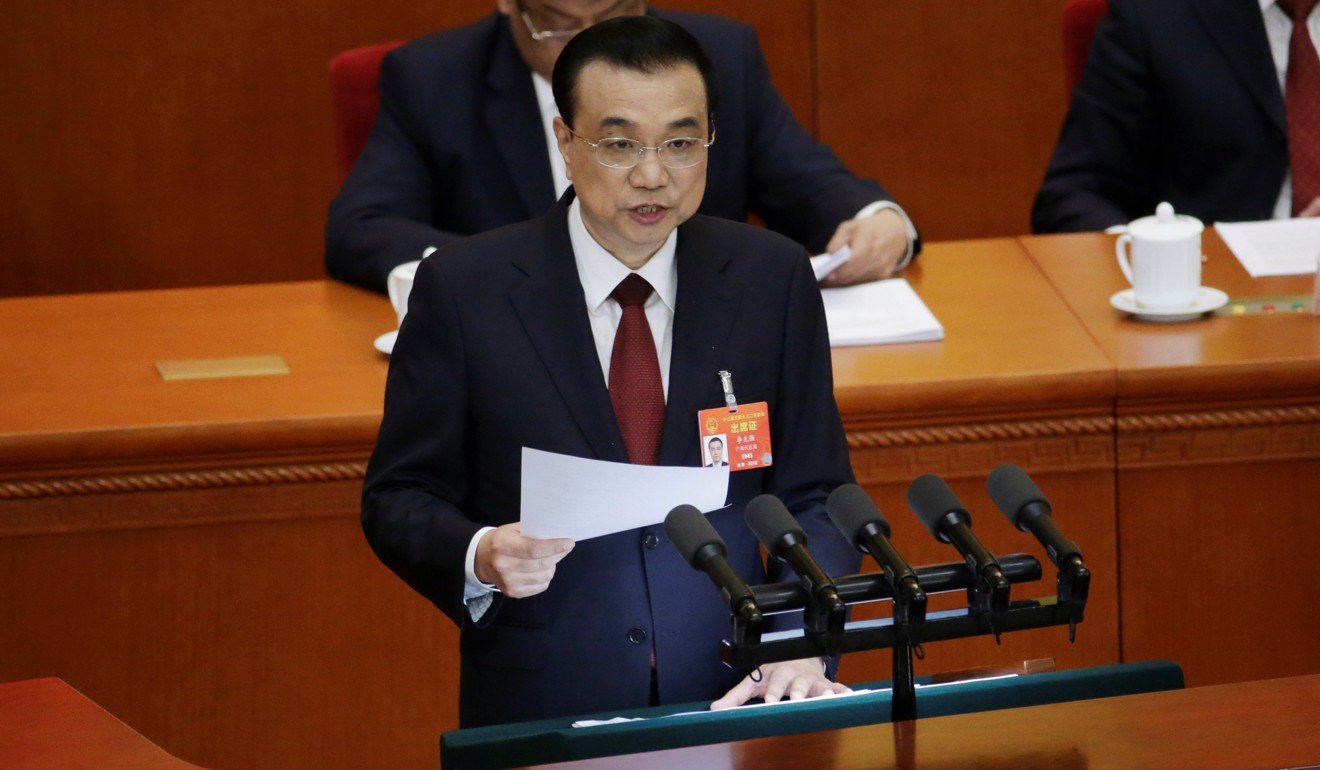
Joining panel discussions by deputies to the 13th National People’s Congress (NPC) from southwest China’s Guangxi Zhuang Autonomous Region, Premier Li Keqiang stressed following the guidance of Xi Jinping Thought on Socialism with Chinese Characteristics for a New Era as China’s development faces more and graver risks and challenges in 2019.
He called for efforts to keep the economic growth within an appropriate range and promote high-quality development, and urged solid implementation of the planned tax and fee cuts to reduce burden on the real economy.
At the joint panel discussions of political advisors from economy and agriculture sectors, Wang Yang, chairman of the Chinese People’s Political Consultative Conference National Committee, told them to focus on major and difficult tasks, such as high-quality development and supply-side structural reform, and to deepen their investigations and researches. Wang also urged the advisors to guide the people in correctly interpreting the changes in economy and boost their confidence in development.
Vice Premier Han Zheng joined the panel discussions by lawmakers from Hong Kong. He expressed the support to Hong Kong’s bid to build itself into an international innovation and technology hub, and encouraged the people of Hong Kong, especially the youth, to start up businesses and work in the Guangdong-Hong Kong-Macao Greater Bay Area.
Han also joined panel discussions by lawmakers from Macao. He said that Macao will be supported in its efforts to expand new development space, and to develop its tourism and exhibition industries.
BEIJING, March 6 (Xinhua) — China should push forward its reform to facilitate the development of private enterprises, a political advisor said Wednesday.
The reform should give them tangible benefits in terms of steady development and fair competition, Liu Shijin, deputy director of the economic committee of the National Committee of the Chinese People’s Political Consultative Conference (CPPCC), said at a press conference.
Compared with state-owned enterprises, private enterprises have seen more difficulties partly due to insufficient credit support, Liu said.
The reform of existing financial enterprises should be promoted, and more importantly, the country should relax market access for the development of a number of financial institutions and financial products that provide special services to smaller firms, Liu said.
The private sector plays an important role in the economic system, contributing more than 50 percent of tax revenue, 60 percent of GDP, 70 percent of technological innovation, 80 percent of urban employment and 90 percent of new jobs and new firms.
“The private sector and the country’s economic and social development have been closely related to each other, and formed a community of a shared future,” Liu said.
However, the difficulties that private firms and small businesses face in accessing affordable financing have not yet been effectively solved. The business environment still falls short of market entities’ expectations, according to a government work report delivered Tuesday by Premier Li Keqiang at the opening of the annual legislative session.
Loans to small and micro businesses by China’s large state-owned commercial banks will increase by over 30 percent in 2019, the report said.
The country also announced reducing the tax burden on and social insurance contributions of enterprises by nearly 2 trillion yuan (about 298 billion U.S. dollars) this year, with a focus on the manufacturing sector and smaller businesses, according to the report.
Liu said that the government’s policy of supporting the development of private enterprises had been “explicit and consistent.”
The non-public sector’s status and functions in the country’s economic and social development have not changed. The principle and policies to unswervingly encourage, support and guide the development of the non-public sector have not changed, and the principle and policies to provide a sound environment and more opportunities to the sector have not changed either, according to an important symposium on private enterprises last year.
Private enterprises have truly felt the government’s unchanged stance on, confidence in and policy support for the private sector, said Nan Cunhui, a member of the Standing Committee of the CPPCC National Committee and chairman of power equipment giant CHINT Group.
“The only change is that what we receive keeps becoming better and better,” he said.
The tax-cut measures for the manufacturing sector put forward in the government work report is a big stimulus to private enterprises and the whole sector, Nan said.
Private firms also need to have the conditions for equal development and a level playing field, Liu said.
Policy support is important, but what’s more important is a stable law-based environment that does not change with short-term policy changes, Liu added.
“We will strive to create a positive business environment in which entrepreneurs can be free of concerns in doing business and running companies,” the government work report said.
Mainland has overestimated its nominal and real growth rates by about 2 full percentage points on average between 2008 to 2016
Calculations suggest that the current nominal size of the economy is about 18 per cent lower than the official level of US$13.4 trillion at the end of 2018
13 Feb 2019
The paper, “A Forensic Examination of China’s National Account”, was submitted to the “Brookings Papers on Economic Activity”, a journal published by the US-based Brookings Institute. Photo: EPA
China has overestimated its nominal and real growth rates by about 2 full percentage points on average between 2008 to 2016, with the miscalculation increasing each year, according to a new study published on Thursday.
The results indicate that the actual size of China’s economy at the end of 2018 was well below the government’s official estimate.
It also raises questions not only about the quality of economic data from the world’s second largest economy, but also the willingness of the government to take the steps necessary to accurately report information.
Using the study’s findings and applying them to government figures starting with the level of nominal gross domestic product (GDP) at the end of 2007 and the growth rate for 2008, calculations by the South China Morning Post show that the current nominal size of the Chinese economy is about 18 per cent lower than the official level of 90 trillion yuan (US$13.4 trillion) at the end of 2018.
The calculation assumes that the government’s official 2017 and 2018 nominal growth rates are overestimated by 2 percentage points, as suggested by the study.
Overestimates of growth in 2007 and previous years would further reduce the current size of the Chinese economy.
SCMP calculations show the adjusted nominal GDP level in China is about US$11.5 trillion using current exchange rates, still more than twice the size of Japan’s economy at US$5.16 trillion, but well below the economy of the United States at US$20 trillion.
The paper, “A Forensic Examination of China’s National Account”,was submitted to the “Brookings Papers on Economic Activity”, a journal published by the US-based think tank Brookings Institute twice a year on macroeconomic issues that are influencing the public policy debate. It will be formally presented in Washington on Thursday.
“Our estimates suggest that the extent by which local governments exaggerate local GDP accelerated after 2008, but the magnitude of the adjustment by the NBS did not change in tandem,” the authors said.
The study focuses primarily on nominal, non-inflation adjusted growth.
The paper comes at a sensitive time for Chinese policymakers, who are battling a slowing economy due to their campaign to reduce debt and risky lending as well as the effect of the trade war with the United States. The inflation-adjusted growth rate of 6.6 per cent last year was the slowest since 1990.
On Tuesday, the government announced that it had lowered its growth target for 2019 to a range of 6 to 6.5 per cent, down from “about 6.5 per cent” last year due to the multiple headwinds the economy is facing. The government also announced new tax cuts and additional government spending to help stabilise growth.
The paper’s four authors – Chen Wei, Chen Xilu and Michael Song from the Chinese University of Hong Kong and Chang-Tai Hsieh from the University of Chicago – used a mix of economic indicators that are less likely to have been manipulated by authorities to prove that the National Bureau of Statistics (NBS) have not done enough to correct the errors in the data collected from provincial governments over the past decade.
Our estimates suggest that the extent by which local governments exaggerate local GDP accelerated after 2008, but the magnitude of the adjustment by the NBS did not change in tandem.Report authors
It has long been believed that local Chinese officials inflate figures reflecting their economic performance, which is closely tied to their opportunity for promotion. Since 2003, the NBS has produced a national gross domestic product (GDP) figure that is lower than aggregate provincial data after examining other data such as the census and land sales.
Local statistics bureaus generally overstate industrial output as a portion of overall production as well as the size of investment within overall expenditures, the two different approaches to calculating GDP, according to the paper. The methods of data collection are often the cause, for example, calculations of investment spending have been based purely on government reports on specific projects rather than on the financial statements of the investing firms involved.
One method that the authors used to probe the accuracy of the NBS’s adjustments was comparing the growth of official GDP with the growth of revenue from value-added tax (VAT), which taxes the value added to a product at each stage of production.
Local governments have fewer incentives to manipulate VAT revenue, since a large portion of it is eventually transferred to the central government, therefore overstating VAT would only increase fiscal revenue losses.
Premier Li Keqiang confirmed China had lowered its growth target for 2019 to a range of 6 to 6.5 per cent at the National People’s Congress on Tuesday. Photo:
Share:
The authors found that since 2008, the official growth rate for industry and other sectors exceeded their corresponding VAT growth rate, with the gap widening over the past decade, indicating that the government was overstating official GDP.
In other words, the overstatement of official growth has worsened since 2008 and NBS’s corrections have been increasingly inadequate to offset bottom-up data exaggerations.
A similar conclusion was drawn when the authors examined and adjusted the official GDP growth data with a set of alternative indicators, including satellite images showing lights at night, national tax revenue, electricity consumption, railway cargo traffic, as well as imports and exports that are less likely to be over-reported, although these proxies did not fully capture the growing importance of the service sector in the economy in recent years.
Among all 31 Chinese provinces, Guangdong, Zhejiang, Beijing, and Shanghai appeared to have the highest data quality, based on the economists’ own calculations that were privately confirmed by NBS officials. The worst performing provinces included Tianjin, Liaoning and Inner Mongolia, all of which have been exposed as having exaggerated economic data in recent years.
The economists suggested that the problem is that much of the underlying data needed to project GDP is outside the NBS’s control, even though the agency has been trying hard to collect local data itself. At the same time, the NBS is also in a weak political position to confront local political leaders to demand better data collection.
Although the NBS adjusts downwards local statistics, it does not report the adjusted local statistics, perhaps out of a desire to not confront powerful local leaders.Report authors
“Although the NBS adjusts downwards local statistics, it does not report the adjusted local statistics, perhaps out of a desire to not confront powerful local leaders,” the authors said.
Since September, the NBS has named and shamed local governments on its website for manipulating data, but it remains to be seen if local governments fall in line.
In a post in January, the NBS said it had passed 14 cases of data falsification on to local governments before February 2018 but that it had not been updated even though local officials are required by law to punish those responsible for manipulating data within six months after receiving a notice of a violation.
The NBS’s ability to fix China’s GDP data problem is bound by its limited political power, the authors indicated.
“There are three problems with China’s GDP. One is that it doesn’t necessarily measure the right thing. Two is statistical bias in the way data is collected. Three is really a macro policy problem by the government which should write down all the bad debt,” said Michael Pettis, professor of finance at Peking University.
“The NBS is only trying to fix the second problem.”
BEIJING (Reuters) – China’s ruling Communist Party is ramping up calls for political loyalty in a year of sensitive anniversaries, warning against “erroneous thoughts” as officials fall over themselves to pledge allegiance to President Xi Jinping and his philosophy.
This year is marked by some delicate milestones: 30 years since the bloody crackdown on pro-democracy demonstrators in and around Tiananmen Square; 60 years since the Dalai Lama fled from Tibet into exile; and finally, on Oct. 1, 70 years since the founding of Communist China.
Born of turmoil and revolution, the Communist Party came to power in 1949 on the back of decades of civil war in which millions died, and has always been on high alert for “luan”, or “chaos”, and valued stability above all else.
“This year is the 70th anniversary of the founding of new China,” Xi told legislators from Inner Mongolia on Tuesday, the opening day of the annual meeting of parliament. “Maintaining sustained, healthy economic development and social stability is a mission that is extremely arduous.”
Xi has tightened the party’s grip on almost every facet of government and life since assuming power in late 2012.
Last year parliament amended the country’s constitution to remove term limits and allow him to stay in office for the rest of his life, should he so wish, though it is unclear if that will happen and Xi has not mentioned it in public.
Later in the year the party will likely hold a plenum of its top leadership focused on what China calls “party building”, diplomats and sources with ties to China’s leadership say, a concept that refers to furthering party control and ensuring its instructions are followed to the letter.
In late January the party again stressed loyalty in new rules on “strengthening party political building”, telling members they should not fake loyalty or be “low-level red”, in a lengthy document carried by state media.
“Be on high alert to all kinds of erroneous thoughts, vague understandings, and bad phenomena in ideological areas,” it warned. “Keep your eyes open, see things early and move on them fast.”
LOYALTY FIRST
On March 1, Xi spoke at the Central Party School, which trains rising officials, mentioning the word “loyalty” at least seven times, according to official accounts in state media.
Xi noted that whether an official is loyal to the party is a key gauge of whether they have ideals and convictions. “Loyalty always comes first,” he said.
Duncan Innes-Ker, regional director for Asia at the Economist Intelligence Unit, said China was concerned about resistance at lower levels to following party orders, the slowing economy and also about demands for political reforms as people get steadily richer.
“The desire for control is not something particular to any time period,” he said. “It is a fundamental tenet of autocratic governments that they are constantly paranoid about being overthrown.”
Xi looms large over this year’s session of China’s largely rubber stamp parliament, known as the National People’s Congress, which has always been stacked with people chosen for their absolute fealty to the party.
Government ministers who spoke to reporters on the sidelines of parliament’s opening session on Tuesday peppered their comments with references to Xi – 16 times in all.
Customs minister Ni Yuefeng said that Xi himself “pays great attention to not allowing foreign garbage into the country”, a reference to China’s ban on solid waste imports, part of the country’s war on pollution.
“Ideology comes first this year,” said one Western diplomat who is attending the parliamentary sessions as an observer. “It’s all about the 70th anniversary.”
ROOTING OUT DISLOYALTY
The party has increasingly been making rooting out disloyalty and wavering from the party line a disciplinary offence to be enforced by its anti-corruption watchdog, whose role had ostensibly been to go after criminal acts such as bribery and lesser bureaucratic transgressions.
The graft buster said last month it would “uncover political deviation” in its political inspections this year of provincial governments and ministries.
Top graft buster Zhao Leji, in a January speech to the corruption watchdog, a full transcript of which the party released late February, used the word “loyalty” eight times.
“Set an example with your loyalty to the party,” Zhao said.
China has persistently denied its war on corruption is about political manoeuvring or Xi taking down his enemies. Xi told an audience in Seattle in 2015 that the anti-graft fight was no “House of Cards”-style power play, in a reference to the Netflix U.S. political drama.
The deeper fear for the party is some sort of unrest or a domestic or even international event fomenting a crisis that could end its rule.
Xi told officials in January they need to be on high alert for “black swan” events..
That same month the top law-enforcement official said China’s police must focus on withstanding “colour revolutions”, or popular uprisings, and treat the defence of China’s political system as central to their work.
The party has meanwhile shown no interest in political reform, and has been doubling down on the merits of the Communist Party, including this month rolling out English-language propaganda videos on state media-run Twitter accounts to laud “Chinese democracy”. Twitter remains blocked in China.
The official state news agency Xinhua said in an English-language commentary on Sunday that China was determined to stick to its political model and rejected Western-style democracy.
“The country began to learn about democracy a century ago, but soon found Western politics did not work here. Decades of turmoil and civil war followed,” it said.
Freda Bedi lived an unusual life. Born in a small town in England, she moved to India for love and ended up joining the independence movement. Her biographer, Andrew Whitehead, writes about her remarkable story.
“There are things deeper than labels and colour and prejudice, and love is one of them.”
These were the words of Freda Bedi, an English woman who overcame prejudice to marry an Indian Sikh and went on to challenge Indian notions about the role of a woman and a wife.
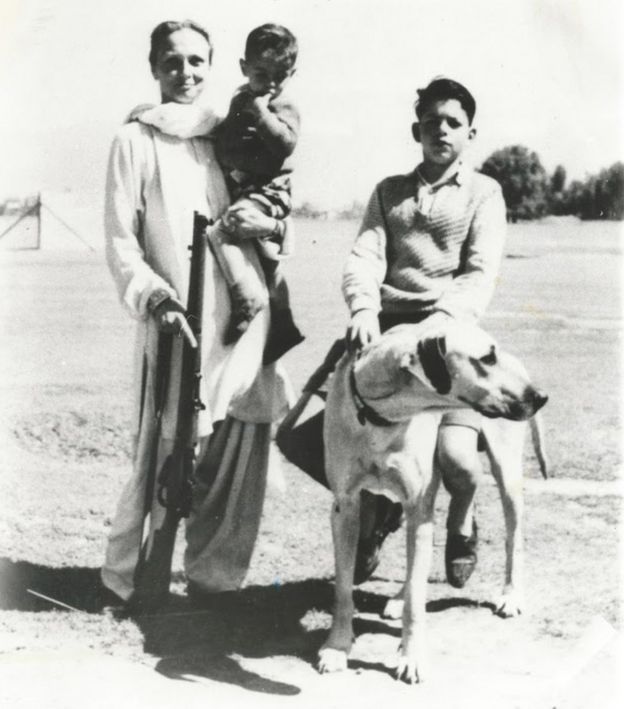
Freda and her boyfriend, Baba Pyare Lal Bedi (his friends called him BPL), met at Oxford where both were students.
This was the early 1930s and romances across the racial divide were rare – almost as rare as a girl from Freda’s background securing a spot at a top university. She was born, quite literally, above the shop in the city of Derby in England’s East Midlands, where her father ran a jewellery and watch repair business.
Freda could barely remember her father. He enlisted during the First World War and served in the Machine Gun Corps, where casualties were so high it was known as the “suicide club”. He died in northern France when his daughter was just seven years old. “This death shadowed my whole childhood,” she recalled – it shaped her political loyalties and prompted her lifelong spiritual quest.
Her years at Oxford were “the opening of the gates of the world”, as Freda once put it. She was part of “the Depression generation” – those who were students at a time of global crisis, mass unemployment and the rise of fascism.
She made firm friends at her college with young women who were rebellious by nature, and went with them to meetings of the Labour Club and the communist October Club.
Image captionFreda and BPL met as students at Oxford University
Driven by curiosity and by sympathy with those struggling against the Empire, she also went along to the weekly meetings of the Oxford Majlis, where radicals among the university’s small number of Indian students asserted their country’s case for nationhood. BPL Bedi, a handsome and cheerful Punjabi, was a regular there. A friendship developed into intellectual collaboration and, within months, Freda and BPL were a couple.
In the early 1930s, women’s colleges at Oxford were obsessed with sex or rather with preventing it. If a male student came to have tea in a female student’s room, a chaperone had to be present, the door left wide open and the bed had to be taken into the corridor. Freda’s college did its best to derail her relationship – she was disciplined for visiting BPL without a chaperone in what she was convinced was a case of racial discrimination.
But she was fortunate in her student friends. Barbara Castle, who later became a commanding British woman politician of her era, was thrilled when Freda confided that she intended to marry her boyfriend. “Well, thank goodness”, Barbara exclaimed. “Now at least you won’t become a suburban housewife!” Freda’s mother didn’t see things that way though. Her family were sternly disapproving, until BPL made a visit to Derby and managed to charm them.
Freda commented that the engagement caused “a minor sensation” in Oxford. That was an understatement. She believed she was the first Oxford woman undergraduate to marry an Indian fellow student. Some didn’t hide their disapproval. The registrar who conducted the marriage ceremony pointedly refused to shake hands with the couple.
From the moment she married, Freda regarded herself as Indian and often wore Indian-style clothes. A year later, husband and wife and their four-month old baby, Ranga, set off by boat from Trieste, Italy, on the two-week journey to the western Indian city of Bombay (now Mumbai). “The nightmare was to get milk for myself to drink because I was feeding the baby”, Freda recalled. “And I remember the millions of cockroaches that used to come out at night in the ship’s kitchens – I used to go in and attempt to get milk.”
The couple had already been marked out by the British authorities as revolutionaries and potential trouble makers because of their student activism. When they disembarked in Bombay, their bags and cases were inspected for seven hours to check for left-wing propaganda. “Even Ranga’s little napkin was taken off and searched,” recalled Freda, “because they thought I might be carrying messages in it”.
The key test of Freda’s marriage was still to come – the first meeting with her Indian mother-in-law, a widow and matriarch known in the family as Bhabooji. From Bombay, the Bedis travelled non-stop for a couple of days to reach the small Punjabi city of Kapurthala, arriving at the family home close to midnight. Freda was wearing a white cotton sari – “not the ideal travelling dress, and nursing Ranga had not improved it”.
BPL bowed to touch his mother’s feet in the traditional expression of respect. “I copied him, feeling a little awkward,” Freda said, “but all my shyness disappeared when she smiled at us both with tears in her eyes, and embraced us and the child as if she could not hold us close enough.”
Although Freda was determined to fit in with her Indian extended family, her lifestyle was anything but conventional. BPL’s political stand extended to rejecting any share in his family’s wealth. They made their home in Lahore, one of the largest cities in Punjab, in a cluster of thatched huts without power or running water, keeping hens and a buffalo. It can’t have been the sort of life Freda had expected – nor would she have been used to the idea of sharing the household with her mother-in-law.
“Nowhere had I seen a white woman trying to be a typical Indian daughter-in-law”, commented Som Anand, a frequent visitor to the Bedis’ huts. “It surprised me to see Mrs Bedi coming to Bhabooji’s hut in the morning to touch her feet. In household matters she respected the old mother’s inhibitions. Her mother-in-law was an equally large hearted person; despite all her conservatism she had accepted a Christian into the family without a murmur.”
Image captionFreda and BPL moved to Kashmir after 1947 and remained politically active
When World War Two broke out, both BPL and Freda were outraged that India was being dragged into supporting the British war effort. BPL was detained in a desert prison camp to stop him sabotaging military recruitment in Punjab. Freda decided to make her own stand against her motherland.
She volunteered as a satyagrahi, a seeker of truth, and was among those chosen by Indian independence leader Mahatma Gandhi to defy emergency wartime powers. She travelled to her husband’s home village of Dera Baba Nanak and announced that she would “break the law by asking the people not to support the military effort until India became democratic”. The authorities didn’t know how to respond to a white woman staging such a protest – they hurriedly sent an English police inspector to the village, deeming it inappropriate for an Indian policeman to arrest an Englishwoman.
Freda was brought before a visiting magistrate that same morning – she has left her own account of the trial:
It was finished in 15 minutes. The man on the other side of the table was quite young still, and looked as though he had been to Oxford. His face was red.
“I find this as unpleasant as you do,” he murmured.
“Don’t worry. I don’t find it unpleasant at all.”
“Do you want the privileges granted to an Englishwoman?”
“Treat me as an Indian woman and I shall be quite content.”
She was sentenced to six months in jail, which was fairly standard, and also to hard labour, which she regarded as vindictive.
That turned out to be no more onerous than supervising the prison gardens, where women imprisoned for criminal rather than political offences – many were locked up for killing their abusive husbands – did most of the work.
“It was my destiny to go to India,” Freda asserted. It was her destiny too to make history as an English woman who went willingly to jail in support of India’s demand for freedom.
The Bedis’ political prominence persisted after independence, when they moved to Kashmir – Freda joined a left-wing women’s militia and worked with the radical nationalists who gained power there. In the 1950s, her life changed utterly when, during a UN assignment in Burma, she encountered Buddhism for the first time and became an enthusiastic convert.
Image captionFreda became a Buddhist nun in the 1950s
When thousands of Tibetans fled across the Himalayas in 1959 to escape Chinese oppression, Freda devoted herself to helping these “brave and wonderful” refugees. She became steeped in Tibetan spirituality. And once she felt that she had fulfilled her role as a mother (the film star Kabir Bedi is one of her three surviving children), she broke convention again by taking vows as a Tibetan Buddhist nun. In her sixties, she travelled relentlessly to spread the word about Buddhist teachings but never returned to live in the West.
“India is my womanhood and my wife-hood,” she once declared. “I too am ‘dust that England bore, shaped and made aware’. Yet I am living in an Indian way, with Indian clothes, with an Indian husband and child on Indian soil, and I cannot feel even the least barrier or difference in essentials between myself and the new country I have adopted.”
Throughout her life, Freda was determined not to be constrained by barriers of race, religion, nation or gender. She delighted in challenging convention and confounding expectations – that is what makes her story so beguiling.
ISLAMABAD (Reuters) – Pakistan intensified its crackdown against Islamist militants on Thursday, with the government announcing it had taken control of 182 religious schools and detained more than 100 people as part of its push against banned groups.
The move represents Pakistan’s biggest move against banned organisations in years and appears to be targeting Islamic welfare organisations that the United States says are a front for militant activities.
Pakistan is facing pressure from global powers to act against groups carrying out attacks in India, including Jaish-e-Mohammed (JeM), which claimed responsibility for the Feb. 14 attack that killed at least 40 Indian paramilitary police.
The escalating tension in the wake of the bombing led to a major confrontation between the nuclear-armed rivals, with both countries carrying out aerial bombing missions and even engaging in a brief dogfight that prompted fears of a war.
Pakistani officials say the crackdown is part of a long-planned drive and not a response to Indian anger over what New Delhi calls Islamabad’s failure to rein in militant groups operating on Pakistani soil.
Previous large-scale crackdowns against anti-India militants have broadly been cosmetic, with the proscribed groups able to survive and continue operations.
The interior ministry said law enforcement agencies had placed 121 people in “preventive detention” as part of the crackdown that began this week.
“Provincial governments have taken in their control management and administration of 182 seminaries (madaris)”, the ministry said in a statement, referring to religious schools.
What to do with madrasas is a thorny issue in Pakistan, a deeply conservative Muslim nation where religious schools are often blamed for radicalisation of youngsters but are the only education available to millions of poor children.
The interior ministry said other institutions from different groups had been taken over, including 34 schools or colleges, 163 dispensaries, 184 ambulances, five hospitals and eight offices of banned organisations.
Many banned groups such as JeM run seminaries, which counter-terrorism officials say are used as recruiting grounds for militant outfits
Jamaat-ud-Dawa (JuD), which operates hospitals and a fleet of ambulances, is estimated to run about 300 madrasas across the country. Pakistan’s government banned the group this week.
JuD calls itself a humanitarian charity but the U.S. State Department has designated it a “foreign terrorist organisation” and calls it a front for Lashkar-e-Taiba (LET), a Pakistan-based group accused of orchestrating attacks in India, including the 2008 Mumbai attack that killed 166 people.
JuD called the crackdown unfair and said it would seek to counter the government action in courts.
“The whole nation is asking that what message the government wants to send by sealing welfare organisations and kicking students out,” said JuD spokesman Yahya Mujahid.
Pakistan has long used Islamist groups to pursue its aims in the region, but it has denied New Delhi’s accusations it actively supports militants fighting Indian forces in India’s part of Muslim-majority Kashmir.
The South Asian neighbours have fought three wars since independence from Britain in 1947, two of them over Kashmir which they both claim in whole but rule in part.
The Chinese foreign ministry on Thursday released a statement in Chinese following the visit of vice-foreign minister Kong Xuanyou to Pakistan, lauding Islamabad’s response.
WORLDUpdated: Mar 07, 2019 16:42 IST
Sutirtho Patranobis
Hindustan Times, Beijing
Kong visited Pakistan as Islamabad faced pressure from global powers to act against groups carrying out attacks in India, including Jaish-e-Mohammed (JeM), which claimed responsibility for the February 14 attack that killed 40 CRPF personnel in Pulwama.(REUTERS File Photo)
China has praised Pakistan for its handling of the tense situation with India, appreciating Islamabad’s “restraint” in the aftermath of the Pulwama terror attack in Jammu and Kashmir in February.
The Chinese foreign ministry on Thursday released a statement in Chinese following the visit of vice-foreign minister Kong Xuanyou to Pakistan, lauding Islamabad’s response.
“China has paid close attention to the present situation between Pakistan and India, and appreciates Pakistan remaining calm and exercising restraint from the beginning, and persisting in pushing to lower the temperature with India via dialogue,” the foreign ministry statement said.
It paraphrased Kong’s discussions with Pakistan’s leadership comprising Prime Minister Imran Khan, army chief General Qamar Javed Bajwa and foreign minister Shah Mehmood Qureshi.
In turn, the statement quoted the Pakistani side thanking China’s “objective and fair position” on the situation and for its efforts to promote the “cooling” of the situation.
Kong visited Pakistan as Islamabad faced pressure from global powers to act against groups carrying out attacks in India, including Jaish-e-Mohammed (JeM), which claimed responsibility for the February 14 attack that killed 40 CRPF personnel in Pulwama.
The Pulwama suicide attack – the worst in Kashmir in decades – led to the most serious conflict in years between the nuclear-armed neighbours with India carrying out a strike on a JeM camp in Balakot and then a dogfight over the skies of Kashmir.
The crisis seems to have eased after Pakistan returned IAF Wing Commander Abhinandan Varthaman last Friday, nearly two days after he was captured.
Kong was quoted as telling the Pakistani leadership that China maintains that the sovereignty and territorial integrity of all countries should be earnestly respected and that Beijing is unwilling to see acts that violate the norms of international relations.
The statement quoted Kong as saying that China calls on Pakistan and India to refrain from taking actions to aggravate the situation, show goodwill and flexibility, launch dialogue as soon as possible, and work together to maintain regional peace and stability.
China is willing to continue to play a constructive role in this regard, Kong is quoted to have said.
According to the statement, the Pakistani leaders appreciated China’s objective and fair position on the situation in Pakistan and India and thanked China for its efforts to promote the cooling of the situation.
It added that the Pakistani side reiterated that it is unwilling to see an escalation of the situation and is willing to resolve the contradictions and differences between the two sides through dialogue and peacefully, and welcomes China and the international community to play an active role in this regard.








 CHINDIA ALERT: You'll be living in their world, very soon