Archive for March, 2019

01/03/2019

China Focus: Foreigners anticipate a more open China at “two sessions”

BEIJING/GUANGZHOU, March 1 (Xinhua) — The world’s attention is on China as the country is to open its most important annual political meetings next week, known as the “two sessions.”

Foreign business leaders, observers and China watchers have expressed high hopes of seeing a more open China during the meetings and look forward to greater opportunities its development will bring to the world.

Harley Seyedin, president of American Chamber of Commerce in South China, said foreign businesses in China would keep a close eye on the discussion of the draft of foreign investment law, as it will “create a level playing field where everyone can participate,” once it is adopted and enforced.

“It will help China open up more,” Seyedin said.

A draft of China’s foreign investment law will be submitted to the upcoming plenary session of the National People’s Congress (NPC), which is scheduled to open on March 5.

Seyedin noted that foreign businesses in China have already sensed a positive signal last year, with the shortened negative list, and have confidence investing in China, fueled by the country’s efforts to protect intellectual property rights.

Mizumoto Shinji, president of Hitachi Elevator (China), said the anticipated adoption of the foreign investment law will help build a more law-based business environment in China.

“China’s business environment has greatly improved in recent years,” said Mizumoto. “We hope that China will further ease its management of foreign capital, so as to create a more stable, transparent and predictable investment environment.”

Once adopted, the unified foreign investment law will become a basic law in the field, replacing three existing laws on Chinese-foreign equity joint ventures, non-equity joint ventures (or contractual joint ventures) and wholly foreign-owned enterprises.

Pablo Rovetta Dubinsky, general manager of Spanish firm Tecnicas Reunidas’s China branch, said the law would help dispel misgivings among some foreign businesses over China’s determination to open up further.

“The foreign investment law to be discussed at the annual legislative session will mark a new beginning in China’s opening-up to the world,” Rovetta said. “It is a clear demonstration of China’s resolve to open up.”

In an interview with Xinhua ahead of the “two sessions,” Argentine ambassador to China Diego Ramiro Guelar hailed China’s spirit of cooperation as the country has been expanding its presence in commerce and investment across the globe.

“Compared to some western countries, China has a much more open attitude toward sharing and transferring its technology, which, in my opinion, is the core spirit of the Belt and Road Initiative,” Guelar said.

The ambassador added that as a region, Latin America had established a close association and mutual trust with China, and was keen to maintain the robust cooperation.

Khalifa Mohammed Alkhorafi, the consul-general of the State of Kuwait in the southern Chinese city of Guangzhou, expressed hope that the upcoming “two sessions” would send more positive signals on the Chinese economy. He added that Kuwait, which is strategically situated in the Persian Gulf region, would provide a lot of business opportunities for Chinese companies.

“There is a very strong relationship between China and Kuwait. There will be many big projects coming soon,” he said.

Lusa news agency reporter Joao Pimenta said that China’s economic achievements and its efforts on poverty alleviation had impressed the world.

“More and more Chinese families are enjoying a relatively comfortable life. China has also made remarkable achievements in poverty reduction in the process of reform and opening-up,” Pimenta said.

Diego Garcia, a Brazilian expert with China Radio International, believes that the international community is paying more attention to China’s diplomacy in global affairs.

“China is playing a constructive role on international issues, especially those concerning developing countries,” Garcia said. “In particular, the Belt and Road Initiative and the China International Import Expo have served the interests of many developing countries.”

Source: Xinhua
01/03/2019

China’s commerce ministry comments on WTO report on U.S. complaint about agricultural subsidies

BEIJING, March 1 (Xinhua) — An official with China’s Ministry of Commerce on Friday commented on a World Trade Organization (WTO) panel report regarding the complaint from the United States about Chinese agricultural subsidies.

The WTO panel report, released Thursday Geneva time, ruled against the United States in terms of China’s corn subsidy policies. “The Chinese side welcomes this [ruling],” the unidentified official said.

China regrets that the panel did not support China’s proposition on calculating the subsidy levels in its minimum procurement price policies for wheat and rice, the official said.

Agriculture is a basic industry that concerns the national economy and people’s wellbeing. It is a common practice for governments to support agriculture, ensure farmers’ incomes and safeguard grain security, and such practices are allowed under WTO rules.

China consistently respects WTO rules and will seriously evaluate the panel report and properly handle the case following WTO dispute settlement procedure, safeguard the stability of the multilateral trade mechanism and continue to push ahead with its agricultural development in lines with WTO rules, the official said.

Source: Xinhua

01/03/2019

China’s 40-day Spring Festival travel rush concludes

CHINA-SPRING FESTIVAL TRAVEL RUSH-ENDING (CN)

Passengers walk to board a train at Liuzhi Railway Station in Liuzhi, southwest China’s Guizhou Province, March 1, 2019. China’s 40-day Spring Festival travel rush concluded on Friday. (Xinhua/Tao Liang)

01/03/2019

Chinese navy’s 70th birthday parade set to showcase country’s rising sea power

  • Next month’s nautical spectacle will allow country to show off its most advanced warships to an international audience
  • More than a dozen foreign navies are expected to join in, including the United States

Chinese navy’s 70th birthday parade showcases rising sea power

1 Mar 2019

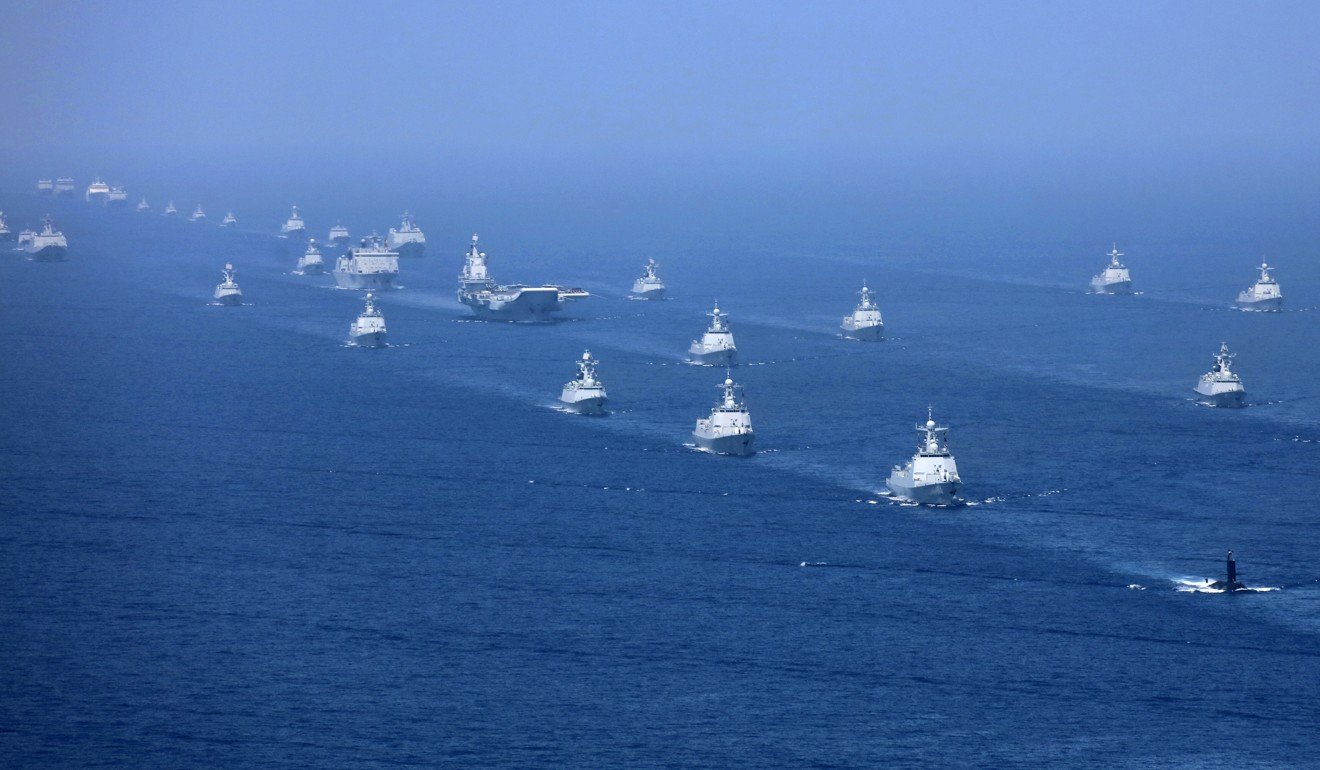
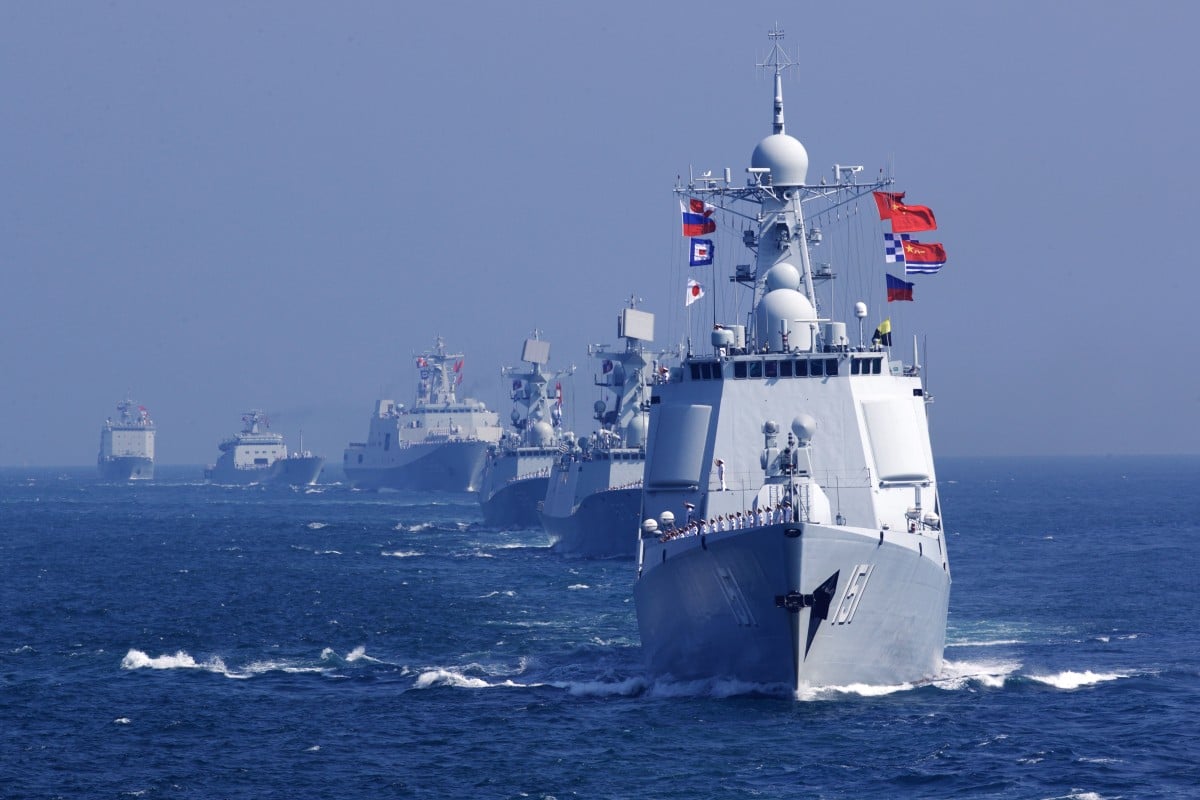
Chinese warships pictured at the end of joint exercise with the Russian navy in 2016. Photo: Xinhua
China will hold a naval parade next month to mark the 70th anniversary of the founding of the People’s Liberation Army Navy and will invite more than a dozen of foreign navies to participate.
The parade will take place on April 23 in the Yellow Sea off the coast of Qingdao in Shandong province, Ren Zhiqiang, a spokesman for the Ministry of National Defence, said on Thursday.
Ren did not provide further details of the parade but military analysts said the exercise would give the navy the opportunity to display its rapidly growing strength and show how that has increased in the past 12 months.

In April last year a naval review in the South China Sea featured a total of 48 vessels and 76 planes, including China’s first aircraft carrier, the Liaoning, its Type 094A and 095 nuclear submarines, 052D guided missile destroyers and J-15 fighter jets.

The experts expect that next month’s event will provide a showcase for several new and more powerful vessels including its home-grown aircraft carrier Type 001A, the Type 055 – Asia’s most powerful destroyer – and several nuclear submarines.

“The fact that China is holding the naval parade just one year after the South China Sea review shows the great importance [the leadership] attaches to the development of China’s maritime interests, the navy and its expansion,” navy expert Li Jie said.

Chinese President Xi Jinping joined the crew on the deck of the cruiser Changsha following last year’s naval review. Photo: Xinhua

China also held a major naval parade in 2009 to mark the navy’s 60th anniversary.

It was smaller in scale than the upcoming extravaganza with 25 PLA vessels and 31 fighter jets taking part.

Fourteen foreign navies sent ships to the 2009 parade, including the USS Fitzgerald from America and the guided-missile cruiser Varyag from Russia. France, Australia, South Korea, India and Pakistan also joined in the event.

More foreign countries are expected to join the party this year as the PLA has become more active internationally and China has sold more warships to foreign navies.

China’s new veterans’ law to be reviewed at National People’s Congress next week

“The parade is more like a birthday party for the PLA Navy and the participation of foreign navies is a matter of diplomatic courtesy with few military implications,” said Yue Gang, a former PLA colonel.

Yue said the US and its allies would attend despite the rising tensions between the two sides.

Since 2015 the US and Chinese navies have engaged in a series of confrontations in the South China Sea as China strengthens its military presence in the region and the US has sought to challenge Beijing’s claims to the waters by conducting what it describes as “freedom of navigation” operations.

“I don’t expect they will send any of the warships that have taken part in such operations [to the parade],” Yue said.

China has greatly expanded its naval capabilities in recent years. Photo: AP

It has been reported that the Japanese Maritime Self-Defence Force has expressed an interest in joining the parade and the Philippines – which has a rival claim to the South China Sea – is planning to send a vessel to the event for the first time.

Li said militaries such as the US and Japan would not want to miss the chance to observe the PLA Navy closely.

“In addition, greater transparency [through the parade] will also help reassure smaller regional partners such as the Philippines that China is a friendly power despite its growing military strength,” he said.

China held its first naval parade in 1957 and April’s display will be the sixth such event.

Sailors also took part in the parade through Tiananmen Square to mark the foundation of the People’s Republic on October 1 1949.

Source: SCMP

01/03/2019

China’s envoy says Turkish Uighur criticism could hit economic tie

ANKARA (Reuters) – Turkey risks jeopardising economic ties with China if it keeps criticising Beijing’s treatment of Uighur Muslims, China’s envoy to Ankara warned, just as Chinese firms are looking to invest in Turkish energy and infrastructure mega-projects.

Last month Turkey broke a long silence over the fate of China’s Uighurs, saying more than one million people faced arbitrary arrest, torture and political brainwashing in Chinese internment camps in the country’s northwestern Xinjiang region.

Turkey’s Foreign Minister Mevlut Cavusoglu repeated Ankara’s concern at a United Nations meeting this week, calling on China to respect human rights and freedom of religion.

China has denied accusations of mistreatment and deems criticism at the United Nations to be interference in its sovereignty. Beijing says the camps are re-education and training facilities that have stopped attacks previously blamed on Islamist militants and separatists.

For now, Deng said that many Chinese companies were looking for investment opportunities in Turkey including the third nuclear power plant Ankara wants to build.

Several Chinese firms including tech giant Alibaba, are actively looking at opportunities in Turkey after the lira’s sell-off has made local assets cheaper.

In addition to Alibaba, which last year purchased Turkish online retailer Trendyol, other companies holding talks included China Life Insurance and conglomerate China Merchants Group, Deng said.

GAPING DEFICIT

Deng said Chinese banks wanted to invest in Turkey, following the lead of Industrial and Commercial Bank of China (ICBC) which bought Tekstilbank in 2015.

Chinese investment in Turkey would help narrow Ankara’s gaping current account deficit, which stood at $27.6 billion last year. Turkey’s trade deficit with China alone stood at $17.8 billion last year, according to Trade Ministry data.

In January, Turkey’s Finance Minister Berat Albayrak said it was “impossible” for Turkey to maintain such a trade deficit with China and other Asian countries, saying the government was considering taking measures.

Deng said he did not expect Turkey to take protectionist steps. “Both countries are strictly against such policies, and both economies need an open world economy,” he said.

He also called on Turkey to adopt Chinese payment platforms such as WeChat and AliPay. “People don’t want to pay in cash and the population here is very young so they wouldn’t have trouble adapting to new technologies,” Deng said.

Good diplomatic and political ties, however, would remain crucial for developing economic ties and attracting more Chinese investment, he said, adding that he had raised the issue with Cavusoglu on Tuesday, a day after the foreign minister’s intervention at the United Nations.

“The most important issue between countries are mutual respect,” he said. “Would you stay friends if your friend criticized you publicly every day?

Source: Reuters

Law of Unintended Consequences

continuously updated blog about China & India

ChiaHou's Book Reviews

continuously updated blog about China & India

What's wrong with the world; and its economy

continuously updated blog about China & India