19/05/2019
Li Zhanshu, chairman of the Standing Committee of the National People’s Congress (NPC), meets with Norwegian King Harald V in Oslo, Norway, May 16, 2019. China’s top legislator Li Zhanshu paid an official friendly visit to Norway from May 15 to 18, expecting to promote the development of Sino-Norwegian ties to score more progress. (Xinhua/Huang Jingwen)
OSLO, May 18 (Xinhua) — China’s top legislator Li Zhanshu paid an official friendly visit to Norway from May 15 to 18, expecting to promote the development of Sino-Norwegian ties to score more progress.
During the stay in Norway, Li, chairman of the Standing Committee of the National People’s Congress (NPC), met with Norwegian King Harald V, Norwegian Prime Minister Erna Solberg and President of the Norwegian parliament Storting Tone Wilhelmsen Troen.
When meeting with Norwegian King Harald V, Li conveyed the greetings of Chinese President Xi Jinping to the King, and expressed congratulations on the Norwegian National Day, which falls on May 17.
Li said during the King’s successful visit to China last year, the two heads of state made strategic plans for the development of bilateral relations in the new era. As this year marks the 65th anniversary of the establishment of diplomatic relations between China and Norway, the two sides are expected to seize the opportunity to cement friendship and expand cooperation on the basis of mutual respect and treating each other equally, so as to realize better development of bilateral relations.
Harald V expressed gratitude to China’s friendliness to the Norwegian side, saying Norway admires China’s tremendous development achievements. He said Norway is ready to strengthen cooperation with China in such fields as winter sports, and will make efforts to help China successfully host the 2022 Beijing Winter Olympics.
When meeting with Solberg, Li said although Sino-Norwegian relations have experienced ups and downs, friendship and cooperation has always been the main theme of the ties. As both countries share common interests on safeguarding current global mechanism, building an open world economy, the two sides should jointly support multilateralism and free trade. Moreover, the two countries have similar development concepts and share strong economic complementarities, so the outlook of bilateral cooperation is very broad.
Norway is welcome to actively participate in the construction of the Belt and Road Initiative. And bilateral cooperation on economy, trade, environmental protection, science and technology, people-to-people exchanges and tourism is expected to be forged ahead, said China’s top legislator.
“China hopes the Norwegian side provides a fair, just and non-discriminatory business environment for Chinese enterprises’ investment and operation in Norway,” said Li.
Solberg said bilateral cooperation has maintained sound momentum since the normalization of bilateral ties, expecting the two sides to push forward talks on inking a free trade deal and deepen cooperation in such areas as maritime affairs, shipping, fishery and environmental protection. She also voiced the will to advance communication and collaboration with China on issues concerning the United Nations, coping with the climate change and Arctic affairs.
When respectively meeting with Troen and members of the parliament’s standing committee on foreign affairs and defense, Li introduced China’s development path and political system.
“The reasons why China continues to make new development achievements are that we have embarked on a development path that suits our national conditions. This is the path of socialism with Chinese characteristics,” said Li, stressing that the Chinese people will unswervingly follow this path.
He said that the NPC of China is willing to work with the Norwegian parliament to implement the important consensus reached by the leaders of the two countries, strengthen friendly exchanges at all levels, enhance understanding and trust through frank dialogues, and create a favorable environment for pragmatic cooperation.
Troen said that this visit is of great significance as Li’s tour marks the first visit of a Chinese leader since the normalization of bilateral relations in 2016. The Norwegian parliament is willing to carry out all-round exchanges and cooperation with the NPC of China, and make positive contributions to the development of state-to-state ties.
The two legislators also exchanged views on jointly safeguarding multilateral trade system, sustainable development and other issues of common concerns.
On May 16, Li attended the economic and trade conference in commemoration of the 65th anniversary of Norway-China diplomatic relations. He said in a speech that President Xi’s proposal of the high-quality development of jointly building the Belt and Road and the policy of China’s further expansion of opening up have provided new opportunities for the common development of all countries. The two countries’ enterprises are expected to seize the opportunity, tap cooperation potentials, so as to translate the desire for strong cooperation into more practical results.
During the tour, Li visited the Chinese skiers who were training in Norway and encouraged them to train hard and carry out bilateral friendship.
He also visited a local ecological agriculture project, an oil gas processing plant, and met with local officials in Norway’s southwestern county of Rogaland and its southern city of Stavanger.
Norway is the first lag of Li’s ten-day tour in Europe, which will also take him to Austria and Hungary.
Source: Xinhua
Posted in Arctic affairs, Austria, bilateral ties, chairman of the Standing Committee of the National People's Congress (NPC), China's top legislator, Chinese President Xi Jinping, climate change, Environmental protection, Erna Solberg, fishery, Harald V, Hungary, Li Zhanshu, maritime affairs, Norway, Norway-China diplomatic relations, Norwegian King, Norwegian National Day, Norwegian Prime Minister, President of the Norwegian parliament, promote, Rogaland, shipping, Sino-Norwegian ties, Storting Tone Wilhelmsen Troen, Uncategorized, United Nations, visits |
Leave a Comment »
19/05/2019
- Experts win reprieve for two out of three heritage houses but fear their success is only temporary
- Authorities plan public cultural facilities for the site
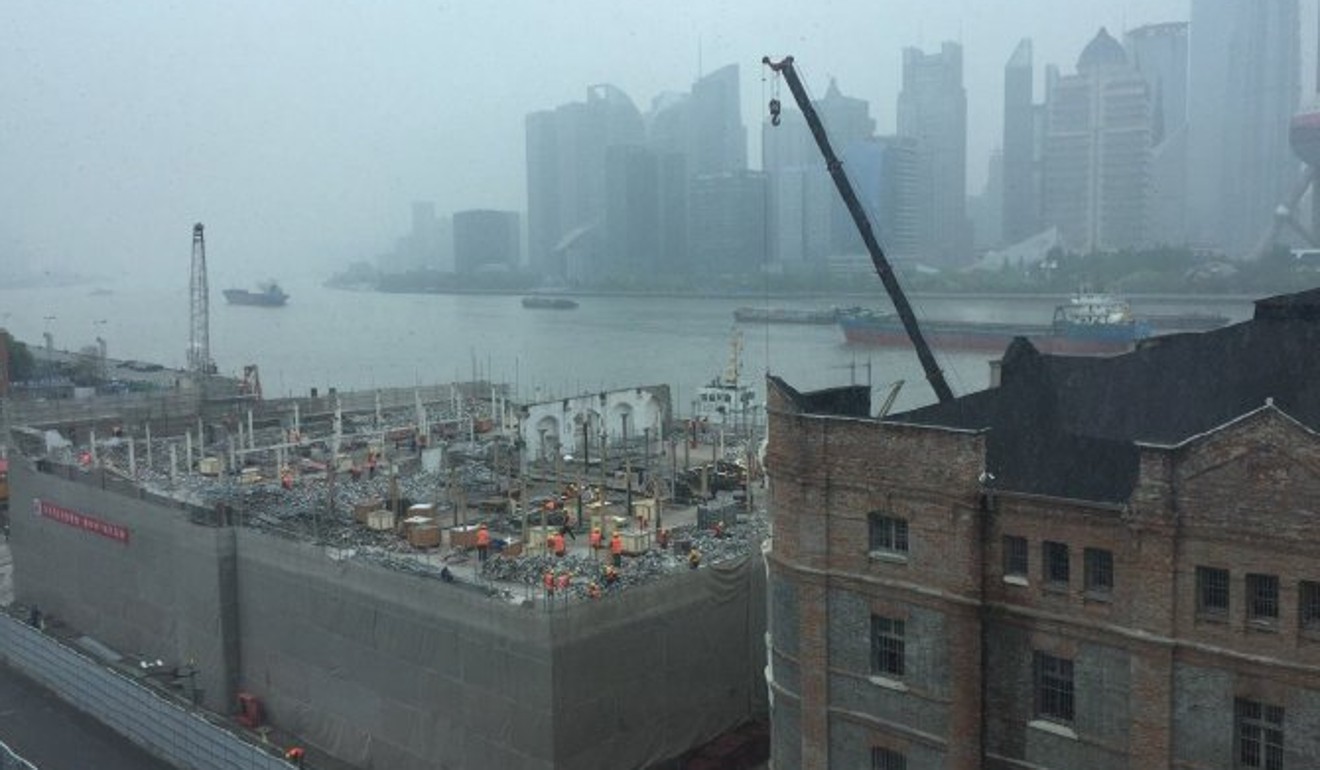
The historic buildings on Shanghai’s Bund in the 1930s. One of the three structures has already been demolished but authorities have temporarily suspended plans to knock down the other two. Photo: Handout
Two historic buildings on Shanghai’s famous Bund have temporarily escaped demolition after a group of experts appealed to the government to conserve the heritage sites, but the intervention was too late to save a third.
About 15 architecture, history and culture experts based in Shanghai banded together to write an article on social media app WeChat last month, calling on the city’s government to “protect the city’s memories” by preserving three houses on Huangpu Road.
A few days after the article was published one of the buildings was demolished as part of a plan to build public cultural facilities on the site. But authorities suspended work on the other two and are considering removing only the interior structure while preserving the external walls, according to the group.
The houses, which date back to 1902, witnessed the city’s boom in the first half of the 20th century when it became one of the world’s most important, and famous, ports, the experts said.
The demolition project on The Bund, Shanghai has been suspended, but not before one of the three historic buildings was demolished. Photo: Urban China magazine
All three of the properties originally belonged to Japanese shipping company Nippon Yusen Kaisha Group and were later used as storage facilities for Japan’s military forces during the second world war, according to Yu Hai, a sociologist from Shanghai’s Fudan University.
“These buildings, along with the nearby Yangzijiang port on the Huangpu River, represented Shanghai’s wharf culture and port culture,” Yu said. “They are historically significant as they witnessed Shanghai grow prosperous through shipping and trade industries about a century ago.”
Although the two remaining buildings are safe for now, the experts argue their interiors are also worth preserving.
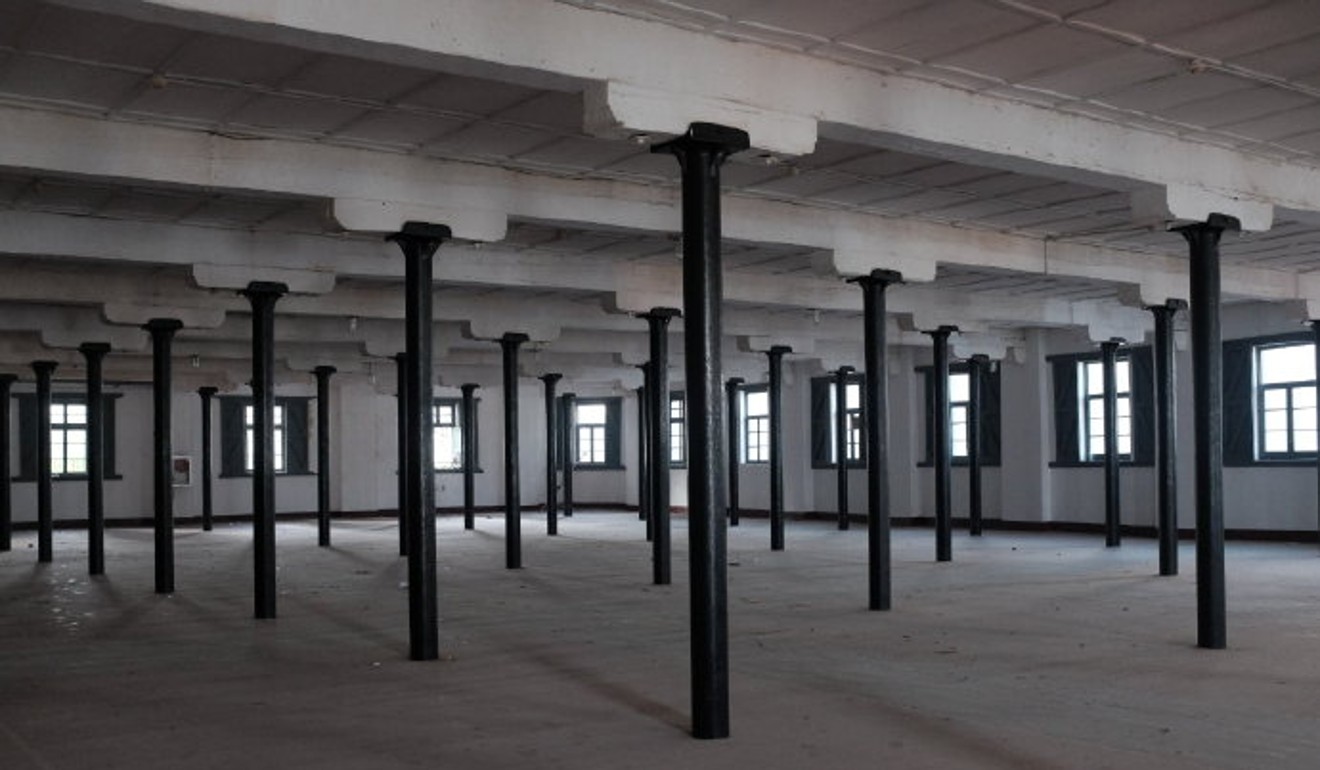
Liu Gang, an architecture professor at Shanghai’s Tongji University, said the properties featured big wooden beams supported by black iron pillars, which were prominent architectural features of industrial buildings dating back to the 19th century.
“We guess it was hard to move these giant beams with vehicles at the beginning of the 20th century. Quite possibly they were transported on the river. We guess that the wood was chopped down and processed in places across the Pacific [from North America] and shipped to Shanghai.”
In the WeChat article, Liu called for the protection of the interior structure of the buildings. “Without solid research, we cannot simply take them down to be replaced by new ones.”
Yu agreed, saying: “The building with a new inside structure would be a fake and this plan will destroy historical heritage.”
Experts say the interiors of the historic buildings are also worth preserving. Photo: Urban China magazine
Huangpu Road, where these houses sit, is rich with history. It features the Garden Bridge of Shanghai – the city’s first steel bridge, built in 1907 – and was once home to the consulates of the United States, Russia, Japan, Germany, Denmark and the Austro-Hungarian empire.
Other notable landmarks on the road include the Astor House Hotel, built in 1846, where Charlie Chaplin, Albert Einstein and George Bernard Shaw stayed in the 1920s and 1930s. The hotel is still there.
“History happened here,” Yu said. “But it’s a pity that most of the old buildings in this area no longer exist.”
Despite their success in winning a stay of execution for the two buildings, the experts are cautious in their expectations.
“The demolition work was suspended, but that does not mean they have accepted our proposals. We are not optimistic,” Yu said.
About two weeks ago as part of their effort to save the buildings, Yu and three other scholars approached officials from Shanghai’s Planning and Natural Resources Bureau, the government body behind the demolition project.
“Officials emphasised the difficulties of keeping the completeness of the old buildings and we just pointed out the damage to their historical values,” Yu said.
The Shanghai bureau did not immediately reply to a request for comment.
Shanghai nightclub king opens new art space – in disused oil tanks
Appeals by the public to conserve historical buildings have generally not been successful. Shenyuli, a typical Shanghai residential community built in the 1930s, was included in the city’s protected list of historical buildings in 2004.
The listing was not enough to prevent its demolition eight years later to make way for a public green land space.
Three years ago, the Shanghai government announced it was suspending the planned demolition of a former sex slavery station used by Japanese soldiers during the second world war, following media reports and a public outcry.
However, the building was later demolished, according to Su Zhiliang, history professor from Shanghai Normal University and a researcher on sex slavery, who predicts a similar outcome for this latest conservation effort.
“I think the government is just using the same tactic to postpone their plan. After the public’s attention is over, they will continue demolishing,” Su said.
Source: SCMP
Posted in Albert Einstein, architecture professor, Astor House Hotel, Austro-Hungarian empire, big wooden beams, black iron pillars, Bund, century, Charlie Chaplin, consulates, demolition, Denmark, Fudan University, Garden Bridge, George Bernard Shaw, Germany, heritage houses, historic building, history professor, Huangpu Road, Japan, Japan’s military forces, Japanese shipping company, Liu Gang, Nippon Yusen Kaisha Group, North America, Pacific, Planning and Natural Resources Bureau, postpone, predicts, public cultural facilities, researcher, residential community, Russia, saved, second world war, sex slavery, Shanghai, Shanghai Normal University, Shenyuli, shipping, sociologist, storage facilities, Su Zhiliang, Tongji University, trade industries, Uncategorized, United States, WeChat, Yangzijiang port, Yu Hai |
Leave a Comment »
19/05/2019
- US paper mills are expanding capacity to take advantage of a glut of cheap waste materials
- Some facilities that previously exported plastic or metal to China have retooled so they can process it themselves
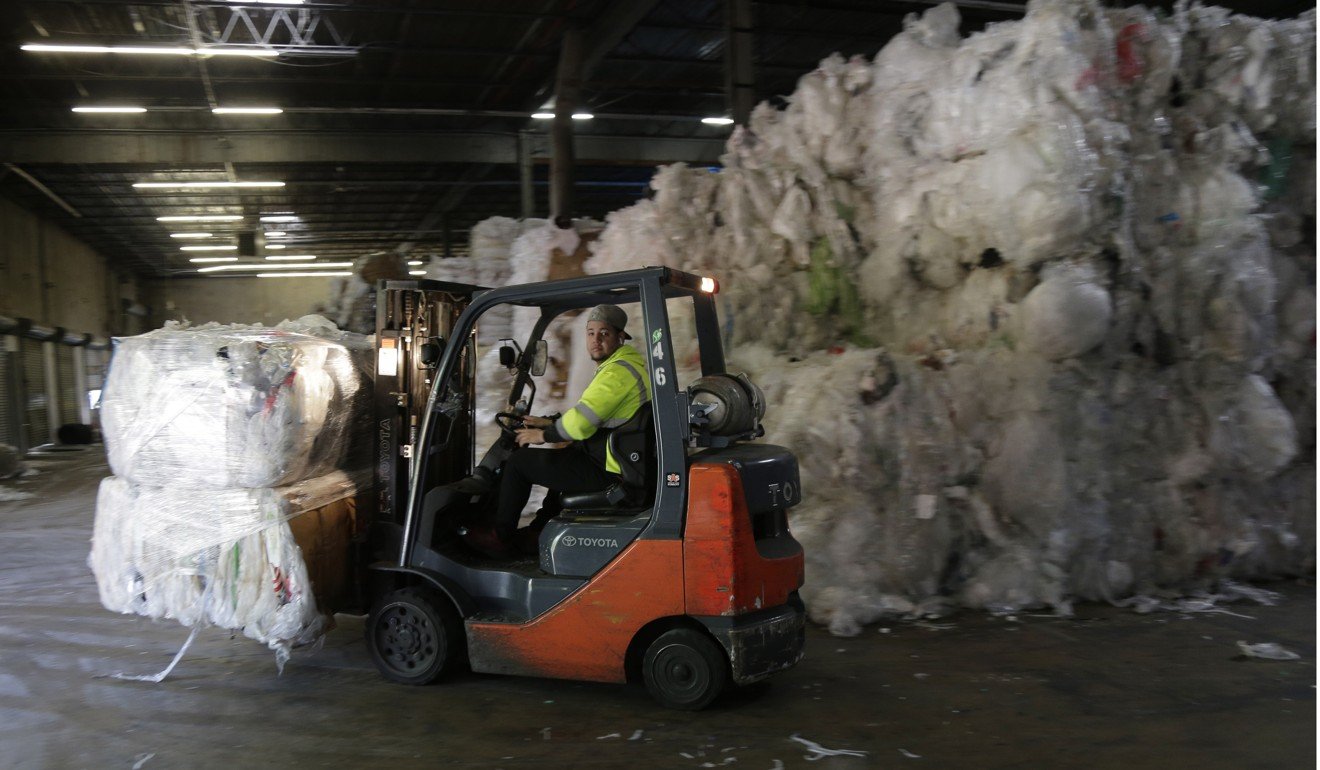
China phased in import restrictions on scrap paper and plastics in January last year. Photo: AP
The halt on China’s imports of waste paper and plastic that has disrupted US recycling programmes has also spurred investment in American plants that process recyclables.
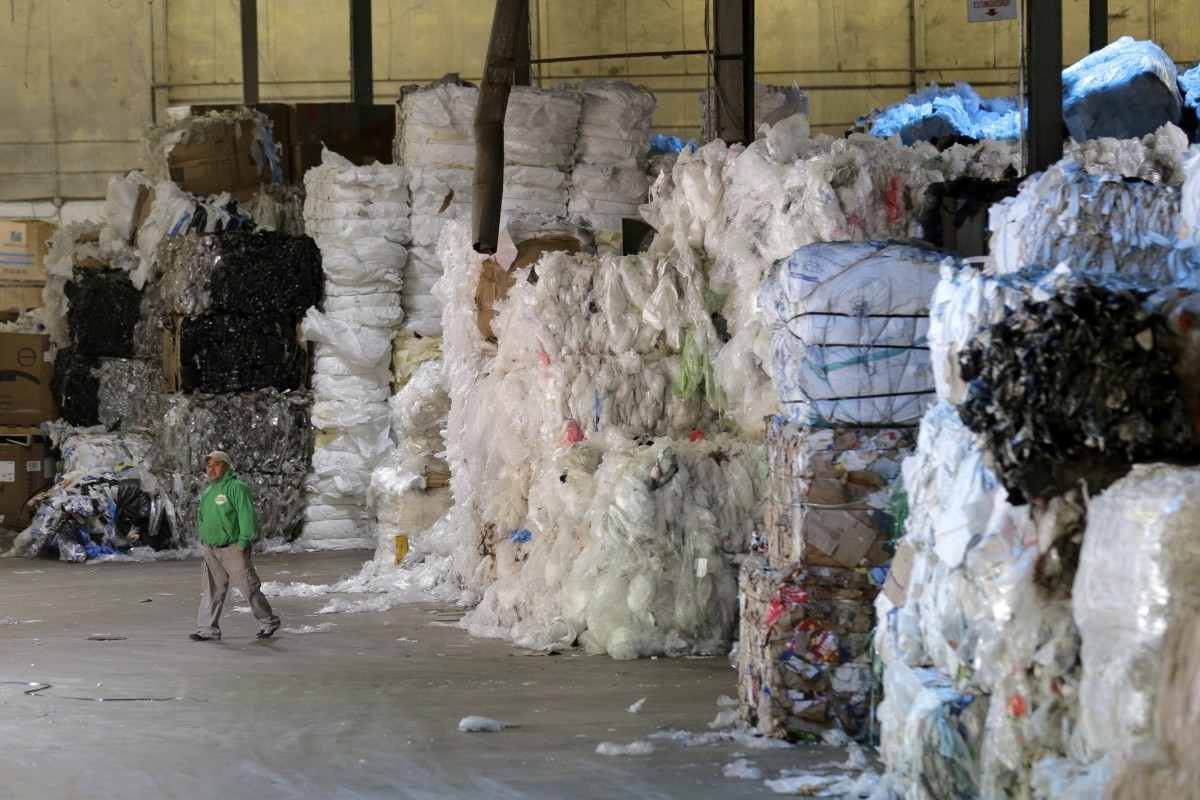
US paper mills are expanding capacity to take advantage of a glut of cheap scrap. Some facilities that previously exported plastic or metal to China have retooled so they can process it themselves.
And in a twist, the investors include Chinese companies that are still interested in having access to waste paper or flattened bottles as raw material for manufacturing.
“It’s a very good moment for recycling in the United States,” said Neil Seldman, co-founder of the Institute for Local Self-Reliance, a Washington-based organisation that helps cities improve recycling programmes.
Global scrap prices plummeted in the wake of China’s ban. Photo: AP
China, which had long been the world’s largest destination for paper, plastic and other recyclables, phased in import restrictions in January last year.
Global scrap prices plummeted, prompting waste-hauling companies to pass the cost of sorting and baling recyclables on to municipalities. With no market for the waste paper and plastic in their blue bins, some communities scaled back or suspended kerbside recycling programmes. But new domestic markets offer a glimmer of hope.
How China’s ban on plastic waste imports became an ‘earthquake’
About US$1 billion in investment in US paper processing plants has been announced in the past six months, according to Dylan de Thomas, a vice-president at The Recycling Partnership, a non-profit organisation that tracks and works with the industry.
Hong Kong-based Nine Dragons, one of the world’s largest producers of cardboard boxes, has invested US$500 million over the past year to buy and expand or restart production at paper mills in Maine, Wisconsin and West Virginia.
Brian Boland, vice-president of government affairs and corporate initiatives for ND Paper, Nine Dragons’ US affiliate, said that as well as making paper from wood fibre, the mills would add production lines turning more than a million tonnes of scrap into pulp to make boxes.
“The paper industry has been in contraction since the early 2000s,” he said. “To see this kind of change is frankly amazing. Even though it’s a Chinese-owned company, it’s creating US jobs and revitalising communities like Old Town, Maine, where the old mill was shuttered.”
Hong Kong-based Nine Dragons has invested US$500 million in paper mills in Maine, Wisconsin and West Virginia. Photo: Handout
:
The Northeast Recycling Council said in a report last autumn that 17 North American paper mills had announced increased capacity to handle recyclable paper since the Chinese cut-off.
Another Chinese company, Global Win Wickliffe, is reopening a closed paper mill in Kentucky. Georgia-based Pratt Industries is constructing a mill in Wapakoneta, Ohio that will turn 425,000 tonnes of recycled paper per year into shipping boxes.
Plastics also had a lot of capacity coming online, de Thomas said, noting new or expanded plants in Texas, Pennsylvania, California and North Carolina that turned recycled plastic bottles into new bottles.
Chinese companies were investing in plastic and scrap metal recycling plants in Georgia, Indiana and North Carolina to make feedstocks for manufacturers in China, he said.
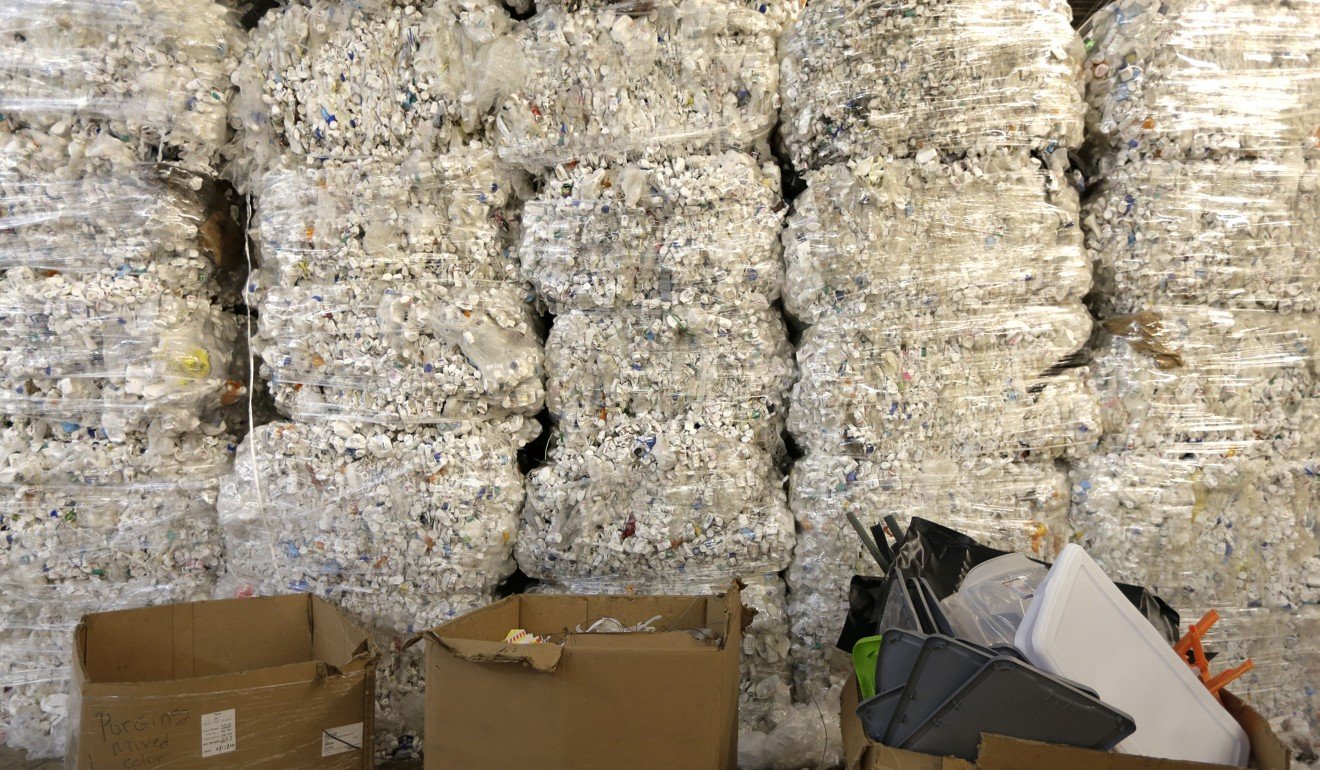
GDB International processes bales of scrap plastic film into pellets to make garbage bags and plastic pipe. Photo: AP
In New Brunswick, New Jersey, the recycling company GDB International exported bales of scrap plastic film such as pallet wrap and grocery bags for years. But when China started restricting imports, company president Sunil Bagaria installed new machinery to process it into pellets he sells profitably to manufacturers of garbage bags and plastic pipe.
The imports cut-off that China called “National Sword” was a much-needed wake-up call to his industry, he said.
“The export of plastic scrap played a big role in easing recycling in our country,” Bagaria said. “The downside is that infrastructure to do our own domestic recycling didn’t develop.”
China to suspend checks on US scrap metal shipments, halting imports
That was now changing, but he said far more domestic processing capacity would be needed as a growing number of countries restricted scrap imports.
“Ultimately, sooner or later, the society that produces plastic scrap will become responsible for recycling it,” he said.
It has also yet to be seen whether the new plants coming on line can quickly fix the problems for municipal recycling programmes that relied heavily on sales to China to get rid of piles of scrap.
About US$1 billion in investment in US paper processing plants has been announced in the past six months, according to a non-profit group that tracks the industry. Photo: AP
“Chinese companies are investing in mills, but until we see what the demand is going to be at those mills, we’re stuck in this rut,” said Ben Harvey, whose company in Westborough, Massachusetts, collects trash and recyclables for about 30 communities.
He had a car park filled with stockpiled paper a year ago after China closed its doors, but eventually found buyers in India, Korea and Indonesia.
China to collect applications for scrap metal import licences from May
Keith Ristau, chief executive of Far West Recycling in Portland, Oregon, said most of the recyclable plastic his company collected used to go to China but now most of it went to processors in Canada or California.
To meet their standards, Far West invested in better equipment and more workers at its material recovery facility to reduce contamination.
In Sarepta, Louisiana, IntegriCo Composites is turning bales of hard-to-recycle mixed plastics into railroad ties. It expanded operations in 2017 with funding from New York-based Closed Loop Partners.
“As investors in domestic recycling and circular economy infrastructure in the US, we see what China has decided to do as very positive,” said Closed Loop founder Ron Gonen.
Source: SCMP
Posted in advantage, bales, boxes, California, capacity, cardboard boxes, cheap, Chief Executive, China’s ba, China’s ban, Closed Loop Partners, Dylan de Thomas, expanding, exported plastic, Far West Recycling, feedstocks, garbage bags, GDB International, Georgia, Georgia-based, Global Win Wickliffe, glut, grocery bags, Hong Kong, import restrictions, India alert, Indiana, Indonesia, Institute for Local Self-Reliance, IntegriCo Composites, Keith Ristau, Kentucky, Korea, Louisiana, Maine, manufacturers, metal, National Sword, Neil Seldman, New Brunswick, New Jersey, New York, Nine Dragons, non-profit organisation, North Carolina, Northeast Recycling Council, Ohio, old mill, Old Town, Maine, Oregon, pallet wrap, paper mills, pellets, Pennsylvania, plastic pipe, Plastics, Portland, Pratt Industries, process, producers, pulp, recycling industry, retooled, revitalises, Ron Gonen, Sarepta, scrap import, scrap metal import licences, scrap metal shipments, scrap plastic film, shuttered, Sunil Bagaria, Texas, The Recycling Partnership, Uncategorized, US, vice-president, Wapakoneta, waste materials, West Virginia, Wisconsin, wood fibre |
Leave a Comment »
19/05/2019
- General will spend five days meeting top Chinese leaders including President Xi Jinping
- Mission seeks to patch up wounds caused by Brazilian President Jair Bolsonaro’s anti-China rhetoric
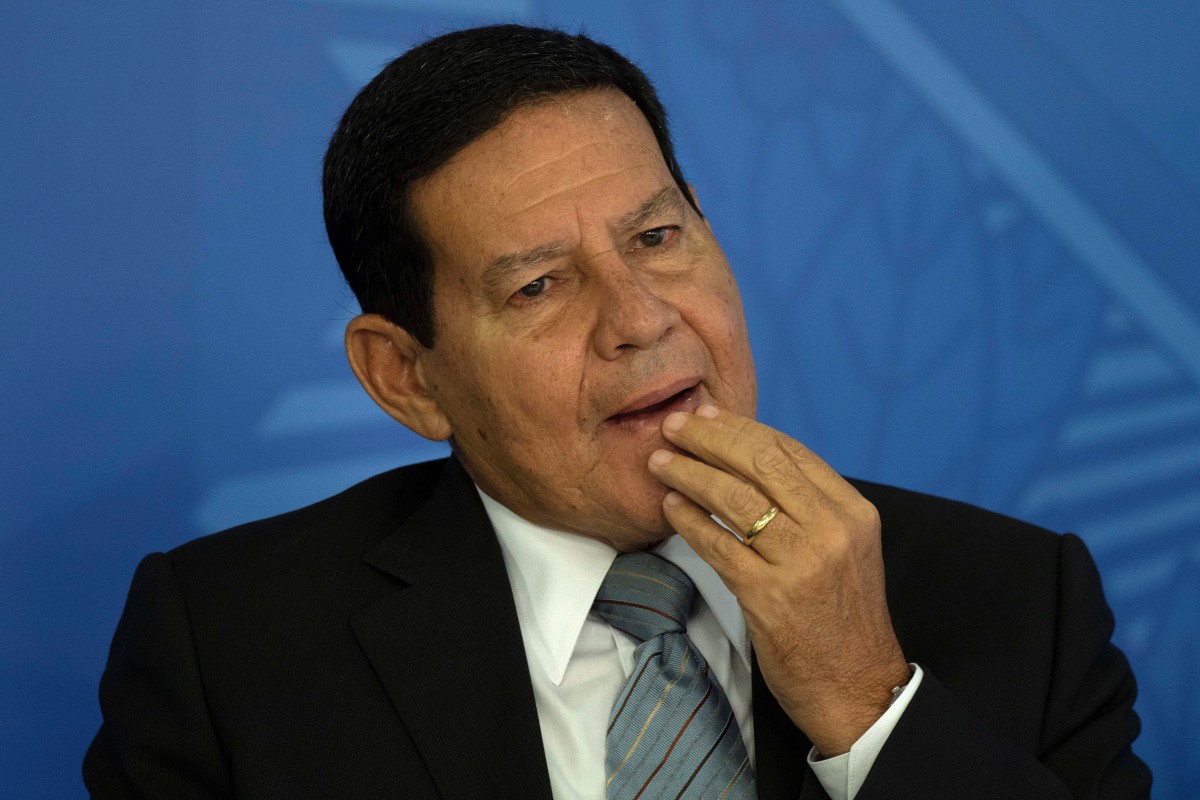
Hamilton Mourao favours maximising engagement with China. Photo: EPA-EFE
Brazil’s vice-president is expected to land in Beijing on Sunday on a mission to patch up wounds caused by President Jair Bolsonaro’s lacerating anti-China rhetoric.
General Hamilton Mourao will spend five days in China rubbing shoulders with some of the country’s most powerful leaders, culminating in an audience with President Xi Jinping, in an effort to shore up the relationship between the two emerging market giants. Bolsonaro himself is due to visit later this year, while Xi is due to visit Brasilia in November for the BRICS summit.
China – Brazil’s most important trading partner for the past decade – remains a sensitive subject in the Bolsonaro administration. While Mourao and the other business-oriented members of government favour maximising engagement with the Asian giant, Bolsonaro and his more radical appointees view China with a high degree of suspicion, as a predatory economy that wishes not merely to invest in Brazil, but to own it.
“The Chinese can buy in Brazil, but they can’t buy Brazil,” the president said at a breakfast with journalists last month.
Brazilian President Jair Bolsonaro said last month that the “Chinese can buy in Brazil, but they can’t buy Brazil”. Photo: AFP
Still, in comparison with his pre-election criticism of China as “heartless”, Bolsonaro in office has dialled down his anti-Beijing sentiment. Mourao’s visit is part of an effort to reset that relationship.
“The Chinese understand that Mourao plays a central role in toning down Bolsonaro’s rhetoric,” said Oliver Stuenkel, a specialist on BRICS – an association of five major emerging economies, namely Brazil, Russia, India, China and South Africa – at the FGV business school. “They know that the Mourao-China relationship will be fundamental.”
Should China be worried about Bolsonaro’s bromance with Trump?
Speaking to reporters recently, Mourao recognised the need to balance the Bolsonaro administration’s desire to pivot towards the United States with practical considerations of China’s economic significance.
“The US are the champions of democracy and freedom and our government has left it very clear what this represents,” the vice-president said. “But on the other side we have to be sufficiently pragmatic to understand the importance of China for Brazil’s economic development.”
Chinese investment in Brazil reached almost US$134 billion between 2003 and 2018, Brazilian government figures showed.
Chinese President Xi Jinping is expected to meet the visiting Brazilain vice-president. Photo: AP
While the trade war between the US and China may offer Brazil some short-term gains, particularly for its agricultural sector, the downsides outweigh the benefits, according to Renata Amaral, a foreign trade analyst at Barral MJorge consultancy.
“In truth this war is no good for anyone,” she said.
Mourao said that Brazil was monitoring the situation “critically and cautiously”.
Why US-China trade war could be good for Brazil
From the Chinese perspective, Beijing is looking for Brazil’s formal support for its “Belt and Road Initiative” – Chinese President Xi Jinping’s signature global infrastructure megaproject. Asked whether Brazil might sign up to the programme, Mourao said that any agreement would have to be approved by Bolsonaro in the second half of the year.
After trips to the Great Wall of China and the Shanghai Stock Exchange, Mourao will meet Xi, in a clear sign of Brazil’s importance to China. “The visit of vice-president Mourao will reinforce mutual political confidence, deepen our friendly cooperation and add new dimensions to our strategic partnership,” according to Chinese foreign ministry spokesman Geng Shuang.
With Beijing both uncertain about the direction of Brazilian foreign policy under Bolsonaro and eager to strike deals on infrastructure and food security, it makes sense for the Chinese to roll out the red-carpet for Mourao, according to Hussein Kalout, a specialist in foreign policy and a researcher at Harvard.
China trade vs economic growth: the dilemma for Brazil’s president
While the federal government remains ambivalent about its relationship with China, some of Brazil’s powerful state governors are seeking to develop their own relationship with the Asian country. One of them is Carlos Massa Ratinho Junior, the governor of the southern state of Parana, who travelled to China recently to discuss agriculture and railroad projects.
“We’re open to talk with any country that wants to and understands that the state of Parana is the best to place to invest in Brazil,” the governor said in an interview, adding that his actions did not conflict with the federal government’s stance towards Beijing.
But in a sign of the domestic pressure Bolsonaro is under not to abandon entirely his sceptical attitude to China, Luiz Philippe de Orleans e Braganca, the vice-president of the lower house’s foreign affairs committee and a lawmaker from Bolsonaro’s own party, said the government should set limits to the partnership.
“It’s good to talk to China, but it depends what is being discussed,” he said. “For example, the 5G network set up by China is dangerous because it will give the Chinese more information about Brazilian citizens than the Brazilian government.”
Source: SCMP
Posted in anti-China, Brasilia, Brazil, Brazilian President, BRICS summit, Carlos Massa Ratinho Junior, China alert, FGV business school, Geng Shuang, Great Wall of China, Hamilton Mourao, India alert, Jair Bolsonaro, mend, Parana, President Xi Jinping, relations, rhetoric, Russia, Shanghai Stock Exchange, South Africa, Uncategorized, Vice President |
Leave a Comment »
19/05/2019
BEIJING (Reuters) – China’s housing regulator has urged four more cities to prevent their residential property markets from overheating in the latest sign that authorities are not about to relax their grip on the real estate business in order to spur the economy.
The cities of Suzhou, Foshan, Dalian and Nanning have been told by the Ministry of Housing and Urban-Rural Development to stabilize land and housing prices as well as market expectations, the official Xinhua news agency reported late on Saturday.
Six other cities were warned by the ministry last month to monitor the growth of home prices in their markets, after some cities, including, Foshan quietly started to relax some curbs since December to spur demand.
China’s home property market is a key plank of the economy, influencing tens of related sectors such as construction and financial services.
The sector has held up well despite a slowdown in growth in the world’s second-biggest economy, with policymakers walking a fine line between preserving stability and hurting market sentiment.
Renewed tensions between China and the United States over trade have also added pressure on Chinese policymakers to keep the domestic economy on a stable footing, while continuing to fend off risks such as housing bubbles.
Average new home prices in China’s 70 major cities rose 0.6% in April, unchanged from the pace of growth in March, according to a monthly official survey.
Most of the 70 cities surveyed by the National Bureau of Statistics still reported monthly price gains for new homes. The number increased to 67 in April from 65 in March, signaling a slight strengthening in the market.
The housing ministry reiterated that “houses are for living in, not for speculation”, according to the Xinhua news agency on Saturday.
Even before the ministry’s latest warning, the prosperous city of Suzhou, just northwest of Shanghai, had already rolled out new property curbs.
On May 11, Suzhou said it would restrict buyers of new homes in some districts from selling their property within three years.
Source: Reuters
Posted in China alert, Chinese cities, Dalian, Foshan, home price growth, housing ministry, Ministry of Housing and Urban-Rural Development (MOHURD), Nanning, National Bureau of Statistics (NBS), Shanghai, Suzhou, Uncategorized, United States, warned, Xinhua News Agency |
Leave a Comment »
19/05/2019
ENJERLA/NEW DELHI, India (Reuters) – It was supposed to be Johnson & Johnson’s biggest manufacturing plant in India. It was to eventually employ at least 1,500 people and help bring development to a rural area near Hyderabad in southern India.
Yet, three years after the U.S. healthcare company completed construction of production facilities for cosmetics and baby products on the 47-acre site, they stand idle.
Two sources familiar with J&J’s operations in India and one state government official told Reuters production at the plant, at Penjerla in Telangana state, never began because of a slowing in the growth in demand for the products.
One of them said that demand didn’t rise as expected because of two shock policy moves by Prime Minister Narendra Modi: a late 2016 ban on then circulating high-value currency notes, and the nationwide introduction of a goods and services tax (GST) in 2017.
J&J spokespeople in its Mumbai operations in India and at its global headquarters in New Brunswick, New Jersey, declined to respond to a list of questions from Reuters.
Modi’s office did not respond to a call and an email with questions.
Aimed at rooting out corruption and streamlining the tax system, the double whammy of ‘demonetization’ and GST – were two of Modi’s signature policy moves. But instead of encouraging economic activity as intended, they did the opposite, at least in 2016-2018, by sapping consumer demand, according to some economists.
Many businesses, especially small and medium-sized enterprises, complained publicly – some in their financial statements – that they suffered a drop off in orders. The suspended J&J project stands as one of the most vivid examples of the impact on the broader investment picture.
In the first month after demonetization, some business surveys showed that sales of products such as shampoos and soap fell more than 20 percent.
Lack of jobs growth and a farm-income crisis because of low crop prices have hurt Modi in the current general election, according to several political strategists.
Still, Modi and his ruling Hindu nationalist Bharatiya Janata Party are expected by many of the strategists to be in a position to get a second term – probably with support of some other parties – when votes are counted on Thursday, partly because of his strong stance on national security issues.
BIG INVESTMENTS, GREAT EXPECTATIONS
A range of Modi’s business policies, such as capping prices of medical devices, forcing tech companies to store more data locally and stricter e-commerce regulations have in the past two years hurt plans of American multinationals such as J&J, Mastercard, Amazon and Walmart-owned Flipkart.
The groundbreaking of the J&J facility in Penjerla, its third in the country, was carried out with much fanfare in 2014, attended by Telangana state’s Chief Minister Chandrashekar Rao, who hailed the foreign investment as a big win for local communities. A document dated April 2017 that lists products the company planned to make at the facility, submitted to the Telangana government and reviewed by Reuters, names baby oil, baby shampoo, baby lotion, baby hair oil, face wash and creams.
Shaukat Ali, running a tea shop under a bamboo stall on barren land outside the plant, said local workers check in routinely for possible vacancies at the J&J site, but nothing has come up in years.
At the local pollution control board office, the member secretary Satyanarayana Reddy said the J&J plant had all the required approvals and he was not sure why it hadn’t started production.
“It is unusual for such a big plant to stay idle for so long,” he said. “But there is no problem from our side.”
Chandrasekhar Babu, an additional director at the Telangana industries department, said a J&J company official told him the plant hadn’t started due to lack of demand.
GST and demonetization were two key reasons the plan didn’t kick off, one of the sources said, adding that lack of consumer demand since then dented company’s plans.
The second source familiar with J&J’s plans said the company miscalculated Indian market demand.
On a recent visit by a Reuters reporter to the J&J plant, plush, furnished conference rooms and cubicles sat inactive; M. Sairam, who said he was the site manager, told Reuters production areas with machines were idle too.
PLANNED FURTHER EXPANSION
Local officials had hoped the initial J&J plant would be only the beginning. After the groundbreaking in 2014, Pradeep Chandra, who was Telangana’s special chief secretary of industries, told Business Today magazine that “based on the extent of land (J&J) have acquired we believe that they are looking at much larger expansion here.”
Local media reports at the time said the J&J facility would employ some 1,500 people.
A J&J official, who was not identified by name, was reported subsequently in December 2016 in India’s Business Standard assaying that the $85 million plant would be operational by 2018 after it had overcome procedural delays. The official was quoted as saying the company had earmarked an additional $100 million for expansion.
Vikas Srivastava, the managing director of J&J Consumer(India), who was at the 2014 groundbreaking, did not respond to calls for comment.
Reuters also talked to two workers outside a sprawling Procter & Gamble facility making detergents and diapers, which is next to the J&J plant. They said they were part of the P&G plant’s production team and the plant had been running below capacity.
A P&G spokesperson denied that, saying the plant was “operating at full capacity in line with our business plans”. “India is a priority market for P&G globally and in recent quarters, P&G’s business in India has registered strong double-digit growth consistently,” the company said.
The weak rural economy, where most Indians work, has also hurt growth in sales of basic items such as detergents and shampoo in the past year.
Hindustan Unilever Ltd, an industry bellwether that would compete with the likes of J&J and P&G in some categories, said its volume growth shrank to 7 percent in the quarter ended March 31, down from double-digit growth in the previous five quarters.
The company warned that the daily consumer goods segment in India was “recession resistant … not recession proof.”
Source: Reuters
Posted in Amazon, American multinationals, baby hair oil, baby lotion, baby oil, baby products, baby shampoo, bamboo stall, bellwether, Bharatiya Janata Party, Business Today, Chandrasekhar Babu, Chandrashekar Rao, Chief Minister, children's diapers, completion, consumer demand, cosmetics, creams, detergents, director, ds and services tax (GST, e-commerce regulations, EXPECTATIONS, face wash, Flipkart, Hindustan Unilever Ltd, Hyderabad, idle, INVESTMENTS, largest India plant, M. Sairam, managing director of J&J Consumer(India), MasterCard, member secretary, Penjerla, Pradeep Chandra, Prime Minister Narendra Modi, Procter & Gamble, Satyanarayana Reddy, shampoo, Shaukat Ali, site manager, special chief secretary of industries, tea shop, Telangana, Telangana industries department, three years, U.S. healthcare company, Uncategorized, Vikas Srivastava, Walmart |
Leave a Comment »
19/05/2019
The seventh and the last phase of Lok Sabha election in West Bengal was hit by vandalism and rigging on Sunday amid polling in nine parliamentary constituencies with the ruling Trinamool Congress and the BJP locked in a bitter battle for power.
LOK SABHA ELECTIONS Updated: May 19, 2019 11:19 IST
Kolkata Police personnel leaving for polling booth on the eve of final phase of Lok Shabha election from a Polling distribution center in Kolkata on Saturday . (ANI photo for representation)
Crude bombs were hurled at two places on Sunday in West Bengal, where polling is underway in nine constituencies in the last phase of polling of the Lok Sabha election amid reports of vandalism and malfunctioning EVMs.
Reports of bombs thrown in Gilaberia area in Deganga of North 24 Parganas district under Barasat constituency and in Raidighi of South 24 Parganas district under Mathurapur constituency came in as voters queued up in polling booths.
There were allegations that BJP supporters were beaten up and its camp office vandalised allegedly by TMC workers in Kultoli in Jaynagar Lok Sabha constituency as 14.17% polling was recorded till 9am from across the state.
Sayantan Basu, the BJP’s candidate for Basirhat constituency, alleged rigging in several areas and said police was doing nothing to stop it.
“People have queued up from as early as 4:30am to vote. But there are a lot of allegations of muscle flexing and rigging in areas such as Sandeshkhali, Hingalganj and Baduria. The inspector-in-charge of Shashan police station is virtually helping to rig in favour of the TMC,” Basu said.
“About 150 complaints were lodged with the EC (Election Commission) in the first three hours. I have not seen effective steps of the poll panel so far,” Basu, also the general secretary of the Bengal unit of the BJP, alleged.
Follow live updates here
Mala Roy, the TMC’s candidate in Kolkata South constituency, alleged that central force personnel did not allow her to enter booth number 72 in a polling station in Mudiali under her constituency. Roy said she went after learning that polling was stopped for 45 minutes. She said she will lodge a complaint with the poll watchdog.
Trinamool Congress’ Rajya Sabha member Sukhendu Sekhar Ray alleged Electronic Voting Machines in all the parliamentary constituencies were not working as he questioned the EC over the EVMs.
“Hundreds of EVMs found to be dysfunctional from the very start of poll in various booths of the 9 Parliamentary Constituencies Of West Bengal where elections are being held today,” Ray wrote on Facebook.
“Rs 3,173 crores sanctioned by the Government in April 2017 for purchase of 16 Lakh new EVMs. It seems that old and junk machines have been put on service in these 9 constituencies with the evil design to delay the process of voting,” he said.
“Because if the voters after waiting for hours together fail to cast their votes will leave the polling stations in disgust, which will affect percentage of polling severely. Shame Election Commission,” Ray said.
Widespread violence
Before this, the state witnessed numerous incidents of violence in the last six rounds of polling, which included vandalism, attacks on candidates, party workers, security officials and the media, and those of stopping voters from voting.
Sporadic incidents of booth capture, smashing and malfunctioning of electronic voting machines (EVM), intimidation of voters have also been reported from West Bengal in all these phases. Several workers of both the parties have also been killed in violence reported from across the state.
The past week also saw a high-pitched battle between the Bharatiya Janata Party and the TMC, during and in the immediate aftermath of BJP president Amit Shah’s roadshow in Kolkata, which included the vandalising of a bust of 19th century Bengali icon Ishwar Chandra Vidyasagar in an educational institute.
This led to the Election Commission bringing forward the campaign period by 19 hours, a move that received all-round criticism from opposition leaders.
The eastern state is important for both the TMC and the BJP as 42 seats are on offer — the third highest after Uttar Pradesh and Maharashtra — which the ruling party at the Centre is eyeing to offset possible losses in northern India, and which are crucial for chief minister Mamata Banerjee’s national political ambitions.
Candidates, as well as party workers, of both the TMC and BJP have accused each other of violence throughout the six phases of polling in the state.
During the sixth phase on May 12, the BJP’s candidate from Ghatal constituency Bharati Ghosh alleged she was heckled at a polling booth and pushed by some women supporters of the Trinamool Congress. The former Indian Police Service (IPS) officer, once considered close to chief minister Mamata Banerjee, also said stones were thrown at her convoy and that crude bombs were hurled at her car.
Also read: Poll violence at several places in Bengal, BJP to meet EC in Delhi
In Barrackpore parliamentary constituency, the BJP’s candidate Arjun Singh alleged he was “attacked by goondas” of the Trinamool Congress in the fifth phase on May 6. On the same day, at Bongaon Lok Sabha seat, one TMC worker and one cop were injured in the violence.
In Hooghly district, which borders Kolkata, the rented accommodation of BJP’s women’s wing chief Locket Chatterjee, an actor-turned-politician who is also the party’s candidate from the Hooghly Lok Sabha constituency, was allegedly vandalised on May 6 by TMC workers.
A complaint was also filed against Chatterjee for allegedly threatening a presiding officer at a poll booth in Hooghly constituency during the same phase.
Sporadic clashes were reported in West Bengal, especially from Asansol, in the fourth phase of the general election. The BJP’s sitting member of Parliament and candidate Babul Supriyo’s car was vandalised in Asansol allegedly by stone-throwing Trinamool Congress supporters. The minister escaped unharmed with only the rear glass of the vehicle being damaged.
On April 18, the second phase of polling, the Communist Party of India (Marxist) candidate and Raiganj sitting MP Mohammed Salim’s car was attacked when he went to a polling booth on Islampur. Reports of sporadic violence came from Darjeeling constituency as well.
Places such as Nalhati (Birbhum), Nanoor (Bolpur), Barabani (Asansol) and Suri (Birbhum) saw pitched battles between political workers involving knives and long sticks.
Crude bombs were hurled by unidentified men outside polling stations at Tiktikipara in Domkal, Murshidabad, and Kaliachawk in Malda South.
The Election Commission has deployed hundreds of security personnel forces to cover the booths in the battleground eastern state to ensure free and fair polling.
The votes will be counted on May 23.
Source: Hindustan Times
Posted in Arjun Singh, Asansol, Babul Supriyo, Baduria, Barabani, Barasat, Barrackpore, Basirhat, Bengal, Bharati Ghosh, Birbhum, BJP, Bolpur, Bongaon, booths, Communist Party of India (Marxist), Darjeeling, Deganga, Domkal, EC (Election Commission), election 2019, Election Commission, Electronic Voting Machines (EVMs), Ghatal, Gilaberia, Hingalganj, Hooghly, Indian Police Service (IPS), Islampur, Jaynagar, Kaliachawk, knives, Kolkata, Kolkata South, Kultoli, Locket Chatterjee, Lok Sabha election, Maharashtra, Mala Roy, Malda South, malfunctioning EVMs, Mathurapur, Mohammed Salim, Mudiali, Murshidabad, Nalhati, Nanoor, North 24 Parganas district, polling, Raidighi, Raiganj, Rajya Sabha, rigging, Sandeshkhali, Sayantan Basu, Shashan police station, South 24 Parganas district, Sukhendu Sekhar Ray, Suri, Tiktikipara, Trinamool Congress, Uncategorized, Uttar Pradesh, Vandalism, West Bengal |
Leave a Comment »
18/05/2019
SHANGHAI, May 17 (Xinhua) — The enrollment of supporting activities for the second China International Import Expo (CIIE) was launched Friday, the CIIE bureau said.
Activities related to policy interpretations, matchmaking sessions and new products displays as well as research report releases will make up at least 80 percent of the supporting activities.
The second CIIE, to be held in November in Shanghai, will also set up a special area for the debut of new products, technologies and services, according to the bureau.
More than 250 Fortune 500 companies and industry leaders have signed up for the event so far.
A total of 172 countries, regions and international organizations and more than 3,600 enterprises participated in the first CIIE, held Nov. 5 to 10 in Shanghai, with more than 370 supporting activities organized.
Source: Xinhua
Posted in China alert, China International Import Expo (CIIE), Shanghai, Uncategorized |
Leave a Comment »
18/05/2019
Chinese State Councilor and Foreign Minister Wang Yi (R) meets with visiting Iranian Foreign Minister Mohammad Javad Zarif in Beijing, capital of China, May 17, 2019. (Xinhua/Yin Bogu)
BEIJING, May 17 (Xinhua) — China hopes to work with the Iranian side to eliminate complicated disturbing factors and make efforts for the full implementation of the Iran nuclear deal, Chinese State Councilor and Foreign Minister Wang Yi said on Friday.
Wang made the remarks when meeting with visiting Iranian Foreign Minister Mohammad Javad Zarif.
“China firmly opposes unilateral sanctions and the so-called ‘long-arm jurisdiction’ imposed by the United States on Iran,” Wang said, pledging to maintain the Joint Comprehensive Plan of Action, also known as the Iran nuclear deal, and safeguard the authority of the United Nations and basic norms governing international relations.
China welcomes Iran to actively take part in the joint building of the Belt and Road and hopes to strengthen mutually beneficial cooperation, Wang said.
Zarif praised China for its important role in defending the Iran nuclear deal and vowed to strengthen bilateral and multilateral coordination so as to safeguard multilateralism and common interests of the two countries.
Source: Xinhua
Posted in Belt and Road (B&R), China alert, Chinese State Councilor, foreign minister, fully implemented, iran, Iranian Foreign Minister, Joint Comprehensive Plan of Action, Mohammad Javad Zarif, nuclear deal, Uncategorized, United Nations, Wang Yi |
Leave a Comment »
18/05/2019
Japanese Prime Minister Shinzo Abe (R) meets with Yang Jiechi, a member of the Political Bureau of the Communist Party of China (CPC) Central Committee and director of the Office of the Foreign Affairs Commission of the CPC Central Committee, in Tokyo, Japan, May 17, 2019. (Xinhua/Ma Caoran)
TOKYO, May 17 (Xinhua) — Japanese Prime Minister Shinzo Abe met with Yang Jiechi, a member of the Political Bureau of the Communist Party of China (CPC) Central Committee and director of the Office of the Foreign Affairs Commission of the CPC Central Committee, here on Friday.
Yang said that since the beginning of this year, Abe has repeatedly expressed in public the willingness to further develop China-Japan relations. Not long ago, Abe appointed Toshihiro Nikai, secretary-general of Japan’s Liberal Democratic Party, to attend the second Belt and Road Forum for International Cooperation, which has generated positive reactions in both countries, Yang said.
The China-Japan relations are at a new historic starting point, facing important opportunities, he said.
Under the guidance of the four political documents between China and Japan and the important consensus reached by leaders of the two countries, and in the spirit of taking history as a mirror and looking into the future, China is ready to work with Japan to strengthen high-level guidance, to enhance political mutual trust, to firmly grasp the general direction of peace, friendship and cooperation, and to push for steady development of bilateral relations on the right track, he said.
China supports Japan in hosting a successful Group of 20 summit in Osaka, which will effectively boost confidence and positive expectations from the international community and inject more positive energy into world economic development, Yang said.
Abe asked Yang to convey his cordial greetings to Chinese leaders. He said this year is an important year, as Japan entered the Era of “Reiwa” and China will celebrate the 70th anniversary of the founding of the People’s Republic of China.
Abe said he looks forward to promoting bilateral relations and opening a new era of China-Japan relations.
Yang visited Japan and co-chaired the sixth high-level political dialogue between China and Japan at the invitation of Japanese National Security Advisor Shotaro Yachi.
During the visit, Yang also met with Japanese Foreign Minister Taro Kono and Japan’s Chief Cabinet Secretary Yoshihide Suga respectively.
Source: Xinhua
Posted in Abe, Belt and Road Forum for International Cooperation (BRF), Chief Cabinet Secretary, China–Japan relations, director of the Office of the Foreign Affairs Commission of the CPC Central Committee, Era of "Reiwa", Japanese Foreign Minister, Japanese National Security Advisor, Japanese PM, Liberal Democratic Party, member of the Political Bureau of the Communist Party of China (CPC) Central Committee, Prime Minister Shinzo Abe, secretary-general, Senior Chinese official, Shotaro Yachi, Taro Kono, Toshihiro Nikai, Uncategorized, Yang Jiechi, Yoshihide Suga |
Leave a Comment »







 CHINDIA ALERT: You'll be living in their world, very soon