Archive for May, 2019

22/05/2019

In an Indian village, Muslims talk of leaving as divide with Hindus widens

NAYABANS, India (Reuters) – Muslims in Nayabans, an unremarkable village in northern India, say they remember a time when their children played with Hindu youths, and people from either faith chatted when they frequented each other’s shops and went to festivals together.

Such interactions no longer happen, many say, because of how polarized the two communities have become in the past two years, and some are frightened and thinking of moving away – if they can afford it.

Muslim residents who spoke to Reuters said they thought tensions would only worsen if Prime Minister Narendra Modi’s Hindu nationalist Bharatiya Janata Party (BJP) wins a second term in the current general election, as exit polls released on Sunday indicate is likely. Votes will be counted Thursday.

“Things were very good earlier. Muslims and Hindus were together in good and bad times, weddings to deaths. Now we live our separate ways despite living in the same village,” said Gulfam Ali, who runs a small shop selling bread and tobacco.

Modi came to power in 2014 and the BJP took control of Uttar Pradesh state, which includes Nayabans, in 2017, partly on the back of a Hindu-first message. The state’s chief minister, Yogi Adityanath, is a hardline Hindu priest and senior BJP figure.

“Modi and Yogi have messed it up,” said Ali. “Dividing Hindus and Muslims is their main agenda, only agenda. It was never like this earlier. We want to leave this place but can’t really do that.”

He says about a dozen Muslim families have left in the past two years, including his uncle.

The BJP denies its policies have stoked community divisions.

COW KILLING

At the end of last year, Nayabans, a village of wheatfields, narrow cemented streets, bullock carts and loitering cows, became a symbol of India’s deepening divide as some Hindu men from the area complained they had seen a group of Muslims slaughtering cows, which Hindus regard as sacred.

Angry Hindus accused police of failing to stop an illegal practice, and a Hindu mob blocked a highway, threw stones and burned vehicles. Two people were shot and killed – including a police officer.

Five months later many Muslims, who only number about 400 of the village’s population of more than 4,000, say the wounds haven’t healed.

And in a country where 14 percent of the population are Muslim and 80 percent Hindu, Nayabans reflects wider tensions in places where Muslim residents are heavily outnumbered by Hindu neighbours.

The BJP denies it is seeking to make Muslims second-class citizens or is anti-Muslim.

“There have been no riots in the country under this government. It’s wrong to label criminal incidents, which we denounce, as Hindu-Muslim issues,” BJP spokesman Gopal Krishna Agarwal said.

“The opposition has been playing communal politics but we believe in neutrality of governance. Neither appeasement of any, nor denouncement of any. Some people may be finding that they are not being appeased anymore.”

CALL TO PRAYER

To be sure, villagers say Nayabans was not free of conflict in the past – attempts to build a mosque in 1977 led to communal riots in which two people were killed. But for the 40 years after that there had been relative harmony, villagers say.

Some Muslim residents said Hindu hardliners started asserting themselves more in the village after Yogi took office in March 2017.

The atmosphere worsened around the Muslim holy month of Ramadan in 2017 – Hindu activists demanded Muslims stop using a microphone in their madrasa, which also acts as a mosque, to call people to prayer, arguing it disturbed the whole community.

The Muslims reluctantly agreed to stop using the mike and speaker – even though they say it had been operating for many years – to keep the peace, but the move created deep resentment.

Some Hindus were unsympathetic.

“God knows what they are moaning about,” said Hindu elder Om Prakash, a 63-year-old tailor. “There’s peace here but we won’t tolerate any mike there. That’s a madrasa, not a mosque.”

Islam requires the faithful to pray five times a day. Without the reminder of hearing the call, some Muslim residents say they risk missing prayer times.

“We can’t express our religion in any way here, but they are free to do whatever they want,” said Muslim law student Aisha, 21.

She said that Hindu men from the village often shouted anti-Muslim slogans during festival processions. At least a dozen Hindus in the village denied that was the case.

Aisha remembers when relations were better.

“Earlier they would speak very nicely to us, but now they don’t,” said Aisha. “If there was any problem at all, or someone was sick in the family, all the neighbours would come over and help – whether Hindus or Muslims. Now that doesn’t happen.”

“EMPTY OUT”

Sharfuddin Saifi, 38, who runs a cloth shop at a nearby market, was named in a complaint filed with the police by local Hindus over the cow incident last year.

After 16 days in jail, he was released as the police found he had nothing to do with the suspected slaughter, but said he found much had changed.

Hindus now shun his business. The money he spent on lawyers meant he had to stop going to Delhi to buy stock for the shop, which is largely empty. And he withdrew his 13-year-old son from a private school because he could no longer afford it.

“For someone who had never seen the inside of a police station or even dreamt of committing a crime, it’s a big thing,” he said of the trauma of his detention.

He often thinks about leaving the village, he says, but tells himself: “I have not done anything wrong, why should I leave?”

Carpenter Jabbar Ali, 55, moved to a Muslim-dominated area in Masuri, closer to Delhi, buying a house with money he saved from working in Saudi Arabia.

“If Hindus could kill a Hindu police inspector, in front of a police outpost, with armed guards alongside him, then who are we Muslims?” Ali said, recalling the December incident.

He still keeps his house in Nayabans and visits occasionally but said he feels much safer in his new home, where all his immediate neighbours are Muslims.

“I’m fearful here,” he said. “Muslims may have to empty out this place if Modi gets another term, and Yogi continues here.”

Junaid, a round-faced 22-year-old with a goatee, comes from one of the most affluent Muslim families in the village. His father runs a gold shop in a town nearby.

Seated outside his home, he recalled playing sport together with Hindus.

“When we were young all the Hindus and Muslims used to play together, especially cricket – I played it a lot,” he said. “Now we haven’t played in at least a year.”

He said he wanted to move to New Delhi soon to study at a university there. “Things are not good here,” he said.

Some Muslims, however, say they are committed to remaining. Aas Mohammed, 42, the owner of a flourishing tiles and bathroom fixtures business in a nearby town, has decided to stay in the village, though he has a house on Delhi’s outskirts.
Mohammed helped arrange a lawyer for Saifi after his arrest over the cow incident. He is now lobbying to have the microphone brought back and fighting a legal battle to get a new mosque built.
“I will fight on,” he said. “I am not scared, but another term for Modi will make it very difficult for many other people to live here.”
Source: Reuters
21/05/2019

Guangdong to fully open elderly care market

GUANGZHOU, May 20 (Xinhua) — South China’s Guangdong Province abolished an old regulation on the market access of elderly care institutions to boost the development of the industry, local civil affairs authorities said Monday.

A registration and filing system will be put into practice to replace the previous license system, which has been implemented since December 20, 2014, to lower the threshold for setting up elderly care institutions. Social sectors are encouraged to participate in the industry.

The provincial department of civil affairs will issue relevant policy documents on the registration and supervision of elderly care institutions, to further promote services for the aged in Guangdong.

China saw improved elderly care system, with 163,800 elderly care institutions and facilities offering 7.46 million beds for senior citizens as of the end of 2018.

A raft of measures are being taken to accelerate the development of the elderly care service industry, including fully opening the elderly care market by 2020.

Source: Xinhua

21/05/2019

Xi visits village of old revolutionary base

CHINA-JIANGXI-XI JINPING-OLD REVOLUTIONARY BASE (CN)

Chinese President Xi Jinping, also general secretary of the Communist Party of China Central Committee and chairman of the Central Military Commission, visits Tantou Village in Yudu County, Ganzhou City, during an inspection tour of east China’s Jiangxi Province on May 20, 2019. At the home of veteran Sun Guanfa, a descendant of a Red Army martyr, Xi chatted with Sun’s family. (Xinhua/Ju Peng)

NANCHANG, May 20 (Xinhua) — Xi Jinping, general secretary of the Communist Party of China Central Committee, visited Tantou Village in Yudu County, Ganzhou City, during an inspection tour of east China’s Jiangxi Province on Monday afternoon.

At the home of veteran Sun Guanfa, a descendant of a Red Army martyr, Xi chatted with Sun’s family and local officials, and learned in detail about the production developments and life improvements of people in the old revolutionary base.

Source: Xinhua

21/05/2019

China, EU sign milestone agreements on civil aviation cooperation

BELGIUM-BRUSSELS-CHINA-EU-CIVIL AVIATION-COOPERATION

Representatives from China and the European Union shake hands after signing agreements on civil aviation cooperation in Brussels, Belgium, on May 20, 2019. China and the European Commission on Monday signed two milestone agreements on civil aviation, marking an important step to implement the consensuses reached by leaders from both sides during the China-EU Summit held last month. (Xinhua/European Union)

BRUSSELS, May 20 (Xinhua) — China and the European Commission on Monday signed two milestone agreements on civil aviation, marking an important step to implement the consensuses reached by leaders from both sides during the China-EU Summit held last month.

The two agreements are Agreement on Civil Aviation Safety between China and the European Union (EU) and Agreement between China and the EU on Certain Aspects of Air Services.

Hailing the two aviation agreements as “a first big step”, European Commission President Jean-Claude Juncker said: “In an increasingly unsettled world, Europe’s partnership with China is more important than ever before.”

“The EU firmly believes that nations working together makes the world a stronger, safer and more prosperous place for all,” Juncker said in a statement.

The two agreements “will create jobs, boost growth and bring our continents and peoples closer together. Today’s agreements show the potential of our partnership (with China) and we should continue on this path of cooperation,” he said.

Feng Zhenglin, head of the Civil Aviation Administration of China (CAAC), said the two agreements will further promote cooperation between China and Europe in civil aviation fields while enriching the content of China-EU comprehensive strategic partnership.

“Signing of the first agreement and its airworthiness certification annex is a response to the call for aviation industry development in both China and Europe, and is conducive to the two-way exchanges of civil aviation products developed and manufactured by both sides,” Feng said ahead of the signing ceremony.

“The signing of the second one will remove the contradiction between the bilateral air services agreements signed by China and EU member states and EU law, and will provide legal certainty for the operation of air carriers from both sides,” said Feng.

“The two agreements will for sure bring China-EU civil aviation cooperation to a new stage and a new high,” he added.

“The two agreements … are highly professional and reflect the broadness and depth of the two sides’ cooperation. Both China and the EU stand for multilateralism and want to build an open world. Strengthening cooperation in the field of civil aviation is a strong example of walking the talk,” Ambassador Zhang Ming, head of the Chinese Mission to the EU who also attended the ceremony, said in a statement.

The main objective of the first agreement is to support worldwide trade in aircraft and related products, the EU said in the statement.

“This agreement will remove the unnecessary duplication of evaluation and certification activities for aeronautical products by the civil aviation authorities, and therefore reduce costs for the aviation sector. The agreement will also promote cooperation between the EU and China towards a high level of civil aviation safety and environmental compatibility,” it said.

The second agreement marks China’s recognition of the principle of EU designation, whereby all EU airlines will be able to fly to China from any EU member state with a bilateral air services agreement with China under which unused traffic rights are available, read the statement.

Up until now, only airlines owned and controlled by a given member state or its nationals could fly between that member state and China. The conclusion of a horizontal agreement will thereby bring bilateral air services agreements between China and EU member states into conformity with EU law — a renewed legal certainty which will be beneficial to airlines on both sides, it said.

Source: Xinhua

21/05/2019

Chinese street cleaner says unlicensed taxi drivers who throw cigarette ends cost him nearly half a day’s wages

  • Man says his pay packet takes a hit every time cabbies flick butts onto the street
  • Zhengzhou city management says supervisors are too zealous with staff fines
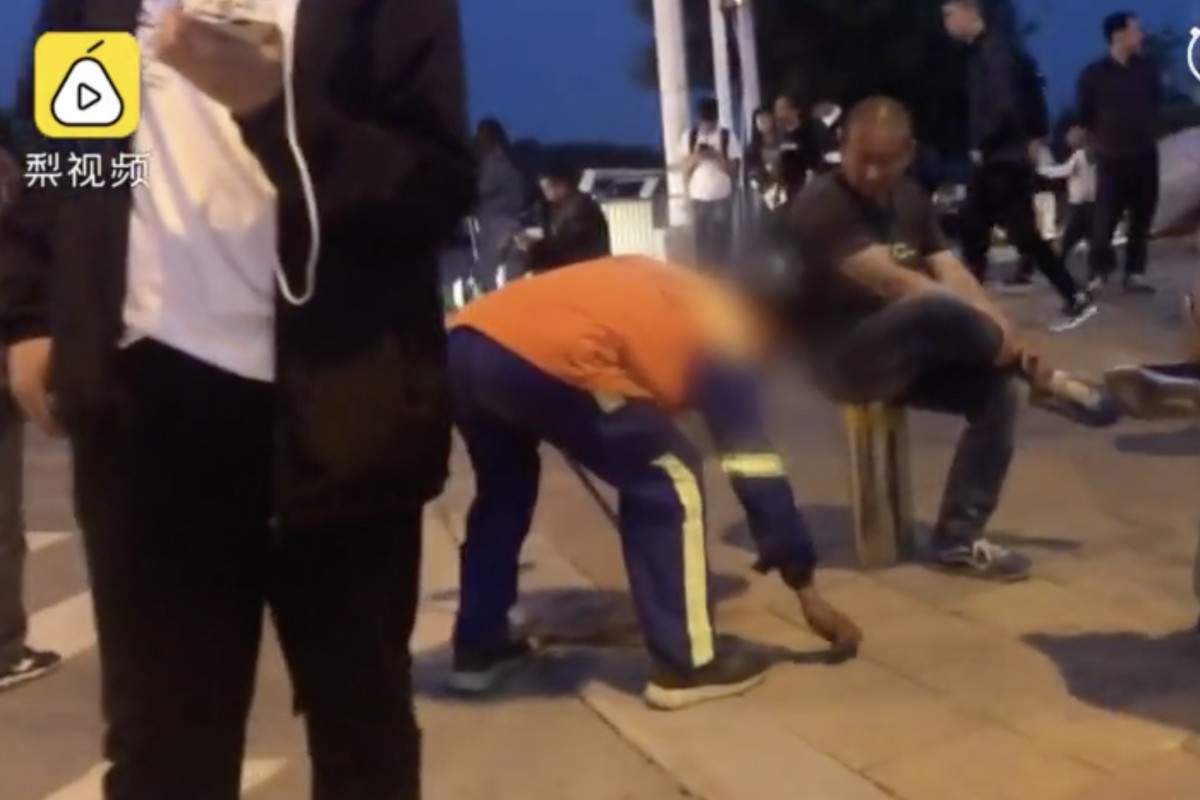
Local authorities say a street cleaner in Henan province fined for the cigarette butts left by smokers on his beat may be the victim of a zealous supervisor. Photo: Weibo
A street cleaner in eastern China who was filmed complaining about the hefty fines he had to pay for the cigarette ends found littering his section of road has won a hearing for his case and the support of internet users, social media site Pear Video said on Tuesday.
In the video taken on Saturday, the elderly man from Zhengzhou in Henan province claimed that he was once fined 260 yuan (US$38) – 7 yuan (about US$8) per cigarette end – from an 86 yuan per day pay packet.
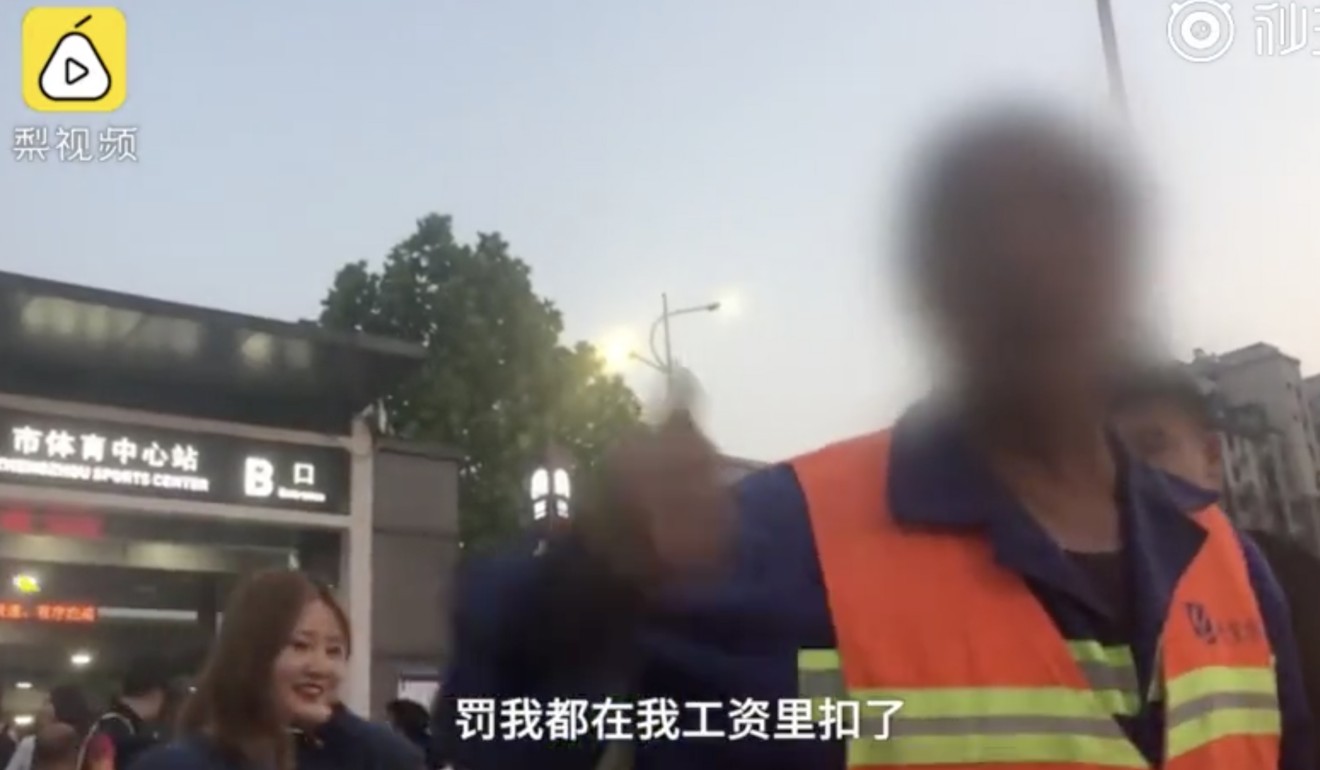
“Today, I had to clean up five or six thousand cigarette butts,” the man said in the video while working outside a subway station.
“All the fines come out of my salary. This month they docked me a few hundred yuan.”
The Zhengzhou street cleaner says he can pick up thousands of cigarette ends off the street each day but the littering in his section does not stop. Photo: Weibo

The man blamed littering on unauthorised taxi drivers who throw cigarette ends into the street.

“These black cab drivers come here every day, again and again. They never stop coming here,” the cleaner was quoted as saying.

Pear Video spoke to other street cleaners in Zhengzhou, who confirmed that they were fined 7 yuan per cigarette butt found after cleaning.

It’s a dirty job, but don’t treat them like trash: Hong Kong’s cleaners are an aged, overlooked group
However, city authorities denied that the penalty system was strictly enforced and blamed overzealous monitoring officers.

“[Management patrol] will say things like this because they want to supervise the street cleaners. But there are no detailed written guidelines, and this was never formally implemented,” a representative from the Zhengzhou City Management Command Centre was quoted as saying in the report.

“It is just for the purpose of verbal supervision and encouragement.”

The Zhengzhou official said the centre would investigate further and speak to the street cleaners about fines.

In response to the cleaner’s complaints, city authorities in Zhengzhou say they will investigate and speak to staff about fines. Photo: Weibo

The video stirred up angry reactions on Weibo, China’s Twitter-like platform.

“When [Pear Video] investigated they say it hasn’t been implemented. If they didn’t investigate, they would have just carried on giving fines,” read one comment that attracted more than 17,000 likes.

Street cleaners in China often earn meagre salaries for gruelling manual labour for long periods of time.

Last month, it emerged that more than 500 street cleaners in the city of Nanjing were ordered to wear GPS tracking bracelets that would alert authorities if they stayed in the same place for more than 20 minutes. The manufacturer removed the feature after a backlash inside and outside China.

Source: SCMP

21/05/2019

China’s green efforts hit by fake data and corruption among the grass roots

  • Local officials have devised creative ways to cover up their lack of action on tackling pollution
  • Falsified monitoring information risks directing clean-up efforts away from where they are needed most
China’s efforts to cut pollution are being hampered by local officials who use creative methods to hide their lack of action. Photo: Simon Song
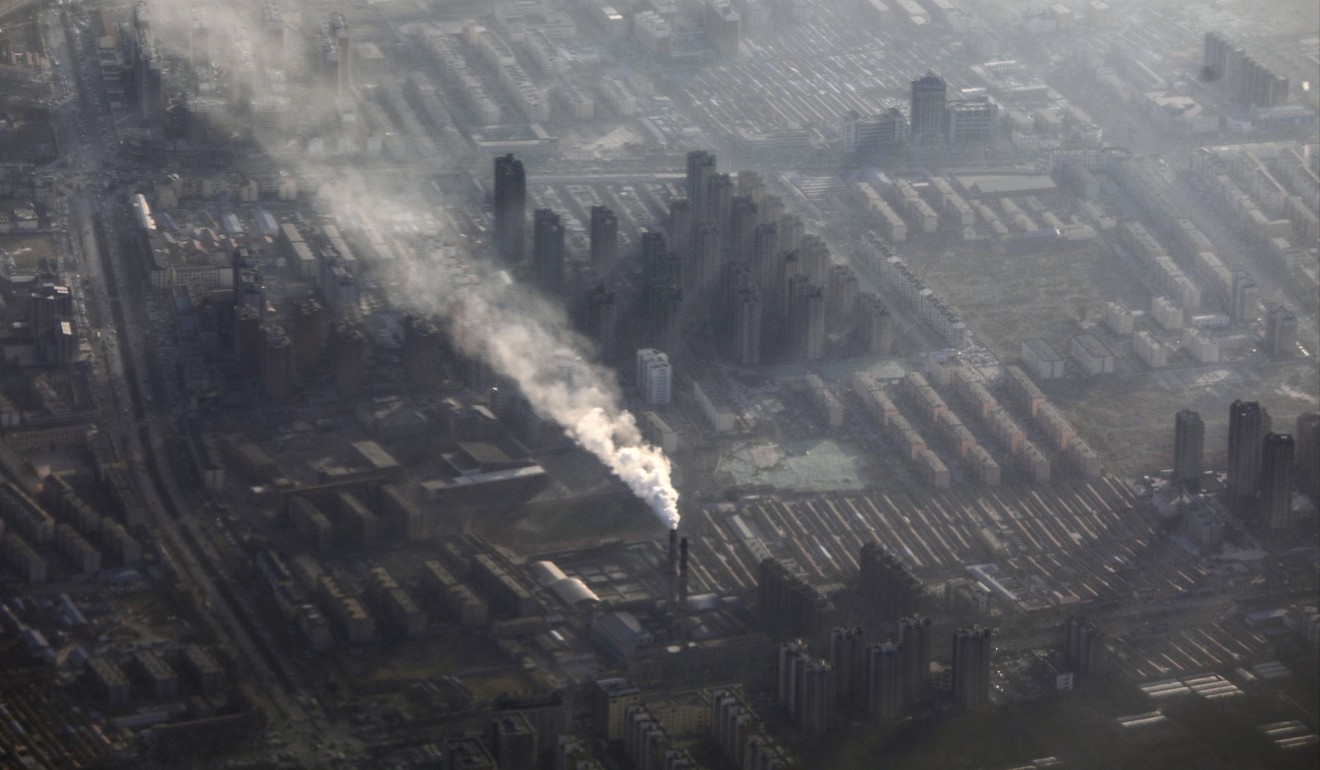
China’s notoriously lax local government officials and polluting companies are finding creative ways to fudge their environmental responsibilities and outsmart Beijing’s pollution inspectors, despite stern warnings and tough penalties.
Recent audit reports covering the past two years released by the environment ministry showed its inspectors were frequently presented with fake data and fabricated documents, as local officials – sometimes working in league with companies – have devised multiple ways to cheat and cover up their lack of action.
Local governments have been under pressure to meet environmental protection targets since Chinese President Xi Jinping made it one of his top three policy pledges in late 2017.
The performance of leading local officials is now partly assessed by how good a job they have done in cleaning up China’s much depleted environment.
According to the reports released this month by the Ministry of Ecology and Environment, pollution inspectors have found evidence in a number of city environmental protection bureaus of made-up meeting notes and even instructions to local companies to forge materials.
Cao Liping, director of the ministry’s ecology and environment law enforcement department, said many of the cases uncovered were the result of officials failing to act in a timely manner.
“In some places, local officials didn’t really do the rectification work. When the inspections began, they realised they didn’t have enough time, so they made up material,” he said.
China ‘still facing uphill struggle in fight against pollution’

While some officials are covering up their inaction, others are actively corrupt. According to Guangzhou’s Southern Weekend, since 2012 there have been 63 cases involving 118 people in the environment protection system involved in corruption.

In the southwest province of Sichuan, 32 current and former employees of Suining city’s environmental protection bureau were found to be corrupt, raking in illicit income of 6.32 million yuan (US$900,000).

Fabricated notes

The party committee of Bozhou district in Zunyi, Guizhou province in southern China, was found to have fabricated notes for 10 meetings – part of the work requirement under the new environmental targets – in a bid to cheat the inspectors.

The case was flagged by the environment ministry in a notice issued on May 10, which said party officials in Bozhou lacked “political consciousness … the nature of this case is very severe”.
Watering down results
Environmental officials in Shizuishan, in the northwest region of Ningxia, tried to improve their results in December 2017 by ordering sanitation workers to spray the building of the local environmental protection bureau with an anti-smog water cannon.
The intention was to lower the amount of pollutant particles registered by the building’s monitoring equipment.
The scheme may have gone undetected if the weather had been warmer but the next day a telltale layer of ice covered the building and the chief and deputy chief of the environmental station in the city’s Dawokou district were later penalised for influencing the monitoring results.
1 million dead, US$38 billion lost: the price of China’s air pollution
Similar tactics were deployed in Linfen, in the northern province of Shanxi in March 2017, when former bureau chief Zhang Wenqing and 11 others were found to have altered air quality monitoring data during days of heavy pollution.
The monitoring machine was blocked and sprayed with water to improve the data and Zhang was also found to have paid another person to make sure the sabotage was not captured by surveillance camera.
According to the environment ministry, six national observation stations in Linfen were interfered with more than 100 times between April 2017 and March 2018. In the same period, monitoring data was seriously distorted on 53 occasions.
Zhang was sentenced to two years in prison in May last year for destroying information on a computer.
Bad company
A ministry notice on May 11 flagged collusion by local officials and businesses in Bozhou in southeast China’s Anhui province. Companies were given advance notice of environmental inspections, with instructions to make up contracts and temporarily suspend production in a bid to deceive inspectors.
In Henan province, central China, inspectors found a thermal power company had been using a wireless mouse to interfere with the sealed automatic monitoring system. They were able to remotely delete undesirable data, eliminating evidence of excessive emissions, and only provided selective data to the environment bureau.
Officials in Shandong reprimanded for failing to cut pollution
In another case, from 2017, an environmental inspection group in Hubei province, central China, found a ceramics company had been working with the data monitoring company to alter automatically collected data on sulphur dioxide emissions.
Criminal offence
Cao said that while the cheating by grass-roots officials was serious, the involvement of companies in falsifying data was a major issue that made the work of inspectors even harder.
“Some fraudulent methods are hidden with the help of high technology, so it’s hard for us to obtain evidence. Besides, the environment officials are not totally familiar with these technologies,” he said.
The environment ministry was working on solutions to the problems, he said, adding that falsifying monitoring data was now a criminal offence.
Fake data was particularly serious, he said, because it could directly influence his department’s decisions about where to deploy resources.

Wang Canfa, an environmental law expert at the China University of Political Science and Law, said the problem of fake data could damage the government’s credibility but also prevent it from taking measures in time.

“If the water pollution or air pollution is severe in one place but the local government has said it’s not a big deal, then the investment needed to control the situation might go to other places,” he said.

Zhou Ke, a professor of environment and resources law at Renmin University, said there was an incentive for local officials to cheat because the inspection results were directly related to their career prospects.

Officials ended up cheating or forging materials to protect local interests or their own political achievements, he said.

Source: SCMP

21/05/2019

China names and shames major state enterprises for breaching pollution limits

  • Heavy industry among companies fined up to US$1 million amid fears economic slowdown is undermining war on pollution
  • Environment ministry fines business for exceeding limits and says some regions have used slowing economy as excuse to backslide on curbs
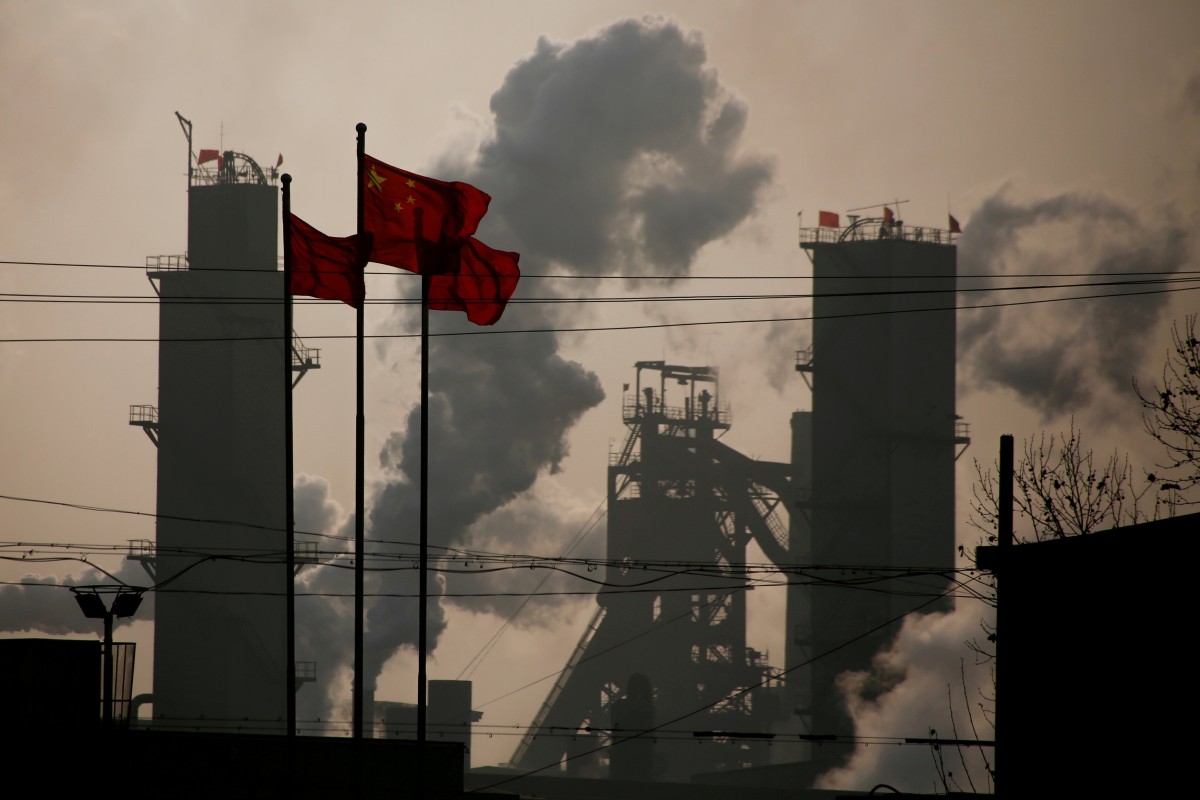
Pollution levels in some parts of China worsened this winter. Photo: Reuters
China has publicly accused dozens of firms, including some of its largest state enterprises, of exceeding pollution limits and breaching monitoring standards, as concerns grow that the slowing economy is undermining a five-year war on pollution.
In lists published by the Ministry of Ecology and Environment over the past week, subsidiaries of state giants such as China Baowu Steel Group and the Aluminium Corporation of China were cited and fined for breaching emissions standards among other violations.
China has been stepping up its supervision capabilities and has plugged thousands of factories into a real-time emissions monitoring system, but enforcement remains one of its biggest challenges.
The ministry has continued to warn that China’s slowing economy had given some regions an excuse to “loosen their grip” on environmental protection.
In the first quarter of this year, air quality in smog-prone northern regions fell compared with last year, and some regions also saw pollution readings in major lakes and rivers rise over the period.
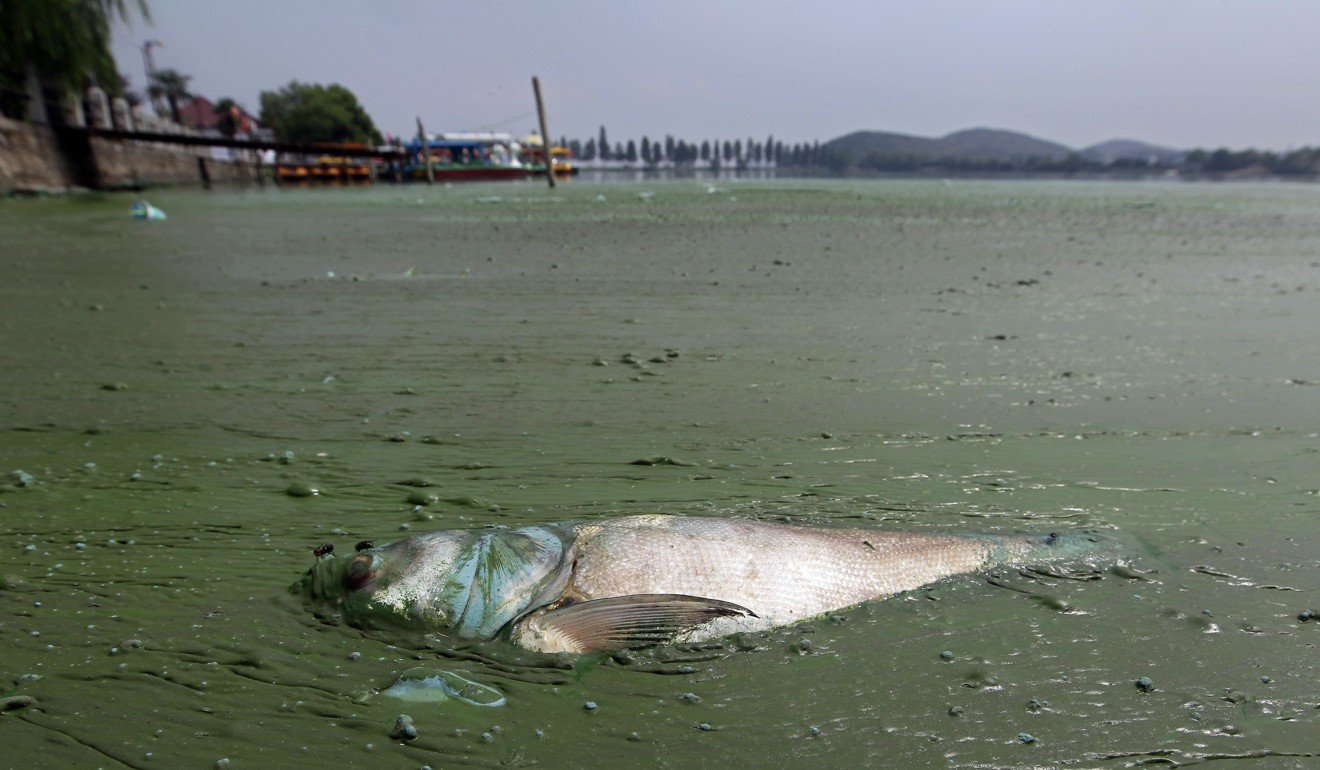
Pollution levels in some lakes or rivers have also worsened. Photo: Reuters

A notice published last Friday said as many as 82 Chinese enterprises exceeded waste water emissions standards in the fourth quarter of 2018, including 44 sewage treatment plants and six waste water treatment facilities.

A unit of the Aluminium Corporation of China in Shanxi province was named as one of five “serious offenders”.

China’s green efforts hit by fake data and grass-roots corruption

It said the unit had exceeded emissions restrictions for a total of 92 days during the period. The firm did not respond to requests for comment.

As well as being fined, the companies cited were told to restrict operations until problems were resolved.

China has a five-year plan for fighting pollution. Photo: Simon Song

The biggest fine was meted out to a waste water treatment plant in Liaoning province, which was ordered to pay 7.2 million yuan (US$1 million).

In a separate review of monitoring standards in the Yangtze River Delta and the Fenwei plain regions, the ministry identified more than 300 firms for equipment quality violations and exceeding waste water discharge restrictions. It found only 22 per cent of equipment was of the required standard.

The list included a special steel producing unit of Baosteel, China’s biggest steelmaker. Baosteel did not respond to a request to comment.

Source: SCMP

21/05/2019

North Korean women ‘forced into sex slavery’ in China – report

Prostitute in a Shanghai back alley (credit: Lei Han)Image copyright KOREA FUTURE INITIATIVE
Image caption The trade of North Korean women in China is said to be worth $100m a year for criminal organisations

Thousands of North Korean women and girls are being forced to work in the sex trade in China, according to a new report by a London-based rights group.

They are often abducted and sold as prostitutes, or compelled to marry Chinese men, says the Korea Future Initiative.

The trade is worth $100m (£79m) a year for criminal organisations, it says.

The women are often trapped because China repatriates North Koreans, who then face torture at home, it says.

“Victims are prostituted for as little as 30 Chinese yuan ($4.30; £3.40), sold as wives for just 1,000 yuan, and trafficked into cybersex dens for exploitation by a global online audience,” the report’s author Yoon Hee-soon said.

The girls and women in question are usually aged between 12 and 29, but can sometimes be younger, the report said.

They are coerced, sold, or abducted in China or trafficked directly from North Korea. Many are sold more than once and are forced into at least one form of sexual slavery within a year of leaving their homeland, it adds.

Many are enslaved in brothels in districts in north-east China with large migrant worker populations.

The girls – some as young as nine – and women working in the cybersex industry are forced to perform sex acts and are sexually assaulted in front of webcams. Many of the subscribers are thought to be South Korean.

Women forced into marriage were mostly sold in rural areas for 1,000 to 50,000 yuan, and were raped and abused by their husbands.

Media caption North Korean defectors who had to escape twice

The group collected its information from victims in China and exiled survivors in South Korea.

One woman, named as Ms Pyon from Chongjin City, North Korea, is quoted as saying in the report:

“I was sold [to a brothel] with six other North Korean women at a hotel. We were not given much food and were treated badly…After eight months, half of us were sold again. The broker did bad things to me.”

“When I arrived [at the new brothel] I had bruises on my body. [The broker] was beaten then stabbed in the legs by some members of the gang.”

Another, Ms Kim, said: “There are many South Koreans [in Dalian, China]…We put advertising cards under their doors [in hotels]…The cards are in the Korean-language and advertise what we offer…We are mostly taken to bars [by the pimp].

“South Korean companies want [North Korean prostitutes] for their businessmen…Prostitution was my first experience of meeting a South Korean person.”

Source: The BBC

21/05/2019

EVM allegations: India poll officials deny ‘vote fraud’

EVMsImage copyright AFP
Image caption More than 1.5 million e-voting machines will be used in the summer elections

India’s election is nearly over: voting began on 11 April, and the final ballot was cast on 19 May with results out on 23 May. Every day, the BBC will be bringing you all the latest updates on the twists and turns of the world’s largest democracy.

What happened?

India’s Election Commission has denied allegations that voting machines had been tampered with in parts of India.

India’s opposition parties are meeting the election watchdog on Tuesday to demand more transparency in counting of votes on 23 May (Thursday).

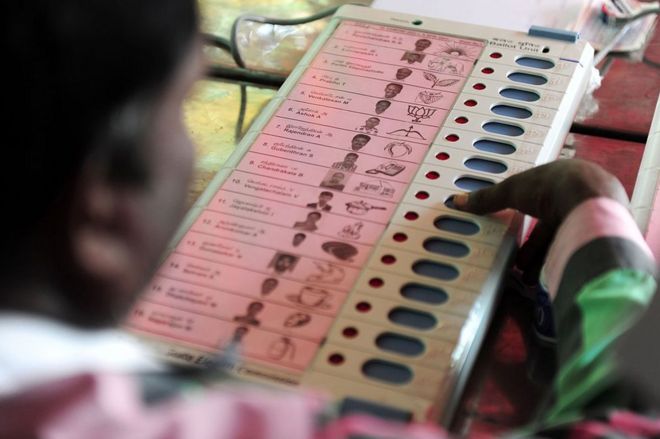
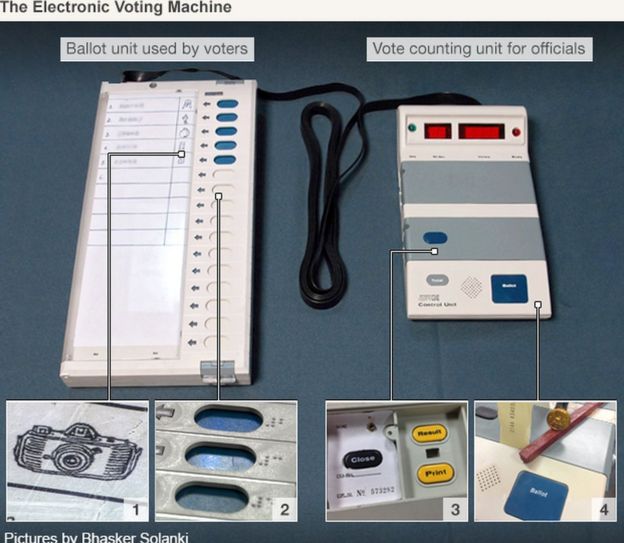
Opposition leaders said the EC had to ensure that there was no possibility of anybody manipulating the Electronic Voting Machines (EVMs) which were used to record votes in the general election that concluded on Sunday.

In Uttar Pradesh’s Ghazipur constituency, a candidate belonging to the opposition Bahujan Samaj Party held a protest outside a room where the machines have been stored ahead of the counting. The candidate alleged that attempts were being made to take out the machines from the storage room.

Local officials have said the allegations are baseless.

Electronic Voting Machine

The Supreme Court has ordered the EC to tally the results from five EVMs with VVPAT receipts in at least five polling stations in every assembly seat. A parliamentary constituency comprises several assembly seats.

But opposition parties say that the tally should done for the entire constituency in case of a mismatch.

“On VVPATs and the EVM tally, the EC is yet to come out with a procedure in case there is a mismatch. Even if there is one mismatch in the EVMs or VVPAT samples picked for counting, to maintain the integrity of the electoral process, all VVPATs in that Assembly segment must be counted. This is important to maintain integrity of the electoral process,” Mr Yechury said.

If this were to happen however, it would considerably slow down the counting process and declaration of results.

Presentational grey line

PM Modi tweets tribute to former PM Rajiv Gandhi

What happened?

Prime Minister Narendra Modi has tweeted on the occasion of the death anniversary of former PM Rajiv Gandhi.

Mr Modi has repeatedly attacked Mr Gandhi on the campaign trail and his slurs have prompted widespread criticism.

He called Mr Gandhi the “number one corrupt man in the country” at a rally earlier this month in the northern state of Uttar Pradesh. A few days later, he went after Mr Gandhi again – accusing him of using a naval aircraft carrier to take him and his family to an island for a “family holiday”.

Mr Gandhi was assassinated by a suicide bomber in 1991 during a campaign rally.

Why does this matter?

Mr Modi’s tweet marking Mr Gandhi’s death anniversary is customary – but it has garnered attention because he attacked the former prime minister repeatedly while campaigning and didn’t back down when challenged.

Many were taken aback by Mr Modi’s criticism of Mr Gandhi. It elicited condemnation not just from the main opposition Congress party, but other regional opposition leaders, political commentators and even former political opponents of Mr Gandhi.

Analysts said the comments were a sign of “desperation” and showed that Mr Modi “knew” his party was not going to perform as well as expected in the election.

Now that campaigning is over and the election is nearly at an end, Mr Modi seems to be abandoning acerbic rhetoric for something more conciliatory.

Presentational grey line

On Monday, opposition rejects exit poll results

BJP supportersImage copyrightGETTY IMAGES

What happened?

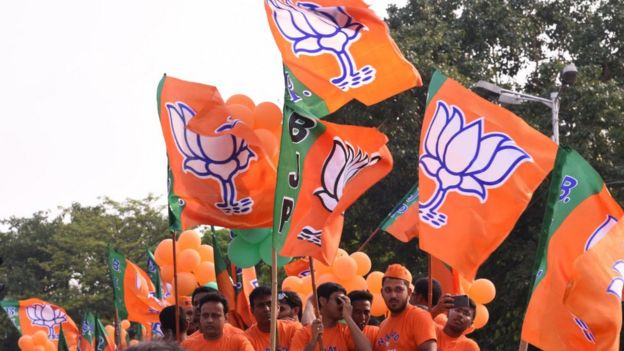
Opposition leaders have dismissed the exit polls, which suggest that the governing Bharatiya Janata Party (BJP) is on course to win the general election.

21/05/2019

Supreme Court dismisses new petition on verifying all votes with VVPAT, says ‘let country elect its government’

Supreme Court dismisses new petition on verifying all votes with VVPAT, says ‘let country elect its government’

INDIA Updated: May 21, 2019 14:54 IST

HT Correspondent
HT Correspondent
Hindustan times, New Delhi
Supreme Court,VVPAT,EVM
Calling the petition a “nuisance”, the court said, “We won’t entertain such a plea over and over again.(HT Photo)
The Supreme Court on Tuesday dismissed a new petition that sought matching of all voter verifiable paper audit trail (VVPAT) slips with electronic voting machines (EVMs) during the counting of votes on May 23.
Calling the petition a “nuisance”, the court said, “We won’t entertain such a plea over and over again. Can’t come in the way of people electing their representatives. Let country elect its government.”
A vacation bench headed by Justice Arun Mishra refused to entertain the plea filed by a Chennai-based organisation ‘Tech for All’ saying that a larger bench headed by Chief Justice Ranjan Gogoi had already dealt with the matter and passed an order, news agency PTI reported.
The apex court had on May 7 dismissed a review plea filed by 21 Opposition leaders led by Andhra Pradesh Chief Minister N Chandrababu Naidu seeking that random matching of VVPAT slips with EVMs be increased to 50 per cent.
The top court had on April 8 directed the Election Commission to increase random matching of VVPAT slips with EVMs from one to five polling booths per assembly segment in Lok Sabha polls, saying it would provide greater satisfaction not just to political parties but also to the entire electorate.
Source: Hindustan Times
Law of Unintended Consequences

continuously updated blog about China & India

ChiaHou's Book Reviews

continuously updated blog about China & India

What's wrong with the world; and its economy

continuously updated blog about China & India