

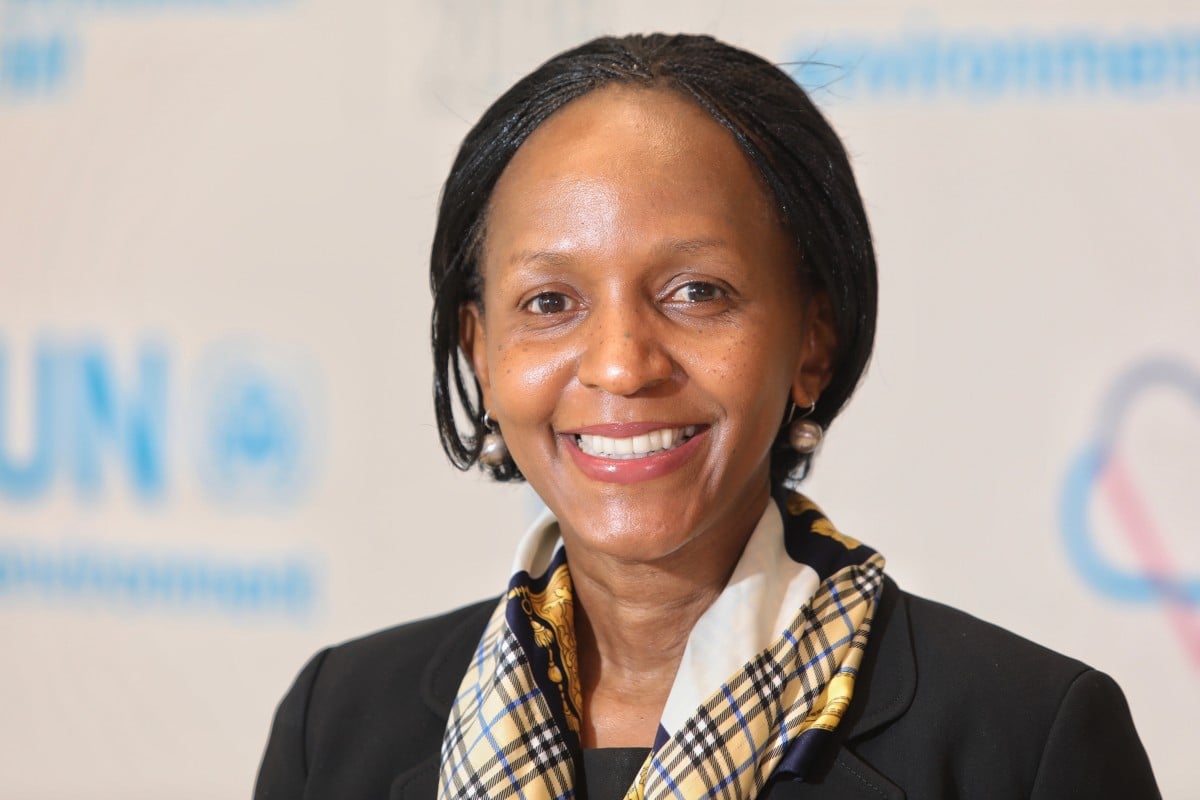
- Joyce Msuya of the UN Environment Programme is full of praise for Beijing’s success in tackling air pollution but says there is work still to be done
- Commitment to environmental protection seen at home must be extended to infrastructure projects developed overseas, she says
schemes.
On China’s efforts to tackle pollution at home, Msuya said that although the move towards a greener economy might require communities to make sacrifices in the short term, these would be outweighed by the long-term benefits.
China has been fighting a “war on pollution” since 2013 but as
have grown so too have concerns that industry unfriendly environmental efforts might be relegated to the back burner. The nation’s gross domestic product grew by just 6.6 per cent in 2018, its slowest rate since 1990, and for the past year it has been embroiled in a stinging trade war with the United States.
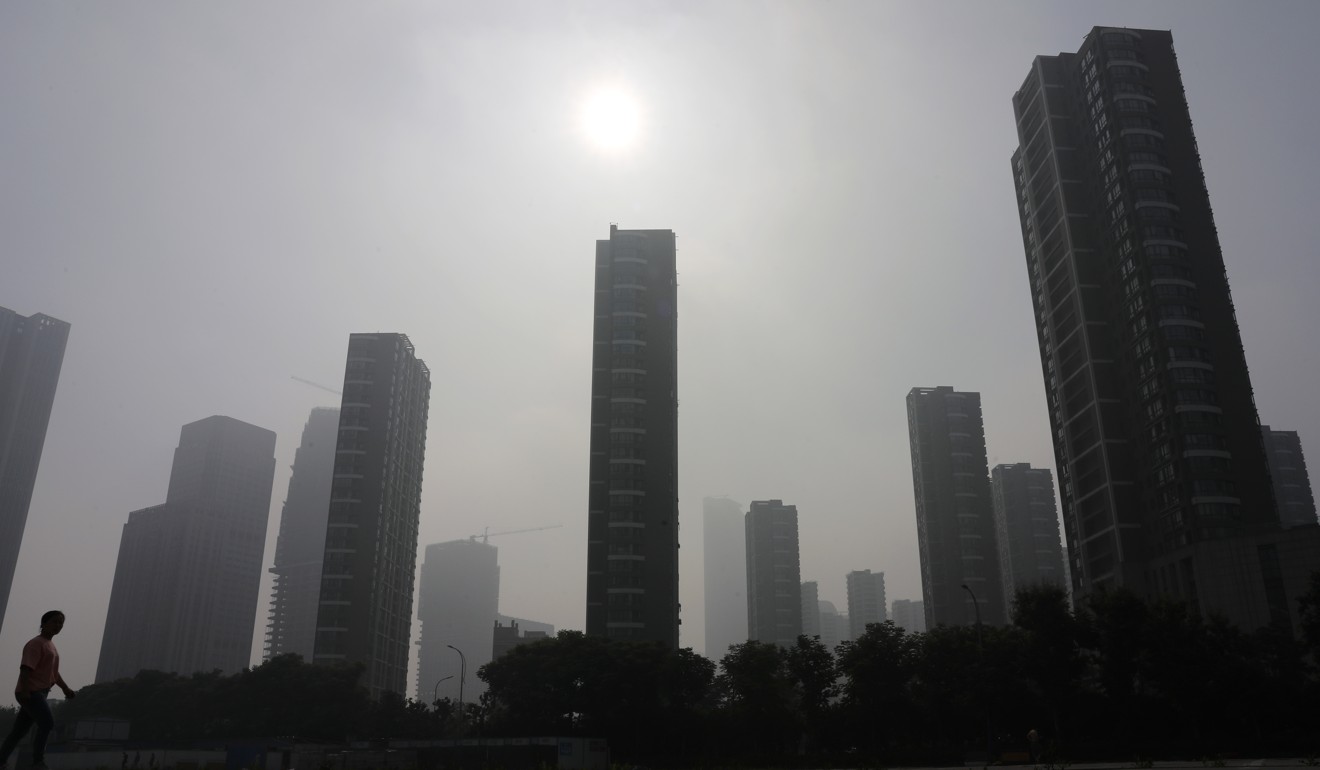
Msuya said that while Beijing had done a good job in improving air quality, it still had some way to go on issues like water, soil and noise pollution.
“China is quite diverse, with many provinces … so the scale of the challenge of dealing with pollution is more complex,” she said. “[But] by building on its experience of cleaning the air, I have full confidence in the Chinese government.”
Pollution in northern China up 16 per cent in January as industrial activity spikes
According to a report issued by Beijing on Wednesday, average levels of PM2.5 – the tiny airborne particles that are particularly harmful to health – in more than 70 cities across
China fell by an average of 42 per cent in the five years through 2018.
Smog levels in the Chinese capital fell 43 per cent in the period, but the average reading in the city last year was still more than five times the World Health Organisation’s recommended safe level.
Air quality was the main theme of the Hangzhou event.
Msuya has first-hand experience of Beijing’s air quality having worked in the city as the World Bank Group’s regional coordinator for East Asia and the Pacific between 2011 and 2014.
“When I moved to Beijing in 2011, I honestly didn’t know how bad the air pollution was.
My son was six at the time and I always made sure he wore a mask when he went out to play,” she said.
“Fast forward to now, and China has shown us that the problem of air pollution can be tackled if everyone participates.”
Source: SCMP

 CHINDIA ALERT: You'll be living in their world, very soon
Leave a comment