Archive for June, 2019

28/06/2019

China calls for more practical cooperation with the Netherlands

CHINA-BEIJING-LI KEQIANG-DUTCH PM-TALKS (CN)

Chinese Premier Li Keqiang holds talks with Dutch Prime Minister Mark Rutte in Beijing, capital of China, June 27, 2019. (Xinhua/Wang Ye)

BEIJING, June 27 (Xinhua) — Chinese Premier Li Keqiang held talks with visiting Dutch Prime Minister Mark Rutte Thursday in Beijing, calling for more mutually beneficial cooperation.

Noting that the Netherlands is China’s second-largest trade partner in the European Union, Li said the two countries enjoy broad cooperation prospects, and China will work with the Netherlands to enhance exchanges at all level, consolidate political mutual trust, tap the potential of cooperation, communicate and coordinate closely on international and regional affairs, and continuously upgrade bilateral relations.

In face of increasing instabilities and uncertainties in the world, China is ready to enhance the synergy of development strategies with the Netherlands, expand two-way opening-up, provide an open, transparent, and non-discriminatory business environment for enterprises from both countries, to contribute to the world economic growth, Li said.

He called for enhanced cooperation in key areas including trade, investment, innovation, clean energy, agriculture, and third-part markets, for win-win results.

Li said China attached great importance to relations with EU, and firmly supported the process of European integration.

China will work with the EU to implement the outcomes of the China-EU leaders’ meeting, accelerate the investment agreement negotiation, reach a geographical indication agreement as scheduled, jointly safeguard multilateralism and free trade, promote inclusive development, and maintain peace and stability, Li said.

Rutte said Premier Li’s visit to the Netherlands last year had injected new impetus to the development of bilateral relations.

Faced with the downward pressure of global economy and trade, the Netherlands is willing to make joint efforts with China to enhance cooperation, champion multilateralism and maintain international orders, Rutte said.

Source: Xinhua

28/06/2019

Xi puts forward 3-point proposal on developing China-African relations

JAPAN-OSAKA-XI JINPING-CHINA-AFRICA-LEADERS-MEETING

Chinese President Xi Jinping chairs a China-Africa leaders’ meeting in Osaka, Japan, June 28, 2019. The meeting was also attended by South African President Cyril Ramaphosa, also former African co-chair of the Forum on China-Africa Cooperation (FOCAC); Egyptian President Abdel-Fattah al-Sisi, also rotating chair of the African Union; Senegalese President Macky Sall, current African co-chair of the FOCAC; and UN Secretary-General Antonio Guterres. (Xinhua/Pang Xinglei)

OSAKA, June 28 (Xinhua) — Chinese President Xi Jinping put forward here Friday a three-point proposal on building a closer community with a shared future between China and African countries.

On the sidelines of the Group of 20 summit in the Japanese city of Osaka, Xi chaired a China-Africa leaders’ meeting, which was also attended by South African President Cyril Ramaphosa, also former African co-chair of the Forum on China-Africa Cooperation (FOCAC); Egyptian President Abdel-Fattah al-Sisi, also rotating chair of the African Union; Senegalese President Macky Sall, current African co-chair of the FOCAC; and UN Secretary-General Antonio Guterres.

Source: Xinhua

28/06/2019

Commentary: Xi-Trump meeting an opportunity to bring talks back on track

BEIJING, June 28 (Xinhua) — Chinese President Xi Jinping is set to sit down with his U.S. counterpart, Donald Trump, on the sidelines of the Group of 20 (G20) summit in the Japanese city of Osaka, igniting a flicker of hope to bring the China-U.S. trade talks back on track.

The meeting arrives at a time when Washington’s trade offensive against China is not only poisoning one of the world’s most important bilateral relationships, but also risking throttling the already frail global economic recovery. Its significance is thus too great to miss.

When the two presidents met each other at last year’s G20 summit in Argentina’s capital city of Buenos Aires, they reached an important consensus to pause the trade confrontation and resume talks. Since then, negotiating teams on both sides have held seven rounds of consultations in search for an early settlement.

However, China’s utmost sincerity demonstrated over the months seems to have only prompted some trade hawks in Washington to press for their luck.

Following its failure to coerce Beijing into swallowing a deal with unequal terms, a disappointed and enraged Washington returned to its tactic of tariffs by raising additional levies on 200 billion U.S. dollars’ worth of Chinese goods from 10 percent to 25 percent, and threatening a new round of tariff hikes on another 300 billion dollars’ worth of goods.

Some ultra-conservative U.S. decision-makers, who have for many years seen in China a “threat” to Washington’s sole superpower status, have tried to extend the trade campaign into a broader operation to shut China out and contain its rise.

As a result, Washington is cracking down on Chinese high-tech companies including telecom equipment provider Huawei, while many Chinese students seeking to study in the United States are facing more restrictions like months-long visa delay.

Thanks to Washington’s relentless efforts, the two countries, which should have celebrated the 40th anniversary of their diplomatic ties this year, are seeing their relations slipping down the path to a possible all-out confrontation.

Despite Washington’s “in-your-face” style of maximum pressure strategy, China has been steadfastly consistent in its position. It has always been committed to settling trade frictions via dialogue and consultation and safeguarding its legitimate and sovereign rights at the same time.

Beijing, as it has on various occasions reaffirmed, does not want a trade war, but is not afraid of one, and will fight to the end if necessary.

Last week, Xi had a telephone conversation with Trump at the request of the U.S. leader, saying that he stands ready to meet Trump in Osaka to exchange views on fundamental issues concerning the development of China-U.S. relations.

Xi’s words reflect an alarming fact that the two countries are facing a challenge to the fundamentals of their relationship. The upcoming Xi-Trump meeting provides a unique opportunity for the two sides to find new common ground in easing trade tensions and bring the troubled ties back onto the right track.

If the two sides can reach an agreement to pick up the talks, the United States needs to place itself on an equal footing with China, and accommodate China’s legitimate concerns on the basis of mutual respect, equality and mutual benefit in order to seek win-win results in the future negotiations.

Just one day ahead of the Osaka G20 summit, some U.S. politician again threatened to slap punitive levies on imported Chinese goods. Such cheap tactics to bring China down to its knees with pressure will get nowhere.

For more than a year, Washington’s spoils in its tariff campaign have so far only seen rising daily costs for ordinary American consumers, growing rejections from U.S. farmers, industry workers and business leaders, roller-coaster rides in U.S. stock markets, as well as China’s increasingly stronger determination to defend its rights.

The trade fight between the world’s two largest economies has already hit hard the global market and dented investors’ confidence worldwide. The latest World Trade Outlook Indicator reading of 96.3 remains at the weakest level since 2010, signaling continued falling trade growth in the first half of 2019, according to the World Trade Organization.

Trade wars produce no winner. In his latest telephone talk with Xi, Trump said he believes the entire world hopes to see the United States and China reach an agreement. To get an agreement, Washington’s hardliners need to know that Beijing will neither surrender to their pressure, nor permit Washington to deprive Chinese people of their rights to pursue a better life.

And for the agreement to be sustainable, Washington’s China policy should be rational. A rising China is not seeking to grab global hegemony. It will continue to work with nations around the world, including the United States, to boost common development and build a community with a shared future for mankind.

The past 40 years of China-U.S. relationship have proved that when the two countries work together, they both win and the world gains as well. But when they fight each other, all are poised to lose.

China and the United States, as two major economies in the international community, bear special responsibility for the wider world.

Therefore, the two sides, just as what Xi said during his meeting with The Elders delegation this April in Beijing, need to manage their differences, expand cooperation and jointly promote bilateral relations based on coordination, cooperation and stability so as to provide more stable and expectable factors to the world.

Source: Xinhua

28/06/2019

Japan’s Abe and China’s Xi Jinping meet amid trade war fears

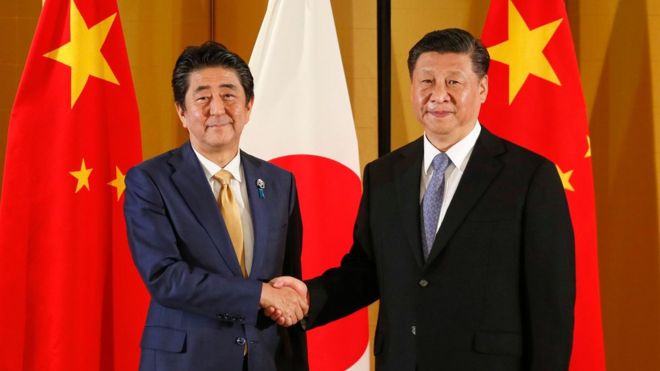
Japanese Prime Minister Shinzo Abe (R) shakes hands with Chinese President Xi JinpingImage copyright AFP

Chinese President Xi Jinping has met Japanese Prime Minister Shinzo Abe at a time of warming ties between the two nations.

Relations have historically been strained, but concerns over US trade policy and North Korea’s nuclear programme have shifted them closer.

The two leaders met on the sidelines of the forthcoming G20 summit in Japan.

“I want to open up a new age of Japan-China relations hand in hand with President Xi,” Mr Abe told reporters.

The pair agreed to work together to promote “free and fair trade” following a “very frank exchange”, a Japanese official said.

It is the first official visit Mr Xi has made to Japan since becoming president in 2013. At the outset of their talks on Thursday, Mr Abe invited him to return on a state visit next year.

“Around the time of the cherry blossoms next spring, I would like to welcome President Xi as a state guest to Japan,” he said. “[I] hope to further elevate ties to the next level.”

What did the leaders discuss?

Japan and China are by far Asia’s largest economies and the talks on Thursday focused strongly on business.

Last year, the two sides signed a deal to maintain annual dialogue and to co-operate on innovation. This time around, officials say, they pledged to develop a “free and fair trading system” in a “complicated” global economic landscape.

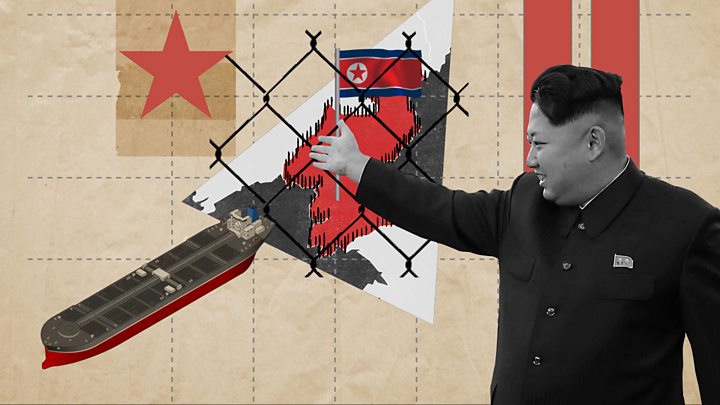
Media caption North Korea has been called out for evading UN sanctions

Another topic on the schedule would probably have been North Korea. While China is North Korea’s biggest trading partner, both Tokyo and Beijing want it to abandon its nuclear programme.

Mr Abe has only very limited leverage on the matter and will try to sway both the US and China to keep Tokyo’s interests in mind in any negotiations.

The G20 summit will begin on Saturday, but the main meeting is likely to be overshadowed by the many bilateral talks that are set to happen on the sidelines.

For example, Mr Xi will meet President Trump as China and the US try to resolve their trade dispute.

Do Japan and China get along?

In the past, relations have been tense. While the two countries do have close trade ties, politically things have been much more fragile.

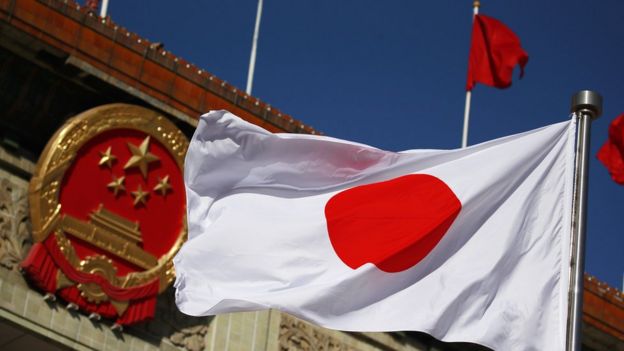
Japanese and Chinese flagsImage copyright EPA
Image caption Japan and China have not always had warm relations

Japan’s World War Two occupation of parts of China remains a very emotional issue. There are also several ongoing territorial disputes between Tokyo and Beijing.

But tensions with Washington over its protectionist trade policy have driven Japan and China into an unlikely friendship.

In 2018, Mr Abe hailed his high-profile visit to Beijing as an historic turning point. Both leaders have since promised to establish positive, constructive, relations.

Source: The BBC

27/06/2019

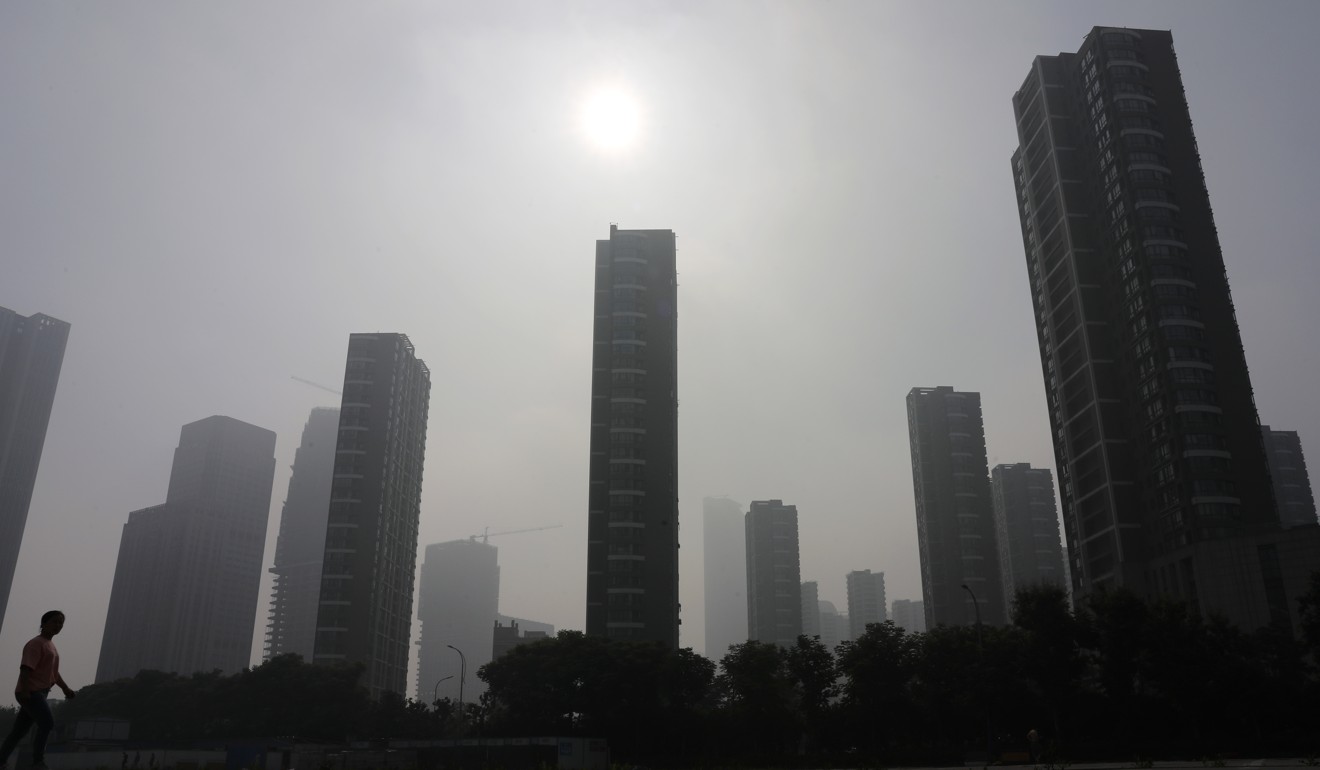
Chinese smog hotspot Hebei breathes a little easier after hitting air quality standard for first time

  • PM2.5 in steel heartland below 35 micrograms for first time since China started measuring pollutant in 2013
  • In May, Hebei’s air pollution index was down 6.6 per cent year on year
The environment bureau in Hebei province, China’s steelmaking heartland, says PM2.5 levels in May were below 35 micrograms for the first time since China began measuring the pollutants in 2013. Photo: Reuters
Smog-prone Hebei, China’s biggest steel producing region, met a national air quality standard for the first time in May, the province’s environment bureau said on Tuesday.

Hebei surrounds Beijing and has been on the front line of a war on pollution since 2014, after toxic smog spread to the Chinese capital.

Provincial authorities converted thousands of households to natural gas from coal, curbed pollution from vehicles and imposed ultra-low emissions standards on its many steel mills, cement factories and power plants.

In May, Hebei’s average concentration of lung-damaging small particles, known as PM2.5, stood at 33 micrograms per cubic metre, the Hebei Ecology and Environment Bureau said.
Blue skies over Hebei as province reports a reduction in air pollutants in May. Photo: Weibo

It was the first time that Hebei’s monthly average fell below the interim standard of 35 micrograms since China began measuring PM2.5 in 2013, the bureau said.

The World Health Organisation recommended average PM2.5 rates of no more than 10 micrograms.

Hebei’s overall air pollution index fell 6.6 per cent in May compared to the same month last year.

While the province has had success in reducing PM2.5 rates and other air pollutants, concentrations of ground-level ozone – known as “sunburn for the lungs” – have continued to rise.

Ozone levels reached 196 micrograms per cubic metre in May, up 5.9 per cent from the same month a year earlier, the bureau said.

China can become a renewable-energy superpower if it follows Norway’s path – away from coal
Ozone is caused when sunlight interacts with organic compounds found in car exhaust fumes.
Air pollution in China generally eases in May as weather improves and coal consumption falls.
From January to April, PM2.5 rates in Hebei rose year on year, raising fears that the war on pollution had stalled amid concerns about China’s slowing economy.
Source: SCMP
27/06/2019

Tough choices lie ahead on global warming

  • Both individuals and businesses need to play their part in lowering carbon emissions, and increasing the city’s proportion of clean energy seems inevitable
  • With two-thirds of Hong Kong’s carbon emissions coming from power generation, increasing the proportion of clean energy seems inevitable.
    With two-thirds of Hong Kong’s carbon emissions coming from power generation, increasing the proportion of clean energy seems inevitable.
    Switching off all air conditioning to achieve zero carbon emissions may sound a little extreme. But it underlines the challenges in fighting global warming, a common goal that involves behavioural and institutional changes from all stakeholders.
    As the threats loom larger and the clock for action ticks faster, it is time we made tough choices. The options for Hong Kong have been mapped out in the public consultation on the long-term decarbonisation strategy, with the focus being drawn to importing more nuclear energy from across the border.
    The idea strikes a raw nerve, not just because it touches on the issue of nuclear safety, but also resistance arising from the perceived higher reliance on the mainland. The lack of information about the actual impact on electricity tariffs also makes discussion difficult.
    With two-thirds of the city’s carbon emissions coming from power generation, increasing the proportion of clean energy seems inevitable.
    Currently, nuclear power from the mainland accounts for about a quarter of our energy supply. As long as safety is not an issue, there is no reason why we cannot develop on that basis, along with more use of solar and other renewable energies.
    In addition to other institutional options such as phasing out polluting fuels for vehicles and introducing more incentives for green buildings, a great deal can be achieved at both individual and corporate levels.

    For example, air conditioning will be just as comfortable when set at 24 degrees Celsius instead of 21. Cutting down on fashion and plastic consumption helps, as can replacing business trips by video conferencing.

    How far are you willing to go to save planet from climate change?
    These changes are simple and easy to do, but they go a long way in saving our planet.
    To combat climate change, the Paris Agreement has set a carbon reduction target to keep the increase in the global average temperature to well below 2 degrees Celsius.
    A small city like ours may seem too little to make an impact on climate change. But as a responsible global citizen and a heavily developed world city, we have a duty to help mitigate the impact.
    The consultation has put the relevant issues into perspective in a timely manner. For the sake of sustainable development and the well-being of future generations, tough choices will have to be made.
    Source: SCMP
27/06/2019

Another trade war is brewing as Asia fights back over the world’s plastic waste

  • The planet is only just waking up to the problems that plastics cause, a reader writes – but what is to be done?
Collecting plastic material from dirty water in Dhaka, Bangladesh, in April. Photo: Reuters
Tired of being the world’s dumping ground for recycled waste materials from other countries, Asian nations are 
striking back

with punitive environmental trade regulations that should leave the waste exporting nations in delirium. Last week, the Malaysian Environment Minister, Yeo Bee Yin,

stated clearly

that countries should manage their own waste, and that Malaysia will take care of its own.

Modern economic theory maintains that the trade of global “goods” and services should be optimised by countries embracing their competitive advantages – letting others excel where their own advantages exist.
What it did not account for is the trade in “bads” between nations, whereby a country’s externalities (in this case waste) are sent to another’s shores to take advantage of the other country’s “competitive advantages” – low labour costs and lax environmental enforcement.
As a result of the planet’s awakening to the vast challenges of what do to with plastic in its second life, we now have two large-scale trade wars to contend with. One is between the two largest economies, the 
US and China

. The other is much broader in scope, undercutting the previously perceived values of globalisation, using environmental trade barriers as a proxy for national benefit.

This trend should be expected to continue, as 
plastic pollution

is not the only ill which countries share with one another, but it is one that has generated the most sharing of ideas and momentum across virtually every country on the planet.

To put the scale into context, one can conservatively estimate that at least 10 per cent of the plastic waste sent to Asia for recycling was of quality too poor to make value from.

If all of this “poor quality” material from the European Union alone was returned to its rightful exporting countries for the past 10 years of their exports, they would receive over 95,000 40-feet containers, each containing 35 metric tons of material. This would create a line of containers over 1,150km (715 miles) long.

A global reckoning on waste is under way, thanks to China
It may not be likely that all 95,000 containers will be returned to their ports of origin, but it is clear that the ability to keep moving this volume of material offshore will quickly evaporate, creating all types of disruptions and needing innovative interventions to solve the complex plastic waste challenge.
Join us, and industry leaders and influencers, at our action-based plastic circular economy forum –

Plasticity Amsterdam

– on June 20 for a big discussion on how some of the solutions needed to address these new plastic defences can be for everyone involved.

Source: SCMP
27/06/2019

UN’s environment chief urges China to keep belt and road projects green and clean

  • Joyce Msuya of the UN Environment Programme is full of praise for Beijing’s success in tackling air pollution but says there is work still to be done
  • Commitment to environmental protection seen at home must be extended to infrastructure projects developed overseas, she says
Joyce Msuya, acting head of the UN Environment Programme, says bad infrastructure can have a negative environmental impact. Photo: Simon Song
The United Nations’ environment chief has appealed to China to apply the same environmental standards to infrastructure projects it develops overseas under its Belt and Road Initiative as it does to those built on its own soil.
“We know from history, bad infrastructure can lead to negative environmental impact,” said Joyce Msuya, acting executive director of the UN Environment Programme. “Given China’s record on and interest in environmental protection, we hope and expect they will apply the same spirit as they invest in developing countries.”
While acknowledging the value of infrastructure building in developing nations, Msuya said it was equally important to consider the environmental implications of 
belt and road

schemes.

“We are interested in working with member countries that have been beneficiaries [of Chinese investment] to see what concerns, if any, what risks, if any, they see,” she said in an interview on the sidelines of an event in Hangzhou, capital of east China’s Zhejiang province, to mark World Environment Day, which fell on Wednesday.
Scores of countries are involved in Beijing’s multibillion-dollar belt and road plan in one way or another, but as it has expanded so too have the concerns over its environmental impact.
In late 2017, the WWF issued a report claiming that the development of two motorway projects in Myanmar would have a negative environmental impact on about half of its population.
China ‘facing uphill struggle’ in fight against pollution

On China’s efforts to tackle pollution at home, Msuya said that although the move towards a greener economy might require communities to make sacrifices in the short term, these would be outweighed by the long-term benefits.

China has been fighting a “war on pollution” since 2013 but as 

economic pressures

have grown so too have concerns that industry unfriendly environmental efforts might be relegated to the back burner. The nation’s gross domestic product grew by just 6.6 per cent in 2018, its slowest rate since 1990, and for the past year it has been embroiled in a stinging trade war with the United States.

China has been fighting a “war on pollution” since 2013. Photo: Simon Song

Msuya said that while Beijing had done a good job in improving air quality, it still had some way to go on issues like water, soil and noise pollution.

“China is quite diverse, with many provinces … so the scale of the challenge of dealing with pollution is more complex,” she said. “[But] by building on its experience of cleaning the air, I have full confidence in the Chinese government.”

Pollution in northern China up 16 per cent in January as industrial activity spikes

According to a report issued by Beijing on Wednesday, average levels of PM2.5 – the tiny airborne particles that are particularly harmful to health – in more than 70 cities across

China fell by an average of 42 per cent in the five years through 2018.

Smog levels in the Chinese capital fell 43 per cent in the period, but the average reading in the city last year was still more than five times the World Health Organisation’s recommended safe level.

Air quality was the main theme of the Hangzhou event.

Msuya has first-hand experience of Beijing’s air quality having worked in the city as the World Bank Group’s regional coordinator for East Asia and the Pacific between 2011 and 2014.

“When I moved to Beijing in 2011, I honestly didn’t know how bad the air pollution was.

My son was six at the time and I always made sure he wore a mask when he went out to play,” she said.

“Fast forward to now, and China has shown us that the problem of air pollution can be tackled if everyone participates.”

Source: SCMP

27/06/2019

China’s growing demand for clean energy and natural gas sparks contest in the Middle East

  • First Qatar, and now Saudi Arabia, are competing to dominate China’s fast-growing natural gas market, already the third largest in the world, as Beijing encourages the switch from coal to cleaner, greener energy
  • A PetroChina LNG tank at Rudong port in Nantong, Jiangsu province. China’s massive and rapidly growing appetite for natural gas is sparking off a scramble in the Middle East, as energy producers compete to become the biggest player in the market. Photo: Reuters
    A PetroChina LNG tank at Rudong port in Nantong, Jiangsu province. China’s massive and rapidly growing appetite for natural gas is sparking off a scramble in the Middle East, as energy producers compete to become the biggest player in the market. Photo: Reuters
    As more countries turn towards clean energy, the geoeconomic impact of natural gas as a fuel has become second only to that of oil. Over the past decade, the global demand for this carbon-free energy source has risen considerably and one major buyer is China.
    The third largest global market for natural gas, China has implemented government policies to replace the use of coal as fuel and millions of households are switching over to clean energy. Consequently, China’s market for gas expanded by a record 43 billion cubic metres last year to reach 280 billion cubic metres at the end of 2018.
    With the recent

    tax cuts in April

    , China’s gas consumption should continue to grow in the year ahead. As the demand spirals further, natural gas consumption in China is estimated to grow to around 620 billion cubic metres in 2030.

    Prioritising its energy security, Beijing last year approved a 22-year gas supply deal between QatarGas and PetroChina International Co. The agreement is PetroChina’s largest LNG supply deal by volume, and will provide 3.4 million tonnes of liquefied natural gas annually.
    With this deal, which QatarGas initiated with Total and ExxonMobil Corp as partners, Qatar achieved regional dominance and filled a vacuum left by major gas producer Iran, currently the target of US sanctions. Interestingly, Beijing has also unwittingly sparked off a competition between Qatar and Saudi Arabia, the kingpins of the Middle Eastern energy industry.
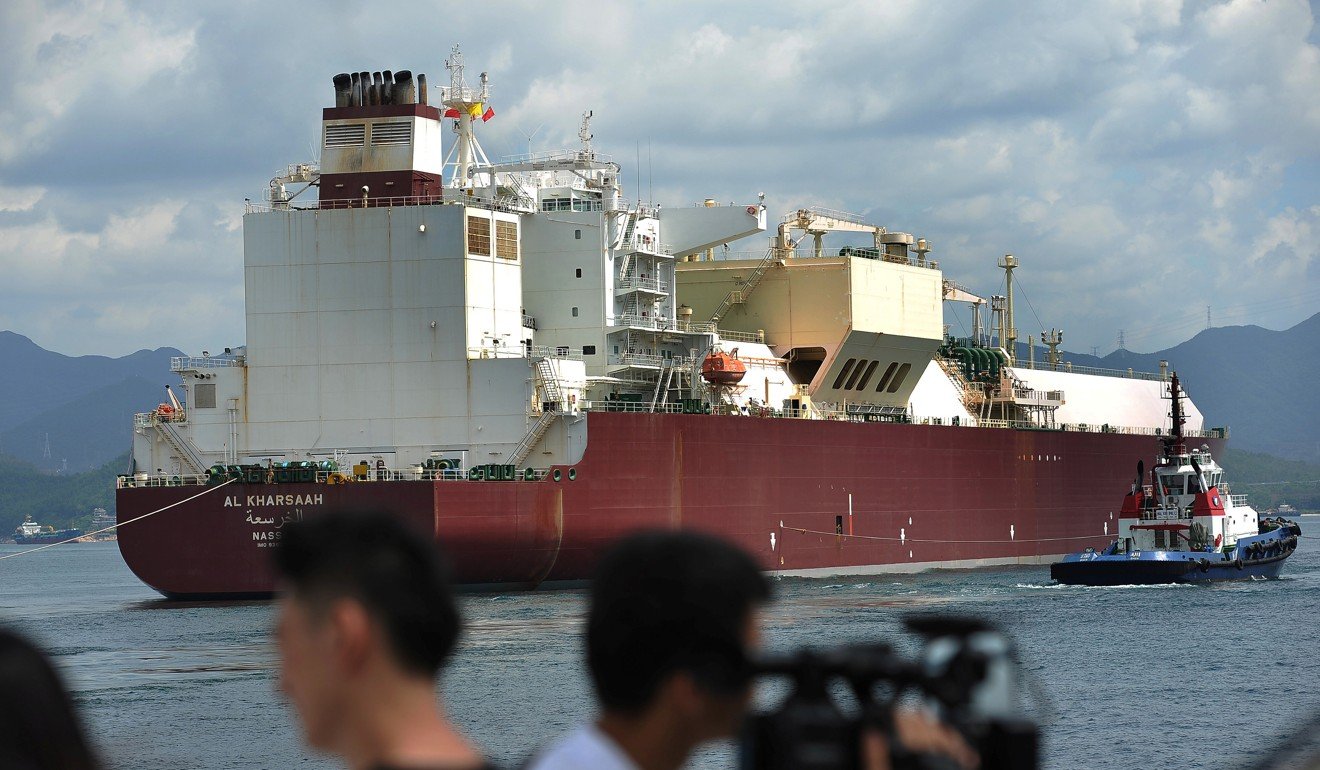
    A vessel carrying Qatar LNG looking to berth in Shenzhen, China last August. Qatar’s recent deal highlighted the massive and growing Chinese appetite for natural gas. Photo: Reuters
    A vessel carrying Qatar LNG looking to berth in Shenzhen, China last August. Qatar’s recent deal highlighted the massive and growing Chinese appetite for natural gas. Photo: Reuters
    China to become world’s top natural gas importer in 2019: report
    By exporting gas, as well as oil, Qatar sail unruffled through the

    economic and diplomatic boycott

    imposed by Saudi Arabia, the United Arab Emirates, Bahrain and Egypt in June 2017, over allegations that Qatar supports terrorism and is friendly with Iran, which the region sees as an enemy. Qatar denies this. Meantime, Qatar plans to further increase its gas output. To attract more buyers, it is offering attractive long-term supply contracts to other countries in the region.

    Inspired by the success of Qatar Gas, Saudi Arabia has stepped up its efforts to capture this new market. The Saudi state-owned oil giant Aramco plans to build an “energy bridge” between Saudi Arabia and China to better meet Beijing’s growing requirements for oil, gas, including LNG, said Aramco’s chief executive Amin Nasser at an industry event in Beijing in March.

    Aramco, already a major supplier of crude oil to China, would need to invest US$150 billion over the next decade to realise its plans to convert crude oil into chemicals, and eventually become a gas producer. “We need to help our stakeholders – including here in China and the wider Asia region – realise that oil and gas will remain vital to world energy for decades to come,” said Nasser.

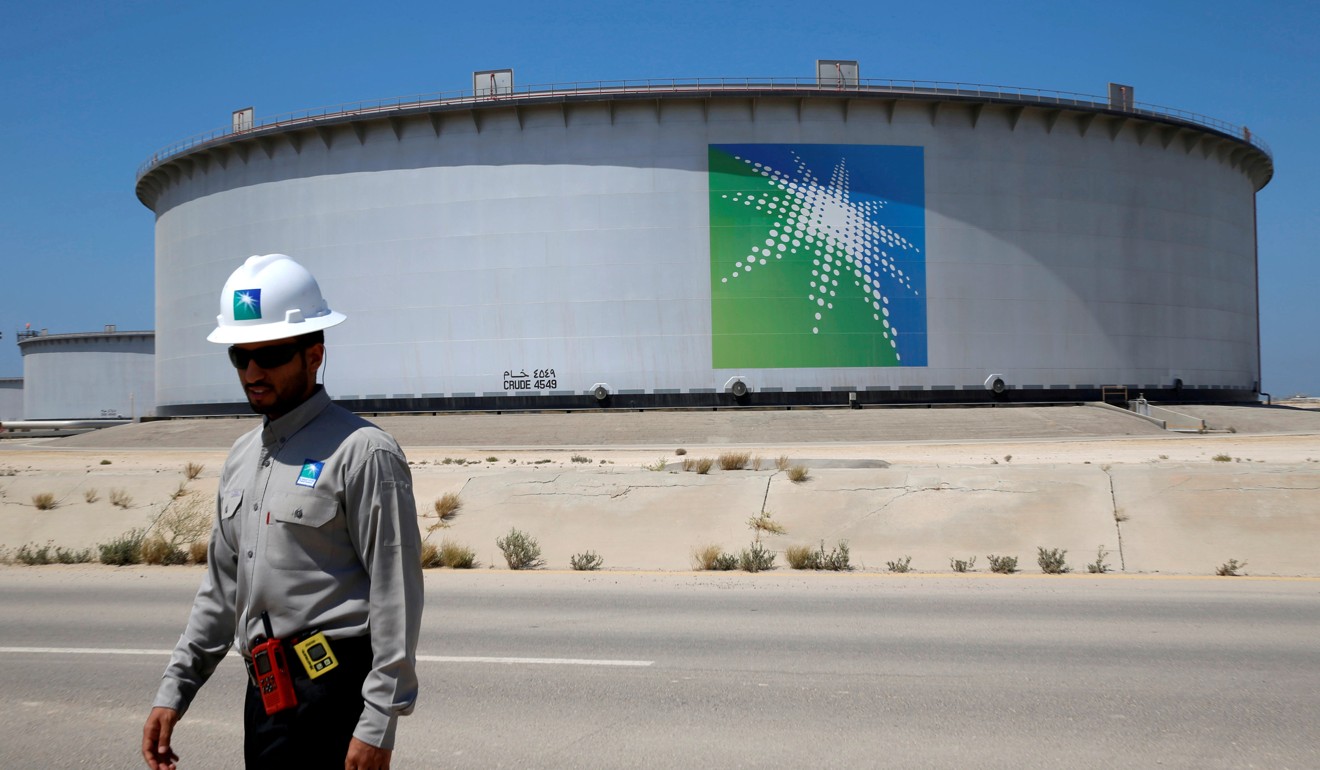
    An Aramco employee near an oil tank in Saudi Arabia. Aramco has grand ambitions to become a major producer of natural gas. Photo: Reuters
    An Aramco employee near an oil tank in Saudi Arabia. Aramco has grand ambitions to become a major producer of natural gas. Photo: Reuters

    The vision of Saudi Arabia as a major natural gas producer is in in line with Saudi Crown Prince Mohammed bin Salman’s economic plan Vision 2030. Riyadh has only Qatar to beat, with Iran on the back foot. Under sanctions pressure, Tehran, despite plans to increase gas exports, has clung on to just 1 per cent of the natural gas market, exporting 36.24 million cubic metres daily. Yet Iran was once part of the so-called regional gas troika along with Russia and Qatar, and is located at the cusp of several energy transit corridors. China, defying sanctions, continues to buy oil from Iran.

    In around five years, Riyadh could become a major gas exporter. Saudi Arabia has already replaced Iran as the main energy provider in countries such as China, Pakistan and India, and has made huge investments in energy projects in these countries.

    However, Qatar is also playing smart, sharply lowering its prices to clinch deals and make the right business connections. The competition for the growing natural gas market is a long game. The main possible setback for Riyadh is that its gas reserves do not match those in Qatar and Iran.

    Source: SCMP

27/06/2019

China to fire up small test nuclear reactor to heat smog-prone north

  • Compact plants proposed to ease pollution but backers must win over wary public
China is exploring the idea of using small nuclear power plants to phase out coal- and gas-fired heating generators in smog-afflicted northern China. Photo: Reuters
China plans to build a pilot small-scale nuclear reactor that could replace coal or gas to heat towns and cities in its colder northern regions, an official with the state-owned developer in charge of the project said on Monday.
The small heating reactor was planned for the city of Jiamusi in northeastern Heilongjiang province, one of two proposed units with a combined capacity of 400 megawatts, Wang Xujia, a senior engineer with the State Power Investment Corp, said on the sidelines of an industry conference.
“The project is still under central government review for approval,” Wang said, adding that the developer aimed to put the project into operation by 2024.
China has been exploring the use of small nuclear reactors – less than a fifth of the size of a standard reactor – as alternative heating systems in smog-prone northern regions.
The state provides heating throughout northern China from November to March, using predominantly coal- or gas-fired boilers.
State-owned China National Nuclear Corp (CNNC) has already conducted trial runs for a “district heating reactor” (DHR) design, which it says can supply heat to 200,000 urban households.
China-built nuclear reactors may enjoy home advantage as delays and costs stymie foreign competitors
The DHR model consists of a reactor core immersed in a water-filled tank. It is estimated to require investment of 1.5 billion yuan (US$217 million) and take three years to build, making it cheaper and quicker to construct than conventional reactors.

However, while the various designs will use only a fraction of the radioactive material of a conventional nuclear plant, officials acknowledge the biggest challenge is convincing the public the reactors are safe and reliable.

“The planned project in Jiamusi will be located in a remote area of the city which undermines its economic efficiency, but since it is just a demonstration project we just want to complete one first and show it to the public,” Wang said.

China aims to raise total nuclear capacity to 58 gigawatts by the end of next year, but it has not launched any new conventional reactors in more than three years.

China expected to miss target for 2020 nuclear capacity
After Japan’s Fukushima accident in 2011, China conducted a root-and-branch safety review and decided it would only use the most advanced “third generation” technology for any new projects.
However, those technologies – including Westinghouse’s AP1000 and the Areva-developed EPR – have proved to be expensive, complex and prone to long construction delays.
In a bid to broaden its options, the country is developing smaller units and plans to launch its first “small modular reactor” on the island province of Hainan at the end of this year.
China also planned to launch floating nuclear reactors with the aim of developing a fleet of ship-mounted nuclear generators that could be deployed on islands in Southeast Asia, Song Danrong, a reactor designer at CNNC, told Monday’s conference.
Source: SCMP
Law of Unintended Consequences

continuously updated blog about China & India

ChiaHou's Book Reviews

continuously updated blog about China & India

What's wrong with the world; and its economy

continuously updated blog about China & India