Chindia Alert: You’ll be Living in their World Very Soon
aims to alert you to the threats and opportunities that China and India present. China and India require serious attention; case of ‘hidden dragon and crouching tiger’.
Without this attention, governments, businesses and, indeed, individuals may find themselves at a great disadvantage sooner rather than later.
The POSTs (front webpages) are mainly 'cuttings' from reliable sources, updated continuously.
The PAGEs (see Tabs, above) attempt to make the information more meaningful by putting some structure to the information we have researched and assembled since 2006.
Chinese Premier Li Keqiang meets with Philippine President Rodrigo Duterte at the Great Hall of the People in Beijing, capital of China, Aug. 30, 2019. (Xinhua/Ding Lin)
BEIJING, Aug. 30 (Xinhua) — Chinese Premier Li Keqiang said Friday that the common interests between China and the Philippines far outweigh the differences in his meeting with visiting Philippine President Rodrigo Duterte.
Li said that China is willing to cooperate with the Philippines on the basis of mutual respect, equality and mutual benefit, and seek better synergy between the Belt and Road Initiative and the Philippines’ “Build, Build, Build” program, so as to promote sustained, stable and healthy development of bilateral relations and cooperation.
Li said that the current situation in the South China Sea is generally stable and the countries in the region are living in peace.
China always acts with the greatest sincerity and is willing to work together with the Philippines and ASEAN countries to achieve the Code of Conduct (COC) in the South China Sea in the period when the Philippines serves as a coordinating country for China-ASEAN relations, said Li.
Li also expected joint efforts to promote offshore oil and gas development, and safeguard peace and stability in the South China Sea and the region.
Duterte said the Philippine side is willing to further expand exchanges and cooperation with China in such fields as the economy, trade and people-to-people exchanges, so as to promote bilateral ties and secure the two peoples concrete benefits.
Duterte said the Philippines will never confront China.
On the South China Sea issue, Duterte said Western countries are not COC negotiators and should not hinder the efforts of regional countries in this regard.
He said as the Philippines now is fulfilling its responsibilities as a coordinating country for China-ASEAN relations, the Philippine side will work with China and ASEAN countries to actively promote the adoption of the COC during his term of office.
Duterte also expressed the willingness to push forward common development with China on offshore oil and gas.
Chinese President Xi Jinping attends the opening ceremony of the FIBA Basketball World Cup 2019 at the National Aquatics Center, also known as the Water Cube, in Beijing, capital of China, Aug. 30, 2019. (Xinhua/Huang Jingwen)
BEIJING, Aug. 30 (Xinhua) — Chinese President Xi Jinping attended the opening ceremony of the FIBA Basketball World Cup 2019 Friday at the National Aquatics Center (Water Cube) in Beijing.
When Xi stepped into the Olympic Hall of the Water Cube with FIBA President Horacio Muratore, FIBA Secretary General Andreas Zagklis and visiting Philippine President Rodrigo Duterte, the audience gave a warm welcome with a standing applause.
After the national flag of the People’s Republic of China was raised and the national anthem being performed and sung, Muratore delivered a speech.
He said the 2019 edition will be the largest and most-watched Basketball World Cup in history, and will feature the greatest ever number of host cities.
He highly commended the preparation China has made for the competition and said he believed that this Basketball World Cup would be a tremendous success.
At Muratore’s invitation, Xi declared the opening of the FIBA Basketball World Cup 2019.
Artistic performances unveiled after the rising of the flags of the FIBA and the FIBA Basketball World Cup 2019.
Yao Ming, chairman of the China Basketball Association, escorted the trophy of the Basketball World Cup into the center.
The FIBA Basketball World Cup is the top national-level basketball competition held by FIBA every four years. This year’s competition will be held from Aug. 31 to Sept. 15.
The airline’s data labs unit is using AI to improve customer service and better handle a flood of complaints
China Eastern Airlines planes are seen on the tarmac at Hongqiao International Airport in Shanghai. Photo: Reuters
In a business that receives around one million complaints a year, the ability to handle large amounts of information is critical.
That is why state-owned China Eastern Airlines is now using artificial intelligence (AI) to improve the customer experience, using the technology’s ability to handle huge amounts of data to tailor its services for individual consumers.
The airline’s data labs unit is even trying to solve problems before they happen by, for example, developing a pilot service that will allow customers to give better instructions and feedback on their in-flight meals.
“Using an analogy, if a good chef happens to leave a restaurant, then he or she takes an abundance of knowledge with them,” said Wang Xuewu, the founder and head of China Eastern Airlines’ data lab, in an interview at the AI summit in Hong Kong this month.
“Through AI, we can better ensure that the tastes and preferences of our customers are kept safe, analysed and applied in the future.”
Beijing thunderstorms return China Eastern’s flight MU5331 twice to Shanghai, taking 17 hours to get back to its origin
The idea for a pilot AI food service at China Eastern comes amid the country’s drive to develop AI technology, dubbed the fourth industrial revolution. In an ambitious three-step blueprint, China wants to catch up with the US in AI technology and applications by 2020, see major breakthroughs by 2025, and become a global leader in the field by 2030.
More broadly, the airline’s data lab now automatically classifies thousands of complaints and offers recommended solutions, to help front line customer relations staff. This shortens the customer response time and helps improve the overall quality of service, said Wang.
A Civil Aviation Administration of China (CAAC) report showed that China Eastern Airlines had 41.6 complaints per million passengers in May. This comes as the airline’s frequent flier members reached 39.6 million in 2019, an increase of 18.8 per cent from the year before, according to the company’s March annual report.
Beijing’s new Zaha Hadid-designed airport to showcase latest facial recognition technology
China’s Quora-like website Zhihu has several questions posted by angry fliers about what is the most effective way to get a satisfactory response from an airline to a complaint.
AI-related technologies have already been deployed at China’s airports. Beijing Capital International Airport launched a facial recognition system for security checks in April 2018 and now around 70 mainland China airports use the system, according to Xinhua reports.
Shanghai AI conference has attracted executives from nearly 300 companies including US firms Intel, IBM, Microsoft and Qualcomm
Ma is mainly an AI optimist, whereas Musk has sounded several warnings on the topic
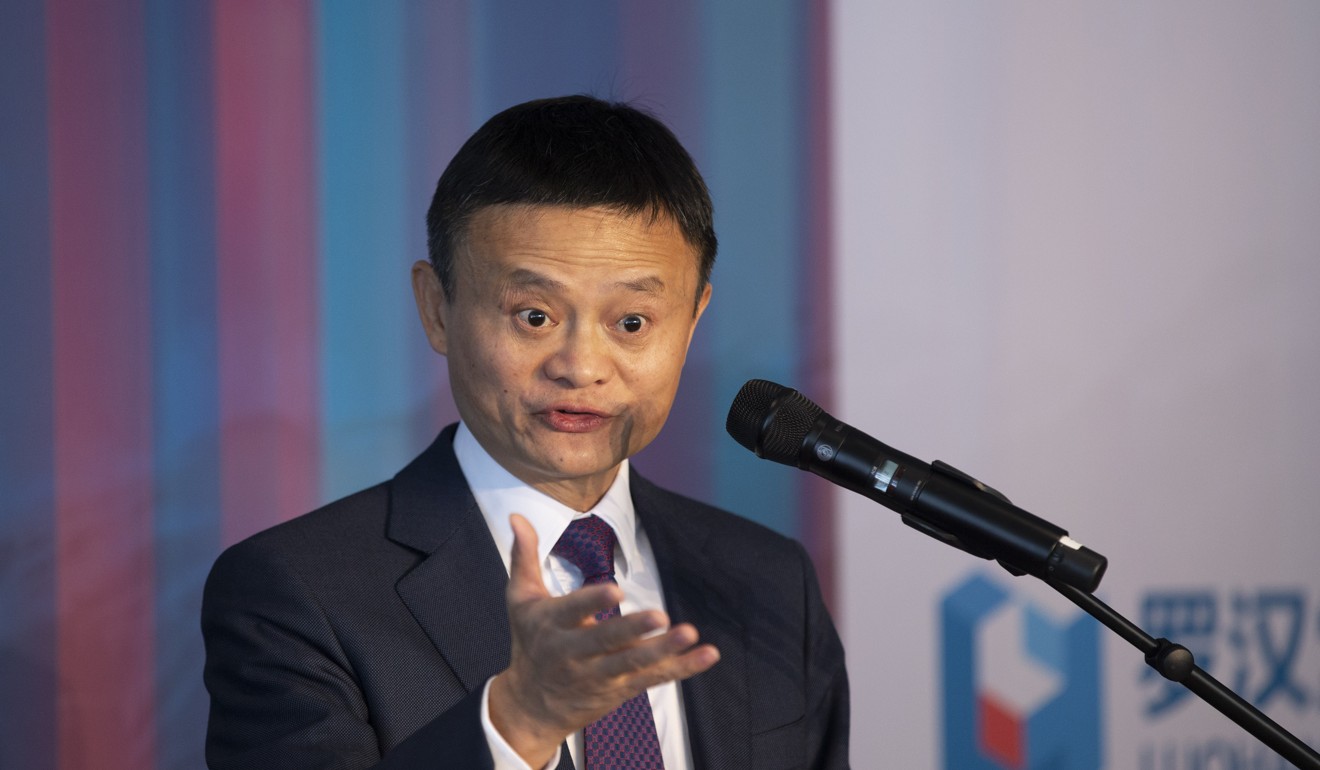
Elon Musk and Jack Ma face off over AI at the 2019 Shanghai WAIC. Photo: SCMP
Billionaire techpreneurs Jack Ma and Elon Musk faced off over AI in a much-anticipated morning session at the Shanghai World Artificial Intelligence Conference on Thursday, and although sparks didn’t actually fly it was clear to the packed audience that they each have a different vision of the future.
“AI will open a new chapter so that humans will know themselves better,” said Jack Ma, Alibaba Group Holding founder. “Most of the projections about AI are wrong … people who are street-smart about AI are not scared by it.”
The conference has attracted executives from nearly 300 companies including US firms Intel, IBM, Microsoft and Qualcomm as well as scientists and scholars from across the world. Both men had to condense their visions of the future into a compact 45-minute session, which also included answering a series of pre-prepared questions from Chinese netizens.
“Due to AI, people will have more time to enjoy themselves as a human being … forget long days, we could end up with 12-hour work weeks,” said Ma. “I don’t worry too much about the impact of AI on jobs … in the future we will not need a lot of jobs.”
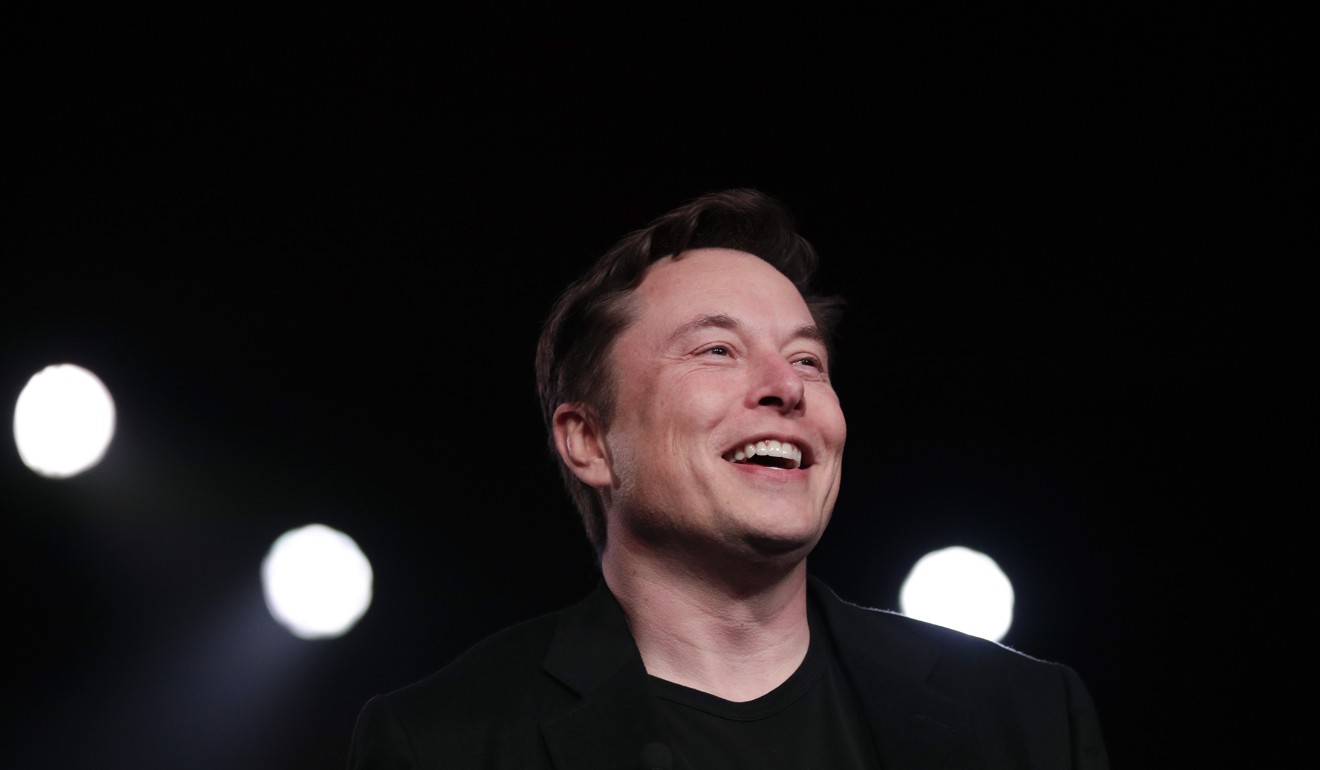
Musk, who has founded a string of tech ventures including SpaceX, Boring Company and Neuralink aside from his role as co-founder and CEO of Tesla, said he had heard that “AI sounds like love in Chinese” but in a more cautious tone described AI as “much more than just a smart human”.
“Humans may become too slow. A millisecond is an eternity to a computer today,” said Musk, who has championed everything from electric cars to Mars colonies. “Computers are already smarter than human beings in many aspects,” he said, adding that while humans write AI software today, in the end the machine will do this itself.
Alibaba co-founder and chairman Jack Ma speaks at the 2019 World Economic Forum (WEF) annual meeting in Davos. Photo: Xinhua
The comments from the two executives, who are both engaged in industries [e-commerce and autonomous driving] where AI is essential – were largely in line with what they have said before on the topic. Ma is mainly an optimist, seeing AI as an inevitable agent of change in a digital world, whereas Musk has sounded several warnings.
In 2017, Musk – along with 100 robotics and AI leaders – urged the United Nations to take action against the dangers of autonomous weapons, known as “killer robots”. He has also described AI as humanity’s “biggest existential threat”, comparing it to “summoning the demon”.
AI cannot replace me yet, says Esquire magazine editor
Earlier in the week, Ma said that amid an escalating trade and technology war between the US and China, both countries needed to make a concerted effort to work together on technology for the world to benefit from the digital era.
“In the smart era, it is almost impossible for anyone to strike out on their own,” Ma said in a speech at the Smart China Expo in Chongqing on Monday. “Only if China and the US work together on technology, can we enter the digital era together.”
Tesla CEO Elon Musk, 2019. Photo: AP
Chinese Vice-Premier Liu He, Beijing’s top trade negotiator said on Monday at a conference that an escalation of the trade war was not in anyone’s interests. US tariffs on some US$300 billion worth of Chinese imports – mostly consumer goods – are expected to increase from 10 to 15 per cent later this year, in retaliation to China’s decision last week to impose tariffs of between 5 to 10 per cent on US$75 billion worth of American products including soybeans, pork and crude oil.
Automobiles is one of the most high-profile sectors to be affected by the trade war, and US President Donald Trump has highlighted the tariff gap between the US and China on imported cars in earlier comments.
Minority Report-style crime prevention is fast becoming reality
Founded in 2003, Tesla is currently building its first overseas factory in Shanghai, which is nearing completion and expected to start production by the year end with an initial annual output of 250,000 vehicles.
China is Tesla’s second largest market after the US. The California-based electric car-maker reported an over 40 per cent year-on-year surge in sales generated in the country to nearly US$1.5 billion in the first six months of the year.
Musk is expected to visit the US$5 billion production facility in Lingang, part of Shanghai’s free-trade zone, amid his China trip and launch a China unit for his infrastructure start-up Boring, as announced earlier on Twitter.
Researchers say system should allow them to track any sound-emitting source – from nuclear subs to whales – using a simple listening device mounted on a buoy, underwater drone or ship
Breakthrough builds on previous work by team from Beijing and San Diego
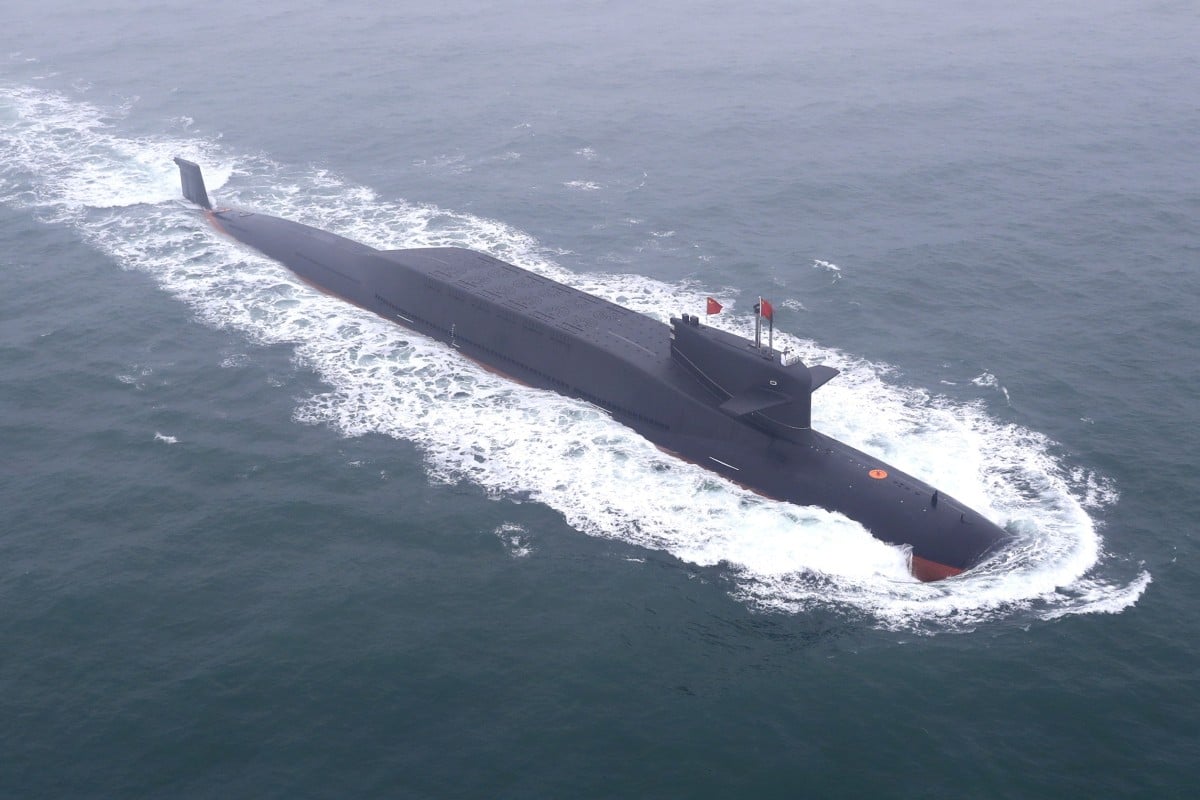
A new AI system developed by Chinese and US scientists could make detecting nuclear submarines possible even in unknown waters. Photo: Xinhua
Scientists from China and the United States have developed a new artificial intelligence
-based system that they say will make it easier to detect submarines in uncharted waters.
The technology builds on earlier work by the team, led by Dr Niu Haiqiang from the Institute of Acoustics at the Chinese Academy of Sciences in Beijing, which saw them develop a deep-learning algorithm that could improve the speed and precision of detection.
The algorithm, however, needs a large amount of data to work, so its use is limited to waters that have already been fully charted. In contrast, the upgrade works in all waters, charted or otherwise.
Even killer whales will be unable to hide from the new technology. Photo: Reuters
Niu and his colleagues, who included scientists from the Scripps Institution of Oceanography at the University of California San Diego, started by developing a simulator to generate a wide range of virtual environments from which the algorithm was able to learn.
Once it had assimilated that information, the simulator was able to analyse real-life data taken from the world’s oceans and seas, the team said in a paper published in the July issue of The Journal of the Acoustical Society of America.
It is now able to help a single hydrophone locate more than 80 per cent of underwater targets within an uncharted area with a margin of error of less than 10 metres (33 feet), the paper said.
Chinese monitoring devices installed near US submarine base
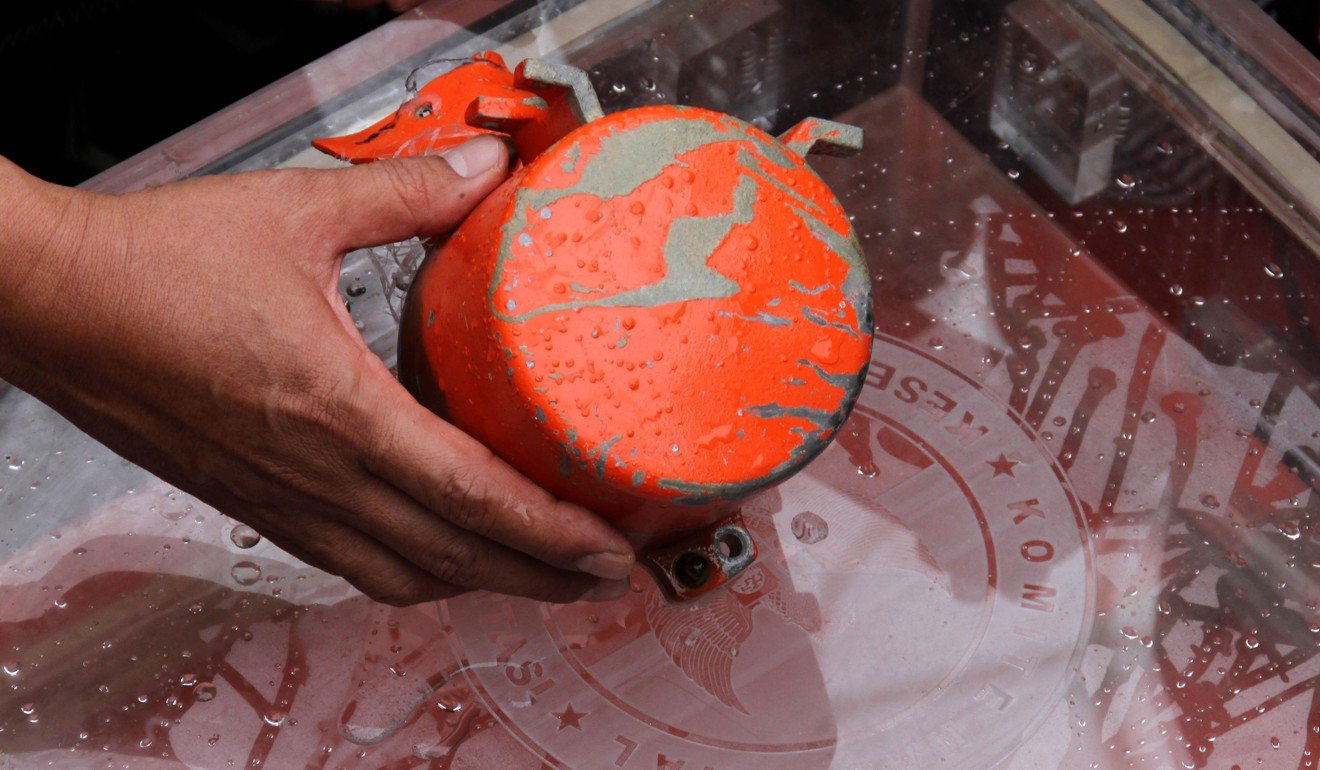
The researchers said the new technology should allow them to track any sound-emitting source – be it a nuclear submarine, a whale or even an emergency beeper from a crashed aircraft – using a simple listening device mounted on a buoy, underwater drone or ship.
The scientists worked together to improve the sensitivity and accuracy of passive underwater surveillance technology, according to the academy’s website.
The new technology might also be able to detect emergency beepers from crashed aircraft. Photo: AFP
Locating targets in unfamiliar waters is challenging because the AI relies on environmental data parameters such as underwater currents and seabed landscapes.
But obtaining such information is not easy, and often impossible.
For instance, the United States does not allow China to collect information in waters close to its west coast, while Beijing forbids the US from getting too close to its military facilities in the South China Sea.
Murder suspect ‘caught by AI software that spotted dead person’s face’
Professor Zhang Renhe, a researcher at the Institute of Acoustics who was not involved in the study, said the latest development was encouraging.
“AI can be a useful assistant to underwater target recognition,” he said. “In a way it is similar to the speech recognition technology on our mobile phones.”
But he said scientists were still wrestling with exactly how the technology worked.
“It is like a black box with some inner workings that are still unexplained,” he said.
Researchers were now working on ways to combine the new AI technology with the physical models for underwater target detection that have been developed in recent decades, Zhang said.
“This is a new frontier for fundamental science,” he said. “It requires international cooperation.”
Image copyright GETTY IMAGESImage caption Four million people were stripped of their citizenship in the draft list last July
India has published the final version of a list which effectively strips about 1.9 million people in the north-eastern state of Assam of their citizenship.
The National Register of Citizens (NRC) is a list of people who can prove they came to the state by 24 March 1971, the day before neighbouring Bangladesh declared independence from Pakistan.
People left off the list will have 120 days to appeal against their exclusion.
It is unclear what happens next.
India says the process is needed to identify illegal Bangladeshi migrants.
It has already detained thousands of people suspected of being foreigners in temporary camps which are housed in the state’s prisons, but deportation is currently not an option for the country.
The process has also sparked criticism of “witch hunts” against Assam’s ethnic minorities.
A draft version of the list published last year had four million people excluded.
What is the registry of citizens?
The NRC was created in 1951 to determine who was born in Assam and is therefore Indian, and who might be a migrant from neighbouring Bangladesh.
The register has been updated for the first time.
Image copyright EPAImage caption The NRC was created in 1951 to determine who was born in the state and is Indian
Families in the state have been required to provide documentation to show their lineage, with those who cannot prove their citizenship deemed illegal foreigners.
Prime Minister Narendra Modi’s Hindu nationalist Bharatiya Janata Party (BJP) has long railed against illegal immigration in India but has made the NRC a priority in recent years.
An anxious wait
By Rajini Vaidyanathan, BBC News, Assam
A small community centre in the village of Katajhar is being guarded by two members of the Indian army. Outside, a line of people wait. Some are clutching plastic bags containing documents.
As they enter one of two rooms, an official runs his eyes down a print-out to see if their names or photos are on it. This list – the National Register of Citizens – is one with huge consequences. And so there’s fear and trepidation as people here find out whether they’ve been included.
Many here who haven’t made it tell me it’s a mistake as they show me paperwork they say proves they belong in this country.
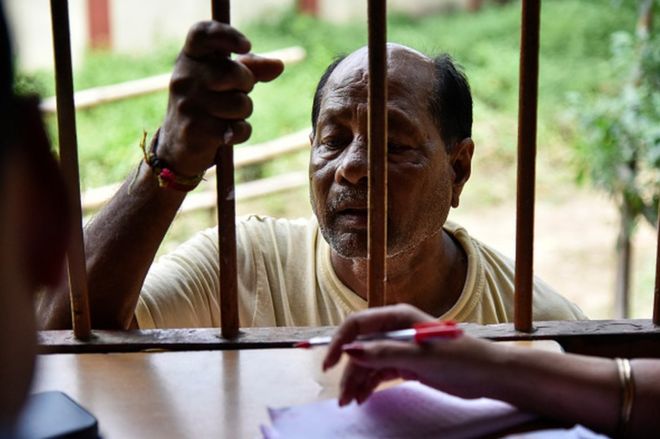
None of Asia Khatun’s family of nine made the list. They now have the chance to appeal but there’s real fear about what might come next. “I’d rather die than go to a detention centre,” she tells me. People here are angry but they’re also scared.
Why is the registry happening in Assam?
Assam is one India’s most multi-ethnic states. Questions of identity and citizenship have long vexed a vast number of people living there.
Among its residents are Bengali and Assamese-speaking Hindus, as well as a medley of tribespeople.
A third of the state’s 32 million residents are Muslims, the second-highest number after Indian-administered Kashmir. Many of them are descendants of immigrants who settled there under British rule.
But illegal migration from neighbouring Bangladesh, which shares a 4,000-km long border with India, has been a concern there for decades now. The government said in 2016 that an estimated 20 million illegal immigrants were living in India.
So have 1.9 million people effectively become stateless?
Not quite. Residents excluded from the list can appeal to the specially formed courts called Foreigners Tribunals, as well as the high court and Supreme Court.
However, a potentially long and exhaustive appeals process will mean that India’s already overburdened courts will be further clogged, and poor people left off the list will struggle to raise money to fight their cases.
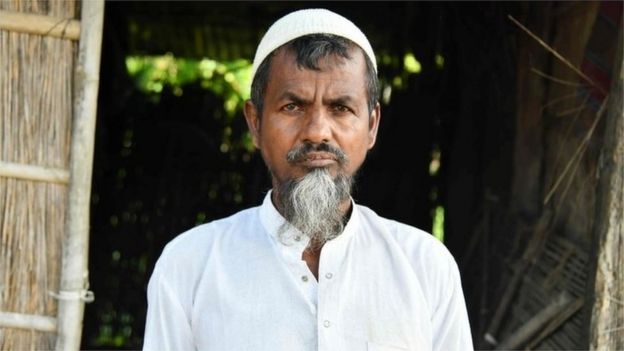
Image copyright AFPImage caption Saheb Ali, 55, from Goalpara district, has not been included in the list
If people lose their appeals in higher courts, they could be detained indefinitely.
Some 1,000 people declared as foreigners earlier are already lodged in six detention centres located in prisons. Mr Modi’s government is also building an exclusive detention centre, which can hold 3,000 detainees.
“People whose names are not on the final list are really anxious about what lies ahead. One of the reasons is that the Foreigners Tribunal does not have a good reputation, and many people are worried that they will have to go through this process,” Sangeeta Barooah Pisharoty, author of Assam: The Accord, The Discord, told the BBC.
Why have been the courts so controversial?
The special courts were first set up in 1964, and since then they have declared more than 100,000 people foreigners. They regularly identify “doubtful voters” or “illegal infiltrators” as foreigners to be deported.
But the workings of the specially formed Foreigners Tribunals, which have been hearing the contested cases, have been mired in controversy.
There are more than 200 such courts in Assam today, and their numbers are expected to go up to 1,000 by October. The majority of these tribunals were set up after the BJP came to power in 2014.
The courts have been accused of bias and their workings have often been opaque and riddled with inconsistencies.
Media caption Living in limbo: Assam’s four million unwanted
For one thing, the burden of proof is on the accused or the alleged foreigner.
For another, many families are unable to produce documents due to poor record-keeping, illiteracy or because they lack the money to file a legal claim.
People have been declared foreigners by the courts because of differences in spellings of names or ages in voter rolls, and problems in getting identity documents certified by authorities. Amnesty International has described the work by the special courts as “shoddy and lackadaisical”.
Journalist Rohini Mohan analysed more than 500 judgements by these courtsin one district and found 82% of the people on trial had been declared foreigners. She also found more Muslims had been declared foreigners, and 78% of the orders were delivered without the accused being ever heard – the police said they were “absconding”, but Mohan found many of them living in their villages and unaware they had been declared foreigners.
“The Foreigners Tribunal,” she says, “must be made more transparent and accountable.”
Both the citizen’s register and the tribunals have also sparked fears of a witch hunt against Assam’s ethnic minorities.
Have the minorities been targeted?
Many say the list has nothing to do with religion, but activists see it as targeting the state’s Bengali community, a large portion of whom are Muslims.
They also point to the plight of Rohingya Muslims in neighbouring Bangladesh.
Image copyright GETTY IMAGESImage caption The move to make millions of people stateless will probably spark protests
However significant numbers of Bengali-speaking Hindus have also been left off the citizenship list, underscoring the communal and ethnic tensions in the state
“One of the communities worst affected by the list are the Bengali Hindus. There are as many of them in detention camps as Muslims. This is also the reason just days before NRC is to be published the BJP has changed tack, from taking credit for it to calling it error-ridden. That is because the Bengali Hindus are a strong voter base of the BJP,” says Barooah Pisharoty.
And in an echo of US President Donald Trump’s policy to separate undocumented parents and children, families have been similarly broken up in Assam.
Detainees have complained of poor living conditions and overcrowding in the detention centres.
Image copyright CITIZENS FOR JUSTICE AND PEACEImage caption A father and son killed themselves 30 years apart because of citizenship doubts (photo shows funeral)
One detainee told a rights group after his release he had been taken to a room which had a capacity for 40 people, but was filled with around 120 people. People who have been declared foreigners as well as many inmates have been suffering from depression. Children have also been detained with their parents.
Human rights activist Harsh Mander, who visited two detention centres, has spoken about a situation of “grave and extensive human distress and suffering”.
What happens to people who are declared foreigners?
The BJP which rules the state, has insisted in the past that illegal Muslim immigrants will be deported. But neighbouring Bangladesh will definitely not accede to such a request.
Many believe that India will end up creating the newest cohort of stateless people, raising the spectre of a homegrown crisis that will echo that of the Rohingya people who fled Myanmar for Bangladesh.
It is not clear whether the people stripped of their Indian citizenship will be able to access welfare or own property.
One possibility is that once they are released, they will be given work permits with some basic rights, but will not be allowed to vote.
BEIJING, Aug. 29 (Xinhua) — Chinese President Xi Jinping will attend a grand gathering to celebrate the 70th anniversary of the founding of the People’s Republic of China (PRC) on Oct. 1.
Xi, also general secretary of the Communist Party of China (CPC) Central Committee and chairman of the Central Military Commission, will deliver an important speech at the event, said Wang Xiaohui, executive deputy head of the Publicity Department of the CPC Central Committee, at a press conference held Thursday.
A military parade and mass pageantry will be held following the gathering, Wang said.
At a grand evening gala in Tian’anmen Square on National Day, Party and state leaders will join the public to watch performances and a fireworks show.
Xi will also present the Medals of the Republic, Medals of Friendship and national titles of honor to outstanding individuals at an award ceremony to be held at the Great Hall of the People in Beijing.
On Sept. 30, the country’s Martyrs’ Day, people from various sectors, including Party and state leaders, will present flowers to deceased national heroes at the Monument to the People’s Heroes at Tian’anmen Square.
A National Day reception will be held at the Great Hall of the People and President Xi will give an important speech.
BROAD PARTICIPATION
“The 70th anniversary of the PRC is a festival shared by Chinese people of all ethnic groups, which is why the celebrations will highlight the participation of the people,” Wang said.
According to him, more than 100,000 ordinary citizens will take part in the mass pageantry on Oct. 1 and about 60,000 will attend the evening gala on the same day, while about 30,000 members of the public will be invited to observe the gathering and military parade.
Among the guests of the gathering and military parade, there will be people who made outstanding contributions to the republic’s founding and development together with their families as well as about 1,500 role models including outstanding Party members, model civil servants and workers.
MILITARY PARADE
The military parade is an important part of the National Day celebrations and is not aimed at any other countries or specific situations, Cai Zhijun, deputy head of the office of the leading group for the military parade, said at the press conference.
The scale of the parade will be greater than the ones commemorating the 50th and 60th founding anniversary of the PRC, as well as the V-Day military parade in 2015, he said.
The military parade is expected to showcase China’s achievements in building its national defense and armed forces in the past 70 years and reflect the outcomes of the reform of the people’s armed forces, according to Cai.
RICH CELEBRATION
“There will be rich and colorful celebrations spanning various sectors and regions,” Wang said.
An evening gala featuring music and dance will be held in the Great Hall of the People. From September, the Beijing Exhibition Center will host a large-scale exhibition on the achievements of the PRC in the past seven decades.
The CPC Central Committee, the State Council and the Central Military Commission will jointly issue medals in commemoration of the 70th anniversary of the PRC as part of the celebrations.
Commemorative coins and stamps will be issued and a documentary will be made.
The celebrations will also be carefully budgeted and avoid extravagance, Wang said.
BEIJING, Aug. 30 (Xinhua) — Chinese President Xi Jinping’s special envoy Yang Jiechi will pay official visits to Kenya, Nigeria and Sierra Leone early next month, Foreign Ministry Spokesperson Geng Shuang said Friday.
Yang, also a member of the Political Bureau of the Central Committee of the Communist Party of China (CPC) and director of the Office of the Foreign Affairs Commission of the CPC Central Committee, will exchange views with officials of the three countries respectively on promoting bilateral ties as well as international and regional issues of common concern, Geng said.
Yang will make the visits at the invitation of the three countries’ governments, Geng said.
‘Forbes’ magazine reported that China’s central bank will launch its own sovereign digital currency to coincide with the Singles’ Day online shopping festival
The People’s Bank of China is seeking to address financial risks and counter the current dominance of the US dollar
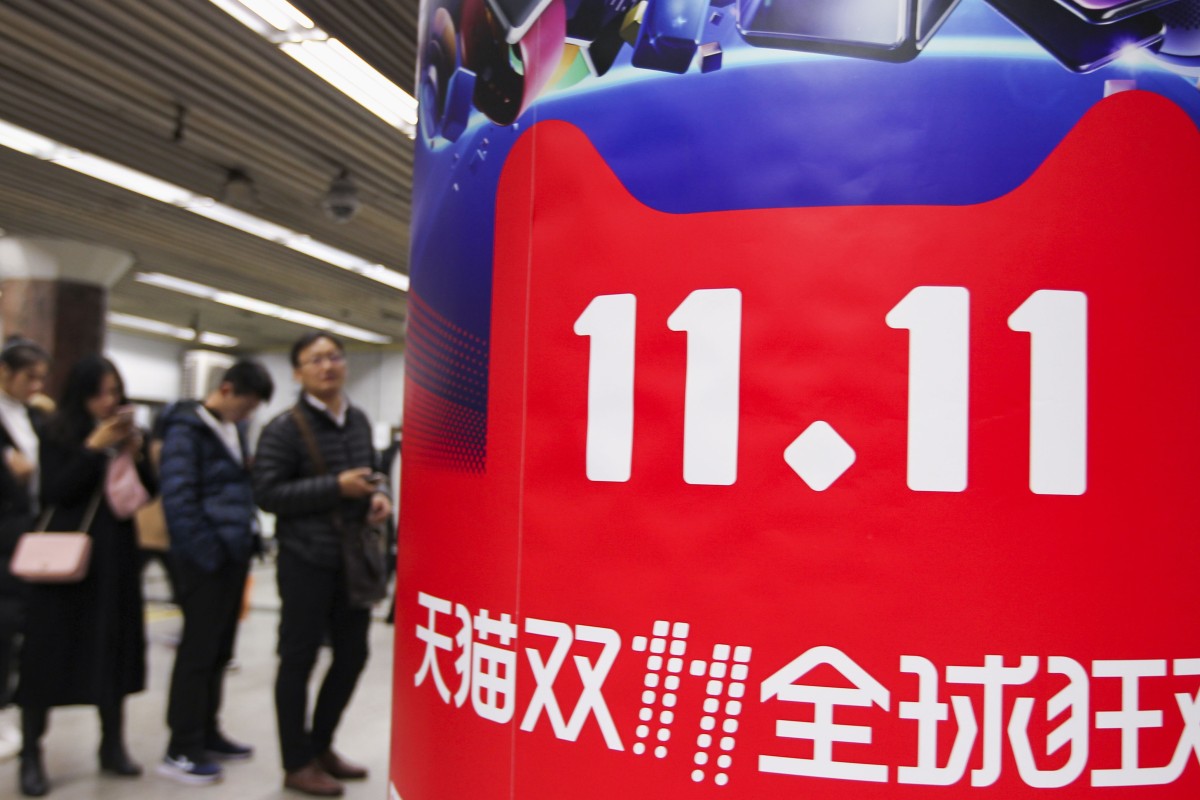
The Singles’ Day is a holiday celebrated in China on November 11 and has become the largest online shopping day in the world. Photo: Simon Song
China’s desire to launch the world’s first government-backed digital currency could see the possible rival to Facebook’s Libra be launched in time for November’s Singles’ Day online shopping festival despite a Chinese media report playing down the timing as “inaccurate speculation”.
Several central bank officials have publicly spoken out over the past several weeks about the need for China to launch its own digital currency since Facebook unveiled its plans for Libra, and the People’s Bank of China (PBOC) appear to be making rapid progress ahead of an expected launch.
Forbes magazine reported this week, citing a source who previously worked for the Chinese government, that China’s central bank could launch the digital currency as soon as November 11 as its bids to address financial risks and to counter the current dominance of the US dollar.
The PBOC did not respond to a faxed request for comment on the Forbes story, although Sina.com said that the report was “inaccurate speculation” citing an unnamed source close to the central bank.
China’s central bank is expected to distribute its digital currency through the big four state-owned banks – the Industrial and Commercial Bank of China, China Construction Bank, the Agricultural Bank of China, and the Bank of China – and mobile payments systems Alipay and WeChat Pay, as well as UnionPay, the state-supported credit card provider, according to the Forbes report. Alibaba is the owner of the South China Morning Post.
Ma Changchun, deputy chief of the Payment and Settlement Division of the PBOC, said at the start of August that a digital currency prototype existed and that the central banks’ Digital Money Research Group had already fully adopted blockchain architecture to ensure its use in retail transactions.
“The People’s Bank digital currency can now be said to be ready,” said Ma on August 11.
The People’s Bank digital currency can now be said to be ready Ma Changchun
Former central bank governor Zhou Xiaochuan said last month that, in addition to central banks, “commercial entities” should be allowed to issue banknotes backed by their own private currency assets, although he did not elaborate on what kind of “commercial entities” might be appropriate to issue a digital currency in China.
China is also ready to make Shenzhen a pilot zone for digital currency as part of plans for the city to become a socialist model city, according to a statement summarising a meeting between the Shenzhen party secretary Wang Weizhong and central bank governor Yi Gang released on Thursday.
The PBOC implemented a blanket crackdown in China on trading of cryptocurrency, including bitcoin, which are not backed by any government, viewing them as risks to China’s financial stability and security. At the same time, in 2014 the central bank created its own academy to study digital currencies and the related blockchain technology.
Neil Woodfine, director of marketing at blockchain start-up Blockstream, said a digital currency created by the PBOC would be “just like cash” and “would be fully controlled by the central bank.”
“If it’s digital instead of physical, they can close accounts and monitor all activities [in the entire financial system]. Commercial bank deposits are difficult for them to monitor, control or pull information out of for verification because the numbers are in each bank’s data centre,” Woodfine said.
Wang Xin, director of the central bank’s research bureau, said last month that
to create its own digital currency have pushed Beijing to speed up its own digital currency plan as Libra could potentially pose a challenge to Chinese cross-border payments, monetary policy and even financial sovereignty.
Leonhard Weese, the president of the Bitcoin Association of Hong Kong, said that a government-backed digital currency may enhance the PBOC’s control of China’s monetary system, cutting reliance on commercial banks to transmit changes in monetary policy.
“It would be similar to just killing the commercial banks,” Weese said.
which would be a non-sovereign digital currency controlled by a Swiss-based company, has come under intense scrutiny by regulators and central banks worldwide. Last month, the Group of Seven industrialised nations, known as the G7, called for urgent regulatory measures and other types of action to address serious concerns over Libra.
Central banks, however, have expressed interest in launching their own digital currencies to counter the US dollar and to gain more control of their own monetary systems.
Mark Carney, governor of the Bank of England, argued last week that the US dollar, the current dominant reserve currency, could be replaced by a global digital alternative to tackle ultra-low interest rates.
Facebook’s Libra, which is expected to be launched next year, will be pegged to a basket of convertible currencies – so it could serve as a stable online currency – while its payments will be endorsed by Visa and Mastercard. Photo: Reuters
A digital currency “could dampen the domineering influence of the US dollar on global trade”, Carney said last week at the US Federal Reserve’s annual conference, adding that a digital currency has the edge to counter shocks emanating from the US through trade and exchange rates.
Daniel Wang, chief executive and co-founder of blockchain start-up Loopring, said that a Chinese government-backed digital currency may provide a new way for the yuan to compete globally.
“If the central bank wants to increase the global competitiveness of the yuan through its digital currency, only an open and standard-based competitor carries any hope,” said Wang.
A digital yuan would “remain a sovereign currency under a centralised sovereign,” continuing to require the trust from users in the Chinese central bank and government institutions behind it, Wang added.
Alfred Schipke, senior resident representative for China at the International Monetary Fund (IMF), said that the bank is “open” to digital currencies, including the one being developed by China’s central bank.
The IMF in principle is looking at these things favourably. It’s a two-way process where we learn from China, which is often at the forefront of development. Alfred Schipke
“We don’t have a specific view on a particular currency, we haven’t looked at the details of the latest proposals from China,” Schipke said on Thursday. “The IMF in principle is looking at these things favourably. It’s a two-way process where we learn from China, which is often at the forefront of development.”
Blockstream’s Woodfine said that Beijing’s move also reflects a growing concerns among central banks that a financial disaster is on the horizon.
The 30-year US Treasury bond yield fell to an all-time low 1.976 per cent on Thursday, while yields around the world also plunged to multi-year or record low, triggering rising fears over a global recession.
Central banks around have also been driving down interest rates, with the PBOC recently unveiling a key interest rate reform that effectively cuts borrowing costs for companies to boost its slowing economy.
“We’ll see a move by governments and central banks to take back control over the financial system and use that power to direct their economies, continuing to pump money into the system to keep it afloat,” Woodfine added.
“A digital currency would be the perfect channel for helicopter money,” he said in reference to the idea that a central bank could stimulate the economy by giving out large quantities of money to the public, as if dumped from the sky. “They can send out free money to consumers.”
BEIJING (Reuters) – China will exempt Tesla Inc’s (TSLA.O) electric vehicles (EV) from purchase tax, the Ministry of Industry and Information Technology (MIIT) said on its website.
China currently levies a 10% purchase tax on the sale of each vehicle. The move could reduce the cost of buying a Tesla car by up to 99,000 yuan ($13,957.82), according to a post on Tesla’s social media WeChat account.
Tesla’s pre-market share price jumped more than 5% after the announcement.
Sixteen variants – all the Tesla models sold in the country – are listed on the document issued by MIIT, including Model S, X and 3. No reason was given for the decision to exclude the cars from the tax.
The U.S. EV maker is building a plant in Shanghai, the firm’s first overseas factory.
It is due to start production by the end of the year and Tesla has said it should be able to build 3,000 Model 3 vehicles a week in its initial phases.
The plant is slated to have annual output capacity of 250,000 vehicles after production of the Model Y is added.










 CHINDIA ALERT: You'll be living in their world, very soon