Chindia Alert: You’ll be Living in their World Very Soon
aims to alert you to the threats and opportunities that China and India present. China and India require serious attention; case of ‘hidden dragon and crouching tiger’.
Without this attention, governments, businesses and, indeed, individuals may find themselves at a great disadvantage sooner rather than later.
The POSTs (front webpages) are mainly 'cuttings' from reliable sources, updated continuously.
The PAGEs (see Tabs, above) attempt to make the information more meaningful by putting some structure to the information we have researched and assembled since 2006.
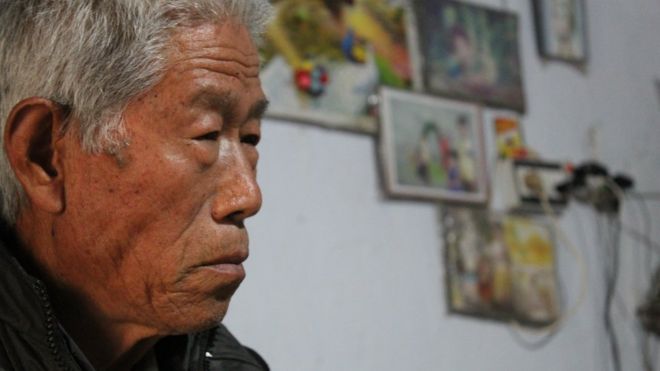
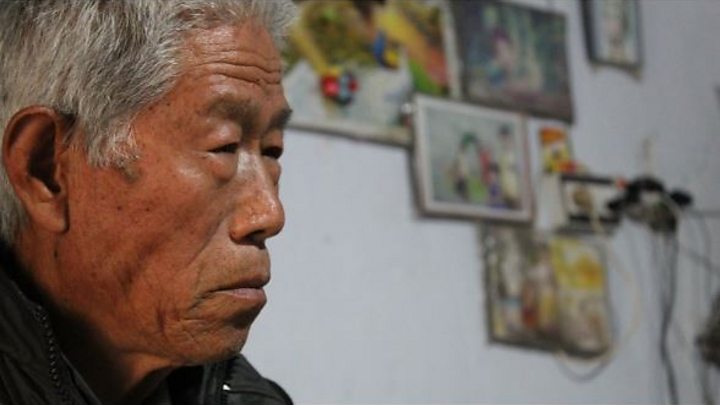
Image caption Wang Qi has been waiting for months to see his family in India
In 1963, a former Chinese army surveyor crossed into India and was captured weeks after a war between the two countries. Wang Qi was then left in a central Indian town for more than five decades before he was allowed to travel back home to China in 2017.
The BBC reported his story at the time and videos of the emotional family reunion in China were watched by millions.
But now, more than 30 months later, his story has taken an unexpected turn – Mr Wang is stuck in China and unable to return to India.
He has been waiting for more than four months for officials to renew his Indian visa so that he can travel back to India where his children and grandchildren live.
“Why are they doing this? I’ve been fighting for such a long time. How much longer can I fight?” Mr Wang told me over the phone from his home city of Xianyang.
The BBC has emailed the Indian embassy in Beijing and is yet to receive a response.
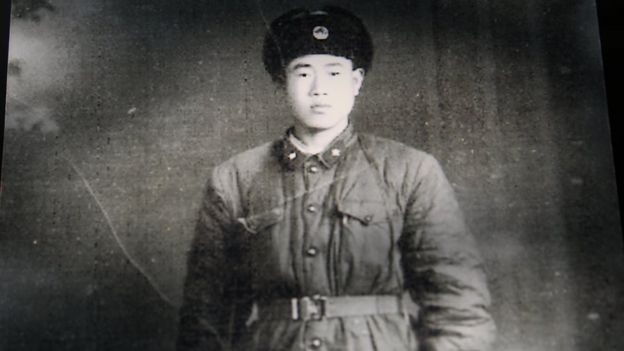
Born to a farmer family in Shaanxi with four brothers and two sisters, he studied surveying and joined China’s People’s Liberation Army in 1960.
Mr Wang says he was “tasked with building roads for the Chinese army” and was captured when he “strayed erroneously” into Indian territory in January 1963.
Image caption He joined China’s People’s Liberation Army in 1960
“I had gone out of my camp for a stroll but lost my way. I was tired and hungry. I saw a Red Cross vehicle and asked them to help me. They handed me over to the Indian army,” he said.
After he was captured, he spent the next seven years in multiple prisons before he was released by a court order in 1969.
Police took him to Tirodi, a far-flung village in the central state of Madhya Pradesh, where he ended up living for most of his life.
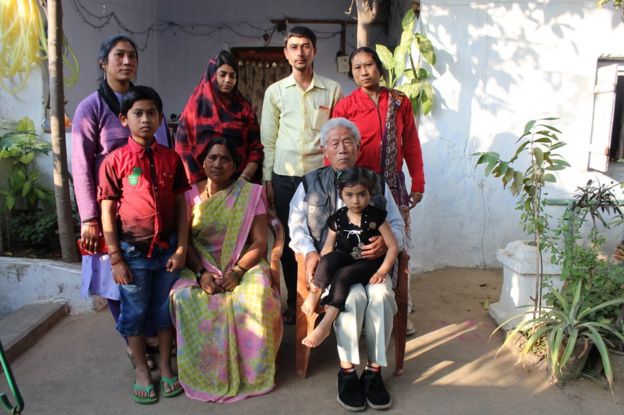
Instead he worked at a flour mill, eventually marrying a local woman and raising a family with her. Neighbours said they lived in “utter poverty”.
It was never clear whether Mr Wang was actually a prisoner of war. But he was denied official Indian documents or citizenship, and he was also denied permission to return to China. Officials told the BBC in 2017 that there were “deficiencies” and a “lack of interest” in the case over the years.
A Chinese passport holder, Mr Wang was reunited with his family in China in 2017. After the BBC reported his story, he received a one-year multiple entry Indian visa.
Media caption Wang Qi did not see his family in China for decades
He kept coming back to India to meet his wife, children and grandchildren who continued to live here.
When Mr Wang first arrived in China, he received a rapturous welcome. Crowds met him with banners reading, “Welcome home, soldier, it’s been a rough journey”.
But according to Mr Wang’s son, Vishnu, his father’s request to local officials to clear his salary for the period of his stay in India, remains unanswered.
Vishnu also adds that it’s unclear if his father still has any claim to ancestral property in China after being away for so many years.
“He was ecstatic to have met his family after decades. He didn’t want anything else.”
In 2017, Mr Wang rushed back to India to take care of his wife, who was hospitalised due to “liver complications”.
“Getting funds for the expensive treatment was very difficult. We tried everywhere, begged for money but didn’t receive any response,” Vishnu says.
She died within a fortnight.
Image caption Mr Wang married an Indian woman and raised a family with her
“My father’s visa was renewed in 2018. He applied again in April 2019 but he is still waiting,” Vishnu adds.
Xianyang and Beijing, where the Indian embassy is located, are more than 1,000 kilometres (621 miles) apart – and travelling between the two cities isn’t easy for Mr Wang, who is nearly 80 years old, Vishnu says.
“My father is fed up. He doesn’t understand why this is taking so long.”
Chinese Vice Premier Liu He, also a member of the Political Bureau of the Communist Party of China Central Committee, reads a congratulatory letter to the 2019 Smart China Expo sent by Chinese President Xi Jinping at the expo’s opening ceremony in southwest China’s Chongqing Municipality, Aug. 26, 2019. (Xinhua/Wang Quanchao)
CHONGQING, Aug. 26 (Xinhua) — Chinese Vice Premier Liu He on Monday called for seizing the new opportunities in technological development and promoting the healthy development of the intelligent industry.
Liu, also a member of the Political Bureau of the Communist Party of China Central Committee, made the remarks at the 2019 Smart China Expo that opened Monday in southwest China’s Chongqing Municipality.
At the opening ceremony, he read a congratulatory letter from President Xi Jinping.
The letter fully demonstrated that the president attaches great importance to the development of intelligent industry, and pointed the direction for the sector’s healthy development, Liu said.
Noting that China’s economy is switching from high-speed growth to high-quality development, Liu said the country’s dynamic microfundations and sufficient macro-policy tools can ensure the sound fundamentals of its economic development.
China’s intelligent industry is developing rapidly and emerging as a new economic growth point, Liu said.
To promote the sector’s development, efforts must be centered on promoting the well-being of humanity, maintain a balance between efficiency and job creation, respect and protect individual privacy, and uphold the ethical and moral bottom line, he said.
In underscoring China’s willingness to advance international cooperation in the intelligent sector, Liu said China welcomes enterprises from all over the world, including the United States, to invest and operate in China.
The country will continue to create an appealing investment environment and strengthen protection of property rights and intellectual property rights, he said.
China is willing to resolve problems calmly through consultation and resolutely opposes the escalation of the trade war, Liu said, adding that any escalation will run against the interests of the people of China, the United States and the whole world.
Chinese State Councilor and Foreign Minister Wang Yi (R) holds talks with Iranian Foreign Minister Mohammad Javad Zarif in Beijing, capital of China, Aug. 26, 2019. (Xinhua/Zhai Jianlan)
BEIJING, Aug. 26 (Xinhua) — Chinese State Councilor and Foreign Minister Wang Yi held talks with visiting Iranian Foreign Minister Mohammad Javad Zarif here Monday.
Noting that the world today sees rising unilateralism and power politics, Wang expressed willingness to work with other countries to safeguard multilateralism, uphold basic norms governing international relations, and maintain the legitimate rights and interests of all countries.
Talking about the Joint Comprehensive Plan of Action, also known as the Iran nuclear deal, Wang expressed support for all efforts conducive to maintaining the deal.
China understands the legitimate claims made by the Iranian side and believed that the Iranian side should receive reasonable returns as the country continued to implement the deal, Wang said, adding that China as a responsible country is willing to continue to implement the deal and play a constructive role in easing the tensions in the Gulf region.
Zarif briefed Wang on his tour of Europe and his communications with relevant parties on safeguarding the nuclear deal, and reiterated Iran’s stance to resolve relevant problems through dialogue and negotiations.
Huang Kunming, a member of the Political Bureau of the Communist Party of China (CPC) Central Committee and head of the Publicity Department of the CPC Central Committee, addresses a seminar on expositions on historical sciences made by Xi Jinping, general secretary of the CPC Central Committee, in Beijing, capital of China, Aug. 26, 2019. (Xinhua/Yao Dawei)
BEIJING, Aug. 26 (Xinhua) — A seminar on expositions on historical sciences made by Xi Jinping, general secretary of the Communist Party of China (CPC) Central Committee, was held Monday in Beijing.
Xi’s expositions on historical sciences, which embody a deep understanding of history and historical sciences by contemporary Chinese Communists, are an important guideline to be followed by China’s historical research in the new era, said Huang Kunming, a member of the Political Bureau of the CPC Central Committee and head of the Publicity Department of the CPC Central Committee, when addressing the seminar.
He said Marxism should be firmly upheld to offer guidance and called for efforts to facilitate the building of discipline, and academic and discourse systems of history research with Chinese characteristics.
Huang stressed the importance of combining research and education, taking a clear-cut stand to oppose historical nihilism, and guiding people to establish a correct view of the history, nation, country, and culture.
The seminar, hosted by the Chinese history research institute under the Chinese Academy of Social Sciences, was attended by over 150 historians from across the country.
The Chief Economic Adviser, K Subramanian, disagreed with the idea of industry-specific incentives and argued for structural reforms in land and labour markets. Members of Prime Minister Narendra Modi’s economic advisory council sound inchoate, resorting to social media and opinion editorials to counter one another.
In essence, the quibble among the members of the economic team of Mr Modi and his government is not about whether India is facing an economic slowdown or not, but about how grave the current economic crisis is.
To put all this in context, it was less than just two years ago, in November 2017, that the global ratings agency Moody’s upgraded India’s sovereign ratings – an independent assessment of the creditworthiness of a country – for the first time in 14 years.
Image copyrightGETTY IMAGESImage captionSales of cars and SUVs have slumped to a seven-year low
Justifying the upgrade, Moody’s had then argued that the economy was undergoing dramatic “structural” reforms under Mr Modi.
In the two years since, Moody’s has downgraded its 2019 GDP growth forecast for India thrice – from 7.5% to 7.4% to 6.8% to 6.2%.
The immediate questions that arise now are: is India’s economic condition really that grim and, if yes, how did it deteriorate so rapidly?
To make matters worse, Finance Minister Nirmala Sitharaman presented her first budget recently with some ominous tax proposals that threatened foreign capital flows and dented investor confidence. It sparked criticism and Ms Sitharaman was forced to roll back many of her proposals.
Image copyright GETTY IMAGESImage caption In 2016, India withdrew 85% of all currency notes from the economy
So, it is indeed true that India is facing a sharp economic downturn and severe loss of business confidence.
The alarm over the economic condition is not merely a reflection of a slowdown in GDP growth but also the poor quality of growth.
Private sector investment, the mainstay of sustainable growth in any economy, is at a 15-year low.
In other words, there is almost no investment in new projects by the private sector. The situation is so bad that many Indian industrialists have complained loudly about the state of the economy, the distrust of the government towards businesses and harassment by tax authorities.
But India’s economic slowdown is neither sudden nor a surprise.
Behind the fawning headlines in the press over the past five years about the robustness of India’s growth was a vulnerable economy, straddled with massive bad loans in the financial sector, disguised further by a macroeconomic bonanza from low global oil prices.
India’s largest import is oil and the fortuitous decline in oil prices between 2014 and 2016 added a full percentage point to headline GDP growth, masking the real problems. Confusing luck with skill, the government was callous about fixing the choked financial system.
Media caption What is really happening with India’s economy?
This move destroyed supply chains and impacted agriculture, construction and manufacturing that together account for three-quarters of all employment in the country.
Before the economy could recover from the currency ban shock, the government enacted a transition to a new indirect taxation system of the Goods and Services Tax (GST) in 2017. The GST rollout wasn’t smooth and many small businesses initially struggled to understand it.
Such massive external shocks to the economy, coupled with a reversal in low oil prices, dealt the final blow to the economy. Millions of Indians started to lose their jobs and rural wages remained stagnant. This, in turn, impacted consumption, slowing down the economy sharply.
Not easy
The wobbly state of the economy has also thrown government finances in disarray: tax revenues are much below expectations.
On Monday, the government got a much-needed breather when India’s central bank announced a $24bn (£19bn) one-time payout for the cash-starved government. (This amount is more than the dividend paid by the central bank to the government in all five years of the Congress rule between 2009 and 2014.)
The solutions to the economic crisis are not easy.
Indian industry, fed and fattened with government protection through decades, is once again clamouring for tax cuts and financial incentives.
But it is not clear that such benefits will revive private sector investment and domestic consumption immediately.
For all the hype about the Make in India programme, hailed as the harbinger of the country’s emergence as a manufacturing power, India’s dependence on China for goods has only doubled in the past five years.
India today imports from China the equivalent of 6,000 rupees ($83; £68) worth of goods for every Indian, which has doubled from 3,000 rupees in 2014.
So, India is neither making goods for itself nor for the world.
Image copyright AFPImage caption India’s agrarian crisis is a major stumbling block
Ornamental tax and other fiscal incentives to specific industries are not suddenly going to make Indian manufacturers competitive and stop India’s addiction for affordable Chinese goods. If any, the trade spat between China and the United States only saw countries such as Vietnam and Bangladesh benefit and not India.
More currency or trade tariffs are not the solutions either. The central bank has lowered interest rates and there is some push to lowering the cost of capital for industry. But again, Indian industry will invest more only when demand for goods and services increases. And demand will increase only when wages increase, or there is money in the hands of people.
So, the only immediate solution for India seems to be to boost consumption through a stimulus given directly to people, in the classical Keynesian mould.
Of course, such a stimulus should be combined with reforms to boost business morale and confidence.
In sum, India’s economic picture is not pretty.
It is important for India’s political leadership to see this not-so-pretty picture and not hide behind rose tinted glasses. Prime Minister Modi has a unique electoral mandate to embark on bold moves to truly transform the economy and pull India out of the woods.
BEIJING, Aug. 25 (Xinhua) — The water quality of China’s major rivers, lakes and coastal waters is improving, while in general, the water ecology is not optimistic, an official report showed.
The report was made by an inspection team tasked with examining the enforcement of the water pollution prevention and control law, under the Standing Committee of the National People’s Congress, China’s top legislature.
From April to June, the law enforcement inspection team was divided into four groups and went to eight provinces, including Sichuan, Jiangsu, Hunan, Hebei, Guangdong, Anhui, Yunnan and Guizhou, to carry out law enforcement inspections.
The inspection groups visited 31 cities and carried out on-site inspections of 201 organizations, villages and projects.
At the same time, 23 other provincial-level regions were entrusted to carry out similar investigations to achieve full coverage of law enforcement inspections.
According to the report, in 2018, 71 percent of the national surface water sections were of good quality and the water quality of major rivers, lakes and coastal waters was stable and good.
However, the report also points out that inadequate law implementation is still prominent, and the overall situation of China’s water environment is not optimistic.
Associate professor caused ‘vicious social impact’ in comments to student in social media chat room
Ethics committee suspends him from teaching for two years
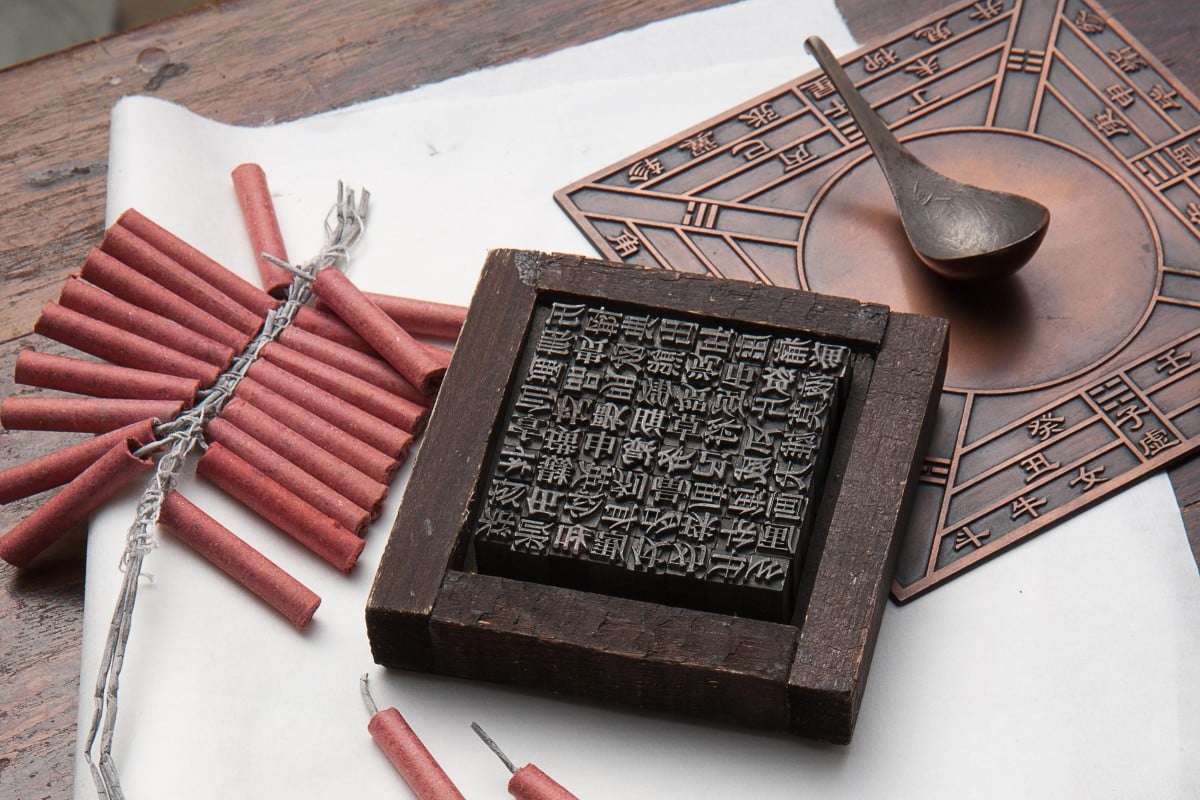
The four great inventions of ancient China: Paper, gunpowder, the compass and printing. Photo: Alamy
An associate professor has been suspended by his university in southwestern China for causing “vicious social impact” by belittling the four great ancient Chinese inventions of papermaking, printing, gunpowder and the compass.
Zheng Wenfeng was suspended from teaching for 24 months by the University of Electronic Science and Technology of China in Chengdu, Sichuan province, for his comments in June to a student in an online group discussion on Chinese social media platform WeChat.
Zheng told the student, who wanted to choose the four great inventions as a thesis topic on innovation, that “ancient China did not have any substantial innovations” and that the four great inventions were “not advanced in the world and did not generate any productivity or cooperation in reality”.
The four inventions are extolled in China as important contributions to the development of world civilisation.
The student’s boyfriend put a screenshot of the conversation on Zhihu.com, a Quora-style knowledge-sharing website, where it generated wide attention.
First day at university in China now means a face scan to enrol
In July, the university issued a statement saying that Zheng had expressed mistaken opinions in the online chat room which had “caused vicious social impact”. The university went on to say that its teachers’ ethics committee had determined Zheng had violated ethics regulations and he would be suspended from teaching, recruitment of master’s degree candidates, and promotion for the next 24 months.
Academics began speaking out in support of Zheng last week, with some university teachers alleging on social media that Zheng had been ambushed by his students. Others felt his punishment went too far.
Huang Shaoqin, an associate professor of the Antai School of Economics and Management at Shanghai Jiao Tong University, called for a boycott of Zheng’s university in response to his treatment and demanded a public apology from the students involved.
“Until you rectify your wrongdoings, I cannot have any academic communication with you,” Huang said. “I call on teachers at Chinese universities to boycott this university.”
College entrance exam boot camp accused of fake advertising
In an editorial on Saturday, GMW.cn – a news website targeting China’s intelligentsia – defended academic debate, saying people could provide their own evidence on the significance of the four great innovations, and this was how academic issues should be argued.
“Students ignored the basic rules of academic discussions and they exaggerated the teacher’s errors. They released the private chat record to the public, no doubt with an intention of making a fuss,” the editorial said. “Their meticulous thought is really horrible.”
Chinese state broadcaster CCTV addressed the issue in an editorial on Friday, saying schools should distinguish correctly between politics and academic issues, and should not magnify the seriousness of the teacher’s opinions.
“This kind of case involves how freely university teachers can talk and the boundary between academic freedom and political red lines,” it said. “The university should give a clear explanation about its punishment so that the public and the teacher involved will be convinced.”
The Ministry of Education promoted 10 principles for university teachers at the end of last year, with “sticking to correct political direction” at the top of the list.
Zheng said he accepted the university’s punishment and did not need to make any clarification or self-justification, according to online news portal Sohu.com last week.
“I will focus on scientific research. This incident is over, is my attitude,” he was quoted as saying.
Police say man from Fujian province was detained while trying to burn body on remote farm after strangling girlfriend
Online lender contacted officers after its verification software spotted that the victim’s eyes weren’t moving
Police were tipped off by an online lending company after its software could find no signs of movement in the victim’s eyes. Photo: Simon Song
A man accused of murdering his girlfriend in southeast China was caught after facial recognition software suggested he had tried to scan a dead person’s face to apply for a loan.
Officers in Fujian province said the 29-year-old named Zhang was caught while trying to burn the body on a remote farm, but they had been tipped off by an online lending company after its software could find no signs of movement in the victim’s eyes, Xiamen Evening News reported on Sunday.
Zhang is suspected of strangling his girlfriend with a rope in Xiamen on April 11 after they argued about money and she threatened to leave him. He then allegedly went on the run with the body hidden in the boot of a rented car.
Zhang is also accused of pretending to be the unnamed victim and contacting her employers via her WeChat account to ask for time off work.
Ugandan police spend US$126 million on surveillance system from Huawei
When he arrived in his hometown of Sanming the next day, police said he tried to apply for a loan using an app called Money Station, which uses artificial intelligence to verify the applicants’ identity and asks them to wink to help the process along.
But the facial recognition technology found no signs of eye movement.
Staff at the lender contacted police after a manual check found bruises on the unnamed woman’s face and a thick red mark around her neck.
Its voice recognition software also detected that it was a man, rather than a woman, applying for the loan.
Zhang, whose formal arrest was approved by prosecutors earlier this month, is accused of using the victim’s phone to take 30,000 yuan (US$4,200) from her bank account, and lying to her parents that she was “going away for a few days to relax”.
Although a trial date has yet to be announced, details of the case have shocked many people.
Some Chinese social media users suggested that the plot would be too gruesome or far-fetched for a horror movie and another wrote: “[I] never thought the facial recognition process could be used in this way.”
Kunming tests support for new rules that demand travellers wear earphones when using noisy electronic devices
Cities across China are listening to the complaints of commuters and ordering owners of noisy mobile phones and music devices to turn them down and wear earphones. Photo: Shutterstock
Kunming, the capital of southwestern Yunnan province, plans to become the third mainland Chinese city to ban public transport users from listening to loud music, watching noisy videos or talking loudly on phones.
Acting on complaints from passengers, the city is testing public support for a change to its subway passenger code of conduct that would ban excessive noise, the municipal transport bureau said last week.
At least two other cities, Beijing and Lanzhou – the capital of northwestern Gansu province – have barred travellers from talking loudly or turning up their electronic devices on the underground.
Kunming’s proposed amendment includes a ban on loud conversation, with administrative penalties for people found breaking the rules. The public have until September 5 to give feedback on the proposal.
“Some passengers ignore other people and play their electronic devices with the sound on, causing a great disturbance to others. Such behaviour needs to be regulated,” the bureau said.
The proposal was popular on social media.
“I’d suggest operators of high-speed trains and civil aviation also adopt this ban,” one user of the Weibo microblogging service wrote. “Don’t you have the money to buy earphones?”
Some Hongkongers have phones checked for protest photos at mainland China border amid anti-government unrest
“I’m strongly in favour – the most effective way to improve our manners is to give clear rules,” another user said.
Lanzhou, which opened its first subway line in June, banned on passengers from playing devices without wearing headphones from the day the first train rolled.
Also in June, Beijing issued a code of conduct for public transport passengers that included a ban on excessive noise. Penalties there included personal credit system demerits, black marks that could be removed by working as a subway volunteer for an hour.
URUMQI, Aug. 25 (Xinhua) — A total of 146,055 dilapidated houses in northwestern China’s Xinjiang Uygur Autonomous Region have been renovated as of the end of July, according to the regional housing and urban-rural development department.
The region plans to finish the renovation work on a total of 200,900 dilapidated houses this year.
By the end of July, renovation work on 197,929 houses has started and 146,055 have been completed. Work on all 9,355 houses in the rural area has started and 7,834 have been finished.
So far, over 400,000 dilapidated houses have also been demolished.
Xinjiang has allocated over 2 billion yuan (about 282 million U.S. dollars) of subsidies this year to renovate dilapidated houses in its rural areas.
More than 1.9 billion yuan, accounting for 92 percent of the government-subsidized funds, has been allocated to 32 impoverished counties.








 CHINDIA ALERT: You'll be living in their world, very soon