20/09/2019
A white paper titled “Equality, Development and Sharing: Progress of Women’s Cause in 70 Years Since New China’s Founding” is released by the State Council Information Office in Beijing, capital of China, Sept. 19, 2019. China on Thursday issued a white paper on the progress of women’s cause in the past 70 years since the founding of the People’s Republic of China. TO GO WITH “China publishes white paper on progress of women’s cause in 70 years” (Xinhua/Zhang Yuwei)
BEIJING, Sept. 19 (Xinhua) — China on Thursday issued a white paper on the progress of women’s cause in the past 70 years since the founding of the People’s Republic of China (PRC).
The white paper, titled “Equality, Development and Sharing: Progress of Women’s Cause in 70 Years Since New China’s Founding,” was released by the State Council Information Office.
The founding of the PRC in 1949 ushered in a new era for women in China, changing their social status from an oppressed and enslaved group in the past thousands of years to masters of their own fate, the white paper said.
As the Chinese nation is rising and growing richer and stronger, Chinese women’s social status has undergone enormous changes, it said.
“The great achievements China has made in the development of women’s cause is attributed to the leadership of the Communist Party of China (CPC),” said Huang Xiaowei, vice president of the All-China Women’s Federation, at a press conference.
The progress made by Chinese women led by the CPC is not only of considerable significance to China’s national rejuvenation but also a notable contribution to human civilization progress, Huang said.
As China’s development has entered a new era, promoting gender equality and women’s overall development at a higher level not only meets opportunities but also has a long way to go, the white paper said.
Under the guidance of Xi Jinping Thought on Socialism with Chinese Characteristics for a New Era, China will always adhere to safeguarding and improving women’s livelihoods, promote women’s all-round development, and lead hundreds of millions of women in working for national rejuvenation, it said.
MORE WORKING WOMEN
China has promulgated laws and regulations to fully protect women’s economic rights and interests, especially the right to equal employment, ensuring equal pay to men and women for equal work and eliminating gender discrimination in employment, the white paper said.
Women account for 40 percent of the labor force in China. In 2017, there were 340 million working women, doubling the figure in 1978.
Women’s job options have greatly expanded. In 2010, 46.8 percent of women worked in industry and service sectors, up 24.8 percentage points from 1982.
HIGHER POLITICAL STATUS
China has drawn up and implemented laws to guarantee that women share equal rights with men to vote, to be elected, and to participate in the administration of state affairs, the white paper said, adding that over the past four decades since the reform and opening-up, new opportunities and channels have been opened to women to participate in politics.
In 2017, women accounted for 52.4 percent of public servants newly-recruited by the central government organs and their affiliates, and the proportion was 44 percent among local governments.
The ratio of women deputies to the 13th National People’s Congress (NPC) was 24.9 percent, 12.9 percentage points higher than that of the first NPC in 1954.
MORE EDUCATED WOMEN
Chinese women’s education level has been dramatically lifted over the past seven decades, according to the white paper.
The illiteracy rate among females aged 15 and above dropped from 90 percent before the founding of the PRC to 7.3 percent in 2017, which was a historic change.
The gender gap in the nine-year compulsory education has been basically eliminated. In 2017, the net primary school enrollment rates of boys and girls were both 99.9 percent while the proportions of girls in primary schools and junior high schools were 46.5 percent and 46.4 percent respectively, 18.5 and 20.8 percentage points higher than those in 1951 respectively
In 2017, the gross high school enrollment rate was 88.3 percent, with girls accounting for 47.7 percent of all students in high schools.
Meanwhile, women accounted for 52.5 percent of students in regular institutions of higher education, 28.4 percentage points higher than in 1978, 32.7 percentage points higher than in 1949.
HEALTHIER WOMEN
Women’s health has further improved in China. Women’s average life expectancy grew to 79.4 years in 2015, an increase of 10.1 years over 1981 and 42.7 years over 1949, according to the white paper.
The maternal mortality rate has fallen 79.4 percent from 88.8 per 100,000 in 1990 to 18.3 per 100,000 in 2018, meaning that China has achieved the United Nations Millennium Development Goals ahead of time.
Source: Xinhua
Posted in 13th National People's Congress (NPC), 70 years, administration of state affairs, All-China Women's Federation, China alert, Communist Party of China (CPC), enslaved group, equal pay to men, Equality, Development and Sharing: Progress of Women's Cause in 70 Years Since New China's Founding, founding of the People's Republic of China (PRC), gender discrimination, illiteracy rate among females, masters of their own fate, maternal mortality rate, oppressed, progress, public servants, publishes, right to equal employment, social status, State Council Information Office, Thought on Socialism with Chinese Characteristics for a New Era, Uncategorized, United Nations Millennium Development Goals, White paper, women's cause, women's economic rights |
Leave a Comment »
20/09/2019
ULAN BATOR, Sept. 19 (Xinhua) — Mongolians have been reaping tangible benefits from humanitarian activities under the China-proposed Belt and Road Initiative (BRI), the Mongolian Red Cross Society (MRCS) General Director Nordov Bolormaa said here on Thursday.
“Humanitarian activities play a crucial role in strengthening cooperation between countries and friendship between their peoples,” Bolormaa told Xinhua in an interview. “We are very happy that many Mongolian citizens have been benefiting from humanitarian projects under the BRI.”
A total of 98 Mongolian children with congenital heart disease have received free surgeries in China under a BRI humanitarian aid program launched in 2017, she said.
The heart surgeries were among multiple humanitarian aid programs conducted by the MRCS, the Red Cross Society of China (RCSC), and the latter’s Inner Mongolian branch, according to the RCSC of Inner Mongolia Autonomous Region.
In addition, over 300 Mongolian seniors have received free cataract surgeries under a project called “The Belt and Road-Brightness Trip” since June, Bolormaa said. The plan aims to provide at least 1,000 free cataract surgeries within five years.
Moreover, the RCSC Inner Mongolia branch helped build a first-aid training center equipped with advanced devices at the headquarters of the MRCS in June on the occasion of the 80th anniversary of the MRCS.
“We provide first aid trainings to students, teachers, employees of organizations and others 3-4 times a week at the center,” Bolormaa said, adding that this is another example of fruitful cooperation of the humanitarian organizations between Mongolia and China.
She said that the MRCS will further contribute the development of bilateral relations between Mongolia and China by more actively cooperating with the RCSC in disaster relief, first aid, prevention of traffic accidents and disaster risk reduction.
Source: Xinhua
Posted in Belt and Road Initiative (BRI), disaster relief, disaster risk reduction, first aid, General Director, humanitarian projects, inner mongolia autonomous region, Mongolia, Mongolian Red Cross Society (MRCS), Mongolians, prevention, reap, Red Cross Society of China (RCSC), tangible benefits, traffic accidents, Ulan Bator, Uncategorized |
Leave a Comment »
20/09/2019
Chinese President Xi Jinping, also general secretary of the Communist Party of China Central Committee and chairman of the Central Military Commission, chairs and addresses a symposium on the ecological protection and high-quality development of the Yellow River in Zhengzhou, capital of central China’s Henan Province, Sept. 18, 2019. (Xinhua/Ju Peng)
ZHENGZHOU, Sept. 19 (Xinhua) — Chinese President Xi Jinping called for concerted efforts to promote ecological protection and high-quality development of the Yellow River.
Xi, also general secretary of the Communist Party of China Central Committee and chairman of the Central Military Commission, made the remarks while chairing a symposium Wednesday during his inspection tour to Henan Province.
NATIONAL STRATEGY
“The protection of the Yellow River is critical to the great rejuvenation and sustainable development of the Chinese nation,” said Xi, adding that it is a major national strategy.
Noting that the peace of the Yellow River is significant to the stability of China, Xi said Chinese people have struggled against the floods and droughts of the Yellow River since ancient times, and the Party and the state have attached great importance to the harnessing and development of the Yellow River after the founding of New China in 1949.
Originating in Qinghai Province, the Yellow River, known as China’s “Mother River” and the cradle of the Chinese civilization, runs through nine provinces and autonomous regions including Shaanxi and Henan before emptying into the Bohai Sea in east China’s Shandong Province.
The river got its name Huanghe in Chinese because of its yellow, muddy water, which appears as it runs through the Loess Plateau in northwest China.
The 5,464-km-long waterway feeds about 12 percent of China’s population, irrigates about 15 percent of arable land, supports 14 percent of national GDP, and supplies water to more than 60 cities.
Xi also pointed out difficulties and problems in protecting the Yellow River, including fragile ecological environment, severe condition of the water resources preservation and development quality that needs to be improved.
SOUL OF CHINESE NATION
Calling for strengthened protection of the ecological environment of the Yellow River basin, Xi said that differences between the upper, middle and lower reaches of the river should be fully considered, given that the Yellow River ecosystem is an organic whole.
Further efforts should be made to ensure the long-term stability of the Yellow River, Xi said, stressing that although the river has not seen major dangers for many years, we should not relax vigilance.
Over the past 2,500 years, the Yellow River has broken its dikes 1,600 times and has made 26 major changes in its course in the lower reaches.
Xi also stressed better use of water resources, with rational planning of the population, urban and industrial development to resolutely curb unreasonable water demand.
When pursuing high-quality development in the region, authorities should actively explore new ways with regional characteristics and participate in the construction of the Belt and Road to promote higher level of opening-up, Xi noted.
Meanwhile, Xi called for preserving, inheriting and carrying forward the Yellow River culture.
“The Yellow River culture, as an important part of the Chinese civilization, is the root and soul of the Chinese nation,” Xi said, calling for telling well the “Yellow River story” to pool spiritual strength for the realization of the Chinese dream of the great rejuvenation of the Chinese nation.
For over 3,000 years, some major dynasties in Chinese history built their capitals in the river basin, making the region the centers of politics, economy and culture in the country.
The Yellow River witnessed the birth of the four era-defining inventions in ancient China — printing techniques, papermaking, gunpowder and the compass, which all emerged in the drainage basin.
At Wednesday’s meeting, Vice Premier Han Zheng, also a member of the Standing Committee of the Political Bureau of the Communist Party of China Central Committee called for efforts to earnestly study and implement the spirit of Xi’s speech and strive to make new progress in the ecological protection and high-quality development of the Yellow River basin.
Source: Xinhua
Posted in 1949, Bohai Sea, Chairman of the Central Military Commission, Chinese civilization, Chinese nation, Chinese President Xi Jinping, compass, cradle, dikes, drainage basin, ecological protection, founding of New China, general secretary of the Communist Party of China Central Committee, gunpowder, Henan province, high-quality development, Huanghe, Loess Plateau, member, Mother River, papermaking, printing techniques, Qinghai Province, rejuvenation, root and soul, shaanxi province, shandong province, Standing Committee of the Political Bureau of the Communist Party of China Central Committee, Uncategorized, Vice Premier Han Zheng, Water resources, Yellow River, Yellow River story, yellow, muddy water |
Leave a Comment »
20/09/2019
GUANGZHOU, Sept. 19 (Xinhua) — After exploring registering a company in Shenzhen and Zhuhai in 2013 and 2015, ChiMan Chan, a Hong Kong entrepreneur, finally made the plunge and launched a business on the Chinese mainland in 2017 when he came across the Tianhe District Service Center for Hong Kong and Macao Youth Entrepreneurship.
The service center, a non-profit organization which acts as an incubator for emerging enterprises, is located in the heart of Guangzhou’s bustling CBD, Zhujiang New Town.
Since it was established in 2017, the center has embraced more than 2,200 young entrepreneurs from the two Special Administrative Regions, and 45 Hong Kong and Macao enterprises have settled down at the center.
Thanks to the assistance from the center, Chan is now the founder and chief executive officer of Deming ProDevelop, an engineering consultant agency with four offices scattered across the Guangdong-Hong Kong-Macao Greater Bay Area.
In Chan’s view, the service center played an instrumental role in his company’s current success. “Without the help of the service center, there is no way we could have thrived to such an extent on the Chinese mainland,” Chan said.
Establishing a business is tough in itself, but for newcomers to the mainland, the application and registration process can especially present a massive initial hurdle, according to Chan. Luckily, the service center reduced some of that pressure for him.
Chen Jingzhan, director of the center’s entrepreneurship and innovation department, said many Hong Kong and Macao entrepreneurs that have set their eyes on development on the mainland often face similar headaches.
“It’s not just a matter of investing enough time to complete the registration process. Without professional guidance, many Hong Kong and Macao newcomers to the mainland simply do not know where to start,” said Chen, adding that is where the service center comes in.
Not only does the center help entrepreneurs get started, but it also offers support as they continue to develop through free registration, entrepreneurship, policy, intellectual property rights, law, and market resource consulting services.
To enterprises that meet specific requirements, the center even provides office space for two to three people free of charge, with aims of “reducing the operational costs associated with startups, and offering more development opportunities to Hong Kong and Macao enterprises,” said Chen.
Since the Outline Development Plan for the Guangdong-Hong Kong-Macao Greater Bay Area was released in February, more and more youths from Hong Kong and Macao have set their sights on Guangdong.
Ye Zhengqiao, a young entrepreneur from Hong Kong, is one of them. Drawn to the Greater Bay Area after graduating from university in the U.S., Ye now is the founder of Geometry Technology Co., Ltd., a company that has launched an online intelligent pet platform. Ye’s platform lists pet-related service providers and product sellers in a one-stop online solution for pet owners in China.
Ye said the construction of the Guangdong-Hong Kong-Macao Greater Bay Area has given young people like him “more confidence and opportunity.” He said he believes “the rate of success in Guangdong is higher than in Hong Kong,” and that the Greater Bay Area gives young people “more room to try new things with lower capital requirements.”
The concept behind the Greater Bay Area also provided the inspiration for ChiMan Chan’s business. While working on a project related to the construction of the Hong Kong-Zhuhai-Macao Bridge, the Greater Bay Area’s most iconic feat of engineering, Chan saw the potential for deepened cooperation and wanted to build a bridge of his own: a platform to connect Chinese mainland engineers and their Hong Kong, Macao and overseas counterparts.
Chen hopes more services like those on offer at the Tianhe District Service Center for Hong Kong and Macao youth entrepreneurship will be offered to young Hong Kong entrepreneurs, both in the mainland and in Hong Kong itself.
Ye Zhengqiao agrees that the mainland offers new pathways to Hong Kong and Macao youths, adding that he hopes more young people from the two SARs can latch on to the new possibilities provided by the Greater Bay Area, and “come to the mainland more often to appreciate the opportunities available.”
Source: Xinhua
Posted in Chinese mainland, Deming ProDevelop, Geometry Technology Co., Ltd, Greater Bay Area, Guangdong-Hong Kong-Macao Greater Bay Area, Guangzhou, HK entrepreneurs, Hong Kong-Zhuhai-Macao Bridge, incubator, leg-up, Macao entrepreneurs, Outline Development Plan, pet owners, Shenzhen, special administrative regions, Tianhe District Service Center, Uncategorized, Zhuhai |
Leave a Comment »
20/09/2019
- As well as earning three times the industry average, successful candidates are promised 165 days’ leave
- Social media posts linked to story attract more than 60 million views
Authorities in Shenzhen are offering three times the national average salary to attract more teachers. Photo: Weibo
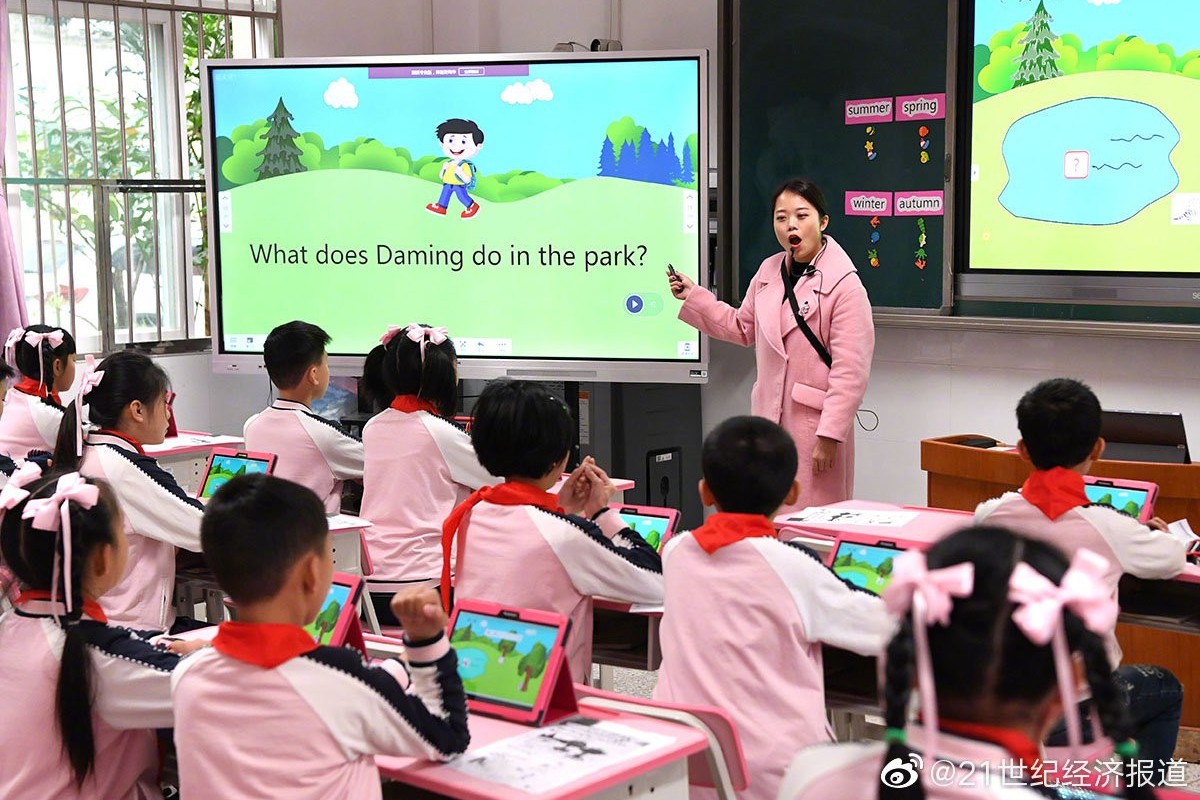
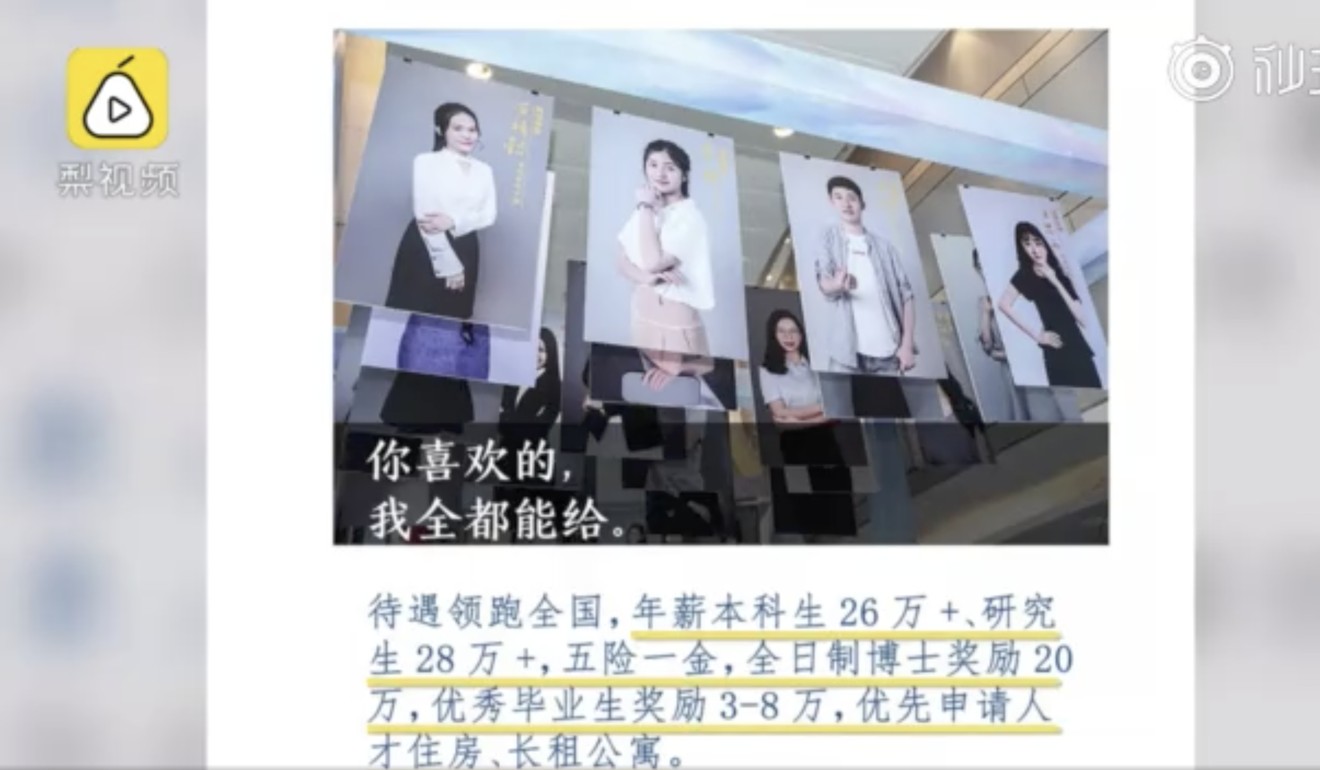
A recruitment advertisement offering schoolteachers in southern China the chance to earn up to 280,000 yuan (US$39,500) a year – more than three times the industry average – has sparked a massive response on social media.
Published by the Longhua district education bureau in Shenzhen, Guangdong province, the advert said it was looking for 400 high, middle and primary schoolteachers. As well as an annual salary of between 260,000 yuan and 280,000 yuan, depending on qualifications, the very best candidates would receive a bonus of between 30,000 and 80,000 yuan, it said.
New recruits would also be entitled to 165 days’ leave per year, though the advert – published on Tuesday on WeChat, China’s most popular messaging platform – did not make clear if that included weekends.
The Longhua district education bureau says it is looking for 400 new teachers. Photo: Weibo
The hashtag “Shenzhen middle schoolteachers are being recruited for almost 300,000 yuan a year” racked up almost 60 million views on Weibo, China’s Twitter-like platform.
While some people praised the authority for trying to attract the best possible candidates – it said itself that hundreds of teachers currently working in the district were graduates of China’s top universities, including Peking and Beijing Normal – others said that even with a sky-high salary most young professionals would find it hard to get by in Shenzhen.
“Do you know how expensive houses are in Shenzhen?” one person wrote on Weibo. “You need to wait several years after graduation before buying a house, unless you already have money.”
“Even if your starting salary is 200,000 yuan or 300,000 yuan, you’ll still need to wait 10 years before you’ve saved up enough to buy a house,” said another.
The advert said the new teachers will be get 165 days’ leave per year. Photo: Xinhua
The education bureau has not released any additional information about the recruitment campaign and calls to its offices on Friday went unanswered.
However, it said in a recent Q&A on its website that teachers’ salaries were in line with those of civil servants in the district, and had been steadily rising under a reform of the pay system.
Longhua is not the first district in Shenzhen to offer attractive salary packages, however. In May, 21st Century Business Herald reported that authorities in Yantian district had recruited 20 teachers from Beijing with the offer of between 290,000 yuan and 330,000 yuan a year.
According to central government figures released in May, teachers in China’s public schools earned an average of 92,383 yuan last year.
While Shenzhen has grown from a once sleepy fishing village to a vast metropolis, and is now slated to become a
model city for China, its education facilities have failed to keep pace with other areas of development. It also faces competition from more established centres, like Beijing and Shanghai.
Despite having a population of about 15 million, the city has just 344 primary schools. By comparison, the provincial capital Guangzhou, which has a similar population, has 961 primary schools and about 17,000 more primary schoolteachers.
According to official figures, of the nearly 80,000 students who applied for places at public secondary schools in Shenzhen last year, just 35,000 were accepted. That left the parents of the remainder having no option but to pay for places at private schools in the city or, in some cases, send their children overseas to study.
The problem is set to get worse as Shenzhen’s preschool system is already straining under the pressure of the city’s high birth rate.
Source: SCMP
Posted in attract, authorities, Beijing, Beijing Normal, best graduates, Birth rate, buy, Century Business Herald, Chinese city, education bureau, Guangdong, guangdong province, high, middle and primary schoolteachers, House, industry average, Longhua district education bureau, metropolis, model city, nation’s top universities, offers, overseas, Peking, preschool system, qualifications, recruitment advertisement, recruits, saved up enough, Shanghai, Shenzhen, sleepy fishing village, study, teachers, Twitter, Uncategorized, WeChat, Weibo, Yantian District |
Leave a Comment »
20/09/2019
- Superstitious medical student, 23, said it was customary in her hometown to throw money for good luck
- Cousin’s child had fallen ill on flight from Jiangxi to Sichuan, she said
A woman was fined for tossing coins onto the apron at an airport in Sichuan province. Photo: Weibo
A woman who
threw coins onto the parking apron at an airport in southwest China in the superstitious belief it might cure her cousin’s baby’s diarrhoea was instead fined 200 yuan (US$28), local media reported.
The incident happened on September 5, as the woman, surnamed Wang, and a group of her relatives arrived in Xichang, Sichuan province, after flying from Nanchang, Jiangxi province, to attend a family wedding, the Chengdu Business News reported on Friday.
Wang, 23, dropped the coins through the gap between the aircraft and the jet bridge as she and her family were disembarking.
Police said the medical student was shocked when she realised the trouble she had caused. Photo: Weibo
Although no one spotted what she had done at the time, airport workers later found three coins on the ground while conducting a security check and reported the matter to the police.
Officers reviewed footage from the airport’s surveillance cameras and identified Wang as the guilty party and went to see her at her hotel the following morning, the report said.
Wang said that during the flight her cousin’s baby had suffered from diarrhoea and that it was customary in her hometown to toss coins in the hope it would bring the child good luck.
“She said she didn’t realise her action could have had a very serious outcome,” a police officer was quoted as saying, adding that Wang appeared shocked when she realised the trouble she had caused.
However, as her actions had not resulted in any delays to flights or created any other problems, she was charged only with a minor offence.
Many Chinese think tossing coins before a flight will bring them good luck. Photo: EPA
Wang, who recently completed a bachelor’s degree in medicine and was preparing to sit a graduate school entrance examination, was worried the incident might have an impact on her future education and job prospects, the officer said.
More than 5,000 people commented on the story on news portal 163.com, with one asking: “You are so superstitious, how can you treat patients?”
In recent years there have been numerous reports of Chinese travellers causing delays and being punished for tossing coins onto airport runways and even into aircraft engines.
In April, a woman was detained for throwing six coins as she was about to board a plane in southern China in the hope it would guarantee her a safe trip.
Source: SCMP
Posted in aircraft engines, Airport, airport runways, airport workers, apron, baby’s diarrhoea, Bachelor's degree, Chengdu Business News, child, Chinese travellers, Chinese woman, conducting, Cousin, cure, customary, diarrhoea, disembarking, fallen ill, Family, fined, flight, footage, future education, gap, good luck, graduate school entrance examination, ground, guarantee, guilty party, hometown, Hotel, incident, jet bridge, Jiangxi Province, job prospects, medical student, medicine, Nanchang, officers, parking apron, plane, Police, punished, reported, safe trip, security check, sichuan province, Superstitious, surveillance cameras, threw coins, throw money, tossing coins, Uncategorized, worried |
Leave a Comment »
20/09/2019
NEW DELHI (Reuters) – India’s aviation safety regulator may ask Boeing (BA.N) to set up simulators in India to train pilots on the 737 MAX planes once it clears the aircraft as safe for flying, a senior official with direct knowledge of the matter told Reuters.
The 737 MAX, the fastest-selling plane in Boeing’s history, has been grounded the world over since March in the aftermath of two fatal crashes in five months that killed 346 people.
India’s Directorate General of Civil Aviation (DGCA) will also conduct an independent inspection of the grounded planes once they are cleared for flying by the U.S. regulator, the Federal Aviation Administration (FAA).
“Once FAA re-certifies it and says these issues have been resolved then we will evaluate whether what they are saying is right or wrong … We will carry out our own inspections,” the official said, adding that it is unlikely the planes will fly in Indian skies until next year.
Boeing is making software changes and drawing up a new pilot training plan, and will need to conduct a key certification test flight to get the FAA’s approval before it can put the planes back in the air. Some federal officials expect the test flight to be conducted in October.
“Later this year India will send a team. We would like to take a look at their flight data, some simulators will also be required for training pilots,” the official said, adding it may ask Boeing to have simulators in India.
Indian carrier SpiceJet (SPJT.BO) has about a dozen Boeing 737 MAX planes in its fleet and a total of 155 on order – among the largest single orders for the narrow-body plane.
Boeing has delivered some 385 737 MAX jets globally before the March grounding and has roughly 5,000 orders for the aircraft, a more fuel-efficient version of the manufacturer’s best-selling single-aisle 737 series.
Source: Reuters
Posted in Aircraft, aviation safety regulator, Aviation watchdog, Boeing, Boeing 737, Boeing 737 MAX, Directorate General of Civil Aviation (DGCA, fleet, India alert, Indian carrier, simulators, SpiceJet (SPJT.BO), U.S. Federal Aviation Administration (FAA), Uncategorized |
Leave a Comment »
19/09/2019
LANZHOU, Sept. 18 (Xinhua) — A total of 26 participants from 21 countries including Brazil, New Zealand and the United States attended the closing ceremony of the Gansu International Fellowship Program held Tuesday in the capital city of Lanzhou, northwest China’s Gansu Province.
Held by the provincial government, the 30-day program, starting from Aug. 20, focused on China’s overall development in areas such as the economy, society and culture, as well as its anti-poverty campaign.
Economic experts, scientists and sociologists from local universities and research institutes as well as government departments were invited to share their experience and give lectures.
During the program, all participants visited the Mogao Grottoes, a UNESCO World Heritage site. Based on the culture courses, they exchanged ideas with local officials and experts.
“I was very impressed with the comprehensive structure planning being undertaken to turn Lanzhou and Gansu as a whole into a major hub of China,” said Robert Love, a strategy and policy planner with Selwyn District Council, New Zealand, after his visit to the Lanzhou Urban Planning Exhibition Hall.
Philippe Dall’Agnol, a state attorney from Brazil, told Xinhua that China’s poverty alleviation efforts and means of increasing production were particularly worth studying, adding that when he returns to Brazil, he will continue to be a messenger of peace and a bridge of friendship, to actively promote exchanges and cooperation between the two countries.
Since it was initiated in 2006, a total of 309 participants from 62 countries have graduated from the program, making it an important platform for international exchanges and cooperation.
Source: Xinhua
Posted in anti-poverty campaign, Brazil, China's development, closing ceremony, Culture, Economic experts, economy, experience, Gansu International Fellowship Program, Gansu Province, government departments, Int'l fellowship program, Lanzhou, Lanzhou Urban Planning Exhibition Hall, lectures, local universities, Mogao Grottoes, New Zealand, poverty alleviation efforts, research institutes, scientists, Selwyn District Council, share, society, sociologists, Uncategorized, unesco world heritage site, United States, World, Xinhua News Agency |
Leave a Comment »
19/09/2019
Chinese Premier Li Keqiang meets with Russian President Vladimir Putin at the Kremlin in Moscow, Russia, Sept. 18, 2019. (Xinhua/Liu Bin)
MOSCOW, Sept. 18 (Xinhua) — Chinese Premier Li Keqiang on Wednesday met with Russian President Vladimir Putin at the Kremlin to discuss bilateral relations.
Li arrived at Moscow after holding talks and co-chairing the 24th regular meeting between Chinese and Russian heads of government with his Russian counterpart, Dmitry Medvedev, in St. Petersburg.
The Chinese premier firstly extended Chinese President Xi Jinping’s sincere greetings to Putin.
Recalling his meeting with Medvedev, Li said this visit helped draw a comprehensive plan for exchanges and cooperation between China and Russia in various fields, and achieved a lot of new results.
The three-day visit came as the two countries are celebrating the 70th anniversary of their diplomatic ties. During Xi’s visit to Russia in June this year, China-Russia relationship was elevated to a comprehensive strategic partnership of coordination for a new era.
China and Russia are each other’s biggest neighbor, said Li, adding that a healthy and stable development of bilateral relations is not only beneficial to both sides, but also conducive to the region and the world.
China is willing to continue to consolidate friendship, deepen cooperation and strengthen exchanges with Russia, as well as jointly safeguard an international system with the United Nations at its core and a multilateral trading system based on the World Trade Organization’s rules, which is of great significance for promoting development, prosperity, peace and stability of the world, said the premier.
Noting that China and Russia have broad prospects for cooperation, Li said that China stands ready to better synergize the Belt and Road Initiative (BRI) with the Eurasian Economic Union, to promote the simultaneous increase in both the scale and the quality of the two-way trade.
“China is further expanding opening up and the huge market potential will bring more opportunities to enterprises from all over the world including Russia,” Li said, expressing hopes that the two countries can continue to open up to each other, broaden investment and market access and create more cooperation opportunities for enterprises from the two countries.
With joint efforts, China-Russia practical cooperation will achieve more fruitful results and deliver greater benefits to the two peoples in the new era, Li said.
Congratulating on the 70th anniversary of the founding of the People’s Republic of China, Putin said relations with China are a priority of Russian diplomacy.
Bilateral cooperation has recorded remarkable achievements since the two countries established diplomatic ties 70 years ago, he said, noting that their relations have been upgraded to a comprehensive strategic partnership of coordination for a new era.
Russia-China relations are an important stabilizing factor in international relations, Putin said.
Noting the meeting between Li and Medvedev has effectively promoted bilateral practical cooperation with its many new results, he pledged Russia’s willingness to better align its development strategy with the BRI, constantly expand the two countries’ trade and promote common development.
Also on Wednesday, Li laid a wreath at the Tomb of the Unknown Soldier in Moscow.
Source: Xinhua
Posted in 70th anniversary, Belt and Road Initiative (BRI), Chinese premier Li Keqiang, Chinese President Xi Jinping, diplomatic ties, Dmitry Medvedev, Eurasian Economic Union, founding of the People's Republic of China (PRC), Kremlin, Moscow, Russian counterpart, Russian diplomacy, Russian President, russian president vladimir putin, St. Petersburg, Tomb of the Unknown Soldier, Uncategorized, United Nations, World Trade Organization (WTO), wreath |
Leave a Comment »
19/09/2019
Chinese President Xi Jinping, also general secretary of the Communist Party of China Central Committee and chairman of the Central Military Commission, visits a revolutionary memorial hall in Xinxian County, central China’s Henan Province, Sept. 16, 2019. Xi went on an inspection tour in Henan Monday. (Xinhua/Xie Huanchi)
ZHENGZHOU, Sept. 18 (Xinhua) — Chinese President Xi Jinping called for unshakable confidence and hard work with great determination to write a magnificent chapter of the central region in the new era during his inspection tour to Henan Province from Monday to Wednesday.
Xi, also general secretary of the Communist Party of China (CPC) Central Committee and chairman of the Central Military Commission, called for efforts to promote the continuous and healthy development of the economy as well as social harmony and stability to give people a stronger sense of fulfillment, happiness and security.
On Wednesday afternoon, Xi listened to the work reports of the CPC Henan Provincial Committee and the provincial government.
Xi said that China’s development is in good shape, but the international situation is still complicated. China is faced with new risks and challenges and must manage its own affairs well.
Calling on Henan to promote high-quality economic development and seize the opportunities provided by the strategy for the rise of central China, he urged the province to focus on the high-quality development of the manufacturing industry and give priority to innovation in the overall development.
Xi also stressed efforts to actively push forward the supply-side reform in agriculture.
Xi noted that priority should be given to the protection of ecosystems and addressing environmental issues at the source.
On improving people’s living standards, Xi called for particular attention to ensuring employment for key groups such as college graduates, veterans, laid-off and rural migrant workers, as well as those returning to rural areas.He also called for efforts to help culture flourish, and promote the preservation, innovation and development of fine traditional Chinese culture.
Xi stressed that the first stage of the education campaign themed “staying true to our founding mission” had been concluded while the second stage had just begun, and called for efforts focused on dealing with the most urgent problems facing the people.
Education on red traditions should make Party members and officials remain true to the original aspiration and undertake their mission, and strive to advance the great cause that the martyrs fought and sacrificed themselves for, Xi said.
During the three-day inspection, Xi visited a martyrs cemetery and a museum in an old revolutionary base, handicraft shops and a homestay in a township, as well as an oil-seed camellia plantation, a village which had escaped poverty and a coal mining machinery company.
He also inspected the ecological protection of the Yellow River at a museum and a national geopark and met with senior military officers stationed in Henan.
Source: Xinhua
Posted in Chairman of the Central Military Commission, Chinese President Xi Jinping, coal mining machinery company, college graduates, CPC Henan Provincial Committee, ecological protection, ecosystems, education campaign, environmental issues, first stage, general secretary of the Communist Party of China (CPC) Central Committee, great determination, handicraft shops, hard work, Henan, Henan province, homestay, martyrs, martyrs cemetery, Museum, national geopark, oil-seed camellia plantation, old revolutionary base, poverty, rural migrant workers, second stage, senior military officers, staying true to our founding mission, township, Uncategorized, unshakable confidence, veterans, Village, Yellow River |
Leave a Comment »






 CHINDIA ALERT: You'll be living in their world, very soon