Chindia Alert: You’ll be Living in their World Very Soon
aims to alert you to the threats and opportunities that China and India present. China and India require serious attention; case of ‘hidden dragon and crouching tiger’.
Without this attention, governments, businesses and, indeed, individuals may find themselves at a great disadvantage sooner rather than later.
The POSTs (front webpages) are mainly 'cuttings' from reliable sources, updated continuously.
The PAGEs (see Tabs, above) attempt to make the information more meaningful by putting some structure to the information we have researched and assembled since 2006.
BEIJING, Oct. 23 (Xinhua) — Chinese authorities demand primary and middle schools to step up education on environment protection and reduce the use of plastic, according to a statement issued Wednesday.
The schools should not force students to use plastic book covers, especially substandard ones, which could damage children’s health, said the statement.
The statement also requires low-carbon consumption in curricular and extracurricular activities and in school management so as to raise the environmental awareness among the students.
A farmer picks apples at a fruit and vegetables specialized cooperative in Nanhai New Area of Weihai, east China’s Shandong Province, Oct. 23, 2019. (Xinhua/Guo Xulei)
The 39 people found dead in a refrigerated trailer in Essex were Chinese nationals, it is understood.
Police are continuing to question lorry driver Mo Robinson, 25, who was arrested on suspicion of murder.
Officers in Northern Ireland have raided two houses and the National Crime Agency said it was working to identify “organised crime groups who may have played a part”.
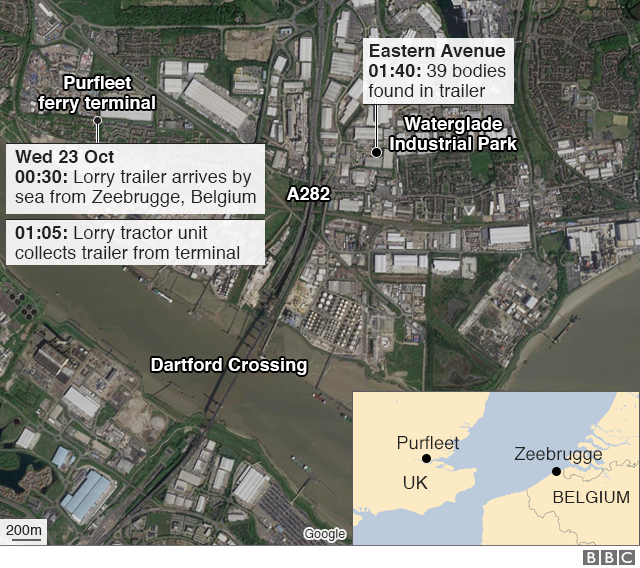
The trailer arrived in Purfleet on the River Thames from Zeebrugge in Belgium.
Ambulance staff discovered the bodies of the 38 adults and one teenager in the container at Waterglade Industrial Park in Grays just after 01:30 BST on Wednesday.
The lorry and trailer left the port at Purfleet shortly after 01:05.
Police said the tractor unit – the front part of the lorry – came from Northern Ireland and picked up the trailer from Purfleet.
Image copyright FACEBOOKImage caption The lorry driver has been named locally as Mo Robinson, from County Armagh
Councillor Paul Berry said the village of Laurelvale in County Armagh, where the Robinson family live, was in “complete shock”.
He said he had been in contact with Mr Robinson’s father, who had learned of his son’s arrest on Wednesday through social media.
“The local community is hoping that he [Mo Robinson] has been caught up innocently in this matter but that’s in the hands of Essex Police, and we will leave it in their professional hands to try to catch the perpetrators of this,” he said.
The Belgian Federal Public Prosecutor’s Office said it had opened a case which would focus on the organisers and others involved in the transport.
A spokesman said the container arrived in Zeebrugge at 14:29 on Tuesday and left the port later that afternoon before arriving in Purfleet in the early hours of Wednesday.
It was not clear when the victims were placed in the container or if this happened in Belgium, he said.
Media caption Essex lorry deaths: CCTV shows arrival at industrial park
St Peter and St Paul’s Church in Grays will be open for people to light candles and say prayers between 12:00 and 14:00.
A vigil is being held at 18:00 outside the Home Office to “call for urgent action to ensure safe passage” for people fleeing war and poverty.
The lorry was moved to a secure site at Tilbury Docks on Wednesday so the bodies could be “recovered while preserving the dignity of the victims”.
Essex Police initially suggested the lorry could be from Bulgaria, but later said officers believed it entered the UK from Belgium.
The force said formal identification of the 39 bodies “could be a lengthy process”.
A spokesman for the Bulgarian foreign affairs ministry said the truck was registered in the country under the name of a company owned by an Irish citizen.
He said it was “highly unlikely” the deceased were Bulgarians.
Shaun Sawyer, the National Police Chiefs Council lead for modern slavery and human trafficking, said while forces had prevented thousands of deaths, “tragically, for 39 people that didn’t work yesterday”.
He told BBC Radio 4’s Today programme even if there were routes perceived as easier to get through, organised criminals would still exploit people who could not access those.
“You can’t turn the United Kingdom into a fortress,” added Mr Sawyer, who is the Chief Constable of Devon and Cornwall Police.
Media caption I’ve seen people running out of a lorry’
Thurrock’s Conservative MP Jackie Doyle-Price said there needed to be an international response.
“We have partnerships in place but those efforts need to be rebooted, this is an international criminal world where many gangs are making lots of money and until states act collectively to tackle that it is going to continue,” she said.
Richard Burnett, chief executive of the Road Haulage Association, said temperatures in refrigerated trailers could be as low as -25C.
He described conditions for anyone inside as “absolutely horrendous”.
Prime Minister Boris Johnson said it was an “unimaginable tragedy and truly heartbreaking”.
In 2015, the bodies of 71 people were found in an abandoned lorry on an Austrian motorway. Police suspected the vehicle was part of a Bulgarian-Hungarian human trafficking operation.
Photo taken on Oct. 22, 2019 shows the construction site of Kuwait New Refinery Project in Al Ahmadi Governorate, Kuwait. The sixth set of oil-refining equipment for the Kuwait New Refinery Project (NRP), constructed by China Petrochemical Corporation (Sinopec), was handed over to its general contractor on Tuesday. (Xinhua/Nie Yunpeng)
KUWAIT CITY, Oct. 22 (Xinhua) — The sixth set of oil-refining equipment for the Kuwait New Refinery Project (NRP), constructed by China Petrochemical Corporation (Sinopec), was handed over to its general contractor on Tuesday.
The successful handover of all the six sets of equipment marked the ending of the project undertaken by Sinopec Fifth Construction Company, NRP’s sub-contractor.
At the handover ceremony, Cheng Yongru, economic and commercial counselor at the Chinese embassy in Kuwait, said that the project is a model for cooperation between China’s Belt and Road Initiative (BRI) and Kuwait Vision 2035.
He expressed the hope that more Chinese companies would continue strengthening cooperation with the Kuwaiti side for more achievements.
In the past three years, Sinopec Fifth Construction Company has installed on the project a total of 22,400 tons of steel structures, welded 2.4 million-inch pipes, installed 1026 units of equipment, and laid 3,700 km of cables, Wang Zhiwei, the project manager of the company.
Mustafa Abdul-Hamid Al Sane, the Kuwaiti representative on the project and president of Al Manafa Group, hailed the successful handover of the refinery project.
It is a huge achievement, he said, noting that “we are very impressed to see this done in a short time.”
Under the contract, the Chinese company is responsible for installing six sets of oil-refining equipment for the NRP with contract value of 519 million U.S. dollars.
Wang said that the project is currently the largest refinery in the Middle East.
Photo taken on Oct. 22, 2019 shows Yuan Longping (C), the “father of hybrid rice”, at an appraisal meeting in central China’s Hunan Province. The third-generation hybrid rice developed by Yuan Longping, the “father of hybrid rice,” and his team underwent its first public yield monitoring from Monday to Tuesday and achieved high output. The final yield of the tested variety, G3-1S/P19, came to 1,046.3 kg per mu (about 667 square meters), based on two plots of land in Qingzhu Village under the city of Hengyang in Hunan. (Xinhua/Chen Zeguo)
CHANGSHA, Oct. 22 (Xinhua) — The third-generation hybrid rice developed by Yuan Longping, the “father of hybrid rice,” and his team underwent its first public yield monitoring from Monday to Tuesday and achieved high output.
The final yield of the tested variety, G3-1S/P19, came to 1,046.3 kg per mu (about 667 square meters), based on two plots of land in Qingzhu Village under the city of Hengyang in central China’s Hunan Province.
Experts agreed that the rice has a stout stem, fertilizer tolerance, lodging resistance, large spike and more grains.
“One of the most important characteristics of the third-generation hybrid rice is that it has a shorter growing period,” said Qian Qian, deputy director of the China National Rice Research Institute.
Qian said some previous high-yielding hybrid rice varieties in China took 160 to even 180 days from sowing to harvesting, while the figure was shortened to around 125 days for the new variety.
“A shorter growth period can reduce the use of pesticides and fertilizers, thus reducing cost and improving production efficiency,” Qian said.
Unlike the previous two generations that required a large amount of water and fertilizers as well as demanding growing conditions and technological support, the third-generation hybrid rice is easier to be cultivated by ordinary farmers.
The soil, altitude and climate of the test site were not “ideal conditions” carefully selected beforehand but were close to the paddies of ordinary farmers, according to Zhao Bingran with Hunan hybrid rice research center.
The whole process was organized by the Hunan Society of Agronomy under the supervision of experts from the Chinese Academy of Agricultural Sciences, the China National Rice Research Institute, Hunan’s agriculture and rural affairs department and multiple Chinese universities.
At present, China’s average yield of rice is about 500 kg per mu. Ordinary farmers can produce 600 kg to 700 kg of rice per mu by growing some excellent second-generation hybrid rice varieties, said Li Xinqi, a researcher with Hunan hybrid rice research center.
“However, under the same planting conditions and environment, the yield of the third-generation hybrid rice could reach 800 kg per mu,” Li added.
China now feeds around 20 percent of the world’s population with less than 9 percent of the world’s arable land.
Yuan, who developed the world’s first hybrid rice in the 1970s, has set multiple world records in hybrid rice yields in previous years, making great contributions to the food security of China and the world.
“We hope to promote the planting of 100 million mu of the third-generation hybrid rice in China in the short term and increase grain production by 20 billion kg, and apply the technology into the research of sea rice,” Li said. “In the medium and long term, we hope to increase the planting area of hybrid rice by 70 percent worldwide.”
At present, Yuan’s team has nine third-generation hybrid rice combinations under trial, which are expected to achieve commercial seed production in the following three to four years.
“The third-generation hybrid rice has the comprehensive strength to promote a greener and more sustainable development of China’s rice production with higher quality and yield,” Yuan said.
Chinese geologists think they have formula that could help to increase control of market in the elements hi-tech industries depend upon
Simple combination of clay mined for porcelain production, granite bedrock and acid rain could point to lucrative sources of rare earths
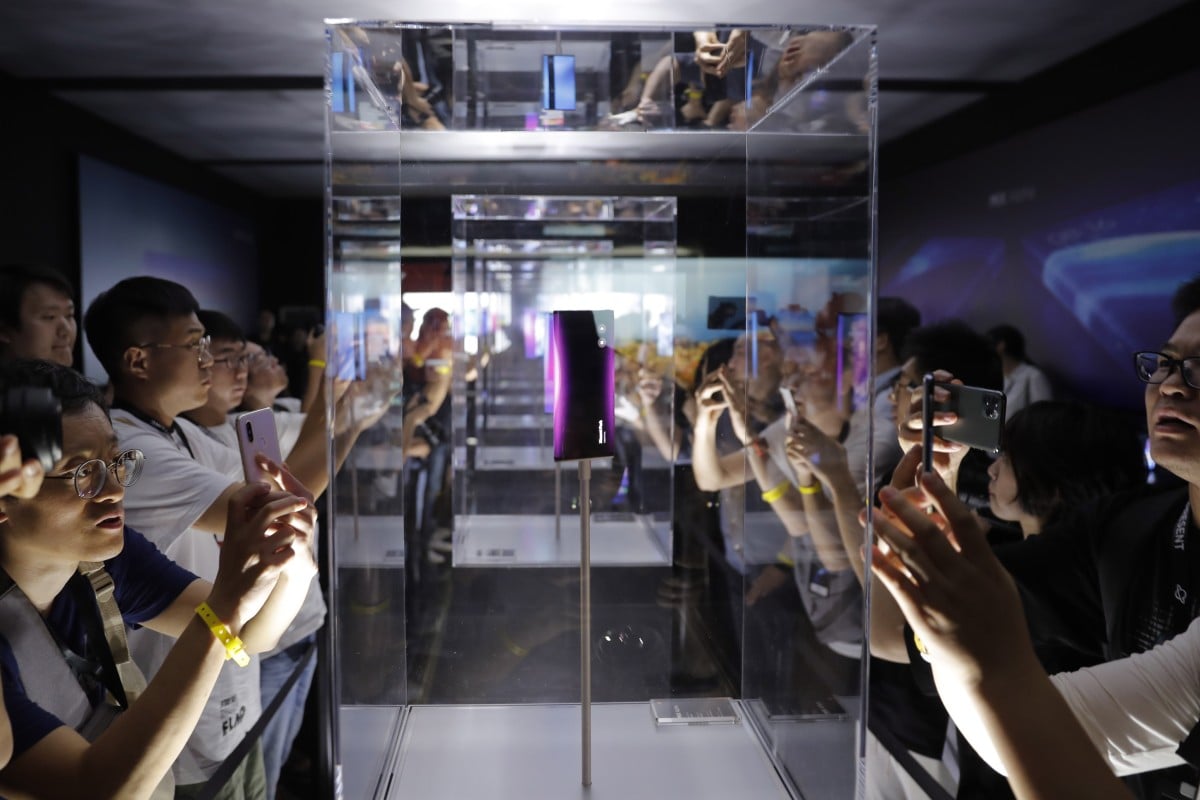
China has 80 per cent of the reserves of rare earth elements the world needs to keep talking on its smartphones, and geologists in Guangzhou think they know why. Photo: EPA
Geologists in southern China say they have isolated a series of critical factors that could make it easier to find rare earth elements used in hi-tech consumer goods such as smartphones.
China has more than 80 per cent of the world’s reserves of heavy rare earths such as terbium, dysprosium and holmium concentrated in a few provinces to the south of the country.
The reason for the concentration is one of the biggest puzzles in geology, but researchers at the Guangzhou Institute of Geochemistry in Guangdong province say the answer may be found in a combination of clay deposits, acid rain and granite that is distinctive to southern China.
Professor He Hongping and his colleagues came to the conclusion by testing the interaction between rare earths and different types of clay. Through their research they found that kaolinite – or china clay – was the best at absorbing rare earths from water.
The clay, named after Gaoling village near Jingdezhen, a centuries-old ceramic production centre in east China’s Jiangxi province, is a raw material for porcelain production.
While kaolinite is found in many countries, those places do not have rare earth deposits – probably because of the lack of acid rain, He said.
“You need the right environment.”
He said that rocks that contained tiny amounts of rare earth elements weathered faster in an acid environment, but the acidity could not be too high or the rare earth might run off before it could be captured by the clay.
Why Beijing cut tax rate on rare earths amid trade war
Rainwater with the right natural acidity often occurred in areas around 20 degrees latitude, such as southern China, he said.
The last step was to locate the source rock. Granite formed in volcanic eruptions between 100 million and 200 million years ago is considered to be the main source of rare earths.
He said that part of the Pacific tectonic plate containing rare elements might have been forced under the Eurasian Plate and was pushed to the surface as magma that formed rocks.
Other countries could learn from the Chinese experience, said He, whose team submitted their findings to the research journalChemical Geology.
Recent discoveries in Vietnam, Australia and North Carolina in the United States conformed to the Guangzhou team’s theory, but there was still more research to do, he said.
“Rare earth deposits are quite unlike minerals such as copper. Sometimes they occur in this mountain but not in another nearby with almost the same geological features. Sometimes they occur in one half of the mountain but not in the other.”
With China and the US engaged in a trade war, and Beijing cutting taxes on mining companies looking for these elements, the pressure was on to unlock the secrets of China’s abundant rare earth deposits, he said.
Does China’s dominance in rare earths hold leverage in trade war?
Dr Huang Fan, associate researcher with the China Geological Survey, said the Guangzhou discovery would help geologists to find more rare earths.
Most rare earth mines were located along the borders between provinces such as Guangdong and Jiangxi, but recently there were discoveries on a plateau in Yunnan province, where few geologists believed rare earths could be found, he said.
“There are many more rare earth deposits out there waiting for us.”
International rules on seabed mining set for approval in 2020, with China most likely to lead the race, UN body says
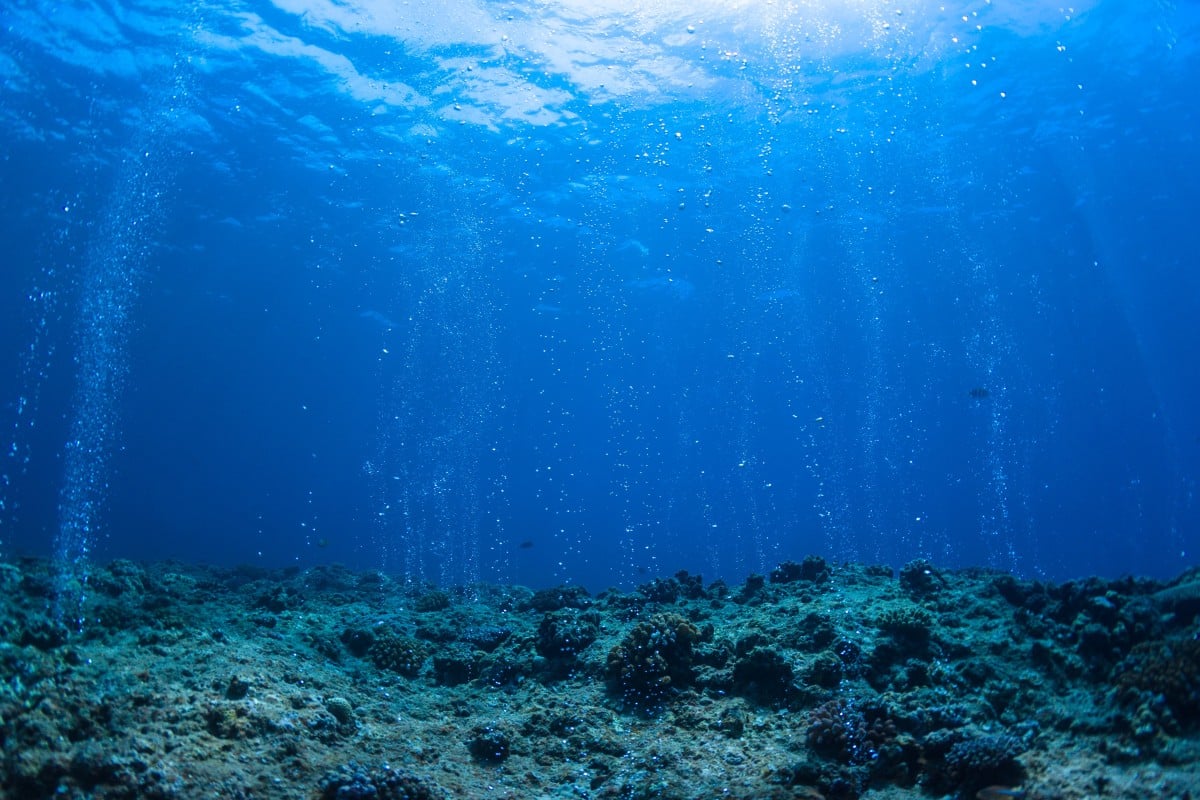
Governments, research institutions and commercial entities have already signed contracts for the exploration phase to extract minerals from the seabed, with China holding the most. Photo: Shutterstock
China is in pole position for the global race to start deep sea mining operations to extract valuable minerals used in smartphones and electric car batteries from the seabed.
The head of the International Seabed Authority (ISA) said China was likely to become the first country in the world to start mining seabed minerals if the international rules for exploitation were approved next year.
The ISA has already signed 30 contracts with governments, research institutions and commercial entities for exploration phase, with China holding the most, five contracts.
The body, which was established to manage the seabed resources by the United Nations Convention on the Law of the Sea (UNCLOS), is aiming to adopt seabed mineral exploitation rules by July 2020.
As China leads the hunt for deep-sea minerals, environmental concerns surface
“I do believe that China could easily be among the first (to start exploitation),” said Michael Lodge, ISA general secretary, who visited China last week.
“The demand for minerals is enormous and increasing, there is no doubt about the market.”
There is also interest from European countries including Belgium, Britain, Germany and Poland, as well as from the Middle East.
The quest to exploit seabed minerals – such as polymetallic nodules containing nickel, copper, cobalt and manganese – is driven by demand for smartphones and electric car batteries, and the need to diversify supply.
However, no one has yet shown that deep sea mining can be cost effective and some non-governmental organisations have questioned whether it would be possible to reach a deal on exploitation rules next year.
“I think, it’s pretty good. I think the current draft is largely complete,” Lodge said, when asked about prospects of adopting the rules by next July.
One of the issues yet to be agreed is proportionate financial payments to the Jamaica-based ISA for subsea mineral exploitation outside national waters.
“We are looking at ad valorem royalty that would be based on the value of the ore at a point of extraction … The middle range is 4 per cent to 6 per cent ad valorem royalty, potentially increasing over time,” Lodge said.
New iPhone models to use recycled rare earths, Apple says
If the rules are approved, it could take about two to three years to obtain permits to start deep sea mining under the current draft, Lodge said.
Canadian Nautilus Minerals had tried to mine underwater mounds for copper and gold in the national waters off Papua New Guinea, but ran out of money and had to file for creditor protection earlier this year.
This has not deterred others, such as Global Sea Mineral Resources (GSR), a unit of Belgian group DEME, and Canada’s DeepGreen, to continue technology tests and research.
In July, Greenpeace called for an immediate moratorium on deep sea mining to learn more about its potential impact on deep sea ecosystems, but the ISA has rejected such a proposal.
Image copyright HONGXING NEWSImage caption A pet cafe in China’s Sichuan province lets people play with dogs dyed to look like pandas.
Animal cafes have been springing up all over the world for the last two decades as a place for animal lovers to enjoy a meal alongside their furry friends.
But a new “panda” cafe in Chengdu in south-western China – internationally known as the home of the giant panda – is raising eyebrows and a lot of concern.
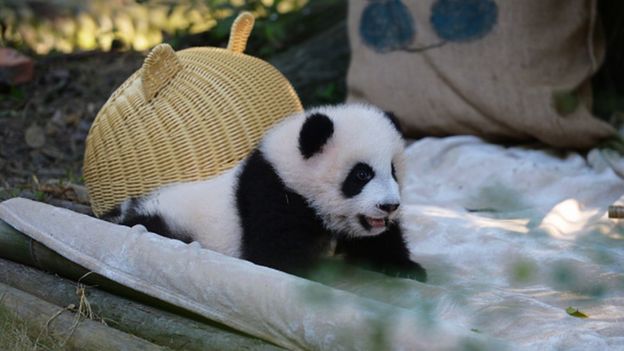
According to the Chengdu Economic Daily, a cafe recently opened in Chengdu, seems at first glance to be home to six giant panda cubs.
But the “panda” cafe is – in fact – all bark and no bite because on closer inspection, it turns out they are actually the Chow Chow breed of dogs, which have been dyed to look like China’s national animal.
‘Could damage their fur and skin’
The owner of the cafe, Mr Huang, says that as well as serving food and drink, the cafe provides a dyeing service.
He tells Hongxing News that he imports his dye from Japan and has hired special staff for dyeing the dogs.
“Every time we dye it costs 1,500 yuan [$211; £163],” he says. “The dye is really expensive.” He says that this is to ensure the quality of the dye, and says that it in no way affects the animals.
Hongxing News says that a short video inside the cafe had raised awareness of it nationally and has boosted visitor figures.
But it has also raised a lot of concern. One vet, Li Daibing, told Hongxing News that he urged people not to dye their pets, saying: “This could damage their fur and skin.”
Image copyright VCGImage caption Chengdu has become a popular tourist site for seeing the vulnerable species, and national Chinese treasure: the giant panda.
‘Has become normal’
Dyeing pets became a full-blown craze in China in the early 2010s, first for competitions, but then amidst a domestic wave of “extreme dog pampering”.
Since, however, there has been a growing consciousness in China about animal ethics and testing. Many of the thousands of social media users commenting on the popular Sina Weibo microblog have voiced their concern about such treatments being used on animals.
Many call the idea “crazy” and note that hair dye can “damage people’s hair and scalp”, so could similarly affect a dog.
But others argue that “it’s really cute”, and say that they perceive animal dyeing “has become normal”.
‘Snow Dragons’ Xuelong and Xuelong II leave on China’s 36th Antarctic expedition
Mission to resource-rich continent carries great scientific and economic weight
A ceremony is held for the maiden voyage of China’s home-built polar icebreaker Xuelong II in Shenzhen, Guangdong province. Photo: Xinhua
China has sent two icebreakers to the Antarctic in its most ambitious polar expedition to the Earth’s resource-rich southernmost continent yet.
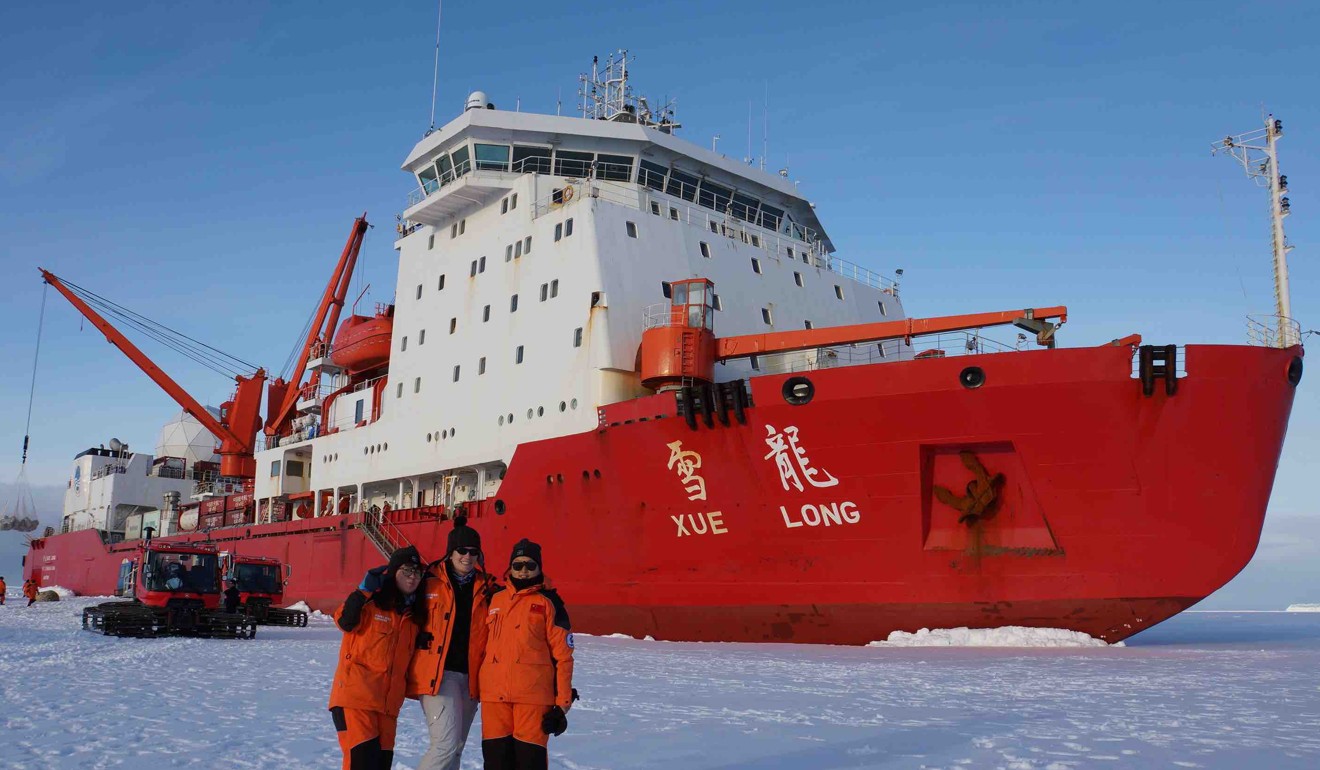
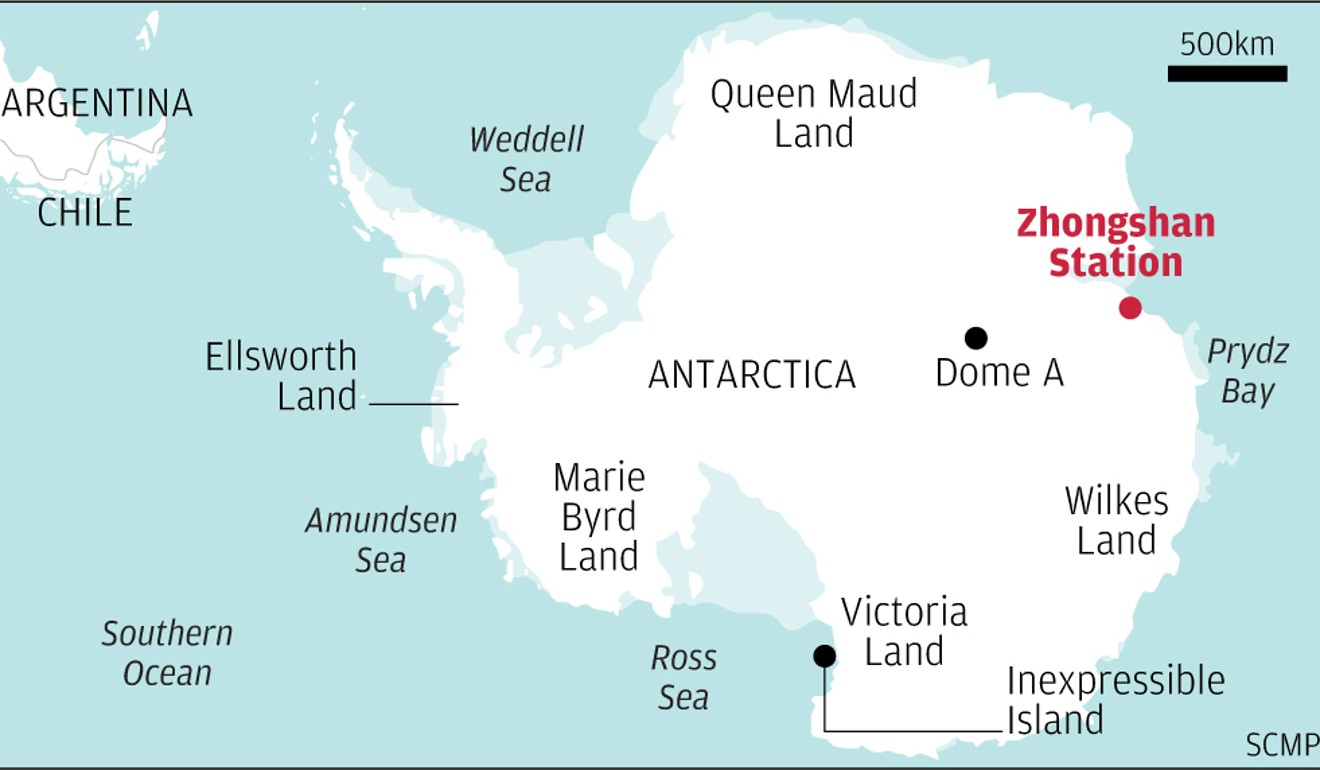
The Xuelong, or Snow Dragon, left Shanghai on Tuesday morning with a crew of 107 and 1,450 tonnes of supplies on board. It is expected to meet another icebreaker, Xuelong II, at Zhongshan Station on Prydz Bay in East Antarctica in late November before the ships carry out separate missions in the region.
This will be the 36th official Antarctic expedition for China, and the first involving two research icebreakers. Xuelong II, the first Chinese-built vessel of its kind, was commissioned in July and left for its maiden Antarctic journey last week. The ships will be back in China by late spring next year.
The voyages have been hailed by state media as “the start of China’s new era of polar exploration”. Zhao Yanping, the captain of Xuelong II, was quoted by the Science Daily website as saying that experts believed the ships could significantly expand Chinese science missions in the polar regions.
China’s Xuelong icebreaker was bought from Ukraine in 1994. Photo: Handout
Xuelong II, with propellers at bow and stern, can make up to 15 knots (28km/h) in open water and three knots (5.6km/h) when breaking ice. Observers said it could pave the way for a nuclear-powered icebreaker.
Xuelong, the country’s first polar research vessel, bought from Ukraine in 1994, is to carry out surveys in the Amundsen and Ross seas.
A report by The Beijing News said that Xuelong’s crew would also visit Inexpressible Island in Terra Nova Bay on the Ross Sea to help in construction work on China’s fifth Antarctic scientific station, which is expected to be operational in 2022.
How Chinese access to Chilean port could give Antarctic exploration activities a boost
Since it joined the Antarctic Treaty in June 1983, China has steadily increased its stakes in a region that contains vast, untapped natural resources, including oil, gas and minerals.
Last year, China announced it would begin building its first permanent airfield on Antarctica – a 1,500 metre strip to be located on an ice cap about 28 kilometres from Zhongshan Station.
Meanwhile, Chinese businesses have taken an interest in the region. Food companies have been among the largest players in fishing krill – tiny, protein-rich shrimp-like creatures that are abundant in Antarctic waters. Tourists from China now account for 16 per cent of the total number of travellers to the world’s last great untouched wilderness, second to visitors from the United States, according to the International Association of Antarctica Tour Operators.
While Beijing said its engagement in the Antarctic would be “peaceful” and the focus of its expeditions was on protecting the environment, its growing presence there has raised concerns in the West, particularly among established explorers such as Australia and the US.
Australia said at the annual meeting of the Commission for the Conservation of Antarctic Marine Living Resources in Hobart, Tasmania, this week, that despite opposition from China and Russia, it would push for the creation of marine reserves off East Antarctica.
China’s new icebreaker Snow Dragon II ready for Antarctica voyage later this year
China and Australia have also been at odds over Beijing’s proposal to establish a code of conduct for the region around Dome A on the Antarctic Plateau, an area on the top of the ice sheet ideal for space and satellite observation. Canberra rejected the proposal, saying that Dome A is inside its territory.
Together the two countries are home to more than 80% of the world’s unicorns.
It comes as Washington and Beijing fight a trade war and jostle to become the world’s technology leader.
“China and the US dominate… despite representing only half of the world’s GDP and a quarter of the world’s population,” said Hurun Report Chairman Rupert Hoogewerf.
Chinese payments company Ant Financial tops the list with a valuation of $150bn.
Founded in 2014, Ant Financial’s main business is online payment platform Alipay, which was spun out of e-commerce giant Alibaba.
China’s Bytedance ranks second, with a valuation of $75bn. The fast-growing technology firm owns popular video-sharing platform TikTok.
Chinese ride-sharing company Didi Chuxing rounds out the top three, valued at $55bn.
High-profile US companies including home-rental site Airbnb, office space firm WeWork and electronic cigarette maker Juul also feature in the top 10.
Technology tensions
The report comes at a time of tense relations between the world’s two largest economies.
The US and China have been embroiled in a trade battle for the past year. Their power struggle has also played out in the technology sector, with Chinese telecoms giant Huawei becoming a central part of their dispute.












 CHINDIA ALERT: You'll be living in their world, very soon