Archive for November, 2019

02/11/2019

Interview: Chinese premier’s visit to further deepen Thailand-China ties, says Thai PM

BANGKOK, Nov. 2 (Xinhua) — The upcoming visit by Chinese Premier Li Keqiang to Thailand will further deepen the comprehensive strategic cooperative partnership between China and Thailand, Thai Prime Minister Prayut Chan-o-cha told Xinhua recently.

Li is scheduled to attend the 22nd China-ASEAN (10+1) leaders’ meeting, the 22nd ASEAN-China, Japan and Republic of Korea (10+3) leaders’ meeting, and the 14th East Asia Summit in the Thai capital Bangkok and pay an official visit to Thailand.

Prayut expressed his welcome to Li’s visit in the written interview, adding that in recent years, the bilateral comprehensive strategic cooperative partnership has continued to deepen on the basis of mutual respect, mutual trust, mutual-benefit and win-win cooperation.

The two sides have witnessed frequent exchange of visits by high-ranking officials and deepened communication, which were demonstrated by the rapid delivery of key connectivity projects such as the Thai-Chinese high speed rail and the high speed rail project linking three airports in Thailand, said Prayut.

Both Thailand and China attach great importance to infrastructure and connectivity construction and have achieved notable results in bilateral economic cooperation, Prayut added.

Noting that as this year’s rotating chair of ASEAN, Thailand has proposed the “Connecting the Connectivities” approach, Prayut said that Thailand has been striving to push forward the building of the Thai-Chinese high speed rail project and enhance the synergy between China’s Guangdong-Hong Kong-Macao Greater Bay Area and Thailand’s Eastern Economic Corridor (EEC).

The Thai prime minister said that he expected China and ASEAN to reach an agreement on dovetailing the Belt and Road Initiative and the Master Plan on ASEAN Connectivity 2025 during their upcoming meeting in Bangkok, adding that such move will contribute to speeding up the regional connectivity process.

He also said both countries could tap the potential of regional cooperation frameworks or initiatives such as Lancang-Mekong cooperation mechanism to strengthen cooperation.

The Thai government welcomes Chinese enterprises to invest in Thailand’s EEC, and will strongly support Thai-Chinese cooperation in technological innovation, e-commerce and other areas while learning from China’s experience in poverty-elimination, environmental protection and smog control, said the prime minister.

Prayut said the Thai side hopes that Li’s visit will further deepen the comprehensive strategic cooperative partnership between the two countries and boost the development of Thailand’s 20-year national strategy and the “Thailand 4.0” strategy, so as to help the country better deal with the ever-changing global economic and political situation.

On ASEAN-China ties, Prayut said the development of the strategic partnership between the two sides in the past decade has demonstrated that the relationship is the most fruitful one between ASEAN and its dialogue partners and also one of the important pillars in maintaining regional peace, stability, prosperity and sustainable development.

ASEAN and China have deepened cooperation and realized mutually beneficial and win-win results in various fields this year, including connectivity, smart cities, and people-to-people exchanges, which are priority areas defined in the China-ASEAN Strategic Partnership Vision 2030, he said.

Prayut said that Thailand believes that China will support ASEAN in community building, support ASEAN’s central role in regional cooperation and its bigger role in building an open and inclusive regional cooperation framework.

Source: Xinhua

02/11/2019

Xi congratulates 120th anniversary of oracle bone inscription discovery, research

BEIJING, Nov. 2 (Xinhua) — Chinese President Xi Jinping has sent a congratulatory letter on the 120th anniversary of the discovery and research of oracle bone inscriptions.

Xi, also general secretary of the Communist Party of China (CPC) Central Committee and chairman of the Central Military Commission, stressed enhancing cultural confidence and promoting exchanges and mutual learning among civilizations in the letter.

Xi extended congratulations to experts and scholars who have long been dedicated to the preservation and promotion of fine traditional culture such as oracle bone inscriptions.

The discovery of the oracle bone inscriptions from Yin Ruins is of epoch-making significance in Chinese civilization and even human civilization, Xi said.

Oracle bone inscriptions are considered the origin of Chinese characters and represent the oldest fully-developed system of characters discovered in China so far.

Xi described oracle bone inscriptions as the roots of fine traditional Chinese culture that merits even better preservation and development.

Over the past 70 years, the Party and the state have attached great importance to the preservation and development of fine traditional Chinese culture represented by oracle bone inscriptions, Xi said.

Noting the remarkable progress in the study of oracle bone inscriptions, Xi stressed efforts to continue such research of ancient characters.

He called on researchers to further explore the historic and cultural values of oracle bone inscriptions and promote exchanges and mutual learning among civilizations.

On Friday, a symposium was held at the Great Hall of the People to mark the 120th anniversary of the discovery and research of oracle bone inscriptions. Xi’s letter was read at the symposium.

Vice Premier Sun Chunlan, also a member of the Political Bureau of the CPC Central Committee, addressed the symposium, calling for earnest implementation of Xi’s instructions, and better research and preservation efforts of oracle bone inscriptions.

She spoke of the need to use technologies such as artificial intelligence recognition to push for new breakthroughs in the research.

Discovered in 1899, oracle bone inscriptions are considered one of the world’s four ancient characters and have been included in the UNESCO Memory of the World Register.

Source: Xinhua

02/11/2019

Chinese scientists create tiny battery capable of working in ultra-low temperatures

  • Team from Dalian Institute of Chemical Physics says its goal is to ‘develop an all-season battery that is low cost but high safety for consumer products’
  • Researchers make breakthrough by using hard carbon and lithium vanadium phosphate
Chinese researchers say they have made a breakthrough in the development of small lithium batteries that can withstand low temperatures. Photo: Xinhua

Chinese researchers say they have found a way to produce a tiny, lightweight lithium battery for use in mobile phones and electric cars that can hold up to 80 per cent of its charge in temperatures as low as minus 40 degrees Celsius.

The breakthrough came by using a combination of a new material called hard carbon along with lithium vanadium phosphate, the team from the Dalian Institute of Chemical Physics said in a paper published in this month’s edition of the scientific journal Nano Energy.

“Our goal is to develop an all-season battery that is low-cost but high-safety for consumer products,” said Song Zihan, its lead author.

It was an unprecedented approach, but “we proved it works”, he said.

The idea of a battery that can withstand extreme cold is not new. Photo: Shutterstock

The idea of a battery that can withstand extreme cold is not new, and they are already in use in space and in the Arctic and Antarctic.

But they tend to be very bulky because of the heating system and large amount of insulation they need to function properly at sub-zero temperatures.

Such measures are neither physically nor economically viable for applications like smartphones, cameras, laptops or electric cars. The trick, Song said, was replacing the soft graphite in normal lithium batteries with hard carbon.

Graphite is a good conductor and often used for the anode at the bottom of a battery, where electrons are generated. But the performance of graphite drops as the mercury slides.

How military tech sparked a robot revolution in firework factories

Song said that hard carbon was a new material that had attracted a lot of research interest in recent years, and compared with graphite, it had a much higher tolerance for the cold.

That was because of its highly irregular and “almost messy” structure, comprising layers of carbon atoms that are interconnected with each other, he said.

However, hard carbon also caused a rapid depletion of the lithium ions that served as an agent carrying the electric flow in battery, he said.

The researchers want to make battery suitable for use in consumer products. Photo: EPA-EFE

In the past, researchers have tried adding lithium powders or flakes to improve battery life, but the approach has proven costly and dangerous, mostly because pure lithium is highly reactive.

So Song and his colleagues used a composite material called lithium vanadium phosphate as the positive cathode on top of the battery.

The composite was capable of providing enough extra lithium ions for the hard carbon’s need without increasing the risk of fire or explosion, and it was cheap, he said.

“The pairing of hard carbon and lithium vanadium phosphate worked a charm,” Song said.

But the technology is still a long way from being commercially viable.

The battery Song’s team made is far too small for any real-life applications, and enlarging it would require some “innovative engineering solutions”, he said.

Another scientist involved in the project said the team was working with battery manufacturers to see if the technology could be commercialised.

Source: SCMP

02/11/2019

China’s Nobel ambitions on show as dozens of science laureates meet in Shanghai

  • Chinese academics and young scientists join global scientific elite to explore frontiers of research
  • International joint laboratory announced at Shanghai forum
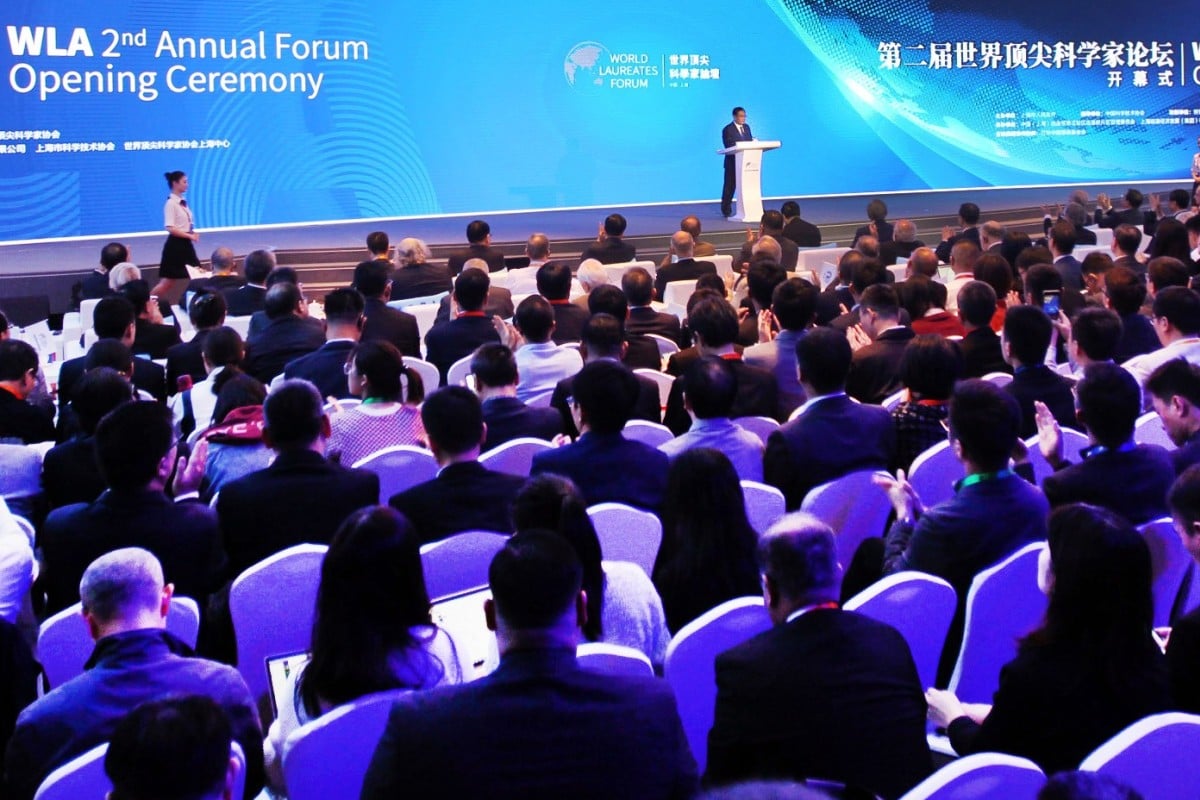
More than three dozen Nobel Prize winners for science were among the gathering in Shanghai for the second annual forum of the World Laureates Association. Photo: Xinhua

Shanghai hosted one of the largest gatherings of Nobel laureates in the world last week, with 44 Nobel Prize-winning scientists in the city for a government-sponsored forum with the lofty goal of discussing science and technology for the “common destiny of mankind”.

The four-day forum, which brought together young Chinese scientists and the cream of the international scientific crop, was a signal of China’s ambitions for its own researchers to take their place at the forefront of development and bring home their own prizes.

Experts agreed the event – the second in an annual “World Laureates Forum” – was hardly a public relations stunt, but a testament to China’s deep-seated, steadfast desire to learn from the world’s top scientists and join them, and their home countries, as leaders on the frontier of science and produce regular home-grown contenders for top prizes.

“The Nobel Prize is the holy grail for China, and it is still quite elusive for Chinese indigenous scientists to be awarded this prestigious recognition,” said Chengxin Pan, an associate professor of international relations at Australia’s Deakin University. “You could say China has a Nobel Prize complex.”

China says US tech ban is a barrier but will not halt scientific advance
Becoming a leader in the sciences was more than just an issue of driving economic expansion through technology and innovation, it was a matter of national preservation with deep roots in Chinese history, Pan said.

“China sees the lack of power, lack of scientific achievements and modern technology as largely responsible for the backwardness and humiliation it suffered during much of the 19th century and early 20th century,” he said.

“They need to make up for lagging behind by engaging with the top leading scientists in the world, wherever they are from.”

To that end, celebrated theoretical physicists, organic chemists, neuroscientists and biologists joined Chinese academics and youth scientists for the conference organised by the Shanghai city government and an association of top global scientists known as the World Laureates Association.

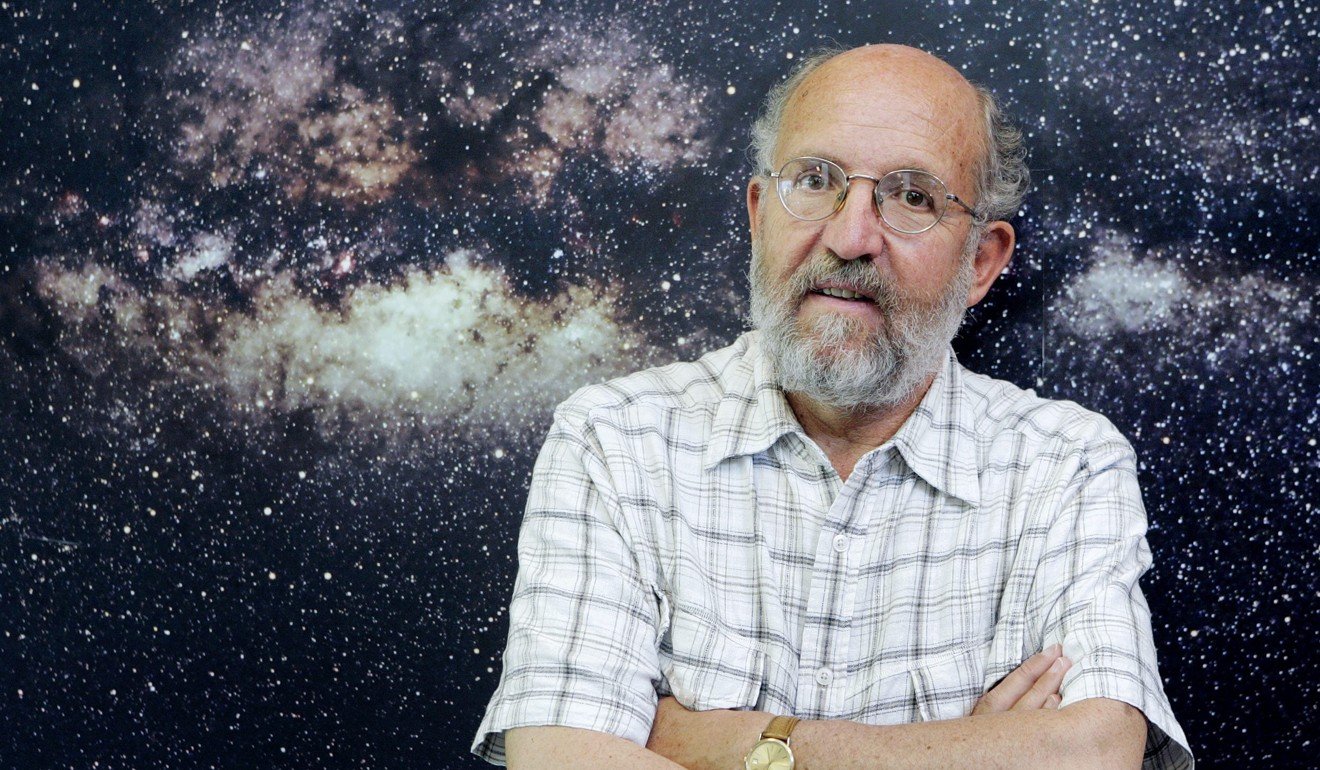
Among them were 2019 Nobel Prize for physics laureates Michel Mayor and Didier Queloz, as well as winners of other top prizes including the Wolf Prize, Lasker Award, and Fields Medal for mathematics. Discussions included the latest breakthroughs in disease prevention and drug development, sustainability and new energy, aerospace and black holes, as well as what drives their scientific curiosity.

Swiss professor Michel Mayor, astrophysicist and director of the Geneva Observatory, was one of the co-winners of the 2019 Nobel Prize in physics and among the attendees at the forum in Shanghai. Photo: EPA-EFE

The event, which culminated with the announcement of an international joint research laboratory for the world’s top scientists, to be established in Shanghai, was lauded by President Xi Jinping in an open letter to the attendees.

“China attaches great importance to the development of the frontier fields of science and technology,” Xi said, stressing China’s willingness to “work with all countries of the world” to “address the challenges of our age”.

The high calibre meeting was a rare opportunity for China to broadcast its message of commitment to scientific advancement, at a time when the reputation of its universities, academics and hi-tech companies have been taking a broad hit as part of a blowback from the US-China trade and tech wars, as well as suspicion among Western countries of China’s geopolitical aims.

In the past year, a number of major global Chinese tech companies, including Huawei and Hikvision, have been blacklisted in the US, while US tech giants like Google and Apple noticeably skipped out on China’s annual state-run World Internet Conference last month. Academic ties between Chinese and Western universities have also been called into question over suspicions of espionage, fraud, and intellectual property theft.

“China is saying we are still open for business and, at this juncture, we more warmly welcome foreign scientists and collaboration between countries in science and technology,” said Zhu Tian, an economics professor at the Chinese Europe International Business School in Shanghai.

60 science groups demand US end crackdown on foreign-born researchers

The past decade has seen China advance rapidly in the sciences. A surge in government funding, along with successive top level strategies to build up science and tech – including the Made in China 2025 innovation blueprint – and a significant uptick in international collaborations, have propelled the nation on to the global scientific stage.

Recent developments, like the first successful landing of a probe on the far side of the moon earlier this year, the dominance of the 5G network technology created by China’s Huawei, and the opening of the world’s largest radio telescope in Guizhou in 2017, have also raised the country’s profile in emerging tech and science.

But, so far, China’s rising visibility as a scientific powerhouse has been largely driven by scale. A June report by the journal Nature found researchers affiliated with the Chinese Academy of Sciences contributed the greatest number of “high-quality natural sciences research” to international journals compared with their peers at other institutions, while last month the journal found the top four “fastest rising” new universities for research output were all from mainland China.

“To some in the outside world, China is already a powerhouse in innovation … but in terms of the quality of innovations or scientific research, China still lags behind developed countries like the US, UK or Switzerland,” Zhu said.

Despite “making the fastest progress among all countries”, and significant leaps as a developing nation, “China is not at the frontier of technology or science yet,” he said, which is why international engagement, like the recent summit, is key to China’s growth.

“In order to catch up you have to know what is the frontier, you have to learn from those who are at the frontier.”

It is a point further underlined by the numerous blog posts and widely circulated articles in Chinese media about China’s meagre Nobel track record. Apart from one celebrated exception – 2015 Nobel laureate for medicine Tu Youyou – Chinese-born scientists who have won the prize did so for their work in overseas laboratories, or after changing citizenship.

Nobel Prize winner may have found solution to malaria drug resistance

Tu was the People’s Republic of China’s first Nobel Prize winner in the sciences and the country’s first woman to win the prize in any category.

Among China’s other Nobel laureates in the sciences are 1957 physics prizewinners Li Zhengdao and Yang Chen-ning, who won their award while in the US, having left China before the Communist Party takeover in 1949. Both later became US citizens. In 2017, 

Yang returned to China,

relinquishing his US citizenship to become a Chinese citizen.

China has worked hard to reverse the damage of brain drain, for example with its flagship “Thousand Talents” programme, a high-profile, state-backed recruitment drive set up in 2008 to attract overseas Chinese students and academics back to China with generous funding.
But reaching the frontiers of science, and making Nobel-worthy advancements, will also require China to do some reshuffling of its domestic priorities, which have been heavy on producing innovations in applied sciences and tech, but lighter on the basics – like physics, chemistry, and biology – whose mysteries are probed by the leading labs around the developed world.
Chinese scientists turn black coal by-product into gleaming white paper
“China in the past has been known as a place for incremental innovation, and not the place where really radical innovation and big breakthroughs have come from, but they don’t want to be tinkering at the margins, they want to be a major innovation powerhouse,” said Andrew Kennedy, an associate professor in the policy and governance programme at the Australian National University.
To change this, China has begun to raise investment in basic sciences, Kennedy said, pointing to National Bureau of Statistics figures which indicate an average spending increase of more than 20 per cent each year between 1995 to 2016. Even so, spending at the end of that period – some US$11.9 billion at market rates – still lagged well below the figure cited for the US in 2015, which rang up US$83.5 billion, he said.
Chinese scientists develop laser that could track submarines
The gathering of science laureates itself was further indication of that shift to place more emphasis on basic sciences, the kinds of disciplines the laureates lead, and could be a major boost to that agenda, according to Naubahar Sharif, associate professor of social science and public policy at Hong Kong University of Science and Technology.
“This [event] is a rocket-propelled, massive injection of scientific power into one place, and China has ambitions to gear up their own scientists to this level,” Sharif said, “and I’m sure the local Chinese scientists have been prepped to take advantage of it.”
While China has work to do in pushing back on criticism of questionable practices in intellectual property transfer, or the extent to which they share their own advances with others, collaboration with leading scientists is a crucial part of China’s “long-haul” vision in the sciences, Sharif said.
“If you rub shoulders with the most prestigious scientists of your era, your local scientists will learn something, and there’s going to be knowledge exchange and making linkages and a start to partnerships,” he said.
“This is the way that getting to that frontier can be achieved.”
Source: SCMP
02/11/2019

Why Chinese farmers have crossed border into Russia’s Far East

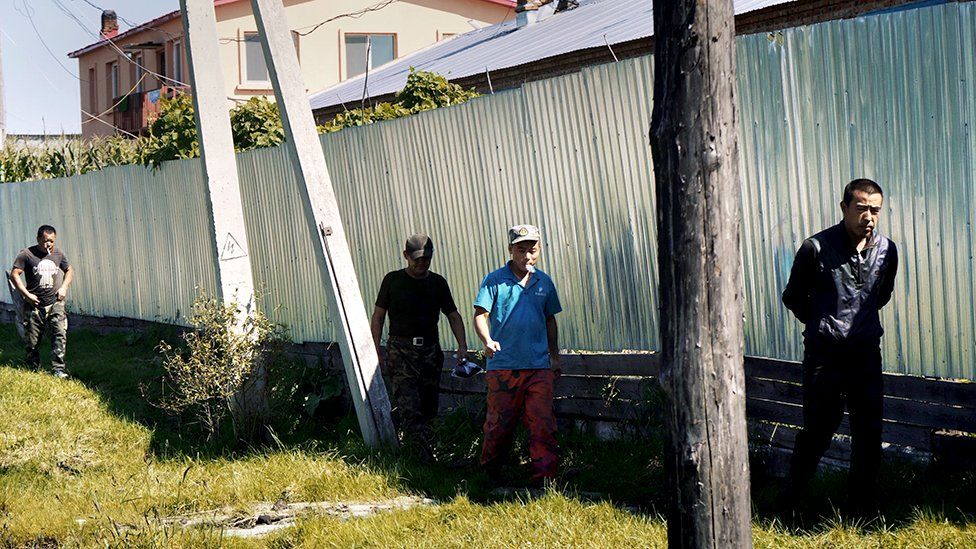
A farm worker in Maksimovka, Amur Region
Image caption Chinese farmers are trying to bring workers across the border into Russia

The farm in Maksimovka is surrounded by high metal fences. The Chinese migrants who work there only leave the site to go shopping. At the centre of this village in Russia’s Far East sits an old abandoned building – there is no lock on the door and inside, the floor is littered with papers dating back to the 1980s and 90s.

Here lie clues to why a farm that once provided work to some 400 Russians was unable to survive.

Like many of the collective farms in rural Russia, the Mayak farm collapsed with the old Soviet Union.

That is when the Chinese workers arrived, in five border regions, and Russians have not always been happy to welcome their new neighbours.

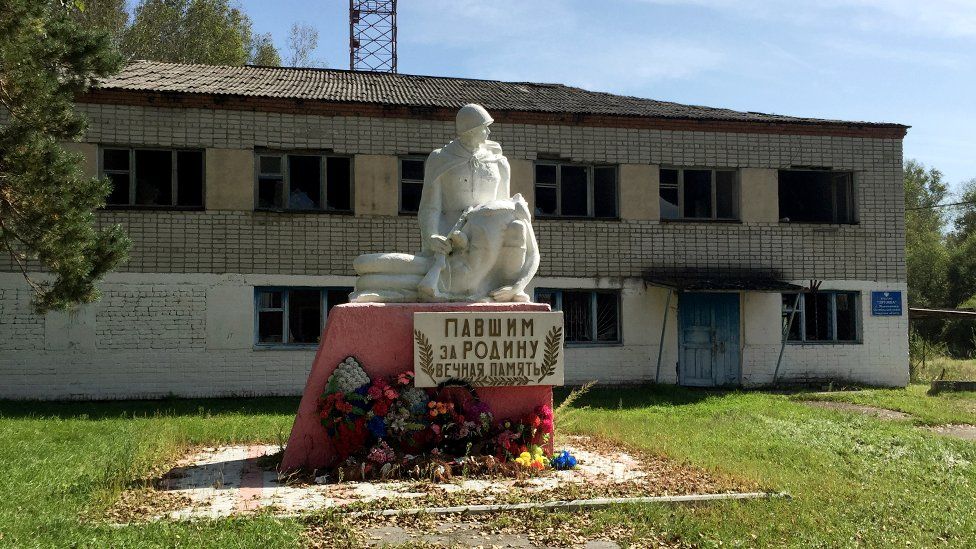
Little remains of the old collective farm at Mayak, apart from a monument to those killed in World War Two
Image caption Little remains of the old farm at Mayak, apart from a monument to those killed in World War Two

“Working in Russia is much the same as in China. You get up in the morning and go to work,” says Chom Vampen.

He is one of thousands of Chinese who have moved to this vast, under-populated part of Russia since the early 1990s.

Most seek work at Russian- or Chinese-owned farms or buy the lease on the land to develop their own agricultural enterprises.

As Russia’s relations with the West have deteriorated, President Vladimir Putin has welcomed China’s growing footprint here.

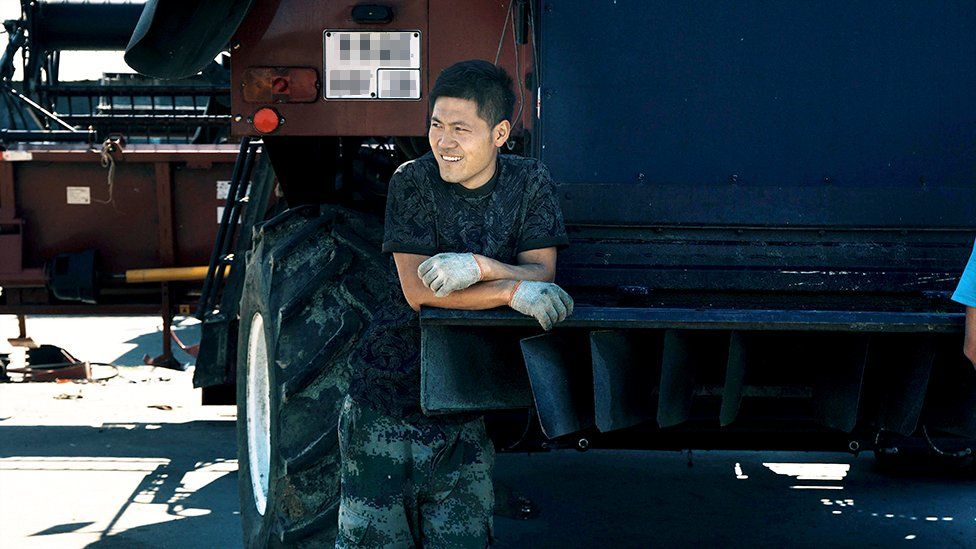
Chinese farm workers from Maksimovka
Image caption Chinese farm workers from Maksimovka

Mayak’s chairman, Yevgeny Fokin, leased thousands of hectares to Chinese entrepreneurs, attracted by low rents and large farms.

“We gave the shares to Fokin, thinking it would be better if the land belonged to the collective. But he gave it all to the Chinese and left, and we lost everything,” a local resident of Maksimovka village, Tatyana Ivanovna, said.

“No way,” says Mr Fokin. “There was nothing unusual about it.”

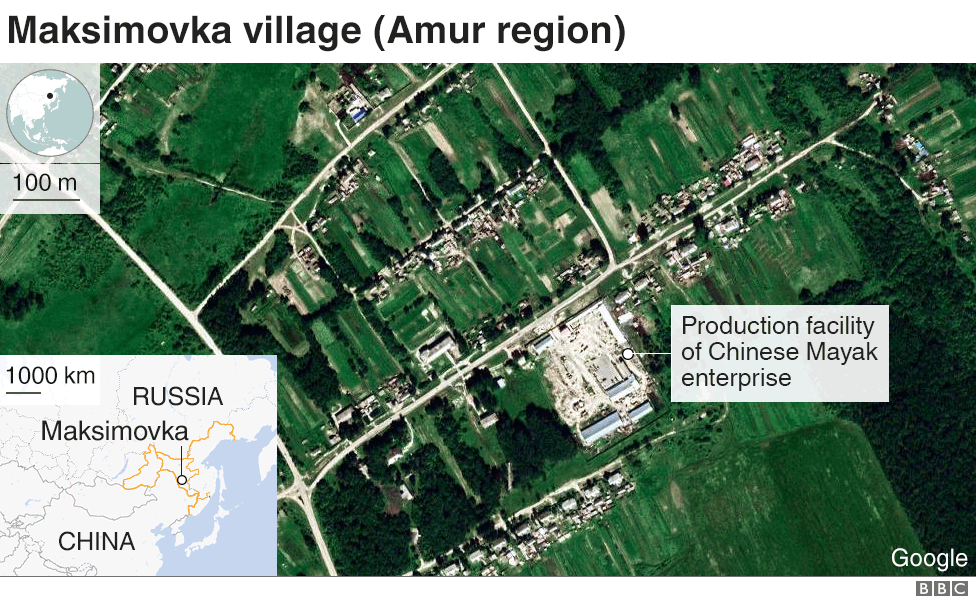
Map of Maksimovka

How Chinese companies took over

Chinese companies first appeared in Russia’s Far East in the early 2000s, but Beijing’s interest in the region increased after the global financial crisis of 2008.

“There was panic, [the Chinese] were looking at where to invest,” the head of a Chinese-owned farm told BBC Russian, preferring not to give his name.

Chinese investment was followed by an influx of Chinese migrants.

“We have little land and a lot of people,” said one Chinese farmer.

Presentational white space

Based on data released by the state land register, BBC Russian calculated that Chinese citizens either owned or leased at least 350,000 hectares (3,500 sq km) of Far Eastern land in Russia. In 2018, around 2.2 million hectares of Russian land in the region was used for agricultural purposes.

The actual proportion could be higher, the BBC has learned

Chinese farmers are, according to BBC research, represented in 40% of the Far East, most significantly in the Jewish autonomous region of Birobidzhan.

Regional governor Alexander Levintal said that in many cases land officially leased by Russians was in reality managed by Chinese nationals.

“Almost all the land that belonged to collectives was handed over to the Chinese,” said the head of the Jewish autonomous region’s peasant association, Alexander Larik.

Why relations are uneasy

Most of the farms run by Chinese migrants resemble fortresses. At Babstovo, a half-hour drive from the Chinese border, lies Friendship farm, which is surrounded by a high fence and a red flag.

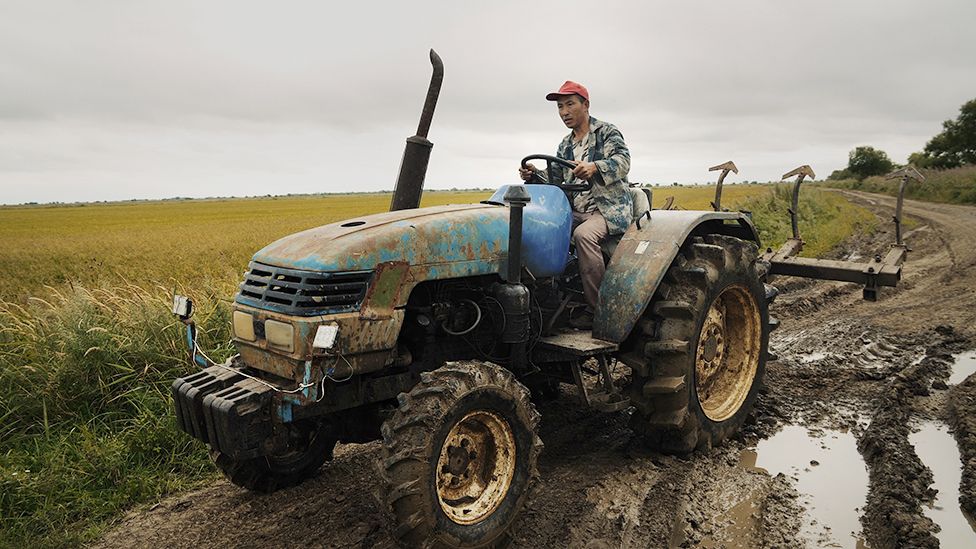
A Chinese tractor driver
Image caption Chinese workers here are main seasonal and rarely settle in Russia

But things are different in the village of Opitnoye Polye, where Xin Jie employs Russian as well as Chinese workers.

Like many Chinese here, he adopted a Russian name and is now known as Chinese Dima.

Chinese Dima moved to Russia in the 1990s and leased more than 2,500 hectares of land to develop a soya plantation. He is actively involved in the community, buying presents for nursery school children and sending his tractor to help clear the snow in remote villages in the winter.

Few have integrated quite as well.

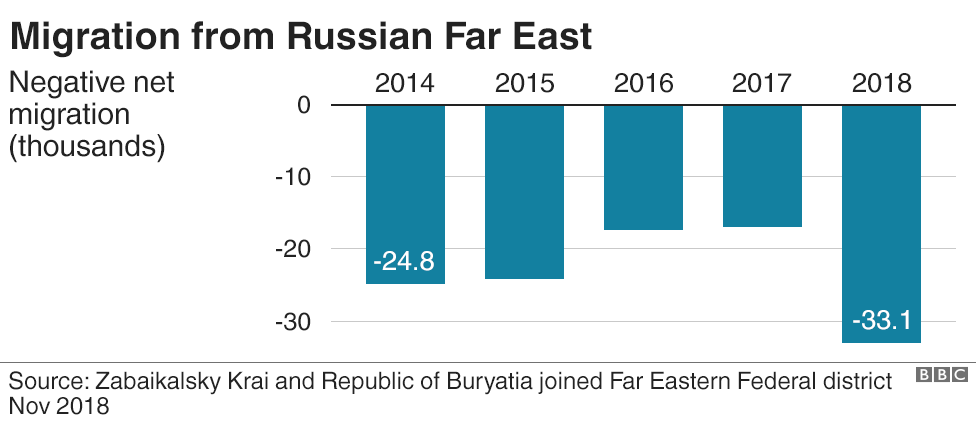
Migration from Russia's Far East

Conflicts between Russians and Chinese are not uncommon. In 2015, three Russians entered a Chinese factory in the Far Eastern Amur region and threatened a Chinese guard with a stick, demanding he give them food.

A few days later, when they returned to steal a tractor engine, they were confronted by the same Chinese guard who this time carried an axe.

They were given prison sentences ranging from five to nine years.

Most Chinese cross the border for seasonal work, for sowing or harvesting, and then return home.

But many Russians are unhappy with the Chinese influx. More than one in three people said they viewed China’s Russia policy as expansion, according to a poll conducted in 2017 by the Russian Academy of Sciences.

Almost half said that China threatened Russia’s territorial integrity, while a third believed that it endangered their country’s economic development.

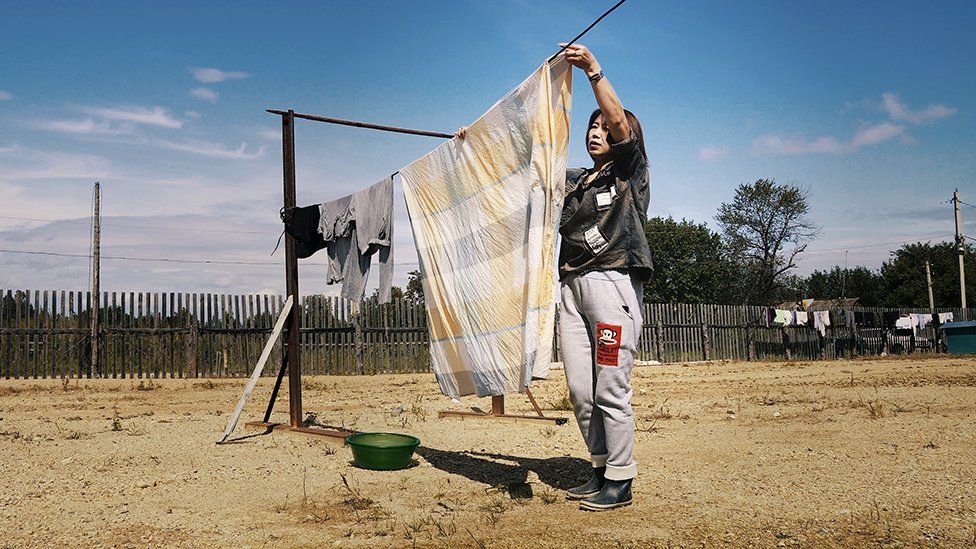
A Chinese woman hangs out the washing on a farm at Dimitrovo
Image caption A Chinese woman hangs out the washing on a farm at Dimitrovo

“They leave at seven in the morning and return after dark. I don’t see them and they don’t see me,” says Ivanovich of his Chinese neighbours in the village of Dimitrovo.

But some Russians have struck up friendships with the Chinese.

“They bring beer, we drink. I give them eggs and honey,” says Alexander.

Why Russian workers struggle to compete

Chinese farm workers in Russia’s Far East often have a better reputation than their Russian counterparts.

“The Chinese do not drink and they have nowhere to run; they come here for the season. Our citizens come to work for a week, plead for money and then go on a bender,” complained one Russian agricultural boss who declined to give his name.

Mr Larik, of the peasant association in the Jewish autonomous region, said Chinese farm owners generally preferred hiring Chinese migrants and gave Russian nationals low-skilled jobs.

A Chinese farmer who asked to stay anonymous complained about the drinking habits of Russian employees.

“All Russians drink. Today you pay them, tomorrow they do not show up. There are problems with discipline,” he said.

Residents in Maksimovka complain that young people tend to head to the cities, leaving only pensioners behind
Image caption Residents in Maksimovka complain that young people tend to head to the cities, leaving only pensioners behind

Russia has a poor record of protecting workers’ rights, especially in the agriculture industry, which is generally low paid.

Not everyone here has a low opinion of local workers.

“What is the difference between Russian and Chinese workers? Russian workers are smarter than the Chinese,” says Chom Vampen.

Source: The BBC

02/11/2019

China highly values Macron’s upcoming state visit: FM

BEIJING, Nov. 1 (Xinhua) — China welcomes and attaches great importance to French President Emmanuel Macron’s upcoming state visit and his attendance at the second China International Import Expo, Chinese State Councilor and Foreign Minister Wang Yi said Friday.

Wang made the remarks when holding a telephone conversation with Emmanuel Bonne, diplomatic counselor to Macron, adding that Macron’s visit will mark another highest level of strategic communication between the two countries’ heads of state.

France and China should, through this visit, speak in one voice to uphold multilateralism and maintain the authority of the United Nations (UN) so as to create positive energy for the world, Wang said.

This is the responsibility that should be assumed by China and France as two permanent members of the UN Security Council as well as the proper content of the comprehensive strategic partnership between the two countries, he added.

China is willing to make all necessary preparations together with France to ensure fruitful results of Macron’s visit, he said.

Bonne thanked China for its delicate preparations for Macron’s visit, and said France is willing to closely coordinate with China to deepen mutually beneficial cooperation in various fields, ensure that the visit will achieve complete success and make new progress in advancing the France-China comprehensive strategic partnership.

Source: Xinhua

02/11/2019

China-Uzbekistan relations enter golden period of rapid development: Premier Li

UZBEKISTAN-TASHKENT-CHINA-LI KEQIANG-ARRIVAL

Chinese Premier Li Keqiang, accompanied by Uzbek Prime Minister Abdulla Aripov, inspects the guard of honor during a welcome ceremony in Tashkent, Uzbekistan on Nov. 1, 2019. Li arrived here for the 18th meeting of the Council of Heads of Government of Member States of the Shanghai Cooperation Organization (SCO) and an official visit to Uzbekistan. (Xinhua/Huang Jingwen)

TASHKENT, Nov. 1 (Xinhua) — Chinese Premier Li Keqiang said on Friday that in recent years, relations between China and Uzbekistan have entered a golden period of rapid development under the strategic guidance of the two heads of state.

Li arrived here for the 18th meeting of the Council of Heads of Government of Member States of the Shanghai Cooperation Organization (SCO) and an official visit to Uzbekistan.

Upon Li’s arrival, Uzbek Prime Minister Abdulla Aripov and other senior Uzbek officials greeted the Chinese premier at the airport. Aripov also held a grand welcome ceremony for Premier Li.

Noting that Uzbekistan is a friendly neighbor of China, Li said this is his first official visit to the country as Chinese premier.

Li said he looks forward to having an in-depth exchange of views with Uzbek leaders on deepening bilateral relations and practical cooperation in various fields so as to lift the China-Uzbekistan comprehensive strategic partnership to a higher level and better benefit the two peoples.

Li pointed out that in the current complex international situation, the SCO is playing an increasingly prominent role in maintaining regional security and stability and promoting the development and prosperity of its member states.

He said he expects to have an in-depth exchange of views with all parties on implementing the consensus reached at the Bishkek summit this June and promoting the SCO development and multilateral cooperation.

Li said he believes that all parties will take this meeting as an opportunity to continue to carry forward the Shanghai Spirit, enhance good-neighborly friendship and mutually beneficial cooperation, expand mutual openness among member states, improve trade and investment liberalization and facilitation, and make greater contributions to the well-being of the people of all countries in the region.

During his visit to Uzbekistan, Li will meet with Uzbek President Shavkat Mirziyoyev. The Chinese premier will also hold talks with Prime Minister Aripov, and they will jointly witness the signing of cooperation documents between the two sides.

While attending the SCO meeting, Li will work with other leaders of SCO member states to plan future practical cooperation of the organization and sign cooperation documents.

Source: Xinhua

02/11/2019

Germany, India sign wide-ranging agreements to deepen bilateral ties

NEW DELHI (Reuters) – German Chancellor Angela Merkel and Indian Prime Minister Narendra Modi signed wide-ranging agreements in New Delhi on Friday to deepen strategic cooperation and exchanged notes on ways to boost bilateral trade.

Merkel, accompanied by several cabinet colleagues and a business delegation, is in India on a three-day visit that began on Thursday.

“We’re encouraging our private sectors to give an impetus to our growing bilateral trade and Chancellor Merkel and I will meet some of the top business and industry leaders,” Modi told a joint news conference with the German leader.

“We’re encouraging our private sectors to give an impetus to our growing bilateral trade and Chancellor Merkel and I will meet some of the top business and industry leaders,” Modi said.

Bilateral trade between the two countries rose to $24.06 billion (18.5 billion pounds) in the 2018/19 fiscal year ending in March from $22 billion the previous year, while German companies have invested nearly $12 billion in India since 2000.

Germany is India’s largest trading partner in Europe and more than 1,700 German companies are operating in India.

The agreements struck on strategic cooperation, included agriculture, cyber security and artificial intelligence. Modi said the two countries would also bolster ties to combat “terrorism and extremism”.

Germany and India also agreed to join hands in the area of education.

“As many as 20,000 Indian nationals are studying in Germany and we would like to see more,” Merkel said.

Although Merkel and Modi didn’t mention anything about restarting talks on finalising a free trade agreement between India and the European Union, sources earlier said the two leaders could take up the trade deal.

Eric Schweitzer, president of the Association of German Chambers of Commerce and Industry (DIHK), earlier said India had enormous potential but there has been uncertainty among companies after an investment protection agreement between the two countries ended in 2016.

“Small and medium-sized German companies stand in a labyrinth of regulations and shy away from larger investment. Negotiations should restart and Merkel’s visit could help,” he said.

VDA, Germany’s car industry association that counts automakers like Volkswagen (VOWG_p.DE), Daimler, BMW and Audi as members, also wanted India to restart the FTA talks.

Daimler’s Mercedes-Benz, BMW and Audi dominate India’s luxury car market.

Source: Reuters

01/11/2019

Vladimir Putin says Russia is helping China build a missile early warning system

  • Kremlin says project highlights the growing closeness between the two countries
  • Military observers argue cooperation between the two sides helps provide counterbalance to American military might
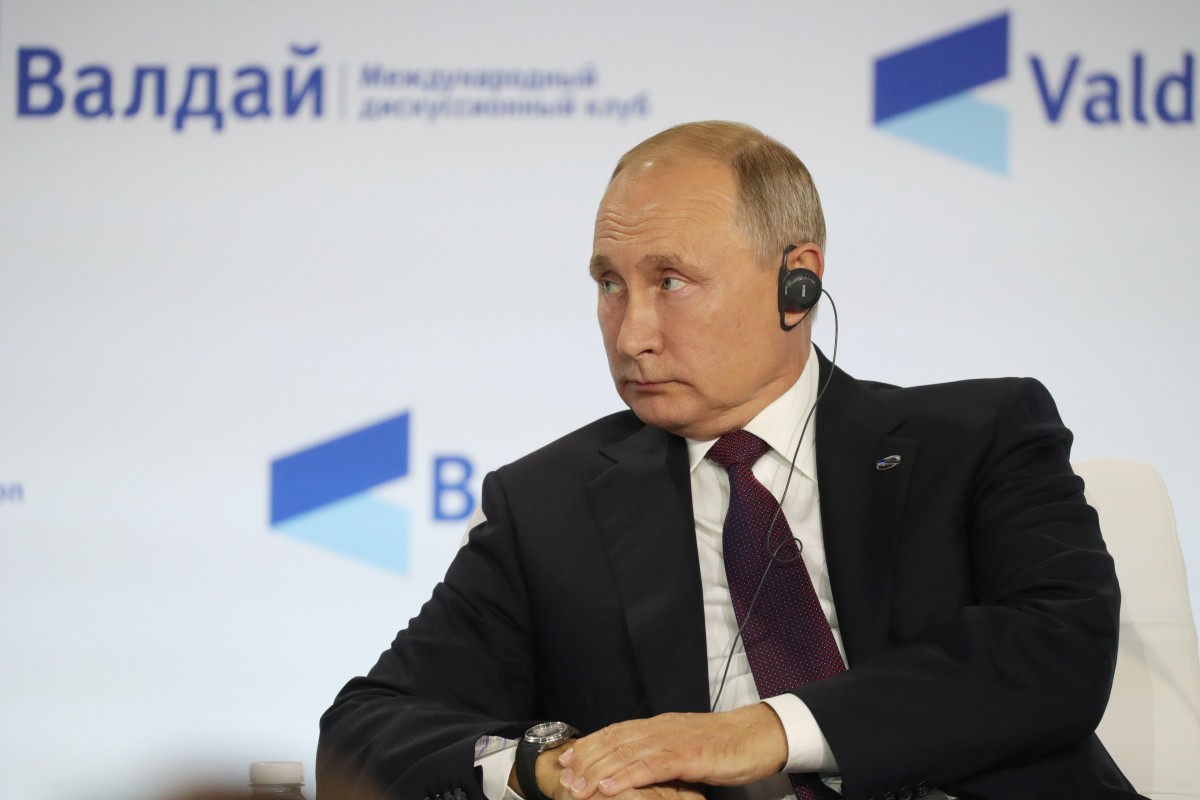
Vladimir Putin disclosed the project at a forum in Sochi. Photo: Sputnik/AFP

Russia is helping China to build an early warning system to counter missile attacks, Vladimir Putin said on Thursday.

Speaking at an international affairs conference in the resort town of Sochi, he said Moscow was helping China increase its missile defence capability, Russian state-owned news agency Sputnik reported.

“This is a very serious endeavour that will fundamentally and radically increase the defence capability of the People’s Republic of China because only the United States and Russia have such a system at present,” the Russian leader said.

Kremlin spokesman Dmitry Peskov declined to say when the system would be operational, but told reporters on a conference call that the move highlighted Russia’s close ties with China.

“Russia has special relations with China of advanced partnership … including the most sensitive [areas] linked to military-technical cooperation and security and defence capabilities,” Peskov said.

Macau-based military observer Antony Wong Dong said Putin’s remarks indicated that military cooperation between Beijing and Moscow may have evolved from the previous “model alliance” to a “real alliance” with the US as their common target.

“Such changes will likely further fuel the strategic arms race, which is already evident from the missile tests [that we have witnessed] and the recent military parade,” said Wong in a reference to the grand parade held in Beijing on Tuesday when China celebrated the 70th anniversary of the founding of the People’s Republic.

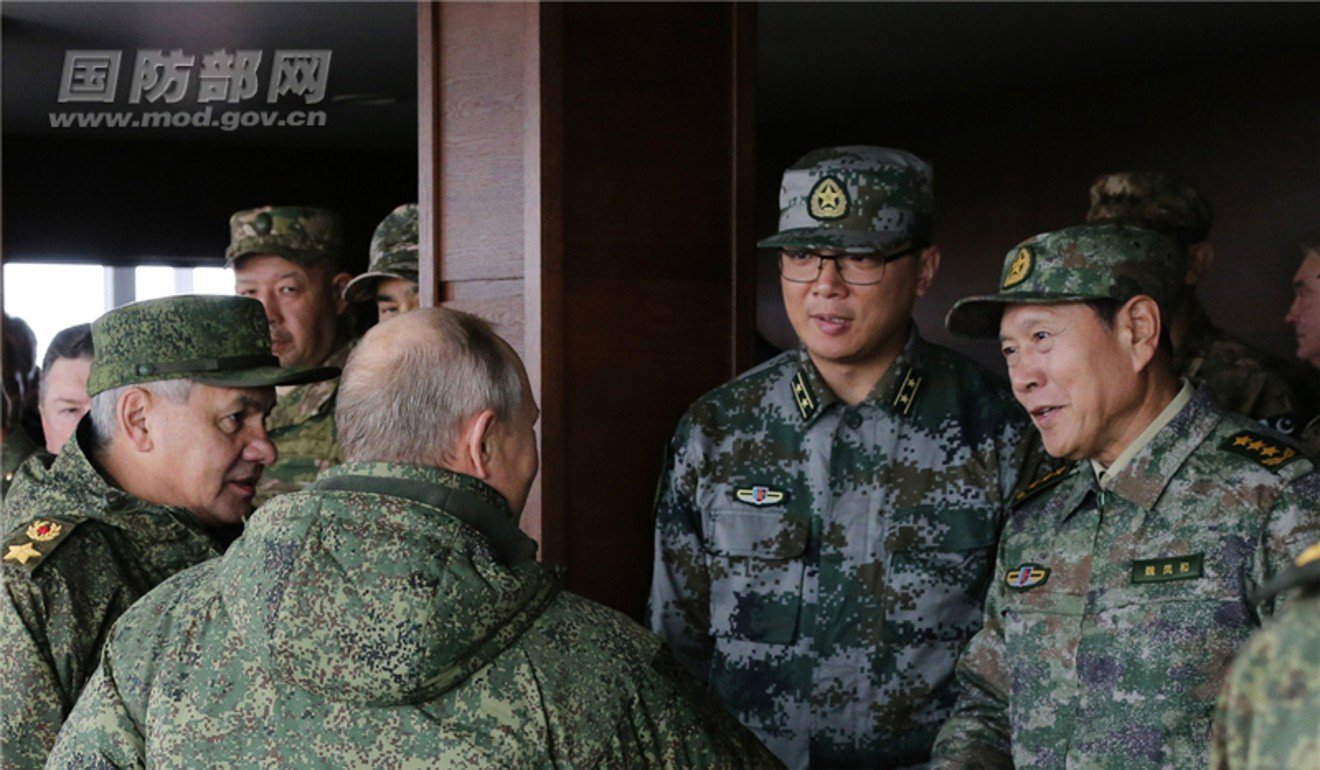
Russian President Vladimir Putin welcomes China’s defence minister Wei Fenghe (right) to a base in Orenburg at the start of a joint exercise. Photo: Handout

Hong Kong-based military analyst Song Zhongping said the system would help Beijing and Moscow set up a joint early ballistic missile network to counter “American global hegemony”.

“If the US wants to attack China [with its ICBMs], their missiles are likely to be launched from the Arctic, and that will be covered by Russia’s early warning system, and that means Moscow will have the capability to alert Beijing,” said Song who added that the Chinese military could provide reciprocal help to Russia.

Beijing-based military expert Zhou Chenming said Putin’s remarks served as a veiled warning to US President Donald Trump who has taken the unilateral step of withdrawing from the Intermediate Range Nuclear Forces Treaty, a cold war-era pact signed between the US and Russia in 1987.

“Joint cooperation will help both Russia and China to save costs because early warning ballistic missile systems are very expensive,” Zhou said,

However, he said Moscow was unlikely to share its most advanced technologies with China.

“For example, Russia’s missile defence system just covers Moscow and St Petersburg, so China’s network will properly just cover Beijing, Tianjin, Hebei province, the Yangtze River Delta area, the Greater Bay Area in South China, as well as a number of key cities in the centre.”

Putin also told the forum that the two countries would continue to work together on space exploration.

Last month, the Ministry of Defence of the Russian Federation announced that Moscow and Beijing have developed a plan for cooperation between military departments for next year and 2021.

Last month 1,600 members of the Chinese military arrived at a Russian training base in the Orenburg oblast for a large-scale joint training exercise.

Source: SCMP

01/11/2019

China’s Communist Party promotes man who shaped the fighting future of PLA Navy’s aircraft carriers

  • Rear Admiral Ma Weiming is seen as pioneer of electromagnetic aircraft launch system
  • Experts say Ma’s full membership of Central Committee shows how important sea power is to China’s strategic planning
An artist’s impression of China’s third aircraft carrier, the Type 002, which will incorporate an electromagnetic aircraft launch system developed by Rear Admiral Ma Weiming and his team. source: Photo: Handout

China’s Communist Party has elevated the senior naval engineer behind the development of a hi-tech launch system for the country’s next aircraft carriers, showing China’s ambition to increase its naval power.

Rear Admiral Ma Weiming, who is seen as the pioneer of China’s electromagnetic aircraft launch system (EMALS), was named as a full member, from alternate member, of the party’s Central Committee at the party plenary meeting which ended on Thursday.

The plenum sessions – attended by more than 300 full and alternate members of the Central Committee – provide an opportunity for the party’s most senior members to discuss and forge consensus on key policy issues.

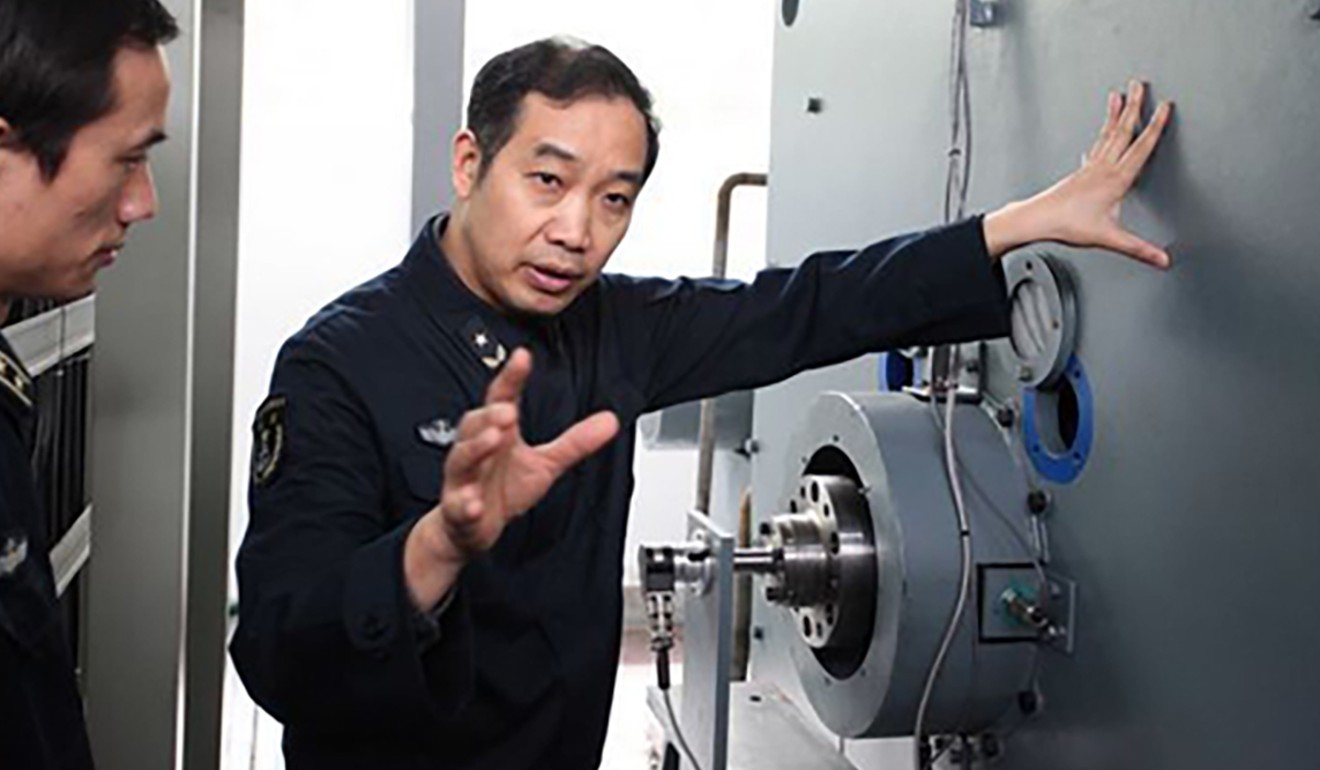
Real Admiral Ma Weiming (right) has been elevated to full membership of the Communist Party’s Central Committee. Photo: SCMP
Rear Admiral Ma Weiming (right) has been elevated to full membership of the Communist Party’s Central Committee. Photo: SCMP
Li Jie, a Beijing-based military specialist, said the move showed China’s ambition to continue expanding its naval military power.
“Ma’s promotion signals that Beijing will devote more resources to developing strategic military hardware like large warships and assault landing ships,” he said.

The EMALS is regarded as a breakthrough for the People’s Liberation Army, as it will enable China’s second home-grown aircraft carrier – known as the Type 002 – to launch larger jets with bigger payloads on longer missions.

The system could result in fuel savings of up to 40 per cent. With a higher launch energy capacity, it will also be more efficient than steam catapults, allowing for improvements in ease of maintenance, increased reliability, and more accurate end-speed control and smoother acceleration.

Why Chinese submarines could soon be quieter than US ones
Ma, who comes from Yangzhou in eastern Jiangsu province, graduated from the PLA Naval University of Engineering in Wuhan in 1987 and earned a PhD in electrical engineering from Beijing’s Tsinghua University in 1996.

A specialist in maritime propulsion, electrical engineering and related fields, he has mentored more than 400 masters and doctoral students at the naval university.

He and his team have often been recognised for their work as greater emphasis has been put on research and development amid the country’s military modernisation.

China’s first home-built carrier will use steam catapults and a ski-jump deck to launch aircraft. Photo: Handout

Ma has twice won the National Science and Technology Progress Award and in 2015 was awarded the science and technology achievement prize by the Hong Kong-based Ho Leung Ho Lee Foundation.

According to news reports, in the 1980s Ma spotted a potential flaw with an electrical component China planned to buy from overseas to use on its submarines that would have made the vessels easier to detect. Though the manufacturer denied any such problem, Ma spent five years tweaking the product so that submarines fitted with the part became harder to spot.

Three catapult launchers spotted in image of China’s new aircraft carrier

Beijing-based military expert Zhou Chenming said Ma’s promotion could be seen as a national endorsement of his work on EMALS.

“Ma was elected as a Central Committee member because the party and the country recognise the strategic importance of his work as China is expanding into a naval power with a huge maritime interest to protect,” he said.

Zhou, however, said Ma’s promotion was made two years ago, but he could not be formally made a full member until a vacancy opened up this year.

Source: SCMP

Law of Unintended Consequences

continuously updated blog about China & India

ChiaHou's Book Reviews

continuously updated blog about China & India

What's wrong with the world; and its economy

continuously updated blog about China & India