Chindia Alert: You’ll be Living in their World Very Soon
aims to alert you to the threats and opportunities that China and India present. China and India require serious attention; case of ‘hidden dragon and crouching tiger’.
Without this attention, governments, businesses and, indeed, individuals may find themselves at a great disadvantage sooner rather than later.
The POSTs (front webpages) are mainly 'cuttings' from reliable sources, updated continuously.
The PAGEs (see Tabs, above) attempt to make the information more meaningful by putting some structure to the information we have researched and assembled since 2006.
Chinese President Xi Jinping, also general secretary of the Communist Party of China Central Committee and chairman of the Central Military Commission, visits the Xixi National Wetland Park during an inspection in Hangzhou, east China’s Zhejiang Province, March 31, 2020. (Xinhua/Yan Yan)
HANGZHOU, March 31 (Xinhua) — Xi Jinping, general secretary of the Communist Party of China Central Committee, on Tuesday inspected wetland conservation and technology-based urban management in the city of Hangzhou, east China’s Zhejiang Province.
During the inspection, Xi visited the Xixi National Wetland Park and the City Brain, a smart city platform aiming to improve urban management.
Hangzhou’s City Brain project was launched in 2016 to help the city make plans in areas including public security, transport and healthcare with the use of big data, cloud computing and artificial intelligence, among other cutting-edge technologies.
With a total area of 11.5 square kilometers, the Xixi National Wetland Park is the first national wetland park in the country.
Chinese Vice Premier Sun Chunlan, also a member of the Political Bureau of the Communist Party of China Central Committee, visits a tea farm in Huangjingtang Village in Xianning City, central China’s Hubei Province, March 31, 2020. Sun, who is leading a central guiding group to oversee the epidemic control work in Hubei, inspected spring plowing and production resumption in Xianning on Tuesday. (Xinhua/Li He)
WUHAN, March 31 (Xinhua) — Chinese Vice Premier Sun Chunlan Tuesday called for efforts to organize spring plowing and help enterprises resume work and production.
Leading a central guiding group to oversee the epidemic control work in Hubei Province, the previous epicenter of the COVID-19 epidemic, Sun, also a member of the Political Bureau of the Communist Party of China Central Committee, made the remarks while inspecting spring plowing and production resumption in the Hubei city of Xianning.
The group visited a tea farm and two enterprises in the city.
While ensuring the epidemic control, efforts should also be made to capitalize on the window for spring plowing, Sun said, urging strengthened farm management, detailed technical guidance for farmers, convenient transportation for agricultural materials and more help for Hubei to sell farm products.
Sun also stressed that during this critical period to resume work and production, the supporting measures for industries should be improved to provide more driving forces for enterprises.
Preferential policies for micro, small and medium-sized enterprises should be fully implemented, Sun noted, adding that the problems of local authorities and enterprises should be solved in a timely manner.
Volume of fuel extracted from gas hydrates is a new world record, natural resources ministry says
Month-long trial also sets a ‘solid technical foundation for commercial exploitation’, it says
China conducted its first operation to extract natural gas from gas hydrates in the South China Sea in 2017. Photo: Reuters
China said on Thursday it extracted 861,400 cubic metres of natural gas from gas hydrates found in the South China Sea during a month-long trial that ended last week.
The production process, which ran from February 17 to March 18, also set two world records: one for the largest total volume extracted and another for the most produced – 287,000 cubic metres – on a single day, the Ministry of Natural Resources said on its website.
The gas was extracted from an area in the north of the disputed waterway, and from a depth of about 1,225 metres, it said.
The success of the latest trial set a “solid technical foundation for commercial exploitation”, the ministry said, adding that China was the first country in the world to exploit gas hydrates using a horizontal well-drilling technique.
Also known as flammable ice, gas hydrates are icelike solids composed mostly of methane. According to figures from the US Department of Energy, one cubic metre of gas hydrate releases 164 cubic metres of conventional natural gas once extracted.
The South China Sea test coincided with sharp movements in global oil and gas prices. China, which is the world’s largest oil and gas importer, has been keen to identify alternative fuel sources, including gas hydrates, to strengthen its energy security.
The official Economic Daily reported in 2017 that China’s reserves of flammable ice were equivalent to about 100 billion tonnes of oil, of which 80 billion tonnes were in the South China Sea.
Yang Fuqiang, a senior energy adviser at the Beijing office of the National Resources Defence Council, an international environmental advocacy group, said that natural gas consumption in China was relatively low compared with that of other countries.
“The demand for natural gas is large and the prospect is promising, but it’s hard to say when China will have commercial development of flammable ice,” he said.
While the government has set a target for natural gas to account for 10 per cent of China’s annual energy consumption by the end of this year, in 2019, the figure was just 8.3 per cent.
China’s teapot oil refineries could become ‘money-printing machines’ amid crude price crash
12 Mar 2020
Fan Xiao, chief engineer with the Sichuan Geology and Mineral Bureau, said that compared to conventional fuels like oil and gas, flammable ice was still too costly to extract to make its widespread use commercially viable.
“It is an important resource, but exploiting it in a sustainable, economically viable way is still some way off,” he said.
There were also environmental concerns, such as methane leaking during the exploitation process, which increased greenhouse gas emissions, he said.
Yang agreed, saying there would be leakage of methane during both mining and transport.
“If the leakage exceeds 5 per cent of the total, it will offset its contribution to carbon reduction,” he said.
Big shoals of acetes, which are just a few centimetres long, crippled the water pumping stations and caused a unit to go into automatic safe shutdown
The same thing happened the next day with all units powered down, but the safety regulator says they are now in a ‘safe and controllable condition’
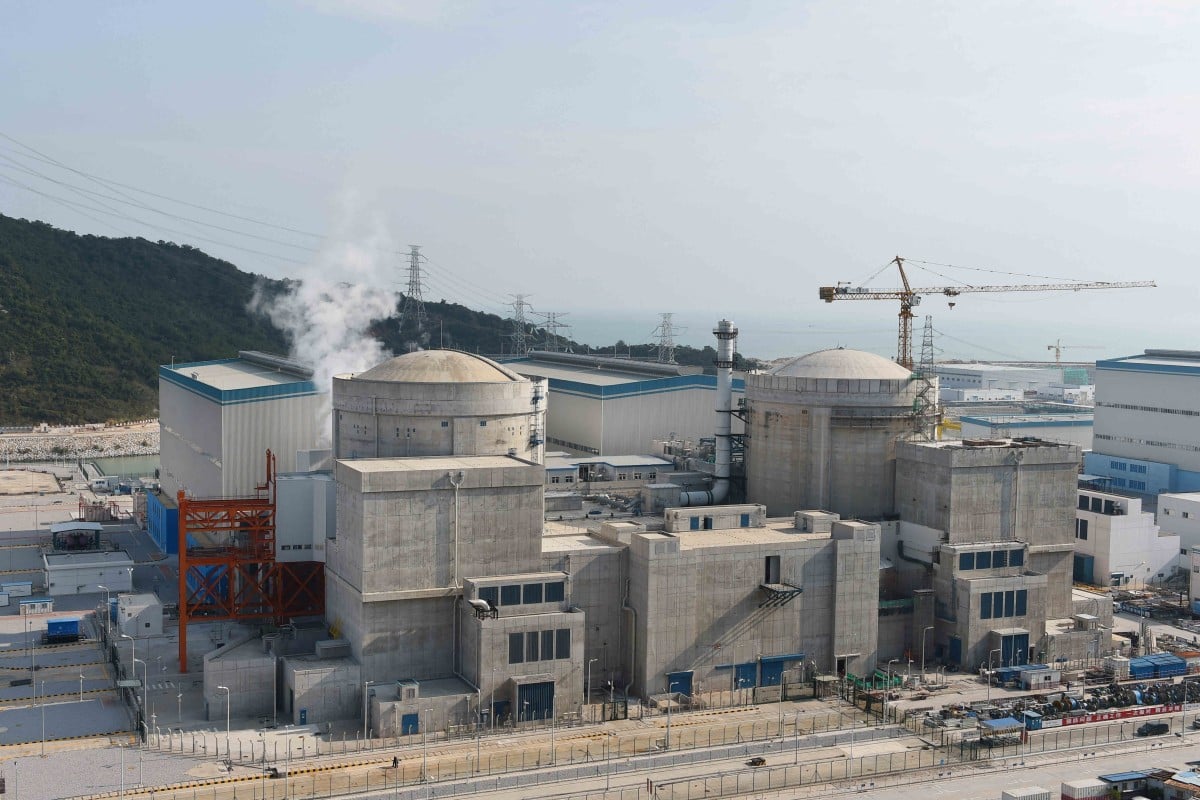
The Yangjiang Nuclear Power Station in Guangdong province is about 235km from Hong Kong. Photo: Handout
The power-generating units of a nuclear plant in southern China were shut down twice last week after its water filters were blocked by masses of small shrimp, the safety regulator said.
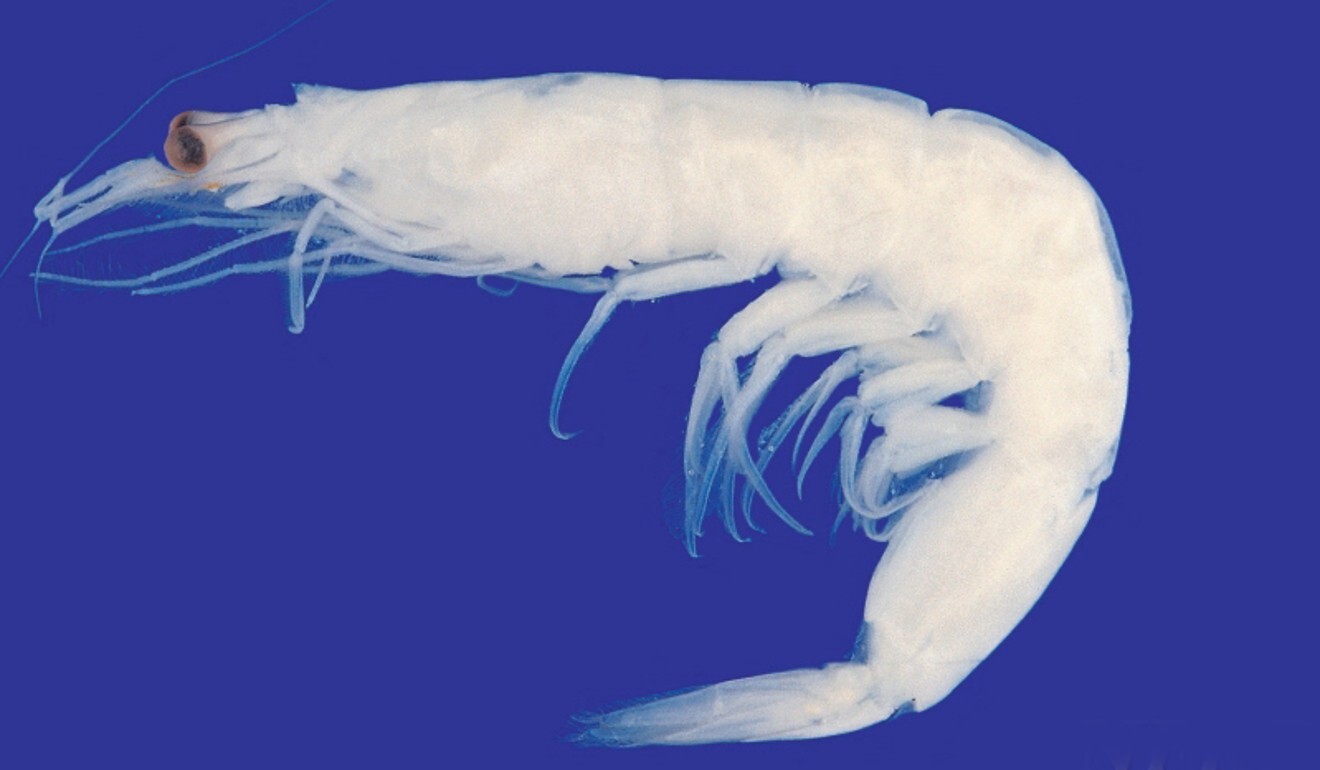
Big shoals of the tiny acetes – krill-like shrimp that are just a few centimetres long – flooded the seawater diversion channel and circulating water pumping stations of the Yangjiang Nuclear Power Station in Guangdong on March 24, the National Nuclear Safety Administration said in a statement.
They crippled the water pumping stations and caused one of the nuclear plant’s six power-generating units to go into automatic safe shutdown, while the other five units ran at 80 per cent of capacity.
The unit that shut down was powered up again the next day after station staff cleared the acetes and cleaned the filters.
But soon after on March 25, the same thing happened, with large shoals of acetes again finding their way into the pumping stations and causing four power-generating units to shut down automatically. The station shut off the other two units for safety reasons.
Big shoals of acetes found their way into the nuclear plant’s pumping stations. Photo: Handout
The incident on March 25 was rated a Level 1 on the International Nuclear and Radiological Event Scale, meaning it was an “anomaly” that had no safety or health consequences. Only two nuclear events have been rated at the top of the scale as Level 7 “major accidents” – the Chernobyl disaster in 1986 and Fukushima in 2011.
China’s nuclear safety regulator said the situation at the Yangjiang plant was under control.
“At present, all six units … are in a safe and controllable condition,” the statement said. “Staff at the scene are taking measures such as fishing out the acetes and cleaning the filters, before reactivating the units and bringing them back to normal operation in accordance with the relevant procedures.”
Nearly a decade after tsunami, clean-up continues at Japan’s Fukushima nuclear plant
Pan Chin, head and chair professor of nuclear engineering at City University of Hong Kong, said the two incidents were “operational events with no radiation leak”.
“The shutdown … is also an indication that the protection system of the power plant is functioning as designed,” he said.
“This incident is not unexpected,” Pan said. “The power plant uses seawater as a coolant for the condenser and occasionally aquatic animals may get close to the intake and cause such incidents.”
The Hong Kong Nuclear Society also noted that similar incidents had happened before.
“Similar events have occurred at nuclear power plants using seawater as a coolant for their power-generating units [including non-nuclear ones] throughout the world, including China,” said Luk Bing-lam, chairman of the society.
New Wufengshan power line across China’s Yangtze River completed
In 2016, a generating unit at the Lingao Nuclear Power Plant in Shenzhen was guided to a safe shutdown by an automatic reactor protection signal after its seawater intake was inundated with tiny marine crustaceans, according to Hong Kong’s Security Bureau. They blocked the filtering screen drum at the intake and tripped two seawater intake pumps.
China tech giants wake up to renewable energy, but fossil fuels still dominate as electricity source
17 Feb 2020
China’s nuclear safety regulator said it had asked all nuclear power station operators to use marine life detection systems in light of incidents such as those at Yangjiang last week.
But Pan from CityU said the acetes could be too small to be detected by a marine life warning system.
“If a system can detect the approach of marine life, large or small, early enough, leaving enough time to take some action to prevent them from approaching further … there will be no such incident,” he said, adding that the systems needed to be improved.
The Yangjiang nuclear plant in Guangdong is about 235km from Hong Kong. It is owned by the China General Nuclear Power Corporation, which operates over 20 nuclear power stations in China. CLP, one of Hong Kong’s two power companies, acquired a 17 per cent stake in the plant in 2017.
The team is expected to provide technical advice on epidemic prevention and control as well as treatment protocols
The Southeast Asian nation on Tuesday recorded its largest daily increase in coronavirus deaths and infections
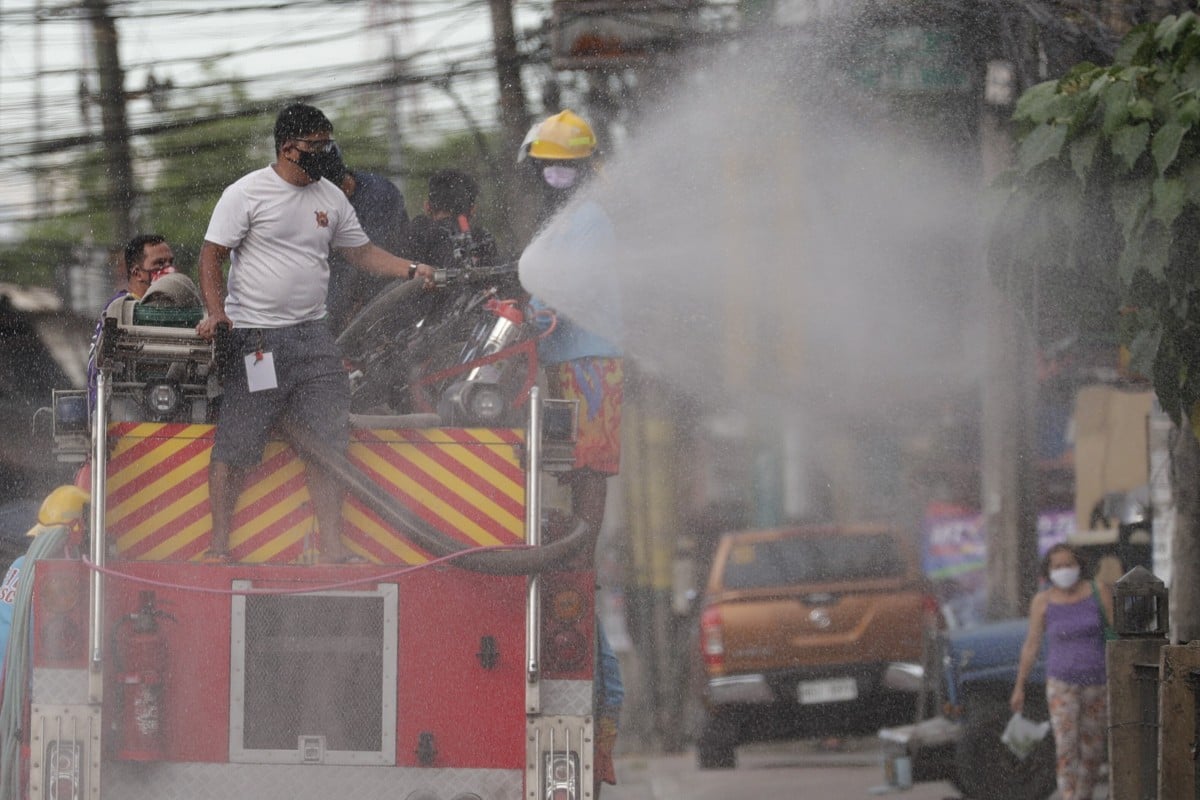
A fireman sprays disinfectant from the back of a fire truck to help curb the spread of the coronavirus during a localised quarantine in Manila. Photo: AP
on Tuesday recorded its largest daily increase in coronavirus deaths and infections, as it awaited the arrival of a Chinese medical team to support its embattled frontline health care workers.
Ten more people died from the Covid-19 disease, bringing the total to 88, while 538 new infections were reported for a total of 2,084.
Among those included in the latest count of positives is former senator Ferdinand “Bongbong” Marcos, whose condition, according to his spokesman Victor Rodriguez, is now “stable” and “improving”.
Health undersecretary Maria Rosario Vergeire said the ministry had opened new labs and run more than 15,000 tests, a five-fold jump from about 3,000 last week. She added that more hospitals were seeking government approval to function as testing centres.
Medical evacuation plane crashes at Manila airport in Philippines, killing eight on board
29 Mar 2020
“We have six more laboratories to conduct tests,” Vergeire said. “We are also conducting contact tracing to find possibly infected persons.”
Philippine hospitals are struggling with a shortage of protective gear, manpower and testing capacity, as are medical facilities around the world. At least 13 doctors have died as of Tuesday and the Philippine Medical Association estimates that over 5 per cent of health workers are currently under quarantine due to Covid-19.
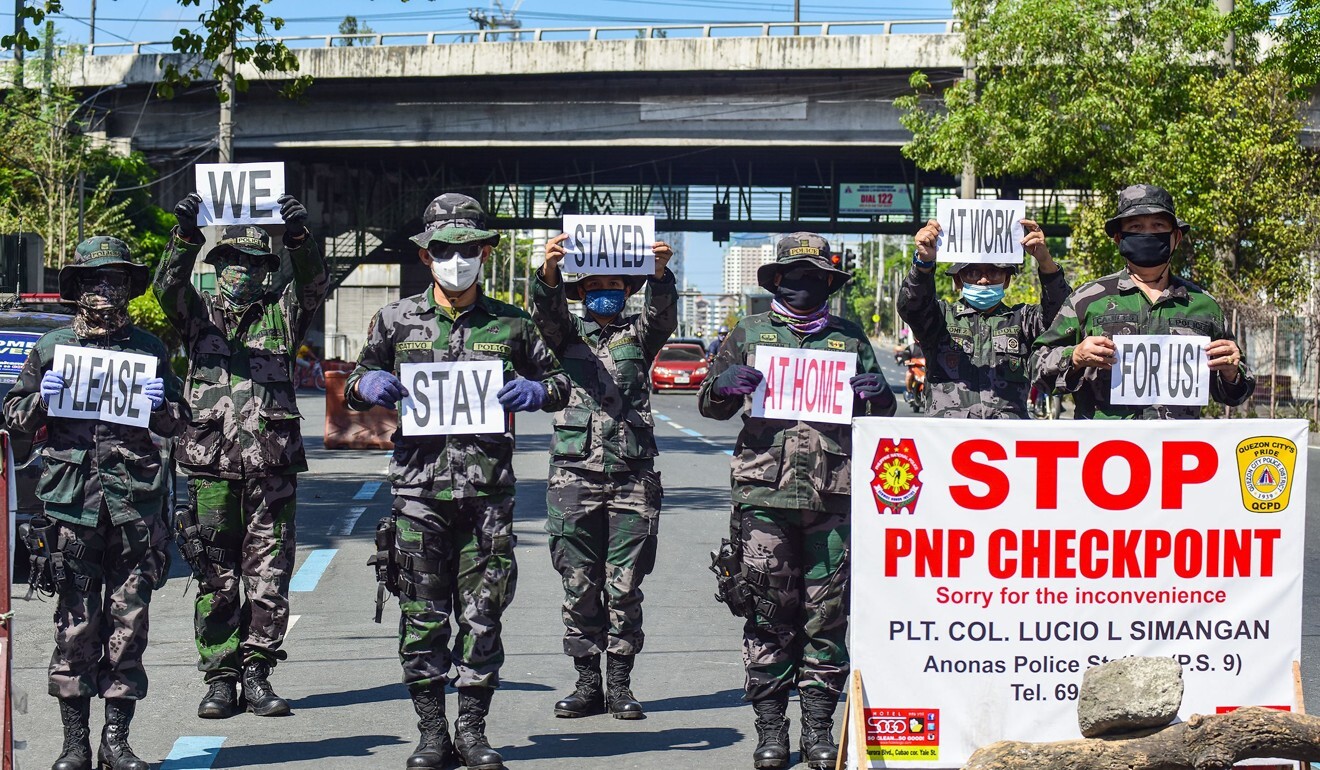
Police personnel in Manila hold up placards reminding people to stay at home. Photo: AFP
The country’s ambassador to China, Chito Sta Romana, confirmed a statement by the Chinese embassy in Manila that Beijing would send an expert team to the Philippines to provide technical advice on epidemic prevention and control as well as treatment protocols.
Sta Romana said the team was made of up of “experienced doctors and public health officials who specialise in infectious diseases”, but could not say when they would arrive.
An infectious disease doctor who spoke on condition of anonymity said the Chinese medical team would only give advice.
Coronavirus: in Philippines, leak shows politicians and relatives received ‘VIP’ testing
25 Mar 2020
“There was an offer to see patients but it was rebuffed because of local laws on practice,” he said, referring to a law that bans foreign doctors from practising medicine in the Southeast Asian nation.
Philippine foreign secretary Teodoro Locsin Jnr on Saturday tweeted that the Department of Health was “blocking their arrival”. His tweet, now deleted, had said “Don’t piss me off. Let them in.”
Health secretary Francisco Duque told local media that Locsin took down his tweet after hearing that the department was preparing hotel accommodation and translators for the expert team.
According to an ethnic Chinese businessman who is a member of a foundation involved in the visit, the team was supposed to have arrived on March 27. It will comprise doctors, nurses and researchers from hospitals and disease prevention agencies in Fujian province who specialise in areas such as infectious diseases, emergency medicine and integrated traditional Chinese and Western medicine.
An estimated 1.2 million ethnic Chinese call the Philippines – which has a population of 107 million people – home, with many tracing their ancestry to Fujian province.
The businessman, who declined to be named, showed This Week in Asia a screenshot of the team’s name list, which included an official from Fujian province’s United Work Front Department, the controversial Communist Party department responsible for promoting its influence around the world.
Beijing has dispatched teams of medical experts to countries struggling with a surge in Covid-19 cases, including Iran and Italy, and has also donated testing kits and other medical supplies.
The Philippine health department apologised over the weekend for comments made by undersecretary Vergeire that some of the kits donated by China had yielded only “40 per cent accuracy” and could not be used.
The Chinese embassy in Manila had rejected the suggestions, and shared a mobile text message supposedly from Duque to Ambassador Huang Xilian that thanked the Chinese government for the test kits.
Philippine President Rodrigo Duterte addresses the nation during a live broadcast on March 30. Photo: AP
Vergeire also issued a correction to her earlier statement, and said she was referring to “another brand” of test kits from China that a private foundation was going to donate.
Political risk analyst Ramon Casiple, who chairs the Institute for Political and Electoral Reforms, said at this point in the Philippines’ coronavirus fight “any help is welcome”.
He said he did not expect any negative political backlash towards the Chinese experts, even though on social media Filipinos have continued to blame China for failing to contain the outbreak in Hubei province, where cases first emerged.
Coronavirus: Philippines’ Luzon lockdown hits domestic helper agencies in Singapore
20 Mar 2020
The Philippines has locked down its main island of Luzon – where about a third of the population lives, and where 70 per cent of economic activity takes place – for the past two weeks, resulting in supply chain disruptions and millions of poor families losing any source of income.
’s critics have questioned what he has done with emergency powers granted to him that came bundled with a 275 billion peso (US$5.4 billion) emergency fund. A report showed that Duterte, through the Department of Social Welfare and Development, had managed to deliver emergency food aid to only 4,753 of the 18 million targeted families.
On Tuesday, finance secretary Carlos Dominguez said the government was planning a stimulus package to help companies and the poorest households.
“This planned stimulus package is already being crafted and will be responsive to the uncertainties of the situation,” Dominguez said in a statement, without elaborating. “At this point, nobody knows how bad this pandemic will get or how long it will last.”
Senate defence committee chair Panfilo Lacson warned that some people “are eating corn fungus to stave off hunger” and “if the executive does not act with dispatch, we may have a serious social problem to face”.
Communist Party of the Philippines founding chairman Jose Maria Sison agreed with Lacson but added, “it is therefore just for the broad masses of the people to be outraged and demand collective action against Duterte, his servant generals and the Department of Health because of their incompetence, corruption and stupidity.”
However, Senate President Vicente Sotto urged the public to “cut [Duterte] some slack”.
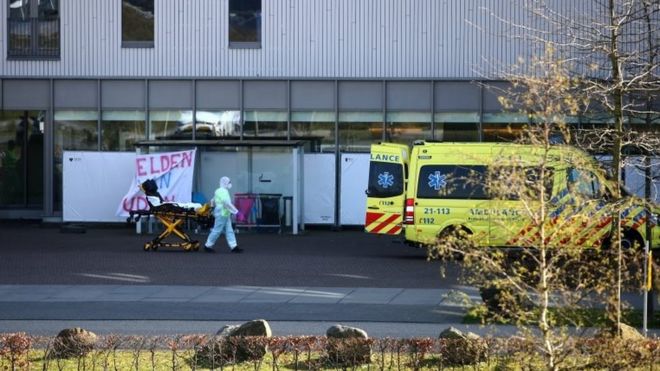
Image copyright GETTY IMAGESImage caption The Netherlands has been among the countries reporting faulty Chinese-made equipment
A number of European governments have rejected Chinese-made equipment designed to combat the coronavirus outbreak.
Thousands of testing kits and medical masks are below standard or defective, according to authorities in Spain, Turkey and the Netherlands.
Europe has reported hundreds of thousands of cases of coronavirus.
More than 10,000 people have died in Italy since the outbreak began.
The virus was first detected in China at the end of 2019. The government implemented strict lockdown measures to bring it under control.
What’s wrong with the equipment?
On Saturday, the Dutch health ministry announced it had recalled 600,000 face masks. The equipment had arrived from a Chinese manufacturer on 21 March, and had already been distributed to front-line medical teams.
Dutch officials said that the masks did not fit and that their filters did not work as intended, even though they had a quality certificate,
“The rest of the shipment was immediately put on hold and has not been distributed,” a statement read. “Now it has been decided not to use any of this shipment.”
Spain’s government encountered similar problems with testing kits ordered from a Chinese company.
It announced it had bought hundreds of thousands of tests to combat the virus, but revealed in the following days that nearly 60,000 could not accurately determine if a patient had the virus.
The Chinese embassy in Spain tweeted that the company behind the kits, Shenzhen Bioeasy Biotechnology, did not have an official license from Chinese medical authorities to sell its products.
It clarified that separate material donated by the Chinese government and technology and retail group Alibaba did not include products from Shenzhen Bioeasy.
Turkey also announced that it had found some testing kits ordered from Chinese companies were not sufficiently accurate, although it said that some 350,000 of the tests worked well.
Allegations of defective equipment come after critics warned China could be using the coronavirus outbreak to further its influence.
“China is aggressively pushing the message that, unlike the US, it is a responsible and reliable partner,” he wrote. “Armed with facts, we need to defend Europe against its detractors.”
What’s the situation in Europe?
On Monday, Spain reported 812 new deaths in the space of 24 hours – bringing its total death toll to 7,340. It now has more than 85,000 infections – surpassing the number of cases reported in China.
Media caption Spanish doctor “scared and exhausted” by pandemic
New measures have also come into force in Spain banning all non-essential workers from going to their jobs. The restrictions will be in place for at least two weeks.
Italy remains the worst affected country worldwide. More than 10,000 people have died from the virus there, and it has recorded nearly 100,000 infections. Only the US has more confirmed cases, although the death toll there is far lower.
BEIJING, March 31 (Xinhua) — Chinese health authority said Tuesday that no new domestically transmitted cases of the novel coronavirus disease (COVID-19) were reported on the Chinese mainland on Monday.
The National Health Commission received reports of 48 new confirmed cases on the mainland on Monday, all of which were imported.
By the end of Monday, 771 imported cases had been reported, said the commission.
Also on Monday, one death which was in Hubei Province, and 44 new suspected cases, all imported ones, were reported on the mainland.
On Monday, 282 people were discharged from hospitals after recovery, while the number of severe cases decreased by 105 to 528.
The overall confirmed cases on the mainland had reached 81,518 by Monday, including 2,161 patients who were still being treated, 76,052 patients who had been discharged after recovery, and 3,305 people who died of the disease.
The commission said that 183 people were still suspected of being infected with the virus, adding that 19,853 close contacts were still under medical observation. On Monday, 1,199 people were discharged from medical observation.
By Monday, 682 confirmed cases including four deaths had been reported in the Hong Kong Special Administrative Region (SAR), 39 confirmed cases in the Macao SAR, and 306 in Taiwan including five deaths.
A total of 124 patients in Hong Kong, 10 in Macao and 39 in Taiwan had been discharged from hospitals after recovery.
BEIJING, March 30 (Xinhua) — The Group of 20 (G20) economies should work together to ensure stability in global industrial and supply chains, said Minister of Commerce Zhong Shan Monday.
All parties should actively take measures such as reducing or removing tariffs, eliminating trade barriers and facilitating unfettered trade, Zhong said at a video conference on COVID-19 control attended by G20 trade and investment ministers.
Zhong suggested the G20 economies should step up international cooperation on disease prevention and control supplies and protect the life and safety of people and medical workers in all countries.
All parties should uphold an open environment for global collaboration, Zhong said, suggesting the parties keep their markets open and safeguard the multilateral trading system and oppose protectionism.
At the meeting, ministers discussed the global impact of the COVID-19 pandemic and G20’s response. The parties agreed that the pandemic is a tremendous shock to international trade and investment, and that the joint statement of the Extraordinary G20 Leaders’ Summit on COVID-19 should be implemented collectively.
It was agreed that the parties should enhance coordination and cooperation and adopt open trade policies to reduce the impact on global supply chains, facilitate cross-border flow of goods and services and revive the confidence in growth of international trade.
The meeting was chaired by Saudi Arabia, which holds the G20 presidency. After the meeting, the Statement of the Extraordinary G20 Trade and Investment Ministers Virtual Meeting on COVID-19 was issued.
CHANGSHA, March 30 (Xinhua) — Railway repair is well underway after a train derailed in the city of Chenzhou in central China’s Hunan Province Monday that killed one and injured 127.
The accident happened in Yongxing County at 11:40 a.m. when the train ran into a landslide, leaving five carriages derailed. The power generation car caught on fire.
The fire has been put out and all of the injured have been sent to hospital, with four in serious condition, local authorities said.
There were 691 people on board the train when the derailment occurred, rescuers said. Except for those injured that were sent to hospital, other passengers took shelter in a nearby primary school until buses were sent to deliver them to a high-speed railway station.
“We volunteered to cook noodles and dress the wounds of several hundred passengers in the school until they were picked up,” said Liu Guijiao, a local villager.
He Zhiwen from China Railway Guangzhou Group told Xinhua that about 380 meters of tracks need repair. The engineering department has prepared 450 meters of tracks and 1,600 railroad ties.
Carriages will be removed after the repairs are completed, but the time for the traffic to resume has not been decided yet.
He said over 1,000 workers have been sent along with seven excavators, six railcars, two large tampers and three relief trains.
“We will try our best to resume traffic as soon as possible,” said an engineer on site.
The train, T179, was running from the city of Jinan, east China’s Shandong Province, to Guangzhou in south China’s Guangdong Province.
The group said 88 trains on the southern section of the Beijing-Guangzhou railway have been affected, including 54 suspensions, 22 returns and 12 detours.
Chinese President Xi Jinping, also general secretary of the Communist Party of China Central Committee and chairman of the Central Military Commission, talks with villagers and learns about the huge changes brought about by advancing green development, in Yucun Village of Tianhuangping Township in Anji County, east China’s Zhejiang Province, March 30, 2020. (Xinhua/Shen Hong)
HANGZHOU, March 30 (Xinhua) — Xi Jinping, general secretary of the Communist Party of China Central Committee, Monday inspected the county of Anji in east China’s Zhejiang Province.
While visiting Yucun Village, Xi talked with villagers and learned about the huge changes brought about by advancing green development.
In 2005, it was in this mountainous village Xi, then Party chief of Zhejiang, put forward the concept that “lucid waters and lush mountains are invaluable assets.”
The village has adhered to that concept for the past 15 years. Today, the village has 280 households and its residents earned a per capita income of 49,598 yuan (7,040 U.S. dollars) in 2019.
Leaving the village, Xi went to Anji’s mediation center to learn about how primary-level social disputes are resolved.
Xi started his inspection tour in Zhejiang Sunday.









 CHINDIA ALERT: You'll be living in their world, very soon