Archive for March, 2020

17/03/2020

Coronavirus: Hong Kong to quarantine all arrivals from abroad

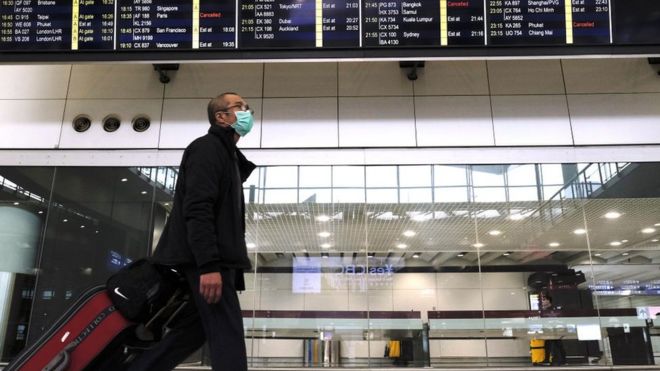
Aman wearing a mask pulls suitcase as he walks past a flight information display boardImage copyright GETTY IMAGES
Image caption Chief Executive Carrie Lam said the majority of Hong Kong’s cases had been imported

Hong Kong will quarantine all people arriving from abroad for 14 days, its leader Carrie Lam has said.

The restrictions, which will kick in on Thursday, will not apply to those from Macau or Taiwan. Entrants from mainland China already had to self-isolate.

Ms Lam said the majority of Hong Kong’s cases had been imported, adding that “strict measures” were needed.

Hong Kong has seen 57 new infections over the past two weeks, 50 of which were imported, said Ms Lam.

“If we exclude these imported, we only have seven local cases in the past week,” she said.

“If we do not impose strict measures, our previous efforts could be wasted.”

Ms Lam also advised residents to avoid all non-essential travel.

There are at least 155 confirmed cases in the territory, which detected its first cases in January.

The territory – a special administrative region of China – has so far been able to avoid the contagion seen elsewhere, thanks partly to a quick government response.

In January, cross-border travel with mainland China was slashed. Soon afterwards, health workers went on strike to demand a total border shutdown.

Presentational grey line

Some of the restrictions in the Asia-Pacific region, as of 17 March:

  • Australia – All travellers will have to self-isolate for 14 days. Foreign nationals who have been to China, Iran, Korea and Italy not allowed in
  • New Zealand – Everyone entering the country will have to self-isolate for 14 days. This excludes those from small Pacific islands with no confirmed virus cases
  • South Korea – Travellers from China’s Hubei province not allowed in. International arrivals from certain countries will need to submit papers on their health condition
  • Singapore – All visitors with travel history to France, Germany, Italy, Spain, South Korea and China banned from entering or transiting. Residents with recent history to these countries will have to self-isolate for 14 days. All those entering from Japan, Switzerland, the UK and Asean countries will have to self-isolate for 14 days
  • Malaysia – All foreign visitors have been banned, all Malaysians will not be allowed to travel overseas until 31 March. All returning Malaysians will have to self quarantine for 14 days
  • Japan – Ban on entry to travellers who have been to parts of China, South Korea, Iran or Italy in 14 days before arrival
Presentational grey line

The number of confirmed coronavirus cases and deaths outside China has now surpassed the number inside.

More than 100,000 people have been infected outside China, while just over 80,000 cases have been reported inside.

There have been more than 182,000 confirmed cases of coronavirus globally and over 7,000 deaths, according to a tally from Johns Hopkins University.

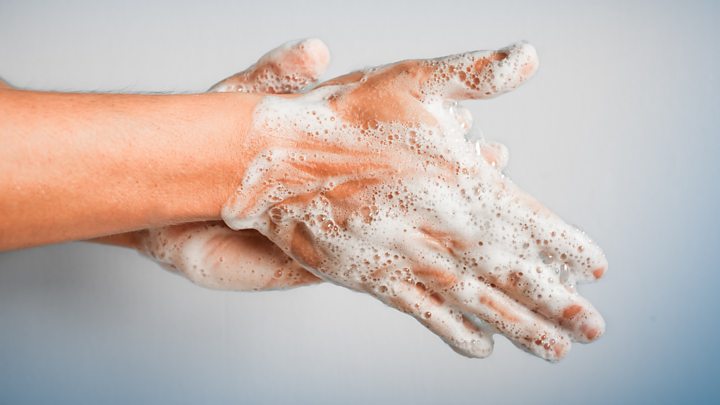
Media caption Steps the NHS says you should take to protect yourself from Covid-19

Source: The BBC

17/03/2020

China gives go-ahead for human trials of potential COVID-19 vaccine – state media

BEIJING (Reuters) – China has given the go-ahead for researchers to begin human safety tests of an experimental coronavirus vaccine in the race to develop a shot against the COVID-19 epidemic that has killed more than 7,000 people worldwide.

Researchers at China’s Academy of Military Medical Sciences, – affiliated to the Chinese People’s Liberation Army (PLA) -received approval to launch early-stage clinical trials of the potential vaccine starting this week, the ruling Communist Party’s People’s Daily reported on Tuesday.

Scientists in the United States said on Monday that clinical trials had begun for a vaccine developed by its National Institute of Allergy and Infectious Diseases and the U.S. biotech firm Moderna.

Details in the Chinese clinical trial registration database show that a “Phase 1” test that will examine whether experimental shot is safe in humans aims to recruit 108 healthy people to take part between March 16 and December 31.

The trial will be conducted by China’s Academy of Military Medical Sciences and the Hong Kong-listed biotech firm CanSino Biologics, the database showed.

Experts at the World Health Organization say they do not expect any fully tested and approved vaccine to reach the market until the middle of next year.

Source: Reuters

17/03/2020

Taj Mahal: ‘Monument of love’ shuts down amid coronavirus fears

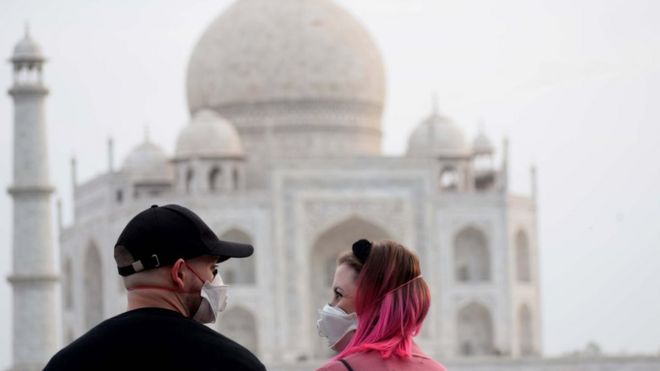
Tourists wear face masks as a preventive measure against the spread of the COVID-19 coronavirus outbreak, near Taj Mahal in Agra on March 5, 2020Image copyright GETTY IMAGES
Image caption The Taj Mahal is one of the world’s leading tourist attractions.

India’s iconic monument Taj Mahal has shut down to halt the spread of the coronavirus, officials say.

The culture ministry said tens of thousands visit the “monument of love” every day and it was “imperative to shut it down”.

The Taj Mahal is one of the world’s leading tourist attractions, and draws as many as 70,000 people every day.

India has 137 reported cases of Covid-19 and three related deaths. It has tested 6,000 people so far.

On Tuesday, the Indian government announced that all monuments and museums run by the Archaeological Survey of India across the country have also been shut to keep people safe.

Culture Minister Prahlad Patel said all the 143 monuments and museums would remain shut until 31 March and the decision would be reviewed after the shutdown period.

On Tuesday, a 60-year-old doctor in the southern state of Karnataka tested positive after treating a man who died from the coronavirus last week.

Media caption Everything you need to know about the coronavirus explained in one minute

India has taken a number of steps to halt the spread of Covid-19:

  • All visas, barring a select few categories, have been suspended for a month
  • Visa-free travel afforded to overseas citizens of the country has been suspended until 15 April and even those allowed in could be subject to 14 days of quarantine
  • Schools, colleges and movie theatres in most states have been shut until 31 March
  • The Indian Premier League (IPL), featuring nearly 60 foreign players and scheduled to begin on 29 March, has been postponed to 15 April

India’s health ministry says it was among the first countries in the world to prepare for an outbreak of the respiratory illness, and denied allegations that it was slow in testing suspected cases.

Experts say that India is in a critical phase where it needs to halt community transmissions. The country has only tested 6,000 people so far and many believe that it’s not enough to halt the spread. Experts say that India needs to start testing thousands daily to effectively stop community transmissions.

The government says it’s prepared and has now allowed even private labs to test, apart from government-run labs.

Source: The BBC

17/03/2020

Exclusive: India plans to top up strategic tanks with cheap Saudi, UAE oil – sources

NEW DELHI (Reuters) – India plans to take advantage of low prices for oil from Saudi Arabia and the United Arab Emirates to top up its strategic petroleum reserves (SPR), two sources familiar with the matter said on Monday.

Global oil prices have fallen around 40% in March as the impact of the coronavirus pandemic has destroyed demand, while supplies are growing following Moscow’s refusal to back deeper output cuts at a meeting of the Organization of the Petroleum Exporting Countries and its OPEC+ allies.

Leading OPEC producers Saudi Arabia and Abu Dhabi have said they will increase output while cutting prices, giving big consumers the chance to fill up at discounted prices.

“It is an opportune time for us and for them (Abu Dhabi National Oil Company and Saudi Aramco) to finalize the deals and fill the SPRs…If there is any delay, we might fill the SPRs on our own,” said an official familiar with the matter, asking not to be named.

A second source, who also requested anonymity, said the oil ministry has written to the finance ministry to release about 48-to-50 billion rupees ($673.7 million) to buy oil in 8-9 very large crude carriers for filling the storage.

Indian Strategic Petroleum Reserves Ltd (ISPRL) and India’s oil and finance ministry had no immediate comment, while ADNOC and Saudi Aramco declined to comment.

India, the world’s third biggest oil importer and consumer, imports about 80% of its oil needs and has built strategic storage at three locations in southern India to store up to 36.87 million barrels of oil or about 5 million tonnes to protect against supply disruption.

ISPRL, a company charged with building of strategic storage, has signed a memorandum of understanding (MOU) with the UAE’s national oil company ADNOC for the lease of half of its 2.5 million tonnes Padur facility.

Last year it signed an MoU with Saudi Aramco for the lease of a quarter of Padur SPR.

The leases allow the national oil companies to store their oil, some of which will cater for India’s strategic needs, while they can sell the rest to Indian refiners.

Padur has four compartments that hold about 4.6 million barrels each. The ISPRL has received 1 VLCC with Arab Mix to fill one compartment and will get a second VLCC in April, a third source said.

The ISPRL has already leased half of the 1.5 million tonnes capacity in Mangalore storage to ADNOC, which has stored about 5.5 million barrels of Das oil in the cavern, while ISPRL has retained the remainder.

“This is the right time to fill the SPRs before prices start moving up,” a third source said.

India has also filled its 1.03 million tonnes Vizag facility with Basra oil from another OPEC producer Iraq.

While India is primarily taking advantage of low prices as a consumer nation, U.S. President Donald Trump aimed to help U.S. energy producers struggling to cope with the price fall by announcing he would take advantage of low prices to fill up the nation’s emergency reserve.

Source: Reuters

16/03/2020

As coronavirus spreads in Africa, countries move quickly to contain disease with travel bans, closures

  • South Africa, Kenya latest to halt arrivals from ‘high-risk’ countries as cases across the continent double over the weekend
  • Concerns are growing over whether health care systems in some African nations will be able to cope
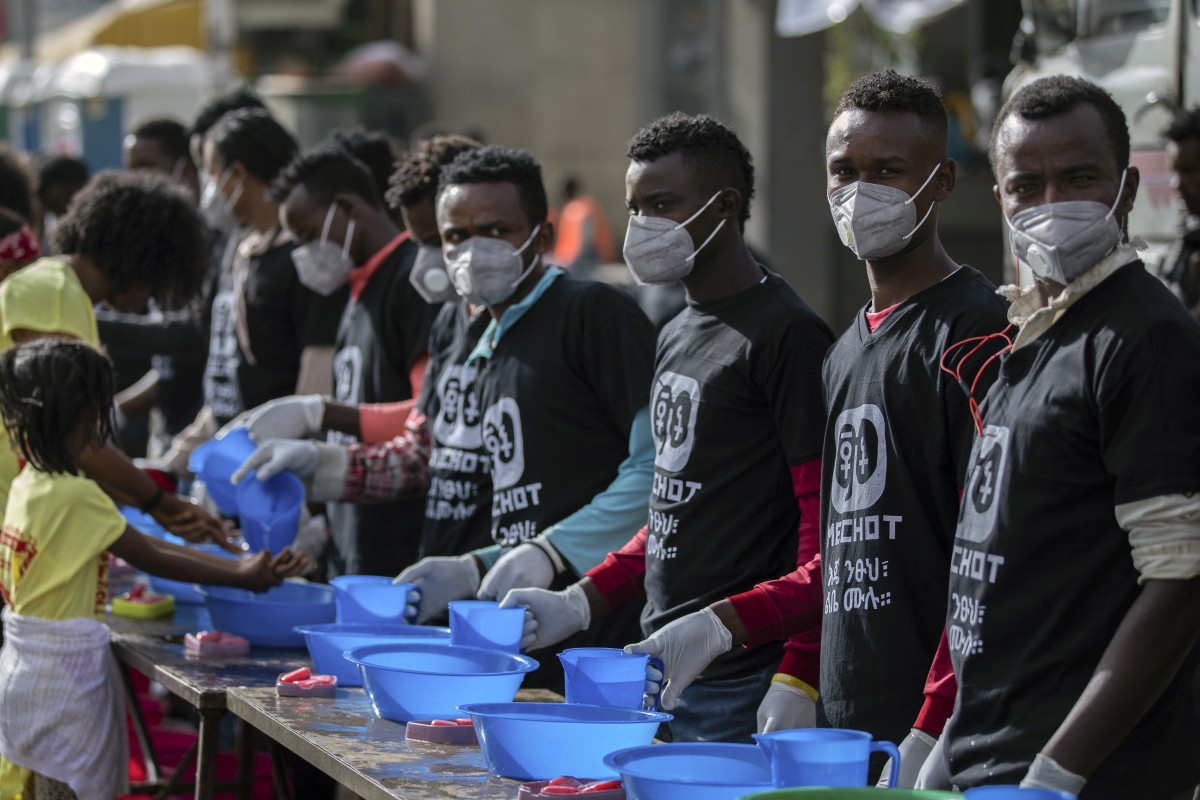
Masked volunteers provide soap and water for participants to wash their hands against the new coronavirus at a women’s 5km fun run in Addis Ababa, Ethiopia on Sunday. Photo: AP
Travel bans and school closures were announced in South Africa and Kenya on Sunday, as concerns grew over the capacity of the continent’s fragile health systems to cope with the spread of the deadly new coronavirus, with more than a dozen countries reporting their first cases.

South African President Cyril Ramaphosa declared a national state of disaster, banning arrivals by foreign nationals from high-risk countries including Italy, Iran, South Korea, Spain, Germany, the United States, Britain and China, effective Wednesday.

“We have cancelled visas to visitors from those countries from today and previously granted visas are hereby revoked,” Ramaphosa said in a televised address on Sunday evening, adding that any foreign national who had visited high-risk countries in the past 20 days would be denied a visa.

South African schools will also be closed from Wednesday until after the Easter weekend. Gatherings of more than 100 people have been banned and mass celebrations for Human Rights Day and other events cancelled. “Never before in the history of our democracy has our country been confronted with such a severe situation,” Ramaphosa said.

In Kenya, where three cases of Covid-19 – the disease caused by the new coronavirus – have now been confirmed, President Uhuru Kenyatta suspended travel from any country with reported infections. Only Kenyan citizens and foreigners with valid residency permits would be allowed entry, provided they proceeded to self-quarantine or a government-designated quarantine facility, he said.
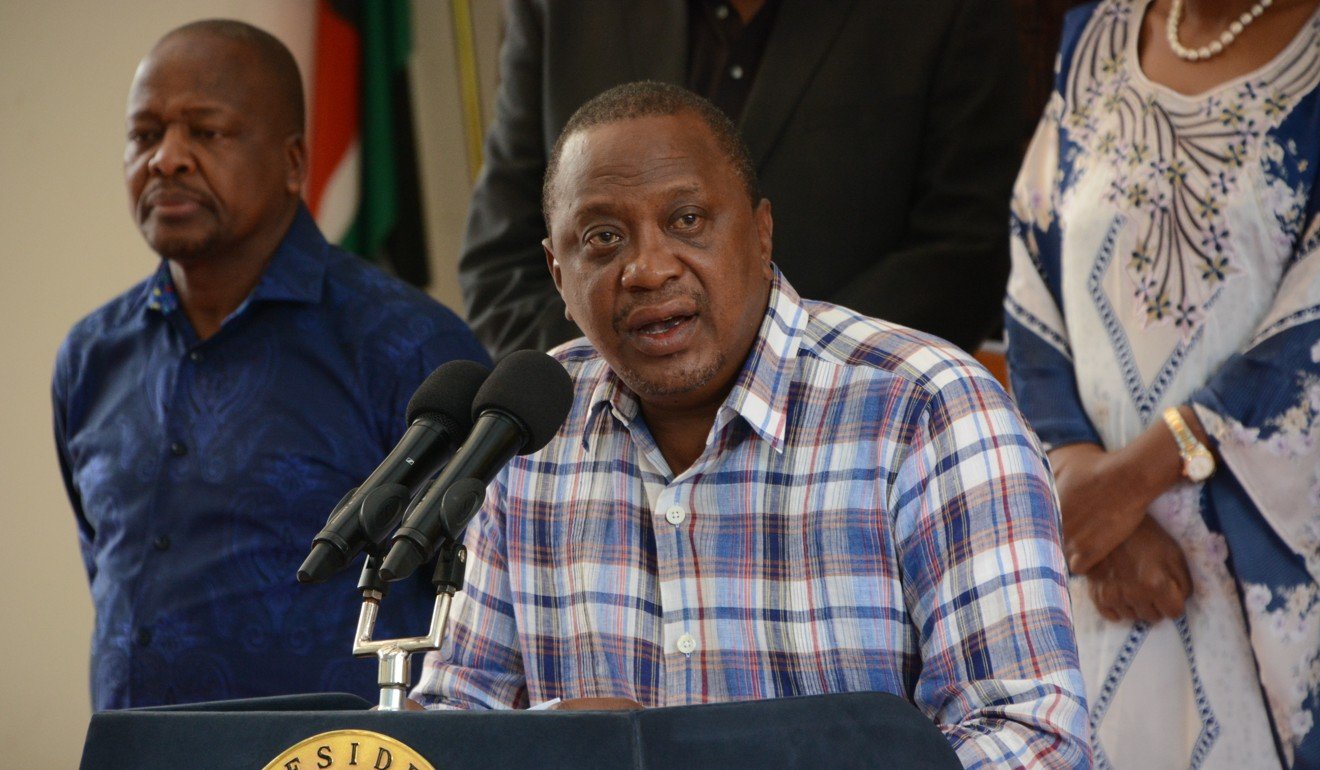
Kenyan President Uhuru Kenyatta reports two more cases of coronavirus in the country, bringing its total number of cases to three. Photo: DPA
Kenyatta also suspended learning in all educational institutions with immediate effect. “Some of the measures may cause inconvenience, but I want to assure you they are designed to ensure that we effectively contain the spread of the virus,” he said.

Kenya and South Africa join Ghana, Rwanda and Morocco in implementing travel restrictions or outright bans, while others are closing churches, museums, sporting activities, nightclubs and tourist attractions in a bid to curb the spread of the disease.

The continent was largely spared in the early days of the outbreak but has now recorded more than 300 cases and six deaths. Algeria, Morocco, Senegal and Tunisia all reported more new cases over the weekend, which saw numbers of new infections across Africa more than double in just two days.

As numbers rise, the Africa Centres for Disease Control and Prevention (CDC) has said there are around a dozen countries on the continent without the capacity to do their own testing.

They will have to send samples to countries like South Africa, which itself is struggling to contain the virus, with confirmed cases doubling to 61 on Sunday, a day after 114 of its citizens were repatriated from the central Chinese city of Wuhan, the original epicentre of the outbreak and the first to be placed in lockdown.

John Nkengasong, director of the Africa CDC, warned that the risk of other African countries detecting new cases of Covid-19 remained high. “Our strategy is clear: we want to capacitate the member states, so they can quickly detect and mitigate the effects of the disease in Africa, and, if widespread transmission occurs, prevent severe illness and death,” he said.

The World Health Organisation has already warned that critical gaps remain in the capacity of many African nations to trace, detect and treat the disease. On Friday, the WHO Africa office said it was “striving to help member states fill these gaps” but warned of global shortages in personal protective equipment (PPE) including gloves, masks and hand sanitiser.

Major coronavirus outbreak in Africa ‘just a matter of time’

13 Mar 2020

WHO said its first blanket distribution of PPEs, to 24 African countries, had been completed and another wave of distributions was planned.

“With Covid-19 officially declared a pandemic, all countries in Africa must act,” said Dr Matshidiso Moeti, WHO regional director for Africa. “Every country can still change the course of this pandemic by scaling up their emergency preparedness or response.

“Cases may still be low in Africa and we can keep it that way with robust all-of-government actions to fight the new coronavirus.”

The 55 member states of the African Union have suspended meetings until May, while the six countries that make up the East African Community have suspended all planned meetings until further notice.

Coronavirus delays Nigeria’s US$1.5 billion Chinese-built rail project

7 Mar 2020

In Algeria – one of the worst-hit North African countries, with 48 cases and four deaths, as of Monday morning – all schools and universities have been closed, while Senegal, with 24 cases to date, has closed schools and cancelled its Independence Day festivities on April 4, which this year marks 60 years since its independence from France. Cruise ships have also been banned from docking in Senegal.

On Sunday, Rwanda closed all its places of worship and suspended large gatherings such as weddings and sporting activities. Schools and universities in the central African country are also closed. National airline RwandAir has also suspended flights between the capital Kigali and Mumbai until April 30.

This is in addition to earlier suspensions of its routes with Tel Aviv and the southern Chinese city of Guangzhou, which remain in place until further notice.

While most African airlines have suspended flights to cities in mainland China, Ethiopian Airlines has continued flying to most of its destinations, describing its China routes as among its most profitable. Nevertheless, chief executive Tewolde GebreMariam last week said coronavirus fears had cut demand by a fifth on most of its routes.

Source: Reuters

16/03/2020

Beijing converts New China Int’l Exhibition Center into transit center for int’l inbound passengers

CHINA-BEIJING-INBOUND PASSENGER-TRANSIT CENTER (CN)

A passenger registers her information at a receiving point at the New China International Exhibition Center in Beijing, capital of China, March 14, 2020. Beijing has converted the New China International Exhibition Center into a transit center for international inbound passengers. The center, divided into different zones according to the destinations of passengers, is used for people showing no fever, cough and other symptoms in the health quarantine at the airport. (Xinhua/Chen Zhonghao)

Source: Xinhua

16/03/2020

Alibaba’s Ma donates coronavirus test kits to US

Co-founder of Alibaba Group Jack Ma .Image copyrightGETTY IMAGES

Alibaba co-founder Jack Ma has sent the first shipment of surgical masks and coronavirus test kits to the US.

The Chinese billionaire tweeted two pictures of the pallets of goods being loaded on to a plane in Shanghai.

Earlier this month he said he would give 500,000 testing kits and one million masks to America.

Mr Ma is also sending consignments of medical supplies to Europe as he called for international cooperation efforts to combat the pandemic.

In his first tweet, Asia’s richest person posted photos of a China Eastern Airlines jet being loaded with boxes of coronavirus test kits and face masks as they were shipped to the US.

It comes after the Jack Ma Foundation and the Alibaba Foundation last week announced that they had prepared 500,000 testing kits and 1 million masks to be sent to America.

They also said that they had already donated supplies to other countries including Japan, South Korea, Italy, Iran and Spain, with two million protective masks pledged for distribution across Europe.

The first consignment of 500,000 masks and other medical supplies such as test kits, which was destined for Italy, arrived in Belgium on Friday.

He joins other high-profile technology executives in pledging support for coronavirus research and disease prevention.

Microsoft co-founder Bill Gates, who is the world’s second-richest person, has announced that the Bill and Melinda Gates Foundation would give $100m to help efforts to stop the spread of the virus.

On Friday Mr Gates announced that he was stepping down from Microsoft’s board to spend more time on philanthropic activities. He said he wanted to focus on global health and development, education and tackling climate change.

Chinese tech giants, including Tencent, ride-hailing company Didi Chuxing, and TikTok owner ByteDance, have all pledged money and resources to fight the coronavirus outbreak.

Source: The BBC

16/03/2020

China eyes rescheduled parliament for late April or early May – sources

BEIJING (Reuters) – China tentatively plans to hold its delayed annual gathering of parliament in late April or early May, two people involved in preparations told Reuters, as new coronavirus cases in the country drop sharply even as they surge elsewhere.

The annual meetings of the National People’s Congress (NPC) and the Chinese People’s Political Consultative Conference (CPPCC), known as the “two sessions”, were scheduled for early March but were delayed due to the virus outbreak, with no new date announced.

Holding the events, which typically draw a combined 5,000 delegates to Beijing’s Great Hall of the People, would be a major indication that the Chinese leadership sees things as returning to normal.

The State Council Information Office and the media department of the Standing Committee of the NPC did not immediately respond to faxed requests for comment on Monday.

The outbreak that originated in the central city of Wuhan has infected more than 80,000 people in the country, killed 3,200 and wreaked economic havoc, causing factory output to plunge at the sharpest pace in three decades.

The NPC’s timing is not finalised, and one of the people said the number of attendees may be reduced, with those visiting from outside Beijing needing to undergo quarantine.

People now arriving in the capital from elsewhere in China must spend two weeks in quarantine.

“We still have to play it by ear, as the coronavirus rapidly spreads across the world,” said the person, declining to be identified given the sensitivity of the matter.

The NPC, China’s parliament, usually sits for at least 10 days. The CPPCC, a largely ceremonial advisory body, runs in parallel.

During parliament, legislators pass laws and unveil economic targets, defence spending projections and other important policy decisions. It is also an occasion for China’s ruling Communist Party to announce major policy and personnel changes.

This year, the NPC is expected to discuss the recent months of anti-government protests in Hong Kong, with China’s economy also expected to be a key item on the agenda.

Source: Reuters

16/03/2020

Mumbai is India’s most ‘forgetful’ city, says Uber

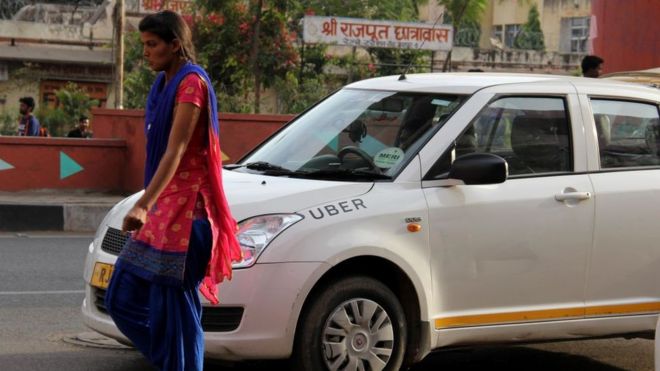
A lady walks past an Uber cab in IndiaImage copyright NURPHOTO
Image caption Uber’s annual Lost & Found Index lists items that passengers leave behind

Mumbai is India’s most “forgetful” city, according to Uber’s Lost & Found Index 2020, followed by Kolkata (formerly Calcutta) and Allahabad.

This is an annual database compiled by the cab aggregator, based on what passengers in different countries leave behind in Uber’s taxis.

Phones top the list in India, which also includes items as unusual as artificial acrylic teeth.

Uber found 3 August 2019 to be the “most forgetful” day in its survey.

India’s capital, Delhi, ranked fourth among the 10 most forgetful cities, followed by the southern city of Bangalore at number 5.

The list of the top 20 most unique lost items also includes mangoes, safari suits, brooms, military shoes and copies of Becoming, Michelle Obama’s memoir.

Uber found that Thursdays and Fridays are the most “forgetful” days of the week, and afternoons – between 13:00 and 15:00 – are the most likely hours when people lose things.

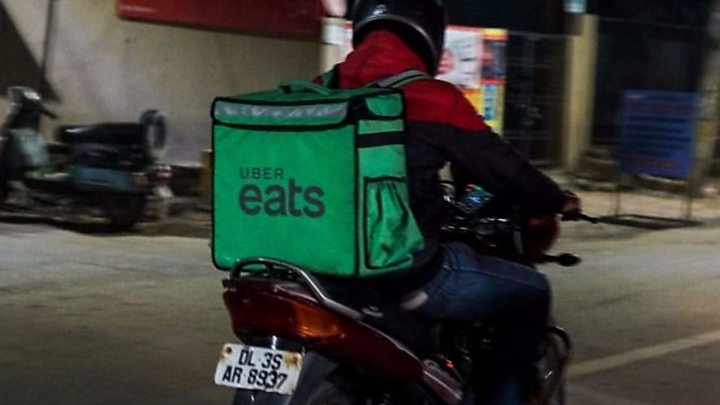
Media caption Why Uber Eats couldn’t deliver in India

The data suggests that people are most likely to leave behind a guitar on Saturdays and Sundays, and their lunch boxes on Tuesdays, Wednesdays and Thursdays.

Source: The BBC

16/03/2020

In Indian capital, riots deepen a Hindu-Muslim divide

NEW DELHI (Reuters) – For years, Hindus and Muslims lived and worked peacefully together in Yamuna Vihar, a densely populated Delhi district.

But the riots that raged through the district last month appear to have cleaved lasting divisions in the community, reflecting a nationwide trend as tensions over the Hindu nationalist agenda of Prime Minister Narendra Modi boil over.

Many Hindus in Yamuna Vihar, a sprawl of residential blocks and shops dotted with mosques and Hindu temples, and in other riot-hit districts of northeast Delhi, say they are boycotting merchants and refusing to hire workers from the Muslim community. Muslims say they are scrambling to find jobs at a time when the coronavirus pandemic has heightened pressure on India’s economy.

“I have decided to never work with Muslims,” said Yash Dhingra, who has a shop selling paint and bathroom fittings in Yamuna Vihar. “I have identified new workers, they are Hindus,” he said, standing in a narrow lane that was the scene of violent clashes in the riots that erupted on Feb. 23.

The trigger for the riots, the worst sectarian violence in the Indian capital in decades, was a citizenship law introduced last year that critics say marginalises India’s Muslim minority. Police records show at least 53 people, mostly Muslims, were killed and more than 200 were injured.

Dhingra said the unrest had forever changed Yamuna Vihar. Gutted homes with broken doors can be seen across the neighbourhood; electricity cables melted in the fires dangle dangerously above alleys strewn with stones and bricks used as makeshift weapons in the riots.

Most Hindu residents in the district are now boycotting Muslim workers, affecting everyone from cooks and cleaners to mechanics and fruit sellers, he said.

“We have proof to show that Muslims started the violence, and now they are blaming it on us,” Dhingra said. “This is their pattern as they are criminal-minded people.”

Those views were widely echoed in interviews with 25 Hindus in eight localities in northeast Delhi, many of whom suffered large-scale financial damages or were injured in the riots. Reuters also spoke with about 30 Muslims, most of whom said that Hindus had decided to stop working with them.

Suman Goel, a 45-year-old housewife who has lived among Muslim neighbours for 23 years, said the violence had left her in a state of shock.

“It’s strange to lose a sense of belonging, to step out of your home and avoid smiling at Muslim women,” she said. “They must be feeling the same too but it’s best to maintain a distance.”

Mohammed Taslim, a Muslim who operated a business selling shoes from a shop owned by a Hindu in Bhajanpura, one of the neighbourhoods affected by the riots, said his inventory was destroyed by a Hindu mob.

He was then evicted and his space was leased out to a Hindu businessman, he said.

“This is being done just because I am a Muslim,” said Taslim.

Many Muslims said the attack had been instigated by hardline Hindus to counter protests involving tens of thousands of people across India against the new citizenship law.

“This is the new normal for us,” said Adil, a Muslim research assistant with an economic think tank in central Delhi. “Careers, jobs and business are no more a priority for us. Our priority now is to be safe and to protect our lives.”

He declined to disclose his full name for fear of reprisals.

Emboldened by Modi’s landslide electoral victory in 2014, hardline groups began pursuing a Hindu-first agenda that has come at the expense of the country’s Muslim minority.

Vigilantes have attacked and killed a number of Muslims involved in transporting cows, which are seen as holy animals by Hindus, to slaughterhouses in recent years. The government has also adopted a tough stance with regard to Pakistan, and in August withdrew semi-autonomous privileges for Jammu and Kashmir, India’s only Muslim-majority state.

In November, the Supreme Court ruled that a Hindu temple could be built at Ayodhya, where a right-wing mob tore down a 16th-century mosque in 1992, a decision that was welcomed by the Modi government.

The citizenship law, which eases the path for non-Muslims from neighbouring Muslim-majority nations to gain citizenship in India, was the final straw for many Muslims, as well as secular Indians, sparking nationwide protests.

Modi’s office did not respond to questions from Reuters about the latest violence.

NIGHT VIGILANTES

During the day, Hindus and Muslims shun each other in the alleys of the Delhi districts that were hardest hit by the unrest in February. At night, when the threat of violence is greater, they are physically divided by barricades that are removed in the morning.

And in some areas, permanent barriers are being erected.

On a recent evening, Tarannum Sheikh, a schoolteacher, sat watching two welders install a high gate at the entrance of a narrow lane to the Muslim enclave of Khajuri Khas, where she lives. The aim was to keep Hindus out, she said.

“We keep wooden batons with us to protect the entrance as at any time, someone can enter this alley to create trouble,” she said. “We do not trust the police anymore.”

In the adjacent Hindu neighbourhood of Bhajanpura, residents expressed a similar mistrust and sense of insecurity.

“In a way these riots were needed to unite Hindus, we did not realise that we were surrounded by such evil minds for decades,” said Santosh Rani, a 52-year-old grandmother.

She said she had been forced to lower her two grandchildren from the first floor of her house to the street below after the building was torched in the violence, allegedly by a Muslim.

“This time the Muslims have tested our patience and now we will never give them jobs,” said Rani who owns several factories and retail shops. “I will never forgive them.”

Hasan Sheikh, a tailor who has stitched clothing for Hindu and Muslim women for over 40 years, said Hindu customers came to collect their unstitched clothes after the riots.

“It was strange to see how our relationship ended,” said Sheikh, who is Muslim. “I was not at fault, nor were my women clients, but the social climate of this area is very tense. Hatred on both sides is justified.”

Source: Reuters

Law of Unintended Consequences

continuously updated blog about China & India

ChiaHou's Book Reviews

continuously updated blog about China & India

What's wrong with the world; and its economy

continuously updated blog about China & India