Archive for March, 2020

27/03/2020

Coronavirus travel: China bars foreign visitors as imported cases rise

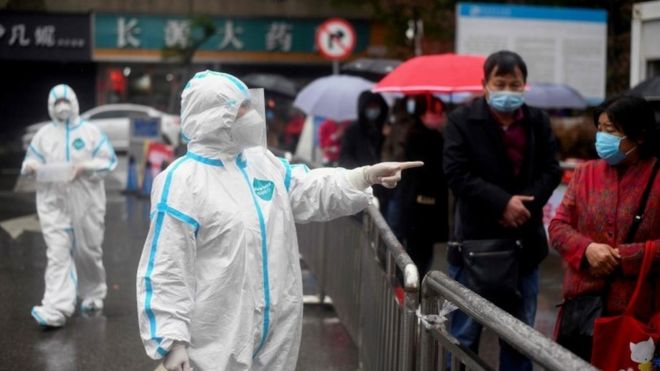
A queue at a fever clinic in Hubei province on FridayImage copyright AFP / GETTY
Image caption A queue at a fever clinic in Hubei province on Friday

China has announced a temporary ban on all foreign visitors, even if they have visas or residence permits.

The country is also limiting Chinese and foreign airlines to one flight per week, and flights must not be more than 75% full.

Although China reported its first locally-transmitted coronavirus case for three days on Friday, almost all its new cases now come from abroad.

There were 55 new cases across China on Thursday – 54 of them from overseas.

What are the new rules?

The Chinese Foreign Ministry said it was “suspending the entry of foreign nationals” because of the “rapid spread of Covid-19 across the world”.

The suspension applies to people with visas and residence passes, but not to diplomats or those with C visas (usually aircraft crew).

People with “emergency humanitarian needs” or those working in certain fields can apply for exceptions.

Although the rules seem dramatic, many foreign airlines had already stopped flying to China – and a number of cities already had restrictions for arrivals.

Last month, for example, Beijing ordered everyone returning to the city into a 14-day quarantine.

What is the coronavirus situation in China?

Although the virus emerged in China, it now has fewer cases than the US and fewer deaths than Italy and Spain.

There have been 81,340 confirmed cases in China and 3,292 deaths, the National Health Commission said on Friday.

In total, 565 of those confirmed cases were classed as “imported” – either foreigners coming into China, or returning Chinese nationals.

In Hubei – the province where the outbreak began – there were no new confirmed or suspected cases on Thursday.

The lockdown in provincial capital Wuhan, which began in January, will be eased on 8 April.

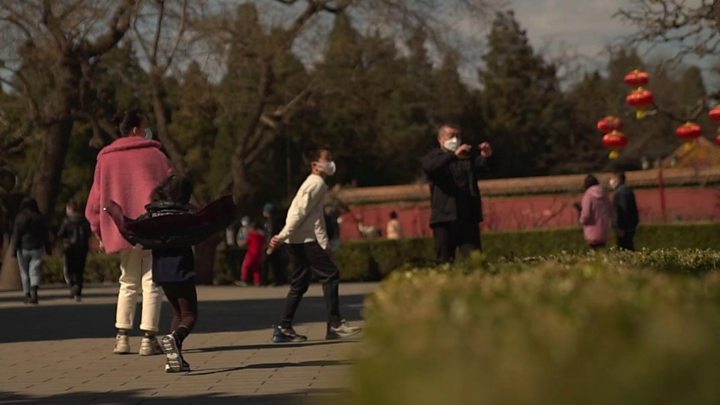
Media caption Stephen McDonell met people in Beijing heading out after the lockdown

Source: The BBC

27/03/2020

China’s Xi offers Trump help in fighting coronavirus as U.S. faces wave of new patients

BEIJING/SHANGHAI (Reuters) – Chinese President Xi Jinping told U.S. President Donald Trump during a phone call on Friday that he would have China’s support in fighting the coronavirus, as the United States faces the prospect of becoming the next global epicentre of the pandemic.

The United States now has the most coronavirus cases of any country, with 84,946 infections and 1,259 deaths. Hospitals in cities like New York and New Orleans struggle to cope with the wave of patients.

Xi’s offer of assistance came amid a long-running war of words between Beijing and Washington over various issues including the coronavirus epidemic.

Trump and some U.S. officials have accused China of a lack of transparency on the virus, and Trump has at times called the coronavirus a “China virus” as it originated there, angering Beijing.

In the call, Xi reiterated to Trump that China had been open and transparent about the epidemic, according to an account of the conversation published by the Chinese foreign ministry.

Trump said on Twitter that he discussed the coronavirus outbreak “in great detail” with Xi.

“China has been through much & has developed a strong understanding of the virus,” Trump said. “We are working closely together. Much respect!”.

The World Health Organization has said the United States, which saw 17,099 new coronavirus cases and 281 deaths in the past 24 hours, is expected to become the epicentre of the pandemic.

CHINA CUTS FLIGHTS

Like U.S. hospitals now, China’s medical system struggled to contain the coronavirus just two months ago, but draconian city lockdowns and severe travel restrictions has seen China dramatically ease the epidemic.

Mainland China on Friday reported its first local coronavirus case in three days and 54 new imported cases, as Beijing ordered airlines to sharply cut international flights, for fear travellers could reignite the coronavirus outbreak.

The 55 new cases detected on Thursday were down from 67 a day earlier, the National Health Commission said on Friday, taking the tally of infections to 81,340. China’s death toll stood at 3,292 as of Thursday, up by five from a day earlier.

The central province of Hubei, with a population of about 60 million, reported no new cases on Thursday, a day after lifting a lockdown and reopening its borders as the epidemic eased there.

The commercial capital of Shanghai reported the most new imported cases with 17, followed by 12 in the southern province of Guangdong and four each in the capital Beijing and the nearby city of Tianjin.

Shanghai now has 125 patients who arrived from overseas, including 46 from Britain and 27 from the United States.

In effect from Sunday, China has ordered its airlines to fly only one route to any country, on just one flight each week. Foreign airlines must comply with similar curbs on flights to China, although many had already halted services.

About 90% of current international flights into China will be suspended, cutting arrivals to 5,000 passengers a day, from 25,000, the civil aviation regulator said late on Thursday.

From Saturday, China will temporarily suspend entry for foreigners with valid visas and residence permits, in an interim measure, the foreign ministry added.

Before the new curbs, foreign nationals made up about a tenth of the roughly 20,000 travellers arriving on international flights every day, an official of China’s National Immigration Administration said last week.

As commercial flights dwindle, Chinese students from wealthy families are paying tens of thousands of dollars to fly home on private jets.

International demand for chartered and private flights into China increased 227% in March from a year earlier, said Shanghai-based private jet service provider iFlyPlus.

Notably, requests for flights from the United States to China rose 10-fold in late March, iFlyPlus told Reuters.

Source: Reuters

27/03/2020

Coronavirus: Can one woman make kindness catch on in India?


Caremongers posterImage copyright CAREMONGERS INDIA

With India under lockdown and social distancing being advised to deal with the threat of the coronavirus, an online collective of “Caremongers” is reaching out to help the elderly and other vulnerable groups.

It started last week when Mahita Nagaraj, a digital marketing professional and single mum, received a call from a close friend in the UK requesting her to help arrange some medicines for her “very elderly parents”.

Within hours, she heard from another friend living in the US with a similar question: can you ensure that my parents have provisions for the month?

Ms Nagaraj, who lives in the southern city of Bengaluru (formerly Bangalore), says that set her thinking about other friends whose elderly parents didn’t have anyone to call upon.

So, she posted a message on Facebook asking people to get in touch if they needed help.

The response she got was “overwhelming”. People reached out to her from all over India and, surprisingly, most who got in touch said they wanted to help out too.

And thus was born Caremongers India – a Facebook group, asking people to “stop scaremongering and start caremongering” – on 17 March.

“There is so much scaremongering in the current scenario,” says Ms Nagaraj. “We are trying to address the feeling of helplessness in the people. We are telling people to stop spreading fear and panic, and instead spread love.”

Mahita NagarajImage copyright CAREMONGERS INDIA
Image caption Mahita Nagaraj set up Caremongers India after her friends called her to seek help

Ms Nagaraj says she learnt about caremongering from a BBC article from Canada. The concept actually started in Toronto to help vulnerable people, but within days it spread to cover almost all of Canada with tens of thousands signing up.

Reports of altruism have come in from other parts of the world too. Britons are delivering soup to the elderly, in the US neighbours are helping those quarantined with buying groceries and one Long Island mother, infected with the virus, wrote about a neighbour who cooked a lasagne and left it outside her door.

Along with all the fear and panic caused by the coronavirus, the pandemic has also seen kindness go viral across the globe, with neighbours and complete strangers pitching in to help.

In India too, caremongering took off from the word go – in the first 24 hours, the Facebook group had 200 members. A week later, it has become a pan-India network with more than 6,500 volunteers.

Ms Nagaraj says she realised that on Facebook, most people were getting in touch to offer help, but only a few were asking for help. So, on Friday night, she launched a helpline number and since then, “it’s gone crazy”.

Caremongers India offers help to those who are most at risk of health complications due to the virus like the elderly, the disabled, those with pre-existing health conditions and anyone with an infant under a year.

In less than a week, Ms Nagaraj says, she has received thousands of calls and messages and although a large number of them have been to verify whether the number is genuine, she has also taken hundreds of requests for assistance.

Listed on the Caremongers India page are countless examples of assistance sought and provided; and testimonials and messages of gratitude.Transparent line (white space)

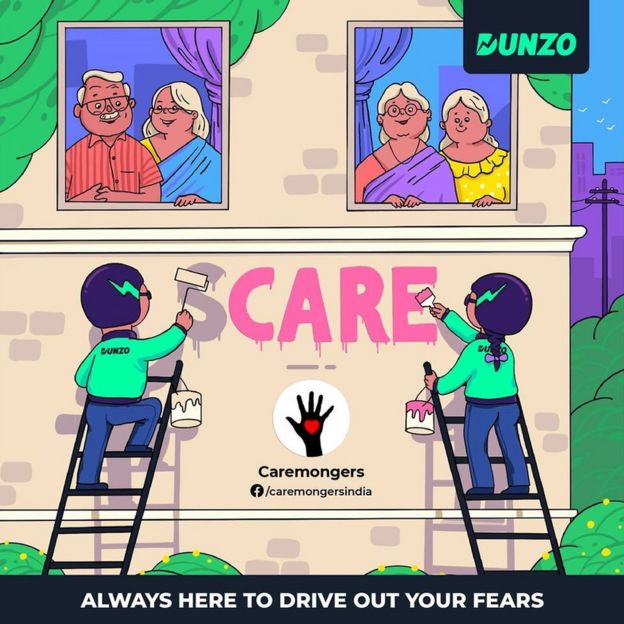
Wiping away the scareImage copyright IMAGE COURTESY: DUNZOTransparent line (white space)Besides those calling in from within India, Ms Nagaraj has been fielding dozens of calls from people across the globe seeking help for their elderly parents and grandparents.

“When people give their requirement and address, we match the requester with the closest volunteer,” she explains.

So last Saturday, when Amit Joshi, a resident of an upscale apartment block in the Delhi suburb of Noida, called the helpline, he was connected to Caremonger Madhavi Juneja, who also lives in Noida.

“We woke up to the news that our apartment complex was under lockdown,” Mr Joshi told me.

A resident had tested positive for the coronavirus and Mr Joshi was informed that they would not be allowed to leave home for a week.

“Police had put up barricades outside on the road and our complex was swamped with disaster management teams and health officials. Everything around us was shuttered. There was complete panic,” he says.

Mr Joshi, who lives with his wife and elderly parents, says his biggest worry was how to get essentials like bread and milk.

Banner image reading 'more about coronavirus'
Banner

And when he received a random WhatsApp forward from a colleague about Caremongers India, he decided to call them.

A few hours later, Ms Juneja, a psychotherapist and life coach, turned up at the gate of Mr Joshi’s housing society and handed over the supplies to him.

“I wore a mask and took my bottle of hand sanitiser and drove to his complex to carry out the delivery,” she said.

“Because the street was barricaded, I parked my car and then walked. If I had left it outside, someone else could have taken it. After I handed over the package to him, I sanitised my hands and got back into my car.”

Media caption People panicked after Narendra Modi said nobody should leave their homes, and did not mention the status of essential supplies

Mr Joshi says, “In trying times like these, to have people selflessly reaching out to those in need has strengthened my belief in humanity.”

Ms Nagaraj says it’s “so heartening” to see that so many people want to help.

“Every request we receive is very special when we fulfil it. When a daughter calls to say her dad who lives alone requires provisions, we work hard to ensure he gets it.”

Ms Nagaraj says caremongering has taken over life and even her home.

“It’s not easy to answer 450 calls a day,” she says, “but when you help others, you go to bed thinking you haven’t wasted your day and that’s good enough for me.”

Source: The BBC

27/03/2020

U.S. has most coronavirus cases in world, next wave aimed at Louisiana

NEW YORK (Reuters) – The number of U.S. coronavirus infections climbed above 82,000 on Thursday, surpassing the national tallies of China and Italy, as New York, New Orleans and other hot spots faced a surge in hospitalizations and looming shortages of supplies, staff and sick beds.

With medical facilities running low on ventilators and protective masks and hampered by limited diagnostic testing capacity, the U.S. death toll from COVID-19, the respiratory disease caused by the virus, rose beyond 1,200.

“Any scenario that is realistic will overwhelm the capacity of the healthcare system,” New York Governor Andrew Cuomo told a news conference. He described the state’s projected shortfall in ventilators – machines that support the respiration of people have cannot breathe on their own – as “astronomical.”

“It’s not like they have them sitting in the warehouse,” Cuomo added. “There is no stockpile available.”

At least one New York City hospital, New York-Presbyterian/Columbia University Medical Center in Manhattan, has begun a trial of sharing single ventilators between two patients.

While New York was the coronavirus epicenter in the United States this week, the next big wave of infections appeared headed for Louisiana, where demand for ventilators has already doubled. In New Orleans, the state’s biggest city, Mardi Gras celebrations late last month are believed to have fueled the outbreak.

Louisiana Governor John Bel Edwards said New Orleans would be out of ventilators by April 2 and potentially out of bed space by April 7 “if we don’t flatten the infection curve soon.”

“It’s not conjecture, it’s not some flimsy theory,” Edwards told a press conference. “This is what is going to happen.”

About 80% of Louisiana’s intensive care patients are now on breathing machines, up from the normal rate of 30-40%, said Warner Thomas, chief executive of Ochsner Health System, the state’s hospital group.

Scarcities of protective masks, gloves, gowns and eyewear for doctors and nurses – reports abound of healthcare workers recycling old face masks, making their own or even using trash bags to shield themselves – have emerged as a national problem.

“Our nurses across the country do not have the personal protective equipment that is necessary to care for COVID patients, or any of their patients,” Bonnie Castillo, head of the largest U.S. nurses union, National Nurses United, told MSNBC.

In an ominous milestone for the United States as a whole, at least 82,153 people nationwide were infected as of Thursday, according to a Reuters tally from state and local public health agencies. China, where the global pandemic emerged late last year, had the second highest number of cases, 81,285, followed by Italy with 80,539.

At least 1,204 Americans have died from COVID-19, which has proven especially dangerous to the elderly and people with underlying chronic health conditions, Reuters’ tally showed.

MORE BEDS NEEDED

For New York state, Cuomo said a key goal was rapidly to expand the number of available hospital beds from 53,000 to 140,000.

New York hospitals were racing to comply with Cuomo’s directive to increase capacity by at least 50%. At Mount Sinai Hospital’s Upper East Side location, rooms were being constructed within an atrium to open up more space for beds.

At Elmhurst Hospital in New York’s borough of Queens, about a hundred people, many wearing masks with their hoods pulled up, lined up behind barriers outside the emergency room entrance, waiting to enter a tent to be screened for the coronavirus.

The city coroner’s office has posted refrigerated trucks outside Elmhurst and Bellevue Hospital to temporarily store bodies of the deceased.

Deborah White, vice chair of emergency medicine at Jack D. Weiler Hospital in the city’s Bronx borough, said 80% of its emergency room visits were patients with coronavirus-like symptoms.

A ventilator shortfall and surge in hospitalizations has already raised the prospect of rationing healthcare.

Asked about guidelines being drafted on how to allocate ventilators to patients in case of a shortage, New Jersey Governor Phil Murphy told reporters such bioethical discussions “haunted him” but were unavoidable.

Outside New York and New Orleans, other hot spots appeared to be emerging around the country, including Detroit.

Brandon Allen, 48, was buying groceries in Detroit for his 72-year-old mother, who has tested positive and was self-quarantining at home.

“It’s surreal,” Allen said. “People around me I know are dying. I know of a couple people who have died. I know a couple of people who are fighting for their lives. Everyday you hear of another person who has it.”

RECORD UNEMPLOYMENT CLAIMS

Desperate to slow virus transmissions by limiting physical contact among people, state and local governments have issued stay-at-home orders covering about half the U.S. population. A major side effect has been the strangulation of the economy, and a wave of layoffs.

The U.S. Labor Department reported Thursday the number of Americans filing claims for unemployment benefits last week soared to a record of nearly 3.28 million – almost five times the previous weekly peak of 695,000 during the 1982 recession.

Dr. Anthony Fauci, director of the U.S. National Institute of Allergy and Infectious Diseases, said warmer weather may help tamp down the U.S. outbreak as summer approaches, though the virus could re-emerge in the winter.

“We hope we get a respite as we get into April, May and June,” Fauci said on WNYC public radio.

Washington state Governor Jay Inslee said he may extend a stay-at-home order tentatively set to expire April 6, encouraged by what he called a “very modest improvement” in the Seattle area.

Washington experienced the first major U.S. outbreak of COVID-19 and has been among the hardest-hit states. As of Thursday the state reported about 3,200 cases and 147 deaths.

In California’s Coachella Valley, a region rife with retirees who are especially vulnerable, 25 members of the state’s National Guard helped a non-profit distribute food to people stuck in their homes, as most of the regular volunteers are senior citizens.

More than 10,000 troops have been deployed in 50 states to provide humanitarian aid during the pandemic.

Source: Reuters

26/03/2020

Chinese vice premier stresses employment via online platforms

BEIJING, March 25 (Xinhua) — Chinese Vice Premier Hu Chunhua called for all-out efforts to make full use of online platforms to boost employment as the novel coronavirus outbreak has dampened the country’s job market.

Hu, also a member of the Political Bureau of the Communist Party of China Central Committee, made the remarks Wednesday during an investigation of a national online recruitment program.

The special hiring project, launched on March 20, offered over 10 million positions for job seekers.

After hearing reports of the program, Hu held video conferences to learn about work resumption of enterprises and online recruitment and paid special attention to key groups like college graduates and migrant workers.

Noting that this year’s employment situation could be tough due to the epidemic, Hu urged localities and relevant government agencies to guide all kinds of employers to provide more types of jobs and help those with employment difficulties.

The vice premier also underlined the use of online platforms in special recruitment plans, career guidance and vocational training as normal hiring activities were disrupted by the outbreak.

Meanwhile, public employment service agencies and relevant market institutions should be encouraged to share information on job vacancies and strengthen the coordination of online and offline recruitment activities to ensure a stable job market, Hu said.

Source: Xinhua

26/03/2020

Over 800 people stranded in Hubei return to Beijing

CHINA-BEIJING-HUBEI-STRANDED PEOPLE-RETURN (CN)

People returning from Hubei arrive at the Beijing West Railway Station in Beijing, capital of China, March 25, 2020. The first batch of over 800 people stranded in virus-hit Hubei Province has arrived in Beijing Wednesday afternoon after Hubei lifted outbound travel restrictions in all areas except the capital city Wuhan starting from Wednesday. (Xinhua/Zhang Chenlin)

BEIJING, March 25 (Xinhua) — The first batch of over 800 people stranded in virus-hit Hubei Province has arrived in Beijing Wednesday afternoon after Hubei lifted outbound travel restrictions in all areas except the capital city Wuhan starting from Wednesday.

The transport of the people was carried out in a well-organized and spot-to-spot way, said Chen Bei, deputy secretary-general of the Beijing municipal government, at a press conference Wednesday.

There are still more than 20,000 teachers and students from Beijing schools and universities stranded in Hubei, according to Chen.

Chen said those who have a fixed residence in Beijing can apply to return to their homes while those who do not still need to wait for further arrangements after the announcement of school and university reopening.

Source: Xinhua

26/03/2020

Almost 72 per cent of Chinese SMEs have resumed work amid push to digitise businesses, ministry says

  • For many small factories and service businesses, the process of returning to normal operations after disruptions from the coronavirus pandemic has been harder
  • Chinese authorities have been pushing for SMEs to make use of technologies such as remote working and smart manufacturing platforms to resume operations quickly
Workers pack instant river snail rice noodles at a factory in Liuzhou, south China's Guangxi Zhuang Autonomous Region, Jan. 2, 2020. Photo: Xinhua
Workers pack instant river snail rice noodles at a factory in Liuzhou, south China’s Guangxi Zhuang Autonomous Region, Jan. 2, 2020. Photo: Xinhua
Small and medium-sized enterprises

(SMEs) in China have been resuming work at a faster rate since March with the help of government measures to promote their adoption of technology, China’s Ministry of Industry and Information (MIIT) said in a news conference on Wednesday.

As of Tuesday, 71.7 per cent of SMEs using cloud-based platforms had resumed production, up from 29.6 per cent a month earlier, said Qin Zhihui, deputy director of MIIT’s SME bureau.
Industrial internet platforms, which help to “coordinate production and prevent risks, ensure the integrity and safety of supply chains and give support to key areas which may experience potential work disruptions”, have helped some businesses resume operations, MIIT spokesman Xie Shaofeng said at the same news conference.
“Others used cloud-based computing to help enterprises move their business operations online, promoting remote working, teleconferencing, online training, co-researching and e-commerce,” he added.
For many small factories and service businesses, which account for most employment in China, the process of returning to normal operations has been more difficult than for larger firms. The smaller firms, for example, are often unable to meet virus prevention conditions set by local governments, including having enough facial masks for employees.
Workers at 60 per cent of Chinese firms still telecommuting under lockdown
27 Feb 2020
In a notice last week, MIIT encouraged SMEs to make use of digital tools such as

remote working

and smart manufacturing platforms to resume operations as soon as possible, and urged cloud services providers to open up services for SMEs in both services and manufacturing sectors.

The ministry also said in the notice that it had rolled out more than 370 online training courses for SMEs to stay informed about government policies and access opportunities to learn managerial and technological skills. It said the courses had been viewed more than 8 million times.

China’s cloud infrastructure, which enables remote working and online learning among other applications, has grown rapidly over the past few years. The market grew 66.9 per cent to US$3.3 billion in the fourth quarter of 2019, according to a Canalys report last week, with Alibaba Group Holding’s Alibaba Cloud accounting for 46.6 per cent of the market, followed by Tencent Cloud with 18 per cent and Baidu’s AI Cloud with 8.8 per cent.

Alibaba is the parent company of the South China Morning Post.

Source: SCMP

26/03/2020

U.S. playing dangerous game, China says, after warship sails through Taiwan Strait

TAIPEI (Reuters) – China accused the United States on Thursday of playing a dangerous game with its support for Taiwan, after a U.S. warship passed through the sensitive Taiwan Strait following heightened military tension between China and Taiwan.

China has been angered by the Trump administration’s stepped-up support for the island it considers its own, such as more arms sales, U.S. patrols near Taiwan and last month’s visit to Washington by Taiwan Vice President-elect William Lai.

Anthony Junco, a spokesman for the U.S. Seventh Fleet, said the guided-missile destroyer USS McCampbell conducted “a routine Taiwan Strait transit” on March 25, in line with international law.

“The ship’s transit through the Taiwan Strait demonstrates the U.S. commitment to a free and open Indo-Pacific,” he added. “The U.S. Navy will continue to fly, sail and operate anywhere international law allows.”

Taiwan’s defence ministry said the ship sailed north through the waterway and was monitored by Taiwan’s armed forces, on what it called an “ordinary mission”, adding there was no cause for alarm.

In Beijing, Chinese defence ministry spokesman Ren Guoqiang denounced “continued negative actions” by the United States on Taiwan, including sailings through and flights over the Taiwan Strait.

“U.S. moves have seriously interfered in China’s internal affairs, severely harmed peace and stability in the Taiwan Strait and poisoned Sino-U.S. military ties,” Ren told a monthly news conference.

The actions were “extremely dangerous”, he added.

Taiwan is China’s most sensitive territorial and diplomatic issue and Beijing has never ruled out the use of force to bring the island under its control. The narrow Taiwan Strait that separates the island from China is a frequent source of tension.

In recent weeks China’s air force has conducted several exercises close to Taiwan, prompting its mostly U.S.-equipped military to scramble fighters to intercept and warn away the Chinese aircraft.

Taiwan has called the drills provocative, and urged China to pay more attention to fighting a coronavirus pandemic, rather than menace it.

The United States, like most countries, has no official relations with Taiwan, but is the island’s most important international supporter and main source of arms.

In January another U.S. warship sailed through the Taiwan Strait less than a week after President Tsai Ing-wen won re-election by a landslide on a platform of standing up to China.

Source: Reuters

26/03/2020

India coronavirus: $22bn bailout announced for the poor


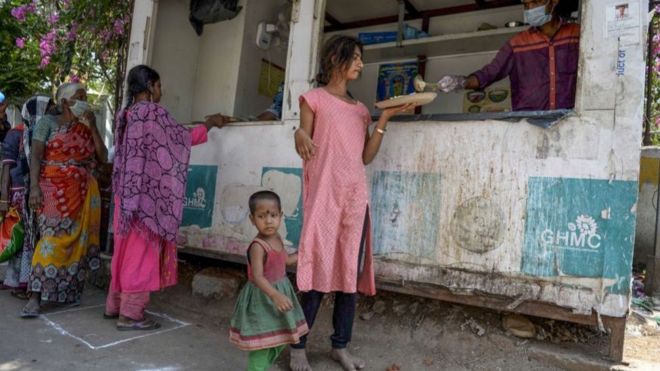
Homeless people receive free food offered by the Telangana state government during a 21-day government-imposed nationwide lockdown as a preventive measure against the COVID-19 coronavirus in HyderabadImage copyright GETTY IMAGES
Image caption Many Indians face losing their income and some say they could starve

India has announced a $22bn (£19bn) bailout for the country’s poor to help counter the economic effects of the Covid-19 outbreak.

“We don’t want anyone to remain hungry, and we don’t want anyone to remain without money in their hands,” finance minister Nirmala Sitharaman said.

The package, which includes free food and cash transfers, was for “those who need immediate help”, she said.

She also said health workers would get medical insurance of up to $66,500.

Correspondents point out that this amounts to just 1% of India’s GDP – in stark contrast to the US and Singapore which are spending about 10% of their GDP on similar packages.

However, this could be just stage one, with similar packages set to be announced later, they added.

India’s economy was already in the midst of a severe slowdown before the country went into lockdown, shutting workplaces, factories and affecting millions of daily-wage and informal workers.

They form India’s vast informal sector, which constitutes a large part of its workforce. The lockdown and social distancing have left many of them with no viable means of getting any income, and many have expressed fears that they could starve.

Growth had slumped to 4.7% last month – the slowest pace in years – as a steep drop in manufacturing affected overall economic health.

Barclays said the total shutdown cost to India would be around $120bn, or 4% of the country’s GDP.

Ms Sitharaman, who is also the head of an economic task force announced by the prime minister, said that workers under an employment guarantee scheme would get a wage increment, and that recipients of other welfare schemes would also get benefits, like free gas cylinders instead of just subsidised ones.

Source: The BBC

25/03/2020

Nike turns to digital sales during China shutdown

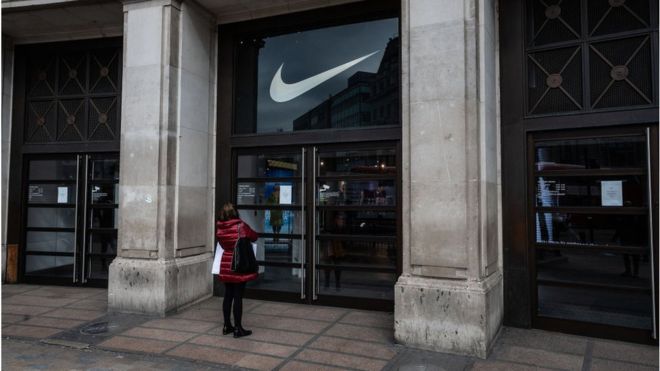
A woman reads the sign on the door of the closed Niketown store on Oxford Street, London.Image copyright GETTY IMAGES

Sportswear firm Nike has seen online sales rise by more than 30% in China as it rides out its coronavirus store shutdowns.

The US firm has shut the majority of its stores globally, but says 80% have now reopened in China.

“We expect the next several weeks to be a challenging period,” said Nike chief executive John Donahoe, talking about the US and Europe.

He hopes Nike can use the lessons learned in China to navigate its Western market shutdowns.

“Consumers are back in the stores,” Mr Donahoe said of Nike’s Chinese outlets. “They are often wearing facemasks, but they’re back in the store”.

Nike reported a 5% drop in Chinese sales to $1.5bn in its last financial quarter, which runs to the end of February. It was the first decline in China for the company in almost six years.

But it has seen strong online sales, rising by 36% during the quarter. It hopes this trend will help cushion a fall in sales from store closures.

Nike also saw an “extraordinary rise” in its personal training apps in China, designed for home workouts. User activity was up 80% as China faced a national lockdown with residents staying at home.

The sportswear firm said it would push on with some new product launches originally intended for the Olympics “when the time is right”. Nike has been promoting its sustainable footwear, made from recyclable materials.

On Tuesday the IOC announced it was postponing the Tokyo 2020 Olympic and Paralympic Games until next year because of the worldwide coronavirus pandemic.

Source: The BBC

Law of Unintended Consequences

continuously updated blog about China & India

ChiaHou's Book Reviews

continuously updated blog about China & India

What's wrong with the world; and its economy

continuously updated blog about China & India