Archive for April, 2020

01/04/2020

China postpones all-important gaokao university entrance exams because of coronavirus

  • Education ministry says they will be held a month later than planned – on July 7 and 8 – when there is ‘a lower risk’ for students and staff
  • It will also give them more time to prepare after months of online learning due to school closures
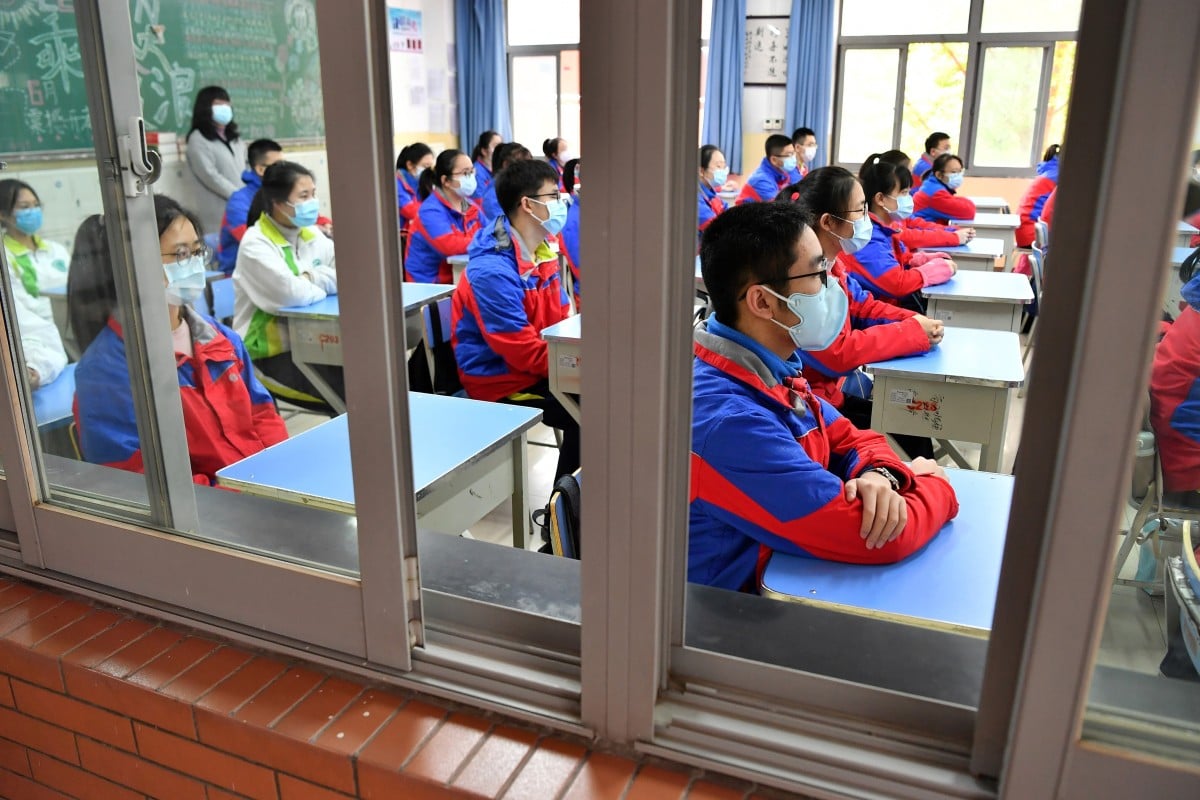
Students were back in class at the Xian Middle School in Shaanxi province on Monday after a nationwide closure because of the coronavirus outbreak. Photo: Xinhua
China’s all-important annual college entrance exams have been postponed by a month because of the coronavirus crisis – the first time they have been disrupted since the Cultural Revolution.
Universities in mainland China base enrolments solely on the results of the gruelling examinations, known as the gaokao, and they are seen as tests that can make or break a student’s future.
This year, they will be held on July 7 and 8 for most of the country – a month later than planned, the Ministry of Education announced on Tuesday.
A date has not yet been set for the capital Beijing or for Hubei, the province worst-hit by the virus. The ministry said authorities in the two places would decide later when they would hold the gaokao, based on their public health situations.

Wang Hui, a ministry official who handles the university sector, said 10.71 million students were expected to sit the exams this summer.

He said the ministry decided to postpone this year’s gaokao to put students’ “health and fairness first”.

Coronavirus: Decoding Covid-19
Wang said although the spread of the coronavirus had slowed to almost a halt in the mainland, there was still a risk of isolated cases and localised outbreaks. China’s focus now is preventing imported cases among people who arrive in the country from overseas.

“[Disease control and] prevention experts suggest that if the gaokao is postponed for a month, there will be a lower risk from … the epidemic,” Wang said.

“We must adopt the most appropriate and the least risky plan in order to protect the safety and health of the students as well as the staff involved in the tests.”

The ministry official said the delay was also about fairness, by giving students more time to study at school and prepare for the exams.

“We hope to reduce the impact of the epidemic on students, especially those from rural and poverty-stricken regions, as much as possible,” Wang said.

“Third-year high school students have had to stay home [because of the coronavirus outbreak] so their preparation for the gaokao has been affected,” he said. “The internet [access] divide between urban and rural areas means some students in rural and poorer regions have been more affected by this epidemic.”

With schools remaining closed during coronavirus outbreak, China launches national remote learning platforms

18 Feb 2020

Beijing imposed a nationwide school closure after the Lunar New Year holiday in late January as the pneumonia-like illness rapidly spread. Schools were told to postpone the new term that was due to start in mid- or late February, meaning millions of students – from primary school to university – had to turn to online learning. Several provinces began reopening schools this month and more are set to follow in early to mid-April, but authorities in Beijing and Guangdong have yet to set a date for classes to resume.

The last time the gaokao was disrupted was during the Cultural Revolution, a decade of political and social turmoil that ended in 1976. It was cancelled during this time and since it resumed in 1979 until 2002 it has been held nearly every year from July 7 to 9. From 2003, the ministry moved the gaokao forward to June 7 and 8 to avoid hot weather and potential natural disasters. The severe acute respiratory syndrome outbreak (Sars) in 2002-03 did not delay the exams.

China’s university entry exam, gaokao: elliptical, obscure and confusing

8 Jun 2018

According to an online survey conducted by microblogging website Sina Weibo on Tuesday, some 537,000 users said they were “shocked” by the ministry’s decision and were “experiencing history”.

About 282,000 people said it was a good thing for students since it gave them more time to prepare for the exams. But it was bad news for another 153,000 users, who said they would have to endure an extra month of exhausting preparation.

Source: SCMP
01/04/2020

Chinese province bars citizens from leaving the country to stop coronavirus spread

  • Authorities in Yunnan limit land and river ports to cargo traffic, locking down border communities
  • Province on alert for imported cases of Covid-19
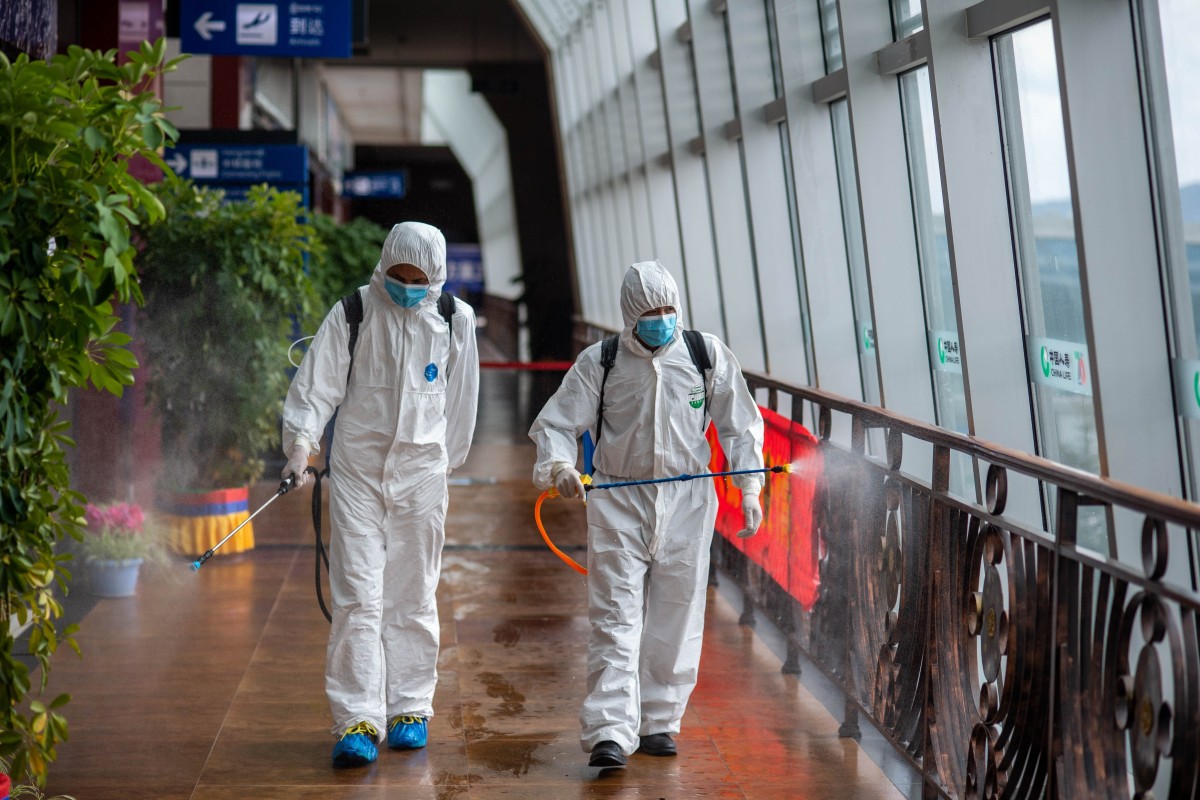
Yunnan is on alert for imported cases of the coronavirus. Photo: Xinhua
The southwestern province of Yunnan has banned Chinese citizens from leaving the country via its more than 30 land and river ports to stop the spread of the coronavirus epidemic through returning nationals.
Yunnan, which borders Vietnam, Laos and Myanmar, had restricted its 19 land ports and 14 river ports to cargo, the provincial government said on Tuesday.
The authorities said that from Tuesday night, all departures by Chinese citizens via the checkpoints would be suspended, with exemptions granted for approved foreign aid, technical support or emergency medical workers.
China closed its borders to foreign travellers and residency holders

on Saturday. But non-Chinese residents of border areas who have permits to cross into Yunnan could still enter the province, according to a previous report by China News Service.

Those permit holders can still cross into Yunnan but will be discouraged from doing so. Under the new restrictions, they will need to test negative for two nucleic acid tests and one antibody test before being put in seven days of centralised isolation and another seven days of home isolation, all at their own expense.

Coronavirus: Decoding Covid-19
Residents in border cities and counties will be restricted to the village and community level to prevent entry and exit of outsiders. They would also be encouraged to report illegal immigrants, the government said.
Yunnan, which recorded 174 local coronavirus cases including two deaths, said all patients in its initial wave were discharged by March 14. The province is now on alert for imported cases, with eight patients who travelled to the province from overseas being treated as of Tuesday.

Xiao Xian, a professor of international relations from Yunnan University, said some permit holders could be deterred from crossing into Yunnan by the cost of tests and quarantine.

Xiao also said that banning Chinese citizens from crossing the border would affect border trade and tourism, but it was necessary to stop transmission of the coronavirus.

“The need to prevent the spread of an infectious disease outweighs trade and tourism. It is understandable since it is the country’s top priority now,” Xiao said.

Source: SCMP

01/04/2020

Coronavirus: India’s race to build a low-cost ventilator to save Covid-19 patients

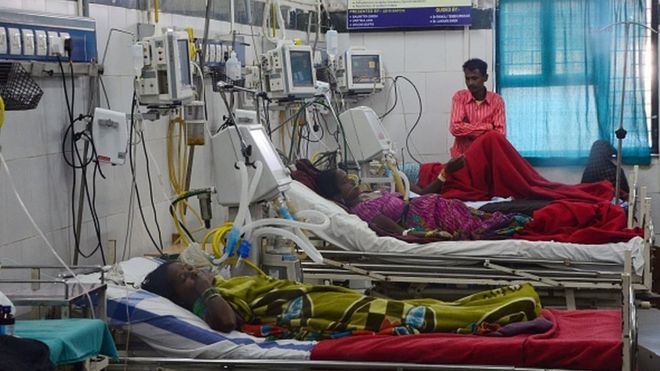
Patients on ventilators in an Indian hospitalImage copyright GETTY IMAGES
Image caption India has an estimated 48,000 ventilators and most of them are already in use

In an 8,000 sq ft (743 sq m) facility in the western Indian city of Pune, a bunch of young engineers are racing against time to develop a low-cost ventilator that could save thousands of lives if the coronavirus pandemic overwhelms the country’s hospitals.

These engineers – from some of India’s top engineering schools – belong to a barely two-year-old start-up which makes water-less robots that clean solar plants.

Last year, Nocca Robotics had a modest turnover of 2.7 million rupees ($36,000; £29,000). The average age of the mechanical, electronic and aerospace engineers who work for the firm is 26.

India, by most estimates, only has 48,000 ventilators. Nobody quite knows how many of these breathing assistance machines are working. But it is a fair assumption that all those available are being used in intensive care units on existing patients with other diseases.

About one in six people with Covid-19 gets seriously ill, which can include breathing difficulties. The country faces seeing its hospitals hobbled as others around the world have been, with doctors forced to choose who they try to save.

At least two Indian companies make ventilators at present, mostly from imported components. They cost around 150,000 ($1,987; £1,612) rupees each. One of them, AgVa Healthcare, plans to make 20,000 in a month’s time. India has also ordered 10,000 from China, but that will meet just a fraction of the potential demand.

The invasive ventilator being developed by the engineers at Nocca Robotics will cost 50,000 rupees ($662). Within five days of beginning work, a group of seven engineers at the start-up have three prototypes of a portable machine ready.

They are being tested on artificial lungs, a prosthetic device that provides oxygen and removes carbon dioxide from the blood. By 7 April, they plan to be ready with machines that can be tested on patients after approvals.

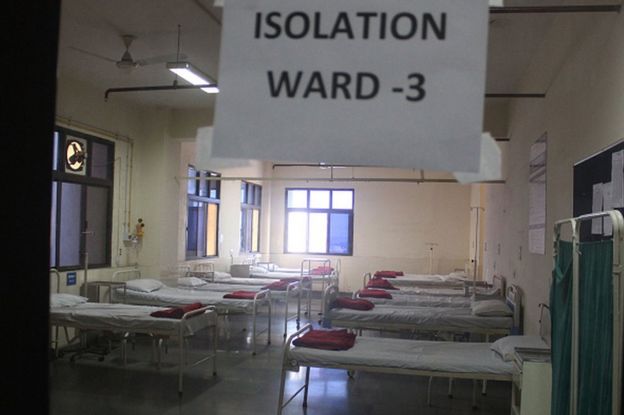
India hospitalImage copyright GETTY IMAGES
Image caption India is beefing up isolation beds in hospitals

“It is most certainly doable,” said Dr Deepak Padmanabhan, a cardiologist at Bangalore’s Jayadeva Institute of Cardiovascular Sciences and Research, and a key advisor on this project. “The simulations on artificial lungs have been done and seem to work well.”

Inspiring story

The race to develop this inexpensive, home-grown invasive breathing machine is an inspiring story of swift coordination and speedy action involving public and private institutions, something not common in India.

“The pandemic has brought us all together in ways I could never imagine,” says Amitabha Bandyopadhyay, a professor of biological sciences and bioengineering at Indian Institute of Technology (IIT), Kanpur, and a key mover of the project.

The young engineers mined open source medical supplies groups on the internet to find information on how to make the ventilators. After securing permissions, it took them exactly eight hours to produce the first prototype. Of particular use, say doctors, were some designs by engineers at MIT. With imports stalled, the engineers picked up pressure sensors – a key component of the machine that helps supply oxygen to lungs at a pressure that doesn’t cause injury – from those used in drones and available in the market.

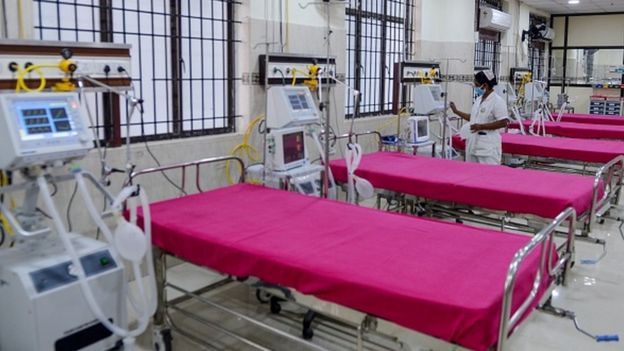
India hospitalImage copyright AFP
Image caption India needs thousands of ventilators to cope with a possible rush of patients

Local authorities helped open firms that stock components – each machine needs 150 to 200 parts – and made sure that a bunch of engineers who had returned home to Nanded after the lockdown were still able to travel 400km (248 miles) back to Pune to work on the machine.

Some leading Indian industrialists, including a major medical device-making company, have offered their factories to manufacture the machines. The plan is to make 30,000 ventilators, at around 150-200 a day, by the middle of May.

Social media influencers joined the effort. Rahul Raj, a lithium battery-maker and an IIT alumnus, crowd-sourced a group called Caring Indians to “pool resources and experience” to cope with the pandemic. Within 24 hours, 1,000 people had signed up. “We tweeted to the local lawmaker and local police in Pune to help the developers, and made contacts with people who would be interested in the project,” Mr Raj said.

‘No-frills machine’

Expat Indian doctors and entrepreneurs who went to the same school – IIT is India’s leading engineering school and alumni include Google chief Sundar Pichai – held Zoom meetings with the young developers, advising them and asking questions about the machine’s development. The head of a US-based company gave them a 90-minute lecture on how to manage production. A former chief of an info-tech company told them how to source the components.

Lastly, a bunch of doctors vetted every development and asked hard questions. In the end, more than a dozen top professionals – pulmonologists, cardiologists, scientists, innovators, venture capitalists – have guided the young team.

Doctors say the goal is to develop a “no-frills” breathing machine tailored to Indian conditions.

Ventilators depend on pressurised oxygen supply from hospital plants. But in a country where piped oxygen is not available in many small towns and villages, developers are seeing whether they can also make the machine run on oxygen cylinders. “In a way we are trying to de-modernise the machine to what it was barely 20 years ago,” says Dr Padmanabhan.

“We are not experienced. But we are very good at making products easily. The robots that we make are much more complex to make. But this is a life-saving machine and carries risk, so we have to be very, very careful that we develop a perfect product which clears all approvals,” said Nikhil Kurele, the 26-year-old co-founder and chief executive officer of Nocca Robotics.

In just a week’s time, India will learn whether they pulled off the feat.

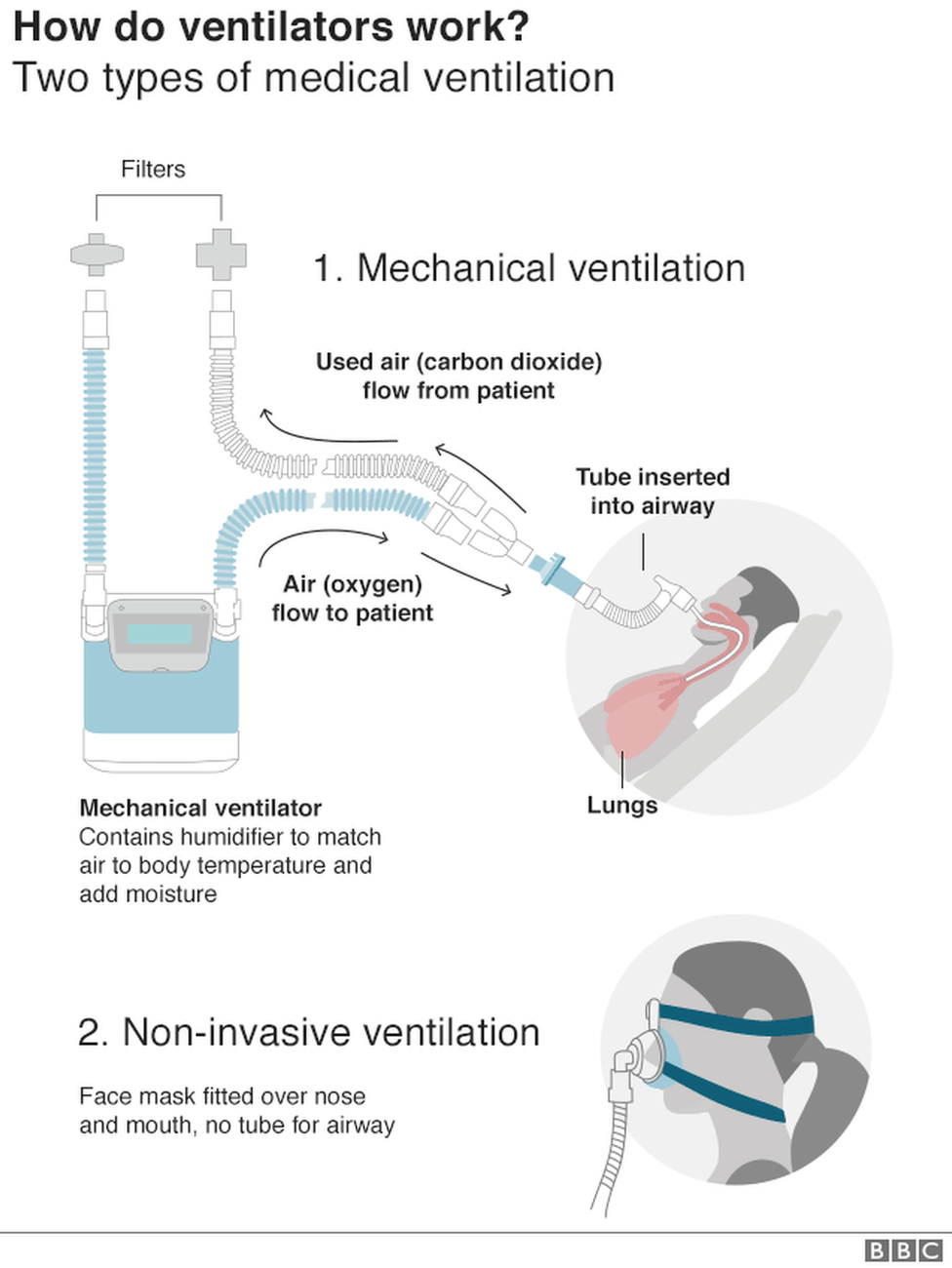
Graphic showing two common types of medical ventilation
Presentational white space

Source: The BBC

Law of Unintended Consequences

continuously updated blog about China & India

ChiaHou's Book Reviews

continuously updated blog about China & India

What's wrong with the world; and its economy

continuously updated blog about China & India