12/12/2014

China opens key section of massive water project | Reuters

China on Friday opened a key section of a massive and ambitious plan to transport water from wetter central and southern parts of the country up to its arid north, including the capital Beijing, state media reported.


Embed from Getty Images

The $62 billion undertaking – dreamed up by former Communist Party leader Mao Zedong in the 1950s – is designed to supply China’s parched and pollution-ridden north, home to more than 300 million people and countless water-intensive businesses.

The latest section opened begins at Danjiangkou reservoir in central China’s Hubei province and runs for 1,432 km (890 miles), the official Xinhua news agency reported.

It can supply on average 9.5 billion cubic meters of water annually for about 100 million people in places like Beijing, Tianjin and the nearby provinces of Henan and Hebei, Xinhua said.

Some provinces in northern China have less freshwater per person than the desert countries of the Middle East. Of the country’s total, water-intensive industries such as clothing and electronics manufacturing consume a quarter – a share the think-tank 2030 Water Resources Group expects to grow to a third by 2030.

The first stage of China’s south-to-north transfer brought water to the industry-heavy northeast, but it was barely useable when it reached Tianjin because it picked up pollutants and sediment while flowing north through polluted soil.

That has raised concerns about the latest phase – a decade in the making – bringing water via a different, less polluted route.

Some experts have also voiced concern that the project’s extensive tapping of water from the Yangtze River and its tributaries may damage one of China’s most important water ways.

via China opens key section of massive water project | Reuters.

11/12/2014

New college graduates struggle find jobs – Xinhua | English.news.cn

The heart of China’s coal industry is shrinking. Coal companies in the northern province of Shanxi are cutting salaries and cutting jobs. Now the ripple effect is being felt most keenly among new college graduates with related majors, who are facing extremely tough odds to find work in the industry.

New college graduates struggle find jobs

Close to 10,000 college graduates stand in long lines in the early morning at one of the top universities in Shanxi province for the biggest job fair of the year.

They are among China’s record 7.3 million new graduates in 2014. But for those hoping to work in the coal industry, the prospect of finding a job are especially low.

“The coal industry is not doing well. They’re cutting jobs now. It’s very hard to find employment with any coal company,” Wang Hao, graduate from Taiyuan University Of Technology, said.

“I think coal companies need less people now. In the past job fair, a coal company would recruit over 20 people. Now they only recruit three to five people,” Ma Junwei, graduate from Taiyuan University Of Technology, said.

Over 200 companies are taking part in the job fair. Only two of them are major coal groups.

“Recruitment needs of local coal companies have severely dropped. Hiring decreased by 25% in 2013. This year it will be even less,” Yuan Qunfang, employment director of Taiyuan University Of Technology, said.

With coal companies hiring less people, many graduates with related majors have shifted their attention to other industries.

“Before, few of us would switch to jobs in other fields. But now some of my classmates are trying to get certification to become teachers, while some others are seeking jobs in banks,” Ma said.

Shanxi’s economy relies heavily on coal… and the downturn has placed great pressure on the job market. Education officials say college graduates should seek jobs in more fields, and that the local government should also provide more employment assistance.

via New college graduates struggle find jobs – Xinhua | English.news.cn.

11/12/2014

Alibaba Tries to Make a Visit to the Doctor Easier – Businessweek

China’s overburdened healthcare system is ripe for reform, and leading technology companies see opportunities in becoming part of the solution.

A Chinese nurse adjusts the infusion rate for a patient at a hospital in Xiangyang city, central China's Hubei province on Jan. 20, 2014.

Take the current system of booking time to see a physician, which is both inefficient and abusive. In order to see a doctor at a leading hospital in Beijing or another major Chinese city, a patient must queue up starting at around 5am and wait in line for several hours just to book an appointment for later that day. Sometimes the patient has the option of buying a hospital slot, typically at an exorbitant fee, from a professional scalper.

In July, Alipay, the popular e-payment system launched by Alibaba Group, began a pilot project to allow patients to book appointments at select hospitals through a smartphone app. A handful of hospitals in Hangzhou, Guangzhou, Kunming, Wenzhou, and Nanchang now participate. It sounds like a simple and intuitive step that should have been tried long ago; notably it’s a technology company, not a medical institution, that’s leading the change.

via Alibaba Tries to Make a Visit to the Doctor Easier – Businessweek.

11/12/2014

The Vladimir Putin and Narendra Modi Agreements in Full – India Real Time – WSJ

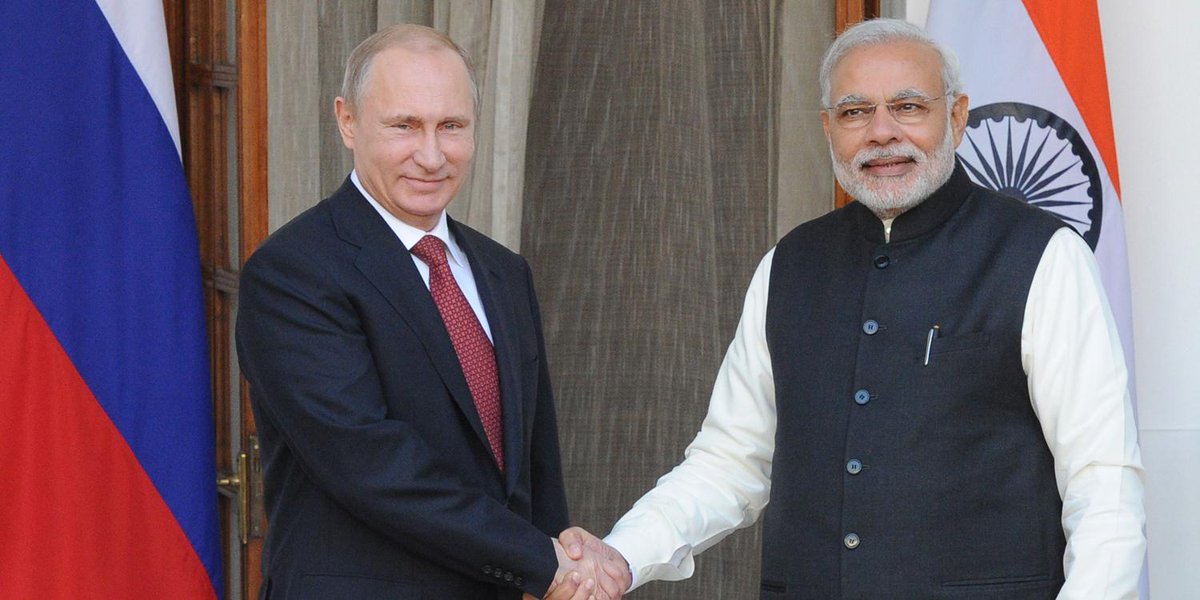
Indian Prime Minister Narendra Modi and Russian Prime Minister Vladimir Putin announced that their countries had signed 20 bi-lateral agreements including memorandums of understanding and commercial contracts on Thursday.

View image on Twitter

During Mr. Putin’s visit to India’s capital, the Russian leader said in a news conference that the documents placed an emphasis on trade and economic issues.

Eight of the agreements signed relate to nuclear power and energy production including a roadmap for bilateral cooperation in the civil nuclear energy sector over the next 20 years. Russia also agreed to supply “major equipment” to the Kudankulam nuclear power plant in Tamil Nadu.

India agreed to identify a second site apart from Kudankulam for Russian-designed nuclear power plants.

Mr. Modi said that they had “outlined an ambitious vision for nuclear energy” and would have “the highest standards of safety in the world.”

A list of the agreements signed is below as provided by India’s Ministry of External Affairs.

via The Vladimir Putin and Narendra Modi Agreements in Full – India Real Time – WSJ.

10/12/2014

World’s longest train journey reaches its final destination in Madrid – Xinhua | English.news.cn

The train, named “Yixinou” arrives in Madrid Abronigal railway station in Madrid, Spain, on Dec. 9, 2014. Madrid was the final destination on Tuesday for a train which has set the record for the longest train journey in history: 13,052 kilometers between the Chinese city of Yiwu and the Spanish capital. (Xinhua/Xie Haining)

MADRID, Dec. 9 (Xinhua) — Madrid was the final destination on Tuesday for a train which has set the record for the longest train journey in history; 13,052 kilometers between the Chinese city of Yiwu and the Spanish capital.

The train which arrived in Madrid at 11a.m. local time (1000GMT), departed from Yiwu on November 18th with 40 wagons, carrying 1,400 tons of cargo, consisting of stationary, craft products and products for the Christmas market and it will return to China filled with luxury Spanish produce such as cured ham, olive oil and wine.

The results of this first historic journey which will then be evaluated with the aim of opening a regular two-way rail link between China and Spain, which could commence operations in early 2015.

Two major advantages of rail travel are that the goods were transported much faster than would otherwise be possible by boat, arriving in Spain in half of the time a cargo vessel would need to cross from China to Spain, while the train produces 62 percent less carbon dioxide contamination less than a lorry making the same journey by road.

The marathon journey crossed China, Kazakhstan, Russia, Belarus, Poland, Germany and France, before arriving in Spain with 30 of the wagons it had originally set out with.

The 13,052 kilometers between Madrid and Yiwu is a greater distance than that between the north and south pole, although the distance was not covered using the same crew, nor the same engine.

The engine was changed approximately every 800 kilometers, while the crew changes with each country the train traversed. Meanwhile special stops were necessary at the frontier cities of Dostyk (Kazakhstan), Brest (Belarus) and Irun (Spain) in order to deal with the different railway gauges encountered along the route.

A host of dignitaries, such as Spain’s Public Works Minister Ana Pastor, the Mayor of Madrid Ana Botella, as well as the Director of Business at the Chinese Embassy in Madrid Mr. Huang Yazhong, and the Director of Commerce for the Government of Zhejiang Province Mr. Zhang Shuming.

Mr. Huang said the journey showed the great importance China gave to strengthening relations with Europe, while thanking all of the authorities which had helped to make such a historic trajectory possible, while Mrs Botella commented that the 13,053 of railway which had made the historic feat possible was like a “new silk road for the 21st century, except that now the commerce will travel in both directions.

via World’s longest train journey reaches its final destination in Madrid – Xinhua | English.news.cn.

10/12/2014

Need Financing to Build U.S. Property? Try Chinese Visa Seekers – China Real Time Report – WSJ

The giant trucks pumping concrete in Hudson Yards, New York’s biggest real-estate project in a generation, are being financed by an unlikely source: about 1,200 Chinese families in search of U.S. visas. As the WSJ’s Eliot Brown reports:

Developer Related Cos. says it has raised roughly $600 million from the families to build the foundation for three skyscrapers at the West Side project, a 17-million-square-foot colossus of office, retail and residential space set to open over the next decade.

To finance the concrete-steel platform, Related tapped a little-known and at times controversial federal visa program known as EB-5, which offers green cards to foreign families who invest at least $500,000 in U.S. projects that create at least 10 jobs per investor.

The amount brought in so far, which privately held Related hasn’t previously disclosed, is a record for the cash-for-visa program.

Related’s success shows how the once-obscure federal program has grown in popularity among developers and foreign investors since the recession.

Chinese nationals are the biggest source of EB-5 funds, making up more than 85% of visas approved in the 12 months ended in September. Many are investing for their children rather than for themselves, said Kenneth Li, a Houston real-estate broker who has offered advice to Chinese investing in EB-5 projects.

“For many of them, it’s for the next generation,” he said.

via Need Financing to Build U.S. Property? Try Chinese Visa Seekers – China Real Time Report – WSJ.

10/12/2014

China releases one of its longest-serving political prisoners, relative says | Reuters

China has freed one of its longest-serving political prisoners, the ethnic Mongol dissident Hada, who has spent much of the last two decades behind bars, his uncle said on Tuesday.

Beijing fears ethnic unrest in strategic border areas and keeps a tight rein on Inner Mongolia, just as it does on Tibet and Xinjiang in the far west, even though the region is supposed to have a large measure of autonomy.

“He’s not in good health,” the dissident’s uncle, Haschuluu, told Reuters, adding that Hada’s younger brother had told him of the release, which took place on Tuesday morning in the Inner Mongolian capital of Hohhot. He declined to comment further.

Many Mongols in China go by just one name.

Hada was tried behind closed doors in 1996 and jailed for 15 years for separatism, spying and supporting the Southern Mongolian Democratic Alliance, which sought greater rights for China’s ethnic Mongols. He says the charges were trumped up.

After being released in December 2010, he had to serve a separate sentence of four years of “deprivation of political rights”, mostly in an illegal detention center in the northern region of Inner Mongolia, his family says.

via China releases one of its longest-serving political prisoners, relative says | Reuters.

10/12/2014

China plans hike in cigarette taxes, prices to deter smokers | Reuters

China is considering raising cigarette prices and taxes, a health official said on Wednesday, as the world’s largest tobacco consumer fights to stub out a pervasive habit.

A man flicks ashes from his cigarette over a dustbin in Shanghai January 10, 2014.  REUTERS/Aly Song

Smoking is a major health crisis for China, where more than 300 million smokers have made cigarettes part of the social fabric, and millions more are exposed to secondhand smoke.

Campaigners for tougher curbs face hurdles, but reforms of the tax system offer China an opportunity to rein in tobacco use, Yao Hongwen, a spokesman for the National Health and Family Planning Commission, told a news conference.


“Our country is deepening reforms of the tax system,” he said. “We believe this presents a hard-to-come-by historic opportunity to implement a tax hike for tobacco control.”

via China plans hike in cigarette taxes, prices to deter smokers | Reuters.

10/12/2014

Former top planning official jailed for life in China over graft | Reuters

The former deputy head of China’s top planning agency was jailed for life on Wednesday over a bribery scandal that exposed graft at the highest levels of China’s government, and ensnared several companies including Toyota Motor Corp.

Liu Tienan, then deputy chairman of China's National Development and Reform Commission (NDRC), attends a news conference in Beijing in this February 27, 2009 file photograph. Liu, a deputy chairman of China's top planning agency, the National Development and Reform Commission (NDRC), is under investigation for suspected ''serious discipline violations'', state media said on 12 May, 2013, REUTERS/Stringer/Files

The sentence, handed down by a court just outside of Beijing, capped the downfall of Liu Tienan, who was sacked as deputy head of the National Development and Reform Commission (NDRC) last year, a position that carries ministerial-level status.

Liu was the first ministerial-level official to face an investigation after Xi Jinping became Communist Party head in late 2012 and launched the most aggressive anti-graft campaign China has seen in decades.

via Former top planning official jailed for life in China over graft | Reuters.

08/12/2014

Rs 5,160cr given to states to clean rivers – The Times of India

Centre has released Rs 5,160 crore to various states for implementation of pollution abatement works in rivers, Parliament was informed on Monday.

Minister of water resources, river development and ganga rejuvenation Uma Bharti said in Rajya Sabha that Rs 5,159.81 crore has been released by the Centre to states for implementation of pollution abatement works and a sewage treatment capacity of about 5,005 million litres per day has been created so far under NRCP and NGRBA programmes.

National River Conservation Plan (NRCP) and National Ganga River Basin Authority (NGRBA) programme cover polluted stretches of 42 rivers spread over 21 states at a sanctioned cost of Rs 11,362.85 crore.

To another question, the minister said conservation of rivers is an ongoing process and cleaning of Ganga and other rivers is taking time mainly due to the “large gap between sewage generation and availability of sewage treatment capacity…”

She said it is the responsibility of the state governments and local bodies concerned to set up proper facility for collection and treatment of sewage generated and ensuring that it is not discharged into the rivers.

The new NDA-government has set up an Integrated Ganga Conservation Mission — ‘Namami Gange’ for for rejuvenation of Ganga and its tributaries.

via Rs 5,160cr given to states to clean rivers – The Times of India.

Law of Unintended Consequences

continuously updated blog about China & India

ChiaHou's Book Reviews

continuously updated blog about China & India

What's wrong with the world; and its economy

continuously updated blog about China & India