05/09/2014

Alibaba’s Taobao, Tmall Transform Shopping in China’s Small Cities – Businessweek

Li Yuxin remembers when she had to travel from Zhangjiekou, her northern Chinese home town, to visit her half-sister in Beijing so she could buy the right clothes. Sure, Zhangjiekou has large shopping malls full of cheap t-shirts and baggy jackets, but not stores where the aspiring fashionista could purchase accessories from such foreign luxury brands as Prada (1913:HK) or even popular Western sportswear made by Nike (NKE) and Adidas (ADS:GR).

Checking deliveries from online marketplaces Tmall and Taobao at an express delivery company in Beijing

But since she started ordering clothes from Taobao and Tmall—websites owned by Alibaba Group—her options and her wardrobe have dramatically expanded. “Maybe I spend too much money now, but I have to catch up with Li Zhu,” her half-sister who lives in China’s capital, she says.

E-commerce has quickly changed the face of shopping and consumer marketing in China. Mirroring the rise of Amazon (AMZN) in the U.S., the ascendance of Alibaba in China has greatly accelerated this trend and turned China into the world’s second-largest e-commerce market.

via Alibaba’s Taobao, Tmall Transform Shopping in China’s Small Cities – Businessweek.

05/09/2014

India’s $33 Smartphone Sales Surge, Setting the Stage for a Shakeup – India Real Time – WSJ

The maker of India’s $33 Mozilla Firefox smartphone says sales of the world’s cheapest smartphone have been strong since it launched last week.

Intex Technologies India Ltd. said it quickly sold out of its first batch of Cloud FX phones–which use Mozilla Corp.’s Firefox operating system—and that it has already had to order another large shipment. It expects to sell 100,000 handsets this month and a total of 500,000 by the end of the year, the company said.

Another super-cheap Firefox-powered smartphone hit the Indian market on Tuesday. India’s Spice Retail Ltd. started selling its Spice Fire One Mi FX1 for about $37. The company did not respond to requests for early sales figures.

The less-than-2,000-rupee price tags make the Firefox mobile operating system smartphones more than 30% cheaper than the least-expensive smartphones which use Google Inc.’s Android operating system.

Other phone sellers say they are also planning Firefox handsets. India’s Karbonn Mobiles says it plans to launch a $41 Firefox smartphone by the end of September. It will be less than half the price of Karbonn’s latest Android phone, making it a “game changer,” said Pardeep Jain, managing director of Jaina Mobiles India Pvt., which  controls the Karbonn brand.

Reviews for the ultralow-cost phones have so far been generally positive. While the phones may lack some functionality and speed, buyers and technology reporters agreed they were still a great deal for the price and a good option for first-time smartphone buyers who use their phones for basic calls, web surfing and social networking.

While Mozilla phones will make smartphones affordable to millions of new users, they will likely get more competition soon on price from Android, the operating system used on most phones from Samsung Electronics and others, analysts said.

Google is expected to launch its Android One low-cost smartphone in the next few weeks.

via India’s $33 Smartphone Sales Surge, Setting the Stage for a Shakeup – India Real Time – WSJ.

05/09/2014

China warns again of dark side of the mooncakes | Reuters

China’s crackdown on corruption, a scourge Communist Party leaders fear threatens their hold on power, is likely to last at least another five years, an official said, warning also against the mid-autumn tradition of handing out mooncakes as gifts.

Freshly-baked mooncakes pass along a conveyor belt at a mooncakes factory in Shanghai September 12, 2013.  REUTERS/Aly Song

Wang Qishan, secretary of China’s anti-corruption watchdog, was quoted as saying the government’s “campaign against extravagance and corruption” would continue for at least five years, the official China Daily said.

Wang’s comments, also reported on television on Thursday, were made in August at a meeting in Beijing.

President Xi Jinping has promised to go after “tigers and flies” in rooting out rampant graft, a campaign that has brought down politicians and company executives in industries including oil, cars and healthcare.

The campaign has also dragged down sales of high-end products from the fiery sorghum-based liquor, baijiu, to mooncakes, both traditional popular gifts for smoothing business and official ties.

Wang criticized the tradition of giving mooncakes as presents around the Mid-Autumn Festival, adding that the practice created opportunities for graft, the China Daily said.

Mooncake sales have taken a steep hit ahead of this month’s festival. In key production regions, sales were half the level of last year, the China Daily said, citing the Wuchuan Association of Mooncakes.

via China warns again of dark side of the mooncakes | Reuters.

05/09/2014

Modi’s first 100 days looked more like Manmohan’s than Vajpayee’s

The new prime minister hasn’t faced a major crisis or unveiled a startlingly new policy.

For the last week, Indian newspapers, channels and websites have been plastered with evaluations of Narendra Modi’s first 100 days. From dedicating entire editions to the 100-day landmark to building complex timelines describing every policy announcement over the last three months (and even comparing what has been achieved to the Bharatiya Janata Party’s campaign promises), there has been so much content that it’s hard to arrive at a conclusion about whether Modi’s Prime Ministership has been good or bad.

That might be expected, considering the scale of the challenge that the new government has set for itself. Alternatively, it might also be surprising: many expected Modi Sarkar to be a hate-it-or-love-it administration, rather than one that would leave people with lukewarm feelings.

Another way to approach the question might be to try and figure out how Modi’s first 100 days will be remembered. The first few months of new governments can often set the tone for what is to come. In hindsight, the trends picked up in the first days are then grafted on to narratives that are applied to entire tenures.

A look back at previous prime ministers might give us an inkling of how this will play out.

via Scroll.in – News. Politics. Culture..

05/09/2014

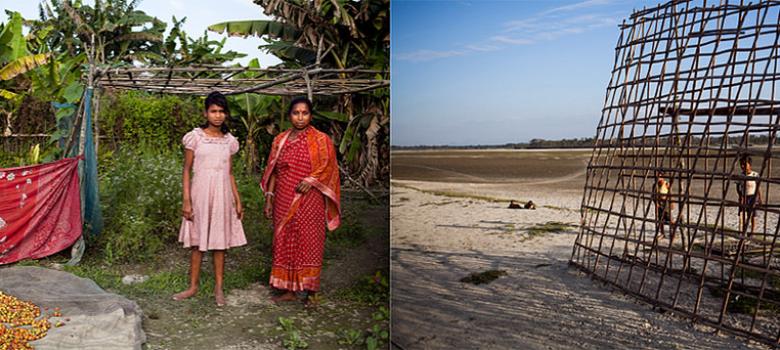
In Assam, villagers struggle to protect their land from the roaring Brahmaputra

Descending from the plateaus of Tibet and flowing through China, India and Bangladesh, the Brahmaputra is one of India’s mightiest rivers, its width running up to 10 kilometers at some places. On its 3,000-kilometer journey, the Brahmaputra provides a livelihood to thousands of communities living on its banks. They depend on it for food, water and farming. In 1950, however, the great earthquake in Assam altered the topography of the river valley and the people of Assam have since been struggling with intense droughts and floods.

Since the earthquake, Assam has witnessed severe cases of river erosion. According to official records, 36 villages, 10 schools, six tea gardens and hundreds of humans and animas have been washed away. The situation has been exacerbated by increasing deforestation and erratic climate changes.

In 2012, floods in Assam displaced over a million people and affected close to 4,500 villages. Today, these villagers from Tinsukia district in Upper Assam are struggling to protect their land and livelihoods from the eroding banks and the rising waters of the mighty Brahmaputra.

via Scroll.in – News. Politics. Culture..

05/09/2014

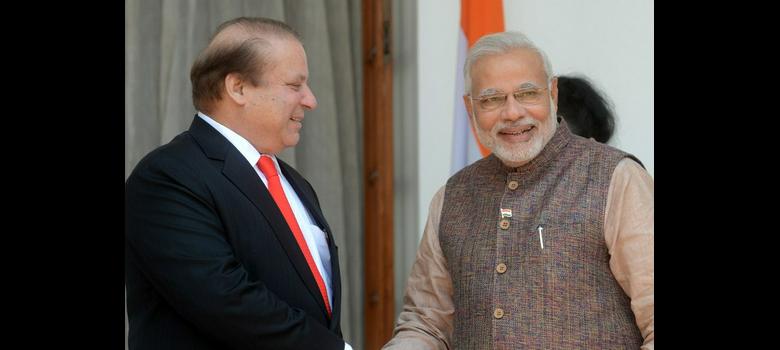
Nawaz Sharif attempts mango diplomacy to placate Modi

Pakistan government keen on reigniting diplomatic ties with India

Pakistan Prime Minister Nawaz Sharif on Thursday sent a package of special mangoes from his country through “official channels” to his Indian counterpart Narendra Modi. This move is seen in Indian diplomatic circles as Pakistan’s initial attempt to rectify the damage caused by its High Commissioner Abdul Basit’s meetings with separatist leaders from Kashmir last month. In response to these meetings, India had cancelled foreign-secretary levels talks with Pakistan scheduled for August 25. Meanwhile, there is speculation that Modi and Sharif might conduct bilateral talks on the sidelines of the United Nations General Assembly summit in New York later this month.

via Scroll.in – News. Politics. Culture..

04/09/2014

Businessman caught in Colombia is China’s first economic fugitive extradited from Latin America | South China Morning Post

A businessman from Zhejiang province, who was arrested in Colombia over allegations he fled the mainland after leaving debts totalling millions of yuan, was repatriated to China yesterday.

a-yiwu.jpg

The case is the first time the mainland has extradited an economic fugitive from a Latin American country, China News Service reported.

The 35-year-old suspect, whose surname was given as Wu, was arrested in Colombia on August 28, it said.

He owned a trading company in Yiwu city and reportedly fled China on a flight from Shanghai‘s Pudong International Airport on September 9, 2012.

He had allegedly left unpaid debts totalling more than four million yuan (more than HK$5 million).

Zhejiang police launched an investigation into Wu about a month later, and order for his arrest was issued in December 2012.

After cooperating with Interpol, Zhejiang police discovered in July that Wu was in Colombia, said Ding Pinglian, of the Zhejiang provincial police bureau.

Four police officers were then sent to Colombia to assist with Wu’s arrest and extradition.

Wu is expected to stand trial in Yiwu, China News Service reported.

A total of 11 people suspected of economic crime have been repatriated since the Ministry of Public Security launched a campaign to return fugitives in July, the report said.

The ministry said last month that more than 150 mainlanders suspected of economic crimes were in the United States, which had become the “top destination” for Chinese fugitives.

via Businessman caught in Colombia is China’s first economic fugitive extradited from Latin America | South China Morning Post.

04/09/2014

Democracy for Hong Kong: Unyielding | The Economist

PRO-DEMOCRACY activists announced the start of a “new era of civil disobedience” on the night of August 31st, after China’s top legislature laid down restrictive guidelines on the kind of elections that are allowed in Hong Kong, a semi-autonomous territory. Officials in Beijing had promised to allow the election of Hong Kong’s next leader, in 2017, through universal suffrage. With the announcement China has clarified that there is a catch, a big one: the government sees itself as being under no obligation to allow open nominations for the election’s candidates. Before the announcement, Chen Zuoer, one of the officials who helped negotiate Hong Kong’s handover to mainland China back in 1997, had warned that “blood will be shed” if their opponents refuse to back down.

In a show of defiance, an alliance of activists who support fully open elections held a rally on Sunday night to declare that it would launch waves of protests, culminating in the occupation of the city’s main financial district. Their movement has been many months in the making; they call it “Occupy Central with Love and Peace”. It was first proposed nearly two years ago by Benny Tai, an associate law professor at the University of Hong Kong, in anticipation of a disappointing official interpretation of “universal suffrage”—just like the one that the central government has now given them.

Police arrested at least 22 people during protests that began on Sunday night and carried through Monday morning. The student-union president at the Chinese University of Hong Kong has announced a strike; students there will have a rally of their own on September 4th around a replica of the “Goddess of Democracy” statue that became famous for its appearance in Tiananmen Square in 1989. Other universities are expected to see strikes of their own announced in the next few days.

Many of the participants at Sunday’s rally despair at convincing the bureaucrats in Beijing to change their position—but they feel they need to put up a fight anyway. “Normal protests are no longer useful,” in the words of Agnes Chow Ting, a student protester. She led a failed attempt after the rally to “ambush” a delegation of officials from the central government.

Such actions may attract international attention but indeed, they are less than likely to sway decision-makers in Beijing. Li Fei, a deputy secretary-general of the National People’s Congress Standing Committee, told local politicians on September 1st that the committee believes Hong Kong’s police will be capable of handling any disturbance that might be caused by “a small group of people seeking to undermine Hong Kong”, as he characterises the Occupy movement.

Hong Kong’s current chief executive, Leung Chun-ying, was picked for the role in 2012 by a 1,200-member “election committee”. A reliable majority of that committee were Hong Kongers who will ever be glad to demonstrate loyalty to their counterparts in Beijing.

via Democracy for Hong Kong: Unyielding | The Economist.

04/09/2014

Water Shortages Will Limit Global Shale Gas Development – Businessweek

If all the world’s theoretically recoverable shale gas could be developed, our supply of clean-burning natural gas would expand 47 percent—lowering both greenhouse gas emissions and energy prices, according to estimates from the Washington-based World Resources Institute.

Shale drilling in China's Sichuan Province

The hitch is that the process for extracting shale gas, called hydraulic fracking, sucks up as much as 25 million liters (6.6 million gallons) of water for each well. A report from WRI (PDF), “Global Shale Gas Development: Water Availability and Business Risks,” released on Tuesday, shows that roughly 38 percent of the world’s shale gas and oil lies buried beneath water-stressed regions. This means that extraction efforts will be difficult and expensive, as well as economically and environmentally risky.

China has the world’s largest estimated deposits of shale gas (1,115 trillion cubic feet), according to studies by the U.S. Energy Information Administration. Yet China is also one of the world’s most naturally water-stressed nations: It is home to a fifth of the world’s population but only 7 percent of its freshwater resources. WRI’s team compared maps of China’s potential shale plays with available water and found that 61 percent of China’s shale lies in arid regions. (China recently slashed in half its mid-term projections for shale gas development, from a goal of over 60 billion cubic meters annually to 30 billion cm by 2020.)

via Water Shortages Will Limit Global Shale Gas Development – Businessweek.

04/09/2014

China Fights Local Budget Corruption With ‘Economic Constitution’ – Businessweek

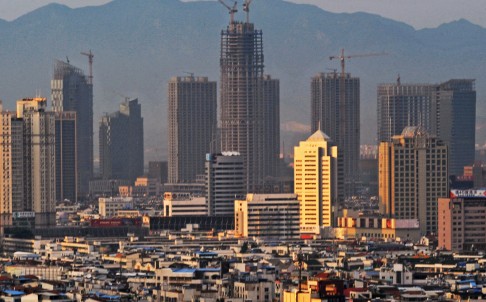
Revising a budget law, as China’s National People’s Congress just did, sure doesn’t sound very sexy. But Sunday’s move is a crucial step toward fixing some of China’s biggest economic challenges: controlling runaway local debt; curbing rampant official corruption, and stemming the spread of socially destabilizing land seizures.

The Shanghai skyline

The amended law that now requires local governments to publicize their annual budgets is so important that some are calling it the “Economic Constitution,” the China Daily reported on Sept. 1. The revision “will prove a milestone in China’s fiscal history, as it will make the government’s collection of taxes and fees and distribution of its fiscal money to become more law-based and transparent,” the English-language paper reports.

Until now, the finances of China’s tens of thousands of counties, townships, and villages have been split into budget and extra-budgetary funds. With much of the financing falling in the murkier off-budget category, “government departments have a great leeway in managing government funds, which can possibly lead to corruption and abuse of public funds,” the newspaper explains.

via China Fights Local Budget Corruption With ‘Economic Constitution’ – Businessweek.

Law of Unintended Consequences

continuously updated blog about China & India

ChiaHou's Book Reviews

continuously updated blog about China & India

What's wrong with the world; and its economy

continuously updated blog about China & India