Chindia Alert: You’ll be Living in their World Very Soon
aims to alert you to the threats and opportunities that China and India present. China and India require serious attention; case of ‘hidden dragon and crouching tiger’.
Without this attention, governments, businesses and, indeed, individuals may find themselves at a great disadvantage sooner rather than later.
The POSTs (front webpages) are mainly 'cuttings' from reliable sources, updated continuously.
The PAGEs (see Tabs, above) attempt to make the information more meaningful by putting some structure to the information we have researched and assembled since 2006.
Marks caused by the mask are seen on the face of a nurse at the Fuzhou Pulmonary Hospital in Fuzhou, southeast China’s Fujian Province, Jan. 31, 2020. (Photo by Wang Yi/Xinhua)
BEIJING, May 11 (Xinhua) — Chinese President Xi Jinping, also general secretary of the Communist Party of China Central Committee and chairman of the Central Military Commission, has sent greetings to nurses across the country ahead of International Nurses Day, which falls on May 12.
City at centre of outbreak finally able to declare itself clear of disease after months in lockdown and thousands of deaths
Risk of infection remains, however, with some patients testing positive for coronavirus that causes disease without showing symptoms
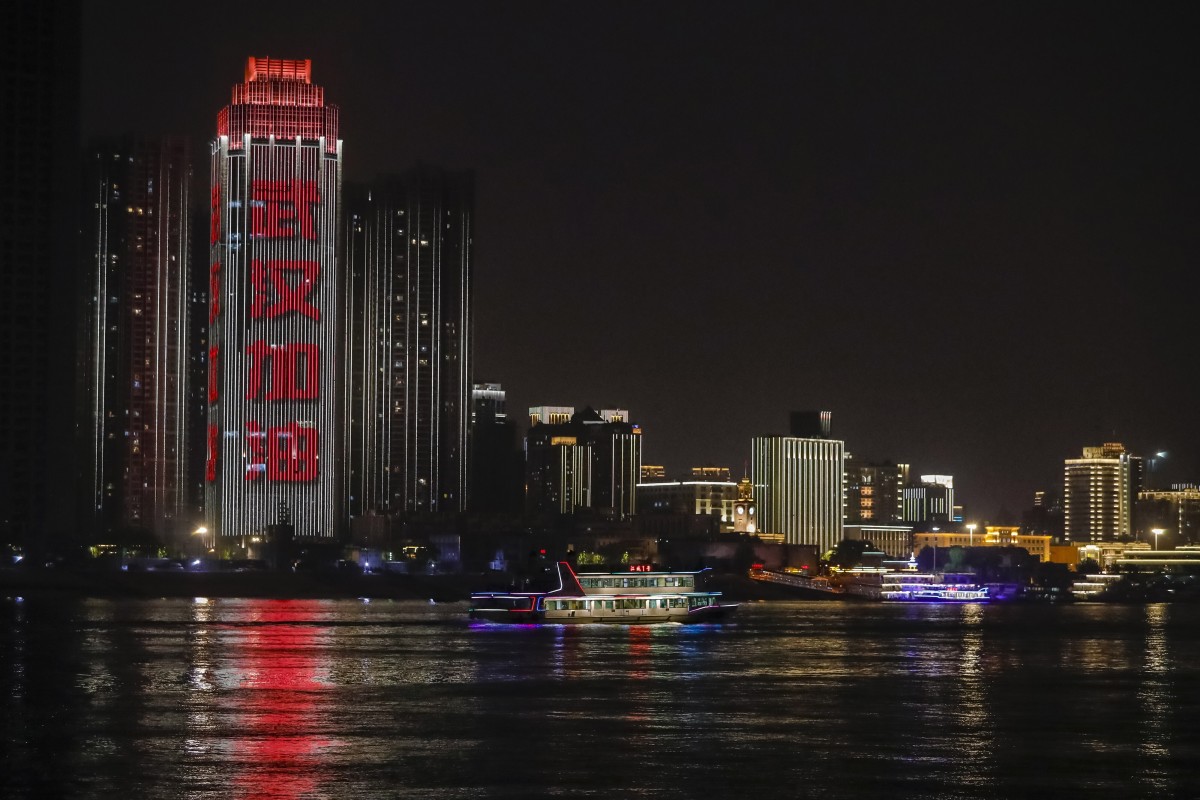
Ferries and other public transport services resumed in Wuhan last week. Photo: Xinhua
The city of Wuhan, the initial epicentre of the coronavirus pandemic, no longer has any Covid-19 patients in hospital after the last 12 were discharged on Sunday.
Their release ended a four-month nightmare for the city, where the disease was first detected in December. The number of patients being treated for Covid-19, the disease caused by a new coronavirus, peaked on February 18 at 38,020 – nearly 10,000 of whom were in severe or critical condition.
“With the joint efforts of Wuhan and the national medical aid given to Hubei province, all cases of Covid-19 in Wuhan were cleared as of April 26,” Mi Feng, a spokesman for the National Health Commission said on Sunday afternoon.
The announcement came only one day after the city discharged the last patient who had been in a severe condition. That patient also was the last severe case in Hubei province.
The last patient discharged from Wuhan Chest Hospital, a 77-year-old man surnamed Ding, twice tested negative for Sars-CoV-2, the virus that causes Covid-19, and was released at noon on Sunday.
“I missed my family so much!” Ding told Changjing Daily.
Another unidentified patient exclaimed as he left the hospital: “The air outside is so fresh! The weather is so good today!”
Wuhan faced a long journey to bring its patient count down to zero.
The city of 11 million, the capital of Hubei province and a transport hub for central China, was put under a strict lockdown on January 23 that barred anyone from entering or exiting the city without official approval for 76 days until it was officially lifted on April 8.
Coronavirus: Wuhan, Los Angeles officials discuss getting back to work after lockdown
22 Apr 2020
Residents were ordered to stay in their apartments as the city stopped public transport and banned private cars from city streets. As the epidemic worsened, more than 42,000 medical staff from across the country were sent to the city and to Hubei province to help ease the burden on the local health care system.
Wuhan was the hardest hit city in China, accounting for 50,333 of the 82,827 locally transmitted Covid-19 cases recorded in China. More than 4,600 died in the country from the disease.
On March 13, the city reported for the first time that there were no new suspected cases of the infection, and five days later there were no confirmed cases.
The number of discharged patients bottomed out at 39.1 per cent at the end of February, gradually climbing to 92.2 per cent by last Thursday.
“Having the patients in the hospital cleared on April 26 marks a major achievement for the city’s Covid-19 treatment,” the Wuhan Health Commission said in a statement.
However, having no severe cases in hospital does not mean all the discharged patients will require no further treatment as they may still need further care.
“Clearing all the severe cases marks a decisive victory for the battle to safeguard Wuhan,” health minister Ma Xiaowei told state broadcaster China Central Television on Saturday.
“Some patients who have other conditions are being treated in specialised hospitals. It has been properly arranged.”
Coronavirus: Chinese writer hit by nationalist backlash over diary about Wuhan lockdown
18 Apr 2020
Ten patients aged between 42 and 85 who have been declared coronavirus-free are still in intensive care at the city’s Tongji Hospital where they are being treated for kidney problems and other complications arising from Covid-19. Some still need ventilators to help them breathe.
These 10 patients are under 24-hour care, with 190 nurses on four-hour rotations. There are other patients in a similar condition in two other hospitals in Wuhan, according to the Hubei Broadcasting and Television Network.
However, the discharge of the last batch of Covid-19 patients does not mean that the risk of infection is gone.
The city reported 20 new cases of people testing positive for Sars-CoV-2, the official name for the coronavirus that causes the disease, but who do not yet show symptoms.
There are 535 such carriers under medical observation. Past data shows some of these asymptomatic carriers will develop symptoms, and so will be counted as Covid-19 patients under China’s diagnosis and treatment plan.
China’s coronavirus infection curve has flattened out with about 694 imported cases of Covid-19 on top of about 800 locally transmitted ones now under treatment.
The national health commission spokesman warned that people still need to be on high alert as the virus is continuing to spread around the globe, with no sign yet of a slowdown.
“[We] must not drop our guard and loosen up. [We] must discover cases in time and deal with them quickly,” Mi said, citing the continued pressure from cases imported by people returning from overseas.
“The next step will be to implement the requirements of the central government and continue to guard against imported cases and a rebound of domestic transmitted cases.”
Image copyright GETTY IMAGESImage caption Tamils argue that imposing Hindi will jeopardise their language
The Indian government has revised a controversial draft bill to make Hindi a mandatory third language to be taught in schools across the country.
The draft bill had met particularly strong opposition in the southern state of Tamil Nadu, which has always resisted the “imposition” of Hindi.
In 1965, it saw violent protests against a proposal that Hindi would be India’s only official language.
Tamil is one of the oldest languages and evokes a lot of pride in the state.
However the government decision has not calmed tensions in Tamil Nadu.
The two main political parties in the state, the DMK and AIADMK, have both said that simply revising the draft to say Hindi would not be mandatory is not enough.
The state teaches only two languages – Tamil and English – in the government school curriculum, and the parties do not want a third language introduced at all.
A DMK spokesman told the NDTV news channel that the third language clause would be used as a “back door” to introduce Hindi anyway.
Their rivals, the AIADMK, which allied with the Bharatiya Janata Party (BJP) in the general elections but lost badly in the state, had a similar view.
“Our party has always been clear in our stand. We have always followed a two-language policy. Though mandatory Hindi has been revised in the draft now, we still cannot support this three-language system. Our government will talk to the union government for our rights,” former state education minister and AIADMK spokesman Vaigaichelvan told BBC Tamil.
On Monday, #HindiIsNotTheNationalLanguage began trending on Twitter in India, which saw many from Tamil Nadu facing off against people from other parts of the country and asserting their right not to have the language “imposed” on them.
The BJP government’s real face is beginning to emerge…Hindi is being imposed on South Indians. Tamil Nadu has rebelled against BJP-Govt. Let’s join them to fight the imposition of Hindi! #HindiIsNotTheNationalLanguage
Picture speaks a thousand words! In a diverse country like India, learning a new language should be a choice and not compulsion/imposition.
Declaring any Indian language as a national language will be a joke. #HindiImposition#HindiIsNotTheNationalLanguage
“There is no opposition to actually learning Hindi. In fact with the recent IT boom in the south, so many people from the north have migrated here that its use has become more widespread here. It is true that if you know Hindi you will find it easier to get work in other parts of India, so there are also many people here who willingly learn it. But that should be their choice. What people are opposing is the imposition of it,” senior journalist and political analyst KN Arun told the BBC.
Mr Arun also warned that there was a chance that the issue could lead to further protests in the state, saying that a few hardline Tamil groups had been using the issue to whip up anger among the people.
It is also a particularly emotive issue. Politics in the state is still centred around the ideas and principles of the Dravidian movement, which among other things reveres the Tamil language and links it closely to regional identity.
“Tamil is very rich in literature and different to other languages like Hindi which branched out of Sanskrit. There is fear that the Indian government is trying to slowly introduce Hindi, which will threaten the status of Tamil,” author and journalist Vaasanthi told the BBC.







 CHINDIA ALERT: You'll be living in their world, very soon