12/04/2020
JOHANNESBURG (Reuters) – African ambassadors in China have written to the country’s foreign minister over what they call discrimination against Africans as the country seeks to prevent a resurgence of the coronavirus.
Several African countries have separately also demanded that China address their concerns that Africans, in particular in the southern city of Guangzhou, are being mistreated and harassed.
Having brought under control the original outbreak centred on the city of Wuhan, China is now concerned about imported cases and is stepping up scrutiny of foreigners coming into the country and tightening border controls. It has denied any discrimination.
In recent days Africans in Guangzhou have reported being ejected from their apartments by their landlords, being tested for coronavirus several times without being given results and being shunned and discriminated against in public. Such complaints have been made in local media, and on social media.
The ambassadors’ note said such “stigmatisation and discrimination” created the false impression that the virus was being spread by Africans.
“The Group of African Ambassadors in Beijing immediately demands the cessation of forceful testing, quarantine and other inhuman treatments meted out to Africans,” it said.
The note was sent to China’s top diplomat, Wang Yi, copying the chair of the African Union, South African President Cyril Ramaphosa and all African foreign ministers.
The Chinese foreign ministry’s International Press Centre did not immediately respond to a request for comment on the note, sent outside of business hours.
The Chinese embassy in South Africa also did not respond.
Foreign affairs official Liu Baochun told a news conference on Sunday that Guangzhou is enforcing anti-virus measures on anyone who enters the city from across the national border, regardless of nationality, race or gender.
The Chinese embassy in Zimbabwe on Saturday dismissed the accusation that Africans were being deliberately targeted.
“It is harmful to sensationalize isolated incidents,” it said in a tweeted statement. “China treats all individuals in the country, Chinese and foreign alike, as equals.”
DISAPPOINTMENT
The ambassadors’ note highlighted a number of reported incidents, including that Africans were being ejected from hotels in the middle of the night, the seizure of passports, and threats of visa revocation, arrest or deportation.
On Saturday, Ghana’s foreign minister of affairs Shirley Ayorkor Botchwey said she had summoned the Chinese ambassador to express her disappointment and demand action.
Kenya’s foreign ministry has also “officially expressed concern”, adding the government is working with Chinese authorities to address the matter.
On Friday, Nigerian legislator Akinola Alabi tweeted a video of a meeting between the leader of Nigeria’s lower house of parliament, Femi Gbajabiamila, and Chinese Ambassador Zhou Pingjian. In it, Gbajabiamila demanded an explanation from the diplomat after showing Zhou a video of a Nigerian complaining about mistreatment in China.
The ambassador said in response to the questions from the house leader that he took the complaints “very seriously” and promised to convey them to the authorities back home.
Source: Reuters
Posted in African, African Ambassadors, African Union, ambassadors, anti-virus measures, apartments, Arrest, “stigmatisation and discrimination”, Beijing, border controls, cessation, chair, China, China’s top diplomat, Chinese embassy, complain, copying, coronavirus, Country, country's, deportation, DISAPPOINTMENT, Discrimination, ejected, enforcing, equals, false, forceful testing, Foreign affairs, foreign minister, foreign ministers, foreign ministry's, Foreigners, gender, Ghana’s, Government, group, Guangzhou, harassed, harmful, hotels, immediately, imported cases, impression, incidents, individuals, inhuman, International Press Centre, isolated, Johannesburg, landlords, local media, meted out, middle, mistreated, national borders, nationality, News conference, Nigerian, night, Official, outbreak, passports, President, quarantine, race, regardless, respond, resurgence, revocation, Saturday, scrutiny, seizure, sensationalize, social media, South Africa, South African, southern city, spread, statement, Sunday, threats, treatments, tweeted, Uncategorized, Virus, Visa, Wang Yi, Wuhan, Zimbabwe |
Leave a Comment »
11/04/2020
BEIJING (Reuters) – China reported on Saturday a rise in new coronavirus cases, as authorities try to head off a second wave of infections, particularly from imported and asymptomatic cases, as curbs on cities and travel are lifted.
The National Health Commission said 46 new cases were reported on Friday, including 42 involving travellers from abroad, up from 42 cases a day earlier.
In its statement the commission added that 34 new asymptomatic cases were reported, down from 47 the previous day.
Mainland China’s tally of infections now stands at 81,953. The death toll rose by three to 3,339.
Tough curbs imposed since January helped rein in infections sharply from the height of the pandemic in February. But policymakers fear a second wave triggered by arrivals from overseas or asymptomatic patients.
Northeastern Heilongjiang recently reported a spike in new cases because of Chinese nationals entering the province from Russia, which has seen a surge of cases.
Provincial health officials said it had 22 new imported cases on Friday, all Chinese nationals coming from Russia, and one new local case, in its capital of Harbin.
Inner Mongolia had a daily tally of 27 new imported cases by Saturday morning, all from Russia, the region’s health authority said.
The central province of Hubei, where the virus emerged late last year, reported no new cases for a seventh successive day.
A rise in virus infections has prompted authorities in Guangzhou to step up scrutiny of foreigners, ordering bars and restaurants not to serve clients who appear to be of African origin, the U.S. consulate in the southern city said.
Anyone with “African contacts” faces mandatory virus tests followed by quarantine, regardless of recent travel history or previous isolation, it said in a statement.
It advised African-Americans or those who feel they might be suspected of contact with nationals of African origin to avoid the city.
Since the epidemic broke out in the provincial capital of Wuhan, it has spread around the world, infecting 1.6 million people and killing more than 100,000.
Source: Reuters
Posted in 100,000, 42, 46, abroad, advised, African, African Americans, Anyone, around the world, Arrivals, asymptomatic, authorities, “African contacts”, bars, capital, cases, central province, China, China’s, Chinese nationals, cities, clients, commission, coronavirus cases, curbs, day, death toll, earlier, emerged, entering, epidemic, February, followed by, Foreigners, Friday, from, Guangzhou, Harbin, head off, Health officials, Heilongjiang, History, Hubei, imported, infecting, infections, Inner Mongolia, isolation, January, killing, late last year, lifted, Mainland China, mandatory, million, morning, National Health Commission, new, Northeastern, ordering, origin, overseas, pandemic, particularly, People, policymakers, previous, province, Provincial, provincial capital, quarantine, recent, regardless, reported, reports, restaurants, rise, Russia, said, Saturday, scrutiny, second wave, seventh, southern city, spike, spread, statement, successive, surge, tally, travel, travellers, triggered, try, U.S. consulate, Uncategorized, up from, Virus, virus tests, Wuhan |
Leave a Comment »
19/02/2020
- Forty countries will be able to diagnose the disease, and the Africa CDC is training health workers
- Until two weeks ago, there were only two laboratories on the continent that could test for the virus, in Senegal and South Africa
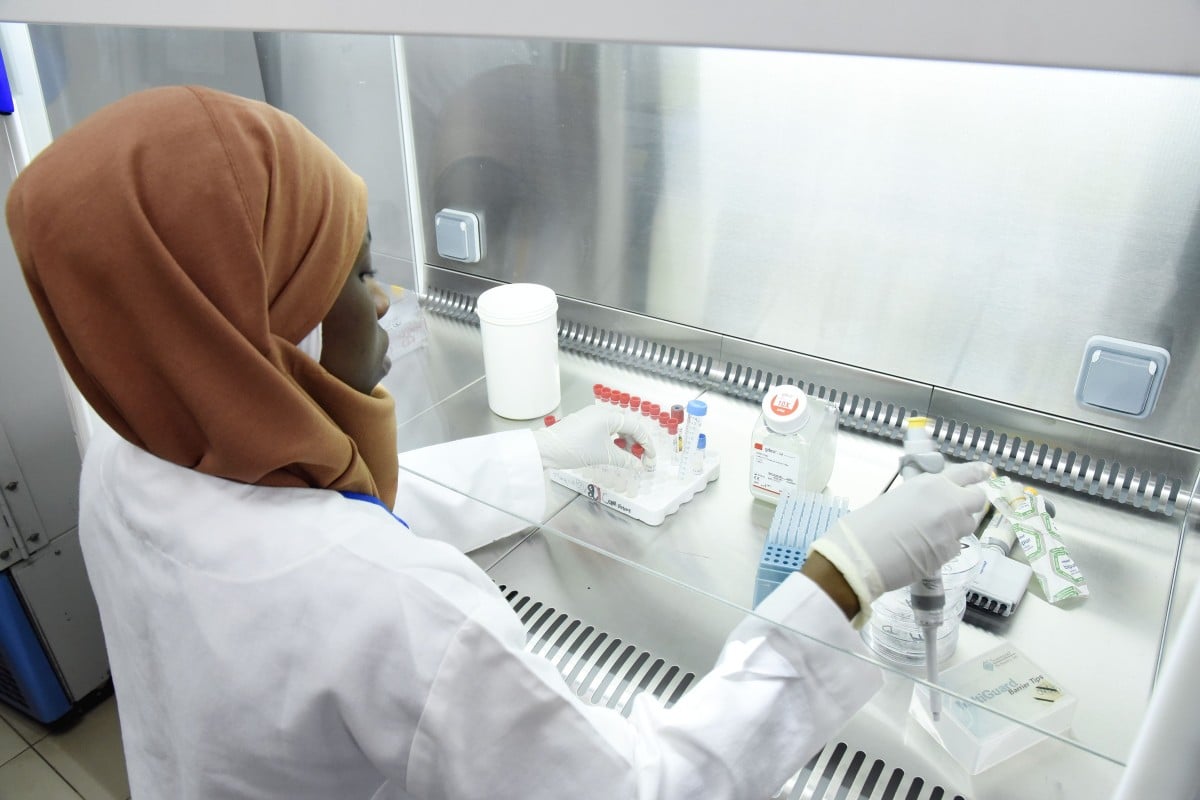
A scientist researches the coronavirus at the Pasteur Institute in Dakar, Senegal, which until two weeks ago was one of just two labs in Africa that could test for the disease. Photo: AFP
Forty countries in Africa will be able to test for the
deadly new coronavirus
by the end of the week, the WHO said, after Egypt confirmed the first case on the continent last week.
The World Health Organisation said many of those nations had been sending samples elsewhere for testing and waiting several days for results.
“Now they can do it themselves, within 24 to 48 hours,” WHO director general Tedros Adhanom Ghebreyesus said in a media briefing on Tuesday.
Until about two weeks ago, there were only two laboratories in the continent of 54 countries – in Senegal and South Africa – with the reagents needed to test for the virus. That meant dozens of nations that had quarantined suspected patients were sending samples to South Africa or Senegal to be tested.
The WHO earlier this week sent reagent kits for coronavirus diagnosis to more than 20 countries in Africa to step up diagnosis of the virus, which causes a disease now known as Covid-19. The global health body said more countries in Africa were expected to receive testing kits this week.
In addition, the WHO last week sent testing kits to Cameroon, Ivory Coast, the Democratic Republic of Congo, Egypt, Ethiopia, Gabon, Ghana, Kenya, Morocco, Nigeria, Tunisia, Uganda and Zambia.
Coronavirus: WHO urges caution over study showing ‘decline’ in new Covid-19 cases in China
Tedros said some countries in Africa, including the Democratic Republic of Congo, were using systems developed to test for the deadly Ebola virus to now test for the coronavirus.
“This is a great example of how investing in health systems can pay dividends for health security,” Tedros said.
Several countries, including Ethiopia and South Sudan, were prioritising surveillance and monitoring at ports of entry, he said. “We’re also working with partners in some of the most fragile contexts, from Syria to the Central African Republic, to prepare countries for the arrival of the virus,” he said.
The WHO and Egyptian health officials on Friday confirmed that a 33-year-old foreigner had tested positive for the coronavirus. Egypt’s health ministry said the patient had tested positive for the virus without any symptoms, raising concern that there could be undetected cases on the continent, as countries scramble to equip labs to test for the disease.
The asymptomatic patient in Egypt was identified through contact screening of an index case who travelled to Cairo on a business trip from January 21 to February 4 and tested positive for the virus on February 11 in China, the WHO regional office said.
The new virus strain has killed more than 2,000 people and infected over 74,000 since the outbreak began in central China in December. It has spread to more than 20 countries.
Screening measures have been stepped up across Africa, including quarantining all passengers arriving from Chinese cities, amid fears that poorer countries with weaker health systems may struggle to cope if the virus spreads on the continent. More than a dozen countries still do not have the capacity to test for the pneumonia-like illness.
There are concerns that Africa’s close links with China put it at high risk for the spread of the new virus. Africa has become home to millions of Chinese since Beijing started looking to the continent for raw materials for its industries and markets for its products. China has been Africa’s largest trading partner since 2009, after it overtook the United States, with two-way trade standing at US$108 billion last year, according to China’s commerce ministry.
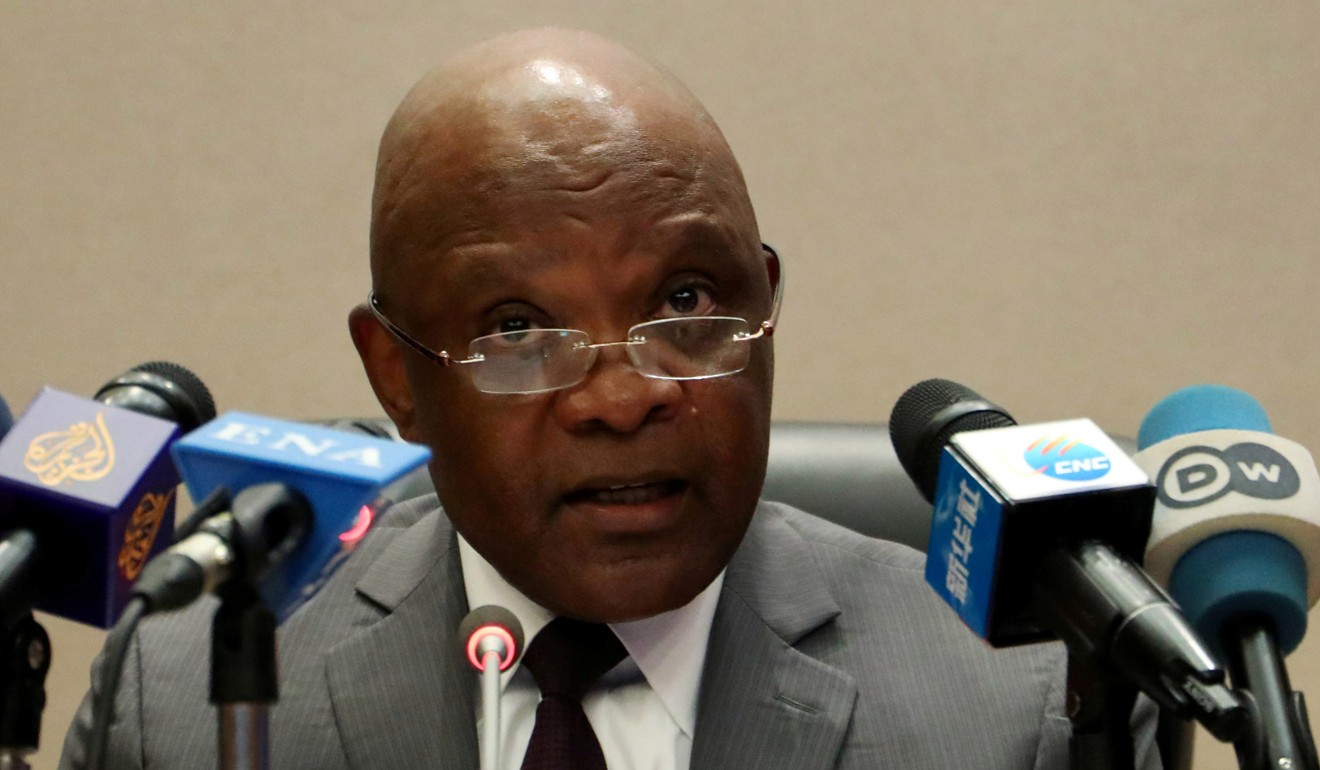
Africa CDC director John Nkengasong said it had been “investing in preparedness and response to the disease”. Photo: Reuters
John Nkengasong, director of the Africa Centres for Disease Control and Prevention (Africa CDC), said it was working closely with the WHO and other partners to ensure that Egypt had the diagnostic tools it needed, and that the right actions were taken to contain the spread of the virus.
“We anticipated that the Covid-19 outbreak would inevitably impact Africa. That is why the Africa CDC has been working actively with African Union member states and partners in the past four weeks and investing in preparedness and response to the disease,” he said.
“[Last week in Dakar, Senegal] we conducted training and supplied test kits to 16 African laboratories, including from Egypt. Egypt also received additional test kits from the WHO,” Nkengasong said.
The Africa CDC would train 40 health workers from nine countries, including Egypt, in Nairobi this week, he said, on “enhancing detection and investigation of Covid-19 at points of entry”.
The Chinese medical workers on the front line of the coronavirus fight in Wuhan
On Monday, Ethiopia, home to one of the continent’s busiest airports, said it had received equipment and reagents for virus detection and control. “We are working hard day and night with the government to improve the critical measures needed to ensure that the country is ready to effectively respond to an outbreak of Covid-19,” said Boureima Hama Sambo, the WHO representative in Ethiopia.
despite pressure for it to suspend services to the country. Many countries on the continent have restricted travel to and from mainland China, while six out of eight African airlines with Chinese routes have halted flights until the virus is contained, including EgyptAir.
Egypt has suspended all flights to and from the mainland until the end of the month and has evacuated more than 300 Egyptians from Wuhan, the epicentre of the epidemic.
Source: SCMP
Posted in africa, Africa CDC, Africa Centres for Disease Control and Prevention (Africa CDC), African, airports, asymptomatic patient, Cameroon, Central African Republic, confirmed, coronavirus, coronavirus case, COVID-19, diagnose, Disease, Ebola virus, Egypt, EgyptAir, Egyptian health officials, Egyptians, epicentre, epidemic, Ethiopia, Ethiopian Airlines, evacuated, Forty countries, Gabon, Ghana, Ivory Coast, Kenya, mainland, monitoring, Morocco, nations, Nigeria, outbreak, Pasteur Institute, ports of entry, sends, Senegal, South Africa, Surveillance, Syria, test kits, the Democratic Republic of Congo, Tunisia, Uganda, Uncategorized, WHO, Wuhan, Zambia |
Leave a Comment »
20/12/2019
- President Yoweri Museveni tells Chinese diplomat Yang Jiechi trade between African nations is unsustainable
- China is the continent’s largest trading partner and lender, but imports mostly its oil and minerals
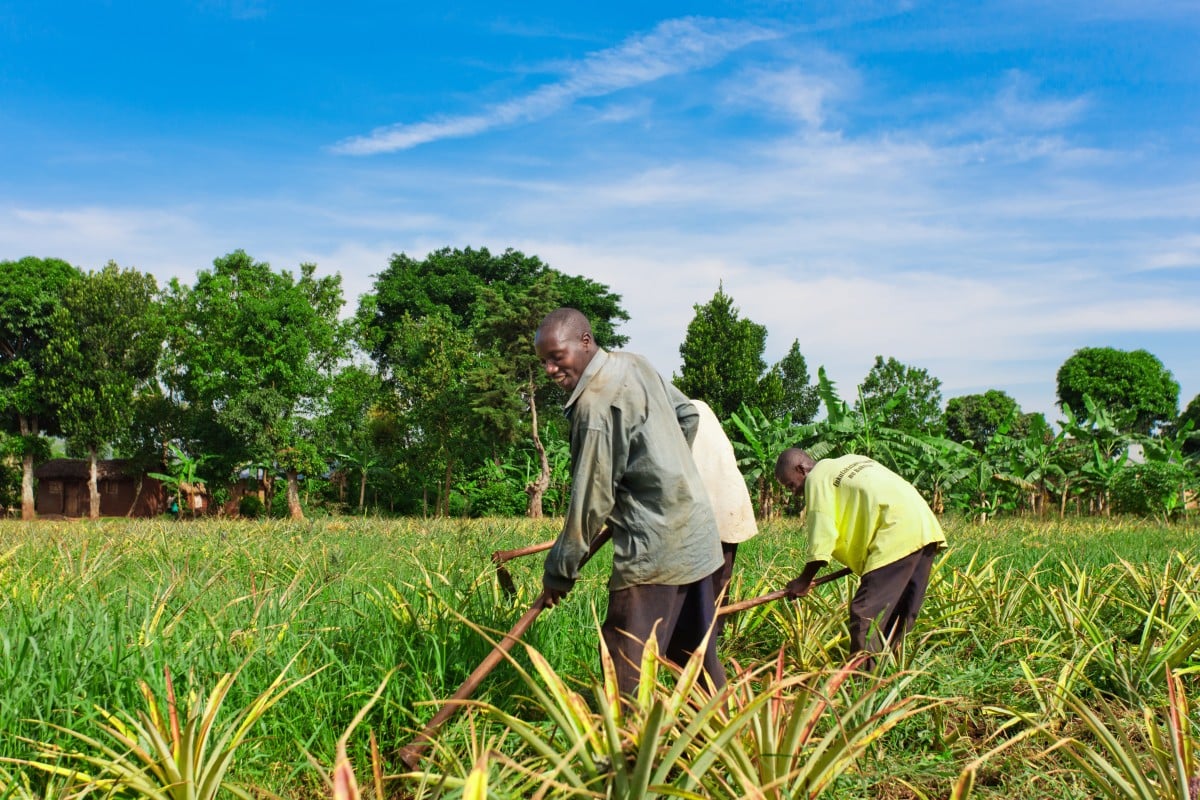
Africa has a surplus of agricultural products, Uganda’s leader says. Photo: Shutterstock
African countries want China to open up its markets to the continent’s agricultural products, Uganda’s President Yoweri Museveni told top Chinese diplomat Yang Jiechi after Beijing
vowed to boost agricultural trade with the United States.
In a meeting with Yang in Uganda, Museveni said an increasing number of African
countries wanted to sell to the lucrative Chinese market.
He said Africa had a surplus of agricultural products despite exporting to Europe and the US, partly because trade between African countries remained low.
“Africa’s 54 countries have come together through market integration in blocs such as Comesa [Common Market for Eastern and Southern Africa] that are not sustainable,” Museveni said. “The surplus of production needs another intercontinental market and an external market like China to come in.”
China is Africa’s largest trading partner, having surpassed the US in 2009. Africa’s trade with China was worth US$204 billion last year, according to figures from China’s Ministry of Commerce.
China is also the continent’s largest lender, having advanced more than US$143 billion between 2000 and 2017 to African countries for building motorways, power dams and railways, according to figures from the China Africa Research Initiative at the Johns Hopkins School of Advanced International Studies in Washington.
Museveni said China was interested in importing some aquatic products from Uganda, such as the Nile perch fish, which he said had high demand globally.
China pledges another US$60b to Africa as leaders meet in Beijing
4 Sep 2018
With China exporting far more to the continent than it imports from it, African nations are aiming to restructure the trading relationship to narrow their trade deficit by working out what Chinese consumers want and how to get it to them.
China’s imports of African goods are dominated by natural resources such as crude oil, copper, cobalt, iron ore, diamonds, gold and titanium, which it buys to meet its industrial and manufacturing needs. In return, Africa imports machinery, electronics and manufactured consumer goods.
The call from Museveni came after China and the US reached an
interim deal to resolve aspects of their protracted trade war. US Trade Representative Robert Lighthizer has said that, under the deal, China had agreed to buy US$80 billion in American agricultural products over two years.
China has not confirmed the figure, but the deal is being
watched closely by China’s other trading partners. Since the dispute with the US began in July last year, Beijing has diversified its agricultural product suppliers to include Argentina, Australia, Brazil, Germany, New Zealand and Spain.
China’s agricultural trade with Africa increased from US$650 million in 2000 to US$6.92 billion in 2018, Chinese Minister of Agriculture Han Changfu said this month. Han said he hoped that the figure would reach US$10 billion in the next decade.
Museveni said in the meeting with Yang that Beijing had “supported the continent’s prosperity through trade”, and that the memorandum of understanding he had signed last year with Chinese President Xi Jinping had “intensified the relationship” between their countries. A pipeline being constructed to Tanzania, to connect Uganda’s oil fields to the Indian Ocean, is being funded partly by Chinese investment, along with new industrial parks.
Yang said China would work with Uganda to implement the agreements reached by their respective heads of state and the outcomes of the Beijing Summit of the Forum on China-Africa Cooperation.
Beijing set to pledge further billions to Africa despite lending fears 2 Sep 2018
He said China would help Uganda to grow its economy, increase trade between the two countries, and build industrial parks and infrastructure. Beijing would continue to fund projects through the
Belt and Road Initiative, its transcontinental infrastructure investment strategy, and through Uganda’s development plan Uganda Vision 2040, without providing details.
After Uganda, Yang will continue his African tour by visiting Congo-Brazzaville. The tiny oil-dependent central African nation recently fell into debt distress when global oil prices dropped, forcing Beijing to restructure its loans to unlock a bailout by the International Monetary Fund.
Xi denies China is spending money on African ‘vanity projects’
Yang will then visit the West African nation of Senegal, where Beijing is funding large infrastructure projects.
Several other leading Chinese diplomats have made trips to Africa this year, including Foreign Minister Wang Yi, who visited South Africa in October. Last week, Ji Bingxuan, vice-chairman of the Standing Committee of the National People’s Congress – the permanent body of China’s legislature – led a group of officials visiting Congo-Brazzaville.
Source: SCMP
Posted in African, agricultural products, asks, buy, China alert, cut, trade deficit, Uganda, Uncategorized |
Leave a Comment »
16/12/2018
- Total number of provinces affected now 22 just weeks ahead of peak demand at Lunar New Year
- Government says there will be plenty of pork to celebrate the arrival of the Year of the Pig
PUBLISHED : Sunday, 16 December, 2018, 5:50pm
UPDATED : Sunday, 16 December, 2018, 6:09pm
The deadly African swine fever virus is continuing to spread through China, with the total number of affected provinces rising to 22, but fears that pork will be in short supply when the country welcomes the Year of the Pig in February are being downplayed.
As of Friday, two more provinces had been affected, according to a report by state broadcaster CCTV, on top of the 20 which had reported virus outbreaks as of three weeks ago.
The report did not name the two new provinces, but one of them has been confirmed as Qinghai.
According to the Ministry of Agriculture and Rural Affairs on Wednesday, there have been recent outbreaks in Sichuan in the southwest – which has previously been affected – and Qinghai in northwestern China.
The Qinghai outbreak affected 69 pigs and is believed to be the first case in the high-altitude province, according to the United Nations.
“The current African swine fever outbreak in the country is being found in scattered spots, it is not pandemic. The epidemic is generally under control,” said Feng Zhongwu, from the ministry’s animal husbandry and veterinary department.
The epidemic of the highly contagious disease, which cannot yet be transmitted to humans, was classified as “generally under control” by the ministry in September, when the outbreak was confined to only five provinces.
Yet the virus has continued to spread, even to major cities including Beijing and Shanghai.
The ministry banned the feeding of pigs with kitchen waste at the end of August, when the first case was found in Liaoning province in northeastern China. Other efforts to contain the outbreak include culling more than half a million animals and banning the transport of live pigs from affected areas.
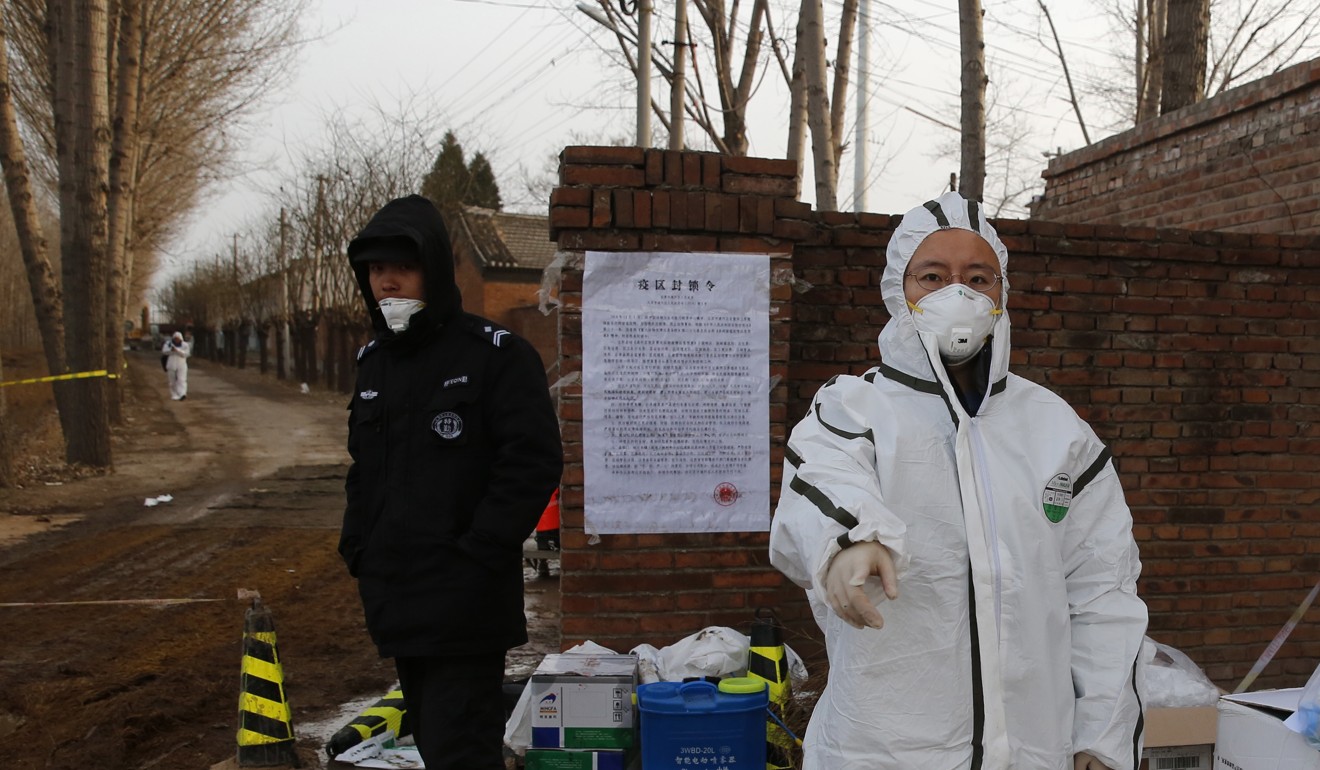
Despite that effort, a total of 87 outbreaks have been reported on farms and two outbreaks have been reported among wild boars in 22 provinces across the nation.
The latest discovery comes less than three months ahead of the Lunar New Year celebrations in early February – which this year will welcome the Year of the Pig – that marks China’s peak demand period for pork, but Feng sought to ease public concerns.
“Our national production of pig is 680 million, therefore, there will be no impact on the supply for the two festivals [January 1 and Lunar New Year],” he said.
There is no cure and no vaccine for the disease, and the virus can survive for weeks in pork and animal feed. The only known control method is to cull animals.
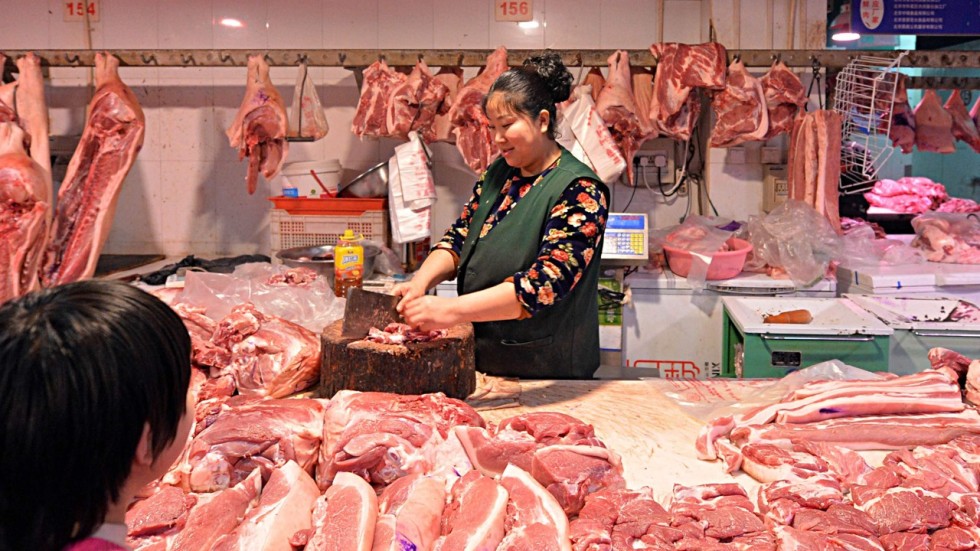
Swine fever has already caused a spike in pork prices in China and fuelled growing fears of a major and prolonged impact on the world’s largest pork producer.
The UN Food and Agriculture Organisation warned in August that the disease could spread to other parts of Asia.
While African swine fever is not harmful to humans it causes deadly haemorrhagic fever in domesticated pigs and wild boars.
Posted in African, China alert, provinces, swine fever, Uncategorized |
Leave a Comment »




 CHINDIA ALERT: You'll be living in their world, very soon
COMMENTS: