Chindia Alert: You’ll be Living in their World Very Soon
aims to alert you to the threats and opportunities that China and India present. China and India require serious attention; case of ‘hidden dragon and crouching tiger’.
Without this attention, governments, businesses and, indeed, individuals may find themselves at a great disadvantage sooner rather than later.
The POSTs (front webpages) are mainly 'cuttings' from reliable sources, updated continuously.
The PAGEs (see Tabs, above) attempt to make the information more meaningful by putting some structure to the information we have researched and assembled since 2006.
There has been strong demand for air freight services since April, when Chinese factories got back to work
Cargo flights have become critical in moving protective health equipment across the globe
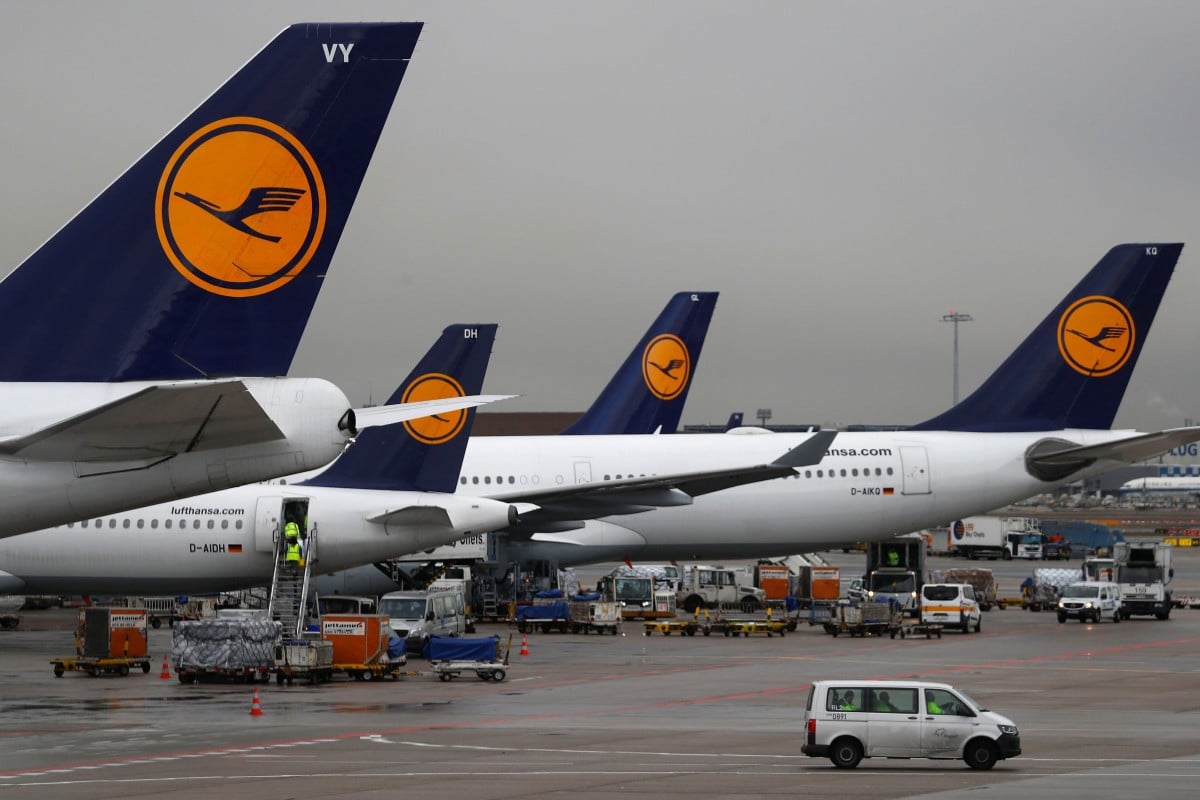
Planes of German air carrier Lufthansa at the country’s largest airport in Frankfurt. Photo: Reuters
German freight carrier Lufthansa Cargo is expanding in China, surpassing 100 weekly flights for the first time, and adding new flights to Shenzhen.
Peter Gerber, CEO of Europe’s largest cargo airline, said there had been heavy demand for its services, though this might cool by the peak of summer.
“At the moment, cargo demand is very, very strong,” he told the Post. “It started to get strong in April, when Chinese industries got back to work, and after that we have seen a constant, heavy demand, a real peak.”
Cathay Pacific and Cathay Dragon report combined HK$4.5 billion loss for start of 2020
15 May 2020
Global air freight capacity has been squeezed as two-thirds of the world’s aircraft have been grounded by the Covid-19 pandemic.
The collapse of air travel has practically put a stop to passenger flights, which typically carry half of all air cargo.
Since the pandemic, cargo flights have been critical in moving protective health equipment across the globe. From sending masks and other supplies to China in February, the German carrier is now taking urgent supplies from the mainland back to Europe.
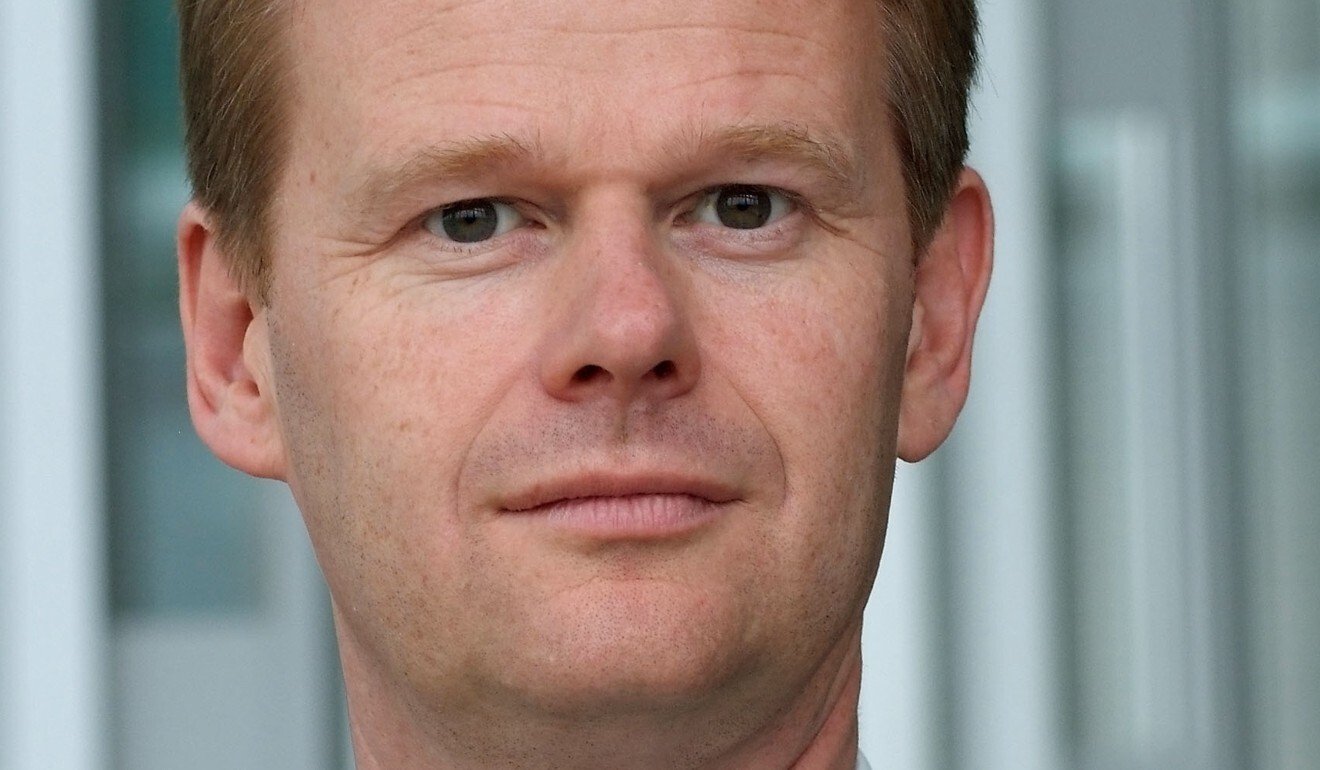
Peter Gerber says Lufthansa Cargo has a high responsibility in maintaining supply chains, for both global health and world trade. Photo: Handout
“We have a high responsibility in maintaining supply chains in these unprecedented times for both global health and world trade,” Gerber said.
With the addition of Shenzhen, Lufthansa Cargo will fly to five destinations in China. It serves more than 300 destinations in 100 countries.
The cargo carrier is part of the Lufthansa Group and coordinates all the freight that goes into the passenger planes of its sibling brands, including Lufthansa, Swiss and Austrian.
Coronavirus: South Africa asks Hong Kong to remove its citizens from government quarantine list
16 May 2020
By next week, Lufthansa Cargo will be running more freight flights to China than the 72 passenger flights the group flew weekly before the pandemic to Beijing, Shanghai, Shenyang, Nanjing and Qingdao.
Lufthansa Cargo has a fleet of seven Boeing 777 Freighters (777Fs), with two new 777Fs arriving this year as part of its strategy to operate a fleet with a single aircraft type.
It also has six McDonnell Douglas-11Fs that Gerber said would still be retired as planned at the end of 2020, despite the extra demand for cargo capacity.
Its additional flights to China will make use of “preighters” – passenger aircraft flying cargo only. Gerber felt the trend of using empty passenger planes as “preighters” had peaked, pointing out that they cost the same to operate as freighters but carry only a fraction of the cargo.
Although he did not rule out future expansion, he said: “Demand will gradually come down in the next two or three months because a lot of equipment would have been shipped by then and some shipments will go on rail or ocean shipping.”
Coronavirus: Cathay Pacific could get cash injection from shareholder Qatar Airways
13 May 2020
He said some uncertainty remained over continued demand for airfreighted cargo, given the battered state of the world economy. Airlines would have to consider longer-term demand before deciding to invest more in cargo aircraft. “It depends how it looks beyond the next year,” he said.
Gerber said no decision had been taken yet on whether to convert some of the group’s orders for Boeing’s newest widebody 777X passenger aircraft into cargo planes.
He added that future plane orders would be balanced against the wider needs and spending decisions at Lufthansa Group, which is currently negotiating a government pandemic bailout package in the region of €9 billion (US$9.7 billion).
Footage shows aircraft manoeuvring strangely before emitting bright light and flying away at great speed
Clips of unexplained ‘aerial phenomena’ were recorded by pilots between 2004 and 2015
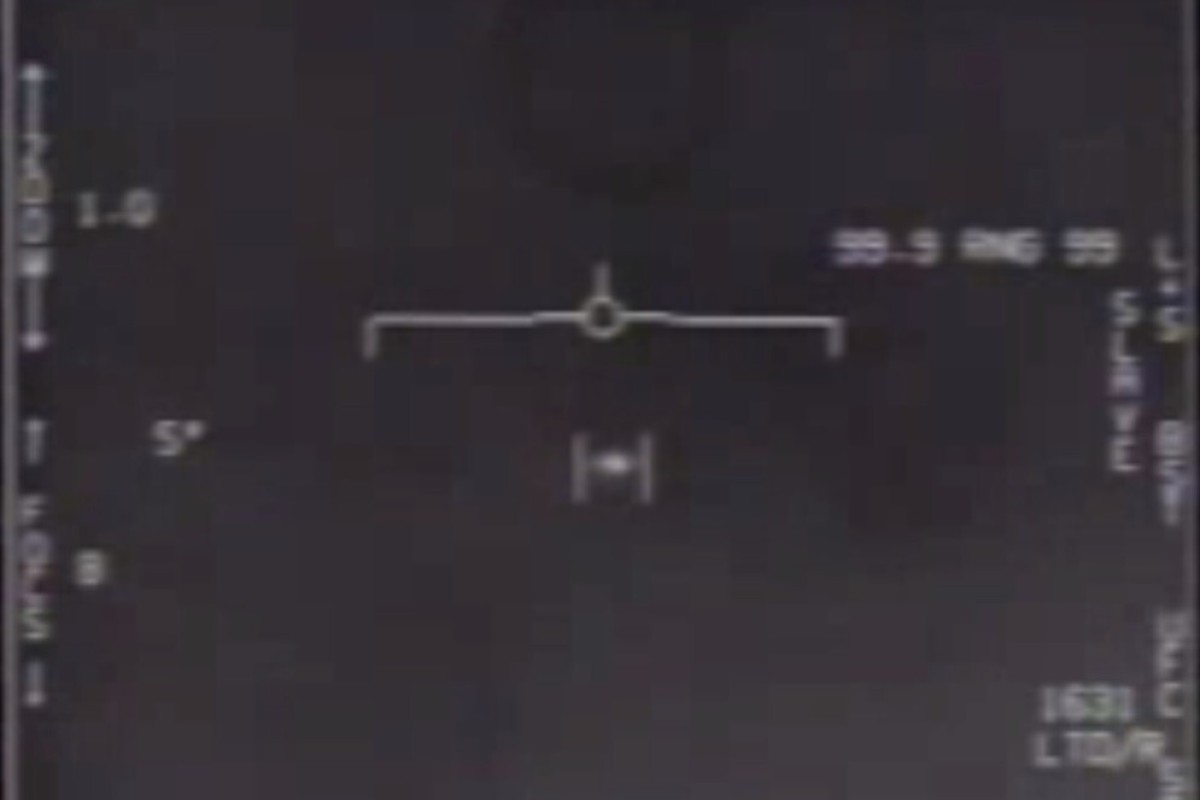
A screen grab from one of the UFO videos released by the Pentagon on Monday. Photo: US Department of Defence
The US Department of Defence has been watching, and recording, the skies.
The Pentagon released three videos on Monday that depict unexplained “unidentified aerial phenomena” which were recorded by pilots between 2004 and 2015.
In each of the reconnaissance videos, a flying aircraft manoeuvres strangely before emitting a bright light and flying away at great speed.
The Pentagon released the videos “to clear up any misconceptions by the public on whether or not the footage that has been circulating was real, or whether or not there is more to the videos”, spokesperson Sue Gough said. “The aerial phenomena observed in the videos remain characterised as ‘unidentified’.”
The Navy originally verified the videos’ existence in 2019 after they were leaked by To the Stars Academy of Arts and Sciences, a UFO research group started by Blink-182 guitarist Tom DeLonge.
“After a thorough review, the department has determined that the authorised release of these unclassified videos does not reveal any sensitive capabilities or systems, and does not impinge on any subsequent investigations of military air space incursions by unidentified aerial phenomena,” Gough said.
The Navy has previously said that releasing information from top-secret briefings about UFOs would cause “exceptionally grave damage” to US national security.
According to the Navy, two of the videos were taken during training missions over military airspace.
“Any incursion into our training ranges by any aircraft or phenomena, identified or not identified, is problematic from both a safety and security concern,” Navy spokesperson Joseph Gradisher said in September 2019.
MADRID, May 3 (Xinhua) — A Boeing 777 plane carrying 56 tons of sanitary material from China for Community of Madrid, one of the 17 autonomous communities of Spain, landed at Madrid-Barajas Airport late on Saturday night, the regional government has informed.
Among the equipment on the aircraft, which came from Shanghai, were 315 multi-parameter monitors, which are used in intensive care units.
The material was shipped to Pavilion 10 at the IFEMA exhibition center in Madrid, which is being used as a warehouse for sanitary equipment during the ongoing coronavirus crisis, and will subsequently be distributed among the region’s hospitals.
Saturday’s arrival was the sixth shipment of sanitary material which has arrived in Madrid from China since April 2, bringing a total of 18 million items, such as facemasks, protective gowns and shoe coverings.
Apart from the monitors, Saturday’s arrival contained 1.5 million face masks (including 560,000 FFP2 masks), 560,000 gloves and 158,000 protective gowns.
Madrid is the worst-hit region of Spain by the pandemic with over 62,000 confirmed cases of COVID-19 and 8,332 deaths.
Warship joined by at least five escort vessels and analysts say the drills were ‘very significant’ to show the strike group wasn’t hit by coronavirus
Latest exercises also seen as putting pressure on Taiwan’s pro-independence forces, with strike group sailing through the strait
The Liaoning is seen as having a big role in the Chinese military’s plan to unify Taiwan by force. Photo: AFP
China’s first aircraft carrier, the Liaoning, returned to its home port of Qingdao on Thursday after nearly a month of training on the high seas, the People’s Liberation Army said.
According to military analysts, the warship was joined by at least five escort vessels, and the drills showed its crew had not been affected by the coronavirus pandemic and that it remained combat-ready.
The annual cross-region drills included intensive and complicated air and sea operations, the official PLA Daily said in a post on social media on Friday.
“The drills have further improved the real combat training level of the Liaoning carrier strike group, putting its systematic combat capability to the test,” the statement on WeChat said, without giving other details.
It was the longest training session by China’s navy since the PLA resumed all large-scale drills in March, after they were suspended because of disruptions to transport and military resources across the country as the deadly new virus rapidly spread.
Beijing-based naval expert Li Jie said it was important for the carrier to get back to training activities.
“The recent training by the Liaoning carrier strike group is very significant because it’s evidence that none of the 2,000 sailors and commanders on the ship have been hit by Covid-19, and neither have any of the other soldiers and personnel on the other warships and support units,” Li said.
The coronavirus situation has eased in China, where the first cases were reported late last year, but it continues to spread across the globe and has infected more than 3.2 million people worldwide and killed over 233,000.
Sailors on warships like USS Theodore Roosevelt vulnerable as coronavirus spreads
29 Mar 2020
The virus has also hit crew members on at least 40 US Navy warships, and Li said that left China with the only operational aircraft carrier in the region.
“Since the four American aircraft carriers in the Indo-Pacific region have all been struck by the pandemic, China is the only country that can operate an aircraft carrier in the area,” he said.
US warship captain seeks to isolate crew members as coronavirus spreads
Taiwan’s defence ministry reported earlier that the Liaoning flotilla had sailed through the Taiwan Strait twice last month as it headed towards the western Pacific, prompting the self-ruled island to scramble aircraft and send warships to monitor its movements.
Japan’s Ministry of Defence said the Liaoning was escorted by two destroyers, two frigates and a supply ship, and they had passed through the Bashi Channel, a waterway to the south of Taiwan, and headed towards waters east of Taiwan.
As tensions continue to simmer between Taipei and Beijing, the PLA has stepped up activities around the island, which the mainland sees as part of its territory awaiting reunification.
Hong Kong-based military commentator Song Zhongping said the latest naval drills were also aimed at heaping more pressure on Taiwan’s pro-independence forces as well as foreign countries seeking to intervene in cross-strait issues.
Coronavirus: US ‘supports Taiwan joining WHO events’ in ministerial phone call
28 Apr 2020
“Taiwan’s pro-independence forces have become more active and are attempting to take advantage amid the pandemic,” said Song, a military commentator with Phoenix Television.
“The Liaoning would play a major role in the PLA’s plan to unify Taiwan by force, so it’s necessary for the aircraft carrier strike group to get back to operations, step up training and send a warning to Taipei,” he added.
Lu Li-Shih, a former instructor at the naval academy in Taiwan, noted that the PLA Navy had regularly held drills in the waters east of Taiwan in recent years to avoid surveillance by US satellites.
LUCKNOW (Reuters) – U.S. and European defence firms backed Indian Prime Minister Narendra Modi’s military modernisation drive at a defence exhibition on Friday, despite a lengthy procurement process running into years and limited funds.
Airbus SE (AIR.PA) and U.S.-based Lockheed Martin Corp (LMT.N) and Boeing Co. (BA.N) are eying multi-billion dollar deals under Modi’s aim to upgrade an ageing fleet of aircraft and enhance local arms manufacturing to cut imports.
“I feel encouraged overall,” Anand Stanley, President and managing director of Airbus India and South Asia, told Reuters.
“Every year the government is doing capital allocation. They are spending,” he said.
The military is also looking to buy submarines, warships and battlefield communication systems. But these have made little headway.
Airbus is offering to set up an assembly line in India in partnership with the Tata Group to produce the C295W military transport aircraft as a replacement for Indian Air Force’s Avro fleet.
The 120 billion rupee Avro replacement programme has been in the pipeline for almost a decade.
Airbus on Thursday signed a memorandum of understanding (MoU) with India’s Adani Aerospace and Defence, part of the diversified Adani Group, for aircraft services in India and South Asia.
Boeing, which has pitched its F/A-18 Block III Super Hornet fighter for the India air force and navy and is competing with Lockheed Martin’s F-21, said it plans to push India’s armed forces’ drive for modernisation through a suite of five products – the Super Hornet, KC-46 tanker, P-8I aircraft, AH-64E Apache and CH-47(I) Chinook helicopters.
The company said it wants to build a global defence and aerospace ecosystem “that creates jobs and industrial capacity with Make in India,” said Salil Gupte, president, Boeing India in a statement during the exhibition.
Boeing and Lockheed will be competing with Sweden’s Saab AB (SAABb.ST) with its Gripen fighter and France’s Dassault Aviation SA (AVMD.PA) Rafale and Russian fighter aircraft.
Lockheed Martin, as part of its fighter jet F-21 proposal for the Indian Air Force, signed an MoU with Bharat Electronics Ltd (BAJE.NS) on Friday to explore industrial opportunities around the F-21 fleet, which is essentially building up a spare and supply ecosystem.
The three aerospace giants, with huge displays at the Defence Expo 2020 held in the northern city of Lucknow, displayed miniaturised versions of the latest aircraft and helicopters that they have pitched to India.
Another French defence firm, Dassault (DAST.PA), which recently delivered its first Rafale aircraft to the government in October under a contract to supply 36 units, said it is developing its facility in central India to make the Rafale jets in the subcontinent.
BEIJING, Dec. 2 (Xinhua) — The Chinese government has decided to suspend reviewing applications to visit Hong Kong by U.S. military ships and aircraft starting Monday, foreign ministry spokesperson Hua Chunying said.
China will also take sanctions against some U.S. non-governmental organizations (NGOs) for their role in the disturbances in Hong Kong, Hua said at a press conference.
The NGOs include the National Endowment for Democracy, National Democratic Institute for International Affairs, International Republican Institute, Human Rights Watch and Freedom House.
A lot of facts and evidence have shown that the aforementioned NGOs supported anti-China rioters in Hong Kong in various ways, abetted their extreme and violent criminal behavior and incited separatist activities for “Hong Kong independence”, Hua said, adding that these organizations bear major responsibilities for Hong Kong’s chaotic situation and should be sanctioned and pay their price.
The spokesperson said the United States has seriously violated the international law and basic norms governing international relations, and interfered in China’s internal affairs by signing the so-called Hong Kong Human Rights and Democracy Act of 2019 into law despite China’s firm opposition.
“China urges the U.S. to correct its mistake and stop meddling in Hong Kong affairs or interfering in China’s other internal affairs by any word and act,” Hua said.
China will take further necessary actions in accordance with the development of the situation to firmly defend the stability and prosperity of Hong Kong and safeguard national sovereignty, security and development interests, she said.
BEIJING (Reuters) – China will launch test flights for the next two space rockets in its Smart Dragon series meant for commercial use in 2020 and 2021, the official Xinhua news agency reported on Sunday, as an expected boom in satellite deployment gathers pace.
The release of the flight schedule by China Rocket Co, a unit of state-owned China Aerospace Science and Technology Corp, comes two months after the firm’s first reusable rocket, the 23-tonne Smart Dragon-1, delivered three satellites into orbit.
China envisions constellations of commercial satellites that can offer services ranging from high-speed internet for aircraft to tracking coal shipments. Reusable designs will enable frequent rocket launches and help keep costs down.
The solid-propellant Smart Dragon-2, weighing about 60 tonnes and with a total length of 21 metres, will be capable of sending 500 kg payloads into orbit at an altitude of 500 km (310 miles), Xinhua said. It is expected to conduct a flight test next year.
At about 116 tonnes and with a length of 31 metres, the Smart Dragon-3, set for a test flight in 2021, will be capable of sending 1.5 tonne payloads into orbit, Xinhua added.
In July, Beijing-based iSpace became the first private Chinese firm to deliver a satellite into orbit on its rocket. Since late last year, two other startups have attempted to launch satellites but failed.
Country’s first home-grown carrier may soon be ready for service but observers warn a few glitches may still need to be ironed out
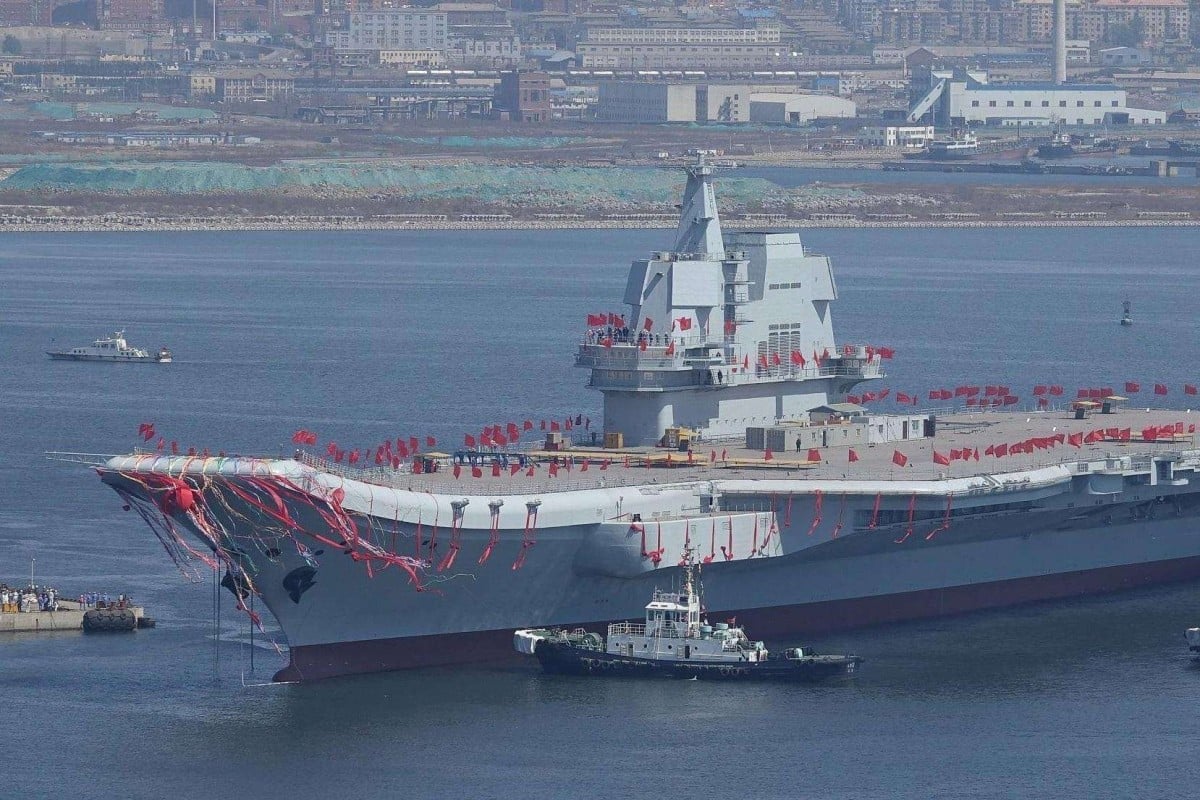
The Type 001A will be China’s second carrier and the first home-grown one. Photo:ifeng
China’s first home-grown aircraft carrier, Type 001A, will be commissioned within months, according to military observers.
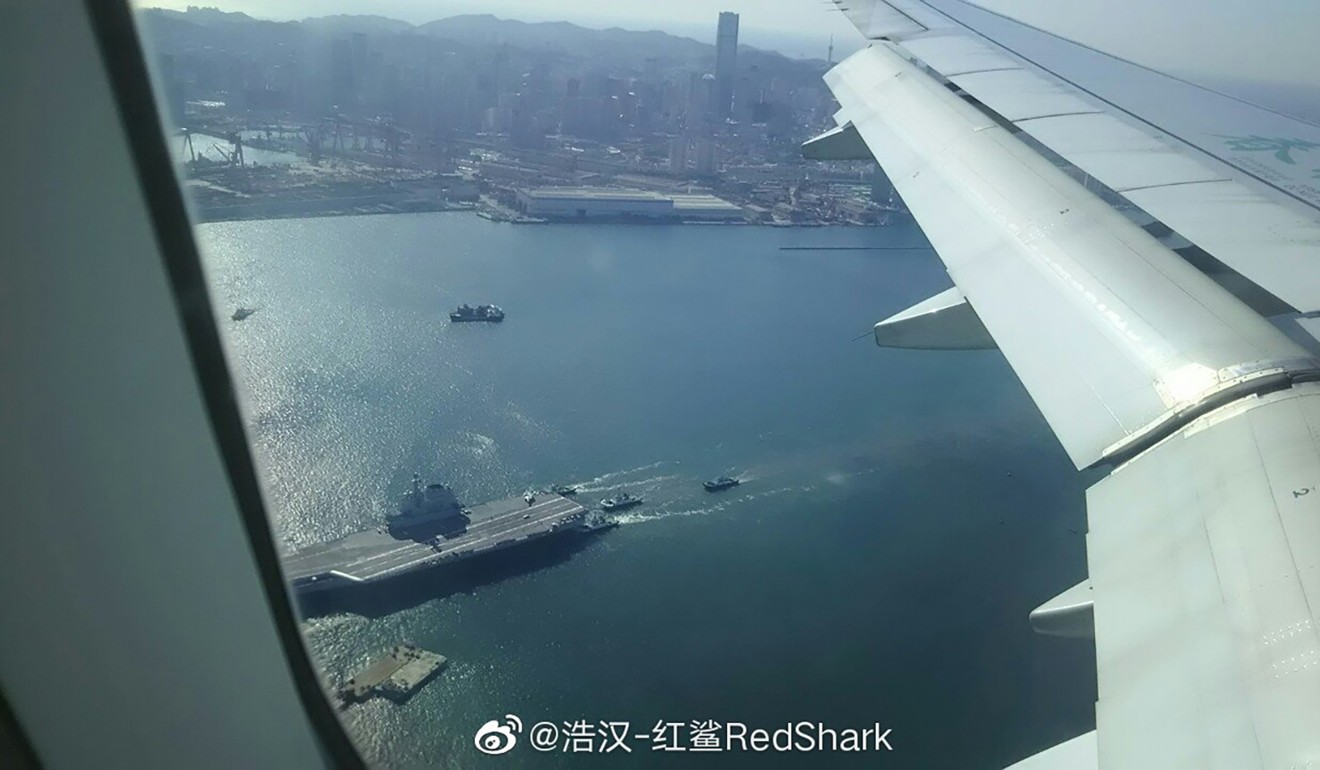
The ship appeared to have set off on its eighth sea trial on Tuesday after photographs taken by a plane flying over a restricted area showed a carrier, with a warplane on deck, leaving the Dalian Shipyard, where the carrier is being built.
The timing coincided with a notice issued by China’s Maritime Safety Administration, saying an area of the Bohai Sea, near the yard would be cordoned off for military activities.
While the commissioning would mark an advance in China’s naval capacity, some analysts noted that the trial phase was taking longer than expected.
A photo shows a carrier leaving the Dalian shipyard on Tuesday. Photo: Weibo
Global Times, a tabloid affiliated to Communist Party mouthpiece People’s Daily, quoted naval observer Li Jie as saying that the Type 001A was likely to be undertaking its eighth sea trial after solving problems discovered in the previous trials.
Zhou Chenming, a Beijing based military expert, said that the Type 001A’s commissioning had already been postponed and the major problem now was a lack of shipborne aircraft and problems with the flight control system.
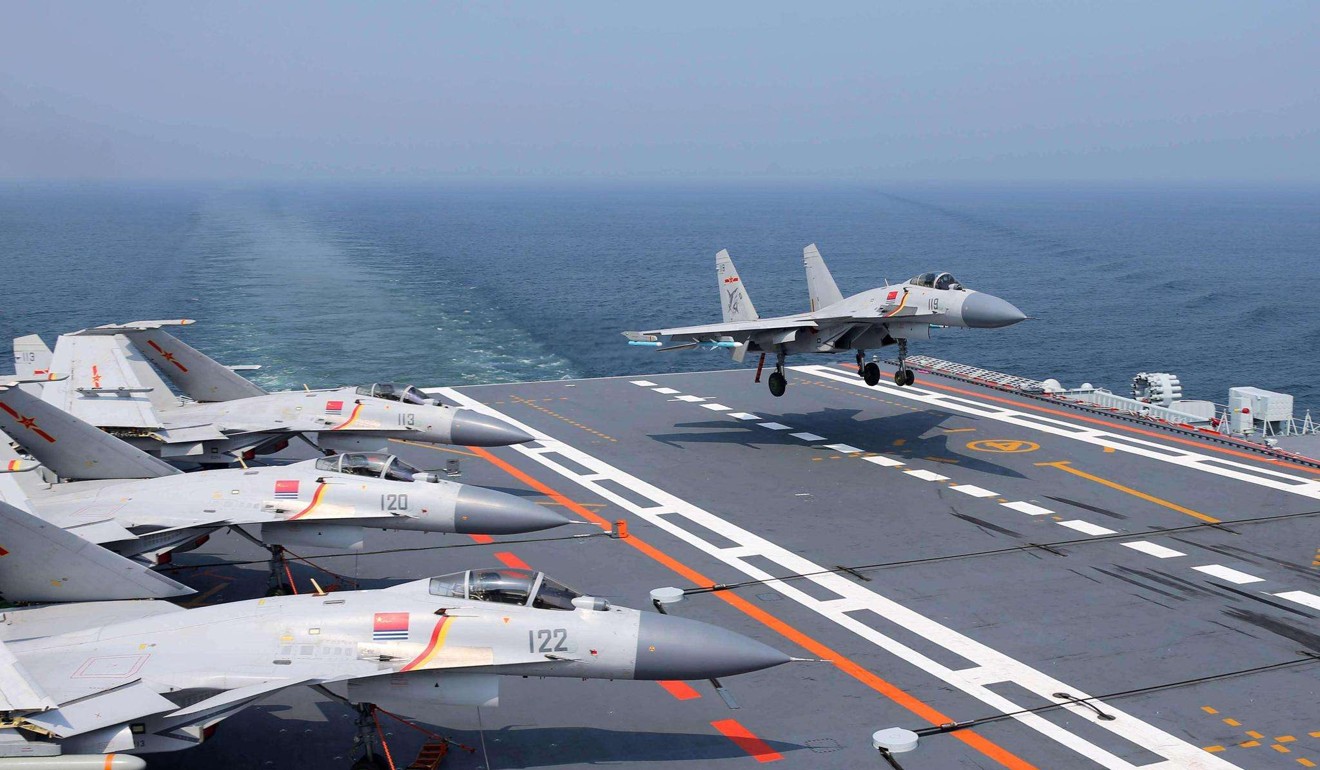
Zhou said the control system worked with J-15 fighters, which will be the primary jets used on the ship, but “is not yet compatible with other aircraft, which hinders the aircraft carrier’s final commissioning”.
Once commissioned, the ship will join the country’s first carrier, the Liaoning, at sea, boosting the country’s naval capacity.
Collin Koh, a research fellow at the Institute of Defence and Strategic Studies from Singapore’s Nanyang Technological University, said: “With two aircraft carriers, the PLA Navy will have greater chances to hone its carrier capabilities – conducting more missions, training, and all of these contributing to the accumulation of expertise and know-how.
“This means qualitatively improving [its] carrier capability, including human capital.
“For long-term strategic significance, it means an expanding power projection capability of the PLAN that allows it to promote presence in regions where Beijing asserts national interests.”
Once ready the ship will carry 32 J-15 fighters. Photo:ifeng
The Type 001A’s trial phase has taken longer than some military observers had expected. The aircraft carrier set out for its first sea trial in May 2018, some 17 months ago.
By comparison, the Liaoning, a former Soviet Kuznetsov-class vessel underwent 10 sea trials over a 13-month period before it was commissioned.
70th anniversary of the founding of the People’s Republic of China marked by its biggest ever military parade and huge civilian parade
Xi says no force can stop China ‘marching forward’ and vows to protect the long-term stability of Hong Kong
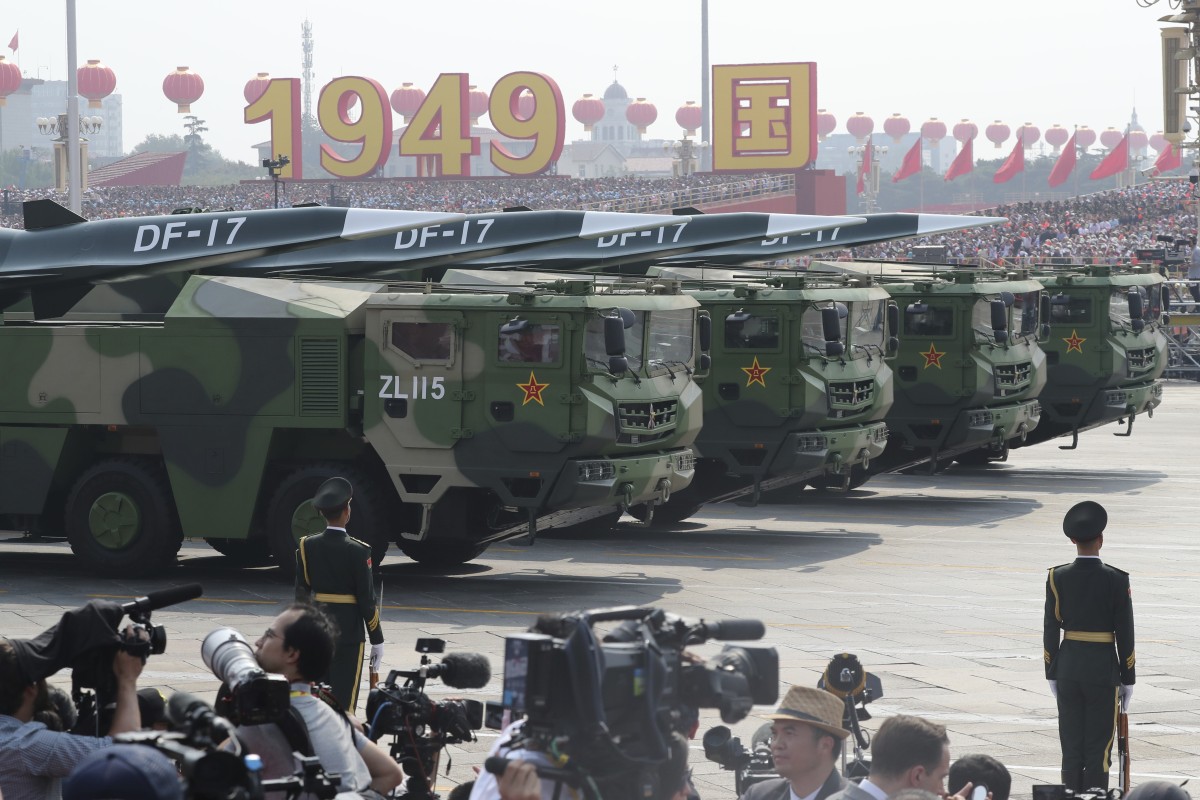
Military vehicles carry DF-17 missiles capable of reaching the US mainland during the parade to mark 70 years of the People’s Republic. Photo: AP
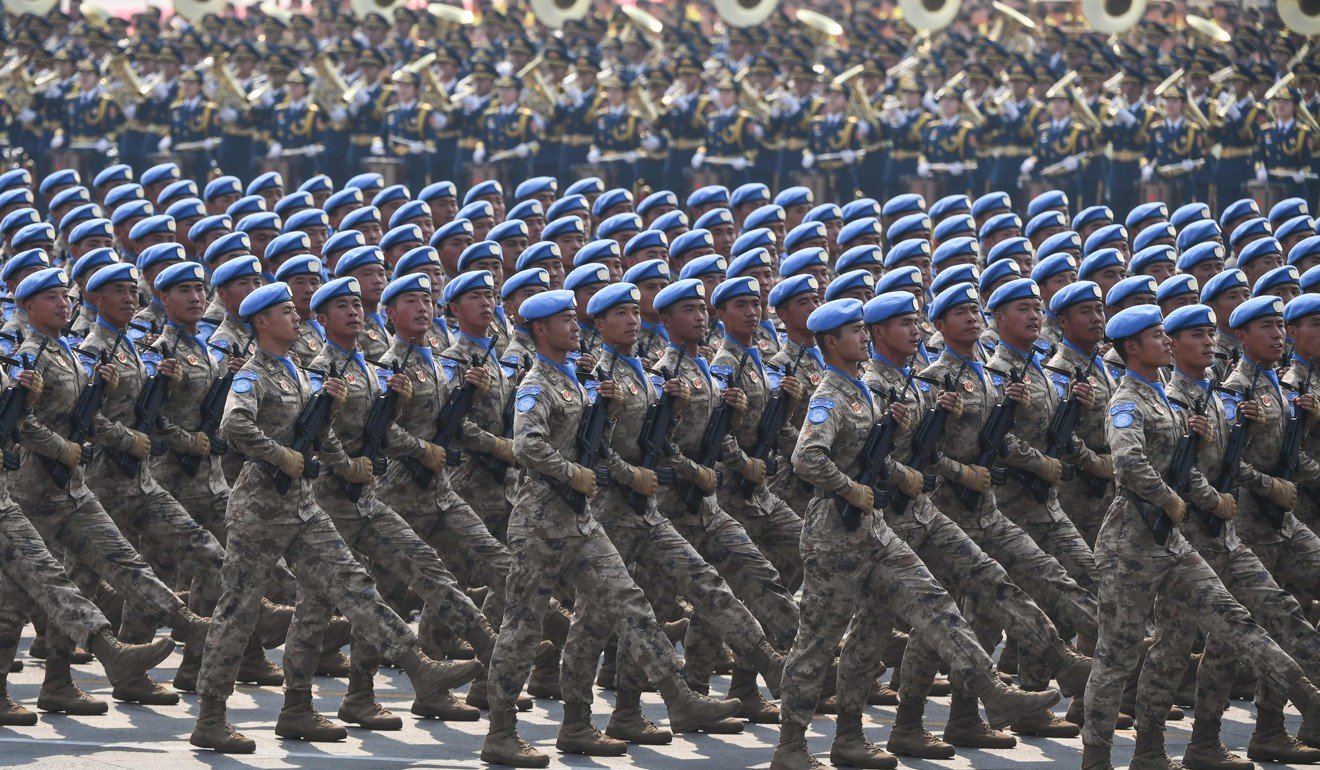
China staged a massive military parade in Beijing on Tuesday to mark the 70th anniversary of the founding of the People’s Republic, with much of the smog-shrouded capital city under a security lockdown.
President Xi Jinping inspected over 15,000 troops, more than 160 aircraft and 580 weapon systems in a show of the country’s growing military might and his drive to modernise the People’s Liberation Army.
He also delivered a bullish eight-minute speech hailing the accomplishments of seven decades of Communist rule and pledging to achieve his vision of a “Chinese dream” of national rejuvenation and global prominence.
Here are some of the key takeaways from a day of celebration in Beijing:
A show of unity
Xi presided over the ceremony in Tiananmen Square flanked by his predecessors Jiang Zemin and Hu Jintao, along with other retired and present party elders.
The rare appearance of Jiang and Hu – on the rostrum of the Gate of Heavenly Peace, where the country’s founding father Mao Zedong declared Communist rule on October 1, 1949 – was clearly aimed at projecting unity and solidarity in the face of daunting domestic and international challenges.
China’s National Day parade, as it happened
Hu had been absent from the funeral of former premier Li Peng in late July, although the ailing Jiang attended.
Former vice-president Zeng Qinghong and Song Ping, the oldest party elder in attendance, also appeared on the rostrum.
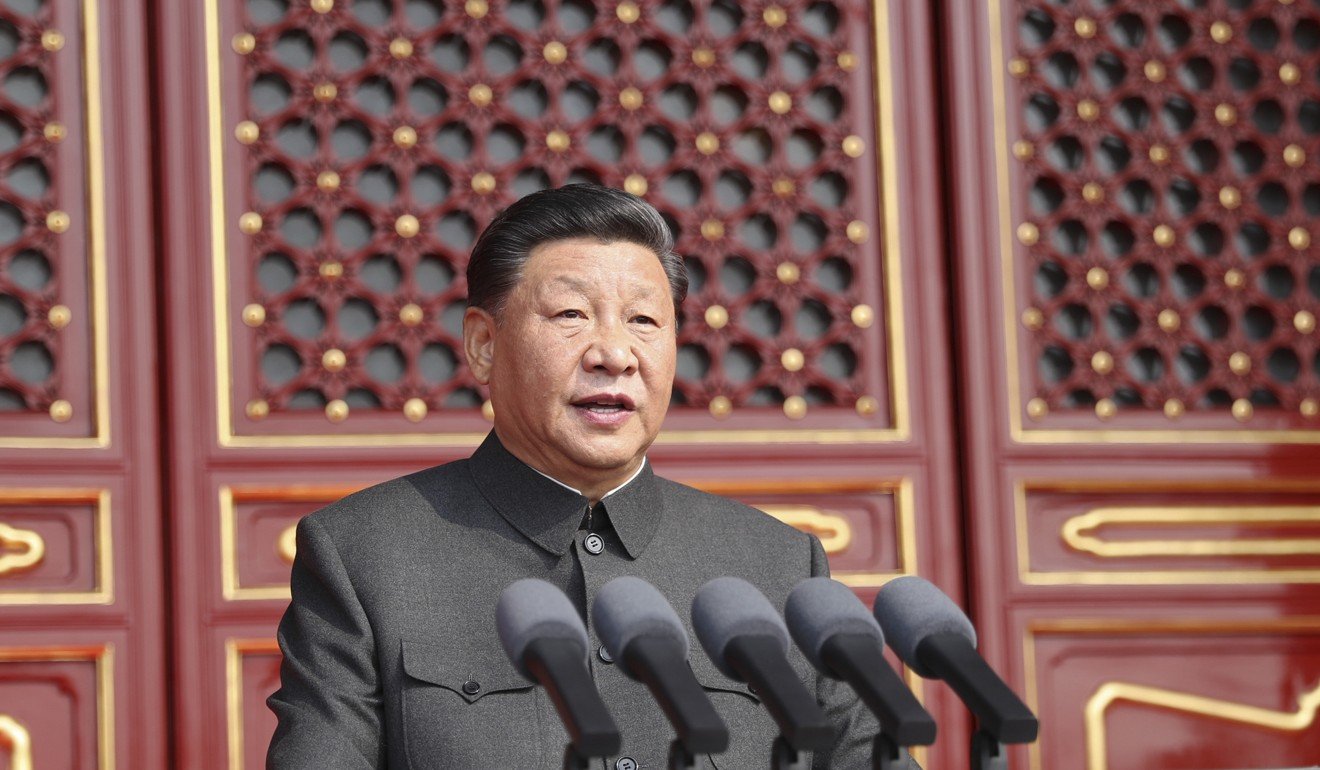
President Xi Jinping speaks in Tiananmen Square during Tuesday’s celebrations. Photo: Xinhua
But notably, while former premier Wen Jiabao was present, his predecessor Zhu Rongji was not.
‘No force can shake China’
Dressed in a Mao suit, Xi’s nationally televised speech invoked China’s “century of humiliation” and praised the achievements of its people, saying there was no force that could stop it forging ahead.
“No force can shake the status of our great motherland, and no force can stop the Chinese people and the Chinese nation from marching forward,” he said.
Chinese troops take part in the Republic’s largest ever military parade. Photo: AFP
“The People’s Liberation Army [PLA] will serve its purpose in safeguarding the sovereignty, security and development interests of the country, and world peace,” he said, at a time when Beijing has expanded its military footprint globally, including with its first overseas military base in Djibouti.
Xi called on the Communist Party and the country to unite and continue to fight for the realisation of what he called the “Chinese dream” – the nation’s rejuvenation.
One country, two systems
Amid escalating unrest in Hong Kong, which has plunged the city into a deepening crisis and threatened to overshadow the National Day celebrations, Xi vowed that the central government would uphold “one country, two systems”.
He said the central government would protect the long-term stability of Hong Kong and Macau, and stressed the goal of “peaceful reunification” with the self-ruling Taiwan, repeating a message frequently used by his predecessors, including Deng Xiaoping, Jiang and Hu.
The theme of one country, two systems later appeared in a National Day parade for the first time, with placards forming the words: “Hong Kong’s tomorrow will be better.”
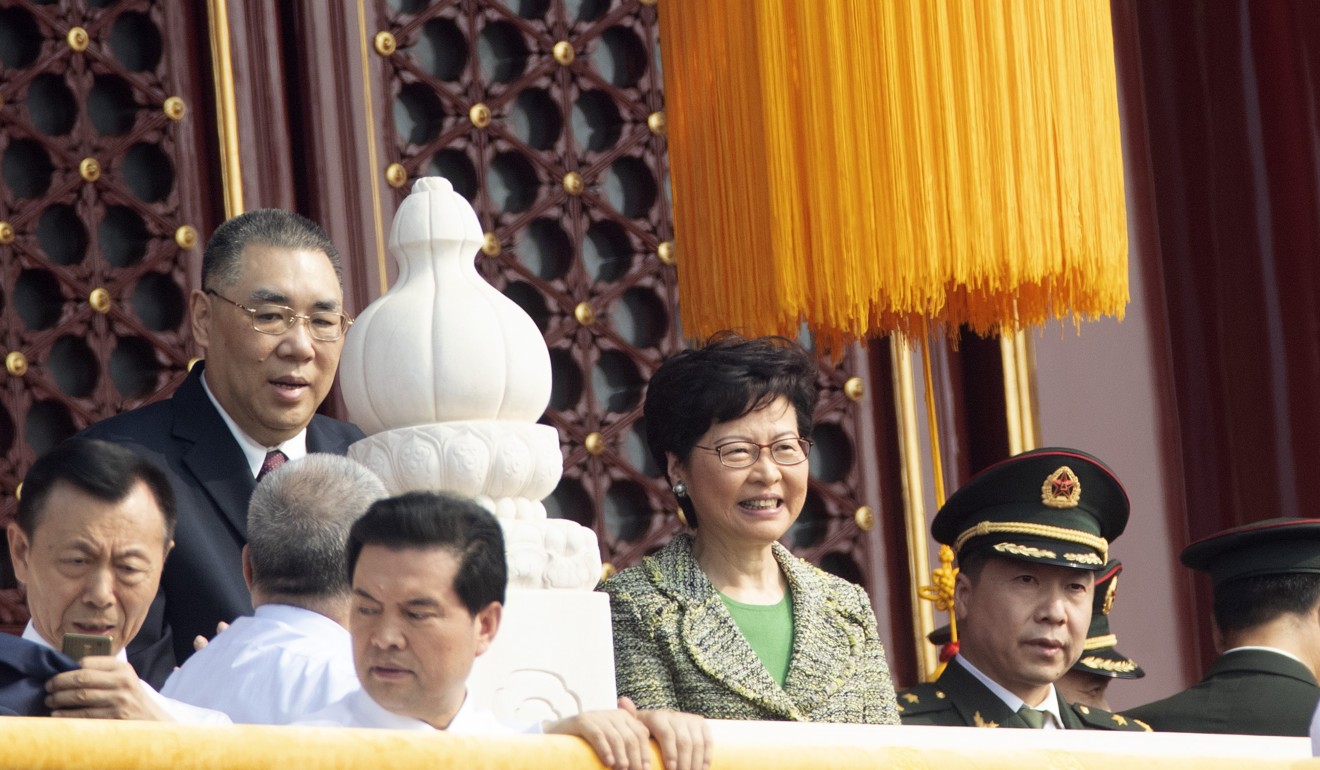
Hong Kong Chief Executive Cheng Yuet-ngor attended the ceremony, as did 10 Hong Kong police officers involved in suppressing anti-government protests in the city.
Showing off new weapons
China’s advancement in military weaponry was on full display, with almost half of the items featured being shown to the public for the first time.
Hong Kong leader Carrie Lam was among the guests in Beijing on Tuesday. Photo: AP
The morning’s celebrations included an 80-minute military parade – the biggest since the founding of the People’s Republic – in an apparent effort to showcase the prowess of the PLA, the world’s biggest military with 2 million personnel.
Among the weapons shown were DF series missiles, including the DF-17, a nuclear-capable glider that has the capacity to strike the US mainland, and the DF-41, which has a range of up to 15,000km, making it the world’s longest-range military missile.
Signalling Xi’s status
A 100,000-strong civilian parade featuring huge portraits of Xi and predecessors including Mao, Deng, Jiang and Hu wrapped up the morning celebration.
The procession was divided into three parts, representing three eras of the People’s Republic: the Mao era, Deng’s reform and opening up, and Xi’s era, which seeks global prominence on a par with that of the United States.
Xi appeared keen to project his supreme status in the party, reinforced since he abolished the constitutional term limit a year ago, allowing him potentially to remain leader for life.
He waved at his own portrait, unveiled alongside a sign reading “Carry out Xi Jinping Thought on Socialism with Chinese Characteristics for a New Era”.
Visually spectacular and with the latest technology, the Chinese capital’s second international airport is open for business
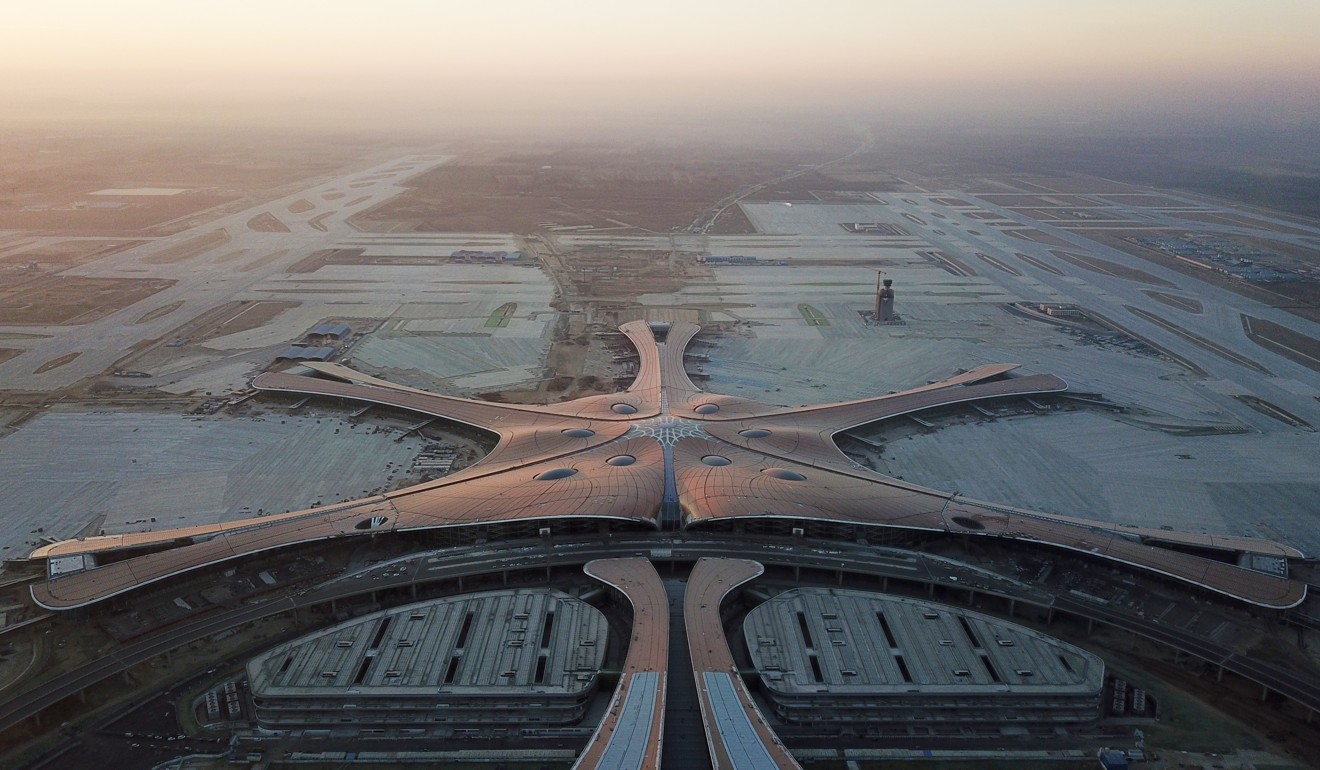
The terminal building at Beijing Daxing International Airport, which has officially opened. Photo: Xinhua
At 4.23pm on Wednesday a China Southern Airlines A380 left Beijing for Guangzhou – on the first commercial flight out of the world’s latest and largest airport terminal at Daxing, five years after construction began on the ambitious project.
The 80 billion yuan (US$11 billion) Beijing Daxing International Airport was officially opened by Chinese President Xi Jinping on Wednesday morning.
China Southern Airlines, the mainland’s largest carrier, has 40 per cent of the flight slots at the new airport. It is one of 16 airlines which will be operating out of Beijing Daxing International Airport, the visually spectacular new facility at the southern end of the Chinese capital.
Six other flights, including China Eastern Airlines for Shanghai and Air China for Chengdu, took off before 5pm in the afternoon. These domestic airlines will have part of their operations moving to Daxing for the upcoming winter-spring season, according to the mainland’s aviation authority. No Hong Kong airlines were listed.
British Airways has announced its whole operation will be moved to Daxing, while some foreign airlines, such as Ethiopian Airlines, Polish Airlines, Malaysia Airlines, Royal Air Maroc and Finnair, will operate at both airports.
Spanning 47 sq km (18 square miles) – almost 50 per cent larger than the city of Macau – Daxing, with its 700,000 square metre (7.5 million sq ft) terminal is a spectacular sight. Its futuristic shape, resembling a giant hexagonal starfish or – as some internet users have dubbed it – an alien base, not only handles more aircraft, it also keeps passengers’ walks
From the centre of the security check to the furthest end gate in each wing is about 600 metres (1,970 feet), or less than an eight-minute walk.
Beijing’s new 7-runway, star-shaped Daxing airport opened by Xi Jinping
According to Xinhua, more than 70 restaurants, tea shops and coffee houses will operate in the airport, along with 36 international brands, including Louis Vuitton, Gucci and Bottega Veneta.
Daxing is designed to take pressure off the overcrowded Beijing Capital International Airport (BCIA) and, by 2021, is expected to handle 45 million passengers a year, rising to 72 million by 2025.
Located at the south of the capital, 46km (28.5 miles) from the central Tiananmen Square, the airport was once frowned upon for its less than optimal location, with its southern end at the border with Hebei province. But it may not be as time-consuming for travellers as originally thought.
The design of the airport means passengers will walk a much shorter distance to the check-in and security check.Hu Haiqing, China Southern Airlines
Hu Haiqing, deputy general manager of China Southern Airlines’ operation control centre, told Global Times that “although Daxing is further away from downtown Beijing than the Capital airport, there are still some advantages, especially for our airline”.
With most of its bases in the south of the country, China Southern Airlines flights to Daxing will be 10 to 15 minutes shorter than to the Capital airport. A further 15 to 20 minutes taxiing time will also be saved, thanks to its position in the new airport.
“The design of the airport also means passengers, once they leave their car or train, will walk a much shorter distance to the check-in and security check,” Hu said.
According to Xinhua, Daxing’s design also makes transit much quicker, with transfers between international and domestic flights up to 90 minutes shorter than from the Capital airport.
The futuristic shape of Daxing airport not only handles more aircraft, it also keeps passengers’ walks to a minimum. Photo: Xinhua
Public transport will be the quickest way to reach the new airport from downtown Beijing – 20 minutes from West Beijing railway station once the Beijing-Xiongan high-speed rail officially opens. The airport express service will also take passengers from Caoqiao station to the airport in 19 minutes.
There is no underground rail service or airport express connecting the Capital airport in the north with Daxing, but passengers can change trains at Caoqiao for downtown Beijing or other stations which connect with BCIA’s airport express service.
Waiting times at the new airport will be greatly reduced by the use of facial recognition technology for self-service check-in and smart security checks, according to Wang Hui, manager of Daxing’s terminal management department.
The technology does away with the need for a paper boarding pass and passengers can check-in, with or without luggage, and go through the security check by themselves.
Beijing is the window for China to go global … Daxing airport makes it possible to open more global routes.China Eastern Airlines pilot
“The airport has more than 400 self-service check-in kiosks, which means more than 80 per cent of check-ins will be self-service. That shortens each passenger’s queuing time to no more than 10 minutes,” Wang told Global Times.
“The smart security check channels are able to handle 260 passengers per hour, 40 per cent faster than using traditional means,” he said.
The opening of Daxing Airport could be a great boost for the mainland – and even the global – aviation industry by easing pressure on the Capital airport and making new routes possible, said a veteran China Eastern Airlines pilot who declined to be named.
5 things we know about Beijing’s new Daxing International Airport
Opening new flight routes from BCIA was almost impossible, he pointed out, because the centre of Beijing was a no-fly zone for security reasons. Daxing airport’s location at the southern end of the city, however, avoided the problem of planes having to bypass the restricted space, leaving room to open more routes for domestic and international flights.
“Beijing is the window for China to go global but the Capital airport’s schedule is saturated and unable to open new routes. Daxing airport makes it possible to open more global routes,” the pilot said.
He said the runway design at Daxing also meant fewer delays, because the four runways of phase one – more than any other airport in China – included one which was perpendicular to the other three, allowing flights to land and take off regardless of wind direction.






 CHINDIA ALERT: You'll be living in their world, very soon
China’s Liaoning aircraft carrier returns home from a month of training
China’s first aircraft carrier, the Liaoning, returned to its home port of Qingdao on Thursday after nearly a month of training on the high seas, the People’s Liberation Army said.
According to military analysts, the warship was joined by at least five escort vessels, and the drills showed its crew had not been affected by the coronavirus pandemic and that it remained combat-ready.
The annual cross-region drills included intensive and complicated air and sea operations, the official PLA Daily said in a post on social media on Friday.
“The drills have further improved the real combat training level of the Liaoning carrier strike group, putting its systematic combat capability to the test,” the statement on WeChat said, without giving other details.
Beijing-based naval expert Li Jie said it was important for the carrier to get back to training activities.
“The recent training by the Liaoning carrier strike group is very significant because it’s evidence that none of the 2,000 sailors and commanders on the ship have been hit by Covid-19, and neither have any of the other soldiers and personnel on the other warships and support units,” Li said.
The coronavirus situation has eased in China, where the first cases were reported late last year, but it continues to spread across the globe and has infected more than 3.2 million people worldwide and killed over 233,000.
Sailors on warships like USS Theodore Roosevelt vulnerable as coronavirus spreads
The virus has also hit crew members on at least 40 US Navy warships, and Li said that left China with the only operational aircraft carrier in the region.
“Since the four American aircraft carriers in the Indo-Pacific region have all been struck by the pandemic, China is the only country that can operate an aircraft carrier in the area,” he said.
Japan’s Ministry of Defence said the Liaoning was escorted by two destroyers, two frigates and a supply ship, and they had passed through the Bashi Channel, a waterway to the south of Taiwan, and headed towards waters east of Taiwan.
As tensions continue to simmer between Taipei and Beijing, the PLA has stepped up activities around the island, which the mainland sees as part of its territory awaiting reunification.
Hong Kong-based military commentator Song Zhongping said the latest naval drills were also aimed at heaping more pressure on Taiwan’s pro-independence forces as well as foreign countries seeking to intervene in cross-strait issues.
Coronavirus: US ‘supports Taiwan joining WHO events’ in ministerial phone call
“Taiwan’s pro-independence forces have become more active and are attempting to take advantage amid the pandemic,” said Song, a military commentator with Phoenix Television.
“The Liaoning would play a major role in the PLA’s plan to unify Taiwan by force, so it’s necessary for the aircraft carrier strike group to get back to operations, step up training and send a warning to Taipei,” he added.
Lu Li-Shih, a former instructor at the naval academy in Taiwan, noted that the PLA Navy had regularly held drills in the waters east of Taiwan in recent years to avoid surveillance by US satellites.
Source: SCMP
Posted in air and sea operations, Aircraft, Aircraft carrier, annual, Beijing, by force, China’s, combat-ready, complicated, coronavirus, Coronavirus pandemic, cross-region drills, destroyers, escort vessels, Friday, frigates, from, high seas, home port, intensive, Japan’s Ministry of Defence, Liaoning, military commentator, military’s plan, month, naval academy, People’s Liberation Army, pla navy, pro-independence forces, Qingdao, returns home, sailing through, sailors, scramble, self-ruled island, social media, strait, strike group, supply ship, Surveillance, Taipei, Taiwan, Taiwan Strait, Taiwan’s, Taiwan’s defence ministry, to unify, training, Uncategorized, US Navy, US satellites, USS Theodore Roosevelt, vulnerable, warship, warships, WeChat, western Pacific, WHO | Leave a Comment »