Chindia Alert: You’ll be Living in their World Very Soon
aims to alert you to the threats and opportunities that China and India present. China and India require serious attention; case of ‘hidden dragon and crouching tiger’.
Without this attention, governments, businesses and, indeed, individuals may find themselves at a great disadvantage sooner rather than later.
The POSTs (front webpages) are mainly 'cuttings' from reliable sources, updated continuously.
The PAGEs (see Tabs, above) attempt to make the information more meaningful by putting some structure to the information we have researched and assembled since 2006.
BEIJING, April 20 (Xinhua) — China has resumed construction of major water conservancy projects amid its further containment of the novel coronavirus disease (COVID-19) epidemic.
Construction has resumed so far on 143 of the 172 major water conservancy projects, with the scale of investment under construction reaching over 1 trillion yuan (around 141 billion U.S. dollars), according to the Ministry of Water Resources.
The ministry said 30 conservancy projects have completed construction and produced benefits.
As the situation of epidemic control and prevention continues to improve, China is speeding up construction on major infrastructure projects to mitigate the economic impact of the novel coronavirus epidemic.
Construction has resumed on about 85 percent of the housing and urban infrastructure projects in China as of April 1, with about 158,700 housing and urban infrastructure projects across the country cranking up work, according to the Ministry of Housing and Urban-Rural Development.
BEIJING, April 19 (Xinhua) — China’s National Equities Exchange and Quotations, also known as the “new third board,” saw transactions exceed 26.4 billion yuan (3.67 billion U.S. dollars) so far this year.
From April 13 to 17, turnover on the board reached 1.8 billion yuan. As of Friday, the board had 8,718 listed firms.
Saidian, operator of Bestdo.com, a Chinese online sport service provider, recorded the highest weekly transaction on the board, raising 127 million yuan.
The exchange was launched in early 2013 to supplement the Shanghai and Shenzhen stock exchanges to serve small- and medium-sized enterprises.
It is seen as an easier financing channel for small businesses, with low costs and simple listing procedures.
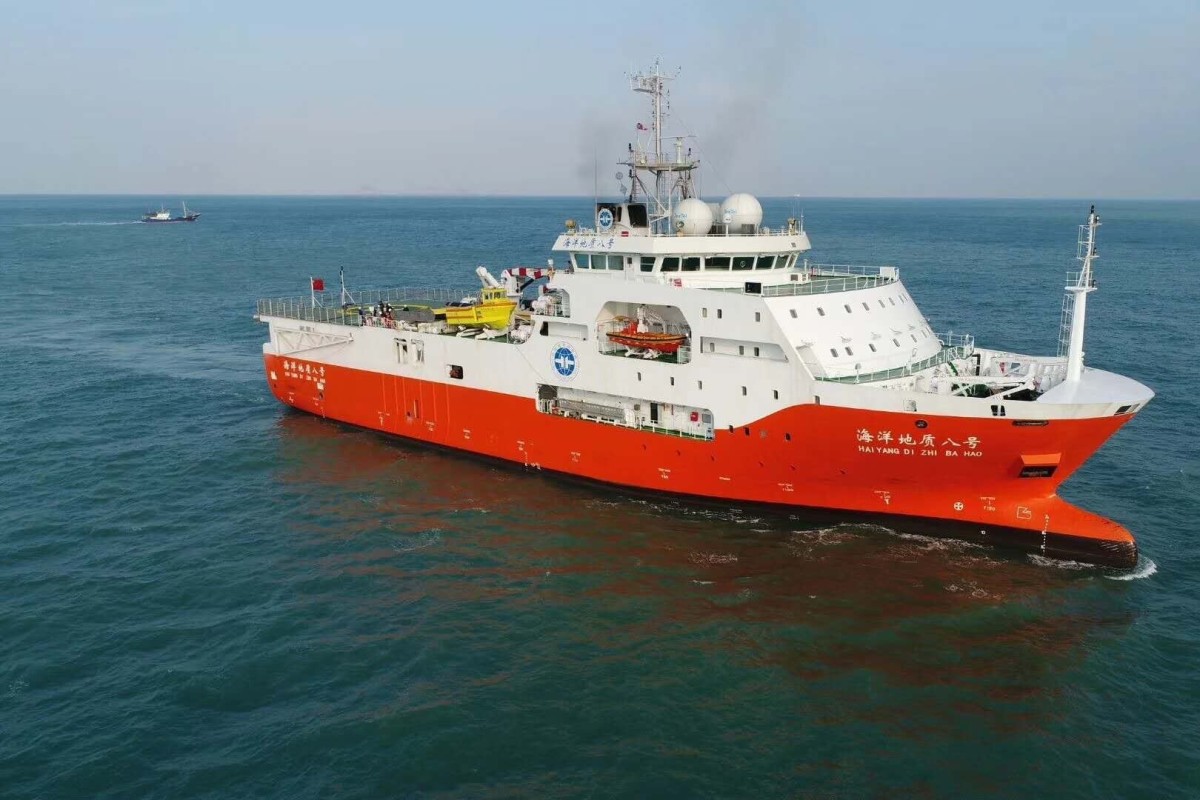
Vietnamese vessels last year spent months shadowing the Chinese Haiyang Dizhi 8 survey vessel in resource-rich waters that are a potential global flashpoint as the
China and Vietnam ‘likely to clash again’ as they build maritime militias
12 Apr 2020
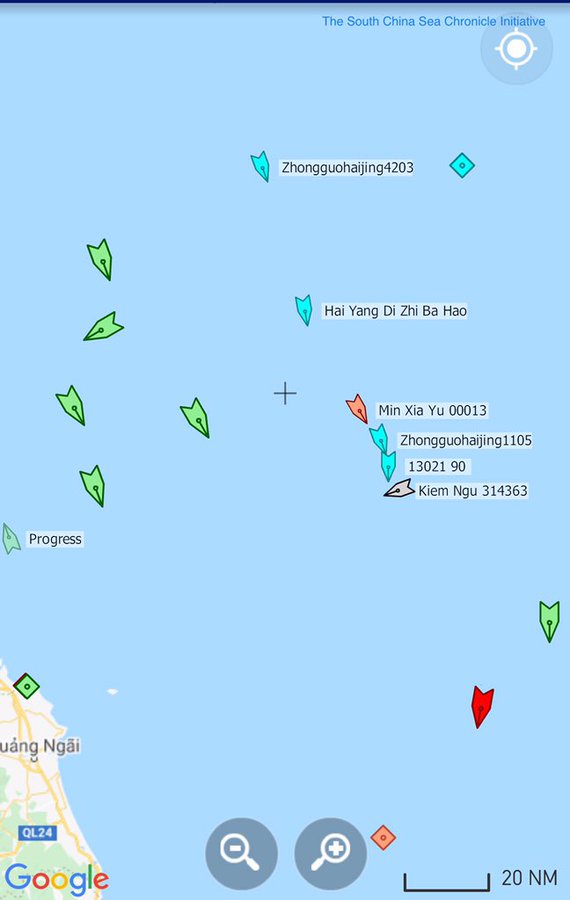
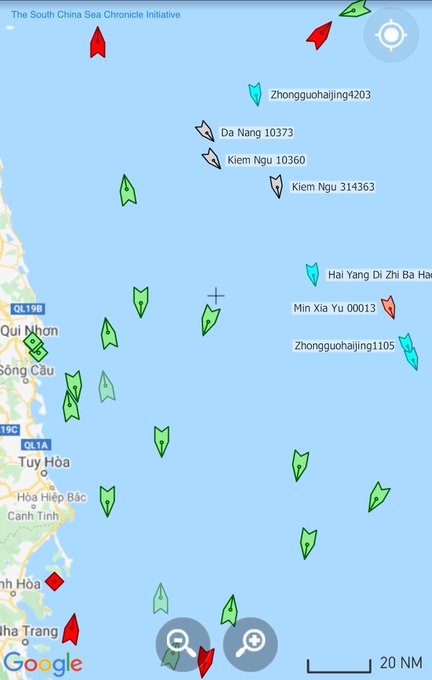
On Tuesday, the ship, which is used for offshore seismic surveys, appeared again 158km off Vietnam’s coast, within its exclusive economic zone (EEZ), flanked by at least one Chinese coastguard vessel, according to data from Marine Traffic, a website that tracks shipping.
At least three Vietnamese vessels were moving with the Chinese ship, according to data issued by the Marine Traffic site.
South China Sea News@SCS_news
·
Haiyang Dizhi 8 is heading toward #SouthChinaSea with several escort ships.
South China Sea News@SCS_news
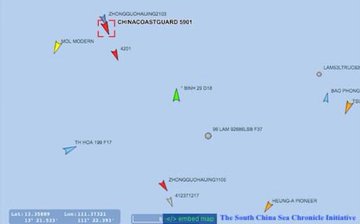
About 50 nm ahead of Haiyang Dizhi 8 is a group of at least 3 #China Coast Guard ships, including the largest 5901. #SouthChinaSea
The presence of the Haiyang Dizhi 8 in Vietnam’s EEZ comes towards the scheduled end of a 15-day nationwide lockdown in Vietnam aimed at curbing the spread of the coronavirus.
“We call on the PRC to remain focused on supporting international efforts to combat the global pandemic, and to stop exploiting the distraction or vulnerability of other states to expand its unlawful claims in the South China Sea,” the US State Department said in a statement, referring to China.
Vietnam pulls DreamWorks’ ‘Abominable’ over South China Sea map
, which also has disputed claims in the South China Sea, has raised its concerns too.
On Saturday, the Global Times, published by the official People’s Daily newspaper of China’s ruling Communist Party, said Vietnam had used the fishing boat incident to distract from its “ineptitude” in handling the coronavirus.
Vietnam’s Ministry of Foreign Affairs did not immediately respond to a request for comment.
Helped by a mass quarantine and aggressive contact-tracing, Vietnam has recorded 265 cases of the novel coronavirus and no deaths. Nearly 122,000 coronavirus tests have been carried out in Vietnam.
China and Vietnam have for years been at loggerheads over the potentially energy-rich waters, called the East Sea by Vietnam.
China’s U-shaped “nine-dash line” on its maps marks a vast expanse of the waters that it claims, including large parts of Vietnam’s continental shelf where it has awarded oil concessions.
and Brunei claim some of the waters that China claims to the south.
During the stand-off last year, at least one Chinese coastguard vessel spent weeks in waters close to an oil rig in a Vietnamese oil block, operated by Russia’s Rosneft, while the Haihyang Dizhi 8 conducted suspected oil exploration surveys in large expanses of Vietnam’s EEZ.
“The deployment of the vessel is Beijing’s move to once again baselessly assert its sovereignty in the South China Sea,” said Ha Hoang Hop, at the Singapore-based ISEAS-Yusof Ishak Institute.
“China is using the coronavirus distraction to increase its assertiveness in the South China Sea, at a time when the US and Europe are struggling to cope with the new coronavirus.”
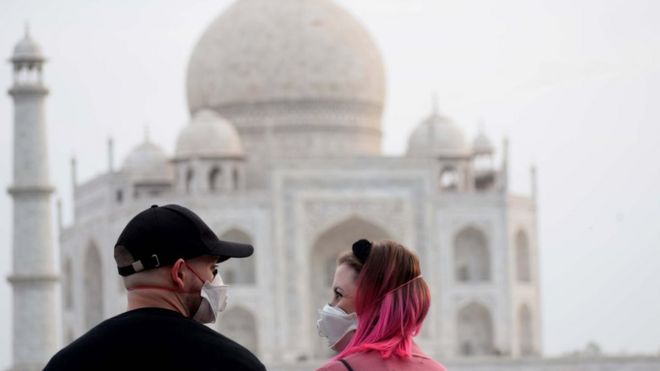
Image copyright GETTY IMAGESImage caption The Taj Mahal is one of the world’s leading tourist attractions.
India’s iconic monument Taj Mahal has shut down to halt the spread of the coronavirus, officials say.
The culture ministry said tens of thousands visit the “monument of love” every day and it was “imperative to shut it down”.
The Taj Mahal is one of the world’s leading tourist attractions, and draws as many as 70,000 people every day.
India has 137 reported cases of Covid-19 and three related deaths. It has tested 6,000 people so far.
On Tuesday, the Indian government announced that all monuments and museums run by the Archaeological Survey of India across the country have also been shut to keep people safe.
Culture Minister Prahlad Patel said all the 143 monuments and museums would remain shut until 31 March and the decision would be reviewed after the shutdown period.
On Tuesday, a 60-year-old doctor in the southern state of Karnataka tested positive after treating a man who died from the coronavirus last week.
Media caption Everything you need to know about the coronavirus explained in one minute
India has taken a number of steps to halt the spread of Covid-19:
All visas, barring a select few categories, have been suspended for a month
Visa-free travel afforded to overseas citizens of the country has been suspended until 15 April and even those allowed in could be subject to 14 days of quarantine
Schools, colleges and movie theatres in most states have been shut until 31 March
The Indian Premier League (IPL), featuring nearly 60 foreign players and scheduled to begin on 29 March, has been postponed to 15 April
India’s health ministry says it was among the first countries in the world to prepare for an outbreak of the respiratory illness, and denied allegations that it was slow in testing suspected cases.
Experts say that India is in a critical phase where it needs to halt community transmissions. The country has only tested 6,000 people so far and many believe that it’s not enough to halt the spread. Experts say that India needs to start testing thousands daily to effectively stop community transmissions.
The government says it’s prepared and has now allowed even private labs to test, apart from government-run labs.
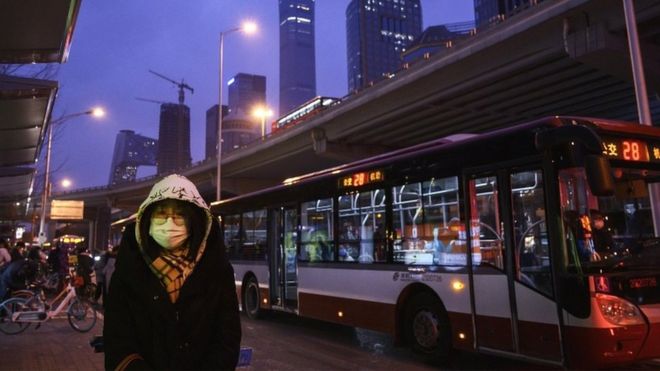
Image copyright GETTY IMAGESImage caption Authorities are also asking overseas Chinese to reconsider travel plans
Travellers from countries with severe coronavirus outbreaks who arrive in some parts of China will have to undergo a 14-day quarantine, state media say.
Travellers from the virus hotspots of South Korea, Japan, Iran and Italy arriving in the capital will have to be isolated, a Beijing official has said.
Shanghai and Guangdong announced similar restrictions earlier.
Authorities are worried the virus might be imported back into the country.
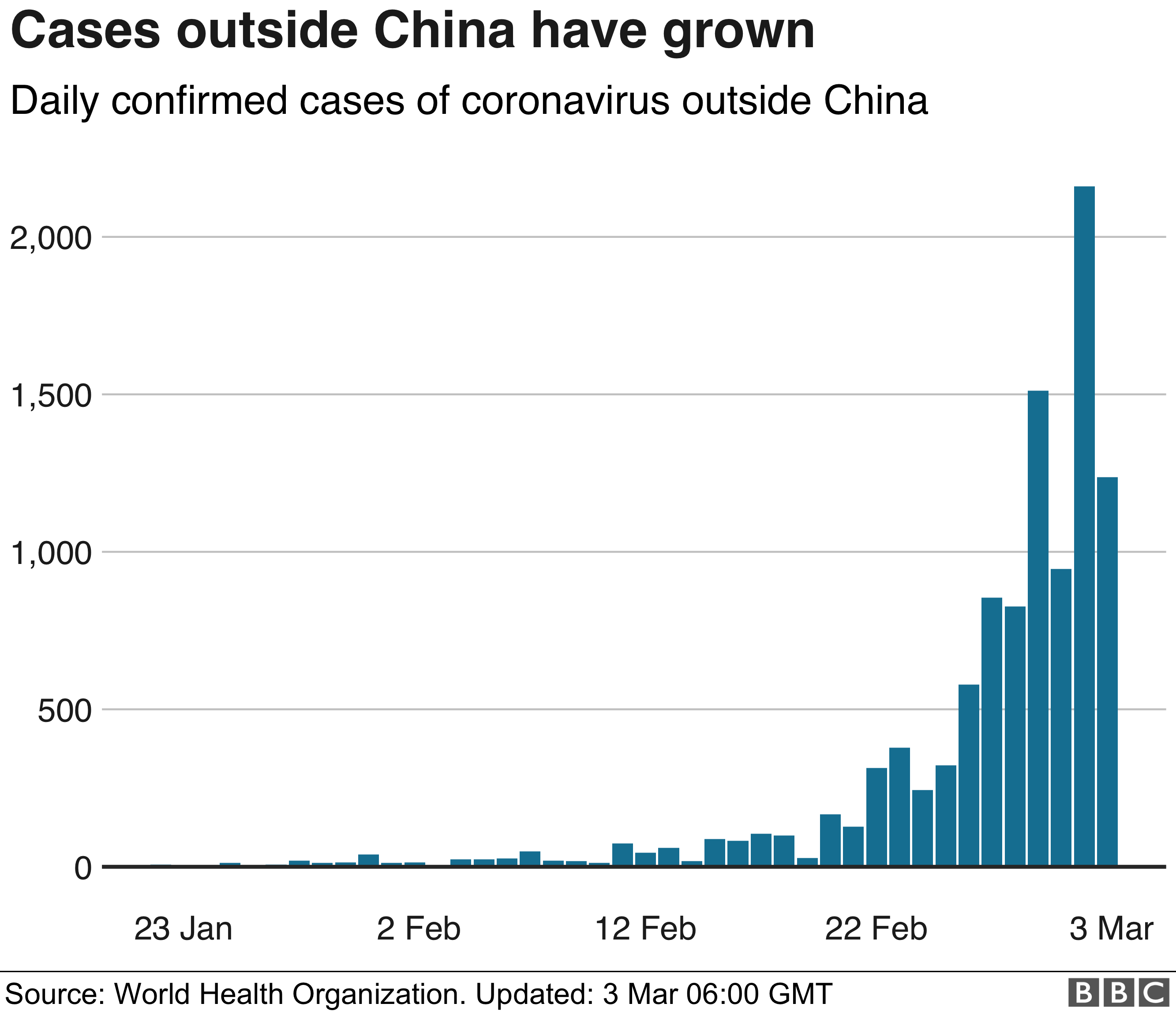
Although most virus deaths have been in China, Monday saw nine times more new infections outside China than in.
Shanghai said it would require new arrivals from countries with “relatively serious virus conditions” to be isolated, without naming the countries.
Authorities are also asking overseas Chinese to reconsider travel plans.
“For the sake of your family’s health and safety, please strengthen your precautions, carefully decide on your travel plans and minimise mobility,” officials in one southern Chinese province said.
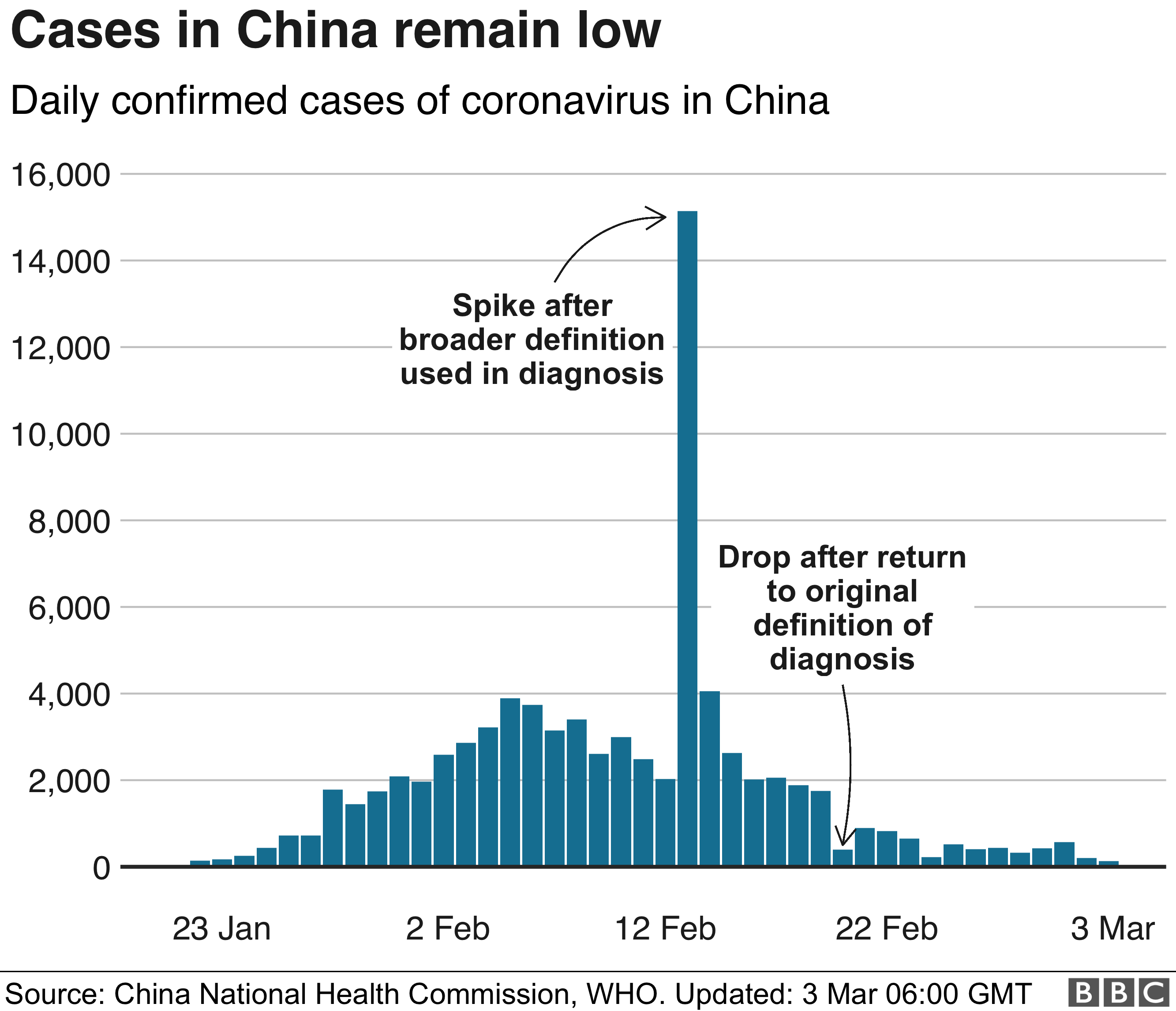
China reported 125 new virus cases on Tuesday – the lowest number of new daily infections in six weeks. There were also 31 more deaths – all in Hubei province, where the virus emerged.
In other developments:
Finance ministers from the G7 countries have said they are “ready to take action”, including fiscal measures to aid the response to the virus and support the global economy
The Pope, who had cancelled a Lent retreat for the first time in his papacy because he was suffering from a cold, has tested negative for the virus, Italian media report
South Korean President Moon Jae-in has put the country into a “state of war” and ordered all government departments to shift to a 24-hour emergency system
Jailed British-Iranian woman Nazanin Zaghari-Ratcliffe is in good health, Iran’s judiciary has said. She was assessed after her husband said she was showing symptoms of Covid-19
Media caption Julie, who lives in Singapore, was diagnosed with coronavirus and then put into isolation
How are different countries affected?
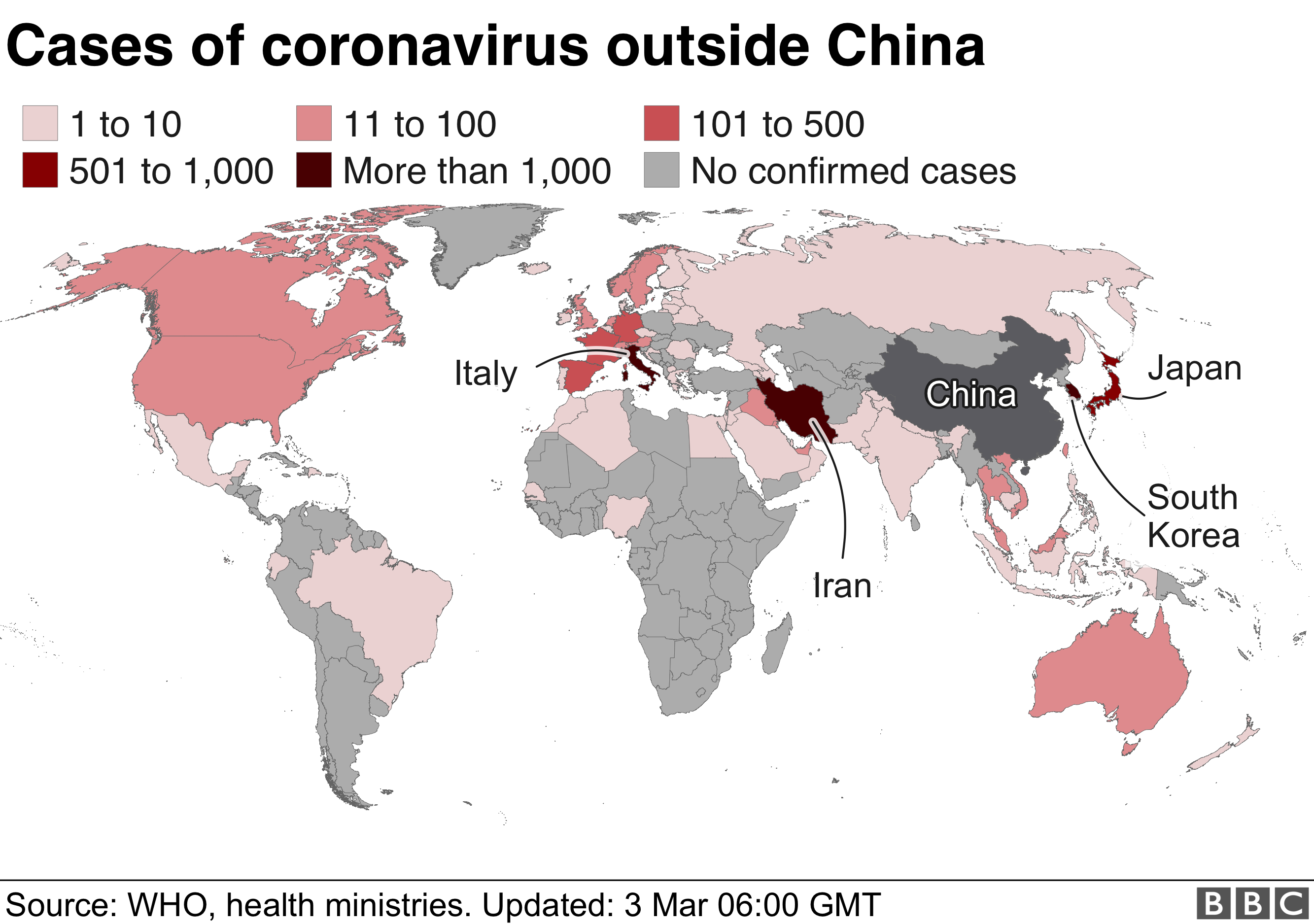
There are now almost 90,000 cases worldwide in about 70 countries, although the vast majority – just under 90% – remain in China, and most of those are in Hubei province where the virus originated late last year.
Of the nearly 8,800 cases outside China, 81% are in four countries – Iran, South Korea, Italy and Japan.
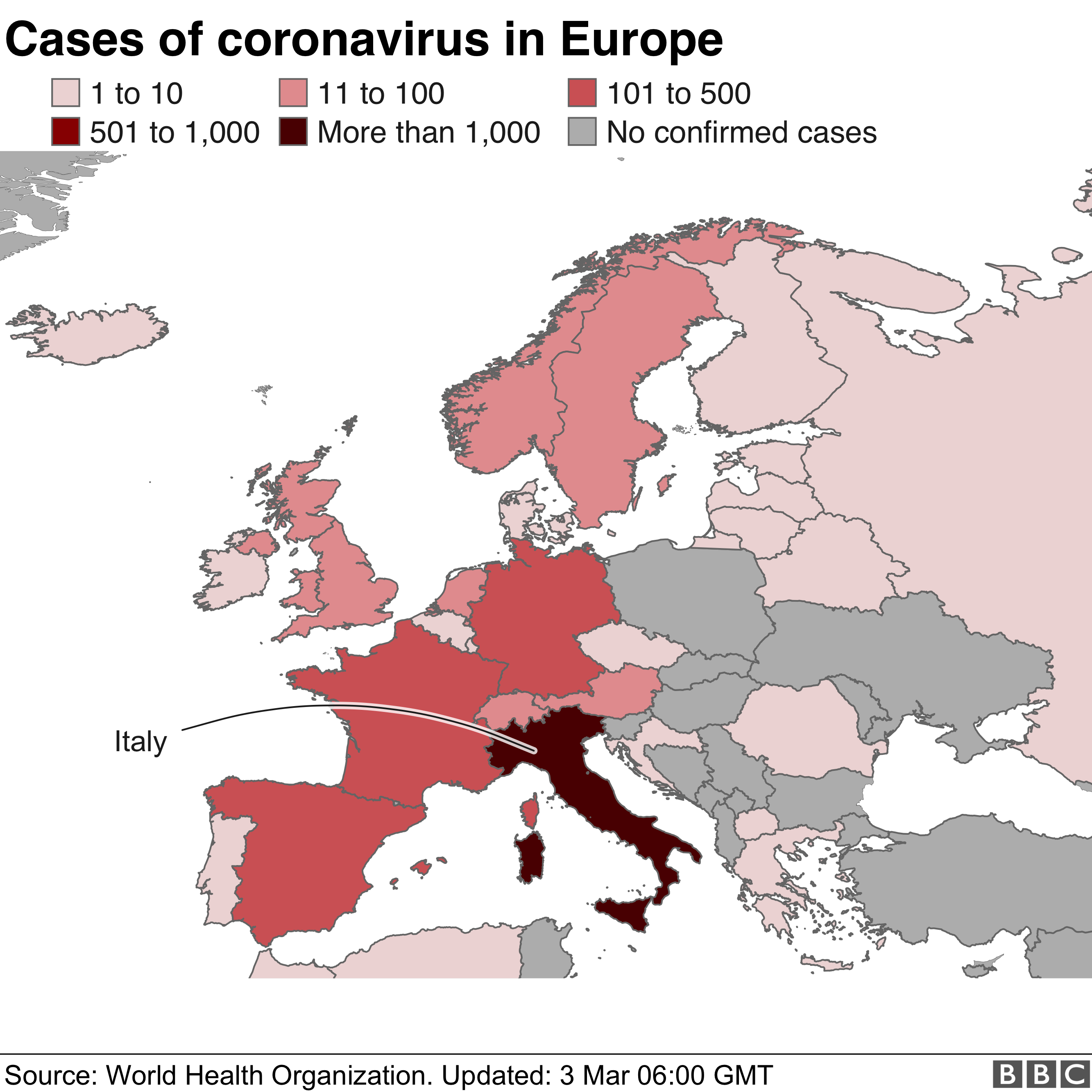
One of the countries worst affected outside China – Italy – said on Monday that the death toll there had risen by 18 to 52. There are 1,835 confirmed cases, most of them in the Lombardy and Veneto areas of the north. Nearly 150 people are said to have recovered.
However, the country is seeing a slowdown in new cases. On Monday, the authorities said there were 258 new cases of the virus – a 16% increase on the previous day – after new cases spiked by 50% on Sunday.
On Tuesday, Iran said the latest death toll from the virus was 77 – although the real figure is believed to be much higher. More than 2,300 people are said to be infected, including senior political figures. The head of Iran’s emergency medical services, Pirhossein Kolivand, was one of them, the Ilna news agency reported on Tuesday.
Some 23 MPs are also reported to have tested positive for the virus, and an official close to the Supreme Leader, Ayatollah Ali Khamenei, was reported on Monday to have died of the disease.
Health officials in the US state of Washington said on Monday that four more people had died, bringing the total there to six. They are the only deaths in the US so far. Local officials say they are buying a hotel to convert it into an isolation hospital.
On Tuesday, Ukraine confirmed its first case of coronavirus, while Portugal, Iceland, Jordan, Tunisia, Armenia, Latvia, Senegal, Morocco and Andorra confirmed their first cases on Monday.
How deadly is Covid-19?
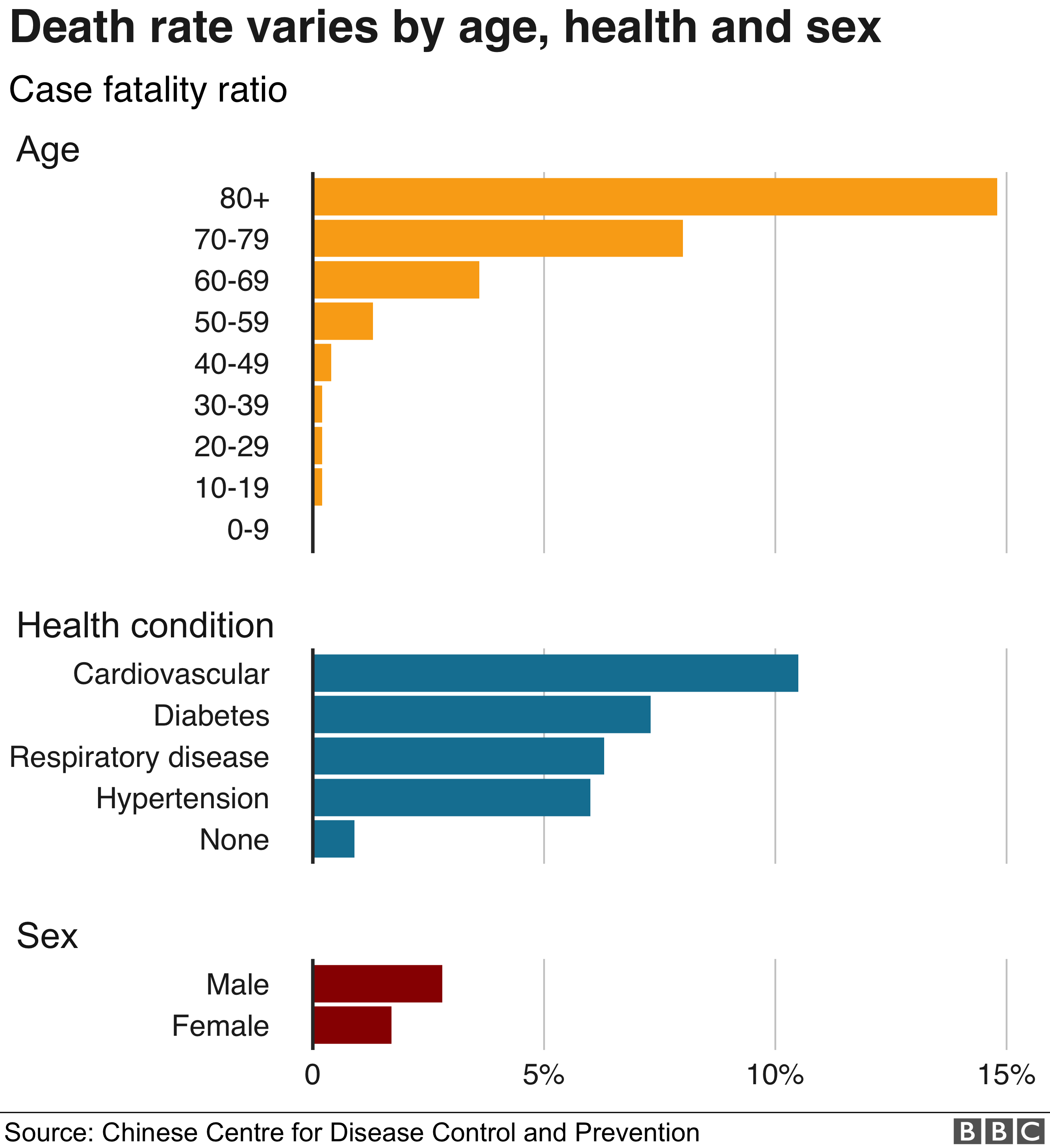
The WHO says the virus appears to particularly affect those over 60, and people already ill.
In the first large analysis of more than 44,000 cases from China, the death rate was 10 times higher in the very elderly compared to the middle-aged.
Most patients have only mild symptoms and the death rate appears to be between 2% and 5%, the WHO said.
By comparison, seasonal flu has an average mortality rate of about 0.1%, but is highly infectious – with up to 400,000 people dying from it each year.
Other strains of coronavirus, such as Severe Acute Respiratory Syndrome (Sars) and Middle East Respiratory Syndrome (Mers), have much higher death rates than Covid-19.
The enterprise collaboration industry in China is forecast to achieve a compound annual growth rate of 12.4 per cent over five years to reach US$7 billion by 2024
Tencent has been accused of using its market dominance with WeChat to stifle competition. Photo: Reuters
Tencent’s super app WeChat, with a user base of 1.2 billion people, has blocked links from a ByteDance remote work tool as Chinese tech giants fight for dominance in the burgeoning enterprise collaboration market.
The latest move adds another ByteDance app to WeChat’s blacklist, which already includes Douyin, the Chinese version of TikTok, and its sister platform Xigua Video, amid ongoing accusations that Tencent uses its market dominance to stifle competition.
Feishu, the Chinese version of ByteDance’s productivity tool Lark, said Saturday that users could not open any of its links on WeChat, nor could they share name cards to invite colleagues.
Feishu said WeChat did not provide advance notice of the ban, adding that the move has “significantly affected work efficiency and user experience” at a time when many companies in China have moved their office operations online to limit the spread of coronavirus infections.
Instead, Lark users need to copy the link and open it in a browser instead of opening it directly via WeChat.
Tencent launches new social apps as flagships WeChat and QQ show their age
13 Dec 2019
A WeChat representative declined to comment other than to cite the company’s regulations on external links. The rules, introduced in October 2019, said the platform will punish websites or apps that send links to “mislead or entice users to download or redirect to an external app”. Punishment includes blocking their domain name from opening in WeChat.
Xie Xin, a ByteDance vice president overseeing Feishu, said the app does not support sign-ups using a WeChat account nor does it enable the sharing of documents or messages on the Tencent app.
In addition to blocking the ByteDance app, WeChat also suspended two tech-focused media websites, 36Kr and ITHome, from publishing posts on the platform after they reported the Lark case over the weekend. The relevant articles have also been removed from WeChat.
The WeChat representative said it did not force media to delete their articles. Rather, the media in question have violated WeChat’s rules on multiple occasions.
The enterprise collaboration industry in China, which has received a huge boost from the health crisis, is forecast to achieve a compound annual growth rate of 12.4 per cent over five years to reach nearly 49 billion yuan (US$7 billion) by 2024, according to the Qianzhan Industry Research Institute.
Feishu is a small but fast-emerging player in the sector, jumping 40 places from late January to become the 15th most downloaded business iOS app on Monday. However, it still lags far behind Alibaba’s DingTalk and Tencent’s WeChat Work and Tencent Meeting, which ranked as the top three among business iOS apps in China as of Monday, according to App Annie.
Alibaba is the parent company of the South China Morning Post.Tencent has also blocked apps from other Chinese tech giants. Links from Taobao, Alibaba’s online marketplace, and Haokan, a short video app from Baidu, cannot be accessed on WeChat. In contrast, Tencent allows the sharing of links from JD.com and PDD pages, online marketplaces in which it owns a financial stake.
“Having more than 1 billion users, [WeChat] has a monopolistic position in the market,” said Wang Sixin, a professor at the Communication University of China who specialises in media policy and rules. “Under these circumstances, Tencent has to have legitimate reasons to block other apps, otherwise it’s taking advantage of its dominance to force out smaller rivals.”
In April 2019, a Chinese lawyer sued Tencent under the country’s anti-monopoly law, charging that the company’s actions infringed on his rights as a user. In December, the intellectual property court in Beijing heard the case, with Tencent representatives arguing that WeChat did not prevent users from sharing links and using the app on other platforms, Southern Metropolis Daily reported. The court has not yet reached a verdict.
Besides enterprise collaboration, Tencent and ByteDance are coming up against each other in other markets. Last week Tencent began testing a short video function for WeChat, a sector dominated by TikTok and Douyin, while ByteDance plans to
NEW DELHI (Reuters) – As deadly clashes between Hindu and Muslim groups rocked parts of the Indian capital Delhi this week, the family of a young Hindu woman living in a Muslim-majority area was forced to cancel her wedding.
Dressed in her wedding finery, her hands laced maroon with henna and her skin cleansed with turmeric, 23-year-old Savitri Prasad said she was weeping in her home as violent mobs battled outside on Tuesday, which was to have been her wedding day.
But Savitri’s father then organised the wedding for the following day, saying his Muslim neighbours were family and he was comforted by their presence.
“My Muslim brothers are protecting me today,” Savitri told a Reuters team that visited the house on the day of the ceremony, breaking down again as her family and neighbours comforted her.
The rituals took place at Savitri’s home, a small brick building in a narrow alley in the Chand Bagh district. Steps away, the main street looked like a war zone, with cars and shops vandalised, a Muslim shrine torched and the area littered with rocks used in pitched battles between mobs on both sides.
At least 32 people have been killed in the fighting in Chand Bagh and nearby areas of the capital this week, and hundreds of Hindus and Muslims have been injured in the worst sectarian riots in the Indian capital in decades.
“We went to the terrace and just saw smoke and more smoke,” Bhoday Prasad, Savitri’s father, said of the scene on Monday and Tuesday. “It is terrifying. We just want peace.”
Bhoday Prasad said he has lived in the area for years alongside Muslims without any trouble.
“We don’t know who the people behind the violence are, but they are not my neighbours. There is no enmity between Hindus and Muslims here.”
On Monday evening, the day Savitri was to have henna applied on her hands in a pre-wedding ritual, violence had already spiralled out of control.
“We could hear a lot of commotion outside, but I had the henna applied, hoping things would be better next day,” she said. Instead, they got worse.
Her father told the groom and his family it was too dangerous to come to the house.
“Our heart pains for her, who would want their daughter to be sitting home crying when she is supposed to be happy?” said Sameena Begum, one of the Muslim neighbours.
Violence ebbed on Wednesday, but markets remained shut and residents stayed indoors, fearful of further clashes. Savitri’s father said he decided to organise a scaled-down ceremony.
“Hindu or Muslim, we are all humans and we are all terrified of the violence,” said Savitri’s cousin Pooja, as she helped the bride dress for the ceremony. “This fight was not about religion, but it has been made so.”
Muslim neighbours gathered to offer blessings as the groom arrived and the wedding rituals took place, with a Hindu priest reciting holy verses and the groom and bride taking the rounds of a small pyre set up inside the house.
“We live peacefully with our Hindu brothers,” said Aamir Malik, who was standing guard with several other men outside the home. “We are everything for them. It’s been like that. We are here for them.”
Following an exchange of garlands, Savitri, her husband and his family were escorted out of the alleys by her family and neighbours.
“Today, none of our relatives could attend my daughter’s wedding,” said Bhoday Prasad. “But our Muslim neighbours are here. They are our family.”
Around two thirds of the total number of flights scheduled every day in February were cancelled, placing huge financial pressure on airlines and airports
China’s aviation industry has also been affected by a series of restrictions by other countries and airlines, with British Airways extending its suspension until mid-April
The cancellation of around 10,000 flights a day, or around two thirds of the total number of flights scheduled every day in February, has placed huge financial pressure on airlines and airports. Photo: Kyodo
A one-way air ticket from the coastal economic hub of Shanghai to the inland municipality of Chongqing, a journey of over 1,400km (870 miles), now costs less than a cup of coffee, with Chinese airlines slashing prices in a bid to boost weak domestic demand amid the coronavirus outbreak.
The cancellation of around 10,000 flights a day, or around two thirds of the total number of flights scheduled every day in February, has placed huge financial pressure on airlines and airports.
The Civil Aviation Administration of China said in a notice on Tuesday that flights should resume gradually as part of the country’s efforts to return economic and social life back to normal, but passengers are still reluctant to fly with the deadly outbreak still not fully under control.
The one-way flight from Shanghai to Chongqing is being offered for just 29 yuan (US$4.10) by China’s biggest low-cost carrier, Spring Airlines, as a special offer for its frequent flyer club members, while a tall caffe latte at Starbucks in China costs 32 yuan (US$4.5).
Many Chinese carriers do receive subsidies for operating key domestic routes, so this also skews the economics as well Luya You
A one-way ticket from Shanghai to Harbin, the capital of the northern Heilongjiang province, a distance of over 1,600km (994 miles), costs just 69 yuan (US$9.80).
Shenzhen Airlines, a division of state-owned carrier Air China, is also running special offers to Chongqing, with a one-way ticket for the 1000km (621 miles) journey from Shenzhen costing just 100 yuan (US$14), around 5 per cent of the standard price of 1,940 yuan (US$276).
Chengdu Airlines, a unit of Sichuan Airlines, which counts China Southern Airlines as a shareholder, is also offering cheap one-way flights from Shenzhen to Chengdu, a distance of over 1,300km (808 miles), for just 100 yuan.
“Considering lower average costs of operating in mainland China, carriers could potentially offer deeper discounts while making slim profits or just breaking even,” said Luya You, an aviation analyst with Bank of Communication International. “As outbreak numbers stabilise or even decline, carriers will likely adjust their fares as well, so these low fares will not last if the situation quickly turns for the better.
“Many Chinese carriers do receive subsidies for operating key domestic routes, so this also skews the economics as well. If it is a key route, for example, the carrier may choose to continue operating regardless of fares or loads as the route constitutes a major link in the domestic network infrastructure.”
China’s aviation authority confirmed earlier this month that between January 25 and February 14, which included the Lunar New Year holiday, the average daily passenger traffic in China was just 470,000, representing a 75 per cent drop from the same period last year.
China’s aviation industry has also been affected by a series of restrictions by other countries and airlines, with British Airways last week extending its suspension of flights to China until after the Easter holiday in mid-April following travel advice from the British government.
The novel coronavirus, which causes the disease officially named Covid-19, has infected more than 78,000 people and killed 2,700 in China. In recent days, South Korea, Italy and Iran have all reported a surge in new cases, raising fears over the spread of the coronavirus.
“The flight suspensions will track the outbreaks, but not likely lead them. If there are more outbreaks, expect more flight suspensions,” said Andrew Charlton, managing director of Aviation Advocacy.
MANILA (Reuters) – The Philippines on Tuesday allowed Filipino workers to travel to Hong Kong and Macau, relaxing the travel ban it imposed on China and its special administrative regions to control the spread of the coronavirus.
The Philippines announced its decision before Hong Kong reported that a Filipina domestic helper became its 61st case of coronavirus in the country.
There are more than 180,000 Filipinos in Hong Kong, many working as helpers, according to the Philippines Labour Ministry.
The Philippines had imposed a travel ban on China and its special administrative regions Hong Kong and Macau. It later included Taiwan in the ban, but lifted it a few days after.
There was no immediate comment from Philippine officials on how the latest development in Hong Kong will affect its decision to relax its travel restriction.
The Philippines also said it would allow foreign spouses or children of Filipinos and holders of diplomatic visas travelling from China, Macau and Hong Kong to enter the country but they will be subjected to a 14-day quarantine.
Initially, only Filipinos and holders of permanent resident visas travelling from these areas were allowed entry.
Recruiters have appealed to the government to exempt Filipino workers from the travel ban because many of them are breadwinners. They could also lose their visas if they failed to report for work on time, the Society of Hong Kong Accredited Recruiters of the Philippines has said.
In 2019, Filipino workers in Hong Kong sent home $801 million in foreign exchange remittances, central bank data showed.
Filipinos leaving for Hong Kong and Macau for study and employment will be required to sign a declaration that they know the risks of going there, health officials said.
The Philippine government also said it will repatriate Filipino crew and passengers from the quarantined cruise ship Diamond Princess who wish to come home.
The cruise ship, owned by Carnival Corp and carrying some 3,700 passengers and crew, has been quarantined in Yokohama since Feb. 3, after a man who disembarked in Hong Kong before it travelled to Japan was diagnosed with the virus.
The Philippine Foreign Ministry said 35 of the 538 Filipinos onboard had tested positive for the coronavirus, including the eight new cases, who are all crew members.
In the Philippines, there have been three confirmed cases of coronavirus, including one death.
Authorities say a foreigner tested positive without any symptoms and has been isolated in hospital in stable condition
WHO is racing to equip laboratories so they can test for the virus and avert an outbreak on the continent, which has close ties with China
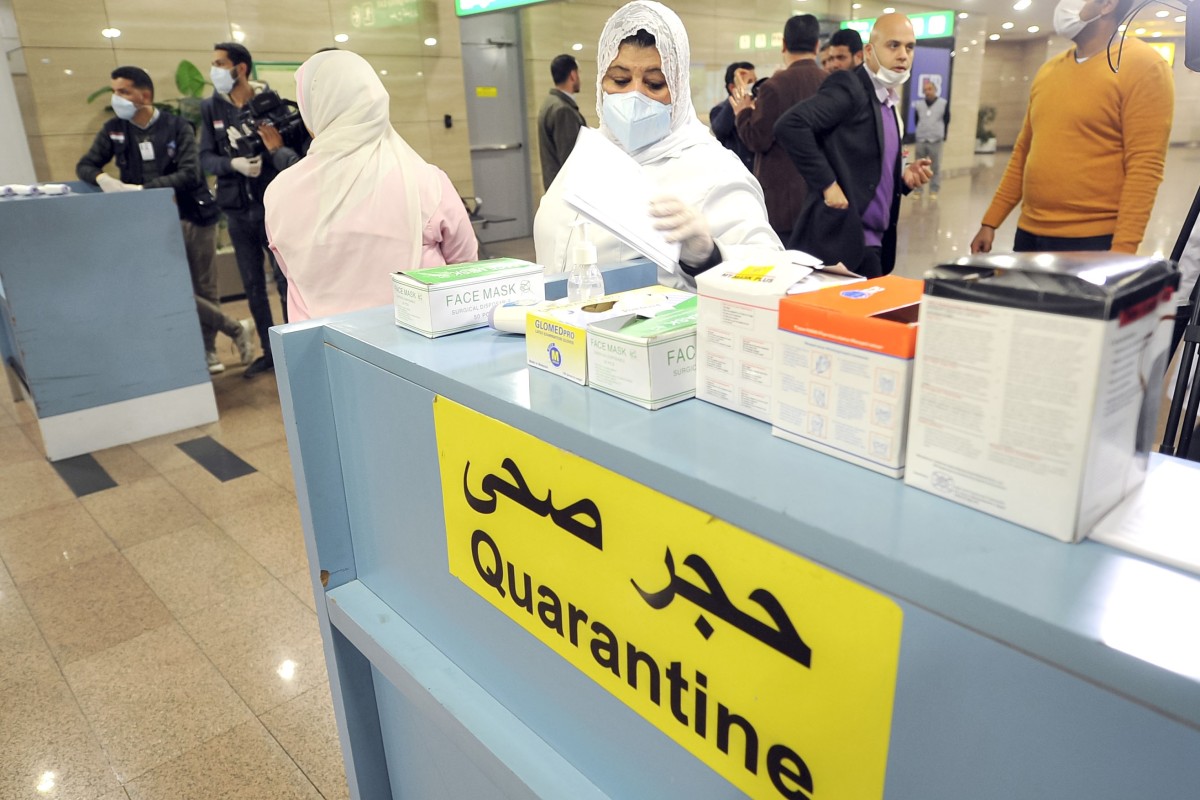
Egyptian quarantine officers prepare to screen travellers arriving at Cairo’s airport. The country has reported its first coronavirus case. Photo: AFP
Africa has reported its first case of the new coronavirus that has so far claimed more than 1,600 lives, with Egypt’s health ministry confirming that a foreigner had tested positive there.
Health experts and African leaders have expressed concern that poorer countries may struggle to cope if the virus spread to the continent. Fears for nations with weaker health systems prompted the World Health Organisation to declare the outbreak of the virus – which originated in China – a global public health emergency in January.
Its director general Tedros Adhanom Ghebreyesus last week said the WHO was racing to equip laboratories in vulnerable African countries with the “capacity to rapidly diagnose cases” to avert an outbreak.
The WHO and Egypt’s health ministry on Friday confirmed the country’s first case was a foreign national who had been isolated in hospital and was in stable condition. Health ministry spokesman Khaled Megahed said the patient had tested positive for the virus without any symptoms, and the WHO had been informed and measures taken to limit its spread.
The WHO said its Egypt office was working closely with health officials in the North African nation, taking “outbreak investigation and response actions”.
The country’s Eastern Mediterranean neighbour, the United Arab Emirates, had reported eight cases, the WHO said.
The Chinese medical workers on the front line of the coronavirus fight in Wuhan
The virus, which causes a disease known as Covid-19, has infected more than 68,000 people since the outbreak began in the Chinese city of Wuhan in December, and it has spread to more than 20 countries.
The first case in Africa comes as countries on the continent have stepped up screening at border checkpoints to prevent the spread of the pneumonia-like illness. Many countries have imposed restrictions on travel to and from mainland China, while six out of eight African airlines with Chinese routes have halted flights until the virus is contained, including EgyptAir.
Egypt has suspended all flights to and from China until the end of the month and has evacuated more than 300 Egyptians from Wuhan.
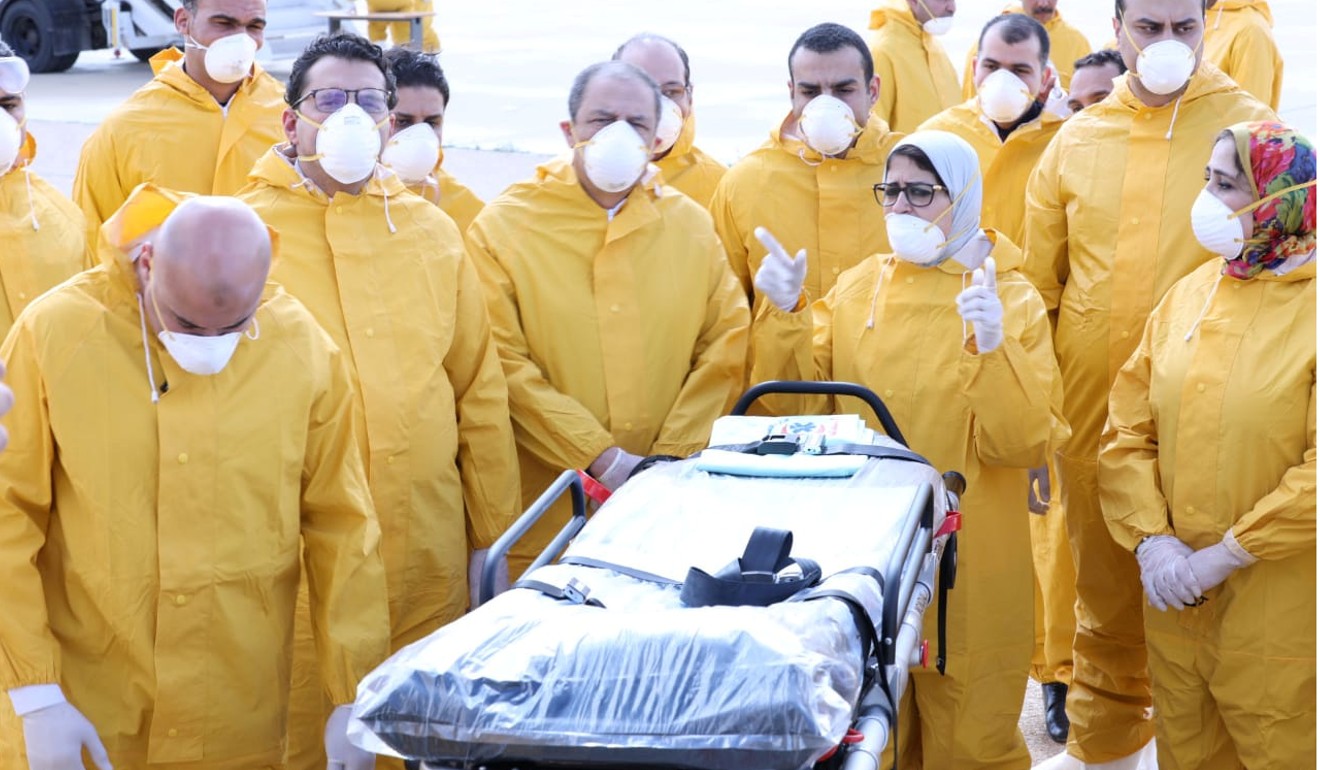
Egyptian Health Minister Hala Zayed waits with a medical team at Alexandria’s airport to meet passengers evacuated from Wuhan on February 3. Photo: Reuters
John Nkengasong, director of the Africa Centres for Disease Control and Prevention (Africa CDC), said the Addis Ababa-based organisation was “on standby to work closely with the government of Egypt to rapidly contain the spread of the virus”.
How to lower the risk of catching a virus while on a flight
15 Feb 2020
African nations are also equipping laboratories so that they can test for the virus, with the help of the WHO and others.
Until about two weeks ago, there were only two laboratories in the continent of 54 countries – in Senegal and South Africa – with the reagents needed to test for the coronavirus.
That meant dozens of countries that had quarantined suspected patients were sending samples to South Africa or Senegal to be tested. Since then, four more labs have been equipped – in Ghana, Nigeria, Madagascar and Sierra Leone – to test for the virus, according to the WHO.
The global health body has also sent testing kits to Cameroon, Ivory Coast, the Democratic Republic of Congo, Egypt, Ethiopia, Gabon, Ghana, Kenya, Morocco, Nigeria, Tunisia, Uganda and Zambia.
Tedros on Monday said the WHO’s immediate “objective remains containment. We call on all countries to use the window of opportunity we have to prevent a bigger fire”.
The Africa CDC has trained health workers from 12 countries in early detection and prevention in Senegal, using testing kits sent by the WHO. Further training would take place in South Africa next week, Tedros said.
“Without vital diagnostic capacity, countries are in the dark as to how far and wide the virus has spread – and who has coronavirus or another disease with similar symptoms,” Tedros said.
Coronavirus: desperate times drive some Chinese to take desperate measures
15 Feb 2020
Many countries in Africa are still reeling from the 2014-16 outbreak of Ebola, which killed 11,325 people and infected 28,600. The deadly virus is yet to be contained, with new cases reported in the Democratic Republic of Congo last week.
China disinfects entire cities to fight coronavirus outbreak, some twice a day
There are concerns that Africa’s close links with China put it at high risk for the spread of the new coronavirus. Africa has become home to millions of Chinese since Beijing started looking to the continent for raw materials for its industries and markets for its products, and China has been Africa’s largest trading partner since 2009, after it overtook the United States.
Ethiopian Airlines refuses to bow to pressure to halt flights to China
14 Feb 2020
China is also a major trading partner of Egypt, with two-way trade standing at US$13.8 billion in 2018, according to the China Africa Research Initiative at the Johns Hopkins University School of Advanced International Studies. Beijing is pouring billions of dollars into infrastructure projects in the country, including building a business district in its new administrative capital, 50km east of Cairo. Chinese firms are also investing billions of dollars in the Egyptian Suez Canal Economic Zone, a project under Beijing’s sprawling trade and infrastructure scheme the Belt and Road Initiative.












 CHINDIA ALERT: You'll be living in their world, very soon