04/05/2020
BEIJING (Reuters) – Tang Yue, a 27-year-old teacher from the city of Guilin in southwest China, steam-presses a blue dress and takes dozens of photographs before picking one to clinch her 200th online sale.
For a growing number of Chinese like Tang, hit by job losses, furloughs and salary cuts, the consumer economy has begun to spin in reverse. They are no longer buying – they are selling.
Instead of emerging from the coronavirus epidemic and returning to the shopping habits that helped drive the world’s second-largest economy, many young people are offloading possessions and embracing a new-found ethic for hard times: less is more.
With Tang’s monthly salary of about 7,000 yuan ($988), the self-described shopaholic said she has bought everything from Chanel lipsticks to Apple’s (AAPL.O) latest iPad in the past three years.
But the adrenaline rush that comes with binge-shopping is gone, said Tang, whose wages have been slashed with the suspension of all the classes on tourism management she usually teaches.
“The coronavirus outbreak was a wake-up call,” she said. “When I saw the collapse of so many industries, I realised I had no financial buffer should something unfortunate happen to me.”
There is no guarantee that the nascent minimalist trend will continue once the coronavirus crisis is fully over, but if it does, it could seriously damage China’s consumer sector and hurt thousands of businesses from big retailers to street-corner restaurants, gyms and beauty salons.
To be sure, there are signs that pent-up demand will drive a rush of spending as authorities reopen malls, leisure venues and tourist spots. In South Korea, the first major economy outside of China to be hit by the virus, people thronged malls this weekend to go “revenge shopping” to make up for time lost in lockdown.,
There are some signs that a similar trend will take hold in China, where some upscale malls are starting to get busy, although luxury firm Kering SA (PRTP.PA) – which owns Gucci, Balenciaga and other fashion brands – has said it is hard to predict how or when sales in China might come back.
A recent McKinsey & Co survey showed that between 20% and 30% of respondents in China said they would continue to be cautious, either consuming slightly less or, in a few cases, a lot less.
“The lockdown provided consumers with a lot of time and reasons to reflect and consider what is important to them,” said Mark Tanner, managing director at Shanghai-based research and marketing consultancy China Skinny.
“With much more of their days spent in their homes, consumers also have more time and reasons to sort through things they don’t feel they need – so they’re not living around clutter that is common in many apartments.”
#DITCHYOURSTUFF
Tang made a spreadsheet to keep track of her nearly 200 cosmetic products and hundreds of pieces of clothing. She then marked a few essentials in red that she wanted to keep. In the past two months, she has sold items worth nearly 5,000 yuan on second-hand marketplaces online.
Bargain-hunting online has become a new habit for some Chinese as the stigma that once hung over second-hand goods has begun to fade.
Idle Fish, China’s biggest online site for used goods, hit a record daily transaction volume in March, its parent company Alibaba (BABA.N) told Reuters.
Government researchers predict that transactions for used goods in China may top 1 trillion yuan ($141 billion) this year.
Posts with the hashtag #ditchyourstuff have trended on Chinese social media in recent weeks, garnering more than 140 million views.
Jiang Zhuoyue, 31, who works as an accountant at a traditional Chinese medicine company in Beijing – one of the few industries that may benefit from the health crisis – has also decided to turn to a simpler life.
“I used to shop too much and could be easily lured by discounts,” said Jiang. “One time Sephora offered 20% off for all goods, I then bought a lot of cosmetics because I feel I’m losing money if I don’t.”
Jiang, the mother of a 9-month-old baby, said she recently sold nearly 50 pieces of used clothing as the lockdown gave her the opportunity to clear things out. “It also offered me a chance to rethink what’s essential to me, and the importance of doing financial planning,” she said.
Eleven Li, a 23-year-old flight attendant, said she used to spend her money on all manner of celebrity-endorsed facial masks, snacks, concert tickets and social media activity, but now has no way to fund her spending.
“I just found a new job late last year, then COVID-19 came along, and I haven’t been able to fly once since I joined, and I’ve gotten no salary at all,” said Li, who said she was trying to sell her Kindle.
Some are even selling their pets, as they consider leaving big cities like Beijing and Shanghai where the high cost of living is finally catching up with them.
NO RETURN TO OLD WAYS?
As the coronavirus comes under control in China, the government is gradually releasing cities from lockdown, easing transport restrictions and encouraging consumers to venture back into malls and restaurants by giving out billions-worth of cash vouchers, worth between 10 yuan and 100 yuan.
But many people say they are still worried about job security and potential wage cuts because of the struggling economy. Nationwide retail sales have plunged every month so far this year.
Xu Chi, a Shanghai-based senior strategic analyst with Zhongtai Securities, said some Chinese consumers may prove the ‘21 Day Habit Theory,’ a popular scientific proposition that it only takes that long to establish new habits.
“We believe people’s spending patterns follow the well-known theory, which means most people in China, having been cooped-up at home for more than a month and not having binge-shopped, may break the habit and not return to their old ways,” Xu said.
Jiang said she was determined not to return to her free-spending ways and planned to cook more at home.
“I’ll turn to cheaper goods for some luxury brands,” she said. “I’ll choose Huawei’s smartphone, because (Apple’s) iPhone has too much brand premium.”
Tang, who has recently used 100 yuan of shopping coupons to stock up on food, is going to hold the purse strings even tighter.
“I’ve set my monthly budget at 1,000 yuan,” she said. “Including one – and just one – bottle of bubble tea.”
Source: Reuters
Posted in #ditchyourstuff, 1,000 yuan, 200th, accountant, adrenaline, Alibaba (BABA.N), apartments, Apple’s, Apple’s (AAPL.O), authorities, ‘21 Day Habit Theory,’, “revenge shopping”, Balenciaga, Bargain-hunting, beauty salons, Beijing, big cities, big retailers, biggest online site, binge-shopping, blue dress, bottle, bought, brand premium, bubble tea, businesses, buying, cash vouchers, cautious, celebrity-endorsed, Chanel, China, China Skinny, China's, China’s, Chinese, Chinese social media, City, classes, collapse, Company, concert tickets, Consumer economy, consumer sector, coronavirus crisis, coronavirus epidemic, coronavirus outbreak, cosmetic products, cost of living, COVID-19, daily, damage, Dozens, drive, economy, embracing, emerging, essentials, establish, ethic, every month, everything, facial masks, fashion brands, financial buffe, Flight attendant, Food, furloughs, garnering, Government, growing, guarantee, Guilin, gyms, hard times, hashtag, health crisis, helped, high, hit by, how or when, Huawei's, hurt, Idle Fish, industries, iPad, IPhone, job losses, Job security, Kering SA (PRTP.PA), Kindle, leisure venues, less is more, lipsticks, lockdown, luxury firm, Major, make up, malls, March, McKinsey & Co, minimalist, monthly budget, monthly salary, nascent, nationwide, new-found, number, offloading, online sale, outside, owns, parent company, pent-up demand, People, pets, photographs, picking, pieces of clothing, plunged, popular, possessions, posts, predict, proposition, prove, purse strings, realised, recent, record, red, reopen, research and marketing consultancy, researchers, respondents, restaurants, retail sales, returning, Reuters, reverse, rush, salary cuts, scientific, second-hand goods, second-hand marketplaces, self-described, selling, senior, Shanghai, Shanghai-based, shopaholic, shopping coupons, shopping habits, slashed, smartphone, snacks, so far, social media activity, South Korea, Southwest China, spenders, spending, spreadsheet, sputters, steam-presses, stigma, strategic analyst, street-corner, survey, suspension, teacher, teaches, this year, Thousands, thronged, time lost, to clinch, to spin, tourism management, tourist spots, Traditional Chinese medicine, transaction, trend, trended, trillion yuan, Uncategorized, unfortunate, used goods, views, Virus, volume, wage cuts, wages, weekend, weeks, world’s second-largest economy, young, yuan |
Leave a Comment »
26/04/2020
- City at centre of outbreak finally able to declare itself clear of disease after months in lockdown and thousands of deaths
- Risk of infection remains, however, with some patients testing positive for coronavirus that causes disease without showing symptoms
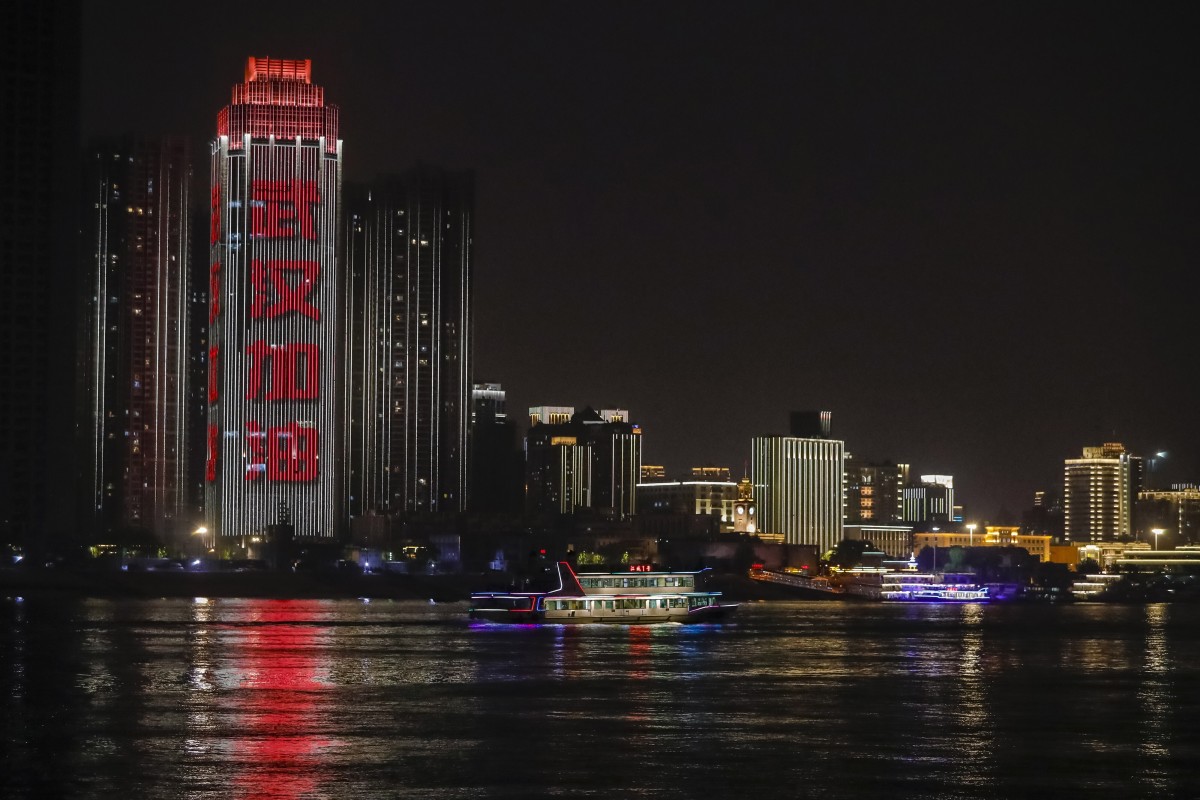
Ferries and other public transport services resumed in Wuhan last week. Photo: Xinhua
The city of Wuhan, the initial epicentre of the coronavirus pandemic, no longer has any Covid-19 patients in hospital after the last 12 were discharged on Sunday.
Their release ended a four-month nightmare for the city, where the disease was first detected in December. The number of patients being treated for Covid-19, the disease caused by a new coronavirus, peaked on February 18 at 38,020 – nearly 10,000 of whom were in severe or critical condition.
“With the joint efforts of Wuhan and the national medical aid given to Hubei province, all cases of Covid-19 in Wuhan were cleared as of April 26,” Mi Feng, a spokesman for the National Health Commission said on Sunday afternoon.
The announcement came only one day after the city discharged the last patient who had been in a severe condition. That patient also was the last severe case in Hubei province.
The last patient discharged from Wuhan Chest Hospital, a 77-year-old man surnamed Ding, twice tested negative for Sars-CoV-2, the virus that causes Covid-19, and was released at noon on Sunday.
“I missed my family so much!” Ding told Changjing Daily.
Another unidentified patient exclaimed as he left the hospital: “The air outside is so fresh! The weather is so good today!”
Wuhan faced a long journey to bring its patient count down to zero.
The city of 11 million, the capital of Hubei province and a transport hub for central China, was put under a strict lockdown on January 23 that barred anyone from entering or exiting the city without official approval for 76 days until it was officially lifted on April 8.
Coronavirus: Wuhan, Los Angeles officials discuss getting back to work after lockdown
22 Apr 2020
Residents were ordered to stay in their apartments as the city stopped public transport and banned private cars from city streets. As the epidemic worsened, more than 42,000 medical staff from across the country were sent to the city and to Hubei province to help ease the burden on the local health care system.
Wuhan was the hardest hit city in China, accounting for 50,333 of the 82,827 locally transmitted Covid-19 cases recorded in China. More than 4,600 died in the country from the disease.
On March 13, the city reported for the first time that there were no new suspected cases of the infection, and five days later there were no confirmed cases.
The number of discharged patients bottomed out at 39.1 per cent at the end of February, gradually climbing to 92.2 per cent by last Thursday.
“Having the patients in the hospital cleared on April 26 marks a major achievement for the city’s Covid-19 treatment,” the Wuhan Health Commission said in a statement.
However, having no severe cases in hospital does not mean all the discharged patients will require no further treatment as they may still need further care.
“Clearing all the severe cases marks a decisive victory for the battle to safeguard Wuhan,” health minister Ma Xiaowei told state broadcaster China Central Television on Saturday.
“Some patients who have other conditions are being treated in specialised hospitals. It has been properly arranged.”
Coronavirus: Chinese writer hit by nationalist backlash over diary about Wuhan lockdown
Ten patients aged between 42 and 85 who have been declared coronavirus-free are still in intensive care at the city’s Tongji Hospital where they are being treated for kidney problems and other complications arising from Covid-19. Some still need ventilators to help them breathe.
These 10 patients are under 24-hour care, with 190 nurses on four-hour rotations. There are other patients in a similar condition in two other hospitals in Wuhan, according to the Hubei Broadcasting and Television Network.
However, the discharge of the last batch of Covid-19 patients does not mean that the risk of infection is gone.
The city reported 20 new cases of people testing positive for Sars-CoV-2, the official name for the coronavirus that causes the disease, but who do not yet show symptoms.
There are 535 such carriers under medical observation. Past data shows some of these asymptomatic carriers will develop symptoms, and so will be counted as Covid-19 patients under China’s diagnosis and treatment plan.
China’s coronavirus infection curve has flattened out with about 694 imported cases of Covid-19 on top of about 800 locally transmitted ones now under treatment.
The national health commission spokesman warned that people still need to be on high alert as the virus is continuing to spread around the globe, with no sign yet of a slowdown.
“[We] must not drop our guard and loosen up. [We] must discover cases in time and deal with them quickly,” Mi said, citing the continued pressure from cases imported by people returning from overseas.
“The next step will be to implement the requirements of the central government and continue to guard against imported cases and a rebound of domestic transmitted cases.”
Source: SCMP
Posted in 10, 10,000, 12, 13, 18, 190, 2020, 22, 23, 24-hour, 26th, 76, 8, 800, able, across the country, after, afternoon, against, air, all cases, announcement, another, Anyone, apartments, approval, April, around the globe, arranged, asymptomatic, banned, barred, bottomed out, breathe, burden, capital, care, carriers, causes, Central China, Central government, centre, Changjing Daily, China Central Television, City, city streets, clear, climbing, complications, condition, conditions, confirmed cases, continuing, coronavirus, Coronavirus pandemic, Country, COVID-19, COVID-19 cases, critical, curve, days, deaths, December, declared, detected, develop, diagnosis and treatment plan, died, discharged, discover, discuss, Disease, domestic, drop, ease, end, ended, entering, epicentre, epidemic, exclaimed, exiting, Family, February, ferries, finally, first time, five days, flattened, four-hour, four-month, free, fresh, from, getting back, given, good, gradually, high alert, Hospital, hospitals, However, Hubei Broadcasting and Television Network, hubei province, implement, imported cases, infection, initial, intensive care, itself, January, joint efforts, kidney problems, last, last week, later, leave, left, lifted, local health care system, locally transmitted, lockdown, longer, loosen up, Los Angeles, March, medical observation, medical staff, million, missed, months, more than, National Health Commission, national medical aid, nearly, negative, new coronavirus, nightmare, no sign, noon, number, nurses, Official, officially, officials, one day, or, ordered, other, our guard, outbreak, outside, overseas, Past data, patients, peaked, People, positive, pressure, private cars, public transport, public transport services, put under, quickly, rebound, recorded, release, released, remains, requirements, residents, resumed, returning, Risk, rotations, Saturday, sent, severe, showing, slowdown, some, specialised, spokesman, spread, statement, stay, stopped, strict lockdown, struggle, Sunday, suspected cases, symptoms, testing, The National Health Commission, their, Thousands, Thursday, to help, to work, Today, Tongji Hospital, transmitted cases, transport hub, treated, twice, Uncategorized, unidentified, ventilators, warned, weather, whom, without, worsened, Wuhan, Wuhan Chest Hospital, Wuhan Health Commission, yet |
Leave a Comment »
12/04/2020
JOHANNESBURG (Reuters) – African ambassadors in China have written to the country’s foreign minister over what they call discrimination against Africans as the country seeks to prevent a resurgence of the coronavirus.
Several African countries have separately also demanded that China address their concerns that Africans, in particular in the southern city of Guangzhou, are being mistreated and harassed.
Having brought under control the original outbreak centred on the city of Wuhan, China is now concerned about imported cases and is stepping up scrutiny of foreigners coming into the country and tightening border controls. It has denied any discrimination.
In recent days Africans in Guangzhou have reported being ejected from their apartments by their landlords, being tested for coronavirus several times without being given results and being shunned and discriminated against in public. Such complaints have been made in local media, and on social media.
The ambassadors’ note said such “stigmatisation and discrimination” created the false impression that the virus was being spread by Africans.
“The Group of African Ambassadors in Beijing immediately demands the cessation of forceful testing, quarantine and other inhuman treatments meted out to Africans,” it said.
The note was sent to China’s top diplomat, Wang Yi, copying the chair of the African Union, South African President Cyril Ramaphosa and all African foreign ministers.
The Chinese foreign ministry’s International Press Centre did not immediately respond to a request for comment on the note, sent outside of business hours.
The Chinese embassy in South Africa also did not respond.
Foreign affairs official Liu Baochun told a news conference on Sunday that Guangzhou is enforcing anti-virus measures on anyone who enters the city from across the national border, regardless of nationality, race or gender.
The Chinese embassy in Zimbabwe on Saturday dismissed the accusation that Africans were being deliberately targeted.
“It is harmful to sensationalize isolated incidents,” it said in a tweeted statement. “China treats all individuals in the country, Chinese and foreign alike, as equals.”
DISAPPOINTMENT
The ambassadors’ note highlighted a number of reported incidents, including that Africans were being ejected from hotels in the middle of the night, the seizure of passports, and threats of visa revocation, arrest or deportation.
On Saturday, Ghana’s foreign minister of affairs Shirley Ayorkor Botchwey said she had summoned the Chinese ambassador to express her disappointment and demand action.
Kenya’s foreign ministry has also “officially expressed concern”, adding the government is working with Chinese authorities to address the matter.
On Friday, Nigerian legislator Akinola Alabi tweeted a video of a meeting between the leader of Nigeria’s lower house of parliament, Femi Gbajabiamila, and Chinese Ambassador Zhou Pingjian. In it, Gbajabiamila demanded an explanation from the diplomat after showing Zhou a video of a Nigerian complaining about mistreatment in China.
The ambassador said in response to the questions from the house leader that he took the complaints “very seriously” and promised to convey them to the authorities back home.
Source: Reuters
Posted in African, African Ambassadors, African Union, ambassadors, anti-virus measures, apartments, Arrest, “stigmatisation and discrimination”, Beijing, border controls, cessation, chair, China, China’s top diplomat, Chinese embassy, complain, copying, coronavirus, Country, country's, deportation, DISAPPOINTMENT, Discrimination, ejected, enforcing, equals, false, forceful testing, Foreign affairs, foreign minister, foreign ministers, foreign ministry's, Foreigners, gender, Ghana’s, Government, group, Guangzhou, harassed, harmful, hotels, immediately, imported cases, impression, incidents, individuals, inhuman, International Press Centre, isolated, Johannesburg, landlords, local media, meted out, middle, mistreated, national borders, nationality, News conference, Nigerian, night, Official, outbreak, passports, President, quarantine, race, regardless, respond, resurgence, revocation, Saturday, scrutiny, seizure, sensationalize, social media, South Africa, South African, southern city, spread, statement, Sunday, threats, treatments, tweeted, Uncategorized, Virus, Visa, Wang Yi, Wuhan, Zimbabwe |
Leave a Comment »
07/07/2019
NEW DELHI (Reuters) – In this teeming capital city of more than 20 million people, a worsening drought is amplifying the vast inequality between India’s rich and poor.
The politicians, civil servants and corporate lobbyists who live in substantial houses and apartments in central Delhi pay very little to get limitless supplies of piped water – whether for their bathrooms, kitchens or to wash the car, dog, or spray a manicured lawn. They can do all that for as little as $10-$15 a month.
But step into one of the slum areas in the inner city, or a giant disorganized housing estate on the outskirts and there is a daily struggle to get and pay for very limited supplies of water, which is delivered by tanker rather than pipe. And the price is soaring as supplies are fast depleting.
India’s water crisis is far from even-handed – the elite in Delhi and most other parts of the country remain unaffected while the poor scramble for supplies every day. Prime Minister Narendra Modi’s official residence and those of his cabinet are in central Delhi, as are those of most lawmakers.
That may help to explain why it took until this week for Modi to call for a massive water conservation program, the first big initiative by the government despite years of warnings about dry reservoirs and depleted water tables, policy makers and water industry experts said.
Telecom sales representative Amar Nath Shukla, who lives in a giant unauthorized housing sprawl on the south side of Delhi, says he is now paying 700 rupees ($10) for a small tanker to bring him, his wife and three school-age children 2,000 liters of water, their weekly quota.
A year ago, Shukla would buy two of the rusty, oval-shaped tankers a week for 500 rupees each but he cut back to one as the price climbed 40 percent.
“Why should a densely populated settlement get so little of water and why should the sparsely-populated central district of New Delhi receive so much of extra supply?” asked Shukla.
More than 30 other residents Reuters spoke to in his Sangam Vihar district also complained about the quality of water.
“Until last year I was drinking the water sold by a few local suppliers but then I fell ill and the doctor asked me to buy water bottles made by only big, reputed companies,” said Dilip Kumar Kamath, 46, waving a prescription which listed abdominal pain and stomach infection as his ailments.
WATER GANGS
Delhi’s main government district and the army cantonment areas get about 375 liters of water per person per day but residents of Sangam Vihar on average receive only 40 liters for each resident per day. The water comes from boreholes and tankers under the jurisdiction of the Delhi water board, run by the city government.
But residents say some of the boreholes have been taken over by private operators associated with criminal gangs and local politicians. These gangs also have a major role in providing private tankers, which are all illegal, making people liable to price gouging.
And all this when temperatures, and demand, are soaring. Delhi was the second driest it has been in 26 years in June, and recorded its highest ever temperature for the month at 48 degrees Celsius on June 10.
Monsoon rains reached the capital on Thursday, more than a week later than usual, with only a light drizzle.
Most private tanker operators in Delhi either illegally pump out fast depleting ground water or steal the water from government supplies, various government studies show.
In Delhi, nearly half of the supply from the Delhi water board either gets stolen with the connivance of lowly officials or simply seeps out via leaky pipes, several studies show.
The board’s 1,033 tanker fleet is well short of the city’s requirements. Hundreds of private water tankers are operating this summer, though there are no official numbers.
WATER WARS
The water scarcity is even more acute in the Bhalswa Dairy locality of northwestern Delhi, more than 30 km (20 miles) from Sangam Vihar. The water from a couple of community taps and hand pumps are too toxic to use, forcing people to queue up for a government tanker that comes just once a day.
As a result, fights frequently break out when people, mostly can-carrying women and children, sprint towards the arriving tanker. Last year, at least three people were killed in scuffles that broke out over water in Delhi.
“Fights over water supplies have gone up since May and these fights now constitute almost 50% of our daily complaints,” said a police official at the Bhalswa Dairy Police station, who declined to be named.
Some tanker operators have also started selling bottled water, underlining concerns over the quality of water in their tanks and how costs for ordinary people can mount, said the police official.
Nearly 200,000 people living in the Bhalswa area are vulnerable to liver-related disease such as jaundice and hepatitis, said Kamlesh Bharti, president of non-governmental organization Kamakhya Lok Sewa Samiti, which works in the areas of health and education.
The Bhalswa area is next to a big waste landfill, which has contaminated both surface and groundwater in the area.
According to UK-based charity WaterAid, about 163 million people in India, roughly 12 percent of the population, do not have access to clean water close to their homes, the most of any country.
Almost all middle-class residents in the city have either water purifiers at home or they buy big cans of water from Bisleri, India’s top bottled water brand, Coca-Cola Co (KO.N) or PepsiCo Inc (PEP.O).
Bottled water suppliers reported a nearly three-fold jump in sales in India between 2012 and 2017, according to market research company Euromonitor.
India’s dependence on groundwater and the country’s failure to replenish aquifers have exacerbated the crisis, said V.K. Madhavan chief executive of WaterAid.
Both individual households and myriad industries mostly use fresh water and the reuse and recycling of water “is almost an alien concept” in the country, Madhavan said.
Still, Delhi authorities said the plan to build three dams in the upper reaches of the Yamuna river, which passes through the city, would help Delhi overcome the shortage.
It will take 3-4 years to construct them, said S. K. Haldar, a top official of the Central Water Commission.
But issues such as land acquisition, resettlement and environmental clearances could make such an aggressive timetable untenable, Madhavan said.
Source: Reuters
Posted in aggressive timetable, apartments, army cantonment, bathrooms, Bhalswa Dairy locality, Bhalswa Dairy Police station, big cans of water, Bisleri, boreholes, build three dams, can-carrying women, Central Water Commission, city government, civil servants, Coca-Cola Co, contaminated, corporate lobbyists, criminal gangs, daily struggle, Delhi water board, depleted water tables, dogs, drought-hit Delhi, dry reservoirs, environmental clearances, Euromonitor, Groundwater, haves get limitless water, housing estate, inner city, Kamakhya Lok Sewa Samiti, kitchens, land acquisition, limitless supplies, local politicians, New Delhi, official residence, outskirts, PepsiCo Inc, pipe, piped water, politicians, poor fight for every drop, Prime Minister Narendra Modi, resettlement, scuffles, slum areas, spray a manicured lawn, substantial houses, tanker, Uncategorized, untenable, wash the car, waste landfill, water conservation program, water purifiers, WaterAid |
Leave a Comment »




 CHINDIA ALERT: You'll be living in their world, very soon