Archive for ‘artificial intelligence (AI)’

26/08/2019

Chinese murder suspect ‘caught by AI software that spotted dead person’s face’

  • Police say man from Fujian province was detained while trying to burn body on remote farm after strangling girlfriend
  • Online lender contacted officers after its verification software spotted that the victim’s eyes weren’t moving
Police were tipped off by an online lending company after its software could find no signs of movement in the victim’s eyes. Photo: Simon Song

A man accused of murdering his girlfriend in southeast China was caught after facial recognition software suggested he had tried to scan a dead person’s face to apply for a loan.

Officers in Fujian province said the 29-year-old named Zhang was caught while trying to burn the body on a remote farm, but they had been tipped off by an online lending company after its software could find no signs of movement in the victim’s eyes, Xiamen Evening News reported on Sunday.

Zhang is suspected of strangling his girlfriend with a rope in Xiamen on April 11 after they argued about money and she threatened to leave him. He then allegedly went on the run with the body hidden in the boot of a rented car.

Zhang is also accused of pretending to be the unnamed victim and contacting her employers via her WeChat account to ask for time off work.

Ugandan police spend US$126 million on surveillance system from Huawei
When he arrived in his hometown of Sanming the next day, police said he tried to apply for a loan using an app called Money Station, which uses artificial intelligence to verify the applicants’ identity and asks them to wink to help the process along.

But the facial recognition technology found no signs of eye movement.

Staff at the lender contacted police after a manual check found bruises on the unnamed woman’s face and a thick red mark around her neck.

Its voice recognition software also detected that it was a man, rather than a woman, applying for the loan.

Zhang, whose formal arrest was approved by prosecutors earlier this month, is accused of using the victim’s phone to take 30,000 yuan (US$4,200) from her bank account, and lying to her parents that she was “going away for a few days to relax”.

Although a trial date has yet to be announced, details of the case have shocked many people.

Some Chinese social media users suggested that the plot would be too gruesome or far-fetched for a horror movie and another wrote: “[I] never thought the facial recognition process could be used in this way.”

Source: SCMP

07/08/2019

Xinhua Headlines: China expands Shanghai FTZ for further opening-up, globalization

BEIJING, Aug. 6 (Xinhua) — China on Tuesday announced the expanding of its Shanghai free trade zone (FTZ) in its latest major strategic move for further opening-up.

The addition of the Lingang area is a major strategic decision made by the Communist Party of China Central Committee to further opening up, Vice Commerce Minister Wang Shouwen told a press conference Tuesday.

It also demonstrates China’s clear stand to adhere to all-round opening up in the new era and an important measure taken to actively lead the healthy development of economic globalization, Wang said.

The new Lingang section will match the standard of the most competitive free trade zones worldwide and implement opening-up policies and systems with strong global market competitiveness, according to an overall plan for the new Lingang area of the China (Shanghai) Pilot Free Trade Zone issued by the State Council, or the cabinet.

Lingang, with a start-up area of 119.5 square kilometers, will facilitate overseas investment and capital flows and realize the free flow of goods, according to the plan.

Aerial photo taken on June 27, 2019 shows the Lingang area in Shanghai, east China. (Xinhua/Fang Zhe)

“The new area is not just a simple expansion of the existing free trade zone and a copy of existing policies. It is comprehensive, profound and fundamental institutional innovation and reform,” Chen Yin, executive vice mayor of Shanghai, told the press briefing.

The Shanghai FTZ had an area of 28.78 square kilometers when it was established in September 2013 and expanded to 120.72 square kilometers in December 2014.

Over the past years, the Shanghai FTZ has made remarkable progress in its bold exploration in sectors like investment, trade and finance and contributed precious experience to the all-around deepening of reforms and high-level opening-up, said Wang.

SPECIAL ZONE

The area will be built into a special economic function zone with global influence and competitiveness, to better serve the country’s overall opening-up strategy, the plan says.

“The status as a special economic function zone means that it is not adding more facilitation but moving toward real investment and trade liberalization,” said Shen Yuliang, a researcher with the Institute of World Economics under the Shanghai Academy of Social Sciences.

By 2025, the Lingang area will have a relatively mature institutional system of investment and trade liberalization and facilitation. By 2035, it will be built into a special economic function zone with strong global market influence and competitiveness, becoming an important platform for the country to integrate into economic globalization.

The area, administered like a special economic zone, will establish an institutional system with its focus on investment and trade liberalization and set up an open industrial system with global competitiveness, according to the plan.

Aerial photo taken on June 27, 2019 shows new cars wating for shipment at a port in the Lingang area in Shanghai, east China. (Xinhua/Fang Zhe)

It will strive to become a business cluster for international business, cross-border financial services, frontier technology research and development and cross-border services trade, and speed up the industrial upgrading of existing companies.

The Yangshan comprehensive bonded area will be set up there, and the area will also pilot free capital inflows and outflows and free capital conversion.

Income tax shall be levied at a reduced rate of 15 percent within five years from its establishment for qualified enterprises engaged in manufacturing and R&D in key fields including integrated circuits, artificial intelligence, biomedicine and civil aviation, says the plan.

Shanghai will also set up a fund of 100 billion yuan (14.2 billion U.S. dollars) in five years to support the development of the new area, said Chen.

OPENING-UP, INNOVATION LEADER

The plan says the new area will be granted greater administration power for self-development, self-reform and self-innovation, and regularly promote its experience to spearhead a new round of reform and opening-up of the Yangtze River Delta.

Apart from serving the Belt and Road Initiative and the Yangtze River Economic Belt, the new area is also designed to promote the coordinated development, reform and opening-up of the Yangtze River Delta, said Wang.

The Lingang area, home to Tesla’s gigafactory, has become a cluster of high-end industries after more than a decade of development, and it now emphasizes the development of key industries like integrated circuits, AI, biomedicine and civil aviation.

Aerial photo taken on July 25, 2018 shows Phase IV of the Yangshan Deep Water Port of east China’s Shanghai. (Xinhua/Ding Ting)

China’s economy faces complicated external situations and to improve industrial competitiveness and move up the value chain, the boost of scientific and technological innovation capacity is the only way, said Yin Chen, secretary general of the Shanghai Free Trade Zone Comprehensive Research Institute with Fudan University.

With more openness, the new area can boost Shanghai’s high-end resources allocation ability and better represent the country to take part in global cooperation and competition, said Yin.

BOON FOR BUSINESSES

The addition of the new area to the FTZ is a boon for both domestic and foreign businesses.

“The new tax policy support will help speed up the commercialization of autonomous driving,”said Xue Jiancong, vice president of TuSimple, an AI company registered in Lingang that received the country’s first open road testing license for trucks.

“We hope that the new policies will help promote the free flow of auto parts,”said Song Feng, president of Caterpillar Remanufacturing Services (Shanghai) Co., Ltd., citing current restrictions on imports of old machinery parts.

Yu Bo, a tax partner at accounting firm PwC, said China has been rolling out institutional reforms over the past years to allow domestic institutions in alignment with international standards.

China, among the top three investment destinations with the biggest development potential for business executives worldwide in an PwC survey, should continue to improve the business environment for foreign investment and conduct more institutional reforms to promote the higher-level opening-up, said Yu.

Source: Xinhua

06/07/2019

Shanghai aims to have full 5G coverage by 2020

SHANGHAI, July 6 (Xinhua) — Shanghai will realize full 5G coverage by 2020, said a guideline for promoting 5G network coverage and application over the next three years released by the municipal government on Friday.

According to the guideline, 10,000 5G base stations will be built to cover the whole of downtown and main suburban areas in Shanghai by the end of 2019.

By 2020, the city will have full 5G coverage throughout the city with 20,000 5G base stations. A total of 20 billion yuan (about 2.9 billion U.S. dollars) will be invested in the area.

By 2021, Shanghai will have 5G related industries worth 100 billion yuan and 100 innovative companies in 5G application industries. The city will add 10,000 more base stations and 10 billion yuan investment based on 2020 numbers.

Shanghai will roll out a three-year action plan to promote 5G in key industries such as manufacturing, transport, medical care, education, leisure and entertainment and the city’s administration.

The city will also push forward innovative application of “5G+4K/8K+AI” in important venues such as China International Import Expo and AI World Conference & Expo, as well as key transport hubs.

Demonstrative regions will be established to promote the in-depth integration of 5G with intellectual manufacturing, industrial internet, big data, artificial intelligence, ultra-high-definition video and industrial control security, according to the guideline.

China is currently testing 5G across all major cities, provinces and regions, including Shanghai. It is forecasted that 28 percent of China’s mobile connections will be running on 5G networks by 2025, accounting for about one-third of all 5G connections globally, according to a report by telecoms lobby group GSMA, which represents the interests of 750 mobile operators.

Source: Xinhua
10/06/2019

China’s massive military spending is creating a ripple effect across the Asia-Pacific region

  • With a defence budget second only to the US, China is amassing a navy that can circle the globe and developing state-of-the-art autonomous drones
  • The build-up is motivating surrounding countries to bolster their own armed forces, even if some big-ticket military equipment is of dubious necessity
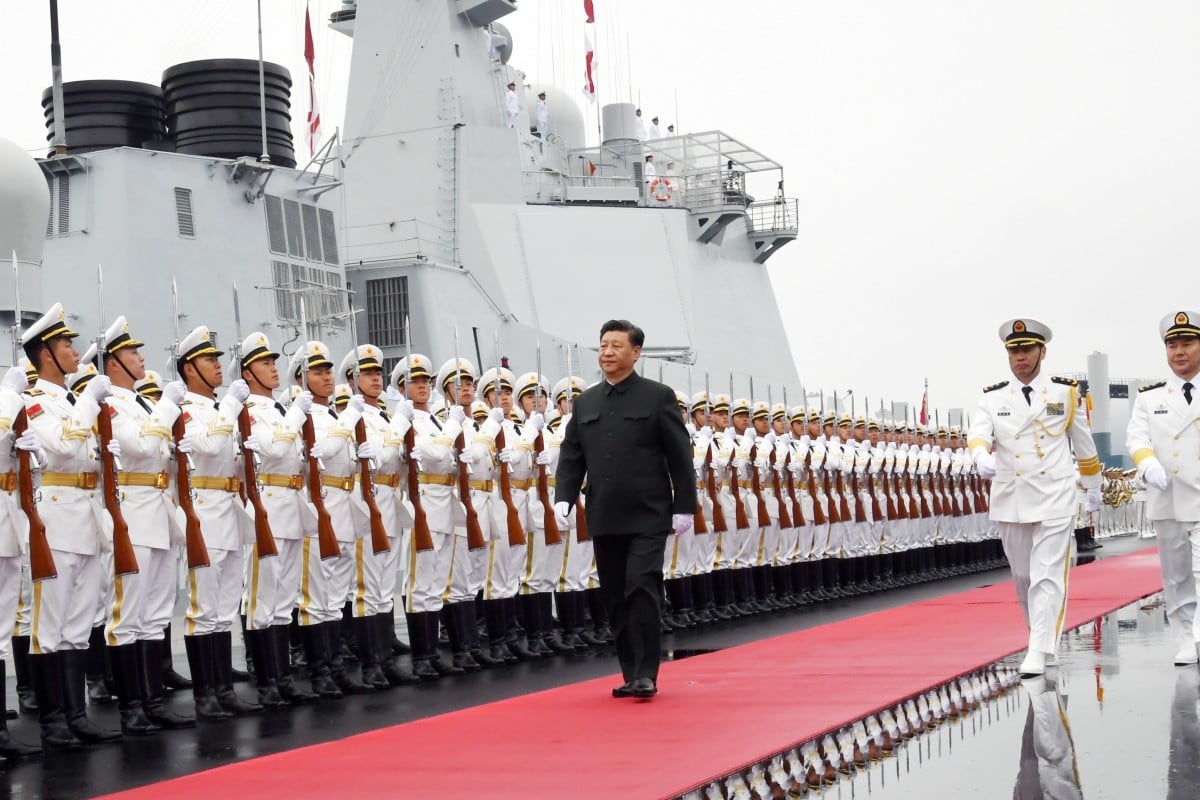
Chinese President Xi Jinping reviews an honour guards before a naval parade in Qingdao. Photo: Xinhua
The Asia-Pacific region is one of the fastest-growing markets for arms dealers, with economic growth, territorial disputes and long-sought military modernisation propelling a 52 per cent increase in defence spending over the last decade to US$392 billion in 2018, according to the Stockholm International Peace Research Institute.
The region accounts for more than one-fifth of the global defence budget and is expected to grow. That was underscored last week by news of 
Taiwan

’s bid to strike a

US$2 billion deal

to purchase US tanks and missiles.

Taiwanese Soldiers on a CM11 battle tank, jointly developed with US arms manufacturer General Dynamics. Photo: EPA
The biggest driver in arms purchases, however, is 
China

– responsible for 64 per cent of military

spending in the region. With a defence budget that is second only to the

US

, China is amassing a navy that can circle the globe and developing state-of-the-art autonomous drones. The build-up is motivating surrounding countries to bolster their armed forces too – good news for purveyors of submarines, unmanned vehicles and warplanes.

It is no coincidence that the recent 
Shangri-La Dialogue

in

Singapore

, a security conference attended by

defence

chiefs, was sponsored by military contractors including Raytheon,

Lockheed Martin

and

BAE Systems

.

Opinion: How the Shangri-La Dialogue turned into a diplomatic coup for China

Kelvin Wong, a Singapore-based analyst for Jane’s, a trade publication that has been covering the defence industry for 121 years, has developed a niche in infiltrating China’s opaque defence industry by attending obscure trade shows that are rarely advertised outside the country.

He said the US is eager to train allies in Asia and sell them arms, while also stepping up its “freedom of navigation” naval operations in contested waters in the

South China Sea

and Taiwan Strait. It has lifted a ban on working with

Indonesia

’s special forces over atrocities committed in

East Timor

. And it is considering restarting arms sales to the

Philippines

.

In his speech at the Shangri-La Dialogue, acting US Defence Secretary Patrick Shanahan touted American advancements in technology “critical to deterring and defeating the threats of the future” and said any partner could choose to win access to that technology by joining the US defence network.
Wong said the message was clear: “Buy American.”
Analysts say Chinese soldiers have less training, motivation and lower morale than their Western counterparts. Photo: Reuters
The analyst said there is a growing admission among the Chinese leadership that the

People’s Liberation Army

has an Achilles’ heel: its own personnel.

He said one executive at a Chinese defence firm told him: “The individual Chinese soldier, in terms of morale, training, education and motivation, (cannot match) Western counterparts. So the only way to level up is through the use of unmanned platforms and 
artificial intelligence

.”

To that end, China has developed one of the world’s most sophisticated drone programmes, complete with custom-built weapon systems. By comparison, Wong said,
US drones rely on weapons originally developed for helicopters.
Wong got to see one of the Chinese drones in action two years ago after cultivating a relationship with its builder, the state-owned China Aerospace Science & Technology Corporation. He viewed a demonstration of a 28-foot-long CH-4 drone launching missiles at a target with uncanny ease and precision.
“Everyone knew they had this,” Wong said. “But how effective it was, nobody knew. I could personally vouch they got it down pat.”
China unveils its answer to US Reaper drone – how does it compare?

That is what Bernard Loo Fook Weng, a military expert at Singapore’s S. Rajaratnam School of International Studies, told the author Robert Kaplan for his 2014 book, Asia’s Cauldron, about simmering tensions in the South China Sea.

He was describing the competition for big-ticket military equipment of dubious necessity.

Southeast Asia

is littered with examples of such purchases.

Thailand

owns an aircraft carrier without any aircraft. Indonesia dedicated about one-sixth of its military budget to the purchase of 11

Russian

Su-35 fighter jets. And

Malaysia

splurged on two

French

submarines it could not figure out how to submerge.

“It’s keeping up with the Joneses,” Wong said. “There’s an element of prestige to having these systems.”

Submarines remain one of the more debatable purchases, Wong said. The vessels aren’t ideal for the South China Sea, with its narrow shipping lanes hemmed in by shallow waters and coral reefs. Yet they provide smaller countries with a powerful deterrence by enabling sneak attacks on large ships.

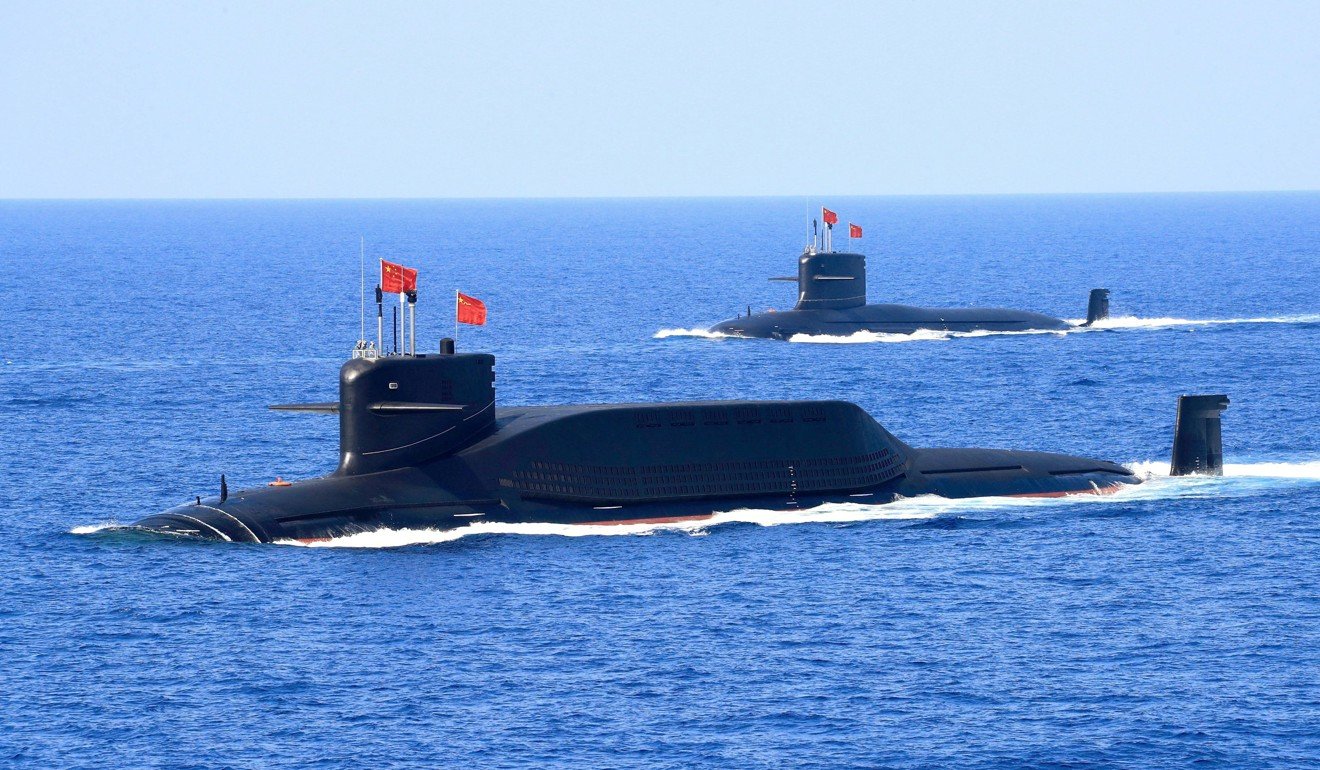
Nuclear-powered PLA Navy ballistic missile submarines in the South China Sea. Photo: Reuters
Asia and

Australia

are home to 245 submarines, or 45 per cent of the global fleet, according to the US-based naval market intelligence firm AMI International.

The Philippines remains one of the last coastal nations in the region without a sub – though it is in talks with Russian builders to acquire some.
Singapore recently received the first of four advanced

German

Type 218 submarines with propulsion systems that negate the need to surface more frequently. If the crew did not need to eat, the submarine could stay under water for prolonged periods. Wong said the craft were specially built for Asian crews.

“The older subs were designed for larger Europeans so the ergonomics were totally off,” he said.
Singapore, China deepen defence ties, plan larger military exercises
Tiny Singapore plays a crucial role securing the vital sea lanes linking the Strait of Malacca with the South China Sea. According to the

World Bank,

the country dedicates 3.3 per cent of its gross domestic product to defence, a rate higher than that of the United States.

State-of-the-art equipment defines the Singapore Armed Forces. Automation is now at the centre of the country’s military strategy, as available manpower is shrinking because of a rapidly ageing population.
Wong said Singapore is investing in autonomous systems and can operate frigates with 100 crew members – 50 fewer than they were originally designed for.

“We always have to punch above our weight,” he said.

Source: SCMP

30/05/2019

Chinese driver gets ticket for scratching his face

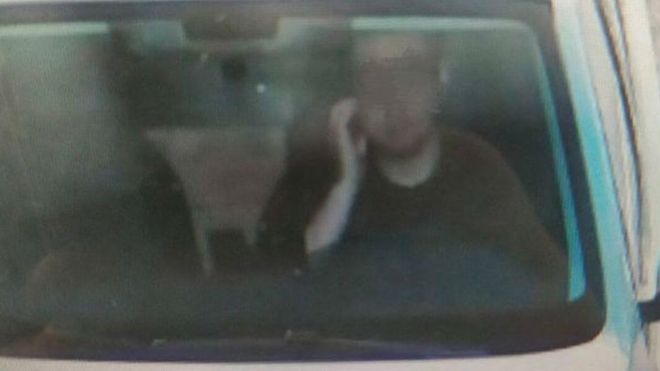
Mr Liu scratching his faceImage copyright SINA WEIBO
Image caption A Chinese man’s face scratch landed him a traffic fine and two points on his licence

A man in eastern China received a fine after a traffic camera using artificial intelligence captured him scratching his face, it’s reported.

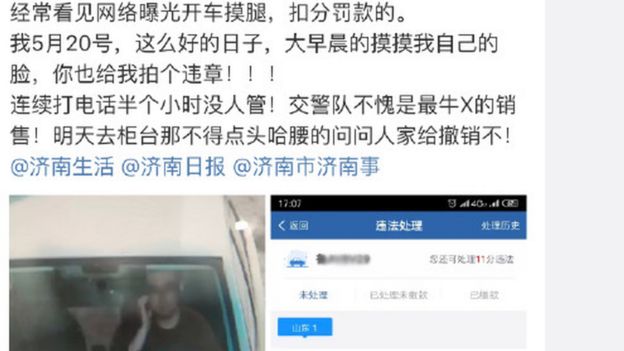
According to the Jilu Evening Post, the male motorist surnamed Liu was driving on Monday in Jinan, eastern Shandong province, and had raised his hand to scratch his face while passing a traffic camera.

The next thing he knew, he’d received a notification instructing him that he had violated the laws of the road for “driving while holding a phone”. A surveillance picture of his “offence” was attached.

He was told that he would receive two points on his licence and was also ordered to pay a 50 yuan (£5.70; $7.25) fine.

“I often see people online exposed for driving and touching [others’] legs,” he said on the popular Sina Weibo microblog,” “but this morning, for touching my face, I was also snapped ‘breaking the rules’!”

He shared the surveillance picture of himself that he had been sent, and said that he was going to go the authorities to try to sort the situation, after “no one would help him” over the phone.

Mr Liu's traffic offenceImage copyright SINA WEIBO
Image caption Mr Liu shared his surveillance photograph on social media

You might also like:

The Global Times newspaper says that the city’s traffic authority have now cancelled his ticket, and told him that “the traffic surveillance system automatically identifies a driver’s motion and then takes a photo”, which is why his face-scratching had been mistaken for him taking a phone call.

While many online are amused by his case joking that the positioning of his hand signalled he certainly appeared to be on an “invisible” phone, some are also voicing their concerns about the level of surveillance placed on them.

“This is quite embarrassing,” says one, “that monitored people have no privacy.”

“Chinese people’s privacy – is that not an important issue?” another asks.

There are more than 170 million surveillance cameras and the country has plans to install a further 400 million by 2020.

Many are fitted with artificial intelligence including facial recognition technology, and whereas some can read simple faces, others can estimate age, ethnicity and gender.

Source: The BBC

26/05/2019

China’s robot censors crank up as Tiananmen anniversary nears

BEIJING (Reuters) – It’s the most sensitive day of the year for China’s internet, the anniversary of the bloody June 4 crackdown on pro-democracy protests at Tiananmen Square, and with under two weeks to go, China’s robot censors are working overtime.

Censors at Chinese internet companies say tools to detect and block content related to the 1989 crackdown have reached unprecedented levels of accuracy, aided by machine learning and voice and image recognition.

“We sometimes say that the artificial intelligence is a scalpel, and a human is a machete,” said one content screening employee at Beijing Bytedance Co Ltd, who asked not to be identified because they are not authorised to speak to media.

Two employees at the firm said censorship of the Tiananmen crackdown, along with other highly sensitive issues including Taiwan and Tibet, is now largely automated.

Posts that allude to dates, images and names associated with the protests are automatically rejected.

“When I first began this kind of work four years ago there was opportunity to remove the images of Tiananmen, but now the artificial intelligence is very accurate,” one of the people said.

Four censors, working across Bytedance, Weibo Corp and Baidu Inc apps said they censor between 5,000-10,000 pieces of information a day, or five to seven pieces a minute, most of which they said were pornographic or violent content.

Despite advances in AI censorship, current-day tourist snaps in the square are sometimes unintentionally blocked, one of the censors said.

Bytedance declined to comment, while Weibo and Baidu did not respond to requests for comment.

SENSITIVE PERIOD

The Tiananmen crackdown is a taboo subject in China 30 years after the government sent tanks to quell student-led protests calling for democratic reforms. Beijing has never released a death toll but estimates from human rights groups and witnesses range from several hundred to several thousand.

June 4th itself is marked by a cat-and-mouse game as people use more and more obscure references on social media sites, with obvious allusions blocked immediately. In some years, even the word “today” has been scrubbed.

In 2012, China’s most-watched stock index fell 64.89 points on the anniversary day here, echoing the date of the original event in what analysts said was likely a strange coincidence rather than a deliberate reference.

Still, censors blocked access to the term “Shanghai stock market” and to the index numbers themselves on microblogs, along with other obscure references to sensitive issues.

While companies censorship tools are becoming more refined, analysts, academics and users say heavy-handed policies mean sensitive periods before anniversaries and political events have become catch-alls for a wide range of sensitive content.

In the lead-up to this year’s Tiananmen Square anniversary, censorship on social media has targeted LGBT groups, labour and environment activists and NGOs, they say.

Upgrades to censorship tech have been urged on by new policies introduced by the Cyberspace Administration of China (CAC). The group was set up – and officially led – by President Xi Jinping, whose tenure has been defined by increasingly strict ideological control of the internet.

The CAC did not respond to a request for comment.

Last November, the CAC introduced new rules aimed at quashing dissent online in China, where “falsifying the history of the Communist Party” on the internet is a punishable offence for both platforms and individuals.

The new rules require assessment reports and site visits for any internet platform that could be used to “socially mobilise” or lead to “major changes in public opinion”, including access to real names, network addresses, times of use, chat logs and call logs.

One official who works for CAC told Reuters the recent boost in online censorship is “very likely” linked to the upcoming anniversary.

“There is constant communication with the companies during this time,” said the official, who declined to directly talk about the Tiananmen, instead referring to the “the sensitive period in June”.

Companies, which are largely responsible for their own censorship, receive little in the way of directives from the CAC, but are responsible for creating guidelines in their own “internal ethical and party units”, the official said.

SECRET FACTS

With Xi’s tightening grip on the internet, the flow of information has been centralised under the Communist Party’s Propaganda Department and state media network. Censors and company staff say this reduces the pressure of censoring some events, including major political news, natural disasters and diplomatic visits.

“When it comes to news, the rule is simple… If it is not from state media first, it is not authorised, especially regarding the leaders and political items,” said one Baidu staffer.

“We have a basic list of keywords which include the 1989 details, but (AI) can more easily select those.”

Punishment for failing to properly censor content can be severe.

In the past six weeks, popular services including a Netease Inc news app, Tencent Holdings Ltd’s news app TianTian, and Sina Corp have all been hit with suspensions ranging from days to weeks, according to the CAC, meaning services are made temporarily unavailable on apps stores and online.

For internet users and activists, penalties can range from fines to jail time for spreading information about sensitive events online.

In China, social media accounts are linked to real names and national ID numbers by law, and companies are legally compelled to offer user information to authorities when requested.

“It has become normal to know things and also understand that they can’t be shared,” said one user, Andrew Hu. “They’re secret facts.”

In 2015, Hu spent three days in detention in his home region of Inner Mongolia after posting a comment about air pollution onto an unrelated image that alluded to the Tiananmen crackdown on Twitter-like social media site Weibo.

Hu, who declined to use his full Chinese name to avoid further run-ins with the law, said when police officers came to his parents house while he was on leave from his job in Beijing he was surprised, but not frightened.

“The responsible authorities and the internet users are equally confused,” said Hu. “Even if the enforcement is irregular, they know the simple option is to increase pressure.”

Source: Reuters

25/05/2019

Across China: “Sino-British Street” seeks rejuvenation

SHENZHEN, May 25 (Xinhua) — A southern Chinese trade hub boasting special links with Hong Kong is hoping the enhanced efforts to build the g will revitalize its tourism industry and local economy.

Chung Ying Street, or “Sino-British Street,” straddles the Hong Kong Special Administrative Region and the mainland city of Shenzhen and has been a special zone where local residents from both sides are allowed to cross the border freely.

It was once a boomtown popular among mainland visitors, who entered with a special permit to snatch duty-free goods from Hong Kong, but fell into decline after travel to Hong Kong was made easier for mainlanders.

The street derived from a small village, which was divided by the “Sino-British” borderline after Hong Kong became a British colony in the 19th century.

Sha Jintao, a 73-year-old resident, remembers how the street became a boomtown as China opened up and tightened links between the mainland and Hong Kong.

“When I was a child, there were only a few farmers and fishermen living on the mainland side of the street, while the Hong Kong side bustled with shops and businesses,” Sha said.

But as Shenzhen rose as a forefront of China’s reform and opening up starting in the late 1970s, the street became the center of changes. New shops and factories propped up with the inflow of Hong Kong investments, and the fancy commodities from its Hong Kong stores wooed in large numbers of mainland tourists.

Historical records show the number of tourists flocking into the 250-meter-long street peaked at 100,000 a day in the 1980s. As many as 89 jewelry stores opened in its heyday and sold 5 tonnes of gold jewelry in half a year.

SURVIVAL CRISIS

The heyday was however short-lived. After Hong Kong returned to the motherland in 1997, the street began to lose its appeal, as shopping in Hong Kong was made much easier for mainland tourists. Its daily visitors dropped below 10,000 after 2003, when mainlanders were allowed to independently travel to Hong Kong.

Many stores closed due to a loss of customers, and some survived by selling fake jewelry, winning the street much notoriety, recalled Sha, who then headed the local neighborhood committee.

Sha said the ephemeral boom was limited to the era when most Chinese had limited access to the outside world, so as the country opened its door wider, the street’s function as a “window” faced an inevitable doom.

“Now with a smartphone, a consumer could easily buy goods from across the globe,” he said, referring to China’s cross-border e-commerce boom. “So if is just for the purpose of shopping, why take the trouble of traveling to the Chung Ying Street?”

The street is now more of a cultural site, dotted with relics and museums displaying its history, but locals are hopeful that the ongoing construction of the Guangdong-Hong Kong-Macao Greater Bay Area will usher in another golden era for their neighborhood.

China has planned to turn the greater bay area, which encompasses Hong Kong, Macao and nine cities in Guangdong Province, into the world’s largest bay area in terms of GDP by 2030.

Earlier this month, the city government of Shenzhen said it will upgrade its ports with Hong Kong to boost the greater bay area development. The Shatoujiao Subdistrict, where the Chung Ying Street is located, was reserved for a new cooperation zone featuring tourism and consumption.

Optimism is running high in the community. New industries like artificial intelligence (AI), health and high-end shipping service have taken root in Yantian District, which administers Shatoujiao, and Sha is buzzing around to connect business people from Hong Kong and Shenzhen.

“Shatoujiao and its Chung Ying Street have boasted the one-of-the-kind advantage in Shenzhen-Hong Kong cooperation. We’ll work hard to turn the blueprint of the greater bay area into a reality here,” said Chen Qing, party secretary of Yantian.

Source: Xinhua

16/05/2019

Xi sends congratulatory letter to World Intelligence Congress

TIANJIN, May 16 (Xinhua) — President Xi Jinping sent a congratulatory letter to the Third World Intelligence Congress, which opened in northern China’s Tianjin municipality Thursday.

In the letter, Xi expressed his sincere welcome to renowned international entrepreneurs, industry leaders and Turing Award winners who attended the congress.

Noting that artificial intelligence (AI) is casting significant and far-reaching impacts on economic development, social progress and global governance, Xi said China attaches high importance to innovative development and takes new-generation AI as the driving force for scientific and technological development, industrial optimization and upgrading, as well as increasing productivity, striving to achieve high-quality development.

Xi expressed hope that participants of the congress could further exchanges, enhance consensus and step up cooperation to promote the healthy development of the new-generation AI.

Having read out Xi’s letter at the opening ceremony, Li Hongzhong, secretary of the Tianjin Municipal Committee of the Communist Party of China, said Tianjin would embrace a new era of intelligence, create a new intelligence-based economy, step up cooperation with other countries in the field of AI and speed up building “intelligent Tianjin.”

Source: Xinhua

Law of Unintended Consequences

continuously updated blog about China & India

ChiaHou's Book Reviews

continuously updated blog about China & India

What's wrong with the world; and its economy

continuously updated blog about China & India