22/09/2019
NANNING, Sept. 21 (Xinhua) — A forum on China-ASEAN cooperation in electric power was held Friday in Nanning City, capital of south China’s Guangxi Zhuang Autonomous Region, according to the organizer.
More than 160 experts from China and members of the Association of Southeast Asian Nations (ASEAN) gathered to discuss topics including investment, technology exchange and interconnection of infrastructure.
Chinese major electric power enterprises completed the investment of 1.8 billion U.S. dollars in 11 projects in the ASEAN countries and signed 9.91 billion U.S. dollars worth of contracts in 2018, according to China Electricity Council.
Cooperation between Chinese electric power enterprises and ASEAN countries covers hydropower, wind power, photovoltaic power and other fields, and has promoted local economic development and achieved win-win progress, said Yu Chongde, secretary general of the council.
China has rich experiences, advanced technology, and strong design and manufacturing capabilities in electric power, all of these are of great importance to ASEAN countries, said Yongyooth Horthong, an official from the Thai Ministry of Energy.
Source: Xinhua
Posted in advanced technology, ASEAN, ASEAN (the Association of Southeast Asian Nations), Association of Southeast Asian Nations (ASEAN), China alert, China Electricity Council, China-ASEAN cooperation, cooperation, design and manufacturing capabilities, electric power, Guangxi Zhuang Autonomous Region, hydropower, Nanning, photovoltaic power, strengthens, Thai Ministry of Energy, Uncategorized, Wind power |
Leave a Comment »
21/09/2019
Chinese Vice Premier Han Zheng, also a member of the Standing Committee of the Political Bureau of the Communist Party of China Central Committee, addresses the opening ceremony of the 16th China-ASEAN Expo and the China-ASEAN Business and Investment Summit in Nanning, south China’s Guangxi Zhuang Autonomous Region, on Sept. 21, 2019. (Xinhua/Shen Hong)
NANNING, Sept. 21 (Xinhua) — Relations between China and countries of the Association of Southeast Asian Nations (ASEAN) have entered a new stage of all-round development, Chinese Vice Premier Han Zheng said Saturday.
Han, also a member of the Standing Committee of the Political Bureau of the Communist Party of China Central Committee, made the remarks at the opening ceremony of the 16th China-ASEAN Expo in Nanning, capital of south China’s Guangxi Zhuang Autonomous Region.
Stressing that ASEAN is a key area in Belt and Road construction, Han said China is willing to work with ASEAN countries to pursue a higher level strategic partnership and build a closer community with a shared future.
China is ready to work with ASEAN to construct the Belt and Road and implement the Master Plan on ASEAN Connectivity 2025 under the guidance of the China-ASEAN Strategic Partnership Vision 2030, Han said.
While stepping up efforts to implement the protocol on upgrading the China-ASEAN Free Trade Area, China will join hands with relevant parties to complete the Regional Comprehensive Economic Partnership, according to the vice premier.
With platforms such as the China International Import Expo and the China-ASEAN Expo injecting strong momentum into common development, China will cooperate with ASEAN in building economic and trade cooperation zones and the China-Indochina Peninsula Economic Corridor.
In addition, efforts will be made to boost the connectivity of infrastructures and deepen innovation cooperation in spheres such as e-commerce, digital trade and 5G internet, Han said.
Source: Xinhua
Posted in 5G internet, all-round development, ASEAN Connectivity 2025, Association of Southeast Asian Nations (ASEAN), Belt and Road construction, China International Import Expo, China International Import Expo (CIIE), China-ASEAN Expo, China-ASEAN Free Trade Area, China-ASEAN Strategic Partnership Vision 2030, China-ASEAN ties, China-Indochina Peninsula Economic Corridor, Chinese Vice Premier, connectivity, digital trade, E-commerce, enter, Guangxi Zhuang Autonomous Region, Han Zheng, infrastructures, innovation cooperation, Nanning, new stage, Regional Comprehensive Economic Partnership, Regional Comprehensive Economic Partnership (RCEP), Standing Committee of the Political Bureau of the Communist Party of China Central Committee, Uncategorized, Vice Premier Han Zheng |
Leave a Comment »
20/09/2019
NANNING, Sept. 19 (Xinhua) — Pham Thi Nguyet Hoa, a vendor living in Vietnam’s Mong Cai, comes to Dongxing, a southern Chinese port city, to sell Vietnam fruits every day. When night falls, she often ends up with thousands of yuan in her pocket, much more than what she can earn at home.
“Most of my customers are Chinese, and it is very convenient to exchange Chinese yuan to Vietnamese Dong as many banks in Dongxing have this currency exchange service,” said Pham.
Tourism has been a pillar industry in the border city of southern China’s Guangxi Zhuang Autonomous Region. Dongxing port saw 12 million people, of which half were tourists, pass through last year, ranking first among all land ports in China.
In the first six months this year, tourism consumption at the port exceeded 6.2 billion yuan (874 million U.S. dollars), up 40.4 percent from the year before.
The flourishing border tourism has brought a huge demand for currency exchange, with a slew of financial reforms rolled out in recent years.
In 2014, the ABC China (Dongxing Experimental Zone) ASEAN Currency business center was established in Dongxing, allowing direct convertibility of Chinese yuan and Vietnamese Dong.
In February 2018, a total of 8 million yuan was transferred in cash from Vietnam to China, marking the first cross-border cash transfer in Guangxi between China and Vietnam.
Fan Zuojun, vice president of Guangxi University, said the cross-border cash transfer will further promote the financial cooperation between China and Members of the Association of Southeast Asian Nations (ASEAN) as well as deepen reform and push forward the internationalization of the Chinese currency in the region.
China and ASEAN countries have always maintained close relations in trade.
In January 2010, the China-ASEAN Free Trade Area was set up, which has significantly boosted bilateral trade. China has maintained its position as the largest trading partner of ASEAN for 10 consecutive years, and trade between China and ASEAN has skyrocketed tenfold from 16 years ago to 587.8 billion U.S. dollars in 2018.
In the first half of 2019, ASEAN became China’s second-largest trading partner, with bilateral trade volume reaching 291.85 billion U.S. dollars, up 4.2 percent year on year.
Guangxi’s geographical advantages have also given it huge development dividends over the past decades. ASEAN has been Guangxi’s largest trade partner for 19 consecutive years, and trade volume between Guangxi and ASEAN in the first seven months of this year topped 128 billion yuan, accounting for 48.7 percent of Guangxi’s total foreign trade.
Now with the launch of the Guangxi Pilot Free Trade Zone (FTZ) in August, bilateral trade exchanges are expected to embrace another golden opportunity.
The pilot FTZ, with a total area of nearly 120 square km, will focus on modern financial services, smart logistics, digital economy, port shipping logistics, international trade and cross-border tourism, among others.
Guangxi vows to make greater efforts to consolidate its financial strength and build itself into an ASEAN-oriented financial portal, with over 90 financial reform measures being rolled out to further facilitate trade and investment and promote innovation in financial services with ASEAN countries.
Posted in ABC China (Dongxing Experimental Zone) ASEAN Currency business center, ASEAN, Association of Southeast Asian Nations (ASEAN), build, China alert, China's border region, China-ASEAN Free Trade Area, Chinese, Chinese yuan, consumption, customers, Dongxing, exchange, expedites, financial gateway, first, Guangxi Pilot Free Trade Zone (FTZ), Guangxi University, Guangxi Zhuang Autonomous Region, land ports, Nanning, night, pillar industry, port city, ranking, reform, sell, Tourism, tourists, Uncategorized, Vietnam, Vietnam fruits, Vietnamese Dong |
Leave a Comment »
10/09/2019
NANNING, Sept. 9 (Xinhua) — South China’s Guangxi Zhuang Autonomous Region on Monday pledged to enhance cooperation with the Association of Southeast Asian Nations (ASEAN) on artificial intelligence (AI).
Chen Wu, chairman of the regional government, said at the First China-ASEAN AI Summit that Guangxi will actively promote technical cooperation, trade, investment and industrial exchange in the AI sector with the ASEAN countries.
Toward this end, the region will speed up the construction of platforms for infrastructure, information sharing and technical cooperation, among others, Chen said.
Guangxi, which boasts both sea and overland links with ASEAN, is building the China-ASEAN Information Harbour to boost digital cooperation with Southeast Asia.
“The summit has sounded the clarion call for the development of AI and big data industry in Guangxi,” said Wang Jingjing, Guangxi regional director of the Chinese AI firm iFlytek.
Hailing the region’s policy and geographical advantages on ASEAN cooperation, Wang said iFlytek hopes to set up an institute on ASEAN languages in Guangxi to facilitate communication between China and ASEAN countries
Source: Xinhua
Posted in AI, AI industry, AI sector, ASEAN, Association of Southeast Asian Nations (ASEAN), big data industry, China's border region, China-ASEAN Information Harbour, Chinese AI firm, clarion call, cooperation, digital cooperation, First China-ASEAN AI Summit, Guangxi, Guangxi Zhuang Autonomous Region, iFlytek, industrial exchange, Investment, overland links, promote, sea links, Southeast Asia, summit, technical cooperation, Trade, Uncategorized |
Leave a Comment »
31/07/2019
- China’s Wang Yi and US’ Mike Pompeo at summit in Thailand to sell their visions of future for Southeast Asia
- Analysts expect pragmatism from Asean as world’s two biggest economic powers play diplomatic game
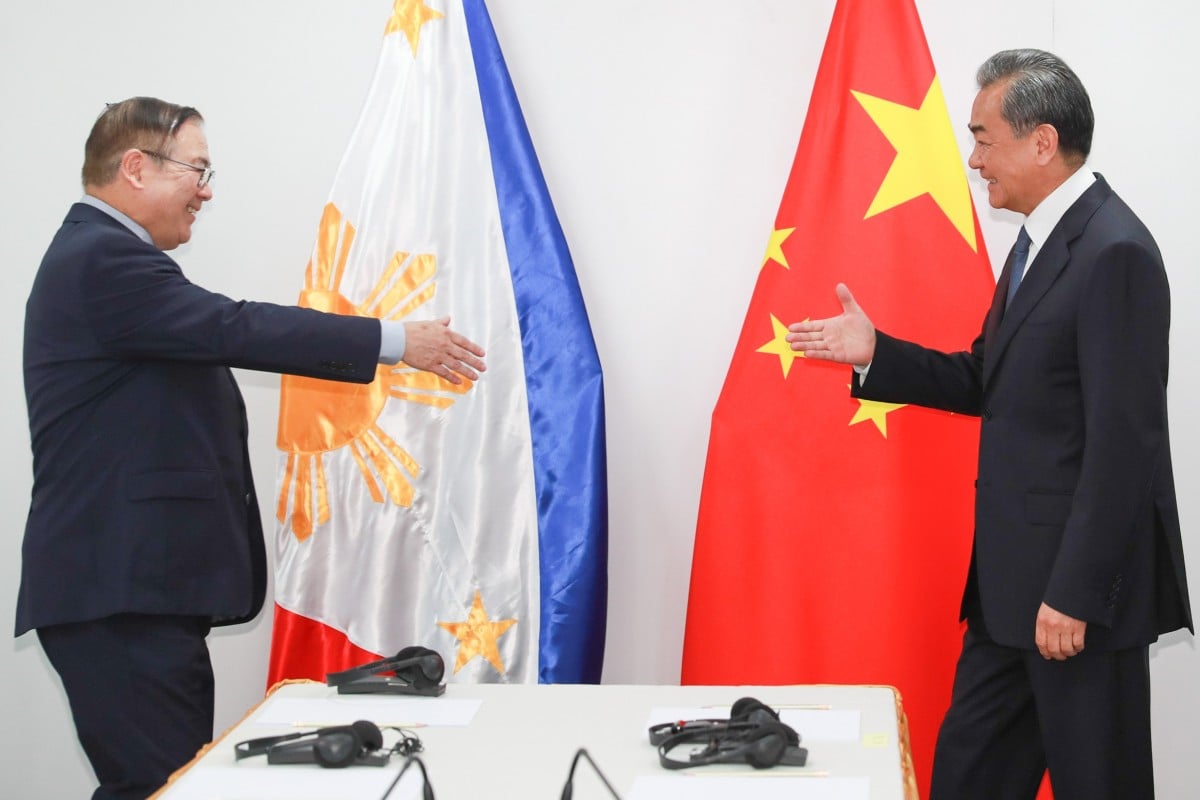
Chinese Foreign Minister Wang Yi (right) greets his Philippine counterpart Teodoro Locsin at the Asean meeting in Bangkok, Thailand. Photo: Xinhua
China and the United States are on a mission to strengthen ties with allies and expand their influence in Southeast Asia this week as their trade war enters a second year.
US Secretary of State Mike Pompeo arrived for a meeting of the Association of Southeast Asian Nations (Asean) in Bangkok on Wednesday to promote the US-led Indo-Pacific strategy, while Chinese Foreign Minister Wang Yi touched down a day earlier to advance Beijing’s Belt and Road Initiative.
The US Department of State said Pompeo’s trip was aimed at deepening Washington’s “long-standing alliances and vibrant bilateral relations with these countries, and [to] reaffirm our commitment to Asean, which is central to our vision for the Indo-Pacific region”.
In Beijing on Wednesday, Chinese foreign ministry spokeswoman Hua Chunying said that while their meeting was yet to be set, Wang and Pompeo were expected to meet and talk “frankly” about bilateral relations.
“I think that it is indeed necessary for China and the United States to maintain communication, as the two countries face many situations,” Hua said. “The issues would be communicated frankly”.
The Indo-Pacific strategy is a military and economic framework to contain China’s expansion into the Pacific and Indian oceans, and give an alternative to Beijing’s flagship belt and road development programme.
En route to Thailand, Pompeo said that after a stalled start to US Indo-Pacific policy during the Barack Obama administration, Washington’s strategy was well on its way to bearing fruit for the US and its allies.
South China Sea tensions, US-China trade war loom over Asean summit
“We have watched these coalitions build out,” he said.
Pompeo dismissed claims that China’s sphere of influence among Asean members was growing, saying such speculation was “not factually accurate”.
“[Asean countries] are looking for partners that are going to help them build out their economies and to take good care of their people,” he said, pledging greater engagement from President Donald Trump’s administration.
Pompeo was expected to sit down on Friday with his South Korean and Japanese counterparts to consolidate their trilateral alliance in the region.
He was also expected to hold talks with Thai Foreign Minister Don Pramudwinai that day.
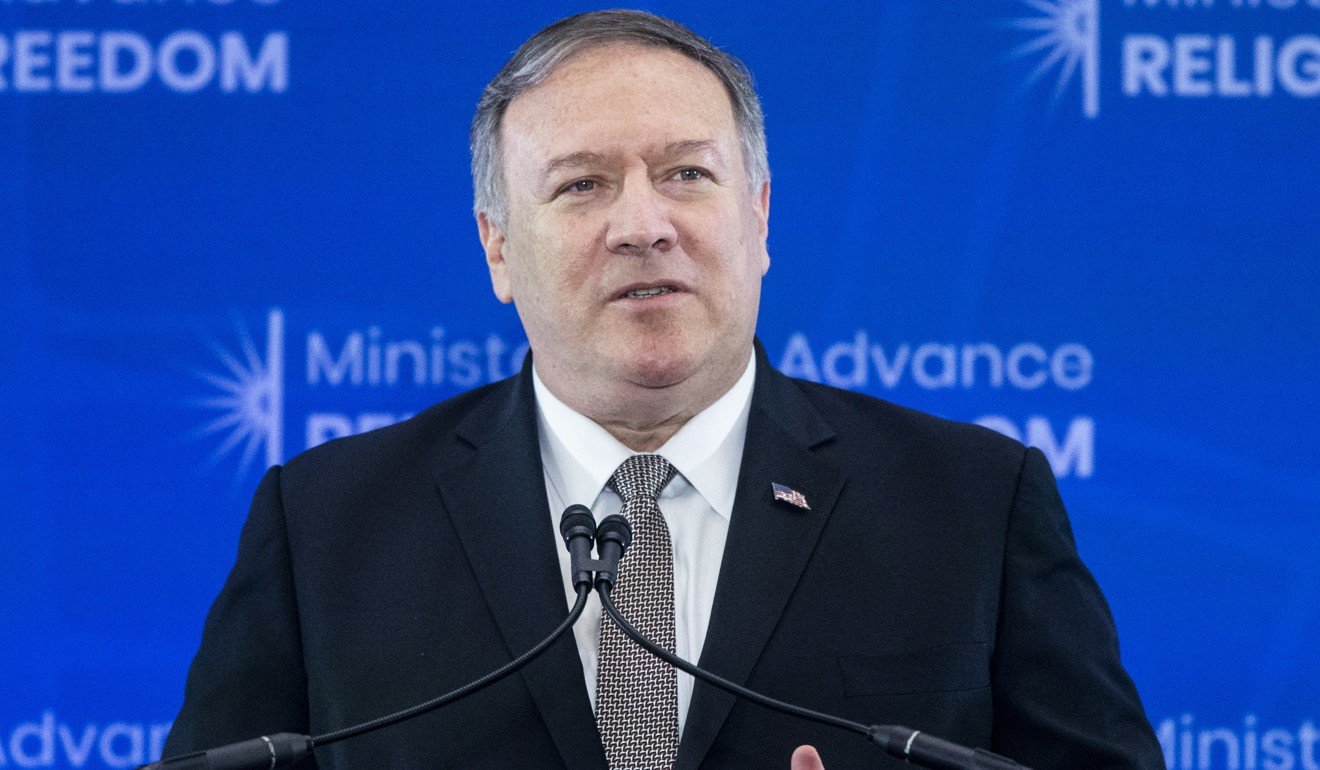
US Secretary of State Mike Pompeo is expected to meet Chinese Foreign Minister Wang Yi at Asean in Thailand. Photo: EPA-EFE
Meanwhile, Wang launched his belt and road pitch to his Cambodian, Philippine and Indonesian counterparts after he arrived in Thailand for the gathering, which ends on Saturday.
The belt and road projects are largely commercial and aimed at strengthening land and sea infrastructure linking Asia, Europe and Africa. But they raised suspicion in the West that they are aimed at eroding the US-led world order.
During his meeting with Philippine Foreign Affairs Secretary Teodoro Locsin, Wang said: “China is willing to have high-level exchanges with the Philippines, to deepen the mutual trust, and promote the Belt and Road Initiative [in the Philippines] … to accelerate the development of regional infrastructure.”
Can China’s trade boost with Asean help get the Regional Comprehensive Economic Partnership over the line?
This year’s Asean forum was taking place as countries were more receptive to Chinese initiatives, in part due to the unpredictability of the US administration, according to Rajeev Ranjan Charturvedy, a visiting fellow at the S. Rajaratnam School of International Studies at Nanyang Technological University in Singapore.
“Policy uncertainties under the Trump administration have already pushed some Asean countries towards China in ways that would have seemed unlikely a few years ago,” Charturvedy said.
Analysts said Trump’s “America first” approach shaped his Asean policy. The president had vowed to apply “punishments” to countries – including Asean member states – for contributing to the US trade deficit.
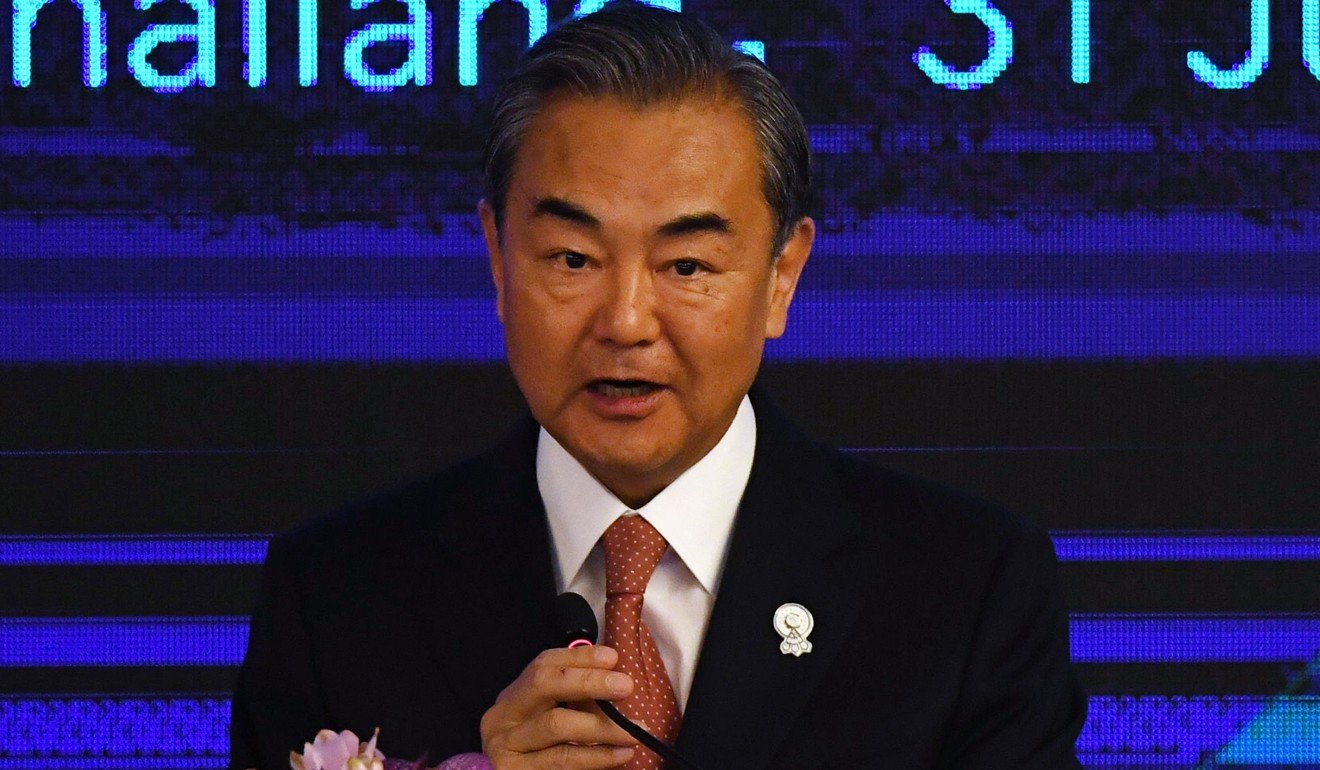
Chinese Foreign Minister Wang Yi is talking to Asean counterparts at a time when they are receptive to China’s proposals, an analyst says. Photo: AFP
Trump was absent at the Asean summit in Singapore last year, leading to concerns that Washington’s commitment to Asia was declining.
Charturvedy said the Asean forum’s focus was about building constructive regionalism, but China’s attitudes to security could pose a challenge.
“[However] Asean countries clearly hope not to be forced to choose between the US and Chinese offers. Rather, they would like more freedom of choice while accommodating for a larger role for China in the region,” he said.
Clarita Carlos, a professor of political science at the University of the Philippines, suggested that Asean members would be pragmatic during the forum.
Robert Lighthizer warns Vietnam over trade deficit with US
They would try to find their own balance between the two major powers – as countries rather than a bloc – to try to maximise each state’s interests and advantages, Carlos said.
“Vietnam has a love-hate relationship with China, especially as a winner in the ongoing US-China trade war,” she said. “Singapore has close relations with China. There are also ups and downs in the relationship with China for Brunei, Malaysia and Indonesia.”
Source: SCMP
Posted in africa, Asia, Association of Southeast Asian Nations (ASEAN), Bangkok, Barack Obama administration, Beijing, belt and road development programme, Belt and Road Initiative (BRI), belt and road projects, Brunei, Cambodian, China alert, China court Asean members, Chinese foreign minister Wang Yi, diplomatic game, Don Pramudwinai, enters second year, Europe, Indo-Pacific strategy, Indonesia, Indonesian, land infrastructure, Malaysia, Mike Pompeo, Philippine, Philippine Foreign Affairs Secretary, pragmatism, President Donald Trump, Regional Comprehensive Economic Partnership, Regional Comprehensive Economic Partnership (RCEP), S. Rajaratnam School of International Studies, sea infrastructure, Singapore, Singapore’s Nanyang Technological University, Southeast Asia, strengthen Indo-Pacific ties, summit, Teodoro Locsin, Thai Foreign Minister, Thailand, trade war, Trump administration, Uncategorized, United States, University of the Philippines, US court Asean members, visions of future, Washington |
Leave a Comment »
22/07/2019
WASHINGTON (Reuters) – China will be able to place armed forces at a Cambodian naval base under a secret pact between the two nations, the Wall Street Journal said on Sunday, although Cambodian officials denied such a deal had been struck.
The agreement, reached this spring but not made public, gives China exclusive access to part of Cambodia’s Ream Naval Base on the Gulf of Thailand, the Journal said, citing U.S. and allied officials familiar with the matter.
Such an arrangement would boost China’s ability to assert contested territorial claims and economic interests in the South China Sea, challenging U.S. allies in Southeast Asia.
Chinese and Cambodian officials denied such a pact existed, the Journal said.
“This is the worst-ever made up news against Cambodia,” Cambodian Prime Minister Hun Sen told the pro-government news site Fresh News on Monday.
“No such thing could happen because hosting foreign military bases is against the Cambodian constitution.”
Cambodian defence ministry spokesman Chhum Socheat told Reuters the report was “made up and baseless”.
In Beijing, foreign ministry spokesman Geng Shuang said, “As I understand it, the Cambodia side denied this.”
But he declined to respond to repeated questions whether China also denied the report.
“China and Cambodia are traditionally friendly neighbours,” Geng told a news briefing.
“We have cooperated in various areas. Our cooperation is open, transparent, and mutually beneficial and equal. I hope the relevant parties do not overinterpret it.”
Hun Sen’s strongest regional ally, China has poured billions of dollars in development assistance and loans into Cambodia through two-way frameworks and its Belt and Road initiative.
The initiative, unveiled by Chinese President Xi Jinping in 2013, aims to bolster a sprawling network of land and sea links throughout Asia, the Middle East, Europe and Africa.
It has attracted a flood of Chinese commercial ventures in Cambodia, including casinos and special economic zones.
This month the U.S. Defense Department suggested China may be attempting to gain a military foothold in Cambodia, in a letter to Cambodia asking why the nation had turned down an offer to repair a naval base.
In a statement, the State Department urged Cambodia to reject such an arrangement, saying the nation had a “constitutional commitment to its people to pursue an independent foreign policy”.
It added, “We are concerned that any steps by the Cambodian government to invite a foreign military presence in Cambodia would threaten the coherence and centrality of the Association of Southeast Asian Nations in coordinating regional developments, and disturb peace and stability in Southeast Asia.”
Cambodia denied reports last November that China had been lobbying it since 2017 for a naval base that could host frigates, destroyers and other vessels of the People’s Liberation Army Navy.
Source: Reuters
Posted in africa, armed Chinese forces, Asia, Association of Southeast Asian Nations (ASEAN), Beijing, Cambodia, Cambodian Prime Minister, deal, denies, destroyers, Europe, Fresh News, frigates, Gulf of Thailand, Middle East, naval base, People’s Liberation Army Navy, President Xi Jinping, Ream Naval Base, Southeast Asia, U.S. Defense Department, Uncategorized |
Leave a Comment »
22/06/2019
BANGKOK (Reuters) – Southeast Asian leaders opened a two-day summit in Bangkok on Saturday, though it was unclear what progress their 10-country group could make on disputes in the South China Sea and the plight of ethnic Rohingya fleeing Myanmar.
Formed more than half a century ago, the Association of Southeast Asian Nations (ASEAN) has historically struggled with challenges facing the region because it works only by consensus and is reluctant to become involved in any matter regarded as internal to a member state.
Thai Prime Minister Prayuth Chan-ocha was making his debut as a civilian leader representing current chair Thailand, after a general election in March that opposition parties say was designed to ensure his victory five years after the former army chief seized power in a 2014 coup.
Officials are expected to discuss a Code of Conduct (COC) for negotiations over the South China Sea, one of the world’s busiest waterways and a potential flashpoint, as it is claimed by several ASEAN members as well as China.
However, it was unlikely much progress would be made, though member nations might discuss the June 9 collision of a Philippine boat and a Chinese fishing vessel.
“It is encouraging to see that the ASEAN-China talks on the COC have continued,” said Marty Natalegawa, former foreign minister of Indonesia.
“However, there is real risk that developments on the ground – or more precisely at sea – are far outpacing the COC’s progress thereby possibly rendering it irrelevant.”
Philippine President Rodrigo Duterte has accepted China’s proposal to jointly investigate allegations that a Chinese fishing vessel abandoned 22 Filipinos after it sank their boat in the South China Sea, his spokesman said on Saturday.
Rights groups have also called on ASEAN leaders to rethink support for plans to repatriate Rohingya Muslims who have fled member state Myanmar, where activists say returnees could face discrimination and persecution.
More than 700,000 Rohingya crossed into Bangladesh in 2017, according to U.N. agencies, after a crackdown by Myanmar’s military sparked by Rohingya insurgent attacks on the security forces.
However, it is unlikely that there will be any criticism of Myanmar at the summit over the Rohingya, said Prapat Thepchatree, a political science professor at Thailand’s Thammasat University said.
“This issue has been a very sensitive one for ASEAN,” he said.
Host country Thailand deployed about 10,000 security forces around Bangkok for the summit, mindful of a decade ago when Thailand last hosted an ASEAN summit and dozens of protesters loyal to military-ousted former premier Thaksin Shinawatra forced their way into the meeting venue.
But on Saturday morning, only a small group of people had planned to stage a protest to call Prayuth’s election the product of a rigged system.
The group, called Citizens Wanting Elections, was stopped by police before it could reach a meeting point near the summit venue. The group later released a statement welcoming visiting leaders but criticising Prayuth.
“The individual who serves as President of ASEAN, who welcomes everyone today, did not come from a clean and fair election,” the letter said.
Source: Reuters
Posted in Association of Southeast Asian Nations (ASEAN), Bangkok, Bangladesh, Chinese fishing vessel, Citizens Wanting Elections, Code of Conduct (COC), foreign minister, Indonesia, Marty Natalegawa, Myanmar, Philippine boat, Philippine President, political science professor, Prayuth Chan-ocha, Rodrigo Duterte, Rohingya, South China Sea, Southeast Asian leaders, summit, Thai Prime Minister, Thailand, Thammasat University, Uncategorized |
Leave a Comment »
03/06/2019
SINGAPORE, June 2 (Xinhua) — Chinese State Councilor and Defense Minister Wei Fenghe said here on Sunday that China’s construction on its South China Sea islands and reefs is its legitimate right and is purely defensive in nature.
“The current situation in the South China Sea is improving towards greater stability. It is attributed to the common efforts of the countries in the region,” Wei said. “However, there are always people trying to rake in profits by stirring up troubles in the region.”
He said over 100,000 ships sail through the South China Sea each year, and “none has been threatened.”
However, in recent years, some countries outside the region come to the South China Sea to flex muscles, in the name of freedom of navigation. “The large-scale force projection and offensive operations in the region are the most serious destabilizing and uncertain factors in the South China Sea,” he said.
If there is chaos in the South China Sea, the regional countries are the ones who will bear the brunt, and China and the Association of Southeast Asian Nations (ASEAN) countries have made progress in negotiating the Code of Conduct in the South China Sea, he added.
Wei noted that China’s construction on its South China Sea islands and reefs is legitimate and defensive in nature. “It is the legitimate right of a sovereign state to carry out construction on its own territory. China built limited defense facilities on the islands and reefs for self-defense,” he said.
“Where there are threats, there are defenses. In the face of heavily armed warships and military aircraft, how can we stay impervious and not build some defense facilities?” he asked.
He also refuted the saying of “militarization” of China’s defensive construction on its South China Sea islands and reefs at the Q&A session. “Anyone who has some military sense would know it’s not militarization,” he said.
Wei is here to attend the 18th Shangri-La Dialogue from Friday to Sunday, and he gave a keynote speech on Sunday morning at a plenary session entitled “China and International Security Cooperation.”
Source: Xinhua
Posted in Association of Southeast Asian Nations (ASEAN), Chaos, Chinese State Councilor, Code of Conduct (COC), defense minister, freedom of navigation, International Security Cooperation, militarization, Shangri-La Dialogue, South China Sea Islands, Uncategorized, Wei Fenghe |
Leave a Comment »



 CHINDIA ALERT: You'll be living in their world, very soon