Chindia Alert: You’ll be Living in their World Very Soon
aims to alert you to the threats and opportunities that China and India present. China and India require serious attention; case of ‘hidden dragon and crouching tiger’.
Without this attention, governments, businesses and, indeed, individuals may find themselves at a great disadvantage sooner rather than later.
The POSTs (front webpages) are mainly 'cuttings' from reliable sources, updated continuously.
The PAGEs (see Tabs, above) attempt to make the information more meaningful by putting some structure to the information we have researched and assembled since 2006.
Chinese groups calling for more ‘fighting spirit’ are getting the upper hand on those who favour calm and cooperation, government adviser says
From Hong Kong to Covid-19, trade to the South China Sea, Beijing and Washington are clashing on a growing number of fronts and in an increasingly aggressive way
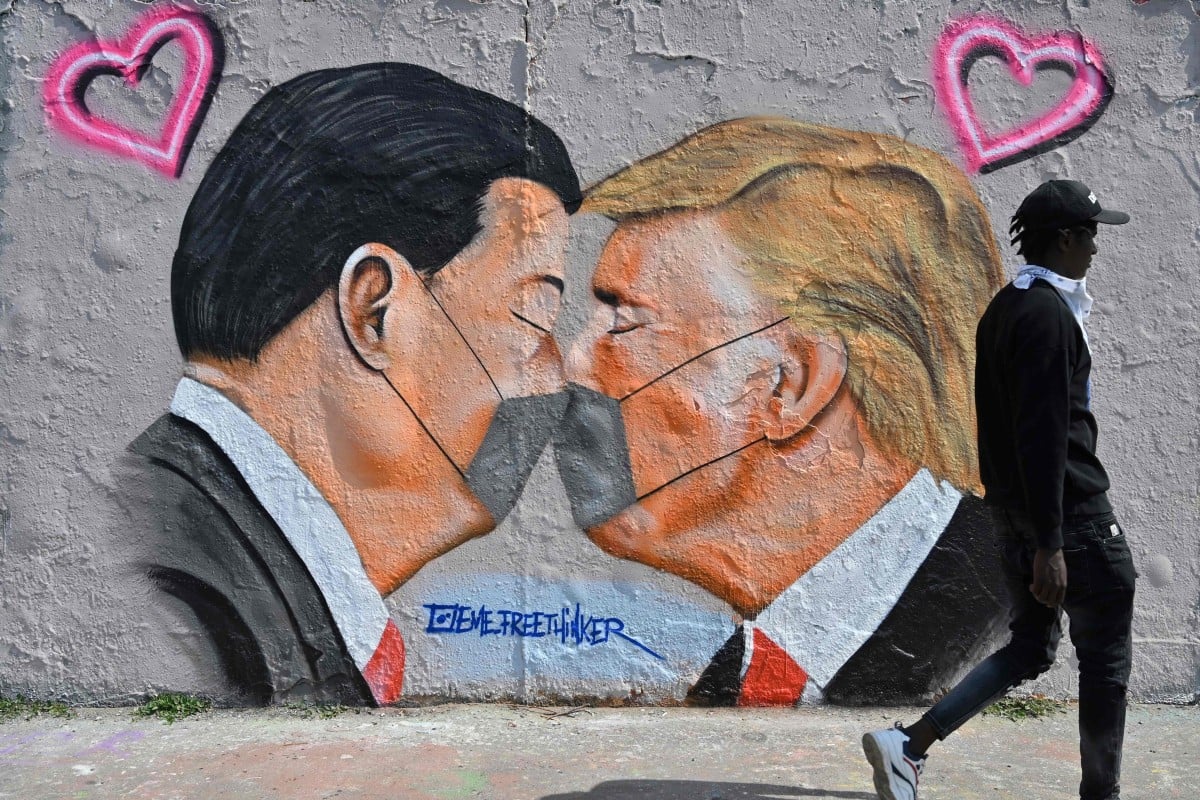
Efforts to promote dialogue and cooperation between the US and China are failing, observers say. Photo: AFP
Moderates who favour dialogue and cooperation as a way to resolve China’s disputes with the United States are losing ground to hardline groups bent on taking the fight to Washington, according to political insiders and observers.
“There are two camps in China,” said a former state official who now serves as a government adviser and asked not to be named.
“One is stressing the combat spirit, the other is trying to relieve tensions. And the former has the upper hand.”
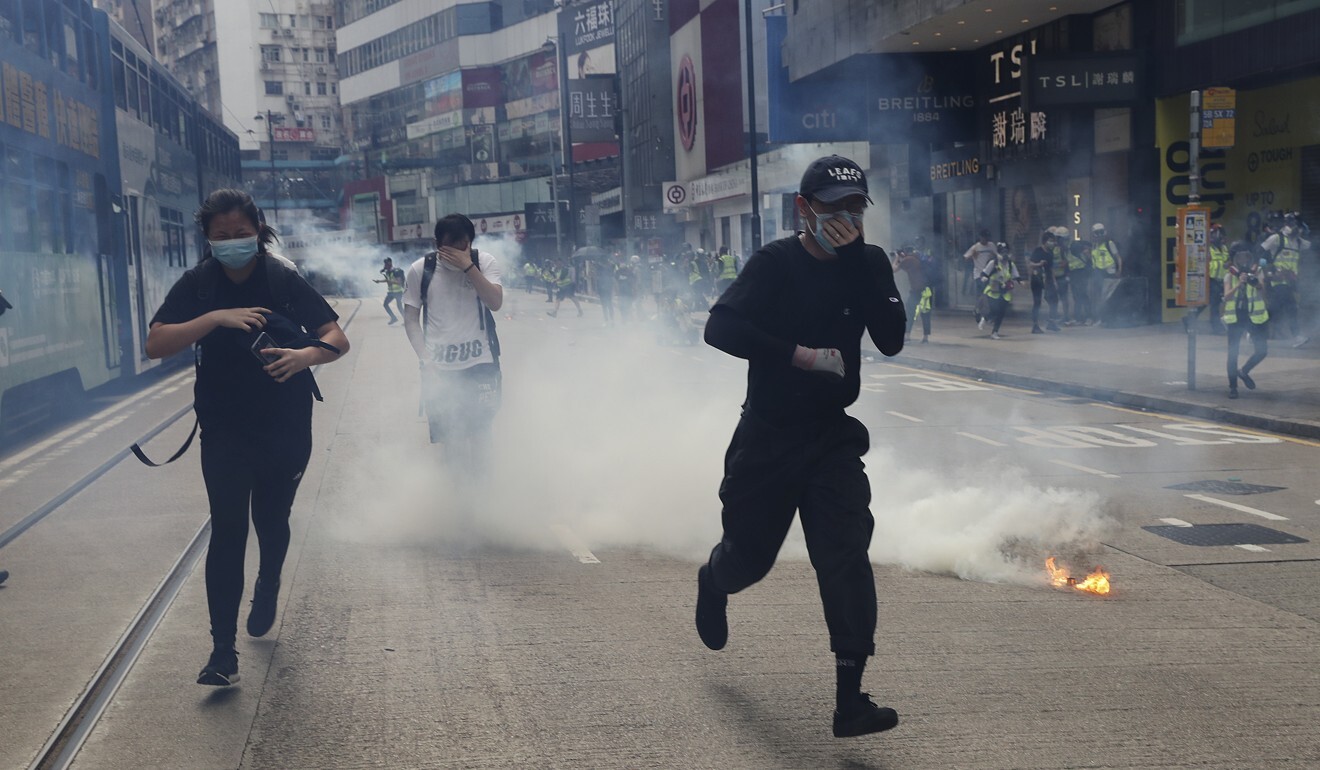
Relations between China and the US are under intense pressure. After Beijing moved to introduce a national security law for Hong Kong, US President Donald Trump said on Friday that Washington would begin eliminating the special policy exemptions it grants the city, as it no longer considers it autonomous from mainland China.
Beijing’s decision to enact a national security law for Hong Kong was met with anger from the US and other Western countries. Photo: Sam Tsang
The two nations have also clashed over trade, Xinjiang, Taiwan and the South China Sea, with the US passing several acts denouncing Beijing and sanctioning Chinese officials.
China has also experienced turbulence in its relations with other countries, including Australia and members of the European Union, mostly related to the Covid-19 pandemic
and Beijing’s efforts to position itself as a leader in the fight against the disease with its policy of “mask diplomacy”.
After Canberra appealed for an independent investigation to be carried out to determine the origins of the coronavirus, Beijing responded by imposing tariffs on imports of Australian barley, showing it is prepared to do more than just trade insults and accusations with its adversaries.
Pang Zhongying, a professor of international relations at Ocean University of China in Qingdao, said there was a worrying trend in China’s relations with other nations.
“We need political and diplomatic means to resolve the challenges we are facing, but … diplomatic methods have become undiplomatic,” he said.
“There are some who believe that problems can be solved through tough gestures, but this will never work. Without diplomacy, problems become confrontations.”
said during his annual press conference on the sidelines of the National People’s Congress last weekend that China and the United States must work together to prevent a new Cold War.
His words were echoed by Chinese Premier Li Keqiang, who said during a press conference after the closure of the legislative session on Thursday that the many challenges facing the China-US relations could only be resolved through cooperation.
However, the government adviser said there was often quite a chasm between what China’s leaders said and what happened in reality.
“Even though we say we do not want a Cold War, what is happening at the working level seems to be different.” he said. “The implementation of policies is not properly coordinated and often chaotic.”
Tensions between China and the US have been in a poor state since the start of a trade war almost two years ago. After multiple rounds of negotiations, the sides in January signed a phase one deal, but the positivity that created was short-lived.
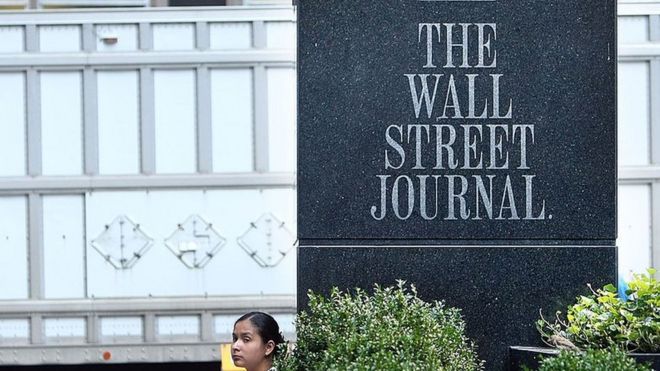
In February, Beijing expelled three reporters from The Wall Street Journal over an article it deemed racist, while Washington has ramped up its military activity in the South China Sea and Taiwan Strait, and threatened to revoke the visas of Chinese students studying science and technology in the US over concerns they might be engaged in espionage.
Beijing has also used its state media and army of “Wolf Warrior” diplomats to promote its narrative, though many Chinese scholars and foreign policy advisers have said the latter’s nationalistic fervour has done more harm than good and appealed to Beijing to adopt a more conciliatory tone.
However, Hu Xijin, editor-in-chief of Chinese tabloid Global Times, said China had no option but to stare down the US, which regarded the world’s most populous nation as its main rival.
“Being contained by the US is too high a price for China to pay,” he said. “I think the best thing people can do is forget the old days of China-US ties”.
Jin Canrong, a professor of international relations at Renmin University in Beijing, wrote in a recent newspaper article that Beijing’s actions – notably enacting a national security law for Hong Kong – showed it was uncompromising and ready to stand its ground against the US.
Wu Xinbo, dean of international studies at Fudan University in Shanghai, agreed, saying relations between the two countries were likely to worsen in the run-up to the US presidential election in November and that Beijing should be prepared for a fight.
But Adam Ni, director of China Policy Centre, a think tank in Canberra, said the issue was not that the moderate camp had been sidelined, but rather Beijing’s perception of the US had changed.
“Beijing has woken up to the idea that America’s tough policy on China will continue and it is expecting an escalation of the tensions,” he said.
“The centre of gravity in terms of Beijing’s perception of the US has shifted, in the same way the US perception of China has shifted towards a more negative image”.
Beijing was simply responding in kind to the hardline, assertive manner of the US, he said.
SEOUL/TOKYO (Reuters) – With more employees working from home to help slow the spread of the coronavirus, demand is surging for laptops and network peripherals as well as components along the supply chain such as chips, as companies rush to build virtual offices.
Many firms have withdrawn earnings forecasts, anticipating a drop in consumer demand and economic slump, but performance at electronics retailers and chipmakers is hinting at benefits from the shift in work culture.
Over the past month, governments and companies globally have been advising people to stay safe indoors. Over roughly the same period, South Korea – home of the world’s biggest memory chip maker, Samsung Electronics Co Ltd – on Monday reported a 20% jump in semiconductor exports.
Pointing to further demand, nearly one in three Americans have been ordered to stay home, while Italy – where deaths have hit 5,476 – has banned internal travel. Worldwide, the flu-like virus has infected over 300,000 people and led to almost 15,000 deaths since China first reported the outbreak in December.
“With more people working and learning from home during the outbreak, there has been rising demand for internet services … meaning data centres need bigger pipes to carry the traffic,” said analyst Park Sung-soon at Cape Investment & Securities.
A South Korean trade ministry official told Reuters that cloud computing has boosted sales of server chips, “while an increase in telecommuting in the United States and China has also been a main driver of huge server demand.”
In Japan, laptop maker Dynabook reported brisk demand which it partly attributed to companies encouraging teleworking. Rival NEC Corp said it has responded to demand with telework-friendly features such as more powerful embedded speakers.
Australian electronics retailer JB Hifi Ltd also said it saw demand “acceleration” in recent weeks from both commercial and retail customers for “essential products they need to respond to and prepare” for the virus, such as devices that support remote working as well as home appliances.
CHINA LEAD
China is leading chip demand, analysts said, as cloud service providers such as Alibaba Group Holding Ltd, Tencent Holdings Ltd and Baidu Inc quickly responded to the government’s effort to contain the virus.
“Cloud companies opened their platforms, allowing new and existing customers to use more resources for free to help maintain operations,” said analyst Yih Khai Wong at Canalys.
“This set the precedent for technology companies around the world that offer cloud-based services in their response to helping organisations affected by coronavirus.”
China’s cloud infrastructure build-up has helped push up chip prices, with spot prices of DRAM chips rising more than 6% since Feb. 20, showed data from price tracker DRAMeXchange.
UBS last week forecast average contract prices of DRAM chips to rise as much as 10% in the second quarter from the first, led by a more than 20% jump in server chips.
It said it expects DRAM chips to be modestly under supplied until the third quarter of 2021, with demand from server customers rising 31% both in 2020 and 2021.
SUPPLY DISRUPTION
Concerns over supply disruption has also contributed to a price rise.
“You’ve got lots of OEMs and systems integrators in the global market who have intense demand for memory now,” said Andrew Perlmutter, chief strategy officer at ITRenew, a company that buys and reworks used data centre equipment for resale.
“Nobody is shutting down their factories – it is still production as normal – but people worry about memory supply in particular, so they want to get out ahead of production.”
About 69% of electronics manufacturers have flagged possible supplier delays averaging three weeks, showed a poll on March 13 by industry trade group IPC International.
Half of those polled expected business to normalise by July, and nearly three-quarters pointed to at least October.
“The Chinese people do not welcome media that publish racist statements and maliciously attacks China,” Mr Geng said, without naming the journalists being expelled.
The Wall Street Journal identified the reporters as two US citizens – Josh Chin, who is the deputy bureau chief, and Chao Deng – as well as Australian citizen Philip Wen. The newspaper has not yet commented.
It is the first time in more than two decades that journalists holding valid credentials have been ordered to leave China, the BBC’s John Sudworth in Beijing reports.
The Foreign Correspondents Club of China called the decision “an extreme and obvious attempt by the Chinese authorities to intimidate foreign news organizations”.
The measure comes a day after the US said it would begin treating five Chinese state-run media outlets that operate in the country in the same way as foreign embassies, requiring them to register their employees and properties with the US government.
The decision affects the Xinhua News Agency, China Global Television Network and China Daily Distribution Corp.
Press freedom in China
China is consistently rated poorly for press freedom and can be a difficult place for foreign journalists to work
Nine journalists have been either expelled or effectively expelled through non-renewal of visas since 2013, according to the Foreign Correspondents Club of China
Last year, the government declined to renew the credentials – necessary for the work of foreign journalists in the country – of another Wall Street Journal reporter.
The journalist, a Singaporean national, had co-written a story that authorities in Australia were looking into activities of one of China’s President Xi Jinping’s cousins suspected of involvement in organised crime and money laundering.
And in 2018, the Beijing bureau chief for BuzzFeed News Megha Rajagopalan was unable to renew her visa after reporting on the detention of Muslim minority Uighurs and others in China’s Xinjiang region.
Meanwhile, two Chinese citizen journalists who disappeared last week after covering the coronavirus in Wuhan, the epicentre of the outbreak in Hubei province, remain missing.
Fang Bin and Chen Qiushi had been sharing videos and pictures online from inside the quarantined city.
Media caption Footage appearing to show people held in quarantine in a makeshift facility in Wuhan, has been shared across social media
Academic on-board the HMAS Canberra says pilots were struck by lasers on a voyage from Vietnam to Singapore, during which they were being tailed by a Chinese warship
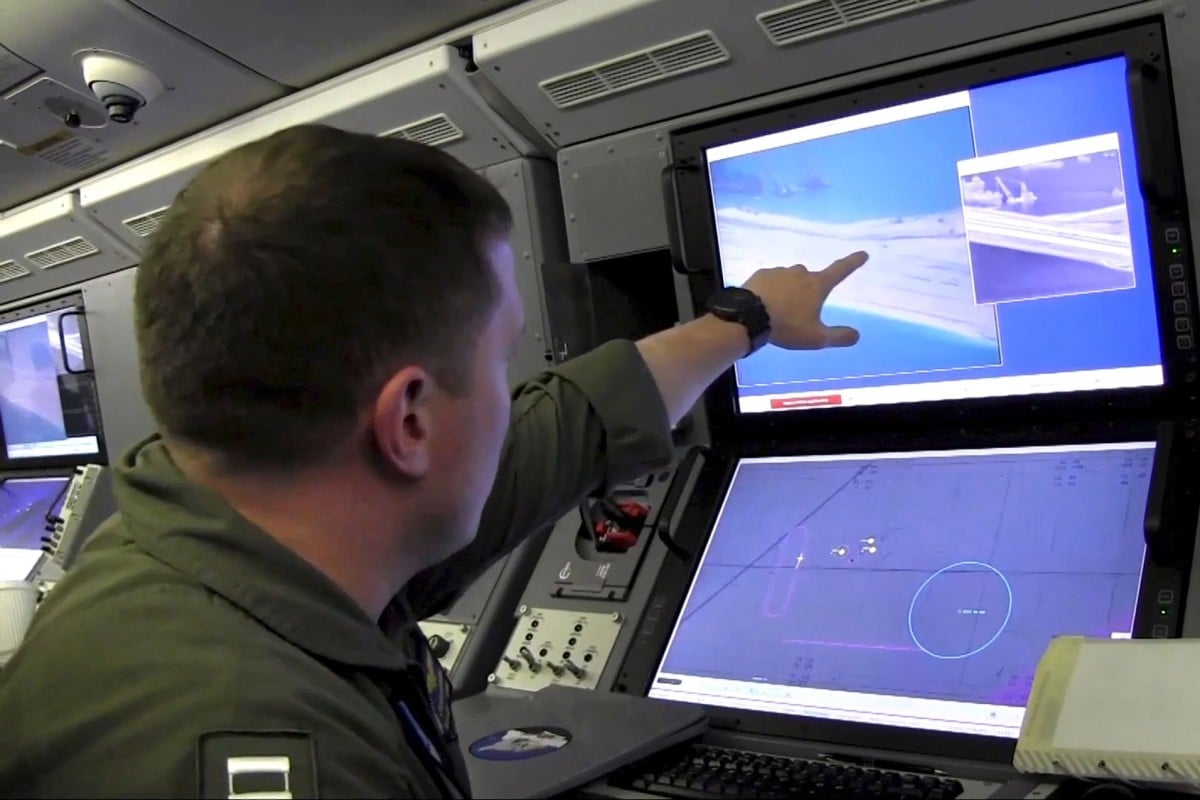
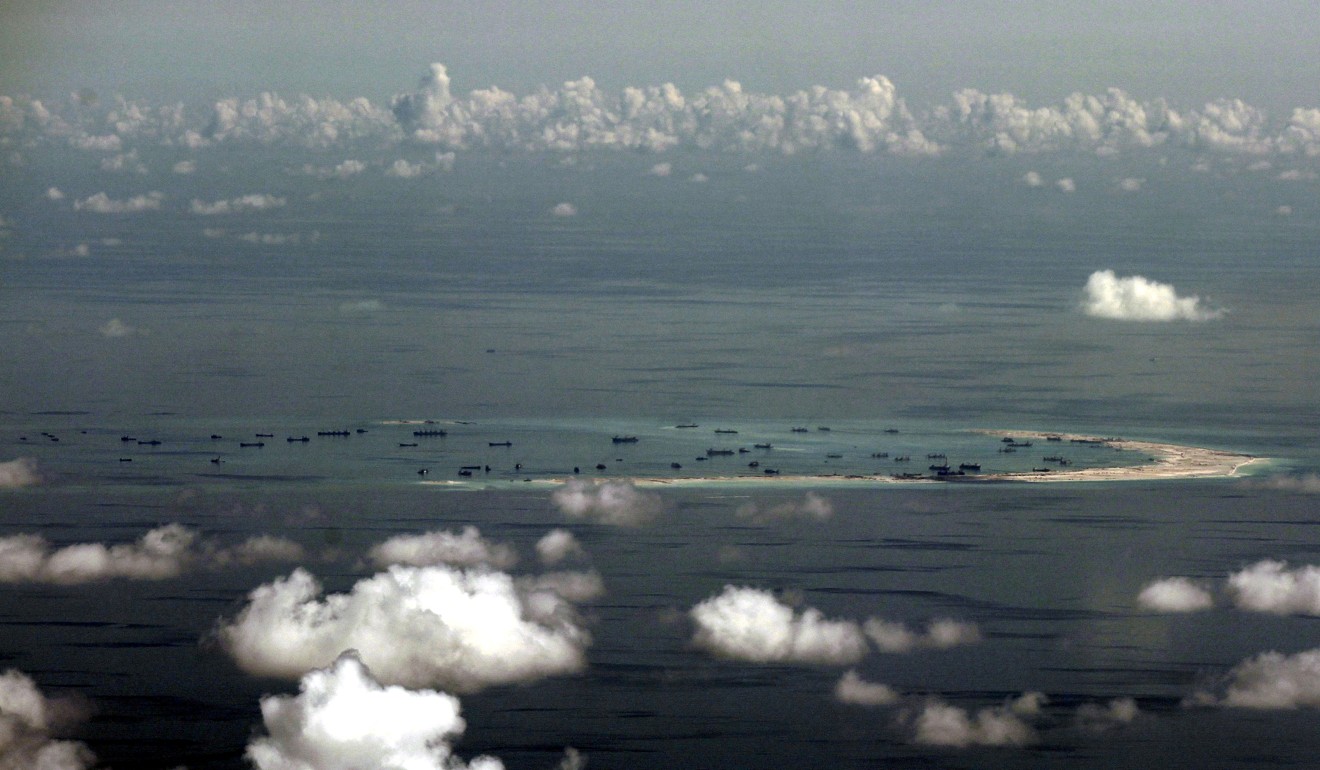
US Navy personnel point at a computer screen showing Chinese activity on the Fiery Cross Reef in the Spratly Islands in the South China Sea. An Australian scholar said
Chinese ships pointed lasers at them during a flight over the disputed sea. Photo: Reuters
Australian navy helicopter pilots were hit by lasers and forced to land during exercises in
flagship HMAS Canberra during a voyage from Vietnam to Singapore, said the lasers had been pointed from passing fishing vessels while the Canberra was being
“Was this startled fishermen reacting to the unexpected? Or was it the sort of coordinated harassment more suggestive of China’s maritime militia? It’s hard to say for sure, but similar incidents have occurred in the western Pacific,” he wrote on the website The Strategist run by the Australian Strategic Policy Institute, an independent, non-partisan think tank based in Canberra.
His account of the incident appeared on Tuesday.
The Mischief Reef in the Spratly Islands in the South China Sea, where China is said to be increasing its military presence. Photo: Reuters
China maintains a robust maritime militia in the South China Sea, composed of fishing vessels equipped to carry out missions just short of combat. China claims the strategic waterway virtually in its entirety and is sensitive to all foreign naval action in the area, especially by
Similar incidents involving lasers and the Chinese military have been reported as far away as Djibouti, where the US and China have bases. Last year, the US complained to China after lasers were directed at aircraft in the Horn of Africa nation, causing minor injuries to two American pilots.
China denied that its forces targeted the US military aircraft.
Graham said that while bridge-to-bridge communications with the Chinese during the voyage were courteous, the Chinese requested the Australian warships notify them in advance of any corrections to their course.
That was something the Australian navy was “not about to concede while exercising its high-seas freedoms”, Graham wrote.
In South China Sea, Asean has a choice: ‘Asian values’ or rule of law?
He wrote that the constant presence of Chinese vessels shadowing foreign ships appeared to indicate that the Chinese fleet had grown large enough to allow it to have vessels lying in wait for just such orders.
He said their trailing actions also appeared to show that China’s over-the-horizon surveillance capability was also maturing, supported by technology based at points such as Fiery Cross Reef in the contested Spratly island group where China has built military installations and an airstrip atop coral reefs.
Five other governments have claims in the South China Sea that overlap with China’s, and the US and its allies insist on the right to sail and fly anywhere in the area is permitted under international law, despite China’s differing interpretation of such guidelines.
Graham, who is executive director of La Trobe Asia at La Trobe University in Australia, was one of several academics invited to observe Australia’s engagement exercise Indo-Pacific Endeavour 2019.





 CHINDIA ALERT: You'll be living in their world, very soon