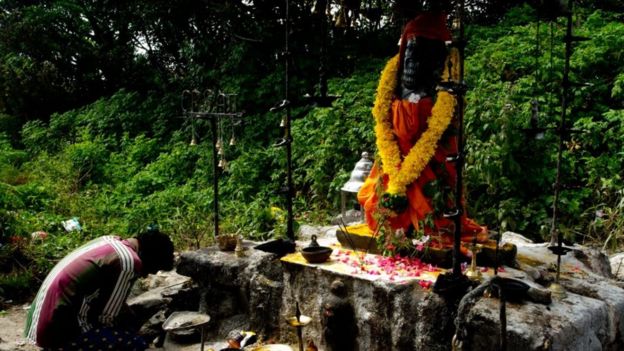
Archive for ‘banned’

07/02/2020

Li Wenliang: Coronavirus death of Wuhan doctor sparks anger

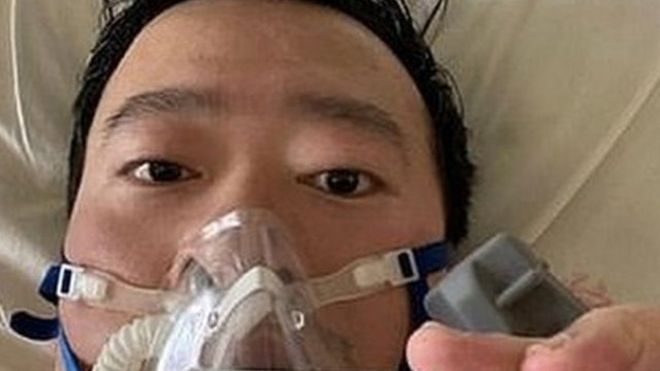
Dr Li posts a picture of himself in a gas mask from his hospital bed on FridayImage copyright DR LI WENLIANG
Image caption Dr Li had posted a picture of himself on social media from his hospital bed

The death of a Chinese doctor who tried to warn about the coronavirus outbreak has sparked an unprecedented level of public anger and grief in China.

Li Wenliang died after contracting the virus while treating patients in Wuhan.

Last December he sent a message to fellow medics warning of a virus he thought looked like Sars – another deadly coronavrius.

But he was told by police to “stop making false comments” and was investigated for “spreading rumours”.

News of his death was met with an intense outpouring of grief on Chinese social media site Weibo – but this quickly turned into anger.

There had already been accusations against the government of downplaying the severity of the virus – and initially trying to keep it secret.

Dr Li’s death has fuelled this further and triggered a conversation about the lack of freedom of speech in China.

The country’s anti-corruption body has now said it will open an investigation into “issues involving Dr Li”.

The Chinese government has previously admitted “shortcomings and deficiencies” in its response to the virus, which has now killed 636 people and infected 31,161 in mainland China.
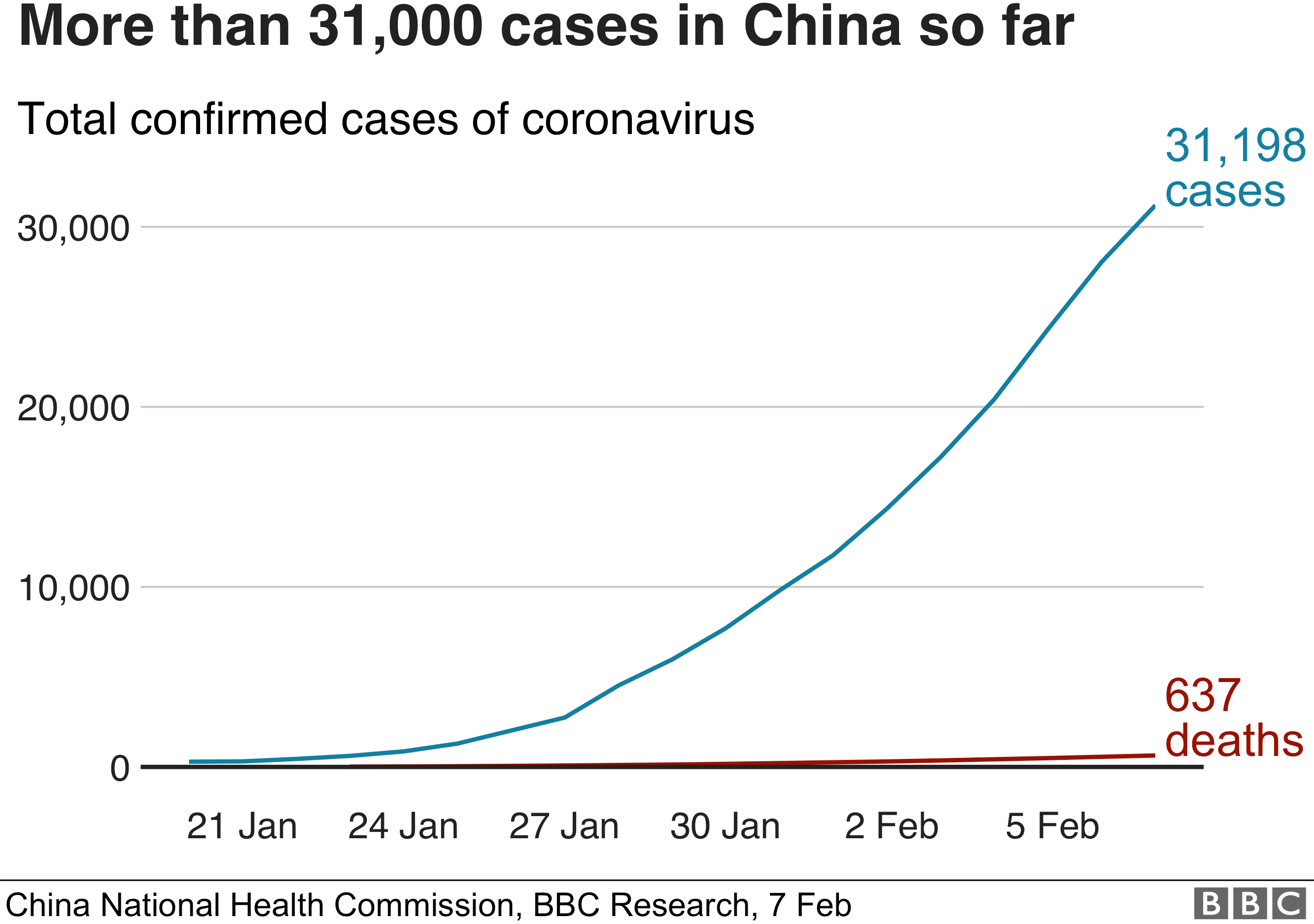

Graphic showing the number of cases in China so far
Presentational white space

According to Chinese site Pear Video, Dr Li’s wife is due to give birth in June.

What has the public reaction been?

Chinese social media has been flooded with anger – it is hard to recall an event in recent years that has triggered as much grief, rage and mistrust against the government.

The top two trending hashtags on the website were “Wuhan government owes Dr Li Wenliang an apology” and “We want freedom of speech”.

Both hashtags were quickly censored. When the BBC searched Weibo on Friday, hundreds of thousands of comments had been wiped. Only a handful remain.

“This is not the death of a whistleblower. This is the death of a hero,” said one comment on Weibo.

A photo circulating on Twitter reportedly sourced from messaging platform WeChat also shows a message in Chinese saying “Farewell Li Wenliang” written in the snow on a riverbank.

Many have now taken to posting under the hashtag “Can you manage, do you understand?” – a reference to the letter Dr Li was told to sign when he was accused of disturbing “social order”.

These comments do not directly name him – but are telling of the mounting anger and distrust towards the government.
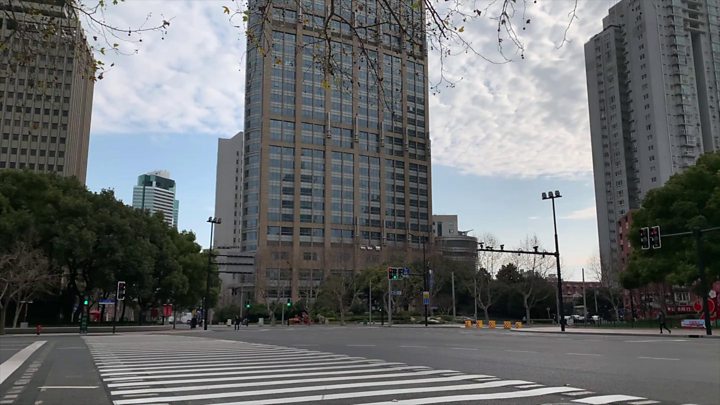
Media caption Coronavirus: Shanghai’s deserted streets and metro

“Do not forget how you feel now. Do not forget this anger. We must not let this happen again,” said one comment on Weibo.

“The truth will always be treated as a rumour. How long are you going to lie? What else do you have to hide?” another said.

“If you are angry with what you see, stand up,” one said. “To the young people of this generation, the power of change is with you.”

Presentational grey line

An epic political disaster

Analysis box by Stephen McDonell, China correspondent

The death of Dr Li Wenliang has been a heart-breaking moment for this country. For the Chinese leadership it is an epic political disaster.

It lays bare the worst aspects of China’s command and control system of governance under Xi Jinping – and the Communist Party would have to be blind not to see it.

If your response to a dangerous health emergency is for the police to harass a doctor trying to blow the whistle, then your structure is obviously broken.

The city’s mayor – reaching for excuses – said he needed clearance to release critical information which all Chinese people were entitled to receive.

Now the spin doctors and censors will try to find a way to convince 1.4 billion people that Dr Li’s death is not a clear example of the limits to the party’s ability to manage an emergency – when openness can save lives, and restricting it can kill.

Chinese people are going to take some convincing.

Presentational grey line

How was the death announced?

There was confusion over when exactly Dr Li had actually died.

He was initially declared dead at 21:30 on Thursday (13:30GMT) by state media outlets the Global Times, People’s Daily and others.

Hours later the Global Times contradicted this report – saying he had been given a treatment known as ECMO, which keeps a person’s heart pumping.

Journalists and doctors at the scene said government officials had intervened – and official media outlets had been told to change their reports to say the doctor was still being treated.

But early on Friday, reports said doctors could not save Dr Li and his time of death was 02:58 on Friday.
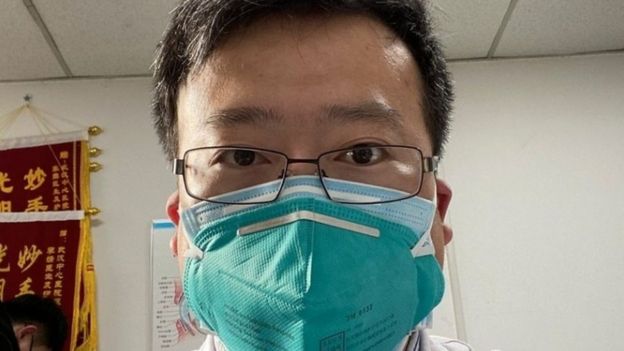
Li WenliangImage copyright LI WENLIANG
Image caption Li Wenliang contracted the virus while working at Wuhan Central Hospital

What did Li Wenliang do?

Dr Li, an ophthalmologist, posted his story on Weibo from a hospital bed a month after sending out his initial warning.

He had noticed seven cases of a virus that he thought looked like Sars – the virus that led to a global epidemic in 2003.

On 30 December he sent a message to fellow doctors in a chat group warning them to wear protective clothing to avoid infection.
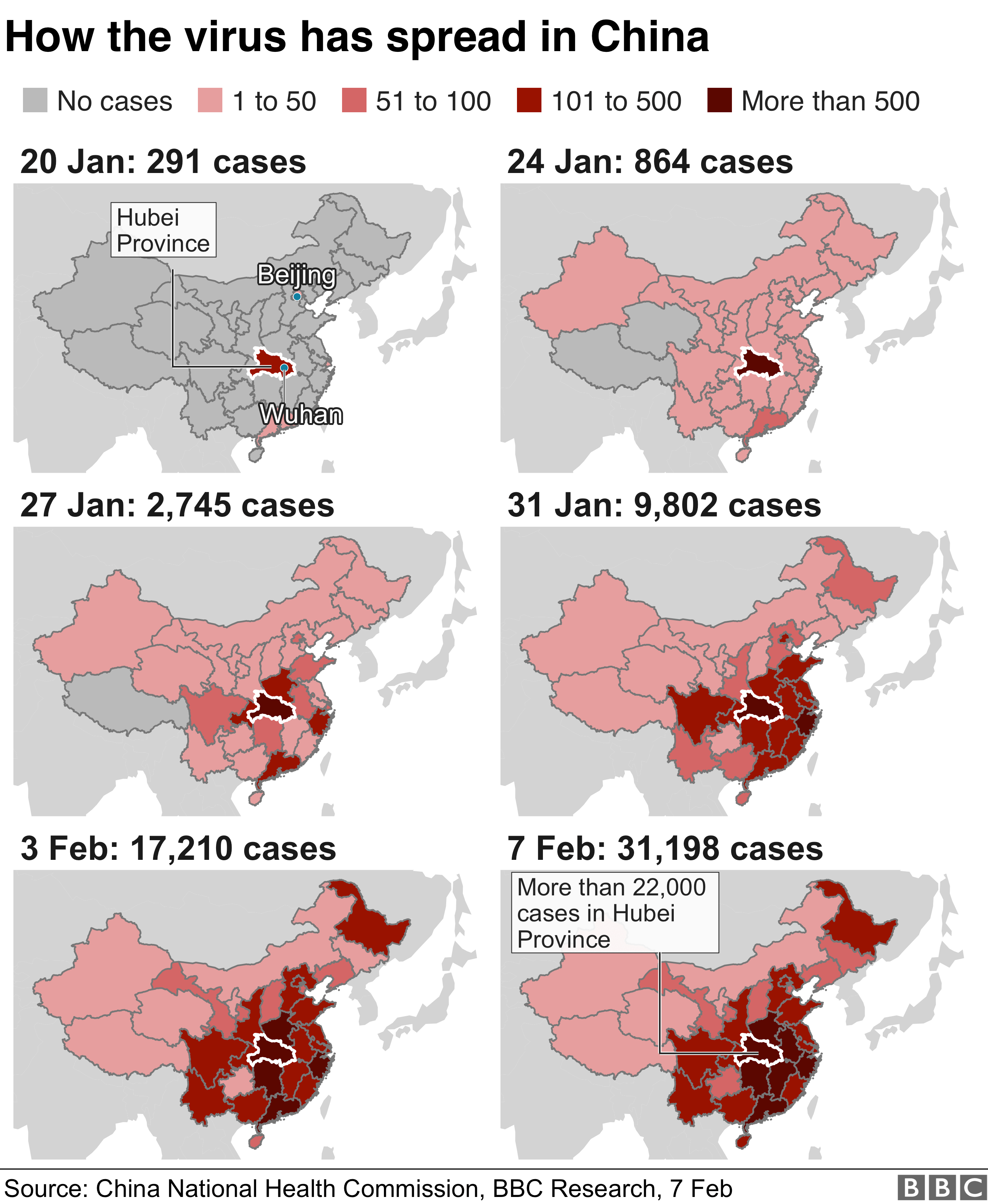
Graphic showing how the virus spread inside China
Four days later he was summoned to the Public Security Bureau where he was told to sign a letter.

In the letter he was accused of “making false comments” that had “severely disturbed the social order”. Local authorities later apologised to Dr Li.

In his Weibo post he describes how on 10 January he started coughing, the next day he had a fever and two days later he was in hospital. He was diagnosed with the coronavirus on 30 January.
Media caption The BBC’s online health editor on what we know about the virus

What is the latest on the coronavirus?

Chinese President Xi Jinping has told his US counterpart Donald Trump that China is “fully confident and capable of defeating the epidemic”. The country has introduced more restrictive measures to try to control the outbreak:

  • The capital Beijing has banned group dining for events such as birthdays. Cities including Hangzhou and Nanchang are limiting how many family members can leave home each day
  • Hubei province has switched off lifts in high-rise buildings to discourage residents from going outside.

The virus has now spread to more than 25 countries. There have been more than 28,000 cases worldwide but only two of the deaths have been outside mainland China.

Source: The BBC
26/01/2020

Coronavirus: Chinese embassy in Paris finds woman who ‘cheated’ checks

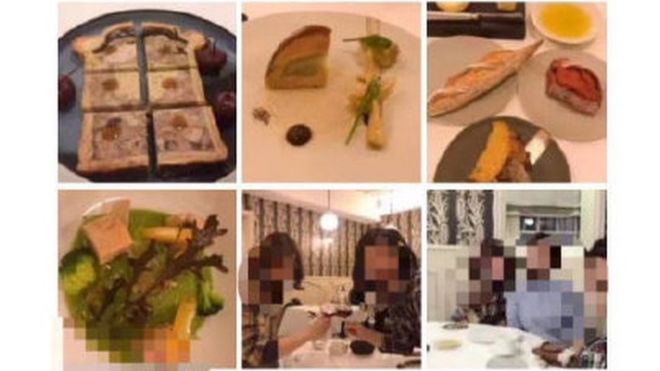
Pictures posted by the woman on WeChatImage copyright WEIBO
Image caption She posted pictures of her meal on social media platform WeChat

The Chinese embassy in Paris has tracked down a woman from Wuhan who said she took tablets to pass airport health checks.

The woman boasted on social media that she had been suffering from a fever, but managed to reduce her symptoms with medicine.

She later posted pictures showing herself dining at what she claimed was a Michelin-starred restaurant in Lyon.

The embassy has now confirmed that her symptoms are under control.

The woman left Wuhan – where the new coronavirus emerged late last year – before flights were suspended, but when thermal scanning was in place.

Since yesterday, public transport has been shut down, with residents told not to leave the city.

At least 25 people with the virus have died. It was first reported to the World Health Organization 31 December.

The virus has spread to countries as far as South Korea, Japan and the US.

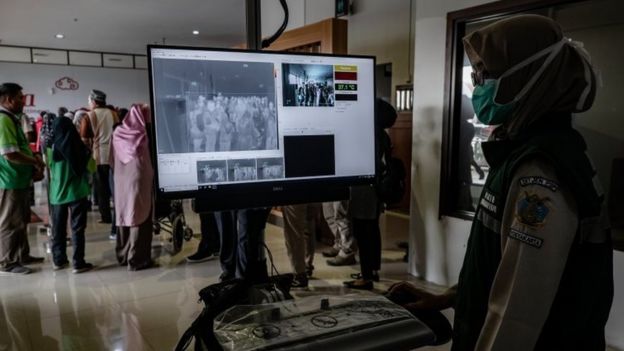
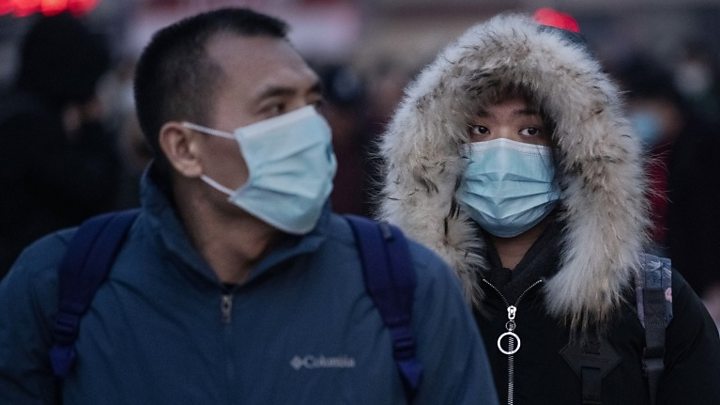
People have been thermally scanned when leaving Wuhan, and arriving at their destination. This picture was taken in Indonesia on ThursdayImage copyright GETTY IMAGES
Image caption People have been thermally scanned when leaving Wuhan, and arriving at their destination. This picture was taken in Indonesia on Thursday

The woman detailed her journey to Lyon on social media site WeChat.

“Finally I can have a good meal, I feel like I’ve been starving for two days. When you are in a gourmet city of course you have to eat Michelin [food],” she wrote.

“Just before I left, I had a low fever and cough. I was scared to death and rushed to eat [fever-reducing] medicine. I kept on checking my temperature. Luckily I managed to get it down and my exit was smooth.”

She also posted pictures of the meal she enjoyed. It is not clear exactly when she arrived.

Her post quickly went viral and she was widely criticised by other social media users.

The Chinese embassy in Paris said it had received calls and emails about the woman. It said she had taken antipyretics, and that it attached “great importance” to the case.

The embassy said it contacted her on Wednesday evening and asked her to refer herself to medical services.

On Thursday, in a new statement, the embassy said the woman’s temperature was under control, and that she had no more fever or cough symptoms.

It added that she did not require “further examinations” at this point.

Media caption Fears over coronavirus in China trigger face mask shortage

China has effectively quarantined nearly 20 million people in Hubei province. Other major cities in China like Beijing and Shanghai are also affected.

Authorities have cancelled all large-scale celebrations in Beijing. Temple fairs are banned, film releases postponed and the Forbidden City will be closed to the public.

All this comes as millions of Chinese people are travelling across the country for Lunar New Year.

Currently known as 2019-nCoV, the virus is understood to be a new strain of coronavirus not previously identified in humans.

Source: The BBC
05/11/2019

Chinese pilot banned from flying after passenger cockpit photo

Photo taken from microblogging site WeiboImage copyright WEIBO/SCREENSHOT
Image caption The female passenger is seen here with her fingers in a V pose, also known as the peace sign

A Chinese pilot has been banned from flying after a photo went viral showing a female passenger in the cockpit.

The photo was taken in January on an Air Guilin flight from Guilin city to Yangzhou city, state media said, but was widely shared this week – causing the airline to take action.

It shows a woman posing in the cockpit with refreshments laid out next to her.

Air Guilin said in a statement the pilot had violated air safety regulations.

‘Thanks to the captain’

The incident took place on 4 January on flight GT1011 from Guilin city to Yangzhou city, according to state media outlet The Global Times.

But it was brought to the airline’s attention on Sunday after screenshots of the alleged passenger’s post started being shared widely on micro-blogging site Weibo.

The post showed the woman making a V sign with her fingers – a popular pose in China – with the photo captioned: “Thanks to the captain. So happy.”

The woman is rumoured to be a flight attendant in training at a Guilin university, according to news site Chinese News Service.

Air Guilin did not specify if the photo was taken mid-flight, but Chinese pilots and analysts said the photo appears to have been taken during the flight.

The pilot, who was not named, has been banned from flying for life, though it is unclear if he was fired from all roles by the airline.

Air Guilin said in a statement that he had “violated [regulations] by allowing irrelevant personnel into the cockpit”.

According to the Civil Aviation Administration of China, passengers are not allowed to enter the cockpit without special approval or under “necessary” circumstances.

Other staff members involved in the incident have also been “suspended indefinitely” while further investigations are held.

“Passengers’ safety is always Air Guilin’s priority. We take a zero-tolerance approach against any inappropriate and unprofessional behaviour that might risk the aviation safety,” the Chinese carrier said.

Last year, Chinese carrier Donghai Airlines suspended a pilot for six months and revoked his qualifications as a flight instructor after he allowed his wife to go inside the cockpit.

Source: The BBC
01/11/2019

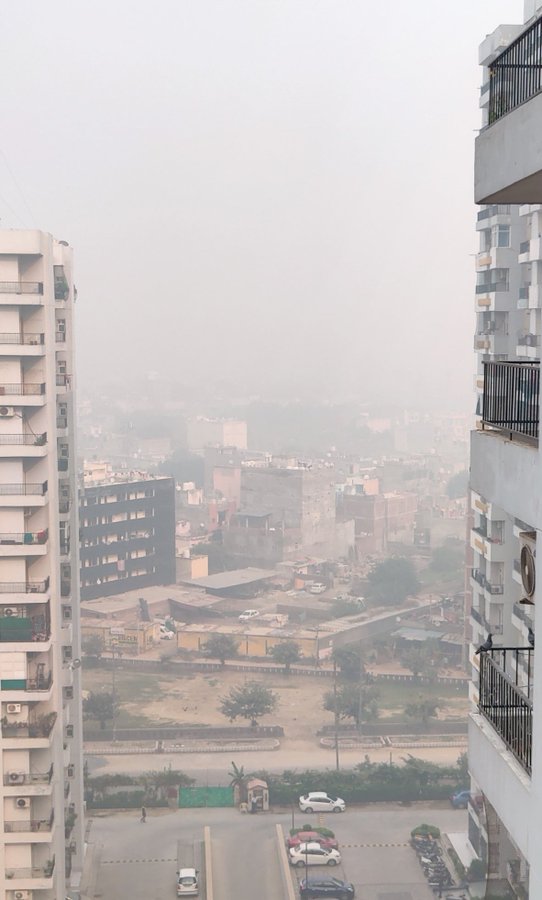
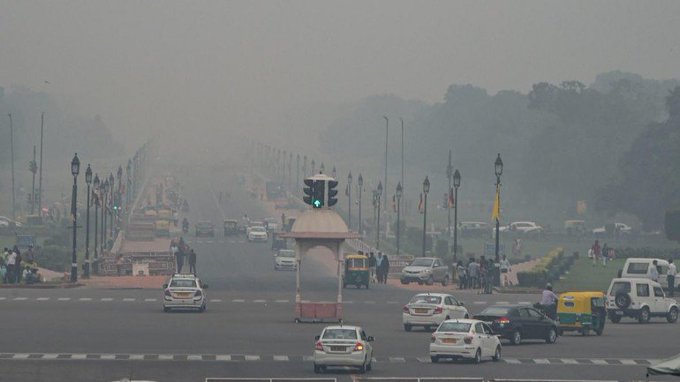
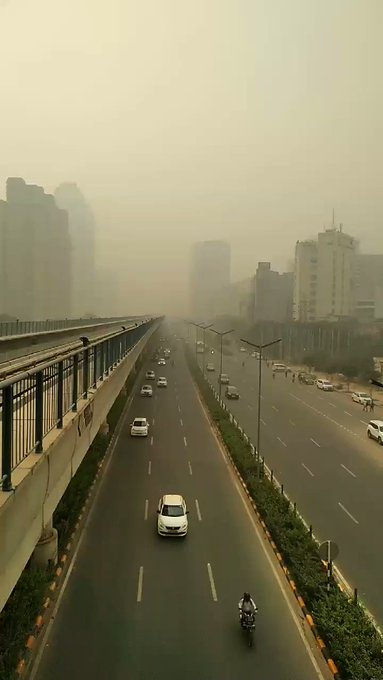
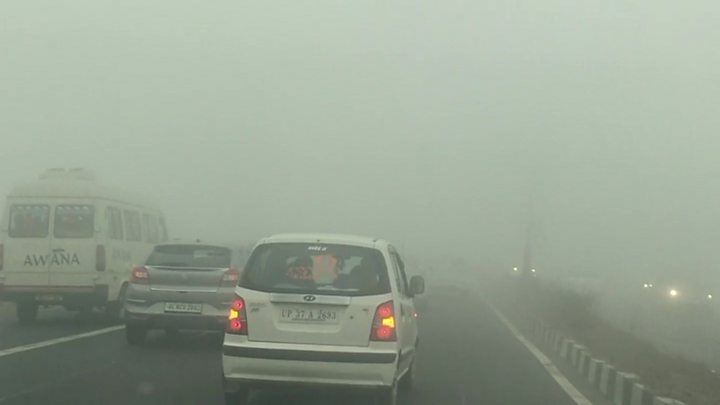
Millions of masks distributed to students in ‘gas chamber’ Delhi

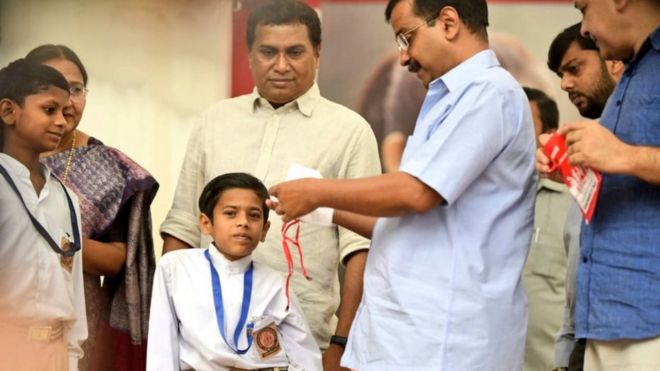
Delhi Chief Minister Arvind Kejriwal distributing masks to studentsImage copyright TWITTER/@ARVINDKEJRIWAL
Image caption Delhi Chief Minister Arvind Kejriwal has been handing out masks to school students

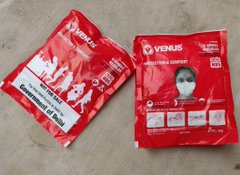
Five million masks are being distributed at schools in India’s capital, Delhi, after pollution made the air so toxic officials were forced to declare a public health emergency.

A Supreme Court mandated panel imposed several restrictions in the city and two neighbouring states, as air quality deteriorated to “severe” levels.

All construction has been halted for a week and fireworks have been banned.

The city’s schools have also been closed until at least next Tuesday.

Delhi’s Chief Minister Arvind Kejriwal said Delhi had been turned into a “gas chamber”.

The masks are being handed out to students and their parents, and Mr Kejriwal has asked people to use them as much as possible.

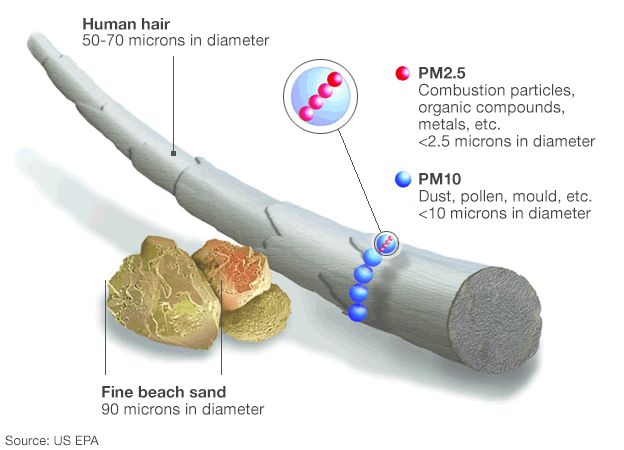
The levels of tiny particulate matter (known as PM2.5) that enter deep into the lungs are 533 micrograms per cubic metre in the city. The WHO recommends that the PM2.5 levels should not be more than 25 micrograms per cubic metre on average in 24 hours.

As thick white smog blanketed the city, residents started tweeting pictures of their surroundings. Many are furious that the situation remains the same year after year.

The hashtags #DelhiAirQuality and #FightAgainstDelhiPollition are trending on Twitter.

Skip Twitter post by @vishmlondhe
One of the main reasons for air quality in the city worsening every year in November and December is that farmers in the neighbouring states of Punjab and Haryana burn crop stubble to clear their fields. It’s made worse by the fireworks during the Hindu festival of Diwali.

There are other reasons too, including construction dust, factory and vehicular emissions, but farm fires remain the biggest culprit.

Media caption A hair-raising drive through the Delhi smog

More than two million farmers burn 23 million tonnes of crop residue on some 80,000 sq km of farmland in northern India every winter.

The stubble smoke is a lethal cocktail of particulate matter, carbon dioxide, nitrogen dioxide and sulphur dioxide.

Using satellite data, Harvard University researchers estimated that nearly half of Delhi’s air pollution between 2012 and 2016 was due to stubble burning.

The burning is so widespread that it even shows up in satellite photos from Nasa.


What are PM 2.5 particles?

Infographic
  • Particulate matter, or PM, 2.5 is a type of pollution involving fine particles less than 2.5 microns (0.0025mm) in diameter
  • A second type, PM 10, is of coarser particles with a diameter of up to 10 microns
  • Some occur naturally – e.g. from dust storms and forest fires, others from human industrial processes
  • They often consist of fragments that are small enough to reach the lungs or, in the smallest cases, to cross into the bloodstream as well

Source: The BBC
05/10/2019

India’s onion crisis: Why rising prices make politicians cry

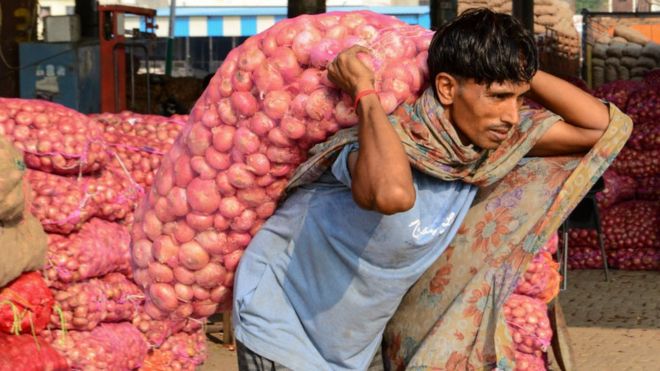
A labourer carries a sack of onions at a wholesale vegetable market on the outskirts of Amritsar on September 19, 2019.Image copyright GETTY IMAGES
Image caption The onion is India’s most “political” vegetable

Onion prices have yet again dominated the headlines in India over the past week. BBC Marathi’s Janhavee Moole explains what makes this sweet and pungent vegetable so political.

The onion – ubiquitous in Indian cooking – is widely seen as the poor man’s vegetable.

But it also has the power to tempt thieves, destroy livelihoods and – with its fluctuating price a measure of inflation – end the careers of some of India’s most powerful politicians.

With that in mind, it’s perhaps unsurprising those politicians might be feeling a little concerned this week.

So, what exactly is happening with India’s onions?

In short: its price has skyrocketed.

Onion prices had been on the rise in India since August, when 25 rupees ($0.35; £0.29) would have got you a kilo. At the start of October, that price was 80 rupees ($1.13; £0.91).

Fearing a backlash, the Bharatiya Janata Party (BJP)-led government banned onion exports, hoping it would bring down the domestic price. And it did.

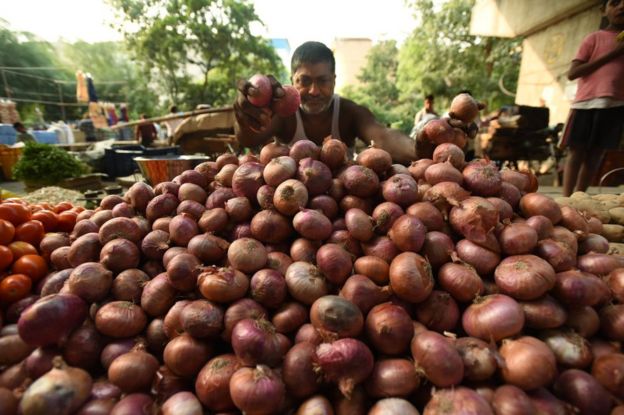
Vegetable vendors sell onions by the road, at Sector 25 on September 24, 2019 in Noida, India.Image copyright GETTY IMAGES
Image caption Onion prices peaked by the end of September

A kilo was selling for less than 30 rupees on Thursday at Lasalgaon, Asia’s largest onion wholesale market, located in the western state of Maharashtra.

However, not everyone is happy.

While high prices had angered consumers in a sluggish Indian economy, the fall in prices sparked protests by exporters and farmers in Maharashtra, where state elections are due in weeks.

And it is not just at home where hackles have been raised: the export ban has also strained trade relations between India and its neighbour, Bangladesh, which is among the top importers of the vegetable.

But why does the onion matter so much?

The onion is a staple vegetable for the poor, indispensable to many Indian cuisines and recipes, from spicy curries to tangy relishes.

“In Maharashtra, if there are no vegetables or you can’t afford to buy vegetables, people eat ‘kanda bhakari’ [onion with bread],” explains food historian Dr Mohseena Mukadam.

True, onions are not widely used in certain parts of the country, such as the south and the east – and some religious communities don’t eat them at all.

But they are especially popular in the more populous northern states which – notably – send a higher number of MPs to India’s parliament.

“Consumers in northern India wield more power over the federal government. So although consumers in other parts of India don’t complain as much about higher prices, if those in northern India do, the government feels the pressure,” says Milind Murugkar, a policy researcher.

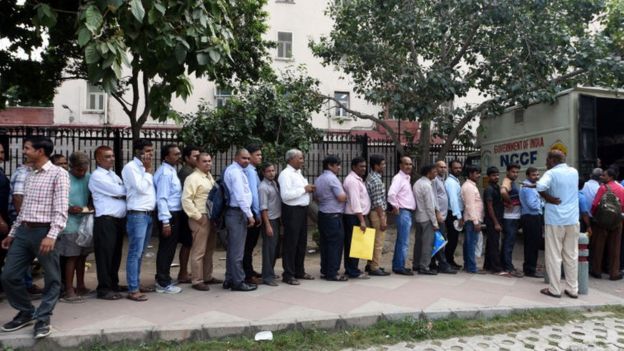
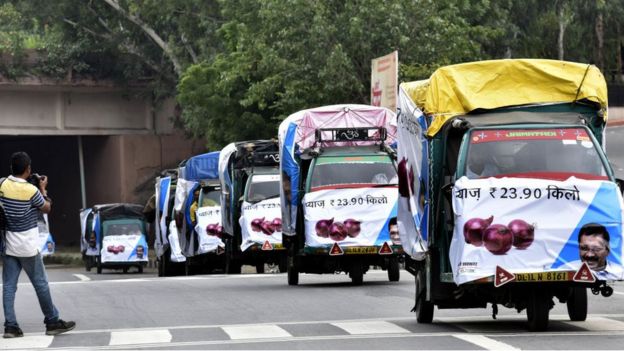
People stand in a queue to buy onions sold at Rs. 22 per kg by the Government of India, outside Krishi Bhawan on September 24, 2019 in New Delhi, India.Image copyright GETTY IMAGES
Image caption Onions are so ubiquitous that the government has been selling them at subsided rates

A drop in prices also affects the income of onion farmers, mainly in Maharashtra, Karnataka in the south and Gujarat in the west.

“Farmers see the onion as a cash crop that grows in the short term, and grows well in dry areas with less water,” says Dipti Raut, a journalist, who has been on the “onion beat” for years.

“It’s like an ATM machine that guarantees income to farmers and sometimes, their household budget depends on the onion produce,” she said.

Onions have even attracted robbers: when prices skyrocketed in 2013, thieves tried to steal a truck loaded with onions, but were caught by the police.

Why do politicians care about the onion?

Put simply, because the price moving too far one way or another is likely to anger a large block of voters, be they everyday households, or the country’s farmers.

Control rate onion vans seen after flagged off by Chief Minister of Delhi Arvind Kejriwal, at Delhi secretariat, on September 28, 2019 in New Delhi, India.Image copyright GETTY IMAGES
Image caption The Delhi government transported 70 vans full of subsidised onions

Onions are so crucial they have even featured in election campaigns. The Delhi state government bought and sold them at subsidised rates in September when prices were at their peak: chief minister Arvind Kejriwal, it should be noted, is up for re-election next year.

Meanwhile, Indira Gandhi swept to power in 1980 on slogans that used soaring onion prices as a metaphor for the economic failures of the previous government.

But why did onion prices rise this year?

A drop in supply, due to heavy rains and flooding destroying the crop in large parts of India, and damaging some 35% of the onions stocks in storage, according to Nanasaheb Patil, director of the National Agricultural Co-operative Marketing Federation.

He said the flooding had also delayed the next round of produce, which was due in September.

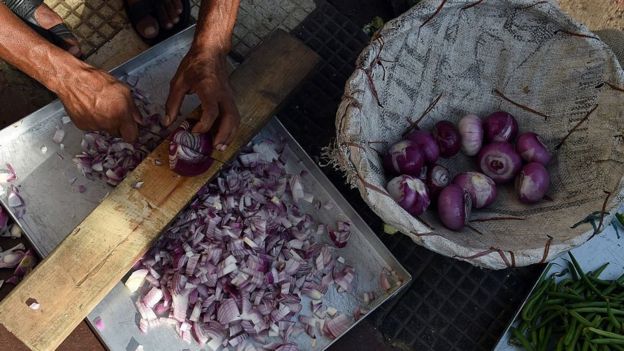
An Indian restaurant worker cuts onions for curries in New Delhi on September 11, 2015.Image copyright GETTY IMAGES

“This has become a fairly regular phenomenon in recent decades,” Mr Murugkar said. “Onion prices swing heavily with a small drop or increase in production.”

In fact, the shortage – and subsequent rise in prices – happens almost every year around this time, according to Ms Raut.

“It’s a vicious cycle and the trader lobby and middlemen benefit from even the slightest price fluctuations,” she added.

What’s the solution?

Ms Raut says more grass-root planning and better storage facilities and food processing services will ease the problem – and making a variety of cash crops and vegetables available across the country would also ease the pressure on onions.

“The government is quick to act when onion prices rise. Why don’t they act as swiftly when prices fall?” asked Vikas Darekar, an onion farmer in Maharashtra. He said the government should buy onions from farmers at a “fair price”.

Mr Murugkar, however, feels that the government should never interfere in “onion matters”.

“If you are interested in raising purchasing power of the people, they should not curtail exports. Do we have such a ban on software exports? It’s really absurd. A government which has won such a huge majority should be able to withstand the pressures from a few consumers.”

Source: The BBC
16/01/2019

India woman makes historic ascent of ‘banned’ sacred peak

Dhanya SanalImage copyrightDHANYA SANAL
Image captionDhanya Sanal was the first woman to scale the peak

An Indian woman has climbed a mountain, where only men were allowed until now for religious reasons.

Dhanya Sanal’s ascent to the summit of Agasthyakoodam in southern Kerala state came after a court ruling in November.

Local tribespeople oppose women climbing it because of a statue of a Hindu sage on top they say is celibate.

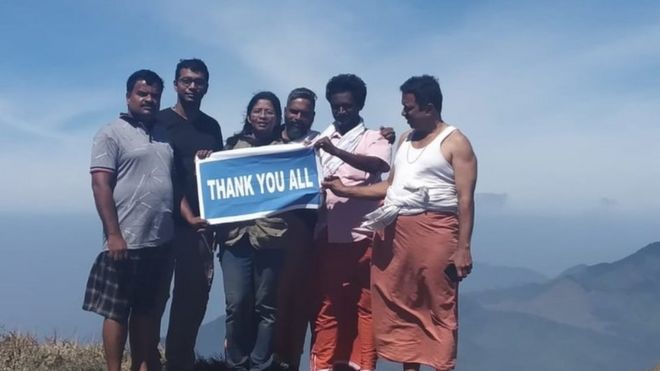
Ms Sanal, 38, told the BBC she had not been stopped by locals or protesters. Campaigners say it’s a victory in the fight to end gender discrimination.

Ms Sanal said she had been “ready to turn back” if tribespeople stopped her, but while she did encounter protesters, she said they had not prevented her from continuing her trek.

In November, the high court in Kerala ruled that women could trek to the 1,868m (6,128ft) peak. The court said that restrictions on trekking could not be based on gender after a women’s group petitioned the court.

The group welcomed Ms Sanal’s climb.

“We have moved one step ahead in ending gender discrimination in Kerala,” Divya Divakaran, one of its members, told the BBC.

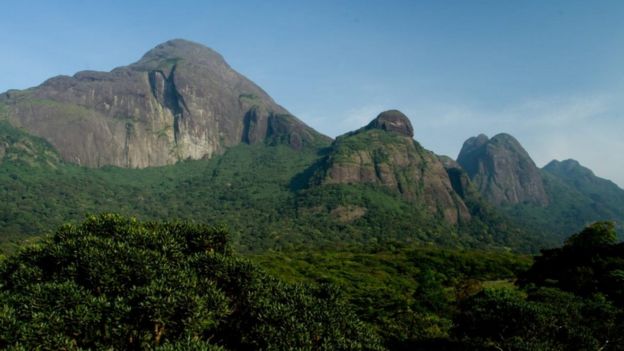
Agasthyakoodam mountainImage copyrightSALI PALODE
Image captionAgasthyakoodam is the second highest peak in Kerala

Located within a biosphere reserve in India’s Western Ghats, Agasthyakoodam is the second highest peak in Kerala.

The high court rejected the claim made by tribespeople, who live at the foothills, that the verdict hurt their beliefs.

They had said they worshipped the sage, Agastya, and did not want women in the vicinity of his idol as that amounted to disrespecting his celibacy.

The terrain is steep and rocky and the trail is inside a thick forest. Trekkers often take two or three days to scale the peak.

“It is extremely tough terrain that demands extra physical fitness,” Ms Sanal told the Times of India newspaper.

She was the only woman in a group of 100 trekkers. The group was accompanied by two female forest officials.

Officials told the BBC that more than 100 women had registered for treks in the coming weeks.

A local offering prayer to the idol of sage AgastyaImage copyrightSALI PALODE
Image captionLocal tribespeople revere the sage whose idol is at the peak

Earlier this month, two women made history in Kerala by entering a prominent Hindu shrine, following months of protests against their entry.

The Sabarimala temple was historically closed to women of “menstruating age” – defined as between 10 and 50. Devotees believe that the deity is an avowed bachelor and the ban was in keeping with his wishes.

Hinduism regards menstruating women as unclean and bars them from participating in religious rituals.

The women’s entry to the shrine prompted massive protests across Kerala.

One of the two women is recovering in hospital after her mother-in-law allegedly attacked her for entering the temple.

Source: BBC

Law of Unintended Consequences

continuously updated blog about China & India

ChiaHou's Book Reviews

continuously updated blog about China & India

What's wrong with the world; and its economy

continuously updated blog about China & India