Archive for ‘base’

29/04/2020

China’s biggest banks post profit growth amid pandemic, but margins shrink

BEIJING/SHANGHAI (Reuters) – China’s biggest listed banks posted higher profits in the first quarter despite the wider impact of the coronavirus pandemic on the economy, though margins shrank.

The world’s largest commercial lender Industrial and Commercial Bank of China Ltd (ICBC)  (601398.SS)(1398.HK) on Tuesday reported a 3.04% rise in first quarter net profit compared to a year earlier, while Bank of Communications Co Ltd (BoCom) (601328.SS)(3328.HK) reported a 1.8% rise.

Meanwhile at Agricultural Bank of China Ltd (AgBank) (1288.HK)(601288.SS) and China Construction Bank Ltd (CCB) (601939.SS)(0939.HK), first quarter net profit rose 4.79% and 5% respectively from the same period last year.

Following suit, Bank of China Ltd (BOC) (601988.SS) (3988.HK) posted on Wednesday a 3.17% rise in first-quarter net profit.

The growth came despite China’s economy posting the first quarterly contraction since at least 1992 due to the coronavirus pandemic. The government restricted people from travelling and going back to work to contain the spread of the virus, reducing revenue for companies and income for residents.

China’s largest banks are historically more resilient than their smaller kin, as they lend more to state-backed enterprises and have larger capital reserves.

However, despite this firmer base, net interest margins shrank at four of the five lenders, as loan prime rate reform and looser monetary policy weighed, said analysts.

AgBank did not report its net interest margin, the difference between what banks pay on deposits and earn on loans.

SOURED DEBT

ICBC, AgBank and CCB bucked the trend of the wider banking sector by posting steady non-performing loan (NPL) ratios.

The banking sector’s NPL ratio climbed in the first quarter to 2.04%, the banking and insurance regulator said, the highest level since the global financial crisis.

The rise came despite Chinese regulators moving to give banks leeway, allowing them to postpone some loan repayments until the end of June, as credit card and mortgage defaults surged.

About one-third of Chinese bank loans are to sectors including transport and retail that are significantly stressed by the pandemic, according to S&P Global.

“You can see generally from banks’ results that some lenders have reported falling asset quality, the NPL ratios have risen quite a lot,” said Richard Cao, an analyst at Guotai Junan International on Monday.

The largest banks are best placed to absorb such losses with a better ability to get financing and withstand a substantial volume of bad loans, S&P said in a research note in April.

Source: Reuters
18/04/2020

India coronavirus: Navy says 21 sailors test positive at key Mumbai base

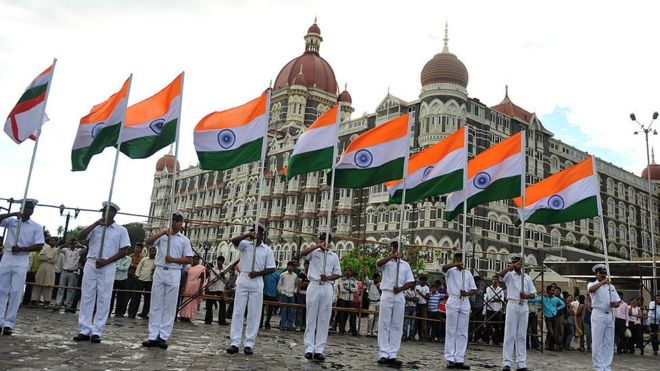
Navy cadets take part in a rehearsal infront of the Taj Mahal hotel in Mumbai on November 24, 2010.Image copyright GETTY IMAGES

Indian defence officials have reported a coronavirus outbreak at a key naval base in the western city of Mumbai.

Twenty-one personnel have tested positive for Covid-19 at INS Angre, which is the seat of the force’s western command, the navy said in a statement on Saturday.

It added that there are no infections aboard any ships or submarines.

India has 11,906 active infections and 480 deaths, according to the latest data from the ministry of health.

The Navy said that they had tested a number of personnel who had come into contact with a soldier who had tested positive earlier this month. Many of those who had tested positive for the virus, the statement added, were asymptomatic.

They are all currently undergoing treatment.

All 21 personnel live in the same residential block, which has been declared a containment zone and has been placed under lockdown.

In a video message to personnel last week, Navy Chief Admiral Karambir Singh stressed the importance of keeping ships and submarines free of the virus.

“The coronavirus pandemic is unprecedented and it has never been seen before. Its impact has been extraordinary across the globe, including India,” he said.

The navy has been playing an active role in India’s response to the Covid-19 outbreak.

It has set up isolation facilities to treat patients at one of its premier hospital units and is also running quarantine camps.

The outbreak aboard the Indian naval base follows reports of outbreaks aboard vessels belonging to other nations.

More than 500 sailors on the USS Roosevelt have tested positive for the virus and one of them died earlier this week. And nearly a third of the sailors serving with France’s aircraft carrier Charles de Gaulle – 668 out of nearly 2,000 – have been infected with coronavirus.

Source: The BBC

19/12/2018

How Greenland could become China’s Arctic base

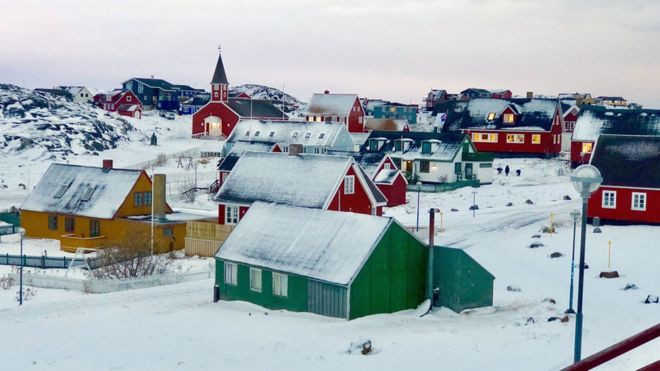
A town in typical Greenland style is pictured - brightly-painted wooden walls and triangular roofs covered in snow are the main features of these sparsely dotted homes
Image captionGreenland’s capital, Nuuk, needs investment – but could it come from China?

China is flexing its muscles. As the second richest economy in the world, its businessmen and politicians are involved just about everywhere in Asia, Africa and Latin America.

Now, though, China is taking a big interest in a very different part of the world: the Arctic.

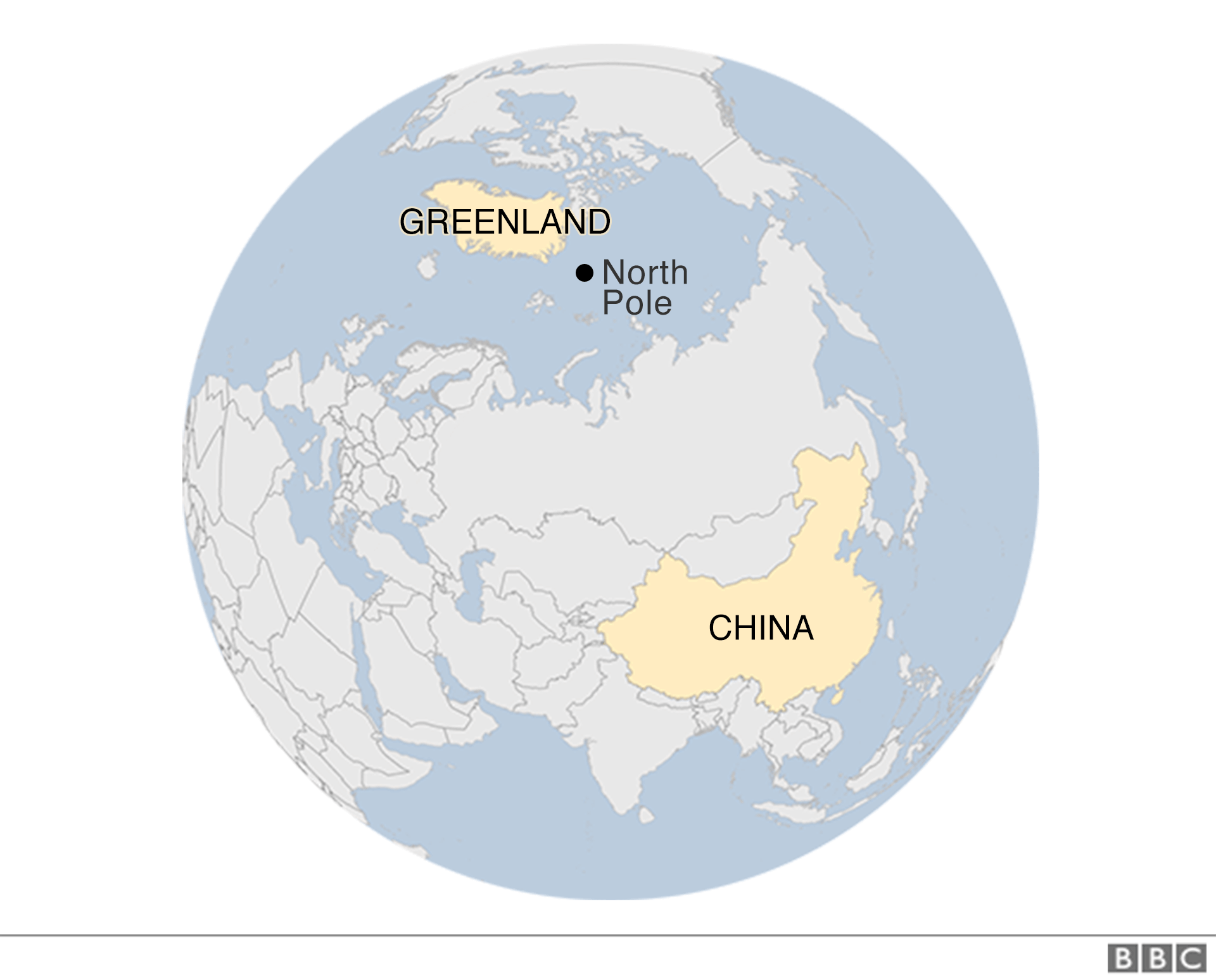
It has started calling itself a “near-Arctic” power, even though Beijing is almost 3,000km (1,800 miles) from the Arctic Circle. It has bought or commissioned several ice-breakers – including nuclear-powered ones – to carve out new routes for its goods through the Arctic ice.

And it is eyeing Greenland as a particularly useful way-station on its polar silk road.

A map is seen on a curved globe surface of the earth -Greenland is marked on the top, just a short distance from the North Pole, also marked - and China's location has two extremely large nations of Mongolia and Russia between it and the pole

Greenland is self-governing, though still nominally controlled by Denmark.

It is important strategically for the United States, which maintains a vast military base at Thule, in the far north. Both the Danes and the Americans are deeply worried that China should be showing such an interest in Greenland.

Least densely populated place on Earth

You’ve got to go there to get an idea of how enormous Greenland is.

It’s the 12th-largest territory in the world, 10 times bigger than the United Kingdom: two million square kilometres of rock and ice.

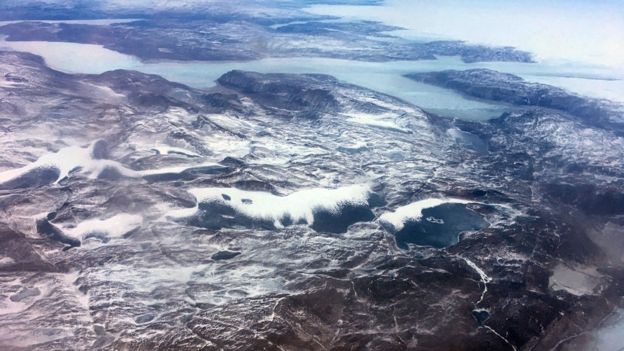
A vast frozen swathe of Greenland is seen in this aerial shot
Image captionMost of Greenland is covered in permanent ice – a vast frozen wilderness

Yet its population is minuscule at 56,000 – roughly the size of a town in England.

As a result, Greenland is the least densely populated territory on Earth. About 88% of the people are Inuit; most of the rest are ethnically Danish.

In terms of investment neither the Americans nor the Danes have put all that much money into Greenland over the years, and Nuuk, the capital, feels pretty poor. Denmark does hand over an annual subsidy to help Greenland meet its needs.

Every day, small numbers of people gather in the centre to sell things that will generate a bit of cash: cast-off clothes, children’s schoolbooks, cakes they’ve made, dried fish, reindeer-horn carvings. Some people also sell the bloody carcases of the big King Eider ducks, which Inuits are allowed to hunt but aren’t supposed to sell for profit.

China’s air power

At present you can only fly to Nuuk in small propeller-driven planes. In four years, though, that will change spectacularly.

The Greenlandic government has decided to build three big international airports capable of taking large passenger jets.

China is bidding for the contracts.

Media captionAirport officials say the planned work is a huge project – but an important one

There’ll be pressure from the Danes and Americans to ensure the Chinese bid doesn’t succeed, but that won’t stop China’s involvement in Greenland.

Interestingly, I found that opinion about the Chinese tended to divide along ethnic lines.

Danish people were worried about it, while Inuits thought it was a good idea.

The Greenlandic prime minister and foreign minister refused to speak to us about their government’s attitude to China, but a former prime minister, Kuupik Kleist, told us he thought it would be good for Greenland.

But the foreign affairs spokesman of the main Venstre party in the Danish coalition government, Michael Aastrup Jensen, was forthright about Chinese involvement in Greenland.

“We don’t want a communist dictatorship in our own backyard,” he said.

Much-needed wealth

China’s sales technique in other countries where its companies operate is to offer the kind of infrastructure they badly need: airports, roads, clean water.

The Western powers that once colonised many of them haven’t usually stepped in to help, and most of these governments are only too grateful for Chinese aid.

But it comes at a price.

Media captionThe former prime minister says someone – anyone – has to invest in Greenland

China gets access to each country’s raw materials – minerals, metals, wood, fuel, foodstuffs. Still, this doesn’t usually mean long-term jobs for local people. Large numbers of Chinese are usually brought in to do the work.

Country after country has discovered that Chinese investment helps China’s economy a great deal more than it helps them. And in some places – South Africa is one of them – there are complaints that China’s involvement tends to bring greater corruption.

But in Nuuk it’s hard to get people to focus on arguments like these.

What counts in this vast, empty, impoverished territory is the thought that big money could be on its way. Kuupik Kleist put the argument at its simplest.

“We need it, you see,” he said.

Law of Unintended Consequences

continuously updated blog about China & India

ChiaHou's Book Reviews

continuously updated blog about China & India

What's wrong with the world; and its economy

continuously updated blog about China & India