Archive for ‘Beijing-Tianjin-Hebei region’

05/03/2020

Direct shipping route links China’s Tianjin port with northern Europe

TIANJIN, March 4 (Xinhua) — German shipping giant Hapag-Lloyd AG launched a direct freight route Wednesday linking north China’s Tianjin port with northern Europe, according to the company’s local branch.

The route is expected to further increase the shipment exported from Tianjin to European ports and European goods will also arrive in Tianjin through the direct route, said Tian Liqiang, with Hapag-Lloyd’s Tianjin branch.

The port of Tianjin, a major link in the Beijing-Tianjin-Hebei region, saw its container throughput rise 8.1 percent year on year in 2019, according to the Tianjin Port Group Co. Ltd.

Headquartered in Hamburg, Hapag-Lloyd AG is a leading global liner shipping company that reaches 600 ports worldwide.

Source: Xinhua

13/02/2020

Coronavirus: dim sum off the menu as Guangzhou bans eating in restaurants

  • Elderly resident says he can’t recall this happening in his city before, not even during the Cultural Revolution
  • Outbreak is expected to deal a heavy blow to businesses, especially smaller eateries, with some already forced to close
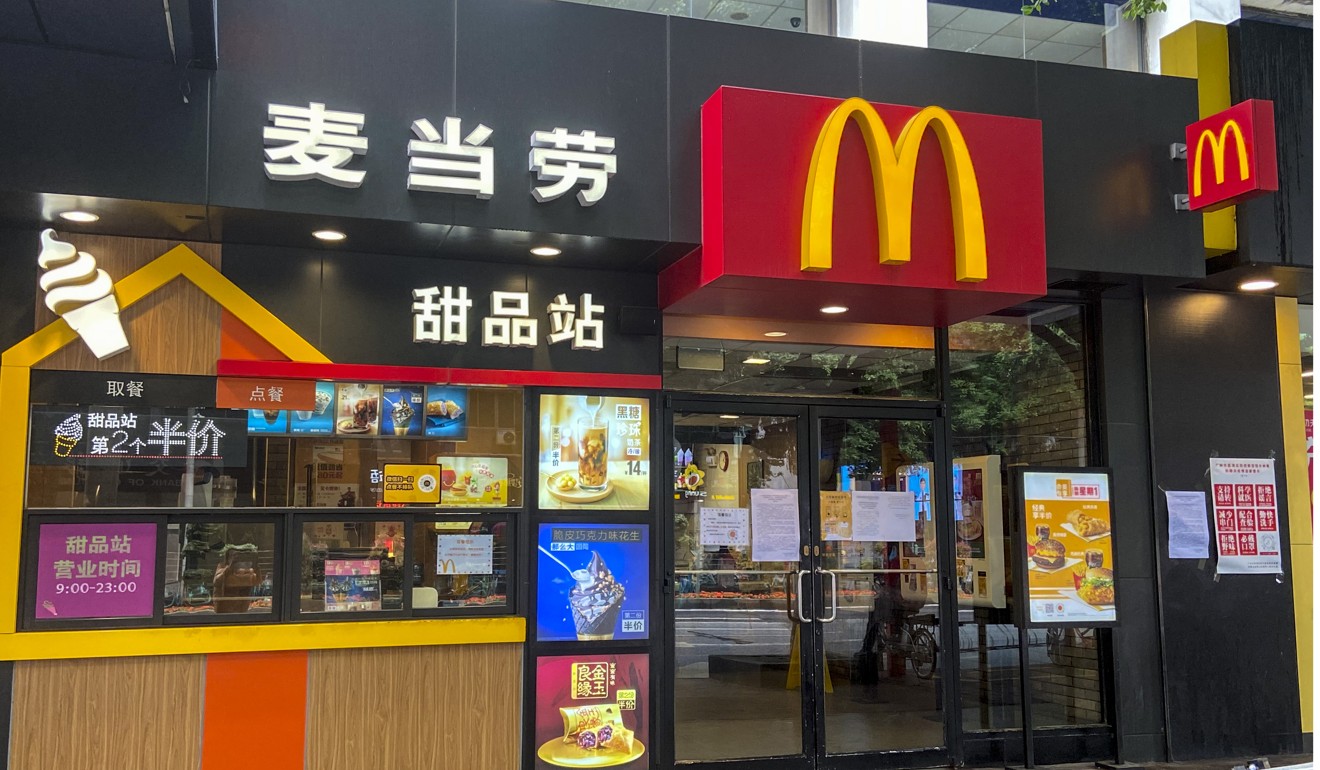
Residents can still get takeaway meals in Guangzhou, but they have been encouraged to order online and have them delivered. Photo: He Huifeng
Guangzhou is home to more than 15 million people and a busy trading port, and has been known as China’s most open city since the 1600s. For locals, going to restaurants for yum cha, or “drinking tea”, and dining on dim sum is an important part of the city’s history and culture – a tradition that has been carried through many generations.

“Even in the ‘three years of natural disasters’ [from 1959 to 1961, when China was in the grip of a famine] I remember there were still restaurants open,” He said. “I was really shocked [by the ban]. I guess the epidemic situation must be severe, otherwise Guangzhou definitely wouldn’t introduce this measure.”

China’s Hubei province reports huge spike in coronavirus cases, rising 10-fold from previous day
Many people in Guangzhou and across the country went back to work on Monday after an extended Lunar New Year break – another measure to try to stop the virus from spreading – with the government keen for businesses to return to normal operations.

The ban on dining in applies to restaurants, but employees can continue to have meals at their company canteens. And while residents can still get takeaways from restaurants, they have been encouraged to do this online, and have their meals delivered, rather than collecting their orders.

Group gatherings have also been banned in the city, and according to Nanfang Daily, some 126 banquets that would have involved more than 90,000 people have been cancelled by authorities already. The authorities did not say how long the measures would be in place.

Guangzhou is not the only city in Guangdong province to bring in a ban on dining in restaurants – Futian district in Shenzhen, Xiangzhou in Zhuhai, Foshan and Zhongshan have all taken the same step.

Beijingers gradually return to work as China’s fight against deadly coronavirus continues
In Guangzhou, while residents try to adapt, businesses are expecting to take a hit. One of the city’s top hotels said the virus outbreak could have a severe impact on the industry.

“Now we will focus on promoting takeaways for local customers. They can order our meals through apps providing online takeaway ordering services,” said Fion Liang, director of sales and marketing at The Garden Hotel. “As for guests staying in the hotel we will deliver meals to their rooms.”

To work or not to work: the difficult coronavirus question facing China

13 Feb 2020

She said the outbreak did not have a big impact on the hotel’s business in January, because the situation only became severe at the end of the month.

“The impact was definitely much bigger in February. If the epidemic continues to be severe throughout February, the occupancy rate of our rooms will be in the single digits this month,” Liang said. “[Most] hotels in Guangzhou are in the same situation.”

The outbreak is expected to deal a heavy blow to restaurants in the city, especially smaller eateries, and some have already been forced to close. June Zhao, the owner of dumpling restaurant Xi Xi, decided to shut down on Wednesday – the day the eat-in ban was announced.

Prospects had been good for the restaurant – it also sold books and alcohol in the evenings, and its trendy decor drew a young crowd.

“We had just started making money last winter and we were looking forward to earning more over the Lunar New Year holiday. But then the coronavirus came, our turnover fell to several hundred yuan a day, and we lost hope,” she said. “The new ban makes this situation worse – takeaway is not a good choice for dumplings, especially in winter. The losses will continue if we stay open.”

Coronavirus: major cities given power to seize private property

13 Feb 2020

The ban has also interrupted daily routines. Freelance cameraman Cony Yu, 28, usually spends some of his working day at cafes, but that is no longer possible. “[Now] I don’t have a comfortable place to sit aside from my home – even the parks have all been closed,” Yu said.

China disinfects entire cities to fight coronavirus outbreak, some twice a day
In the southern tech hub of Shenzhen, dining in has also been banned in central Futian district. Zhu Hao, a financial analyst based in the district, has been working from home for a week and ordering takeaway food every day. But he has to collect it from the gate at his residential compound, where security staff check the temperature of anyone entering or leaving.
He is losing patience with the restrictions. “I want to eat out. I want beef hotpot, coconut chicken, Korean barbecue and seafood,” he said.
In other Shenzhen districts, many restaurants and shopping centres have been temporarily closed or can only provide takeaway meals – including fast food chains such as McDonald’s and Starbucks.
Other places have strict rules for customers. At a bread shop, customers must register their ID and phone numbers and have their temperatures checked before they can enter. And for now, all hotpot restaurants have been closed.
Source: SCMP
11/10/2019

Vice premier calls for solid progress in Xiongan New Area development

CHINA-HEBEI-XIONGAN-HAN ZHENG-RESEARCH TRIP (CN)

Chinese Vice Premier Han Zheng, also a member of the Standing Committee of the Political Bureau of the Communist Party of China Central Committee, inspects the progress of local relocation work during his research trip in Xiongan New Area, north China’s Hebei Province, Oct. 9, 2019. (Xinhua/Zhang Ling)

XIONGAN, Oct. 10 (Xinhua) — Vice Premier Han Zheng has called for solid progress in the high-quality development of the Xiongan New Area in north China’s Hebei Province.

Han, also a member of the Standing Committee of the Political Bureau of the Communist Party of China Central Committee, made the remarks during a research trip to Xiongan Wednesday.

Hailing the smooth progress in the development of the new area, Han said authorities should provide more incentives to guide high-quality resources including education and healthcare into the area, while efforts should be made to make Xiongan more intelligent.

Calling the building of the area “a strategy that will have lasting importance for a millennium to come and a significant national event,” Han stressed high standards and solid progress in the area’s development.

Environmental protection and treatment should be a priority while particular attention should be given to improving the ecology of the Baiyangdian Lake in Xiongan, he said.

Reforms and innovation should be carried out in the new area, which will gradually be granted provincial-level authority for economic and social management, Han added.

China announced plans in 2017 to establish the Xiongan New Area, located about 100 km southwest of Beijing. It is a key move in pushing the coordinated development of the Beijing-Tianjin-Hebei region.

Source: Xinhua

26/09/2019

Xi announces opening of Beijing Daxing International Airport

CHINA-BEIJING-XI JINPING-NEW AIRPORT-OPEN (CN)

Chinese President Xi Jinping, also general secretary of the Communist Party of China (CPC) Central Committee and chairman of the Central Military Commission, attends the operation ceremony of the Beijing Daxing International Airport on Sept. 25, 2019. Xi announced the official opening of the airport and inspected the airport’s platforms and check-in hall. (Xinhua/Ju Peng)

BEIJING, Sept. 25 (Xinhua) — Chinese President Xi Jinping on Wednesday announced the official opening of the Beijing Daxing International Airport.

Xi, also general secretary of the Communist Party of China (CPC) Central Committee and chairman of the Central Military Commission, attended the opening ceremony of the airport on Wednesday morning.

Xi stressed that the new airport, which was built in less than five years and put into operation smoothly, has shown China’s prowess in engineering construction.

It is also a display of the political advantages of the CPC leadership and China’s socialist system that can mobilize all sources to make great achievements, said Xi.

While inspecting the rail transit of Daxing Airport Express at Caoqiao station, Xi stressed that urban rail transit marks the direction for future transportation development in large modern cities, and the development of rail transit is an effective way to solve “big city malaise” and to build green and smart cities.

Beijing should continue to develop rail transit in a bid to build a modern international metropolis, Xi said.

Then Xi took the subway heading for the Beijing Daxing International Airport.

On the way, he inquired in detail about the design and production of the rail trains, ticket prices, baggage consignment and connection with other traffic lines.

Xi stressed that transportation should precede urban modernization, and the Daxing International Airport should fully play its role in serving the coordinated development of the Beijing-Tianjin-Hebei region.

After his arrival at the airport, Xi heard a report on the construction of the airport integrated transportation system and commended the construction of supporting transportation facilities for the airport.

He said that building a comprehensive transportation system with internal and external traffic connections is essential to improving the operational efficiency of the airport.

Advanced management concepts and modern information technology should be employed to make the management and operation more intelligent and convenient, he said.

When inspecting the airport’s platforms and check-in hall, Xi called the airport a significant landmark project of Beijing which would contribute to the coordinated development of the Beijing-Tianjin-Hebei region.

He urged the three areas to seize the opportunity to strengthen coordination and cooperation and accelerate the pace of promoting regional high-quality development.

Xi also stressed the need to construct more advanced aviation hubs and more improved comprehensive transportation systems.

At the check-in counters, Xi saw how self-service paperless check-in was done, acknowledged the airport’s application of modernized facilities to provide passengers with convenient services and urged more efforts to develop the airport into a world-class aviation hub.

At the International Departure area, Xi met with delegates responsible for airport construction and operation.

Xi said that the new airport has demonstrated the great ambition and strategic vision of the Chinese people and displayed the spirit and modern craftsmanship of the nation.

He encouraged builders to march forward and persist in making new contributions.

Chinese Vice Premier Han Zheng also attended the ceremony, saying that the opening of the airport is of great significance to enhancing the international competitiveness of China’s civil aviation industry, better serving the country’s opening up and promoting the coordinated development of the Beijing-Tianjin-Hebei region.

In December 2014, China started building the Beijing Daxing International Airport with a terminal area of 700,000 square meters, four runways and 268 aircraft stands. Flight checks were successfully completed in February this year.

Source: Xinhua

05/07/2019

Joint law enforcement on environment in Beijing-Tianjin-Hebei region

SHIJIAZHUANG, July 4 (Xinhua) — Authorities in Beijing, Tianjin and Hebei will conduct joint law enforcement in environment-related areas from 2019 to 2020.

That was learned from a working meeting, held Wednesday in Langfang of Hebei Province, on joint law enforcement involving ecology and environment in Beijing, Tianjin and Hebei.

The campaign is aimed at handling cases of cross-region environmental pollution and related violations.

The authorities will inspect industries, with priority going to polluters such as printing, furniture-making, medicine and pesticide, and rubber products. They will also inspect water resources in regional border areas.

China pledged to coordinate its efforts on environmental protection and economic development in 2019. It promised to push for better air quality with better regional coordination and heavy-polluter revamps, according to the Ministry of Ecology and Environment.

Source: Xinhua

23/06/2019

Chinese cities see improving air quality from Jan. to May

BEIJING, June 23 (Xinhua) — Air quality improved in Chinese cities in the first five months of 2019, according to the Ministry of Ecology and Environment (MEE).

Some 337 Chinese cities enjoyed good air quality on 80.3 percent of days from January to May this year, up 0.6 percentage points from the same period last year. Nearly 120 cities met the air quality standards, including 20 cities joining this year, data of MEE showed.

The average PM2.5 density, a key indicator of air pollution remained unchanged at 44 micrograms per cubic meter over the period and the average density of PM10 and sulfur dioxide fell 2.6 percent and 13.3 percent respectively year on year.

Haikou, Lhasa and Shenzhen ranked top three on the list of 168 cities’ air quality in the first five months while cities in the provinces of Hebei, Henan and Shanxi lagged behind.

Several regions saw a decrease in PM2.5 in May 2019, with that in Beijing-Tianjin-Hebei region and Yangtze River Delta down 16.7 percent and 8.6 percent year on year respectively.

China pledged to coordinate its efforts on environmental protection and economic development in 2019.

The country vowed to reduce imports of solid waste and push for better air quality with better regional coordination and heavy-polluter revamps, according to the ministry.

Source: Xinhua

10/03/2019

Xi stresses implementation of rural revitalization strategy

(TWO SESSIONS)CHINA-BEIJING-XI JINPING-NPC-DELIBERATION (CN)

Chinese President Xi Jinping, also general secretary of the Communist Party of China (CPC) Central Committee and chairman of the Central Military Commission, joins deliberation with deputies from central China’s Henan Province at the second session of the 13th National People’s Congress in Beijing, capital of China, March 8, 2019. (Xinhua/Xie Huanchi)

BEIJING, March 8 (Xinhua) — Chinese President Xi Jinping on Friday called for more efforts to implement the rural revitalization strategy with the chief goal to modernize agriculture and rural areas.

“The top task for implementing the rural revitalization strategy is to ensure supply of important farm produce, grain in particular,” said Xi, also general secretary of the Communist Party of China Central Committee and chairman of the Central Military Commission.

He made the remarks when joining deliberation with deputies from Henan Province at the second session of the 13th National People’s Congress, China’s national legislature.

Efforts should be made to promote the supply-side structural reform in the agricultural sector to achieve food security while building a modern and efficient agriculture, Xi added.

Xi also called for enhanced protection of agriculture ecological environment and prevention and treatment of pollution in rural areas.

Xi stressed strict penalties on crimes involving food safety so as to ensure safe farm produce for the public.

Efforts should be made to strengthen the leadership of grassroots Party units in the rural areas, Xi said, noting that the practices of rural residents’ self-governance should be further explored.

Xi also called for measures to promote two-way flow and equal exchange of factors, including human resources, lands and capital, between urban and rural areas.

“The task to eradicate extreme poverty must be fulfilled by 2020,” Xi stressed.

Implementation of the rural revitalization strategy and seeking progress in work related with agriculture, rural areas and farmers should be taken into consideration and promoted in the overall economic and social development, Xi said.

Li Keqiang, Wang Huning and Han Zheng — members of the Standing Committee of the Political Bureau of the CPC Central Committee — on Friday also separately joined deliberation with NPC deputies.

Premier Li Keqiang stressed building a business environment that is fair and convenient for enterprises under all forms of ownership, when joining a deliberation with deputies from Hubei Province.

He called for efforts to fully carry out the reforms of tax and fee cuts and further stimulate the market vitality.

Wang Huning, a member of the Secretariat of the CPC Central Committee, asked deputies from central China’s Hunan Province to take bigger steps in pushing forward high-quality development.

He also called for taking a people-centered approach to further live up to people’s new expectations for their cultural lives.

Joining the deliberation of the Beijing delegation, Vice Premier Han Zheng underlined deepening the coordinated development of the Beijing-Tianjin-Hebei region to further relieve Beijing of functions nonessential to its role as the capital.

Source: Xinhua

Law of Unintended Consequences

continuously updated blog about China & India

ChiaHou's Book Reviews

continuously updated blog about China & India

What's wrong with the world; and its economy

continuously updated blog about China & India