Chindia Alert: You’ll be Living in their World Very Soon
aims to alert you to the threats and opportunities that China and India present. China and India require serious attention; case of ‘hidden dragon and crouching tiger’.
Without this attention, governments, businesses and, indeed, individuals may find themselves at a great disadvantage sooner rather than later.
The POSTs (front webpages) are mainly 'cuttings' from reliable sources, updated continuously.
The PAGEs (see Tabs, above) attempt to make the information more meaningful by putting some structure to the information we have researched and assembled since 2006.
Image copyrightGETTY IMAGESImage captionTuvalu is battling rising sea levels
The tiny South Pacific nation of Tuvalu has rejected offers from Chinese firms to build artificial islands that would help it deal with rising sea levels, its foreign minister says.
Simon Kofe told Reuters he saw the offers as an attempt to reduce Taiwan’s influence in the region.
But he instead reaffirmed his country’s support for Taiwan.
China has increased efforts to expand its influence in the Pacific, alarming the United States and its allies.
Only 15 countries recognise Taiwan as a sovereign nation and have full diplomatic relations. A number of countries have switched their allegiance from Taiwan to China in recent years.
China refuses to have diplomatic relations with any country that recognises Taiwan.
In recent months Taiwan lost two allies in the region, when Kiribati and the Solomon Islands switched diplomatic recognition to China. Beijing has been accused of luring them in with the promise of financial aid and airplanes.
Media caption Tuvalu’s foreign minister discusses increasing pressure from China
Mr Kofe expressed his backing for Taiwan and said his nation was setting up a group to unite Taiwan’s four remaining Pacific allies – the Marshall Islands, Palau, Nauru and Tuvalu.
“We believe in the power of grouping together and collaborating,” he told Reuters news agency.
“Together with our partners, we will be able to counter the influence from mainland China.”
Mr Kofe said Chinese companies had approached local communities offering to help with a $400m (£310m) government plan to build artificial islands. He believes the companies were backed by the Chinese government.
“We are hearing a lot of information about debt,” he said. “China buying our islands and looking at setting up military bases in our part of the world. Those are things that are concerning to us.”
Beijing has proposed Taiwan operate under a “one country, two systems” structure, similar to Hong Kong.
Since Taiwan President Tsai Ing-wen took office in 2016, seven countries have dropped Taiwan as a diplomatic ally. The support from Tuvalu could help her as she seeks re-election in January.
Chinese President Xi Jinping poses for a group photo with foreign delegates attending the 2019 New Economy Forum before meeting with them at the Great Hall of the People in Beijing, capital of China, Nov. 22, 2019. (Xinhua/Huang Jingwen)
BEIJING, Nov. 22 (Xinhua) — Chinese President Xi Jinping said on Friday realizing the Chinese dream of national rejuvenation is by no means to seek hegemony.
Saying he has full confidence in China’s prospects for development, Xi noted China does not intend to replace any power, rather, its aim is to “regain the dignity and status it deserves.”
The president made the remarks when meeting with foreign delegates attending the 2019 New Economy Forum held in Beijing.
China, with a 5,000-year-old history of civilization, is home to the four great inventions that had contributed tremendously to the progress of human civilization. The country had become a semi-colonial and semi-feudal society since the Opium Wars, but the Chinese people had never yielded and spared no effort in seeking a path to national rejuvenation, Xi stressed.
Earth-shattering changes have taken place since the founding of the People’s Republic of China 70 years ago, and the humiliating history of China as a semi-colonial and semi-feudal country will never be repeated, he said.
“The fundamental reason is that we have found a correct path that suits China’s national conditions, conforms to the trends of the times and enjoys the support of the people. The path is socialism with Chinese characteristics,” Xi said.
With full confidence, the Chinese people will unswervingly follow this path, he added.
Xi noted that innovation is a major theme of the current times, as the world is undergoing changes rarely seen in a century, featuring a new round of technological revolution and rapid industrial transformation.
The common challenges facing humanity call for concerted efforts of all countries. No country can become an independent innovation center or enjoy fruits of innovation alone, Xi said. “Innovation should benefit the world rather than being encaved.”
He said China is willing to carry out cooperation in innovation with other countries including the United States, so as to better benefit the people of the two countries and the world.
Despite great achievements, China will continue to adhere to the traditional concept of “harmony in diversity,” stick to the path of peaceful development, and strive for mutually beneficial cooperation with other countries, Xi told the foreign delegates.
China will stick to the reform and opening-up through bold innovations and with a manner of “feeling the rocks on the riverbed when crossing the river,” he said.
“The more resistance we are confronted with, the more determined we will be to open up,” Xi said. “I have full confidence in China’s prospects of development.”
During the meeting, former U.S. Secretary of State Henry Kissinger, former U.S. Treasury Secretary Henry Paulson, Egyptian Tourism Minister Dalia al-Mashat, former Japanese Foreign Minister Yoriko Kawaguchi, and Credit Suisse Group AG CEO Tidjane Thiam exchanged views, and expressed their support for innovation cooperation.
The 2019 New Economy Forum, which focused on development trends and social impacts of innovation, gathered more than 500 delegates from more than 60 countries around the world.
Chinese President Xi Jinping meets with International Monetary Fund (IMF) Managing Director Kristalina Georgieva at the Great Hall of the People in Beijing, capital of China, Nov. 22, 2019. (Xinhua/Huang Jingwen)
BEIJING, Nov. 22 (Xinhua) — Chinese President Xi Jinping met with International Monetary Fund (IMF) Managing Director Kristalina Georgieva in Beijing on Friday.
Xi extended his welcome for Georgieva’s first visit to China as IMF chief.
Xi said global economic growth is slowing down with increasing downside risks, protectionism in the world is on the rise, and multilateralism and free trade are facing severe challenges. Therefore, the international community has higher expectations for the role of the IMF.
“I hope that under your administration, the IMF will further improve the international currency and its governance system, and enhance the representation and voice of emerging markets and developing countries,” said Xi.
The Chinese president expressed the hope that the IMF will continue to promote global trade, safeguard a fair and open global financial market, and advance the development of the international order in a more just and rational manner.
Xi said in recent years, China and the IMF have carried out sound cooperation in strengthening the capacity building of countries involved in the Belt and Road Initiative.
“China is willing to continuously deepen cooperation with the IMF,” said Xi.
Stressing that China’s economic development has great resilience, potential and room for maneuvering, Xi said the long-term positive trend of China’s economic growth will not change.
“I am full of confidence in China’s development,” said Xi, noting that China will stick to the new vision for development, forge ahead high-quality economic development, continuously promote a higher level of opening up, and bring more opportunities to the world economic growth.
Georgieva said China aims to eradicate absolute poverty by 2020, and the goal is of landmark significance for China and the world. China has achieved sustained and strong economic growth through reform and opening up. It is believed that China will continue to remain open to the outside world in various fields including finance and capital.
The IMF attaches great importance to its relationship with China and will continue to deepen cooperation with China, she said.
Noting that the world economy is currently in a difficult period, Georgieva said the IMF firmly supports free and open trade and strives to achieve peaceful trade relations.
She said the IMF is ready to carry out reforms in line with the needs of the times and enhance the weight of emerging economies.
Georgieva also expressed the willingness to work with China to advance the building of a community of a shared future for humanity and strengthen Belt and Road cooperation.
During her stay in China, Georgieva, who took office as the managing director of the IMF last month, also attended a roundtable meeting hosted by Chinese Premier Li Keqiang with leaders of six major international economic and financial institutions.
Chinese Premier Li Keqiang and leaders of six major international economic and financial institutions meet the media after their fourth roundtable meeting in Beijing, capital of China, Nov. 21, 2019. The six leaders are World Bank Group President David Malpass, International Monetary Fund Managing Director Kristalina Georgieva, World Trade Organization Deputy Director-General Alan Wolff, International Labor Organization Director-General Guy Ryder, Organization for Economic Cooperation and Development Secretary-General Angel Gurria and Financial Stability Board Chairman Randal Quarles. (Xinhua/Yue Yuewei)
BEIJING, Nov. 21 (Xinhua) — Chinese Premier Li Keqiang held a roundtable meeting with leaders of six major international economic and financial institutions in Beijing on Thursday.
The six leaders are World Bank Group President David Malpass, International Monetary Fund Managing Director Kristalina Georgieva, World Trade Organization Deputy Director-General Alan Wolff, International Labor Organization Director-General Guy Ryder, Organization for Economic Cooperation and Development Secretary-General Angel Gurria and Financial Stability Board Chairman Randal Quarles.
Li expressed hope to build consensus, boost confidence and deepen cooperation through the meeting, so as to promote the sustained, healthy and stable development of world economy.
It is the fourth roundtable meeting for Li and leaders of the six institutions. This year’s meeting features the theme of “promoting openness, stability and high-quality development of the world economy.”
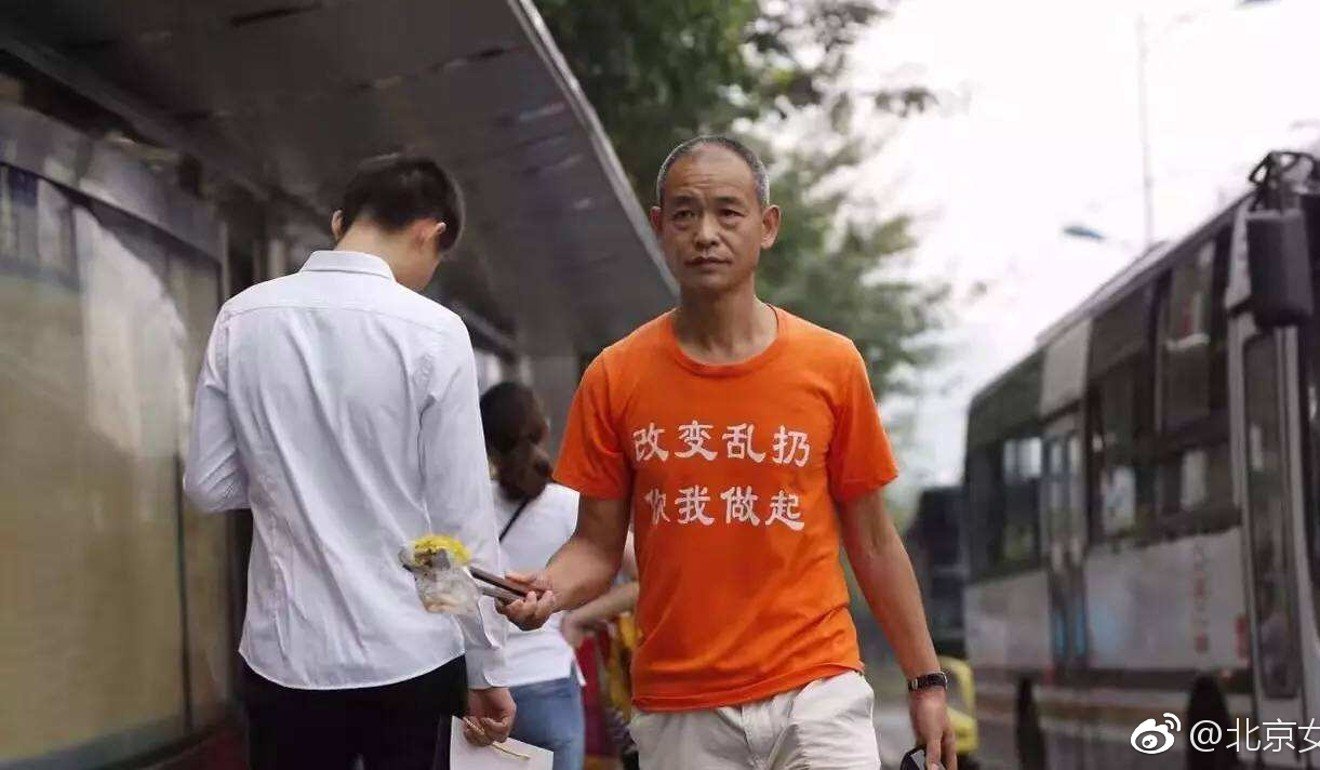
Every morning and night for the past four years, businessman Zhong Congrong has been on the streets of Chongqing to stop people dropping their litter
Admired as a welfare champion, the 54-year-old says he has been beaten and insulted for his cause
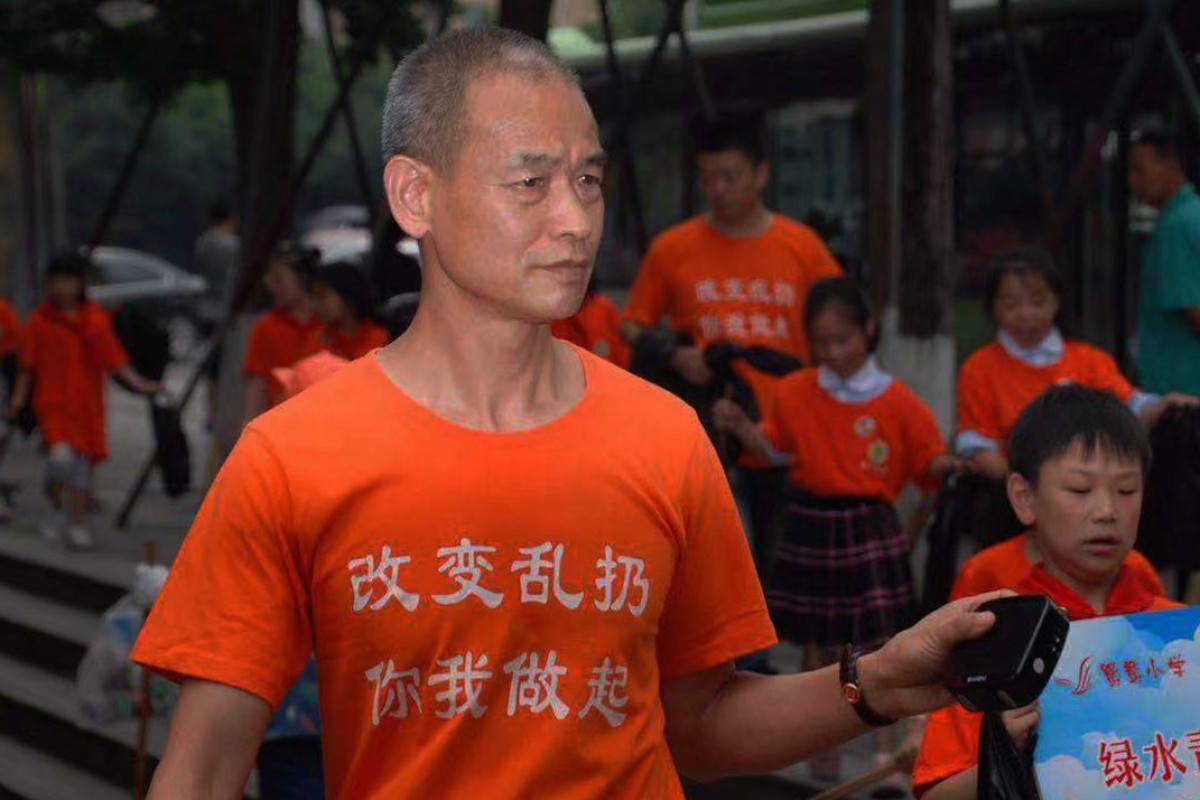
Zhong Congrong is a familiar figure on the streets of his hometown. Photo: Handout
Zhong Congrong owns three businesses in southwestern China which together are worth more than 100 million yuan (US$14.3 million), but he prefers to risk being labelled as an environment “nut” who wants to clean up Chongqing.
Every morning after breakfast and each evening after supper, the entrepreneur pulls on an orange T-shirt, gets into his Mercedes-Benz SUV and heads downtown. For one or two hours, he walks the streets, picking scraps of rubbish off the road and talking to passers-by about littering.
“It is my mission to change people’s bad habits and to raise their awareness of protecting the environment,” said Zhong, who has been on this mission for four years. It has brought the 54-year-old civic rewards, earned him a bruising or two from people who do not want to listen to his message and it nearly cost him his marriage.
Throughout it all, he has remained a persistent voice for the environment in the city of more than 30 million people and, as some of them have learned, he refuses to give up.
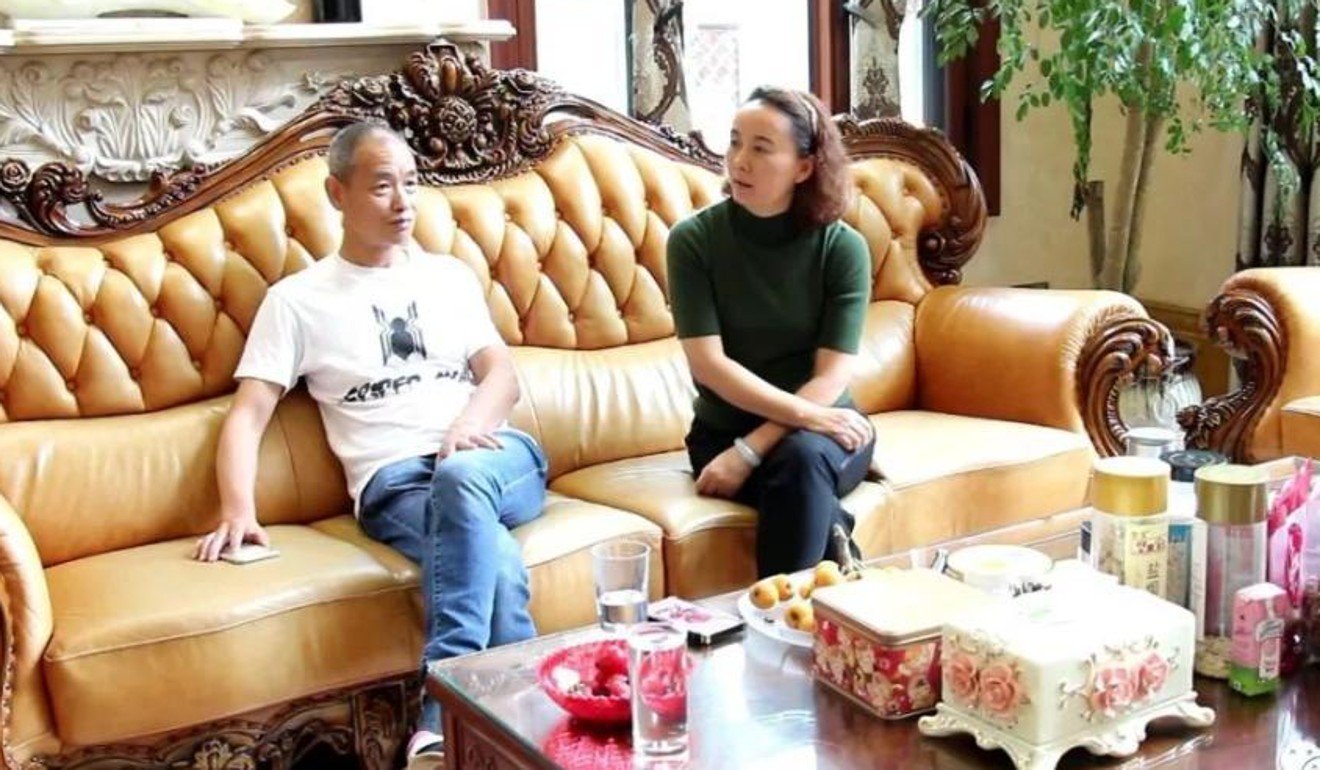
Yang Zuhui (right) has come to admire Zhong Congrong’s dedication to his litter picking mission, but she fears for her husband’s safety. Photo: Weibo
On mainland China, cities have banned littering and some hit offenders with fines as high as 200 yuan. However, the rules are rarely obeyed and feebly enforced, and while there are plenty of dustbins in public places, litter is still a nuisance.
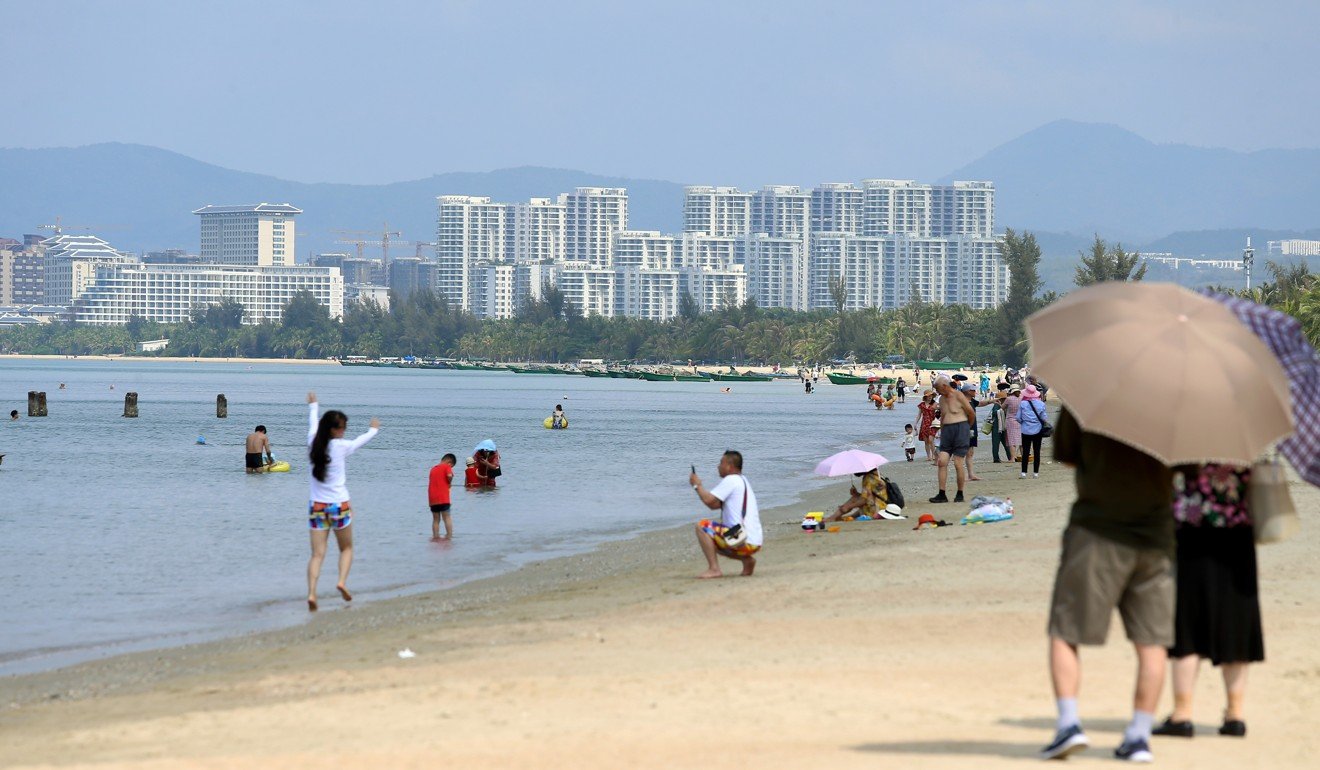
Zhong said his mission started in 2015 after he met a woman in her 70s in Sanya, the southern coastal city on the South China Sea island of Hainan. He was struck by how dedicated she and her husband were when they went litter picking each day.
“They are retired professors from a prestigious university in Beijing,” Zhong said. “I chatted a lot with her and I asked her, ‘What’s the point of collecting rubbish every day? You clean up the beach today, but tomorrow new rubbish appears’.”
The way to solve the problem was to teach people to not litter, she told him, but she said she “dared not” try to do that. Zhong said that encounter gave him his purpose and he would dare to change attitudes.
Shanghai recycling scheme slips up on 9,000 tonnes of waste
Back home, Zhong watched and learned – concluding that customers of restaurants and fast food businesses tended to be the people who dropped rubbish most.
“Perhaps it’s because when people dine in restaurants, they throw their rubbish wherever they like. Going outside, they keep on doing it,” he said.
“People in shopping malls are generally more civilised.”
Zhong says his mission began in 2015 during a holiday on the island of Hainan. Photo: Dickson Lee
While on patrol, Zhong makes himself easy to see in an orange T-shirt that bears his clean-up message. His tools include a metal pincer for picking up tissue paper, plastic bags, drinks bottles, nappies and other everyday detritus and putting it into bins.
He also carries a voice recorder that sends out an appeal to restaurant customers: “To protect our environment and not to affect our kids’ healthy growing up, dear friends, please don’t throw rubbish.”
Can China sort its household waste recycling problem by 2020?
Zhong said that at first he felt afraid and self-conscious when he stood in front of a crowd of diners with his green gospel. But time and practise taught him he had almost nothing to fear, he said.
One of the bigger challenges is getting through to the many people who do not listen to him and refuse to dispose of their rubbish the right way.
“It’s normal that our society has various kinds of people and I need to face this reality,” Zhong said. “I was prepared in my mind that I would be called ‘nut’ since this is such an arduous but fruitless cause.”
He tackles the problem with his usual persistence, so argument and persuasion is all part of the job. When Zhong insists the rule breakers take their rubbish and bin it, some ignore him and others walk away – but he is ready with an answer.
“I tell them, ‘If you don’t pick it up, I guarantee that you will lose face today. I will let passers-by see and hear what a humiliating thing you have done. Everybody will then condemn you and you will be embarrassed’,” he said.
When people tell him what they do is none of his business, Zhong replies that what he is doing is in the public interest.
Sometimes there is a heavier price. Zhong said he once watched several men in their 20s throw rubbish onto the road from their car. He set off after them in his SUV. He waylaid them and asked them to clean up after themselves – the men refused, swore at him and beat him up. Their day ended in a police station.
Zhong said he hoped his work would bring “positive energy” to the employees of his vehicle components and packaging materials companies, but his mission was not about business prestige.
However, last year, he was named as one of the top 10 public welfare figures of Chongqing by the municipal government, while his family was honoured as a Chinese good family by the semi-governmental All-China Women’s Federation, a women’s rights organisation established in 1949.
Street cleaner who found US$22,000 in rubbish refuses to accept a reward
There were trials for Zhong closer to home – his wife, Yang Zuhui, did not support his mission at first and threatened to divorce him.
“It’s OK that you picked up trash on the street and you were just another cleaner there,” she told him in an interview with Hunan Television in 2017. “But what worried me was that you tried to persuade others – physical violence [against him] was inevitable.”
She also said: “My husband is not very tall and, on many occasions, he was at a disadvantage and got beaten up. I am worried about his personal safety.”
Zhong impressed his daughter’s schoolfriends with an inspiring speech. Photo: Weibo
But two years ago, their 10-year-old daughter helped change Yang’s attitude towards her husband’s mission after a school outing.
After lunch that day, Zhong gave the adults and children who had left rubbish behind one of his lectures.
His daughter, who was embarrassed by Zhong’s speech, came to appreciate him when classmates told her: “Your father is awesome. He is like a hero who protects the Earth.”
Yang was won over because she knew her husband was a determined man and once he decided on a course of action would not change his mind.
Their son – who is in his 20s and has returned to Chongqing after studying in France – always stands by his father, Zhong said.
“My son told me that environmental voluntary work normal abroad and it is respected,” he said.
Going out to collect rubbish has become part of Zhong’s life, he said.
“In the evening, if I stay at home, my wife and daughter will ask me ‘Why don’t you go to pick up rubbish?’”
He said it was important to go litter picking every day because the more he did it the more people he could influence.
“By breaking the littering habit, Chinese people can stand tall when they travel abroad,” Zhong said.
Li Keqiang tells senior officials to step up efforts to channel water from Yangtze River to arid regions
Impact of pollution and rising population has prompted increased efforts to improve efficiency and supply
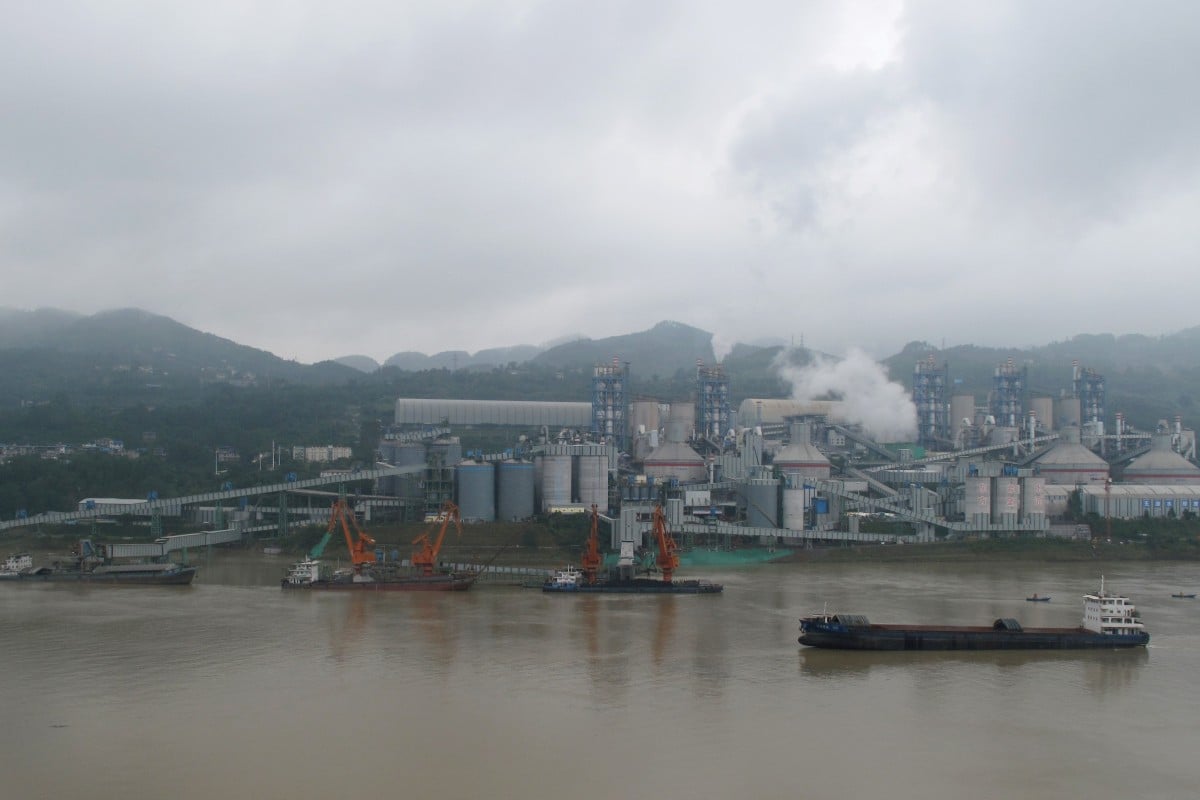
A cement plant on the banks of the Yangtze in Chongqing. The authorities are now trying to stop further development along the river. Photo: Reuters
China needs to divert more water to its arid northern regions and invest more in water infrastructure as shortages get worse because of pollution, overexploitation and rising population levels, Premier Li Keqiang has said.
China’s per capita water supplies are around a quarter of the global average. With demand still rising, the government has sought to make more of scarce supplies by rehabilitating contaminated sources and improving efficiency.
Water remained one of China’s major growth bottlenecks, and persistent droughts this year underlined the need to build new infrastructure, Li told a meeting of senior Communist Party officials on Monday. An account of the meeting was published by China’s official government website.
Local government bonds should be “tilted” in the direction of water infrastructure, he said, and innovative financing tools were also needed.
He also called for research into new pricing policies to encourage conservation.
Li said China’s water supply problems had been improved considerably as a result of the South-North Water Diversion Project, a plan to divert billions of cubic metres of water to the north by building channels connecting the Yangtze and Yellow rivers.
World ‘woefully unprepared’ for climate change’s effects on drinking water supplies drawn from mountains
He said opening up more channels to deliver water to regions north of the Yangtze River Delta would support economic and social development and optimise China’s national development strategy, according to a summary of the meeting on the government website.
China is in the middle of a wide-reaching programme to clean up the Yangtze River, its biggest waterway, and put an end to major development along its banks.
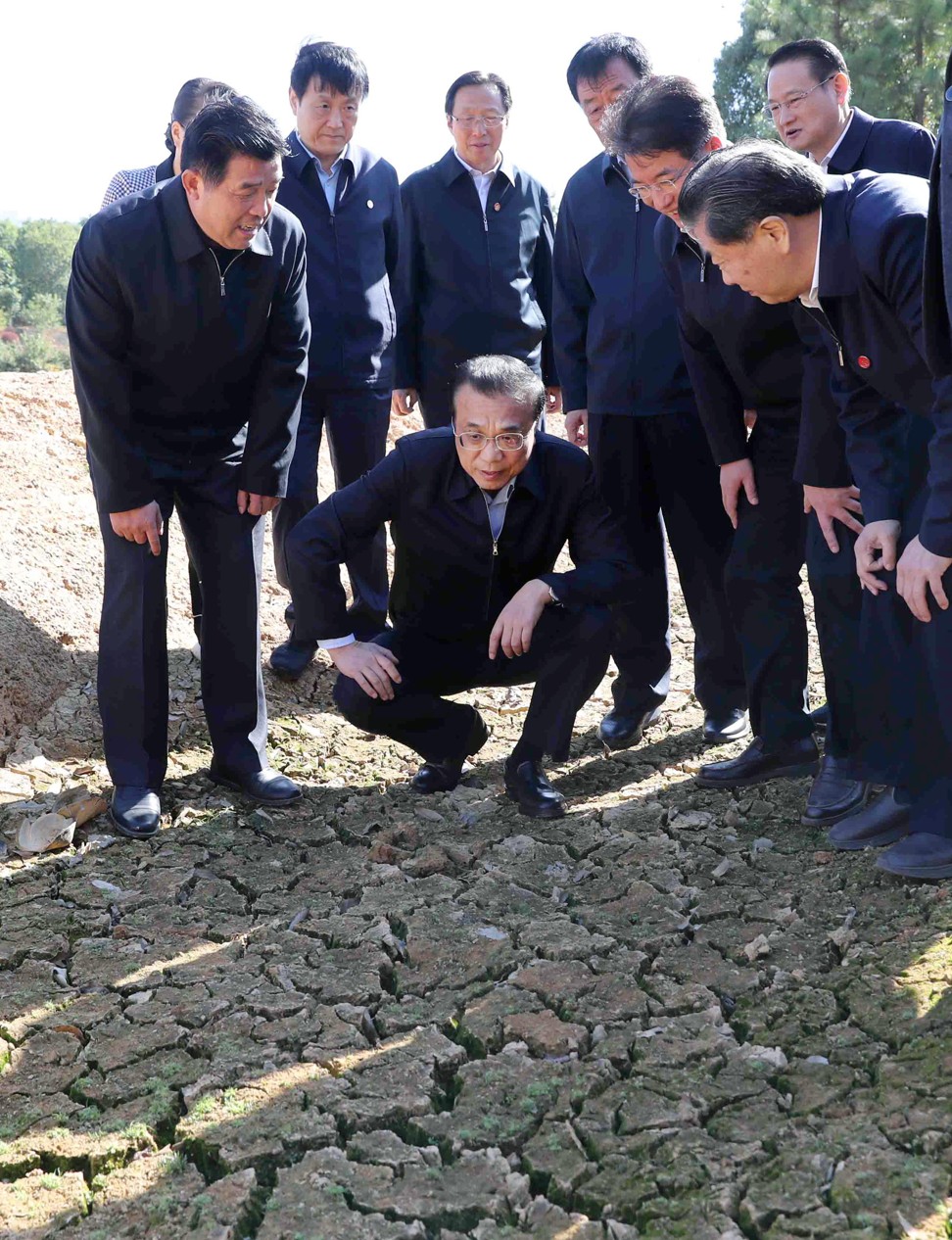
Chinese Premier Li Keqiang inspects an empty reservoir during a visit to Jiangxi province last week. Photo: Xinhua
Local governments have been under pressure to dismantle dams, relocate factories and even ban fishing and farming in ecologically fragile regions.
But experts say the ongoing campaign to divert the course of the Yangtze to other regions is still causing long-term damage to the river’s environmental health.
Many cities that had polluted their own water sources had drawn replacement supplies from the Yangtze, exceeding the river’s environmental capacity, said Ma Jun, founder of the Institute of Public and Environmental Affairs, which monitors water pollution.
Beijing already relied on diversion channels from the Yangtze to supply 70 per cent of its water, but had done little to improve conservation or reduce per capita consumption, which was higher than many Western countries, he said.
“[Diversion] has caused so much suffering and needs so many dams to keep up supply, and that has impacted biodiversity,” he said.
HONG KONG (Reuters) – China’s People’s Liberation Army (PLA) soldiers in shorts and t-shirts made a surprising appearance in some Hong Kong streets on Saturday, briefly helping residents clean up debris after anti-government protests blocked roads, witnesses said.
The presence of PLA troops on the streets, even to help clean up roads near their base, could stoke further controversy over the Chinese-ruled territory’s autonomous status.
Hong Kong has been rocked by more than five months of demonstrations by protesters angry at perceived Communist Party meddling in the former British colony, which was guaranteed its freedoms when it returned to Chinese rule in 1997.
Beijing denies interfering and has blamed the unrest on foreign influences.
Clashes between protesters and police have become increasingly violent. China has warned that any attempt at independence for Hong Kong will be crushed, but troops have remained inside their base.
RELATED COVERAGE
China’s PLA soldiers seen helping clean up streets after Hong Kong protests – RTHK
Saturday’s clean up followed some of the worst violence seen this year, after a police operation against protesters at the Chinese University of Hong Kong on Tuesday.
The authorities have since largely stayed away from at least five university campuses that had been barricaded by thousands of students and activists who stockpiled petrol bombs, catapults, bows and arrows and other weapons.
Many protesters appeared to have left the campuses by late Saturday, though some remained behind to man makeshift barricades. Hong Kong’s Cross-Harbour Tunnel was still blocked by protesters occupying Polytechnic University.
Earlier, hundreds of pro-China demonstrators gathered by the city’s legislature and police headquarters, waving Chinese and Hong Kong flags. Some held up posters reading “Police we stand with you”, while others chanted “Support the police”.
Pro-China protests have so far attracted much smaller numbers than those angry at Beijing.
RARE TROOP PRESENCE
By late afternoon, the PLA soldiers had left the streets outside Baptist University, beside their barracks in leafy Kowloon Tong.
Chinese troops have appeared on local streets only once since the 1997 handover, to help with cleanup operations after a typhoon in late 2018. It was not immediately clear how many were involved on Saturday.
Calls to the PLA Hong Kong garrison office and a media liaison officer went unanswered.
Demosistō, a pro-democracy organisation, said Saturday’s cleanup operation could set a “grave precedent” if the city’s government invites the military to deal with internal problems.
In August, Beijing moved thousands of troops across the border into Hong Kong in what state news agency Xinhua described as a routine “rotation”.
Foreign envoys and security analysts estimate up to 12,000 troops are now based across Hong Kong — more than double the usual garrison number.
Standing beside a black flag with the slogan “Liberate Hong Kong, Revolution of our Times,” James Wong, 23, was among a handful of protesters still manning a bridge at Baptist University.
“We didn’t want to confront the people and the PLA troops directly,” he told Reuters. “We are not directly against the PLA, but rather the government. But the PLA should not leave their base because this is Hong Kong territory.”
Wong said even after the campus fortifications have been dismantled “Hong Kong will keep resisting until the government responds to our demands”.
Hundreds of residents moved in to help clear barricaded roads near several universities.
Clashes on Saturday saw at least one petrol bomb thrown before anti-government protesters at the campuses retreated. No soldiers appeared to have been involved in the confrontations.
“We just want our lives to continue,” said one resident who was helping clear streets near HKU. “There are many elderly who need to go the hospital and children who need to go to school. I am very sad to see what is happening in my community.”
PRO-POLICE DEMONSTRATION
Saturday’s rally to denounce the anti-government violence drew a mix of young and elderly.
“From the bottom of our hearts, we believe it is the correct thing to support the police in fighting the rioters for Hong Kong citizens,” said a 49-year-old housewife surnamed Kong.
“A lot of people keep silent, afraid of the rioters. It’s time for all the people who are silent to step up and say that’s enough.”
A 70-year-old street cleaner died on Thursday after being hit on the head by one of several bricks police said had been thrown by “masked rioters”. On Monday, police blamed a “rioter” for dousing a man in petrol and setting him on fire. The victim is in critical condition.
On the same day, police shot a protester in the abdomen. He was in a stable condition.
Many pro-police protesters laid white flowers outside the government office to pay their respects to the cleaner. Others applauded and cheered the police, some bowing and giving thumbs up as they walked past riot police on duty.
Authorities said on Saturday that a highway blocked by anti-government protesters on Friday had reopened after being cleared of debris and petrol bombs.
Train services suspended earlier in the week were gradually resuming, metro operator MTR Corp (0066.HK) said.
Mainland social media users come out in strong support for the officer, compounding extensive coverage of vandalism of businesses with ties across the border
Hong Kong’s police force has gained support from online commenters on the mainland. Photo: Nora Tam
As Monday morning’s police shooting of a protester triggered a wave of shock and outrage in Hong Kong, across the border in mainland China, the response online was just as swift – but in support of the force.
“Support Hong Kong police opening fire! Clean up Hong Kong’s cockroaches!” one popular financial blogger on Weibo, China’s Twitter-like platform, said as he shared footage of the incident.
In the video, an officer grapples with a protester and points his gun towards another approaching protester. The second protester reaches out towards the gun, the officer dodges, steps back and shoots him in the torso.
“It feels great [to watch]! Kill them all, these trash and tumours of society,” a Weibo user replied to the video, with a thumbs-up emoji.
“Hongkong’s loser youth, [police] should totally open fire!! It would be best to shoot them in the head,” another post read.
These comments, and many others like them flooding social media in mainland China, highlight the deep divisions in views on each side of the border as Hong Kong’s political crisis drags into its sixth month.
Despite some initial sympathy, mainland public sentiment towards Hong Kong has hardened since July, amid state propaganda painting the protesters as a separatist movement plotted by “Western black hands”.
In recent weeks, the rancour from the mainland has only appeared to deepen, with photos and videos of protesters vandalising businesses with ties to the mainland spreading online.
Last month, a mainland Chinese banker was assaulted in a confrontation with protesters during his lunch break in Central, drawing the wrath of many mainlanders and renewed online calls for military intervention.
Extensive media coverage of the vandalism and attack, as well as a series of inflammatory commentaries, have further fanned the anger.
On Monday, the social media account of state-run Beijing Daily ran the story of the shooting under the headline: “This morning, a gunshot in Hong Kong, to the applause of citizens!”
“At such a critical moment, the police officer acted so bravely and restrained,” the report said.
“After the police fired the shot and subdued the rioters, some citizens at the scene directly applauded the police. The reaction of the public directly shows that the officer fired not only in a legal and reasonable way, but also in line with the will of the people.”
In the video, a man in a dark blue jumper claps his hands at a nearby traffic light, as police officers pin the protesters to the ground.
The Beijing Daily report did not refer to angry bystanders condemning the officers as “murderers”.
Hong Kong police officer who shot protester receives death threats against children after personal details released online, force says
Hu Xijin, editor-in-chief of nationalist tabloid Global Times, and a regular – and hugely popular – commentator on Hong Kong’s unrest, also weighed in.
“As a media worker, I resolutely support this Hong Kong police officer gunning down the attacking rioters,” he wrote to his 2 million fans on Weibo in a post that included video of the shooting.
Hu accused Hong Kong and Western media of “focusing their coverage on the police shooting and diluting the illegal, criminal and evil deeds of the rioters”.
“Such guiding of public opinion is disgusting,” he wrote.
Hu ended his post with a message to Hong Kong police: “Don’t you be afraid of anything, resolutely defend Hong Kong’s law and order, be strong and be tough. You’re not alone on the front lines. Behind you there are not only the [patriotic] Hong Kong public and the nation, but also the country’s paramilitary police and the People’s Liberation Army Hong Kong garrison, who can enter Hong Kong and offer support in accordance with the Basic Law when needed.”
The post was liked more than 26,000 times in six hours.
Scores of Chinese students flee Hong Kong over fears they will be attacked as anti-mainland sentiment sweeps through protesters in city
Meanwhile, Taiwanese President Tsai Ing-wen called on the Hong Kong government to give a detailed response to the Hong Kong people’s calls for democracy and freedom, which she described as “the only path to return to stability and order”.
“Governments should not fire upon unarmed people, this will only exacerbate the problem,” she wrote on her official Facebook account. “Beijing and the Hong Kong government should respond to the Hong Kong people, not with bullets but with the promise of democracy and freedom.”
Taipei’s Mainland Affairs Council, which oversees the island’s policies on Beijing, called on all sides to give up their arms and aggressive actions to make way for peaceful conversation.
Li Zhanshu, chairman of the Standing Committee of the National People’s Congress (NPC), meets with Speaker of the Czech Chamber of Deputies Radek Vondracek in Beijing, capital of China, Nov. 7, 2019. (Xinhua/Ding Haitao)
BEIJING, Nov. 7 (Xinhua) — Chinese top legislator Li Zhanshu met with Speaker of the Chamber of Deputies Radek Vondracek in Beijing on Thursday.
Li, chairman of the Standing Committee of the National People’s Congress (NPC), said China and the Czech Republic have traditionally enjoyed friendly ties, and China’s further opening-up will bring greater opportunities for cooperation between the two countries.
Li called on China and the Czech Republic to uphold mutual respect, mutual trust and mutual benefit to push the strategic partnership between the two countries to new heights.
The NPC stands ready to work with the parliament of the Czech Republic, he said.
Vondracek said the Czech Republic is willing to seize the important opportunity provided by China’s development and further opening-up, enhance high-level exchanges, promote practical cooperation and explore the Chinese market. The Czech Republic will continue to uphold the one-China principle, he said.
French leader calls for restraint and says he raised the topic ‘on several occasions’ during his visit
Two sides find common ground on need to defend free trade and fight climate change as Donald Trump starts process of pulling US out of Paris Climate Agreement
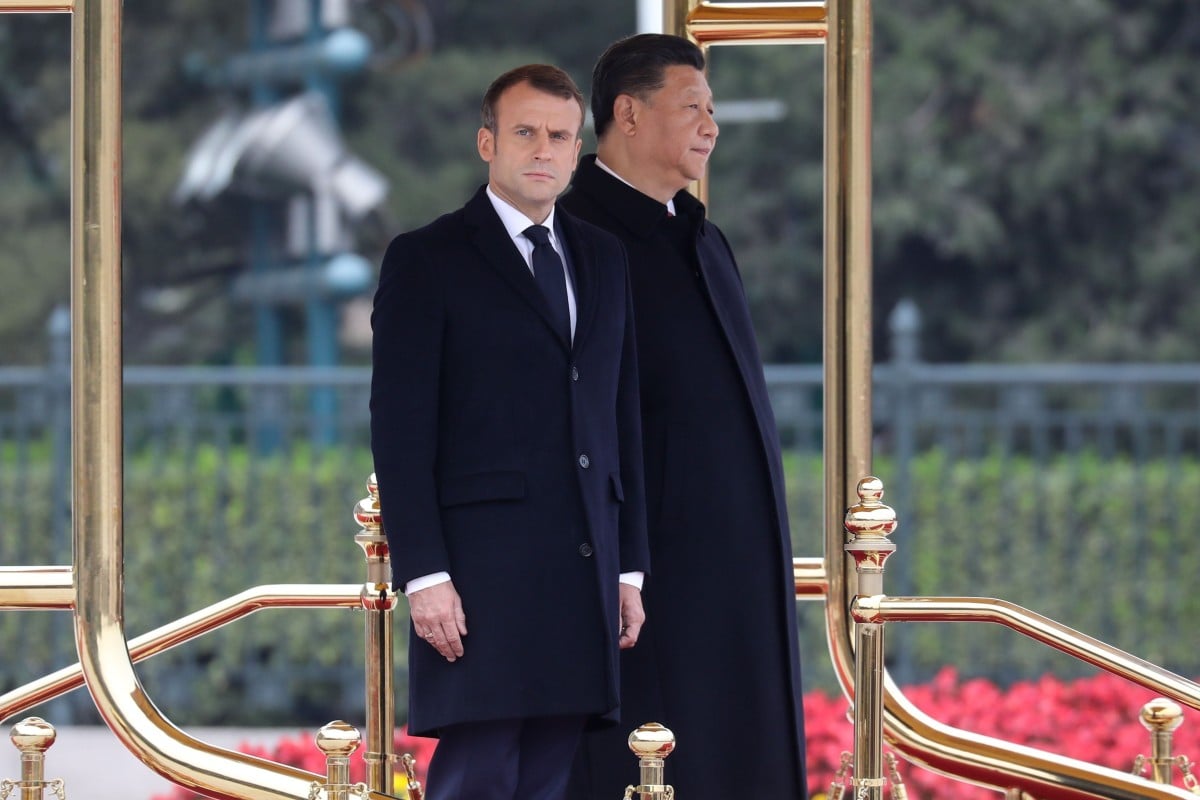
Xi Jinping and Emmanuel Macron at a welcome ceremony ahead of their talks in Beijing on Wednesday. Photo: AFP
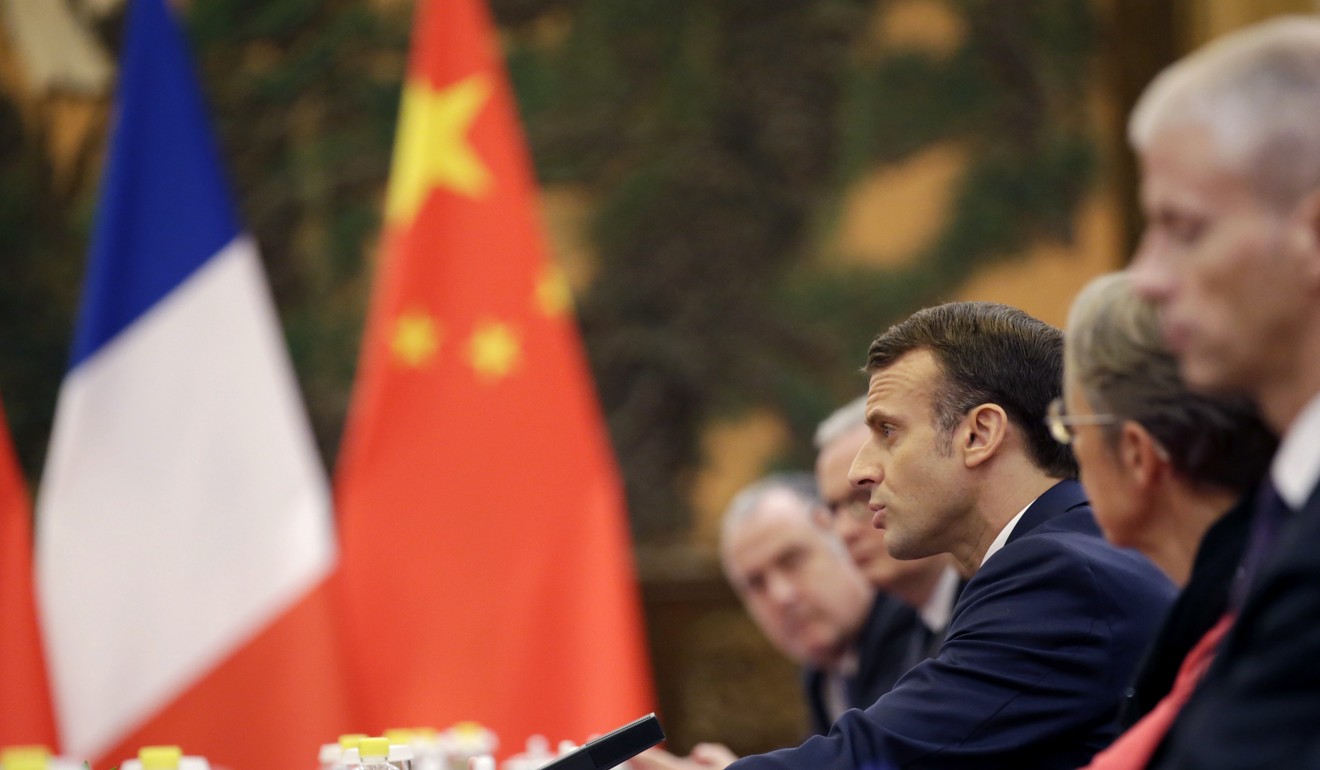
French President Emmanuel Macron said he raised human rights and the Hong Kong situation during his talks with his Chinese counterpart Xi Jinping on Wednesday.
Macron’s visit to China concluded with pledges to work together on climate change, but the French leader also said he also called for a de-escalation of the situation in the city through dialogue after months of protests.
Macron, who had promised to raise “taboo” topics during the visit, told a press conference: “I obviously raised this with President Xi Jinping on several occasions.
“We have repeatedly called on the parties involved to [engage in] dialogue, to show restraint, to de-escalate.”
The discussion followed Xi’s meeting with Hong Kong’s embattled Chief Executive Carrie Lam Cheng Yuet-ngor in Shanghai on Monday, where he expressed “high trust” in her and “fully affirmed” support for her response to the unrest that has gripped the city since June.
Earlier the French and Chinese leaders had restated their commitment to protect free trade and pledged their continued support for the Paris Agreement as the United States begins the process of formally withdrawing from the global climate deal.
Macron expressed “regret” over “some countries’ negative attitude” towards environmental protection and the fight against climate change and pledged to work with China to halt the loss of biodiversity.
The French president’s office also released a statement on Wednesday that reaffirmed France and China’s joint support for the “irreversible” Paris Agreement.
Macron points to common ground with China on tariffs and climate action
With the European Union, China and Russia backing the pact, he added, “the isolated choice of one or another is not enough to change the course of the world. It only leads to marginalisation.”
The two countries also agreed to work together to develop joint nuclear power projects and signed a series of contracts worth US$15 billion.
The deals covered aeronautics, energy and agriculture, including approval for 20 French companies to export poultry, beef and pork to China.
An additional action plan released after the talks said French utility giant EDF and China General Nuclear Power should be encouraged to cooperate on projects in China or third countries, citing the joint efforts by the two companies to build nuclear reactors at the Hinkley Point C station in Britain as an example.
The two sides also committed to signing a contract for the construction of a nuclear fuel recycling plant in China, which would involve French energy giant Orano, by January 31.
Xi took what appeared to be a veiled swipe at the United States, which is still embroiled in a protracted trade war and other confrontations with Beijing.
“We advocate for mutual respect and equal treatment, and are opposed to the law of the jungle and acts of intimidation,” Xi said.
“We advocate for openness, inclusion and for mutually beneficial cooperation, and are opposed to protectionism and a zero-sum game.”
Macron said China and the European Union should work in partnership as the world became more unstable, calling on the two sides to further open up market access.
“We call again for trade multilateralism to respond to distortions that have appeared in the global economy, which have led to a profound rise in inequalities and imbalances that explain the surge of challenges to the international systems,” he said.
“China and Europe also share the same views that the trade war only leads to loss.”
Macron kicks off China visit with deal to protect wine and cheese from counterfeiting
Chinese state news agency Xinhua said the two countries agreed to work together to push forward with plans to assemble Airbus’s A350 model in China.
Meanwhile, Beijing Gas Group and French utility firm Engie will collaborate on a liquefied natural gas terminal and storage in the northern city of Tianjin, while France’s Total will set up a joint venture with China’s Shenergy Group to distribute liquid nitrogen gas by truck in the Yangtze River Delta.
The two countries also agreed to reach an agreement by the end of January 2020 on the cost and location of a nuclear fuel reprocessing facility to be built by Orano, formerly known as Areva.
Wu Libo a professor and director of the Centre for Energy Economics and Strategies Studies at Fudan University, said there was “great potential” for further cooperation between the two countries on nuclear energy.
“France has many useful experiences in the operation and management of nuclear power plants and its plants have long-term safe and stable operation records,” she said.
The two sides agreed to work together on joint nuclear power projects. Photo: AP
Jiang Kejun, a senior researcher at the Energy Research Institute of China’s National Development and Reform Commission, said China’s cooperation with France would add credibility to potential third-country projects.
“China has advanced third-generation technology but it’s still a new member in the nuclear power market, while France has developed nuclear energy for a long time, and its EPR reactors – a technology designed and developed in France – are in business operation,” he said.
Jiang said possible markets for the joint projects included Argentina and India, while some Middle Eastern states – such as Saudi Arabia and Qatar – had expressed interest in nuclear energy.
China’s ambassador hits out at Macron’s team for backing ‘hypocritical’ EU stance on Hong Kong
Tong Jiadong, professor of international trade at Nankai University, said that the deals between the two sides helped show that France and China could work together to counteract US unilateralism.
“Objectively speaking, this will form, or at least imply, an opposition to US unilateralism,” Tong said. “China hopes the cooperation between these two countries produces demonstrable effects for other EU member states.”
Ding Chun, a professor of European Studies at Fudan University, said he did not think the EU wanted to “choose a side” between the US and China.
But Ding continued: “If we are talking about free trade and multilateralism, there’s no doubt that the EU and China share a common view and can balance Donald Trump’s unilateralism.”


 Image copyrightGETTY IMAGES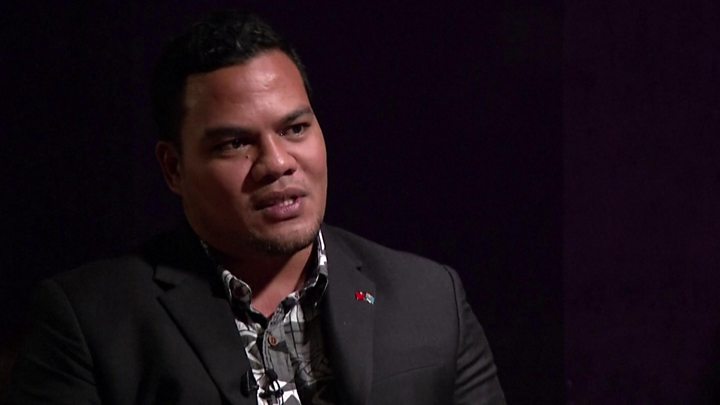





 CHINDIA ALERT: You'll be living in their world, very soon