22/09/2019
Li Zhanshu (L), chairman of the Standing Committee of the National People’s Congress of China, meets with Azerbaijani President Ilham Aliyev in Baku, Azerbaijan, Sept. 19, 2019. Li paid an official goodwill visit to Azerbaijan from Sept. 19 to 21 at the invitation of Ogtay Asadov, speaker of the National Assembly of Azerbaijan. (Xinhua/Pang Xinglei)
BAKU, Sept. 21 (Xinhua) — Li Zhanshu, chairman of the Standing Committee of the National People’s Congress (NPC) of China, and top Azerbaijani officials have agreed here to strengthen bilateral cooperation in various areas.
During an official goodwill visit from Thursday to Saturday, Li met with Azerbaijani President Ilham Aliyev and conveyed Chinese President Xi Jinping’s cordial greetings to him.
Li briefed Aliyev on the great achievements of the People’s Republic of China since its founding 70 years ago, saying that the Communist Party of China is forging ahead on the road of socialism with Chinese characteristics in line with China’s national conditions.
The socialism with Chinese characteristics has now entered a new era, and China under the leadership of Xi is striving to achieve its “two centenary goals” and realize the Chinese dream of the great rejuvenation of the Chinese nation, Li told Aliyev.
China deems Azerbaijan as an important partner in Eurasia and is ready to implement the blueprint made by Xi and Aliyev on the development of bilateral ties, further cement political mutual trust, strengthen practical cooperation in various areas, and jointly safeguard the two countries’ security and development interests, Li said.
Aliyev asked Li to convey his best wishes to Xi and said he had witnessed the great changes in China with his own eyes during his repeated trips to the country and that he admired such achievements.
Azerbaijan-China relations are developing rapidly with a rosy future, he said, adding that his country firmly adheres to the one-China principle, and intends to combat jointly with China the “three forces” of terrorism, separatism and extremism, and improve their coordination and cooperation on international and regional issues.
LEGISLATIVE EXCHANGES
During a meeting with Ogtay Asadov, speaker of the National Assembly of Azerbaijan, Li said his visit was aimed at strengthening cooperation between the two legislatures and implementing the important consensuses reached by the two heads of state.
The Chinese top legislator suggested both sides increase interactions at various levels, exchange experience on governing the countries, and provide legal assurance for bilateral practical cooperation.
Every country has a unique history, national situation and culture, so different civilizations should coexist harmoniously and learn from each other, Li said.
The NPC of China is willing to work with the National Assembly of Azerbaijan to promote cultural and people-to-people exchanges between the two countries, learn from each other, and cement public support for bilateral relations, he said.
Asadov said Li was the first top Chinese legislator to visit Azerbaijan in 19 years and that the trip has injected new vitality into the development of bilateral relations and the interactions between the two legislatures.
Azerbaijan and China have signed many cooperation deals and the two legislatures should help to deliver on the agreements, Asadov said.
An increasing number of Azerbaijani people are interested in Chinese culture and there is a need to promote educational, cultural and youth exchanges, he said.
ECONOMIC COOPERATION
At a meeting with Azerbaijani Prime Minister Novruz Mammadov, Li said Azerbaijan is located at the junction of Europe and Asia and is an important country along the Belt and Road.
Li said China is ready to boost economic and trade exchanges with Azerbaijan and enhance cooperation with the country in jointly building the Belt and Road and achieve more cooperation outcomes in such fields as energy, agriculture, transportation, logistics, tourism and informatization.
He welcomed Azerbaijan to the second China International Import Expo to be held in early November in Shanghai.
Mammadov said his country was among the earliest participants in the Belt and Road Initiative and is ready to expand cooperation with China in various areas.
He welcomed more Chinese investments in Azerbaijan and expected cooperation with China on the construction of a Trans-Caspian International Transport Corridor so that more Chinese goods can hit the Eurasian market via Azerbaijan.
During his stay in Baku, Li also visited the Heydar Aliyev Center and a carpet museum, and laid a wreath at the tomb of former President Heydar Aliyev and the Eternal Flame.
Source: Xinhua
Posted in agriculture, Asia, Azerbaijan, Azerbaijan-China relations, Azerbaijani Prime Minister, Belt and Road (B&R), Belt and Road Initiative, Belt and Road Initiative (BRI), blueprint, carpet museum, chairman of the Standing Committee of the National People's Congress (NPC) of China, China alert, China International Import Expo, China International Import Expo (CIIE), Chinese goods, Chinese President Xi Jinping, Communist Party of China, cooperation, cultural, educational, energy, Eurasia, Europe, extremism, Heydar Aliyev Center, informatization, Li Zhanshu, logistics, Novruz Mammadov, Ogtay Asadov, one-China principle, People's Republic of China, pledge, President Ilham Aliyev, promote, rejuvenation, separatism, Shanghai, Socialism with Chinese characteristics, speaker of the National Assembly of Azerbaijan, strengthen, terrorism, the Eternal Flame, tomb, Tourism, Trans-Caspian International Transport Corridor, transportation, two centenary goals, Uncategorized, wreath, youth exchanges |
Leave a Comment »
21/09/2019
BAKU, Sept. 21 (Xinhua) — China and Azerbaijan enjoy promising prospects in co-building the Belt and Road, Chinese Ambassador to Azerbaijan Guo Min said in a recent exclusive interview with Xinhua.
With a sound and steady development of bilateral relations, Guo praised the advantages of the China-proposed Belt and Road Initiative (BRI) for both sides, emphasizing Azerbaijan’s full support for and involvement in the construction of the Belt and Road.
She said Azerbaijan sees the development of relationship with China as a diplomatic priority. “China and Azerbaijan have exchanged frequent high-level visits since the beginning of this year, with mutual political trust deepening even further.”
Azerbaijani President Ilham Aliyev attended the second Belt and Road Forum for International Cooperation held in Beijing in April, said Guo, adding “the leaders of the two countries reached important consensus to further develop bilateral relations and practical cooperation in various fields.”
“Cooperation in trade, energy, transportation, humanities and other fields has yielded fruits,” she said, noting bilateral trade reached 1.5 billion U.S. dollars from January to August, an increase of 104 percent from the same period last year.
“In recent years, the two nations have been promoting cooperation in a number of areas, including education, culture, health, sports and tourism on a continuous basis,” said the ambassador.
The two countries “have exchanged the visits of culture and art figures and held a wide range of film festivals, art exhibitions and other activities to actively promote unity, mutual understanding and friendly exchanges between the people,” according to Guo.
“At the next stage, the two nations should capitalize on the existing potential and focus on more points of interest,” the ambassador said.
She described the deep traditional friendship, high-level mutual political trust and the highly complementary practical cooperation as key foundations and effective guarantees for the stability and improvement of bilateral relations.
“China is willing to work together with Azerbaijan to push Sino-Azerbaijani friendship and cooperation to a new level and benefit the two countries and their peoples,” the ambassador added.
Source: Xinhua
Posted in art exhibitions, Azerbaijan, Azerbaijani President, Belt and Road Forum for International Cooperation (BRF), Belt and Road Initiative (BRI), bilateral trade, China alert, Chinese ambassador, Chinese Ambassador to Azerbaijan, co-building, cooperation, Culture, education, energy, enjoy, film festivals, fruits, health, humanities, Ilham Aliyev, promising prospects, Sino-Azerbaijani friendship and cooperation, sports, Tourism, Trade, transportation, Uncategorized, Xinhua, Xinhua News Agency |
Leave a Comment »
20/09/2019
ULAN BATOR, Sept. 19 (Xinhua) — Mongolians have been reaping tangible benefits from humanitarian activities under the China-proposed Belt and Road Initiative (BRI), the Mongolian Red Cross Society (MRCS) General Director Nordov Bolormaa said here on Thursday.
“Humanitarian activities play a crucial role in strengthening cooperation between countries and friendship between their peoples,” Bolormaa told Xinhua in an interview. “We are very happy that many Mongolian citizens have been benefiting from humanitarian projects under the BRI.”
A total of 98 Mongolian children with congenital heart disease have received free surgeries in China under a BRI humanitarian aid program launched in 2017, she said.
The heart surgeries were among multiple humanitarian aid programs conducted by the MRCS, the Red Cross Society of China (RCSC), and the latter’s Inner Mongolian branch, according to the RCSC of Inner Mongolia Autonomous Region.
In addition, over 300 Mongolian seniors have received free cataract surgeries under a project called “The Belt and Road-Brightness Trip” since June, Bolormaa said. The plan aims to provide at least 1,000 free cataract surgeries within five years.
Moreover, the RCSC Inner Mongolia branch helped build a first-aid training center equipped with advanced devices at the headquarters of the MRCS in June on the occasion of the 80th anniversary of the MRCS.
“We provide first aid trainings to students, teachers, employees of organizations and others 3-4 times a week at the center,” Bolormaa said, adding that this is another example of fruitful cooperation of the humanitarian organizations between Mongolia and China.
She said that the MRCS will further contribute the development of bilateral relations between Mongolia and China by more actively cooperating with the RCSC in disaster relief, first aid, prevention of traffic accidents and disaster risk reduction.
Source: Xinhua
Posted in Belt and Road Initiative (BRI), disaster relief, disaster risk reduction, first aid, General Director, humanitarian projects, inner mongolia autonomous region, Mongolia, Mongolian Red Cross Society (MRCS), Mongolians, prevention, reap, Red Cross Society of China (RCSC), tangible benefits, traffic accidents, Ulan Bator, Uncategorized |
Leave a Comment »
19/09/2019
Chinese Premier Li Keqiang meets with Russian President Vladimir Putin at the Kremlin in Moscow, Russia, Sept. 18, 2019. (Xinhua/Liu Bin)
MOSCOW, Sept. 18 (Xinhua) — Chinese Premier Li Keqiang on Wednesday met with Russian President Vladimir Putin at the Kremlin to discuss bilateral relations.
Li arrived at Moscow after holding talks and co-chairing the 24th regular meeting between Chinese and Russian heads of government with his Russian counterpart, Dmitry Medvedev, in St. Petersburg.
The Chinese premier firstly extended Chinese President Xi Jinping’s sincere greetings to Putin.
Recalling his meeting with Medvedev, Li said this visit helped draw a comprehensive plan for exchanges and cooperation between China and Russia in various fields, and achieved a lot of new results.
The three-day visit came as the two countries are celebrating the 70th anniversary of their diplomatic ties. During Xi’s visit to Russia in June this year, China-Russia relationship was elevated to a comprehensive strategic partnership of coordination for a new era.
China and Russia are each other’s biggest neighbor, said Li, adding that a healthy and stable development of bilateral relations is not only beneficial to both sides, but also conducive to the region and the world.
China is willing to continue to consolidate friendship, deepen cooperation and strengthen exchanges with Russia, as well as jointly safeguard an international system with the United Nations at its core and a multilateral trading system based on the World Trade Organization’s rules, which is of great significance for promoting development, prosperity, peace and stability of the world, said the premier.
Noting that China and Russia have broad prospects for cooperation, Li said that China stands ready to better synergize the Belt and Road Initiative (BRI) with the Eurasian Economic Union, to promote the simultaneous increase in both the scale and the quality of the two-way trade.
“China is further expanding opening up and the huge market potential will bring more opportunities to enterprises from all over the world including Russia,” Li said, expressing hopes that the two countries can continue to open up to each other, broaden investment and market access and create more cooperation opportunities for enterprises from the two countries.
With joint efforts, China-Russia practical cooperation will achieve more fruitful results and deliver greater benefits to the two peoples in the new era, Li said.
Congratulating on the 70th anniversary of the founding of the People’s Republic of China, Putin said relations with China are a priority of Russian diplomacy.
Bilateral cooperation has recorded remarkable achievements since the two countries established diplomatic ties 70 years ago, he said, noting that their relations have been upgraded to a comprehensive strategic partnership of coordination for a new era.
Russia-China relations are an important stabilizing factor in international relations, Putin said.
Noting the meeting between Li and Medvedev has effectively promoted bilateral practical cooperation with its many new results, he pledged Russia’s willingness to better align its development strategy with the BRI, constantly expand the two countries’ trade and promote common development.
Also on Wednesday, Li laid a wreath at the Tomb of the Unknown Soldier in Moscow.
Source: Xinhua
Posted in 70th anniversary, Belt and Road Initiative (BRI), Chinese premier Li Keqiang, Chinese President Xi Jinping, diplomatic ties, Dmitry Medvedev, Eurasian Economic Union, founding of the People's Republic of China (PRC), Kremlin, Moscow, Russian counterpart, Russian diplomacy, Russian President, russian president vladimir putin, St. Petersburg, Tomb of the Unknown Soldier, Uncategorized, United Nations, World Trade Organization (WTO), wreath |
Leave a Comment »
16/09/2019
BEIJING, Sept. 16 (Xinhua) — At a time when the China-Russia relationship is at an all-time high, Chinese Premier Li Keqiang’s visit will further enhance strategic mutual trust and inject fresh vitality into practical cooperation between the two partners.
Li’s visit, scheduled from Monday to Wednesday, comes as the two countries are celebrating the 70th anniversary of the establishment of their diplomatic ties, and have embarked on a new historic journey since Chinese President Xi Jinping’s visit to Russia in June.
During Xi’s visit, China and Russia agreed to lift their relations to a comprehensive strategic partnership of coordination for a new era, opening a new chapter of bilateral cooperation conducive to global stability and prosperity.
Under the strategic leadership of the two heads of state, Xi and his Russian counterpart, Vladimir Putin, relations between Beijing and Moscow have seen closer cooperation and growing mutual support on a wide range of issues in the past several years.
Bilateral trade has maintained a steady growth momentum. In 2018, two-way trade surged 27.1 percent to hit a record of 107.1 billion U.S. dollars, the highest growth rate among China’s top 10 trading partners. The two countries are working hard to double the trade volume by 2024.
Sub-national exchanges are blossoming. With 2018 and 2019 designated as the years of China-Russia local cooperation and exchanges, local regions of the two countries have carried out close economic and trade cooperation as well as people-to-people and cultural exchanges.
Meanwhile, the two sides are actively seeking greater synergy and cooperation between the China-proposed Belt and Road Initiative and the Russia-led Eurasian Economic Union to boost connectivity across the continent.
During his stay in St. Petersburg, Russia’s second largest city, Li and Russian Prime Minister Dmitry Medvedev will co-chair the 24th regular meeting between the two countries’ heads of government, a key mechanism and platform to promote cooperation and facilitate communication.
They will exchange in-depth views on how to fully translate the consensus between Xi and Putin into win-win cooperation, and sign a series of agreements on trade, energy, technology and other areas, so as to demonstrate both countries’ determination to strengthen their friendly and fruitful ties.
In the face of rising unilateralism, protectionism and anti-globalization, China and Russia, both responsible major countries, share a similar view on building a more open world economy, improving global governance and promoting democracy in international relations.
During Li’s visit, the two sides are expected to jointly voice their support for multilateralism and global free trade. That will further enrich the close China-Russia partnership and give better play to its role as a model of cooperation between the world’s major countries.
Standing at a new starting point, the two close neighbors will continue to play a constructive role in promoting world peace, stability and development.
Source: Xinhua
Posted in Beijing, Belt and Road Initiative, Belt and Road Initiative (BRI), China-Russia relationship, Chinese premier Li Keqiang, Chinese President Xi Jinping, Dmitry Medvedev, Eurasian Economic Union, Moscow, Russia, Russian Prime Minister, St. Petersburg, Uncategorized, Vladimir Putin |
Leave a Comment »
12/09/2019
Chinese Premier Li Keqiang meets with Kazakh President Kassym-Jomart Tokayev at the Diaoyutai State Guesthouse in Beijing, capital of China, Sept. 11, 2019. (Xinhua/Rao Aimin)
BEIJING, Sept. 11 (Xinhua) — Chinese Premier Li Keqiang met with Kazakh President Kassym-Jomart Tokayev here on Wednesday.
Calling Kazakhstan China’s friendly neighbor and comprehensive strategic partner, Li said the two countries enjoy solid political mutual trust, fruitful cooperation results and a long-standing friendship.
China stands ready to better synergize the Belt and Road Initiative with Kazakhstan’s development strategy, Li said.
The two countries should intensify all-round cooperation, and jointly safeguard peace and stability in the region, he said.
Cooperation between China and Kazakhstan is based on mutual trust, geographical proximity, huge potential and broad prospects, Li said, promising that China will facilitate cooperation with Kazakhstan in energy, production capacity, nuclear electricity, finance, and science and technology.
The Chinese premier also called for better use of cross-border e-commerce platforms and expansion of bilateral trade.
Tokayev congratulated the People’s Republic of China on its 70th anniversary.
China is viewed as an important strategic partner of Kazakhstan, said Tokayev, reiterating that his country is willing to be an active participant in the construction of the Belt and Road, boost bilateral cooperation in all areas, and expand exports to China.
He added that Chinese enterprises are welcome to invest in Kazakhstan, and voiced hope for more tourism cooperation and closer exchanges among young people.
Source: Xinhua
Posted in 70th anniversary, Beijing, Belt and Road Initiative, Belt and Road Initiative (BRI), Chinese premier Li Keqiang, Kassym-Jomart Tokayev, Kazakh President, Kazakhstan, The People's Republic of China, Uncategorized |
Leave a Comment »
12/09/2019
BEIJING (Reuters) – China and Malaysia have agreed to set up a joint dialogue mechanism for the disputed South China Sea, the Chinese government’s top diplomat said on Thursday after meeting Malaysia’s foreign minister.
Recent Chinese naval deployments in the strategic waterway, through which more than $3.4 trillion worth of goods are transported annually, have reignited tension with Vietnam and the Philippines. Malaysia, Brunei and Taiwan also have competing claims in the South China Sea.
Malaysia had been critical of China’s South China Sea position, but has not been excessively outspoken recently, especially after China pumped in billions of dollars into infrastructure projects under its Belt and Road Initiative.
Malaysia regularly tracked Chinese naval and coastguard vessels entering Malaysia’s territorial waters, but China respects Malaysia and had “not done anything that caused us trouble, so far”, Defence Minister Mohamad Sabu told Reuters last month.
Chinese State Councillor Wang Yi told a news conference with Malaysian Foreign Minister Saifuddin Abdullah that this year, tensions in the South China Sea had dropped.
Littoral states and China were committed to continue appropriately handling the South China Sea issue and jointly safeguard peace and stability there, said Wang, who is the Chinese government’s top diplomat.
“To this end, our two sides have agreed to set up a bilateral consultation mechanism for maritime issues, a new platform for dialogue and cooperation for both sides,” he said.
Abdullah, who referred to Wang as “my brother”, said the mechanism would be led by the two countries’ foreign ministries.
“Our officers will be discussing the details, but I think this is one important outcome of the meeting today and also the 45 years of our diplomatic relations,” he said.
China is debt-heavy Malaysia’s biggest trade partner and the countries have close cultural ties too.
In July, China and Malaysia resumed construction on a train project in northern Malaysia, which is part of China’s Belt and Road plan, after a year-long suspension and following a rare agreement to cut its cost by nearly a third, to about $11 billion.
Source: Reuters
Posted in Belt and Road Initiative, Belt and Road Initiative (BRI), belt and road plan, Brunei, China alert, coastguard vessels, defence minister, dialogue, infrastructure projects, Littoral states, Malaysia, Malaysian Foreign Minister, mechanism, Mohamad Sabu, naval deployments, naval vessels, Philippines, Reuters, Saifuddin Abdullah, set up, South China Sea, State Councillor Wang Yi, strategic waterway, Taiwan, Uncategorized, Vietnam |
Leave a Comment »
08/09/2019
Serbian President Aleksandar Vucic(4th R) meets with Zhang Youxia(3rd L), a member of the Political Bureau of the Communist Party of China (CPC) Central Committee and vice chairman of the Central Military Commission in Belgrade, Serbia on Sept. 6, 2019. (Photo by Li Xiaowei/Xinhua)
BELGRADE, Sept. 7 (Xinhua) — Serbia hopes to enhance mutually beneficial cooperation with China in various fields, including military, to advance bilateral relations to new levels, Serbian President Aleksandar Vucic has said.
Vucic made the remarks on Friday when meeting with visiting vice chairman of China’s Central Military Commission, Zhang Youxia.
Vucic said that history has proved that China is Serbia’s most reliable friend. The Serbian government, people and military support the “one-China” policy as well as China’s stance and proposition in many other issues concerning China’s core interests.
Vucic added that the Belt and Road Initiative has brought many opportunities to the development of Serbia. He said he hopes that the two sides will continue to deepen mutually beneficial cooperation in various fields, including military, to advance bilateral relations to new levels.
Zhang, who is also a member of the Political Bureau of the Communist Party of China Central Committee, said that the traditional friendship between China and Serbia is profound.
He said that China is ready to work with Serbia to consolidate the all-weather friendship between the two countries, promote the quality of their bilateral relations and accelerate the growth of their ties.
Zhang also called for the militaries of the two countries to implement consensus reached between the heads of state of China and Serbia, deepen strategic mutual trust and enhance exchanges and cooperation in bids to promote their links to new height.
During his visit, Zhang also met with Serbian Defense Minister Aleksandar Vulin, and witnessed the signing of a memorandum of understanding on the establishment of a Chinese medicine center in the Serbian Military Medical Academy.
Source: Xinhua
Posted in advance, Aleksandar Vucic, Aleksandar Vulin, Belt and Road Initiative, Belt and Road Initiative (BRI), Central Military Commission, Central Military Commission (CMC), China alert, Chinese medicine center, establishment, levels, member of the Political Bureau of the Communist Party of China Central Committee, Memorandum of understanding, Memorandum of Understanding (MOU), Military, pledges, Serbian Defense Minister, Serbian Military Medical Academy, Serbian president, ties, Uncategorized |
Leave a Comment »
03/09/2019
ULAN BATOR, Sept. 2 (Xinhua) — A series of cultural events to celebrate the 70th anniversary of the establishment of diplomatic ties between China and Mongolia kicked off at the Mongolian National Modern Art Gallery here on Monday.
Hundreds of people from various fields of both countries, including Mongolian Minister of Education, Culture, Science and Sports Yondonperenlei Baatarbileg and Chinese Ambassador to Mongolia Xing Haiming attended the opening ceremony.
“We will relive the China-Mongolia friendship through more than 20 activities including cultural performances, exhibitions, exchanges of books, watching movies and TV series and free medical exams under a broader theme called ‘Feel China’ for the 70th anniversary of the establishment of diplomatic relations between China and Mongolia,” Xing said at the ceremony.
The ambassador noted that China attaches great importance to China-Mongolia relations and is willing to deepen the alignment of the China-proposed Belt and Road Initiative and Mongolia’s Development Road Program on the basis of equality and mutual benefit.
He expressed hope that the two countries will work together to boost the friendly and mutually beneficial cooperation that brings tangible benefits to the two countries and peoples.
For his part, Baatarbileg said that the culture of any country is a guarantee of independence and the value of its people.
“I have no doubt that the cultural events can give Mongolians a deeper understanding of China’s culture,” he said, noting that the Mongolian government will support any activities aimed at promoting the history and culture of the two countries.
Visitors can partake in martial arts training, craft traditional Chinese embroidery, attend film screenings and taste a variety of Chinese foods.
The events are co-organized by China’s State Council Information Office, China’s Inner Mongolia Autonomous Region, the Mongolian Ministry of Education, Culture, Science and Sports and governor’s office of the Mongolian capital Ulan Bator.
The events run until Friday.
Source: Xinhua
Posted in 70th anniversary, Belt and Road Initiative, Belt and Road Initiative (BRI), China's Inner Mongolia Autonomous Region, China-Mongolia friendship, China-Mongolia ties, Chinese Ambassador to Mongolia, craft traditional Chinese embroidery, cultural events, Culture, film screenings, kick off, martial arts training, Mongolia's Development Road Program, Mongolian Minister of Education, Mongolian Ministry of Education, Culture, Science and Sports, Mongolian National Modern Art Gallery, Science, sports, State Council Information Office, Ulan Bator, Uncategorized, variety of Chinese foods, Xing Haiming, Yondonperenlei Baatarbileg |
Leave a Comment »
01/09/2019
- US president likely had Beijing ‘on his mind’ when he made his audacious offer, diplomat says
- Proposal ‘could be interpreted as a very clear signal’ to China and Denmark that the US sees Greenland as part of an exclusive strategic zone, academic says
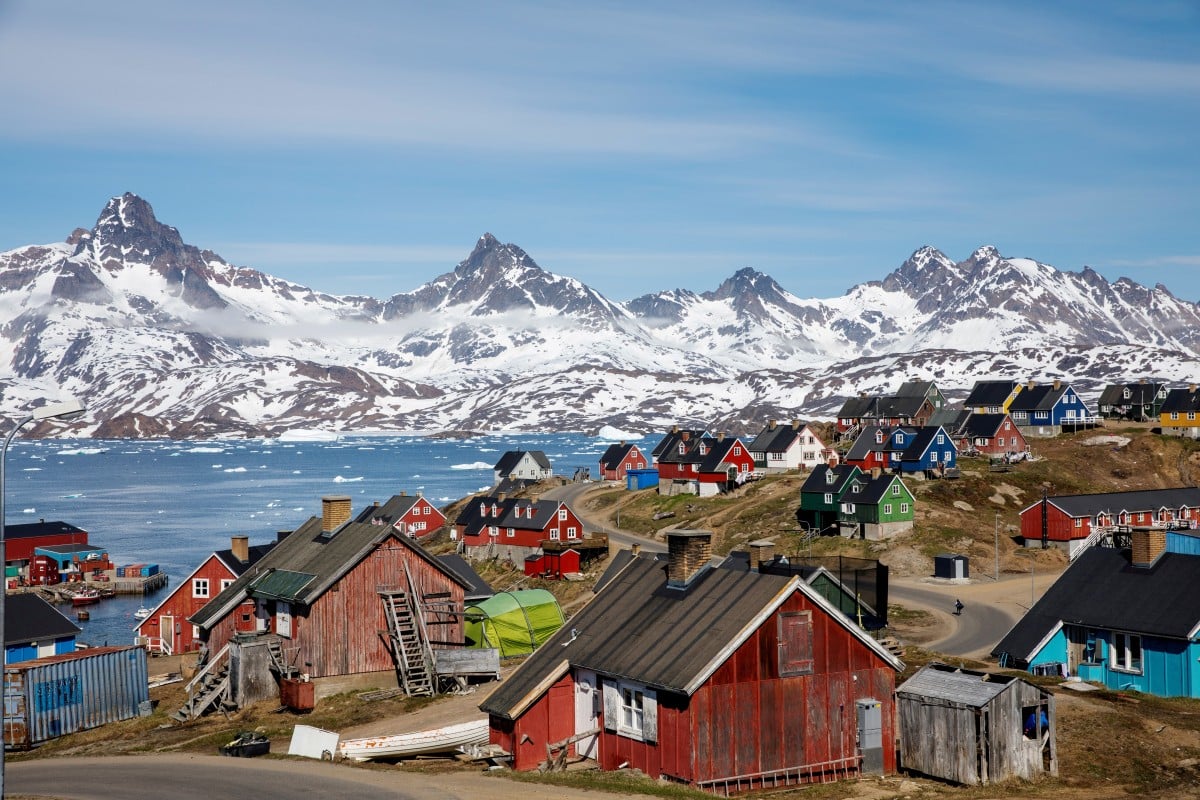
China has been building closer ties with Greenland in recent years. Photo: Reuters
US President Donald Trump’s eyebrow-raising idea to buy Greenland from Denmark last month epitomised what analysts say is Washington’s fear of the growing interplay of Chinese money, Russian aggression and Arctic political division.
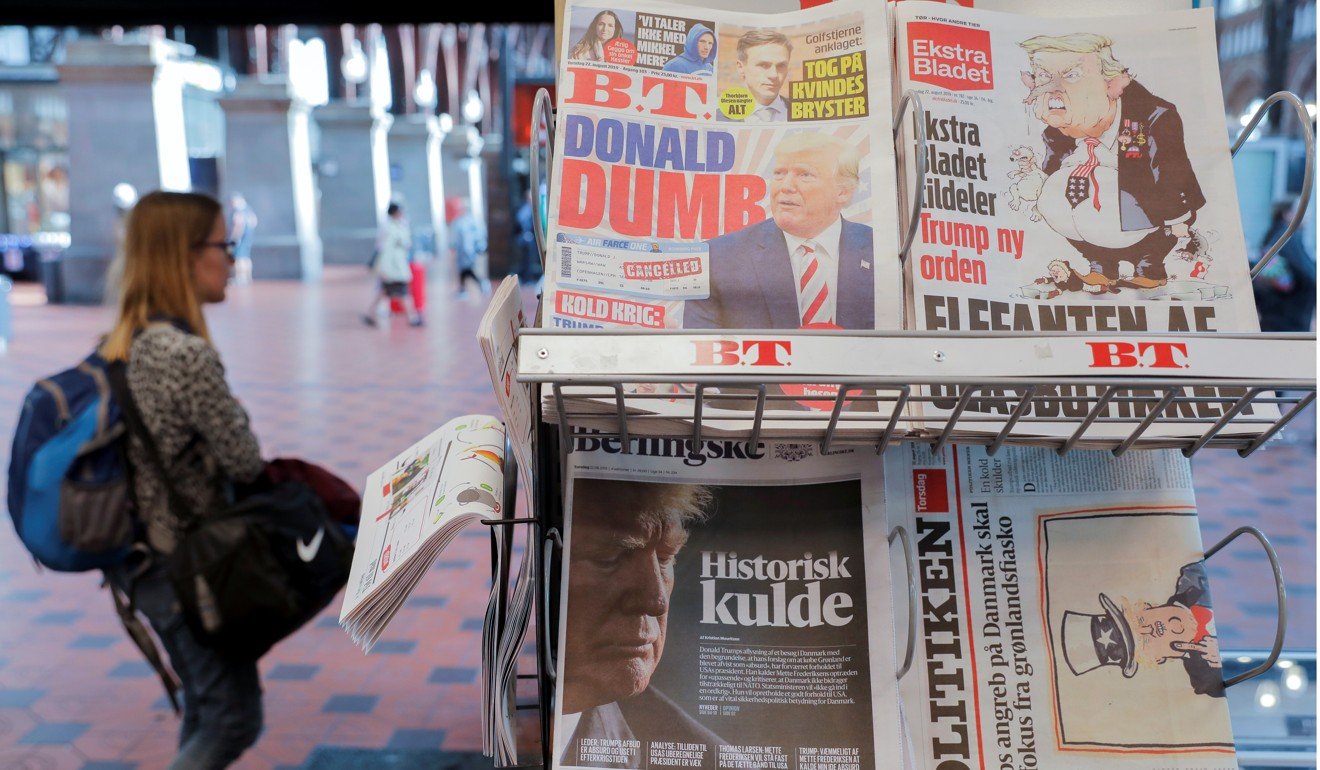
Of all the countries involved in the region, Denmark is feeling the most heat, and not just because Trump recently cancelled a trip and called its Prime Minister Mette Frederikse “nasty” for describing his plan to buy the world’s largest island “absurd”.
Over the past few years, both of Denmark’s self-ruled governments – Greenland and the Faroe Islands – have increasingly turned to China for commercial deals, adding weight to Beijing’s growing strategic influence in the vast area that forms the common backyard of Europe, North America and Russia.
Russia seeks Chinese support in developing Arctic shipping routes
Greenland is of particular concern to the White House and the Pentagon as it is home to the US Thule Air Force Base, located far above the polar circle and which served as the first line of defence during the cold war.
Nowadays, the island is also strategically important for the US ballistic missile early warning system, as the shortest route from Europe to North America goes via the ice-cloaked, resource-rich territory.
“Though it’s difficult to tell the motivations of President Trump, he likely had China on his mind with his Greenland offer,” said a Beijing-based diplomat, who asked not to be named.
The US was likely to step up its presence in Greenland in the future, the person said.
In May, US Secretary of State Mike Pompeo accused China and Russia of introducing a strategic power struggle into the Arctic region and described Beijing’s behaviour there as aggressive.
When Greenland signalled an interest in engaging a Chinese state-owned company to build two airports in 2017 – the island’s prime minister flew to Beijing to appeal for financial backing – Copenhagen stepped in amid US pressure, reluctantly agreeing to finance the projects from the public coffers.
Denmark’s reluctance stems from a long-standing mistrust between Copenhagen and Greenland, as the island’s quest for economic development is viewed by the Danes as an attempt to shore up capital to push for a future independence movement.
“There is no doubt that the US foreign and security policy community is becoming far more interested in Greenland as a strategic asset,” said Andreas Bøje Forsby, a researcher at the University of Copenhagen’s Nordic Institute of Asian Studies.
“Proposing to buy Greenland could be interpreted as a very clear signal to both China and Denmark that Greenland is part of an exclusive American strategic zone,” he said.
Danish Prime Minister Mette Frederikse described Donald Trump’s plan to buy Greenland as “absurd”. Photo: Reuters
The government of the Faroe Islands – an archipelago located between Scotland, Norway and Iceland – has a similar readiness to engage with China but for a different purpose.
Unlike Greenland, there are no immediate political movements calling for independence from Denmark, making its overall relationship with Copenhagen more amiable.
This month, the Faroese government will open a liaison office in Beijing, located within the Danish embassy.
“Our top priority is to have a free-trade agreement with China,” Sigmundur Isfeld, the first head of the Faroe Islands’ representation to Beijing, said.
US defence report flags China’s expanding military reach in the Arctic
With Norway – a key competitor of the Faroes in the fishing and export industries – eyeing a similar arrangement with China, the time was ripe to clinch a deal, he said.
“It is a challenge for us … we need to get in the game.”
Although part of Denmark, the Faroe Islands are not part of the European Union and therefore have to form separate trade agreements with other countries.
“For example, there is an EU-Japan economic partnership agreement. It covers all EU nations, but it does not cover the Faroe Islands,” Isfeld said.
Trade between Greenland and China totalled US$126 million in 2108. Photo: AFP
China, for its part, has sought to exert its economic and cultural influence on the Faroes, which has a population of about 52,000 people.
, the embattled Chinese telecoms giant, has been working with the islands’ main telecoms provider for four years and is said to be finalising a plan for 5G upgrades across the archipelago.
Beijing also helped fund a project for a Chinese-Faroese dictionary.
With a population of about 56,000 people, Greenland is one of China’s smallest trading partners. In the first seven months of 2019, trade between the two was US$126 million, with Chinese imports of fish accounting for the bulk of the total.
The Greenland government’s annual political and economic report for 2019 said that strong demand for metals from China had contributed to mineral and mining projects in the country, though China’s transition to a less mineral-intensive economy could spell trouble for the future of the sector.
The island’s gross domestic product is expected to grow by 3 per cent this year, according to the report, with seafood – principally cod, halibut and prawns – set to continue to be its chief export.
The end of the Arctic as we know it
China’s attempts in recent years to expand its involvement in Greenland have run into roadblocks.
In 2016, a Chinese mining company expressed interest in taking over an abandoned marine station in Grønnedal, an offer that the Danish government turned down the following year. A Chinese state-owned construction company had also offered to build airports in Greenland, but withdrew its offer this year.
Also this year, China expanded its involvement in exporting from Kvanefjeld, one of the world’s largest deposits of rare earths and uranium, by creating a joint venture to process and export the resources.
Beijing has made clear its strategic ambitions in the region. Early last year, it unveiled its Polar Silk Road strategy, plotting the course for its future development goals in the region – including scientific, commercial, environmental preservation and resource extraction efforts.
It also aligned its Arctic interests with its Belt and Road Initiative. Chinese companies are encouraged to invest in building infrastructure along the routes and conduct commercial trial voyages to gauge feasibility.
Putin boasts of nuclear icebreaker fleet as he outlines Arctic expansion plans
Anders Rasmussen, a former Danish prime minister and erstwhile Nato secretary general, said in an article published in Atlantic magazine last month that with melting ice caps opening the Arctic Sea to shipping, Arctic sea lanes “will likely become another flashpoint of renewed competition among the great powers as climate change alters our world”.
It was a situation he said he found “regrettable, but inevitable”.
“Both China and Russia are interested in getting a foothold in Greenland, to expand their influence in the Arctic region,” Rasmussen said. “Instead of being a source of contention,
Greenland should serve to highlight how many interests the United States and Denmark have in common.”
Source: SCMP
Posted in 5G upgrades, airports, Anders Rasmussen, archipelago, Arctic, Arctic expansion plans, Arctic political division, Arctic Sea, Arctic sea lanes, Arctic shipping routes, Atlantic magazine, Beijing, Belt and Road Initiative, Belt and Road Initiative (BRI), China alert, China’s growing presence, Chinese mining company, Chinese money, Chinese support, Chinese-Faroese dictionary, climate change, Cold War, commercial, Copenhagen, Danish embassy, Danish government, Danish prime minister, Denmark, early warning system, environmental preservation, EU nations, EU-Japan economic partnership agreement, Europe, European Union, Faroe Islands, Faroese government, first line of defence, Grønnedal, Greenland, Huawei, Iceland, imports of fish, Kvanefjeld, liaison office, melting ice caps, Mette Frederikse, Mike Pompeo, Nato secretary general, Nordic Institute of Asian Studies, North America, Norway, nuclear icebreaker fleet, offer, Pentagon, polar circle, Polar Silk Road strategy, President Donald Trump, Prime minister, prompt, Putin, rare earths, resource extraction, Russia, Russian aggression, scientific, Scotland, shipping, telecoms giant, to buy, Uncategorized, United States, University of Copenhagen, Uranium, US ballistic missile, US Secretary of State, US Thule Air Force Base, Washington, White House |
Leave a Comment »




 CHINDIA ALERT: You'll be living in their world, very soon